
As an Amazon Associate, I earn from qualifying purchases. This means I may earn a commission if you purchase through links on this page — at no extra cost to you.
The Short Answer
The three best peel-and-stick products for DIY decor are NuWallpaper peel-and-stick wallpaper ($30-45 per roll) for walls — the easiest transformative upgrade; Smart Tiles peel-and-stick backsplash ($25-35 per pack) for kitchens and bathrooms — genuinely convincing tile looks; and Con-Tact brand adhesive shelf liner ($8-12 per roll) for drawers, shelves, and small furniture refreshes — the cheapest way to experiment. All three apply without tools, remove cleanly, and are renter-friendly.
Why Peel-and-Stick Changed DIY Decor
Peel-and-stick products removed the two biggest barriers to home upgrades: skill and permanence. Traditional wallpaper requires paste, smoothing tools, and the confidence to commit. Tile needs thinset, grout, and a wet saw. Peel-and-stick versions need nothing but clean hands and a little patience — and they peel off when your lease ends or your taste changes.
The category has matured enormously. Early peel-and-stick products were thin, plasticky, and obviously fake. Current generations from established brands look genuinely convincing, with textured finishes, realistic grout lines, and patterns designed by actual artists rather than clip-art libraries.
That said, not all peel-and-stick is created equal. Adhesive quality, material thickness, and print resolution vary enormously between brands. Here’s what actually works, organized by product type.
Top Picks: Detailed Reviews
1. NuWallpaper Peel-and-Stick Wallpaper — $30 to $45 per roll
Best for: Accent walls, rental-friendly room transformations, powder rooms
Material: Woven fabric-backed vinyl, noticeably thicker than budget alternatives
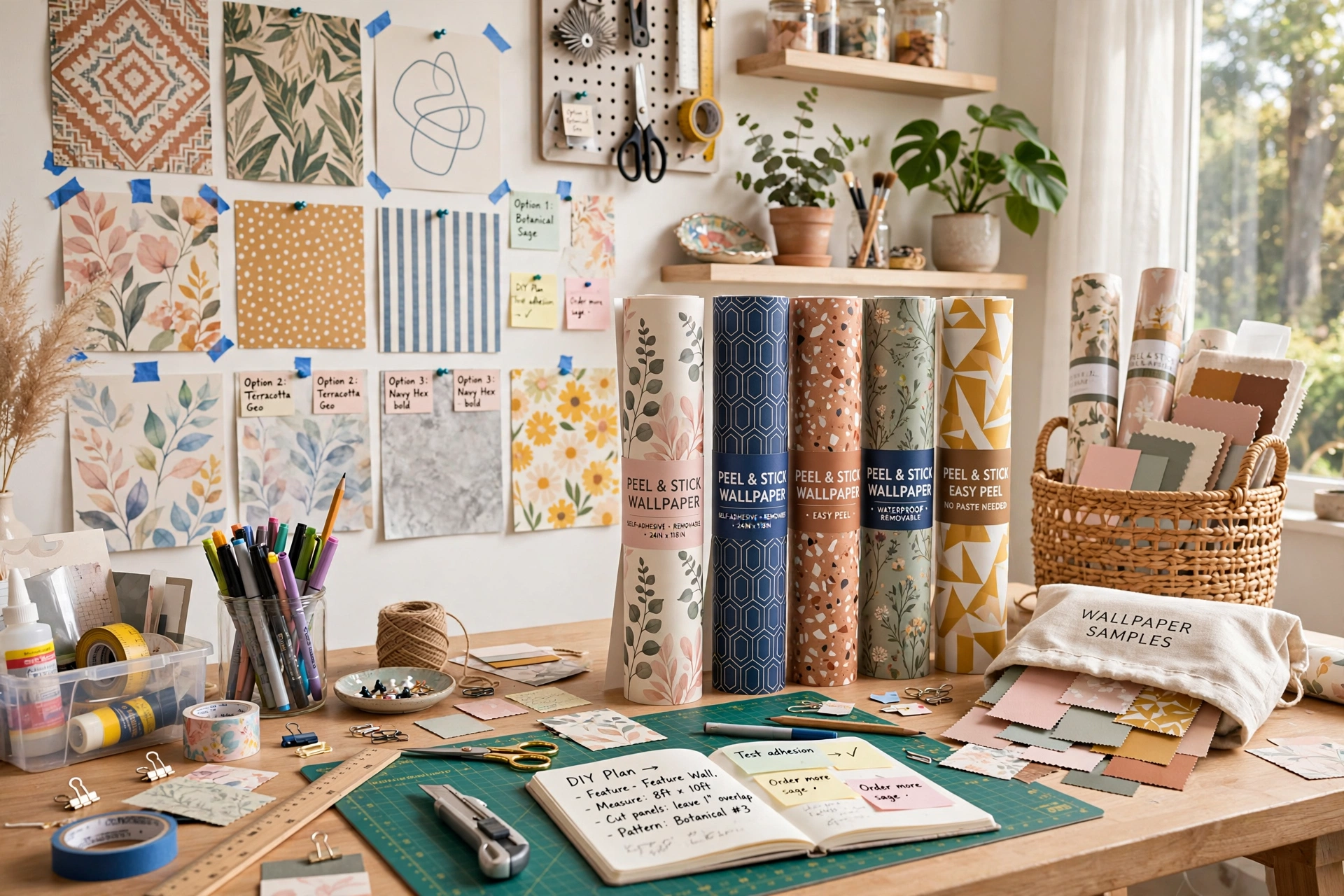
NuWallpaper (by York Wallcoverings, a company that’s made traditional wallpaper for over a century) is the gold standard of removable wallpaper. The fabric backing gives it a premium feel and — critically — makes it repositionable during installation. You can peel it back and re-stick multiple times without losing adhesion, which is a lifesaver for beginners lining up patterns.
Each roll covers about 20.5 square feet. A standard 8×10 accent wall needs roughly 4 rolls. The patterns range from subtle grasscloth textures to bold botanicals, and the print quality holds up at close range.
Durability: Holds up well in normal living spaces. Not recommended for high-humidity bathrooms without ventilation — steam can loosen edges over time. Wipes clean with a damp cloth.
Removal: Peels off in full sheets without residue on properly primed/painted walls. On flat/matte paint, test a small area first — very porous paint can bond more aggressively.
2. RoomMates Peel-and-Stick Wallpaper — $25 to $35 per roll
Best for: Budget accent walls, kids’ rooms, temporary seasonal decor
Material: Thinner vinyl than NuWallpaper, but perfectly serviceable
RoomMates is the most widely available brand (sold at Target, Walmart, Home Depot) and the best value for the quality. The vinyl is thinner than NuWallpaper, which makes it slightly trickier to reposition, but the price difference is meaningful on large walls. Their licensed patterns (including many designer collaborations) are a standout — you won’t find these prints elsewhere at this price.
Durability: Good for 2-4 years in normal conditions. Thinner material means it’s more prone to showing wall imperfections underneath — make sure walls are smooth and clean before applying.
Removal: Clean removal on eggshell and satin paint. May leave slight residue on flat paint; a quick wipe with warm soapy water handles it.
3. Smart Tiles Peel-and-Stick Backsplash — $25 to $35 per pack (covers ~10 sq ft)
Best for: Kitchen backsplashes, bathroom accents, laundry rooms
Material:
Smart Tiles are the most convincing peel-and-stick product in any category. The 3D gel construction creates actual depth and shadow lines that mimic real tile grout joints. From two feet away, most people cannot tell the difference from ceramic subway tile. They’re heat-resistant (safe behind stoves) and water-resistant (fine for backsplashes, though not inside shower stalls).
🛒 Shop This Look:
Installation is straightforward: peel, stick, press firmly. The sheets interlock with a slight overlap that hides seams. A standard 30-square-foot kitchen backsplash needs about 3 packs and takes an afternoon.
Durability: Excellent. These are the longest-lasting peel-and-stick product here — many installations look great after 5+ years. The gel surface wipes clean easily and resists kitchen grease.
Removal: Peels off with gentle heat from a hair dryer. May require some adhesive cleanup with Goo Gone on the wall underneath, but won’t damage drywall.
4. Tic Tac Tiles Peel-and-Stick Tile — $20 to $30 per pack
Best for: Budget backsplash updates, RV and camper renovations
Material: Thinner PVC than Smart Tiles, 2D printed with faux texture
The budget alternative to Smart Tiles. Tic Tac Tiles look good from a normal viewing distance but lack the 3D depth — up close, you can tell they’re flat. For the price difference (roughly 30% cheaper), many DIYers find the tradeoff acceptable, especially in low-visibility areas or temporary situations like rental kitchens.
Durability: Good for 2-3 years. Less heat-resistant than Smart Tiles — keep them away from direct stove heat.
5. Con-Tact Brand Adhesive Shelf Liner — $8 to $12 per roll
Best for: Drawer liners, shelf lining, small furniture accents, craft projects
Material: Thin vinyl with light adhesive
The humble shelf liner is the most versatile peel-and-stick product nobody talks about. Beyond drawers and shelves, crafters use it to cover the tops of side tables, line the backs of open shelving, create custom placemats, and add patterned accents to plain furniture. At under $12 for a 20-foot roll, it’s the cheapest way to experiment with pattern in your home.
The Grip Prints line has a slightly textured surface that prevents items from sliding — genuinely useful in drawers. The adhesive is light enough to reposition easily but holds firmly once smoothed down.
Removal: The easiest removal of anything on this list. Peels off cleanly even after years, with zero residue in most cases.
6. DC Fix Peel-and-Stick Countertop Film — $15 to $25 per roll
Best for: Rental kitchen countertop refreshes, bathroom vanity tops
Material: Thick vinyl with realistic stone and wood prints
DC Fix (a German brand) makes the most convincing countertop film available. Their marble and butcher-block patterns have fooled guests in real kitchens. The vinyl is thick enough to resist minor scratches and heat from warm (not hot) dishes. Application requires patience — large flat surfaces show every bubble — but the soapy-water method (spraying the surface lightly before applying) makes it manageable.
Durability: 1-3 years on countertops with daily use. Not a permanent solution, but transformative for rentals. Avoid placing hot pots directly on it and use cutting boards.
Removal: Peels off with heat. May leave adhesive residue on the original countertop — Goo Gone and patience handle it.
7. RoomMates Peel-and-Stick Wall Decals — $10 to $20 per set
Best for: Kids’ rooms, nursery decor, seasonal wall accents, dorm rooms
Material: Thin vinyl decals, individually cut
🛒 Shop This Look:
For anyone intimidated by full wallpaper rolls, decals are the zero-commitment entry point. Individual elements (animals, stars, botanical sprigs, quotes) arrange however you like, reposition freely, and remove without a trace. They’re perfect for kids’ rooms where tastes change yearly — peel off the dinosaurs, stick up the space theme.
Durability: Last for years on clean walls. The thin vinyl can curl at edges in humid rooms.
Removal: The cleanest removal of any wall product. They practically fall off when you want them to.
8. Rabbitgoo Window Privacy Film — $15 to $25 per roll
Best for: Bathroom windows, front door sidelights, ground-floor privacy
Material: Static-cling vinyl (no adhesive at all)
Technically not adhesive — it clings with static — which means truly zero-risk application and removal. The frosted and stained-glass patterns provide daytime privacy while still admitting light. It’s the single best solution for rental bathroom windows and one of the cheapest privacy upgrades available.
Application is the easiest on this list: spray the window with soapy water, position the film, squeegee out bubbles. Reposition as many times as needed.
Durability: Lasts indefinitely indoors. Can be removed, stored, and reused.
Choosing by Project Type
Full accent wall
NuWallpaper for the best result, RoomMates for the best value. Budget 4-5 rolls for a standard wall and buy one extra — pattern matching wastes more than you expect, and dye lots can vary between orders.
Kitchen backsplash
Smart Tiles, no contest. The 3D effect is worth the premium over flat alternatives, and the durability means you won’t be redoing it in two years.
Rental-friendly refresh (multiple rooms)
Combine: RoomMates wallpaper for one accent wall, Con-Tact liner for shelves and drawers, Rabbitgoo film for bathroom windows. Total cost under $100 for a dramatically different-feeling apartment.
Kids’ room
Wall decals for flexibility, or RoomMates wallpaper in a fun pattern. Both remove cleanly when tastes change (and they will).
Furniture update
DC Fix for tabletops and counters, Con-Tact liner for drawer interiors and shelf surfaces. Both are forgiving for beginners.
Application Tips (What the Instructions Don’t Tell You)
- Clean walls obsessively. Dust, grease, and texture are the enemies of adhesion. Wipe walls with a damp cloth and let them dry completely. In kitchens, use a degreaser — cooking residue is invisible but prevents sticking.
- Start in the least visible corner. Your first panel will be your worst. Start behind furniture or in a corner where imperfections hide.
- Use the soapy water trick for large pieces. A light mist of water with a drop of dish soap on the surface lets you slide large pieces into position before the adhesive grabs. Squeegee the water out from center to edges.
- Overlap, don’t butt. Slightly overlapping seams (1/16 inch) looks better than tiny gaps. Most quality products are designed for minimal overlap.
- Temperature matters. Apply in a room between 65-80°F. Cold adhesive doesn’t stick well; hot adhesive grabs too aggressively to reposition.
- Buy 15-20% more than you calculate. Pattern matching, mistakes, and future repairs all consume extra material. Running short mid-project and finding the pattern discontinued is a special kind of heartbreak.
Removal Guide: Getting It Off Cleanly
Removal technique varies by product, but the principles are universal:
- Start with heat. A hair dryer on medium heat, held 6 inches away for 30 seconds, softens most adhesives dramatically. Work in small sections.
- Pull slowly at a low angle. Pull the material back on itself at roughly a 45-degree angle, not straight out from the wall. Slow and steady prevents tearing and reduces residue.
- Clean residue immediately. Warm soapy water handles light residue. Goo Gone or similar citrus-based removers tackle stubborn spots. Don’t let residue sit — it hardens over time.
- Know your paint. Flat/matte paint is the most vulnerable to damage during removal. Eggshell and satin finishes release adhesive much more cleanly. If your walls are flat paint, test removal in a hidden spot first.
Frequently Asked Questions
Will peel-and-stick damage my walls?
On properly painted walls (eggshell, satin, or semi-gloss finish that’s fully cured — at least 30 days old), quality peel-and-stick products remove cleanly. The risk cases are: flat/matte paint (more porous, bonds aggressively), fresh paint (under 30 days), and damaged or unprimed drywall. When in doubt, test behind furniture first.
Can I use peel-and-stick in bathrooms?
Yes, with ventilation. Powder rooms and well-ventilated bathrooms are fine. Avoid inside shower stalls (constant direct water) and poorly ventilated bathrooms where steam sits on surfaces for extended periods. Smart Tiles handle humidity better than wallpaper.
How long does peel-and-stick actually last?
It varies by product and conditions: wall decals and window film last indefinitely indoors; quality wallpaper lasts 3-5 years; backsplash tiles last 3-7 years; countertop film lasts 1-3 years with daily use. Heat, humidity, and direct sunlight are the main factors that shorten lifespan.
Can I apply peel-and-stick over textured walls?
Light orange-peel texture is usually fine. Heavy knockdown or popcorn texture prevents proper adhesion — the product can’t make full contact with the surface. For heavily textured walls, either skim-coat smooth first or choose a different approach.
Is it really renter-friendly?
Yes — that’s the entire point of the category. All the products above are designed for clean removal. That said, always check your lease and test in an inconspicuous area first. Document wall condition with photos before applying, so you have proof of prior condition at move-out.
By Ella Knight
🛒 Shop This Look:



