
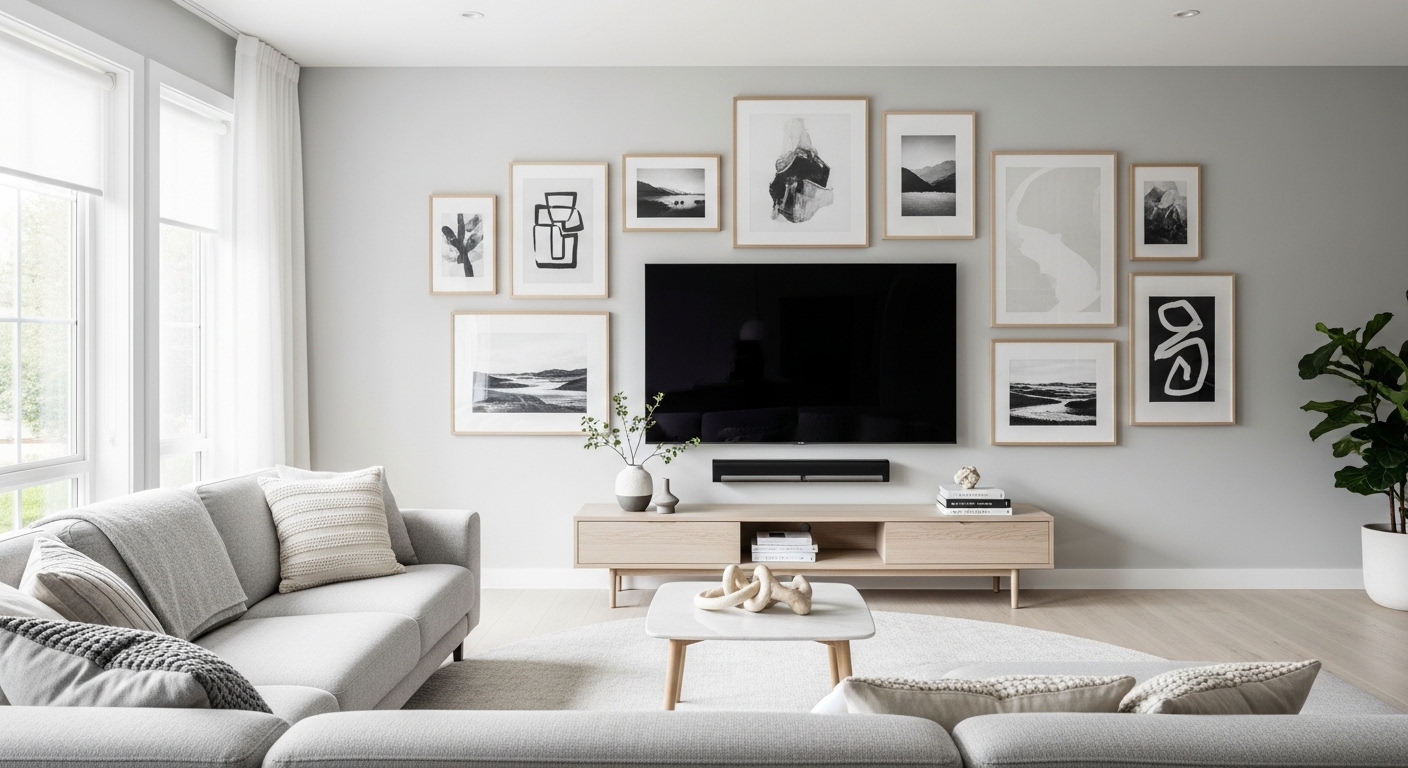
Building a gallery wall around a TV can be tricky. Too many frames can overwhelm the space, while too few make it feel empty. Black and white art keeps the wall bold yet clean.
With the right arrangement, your TV becomes part of the gallery. Symmetry, spacing, and proportion are key. These ideas show how to create a stylish, uncluttered gallery that complements the screen without stealing focus.
1. Central TV, Symmetrical Gallery
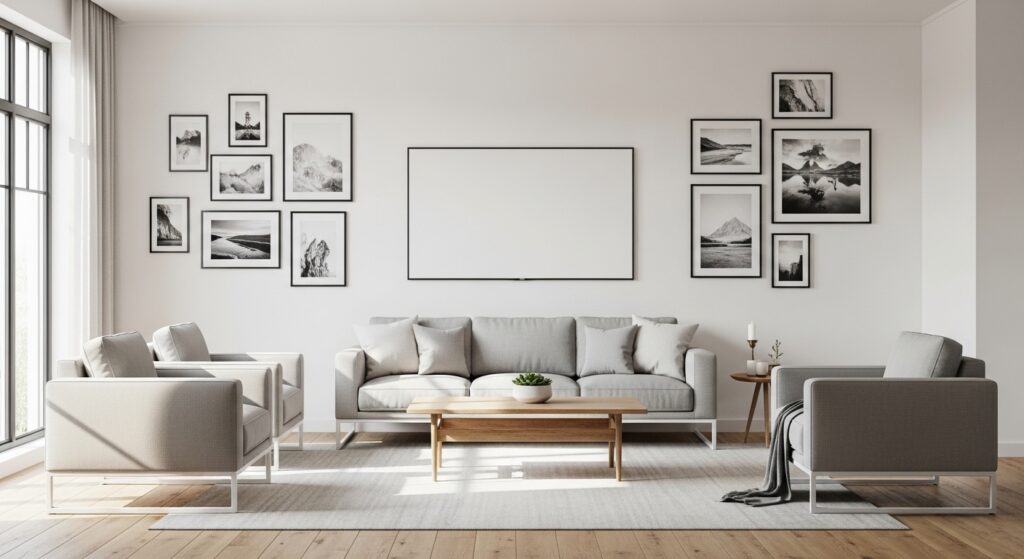
Creating a gallery wall around a TV starts with balance. Placing art symmetrically on either side and above the TV keeps focus centered while avoiding visual clutter. Black and white prints help maintain cohesion.
Keep frames uniform in size and color. Leave enough spacing between the TV and art to prevent crowding. Symmetry ensures the gallery feels intentional, integrating the TV as part of the wall rather than a distraction.
2. Floating Shelves with Art

Floating shelves provide a functional yet stylish way to build a gallery wall. You can lean smaller prints, decorative objects, and plants without drilling into the wall constantly.
Keep accessories minimal and proportional to the TV. The layered look adds interest while maintaining airiness. Using shelves allows flexibility to rotate art and decor while keeping the gallery organized.
3. Grid-Style Arrangement

A grid arrangement brings order to the gallery. Equal spacing and consistent frame sizes prevent visual chaos and highlight the TV as the centerpiece.
Use 2–3 rows above and beside the TV for balance. Stick to uniform colors or themes to keep the grid cohesive. This approach works best in modern, minimalist interiors.
4. Mix of Art and Functional Pieces

Integrating functional items like clocks or mirrors adds personality without cluttering the wall. Mixing mediums creates a dynamic gallery while keeping a sense of organization.
Place the TV slightly below center and arrange the objects around it in a balanced way. Keep each piece proportional to the TV size. The goal is harmony, not overcrowding.
5. Use Neutral Color Palette
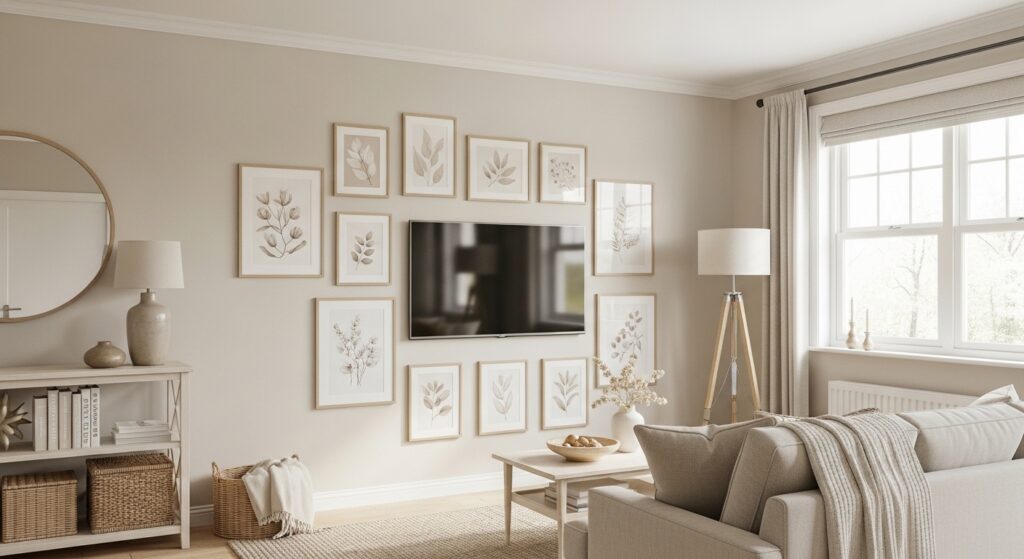
Choosing neutral colors for artwork keeps the gallery cohesive and avoids clashing with TV frames. Light backgrounds, soft hues, and muted tones create an airy, uncluttered look.
Stick to one or two frame colors and avoid overly bright or busy prints. Neutral palettes allow the TV to blend seamlessly into the wall rather than fight for attention.
6. Horizontal Layering
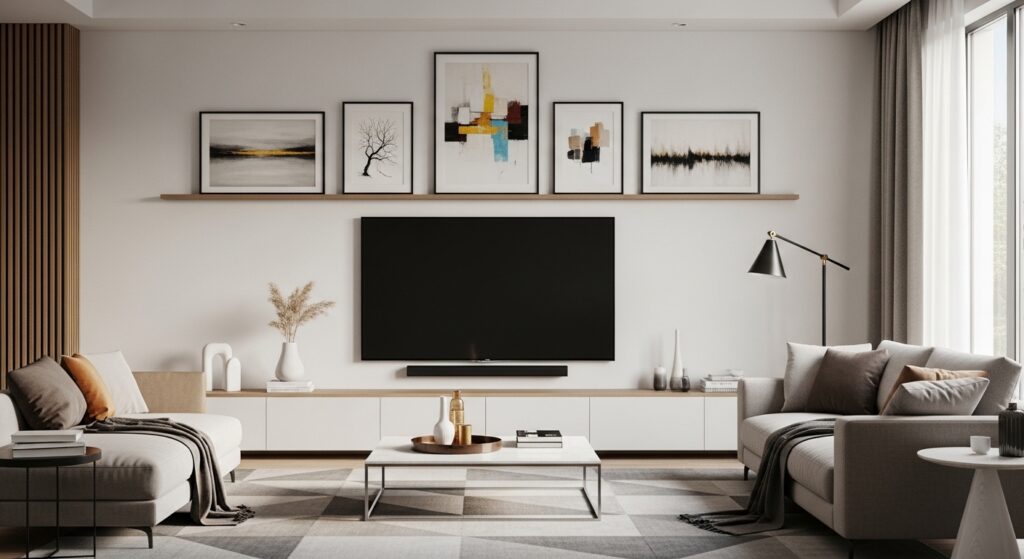
Horizontal layering emphasizes width and anchors the TV visually. It keeps the focus on the screen while adding decorative interest around it.
Align the top row with the TV frame or slightly above for balance. Keep consistent spacing between pieces to maintain a clean, intentional look.
7. Leaning Frames on a Floating Console

Leaning frames offer flexibility and reduce the need for precise wall mounting. You can layer pieces and adjust the arrangement over time without cluttering the wall.
Use a mix of frame sizes but keep the overall width proportional to the TV. Keep consoles minimal to allow the artwork to shine without distraction.
8. Asymmetrical Gallery with Anchors
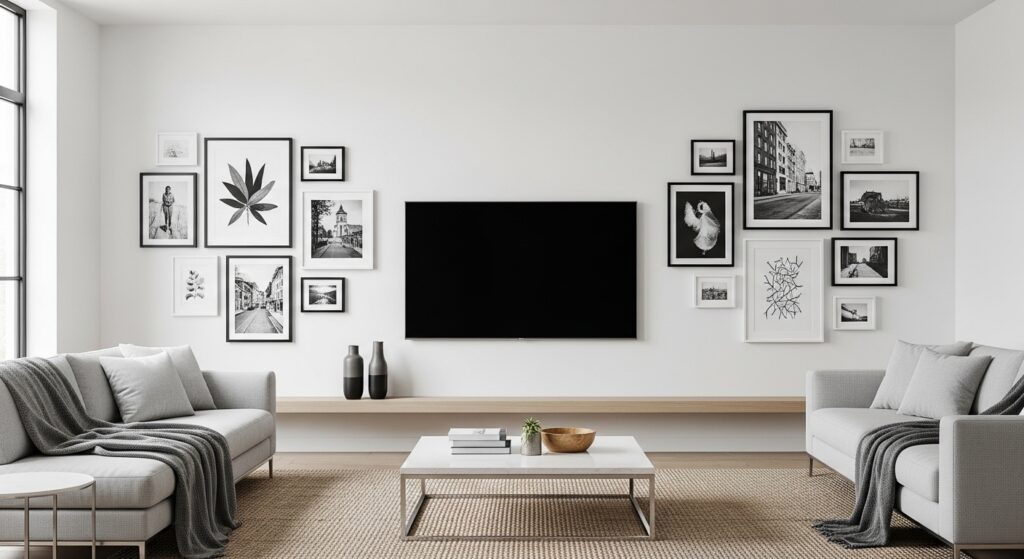
Asymmetrical arrangements feel dynamic but need anchors to prevent chaos. Larger prints act as visual weight while smaller pieces support them around the TV.
Place anchors close to the TV corners and balance smaller prints on opposite sides. Consistent spacing and color palette ensure the gallery looks curated, not cluttered.
9. Framed Mirrors to Add Depth
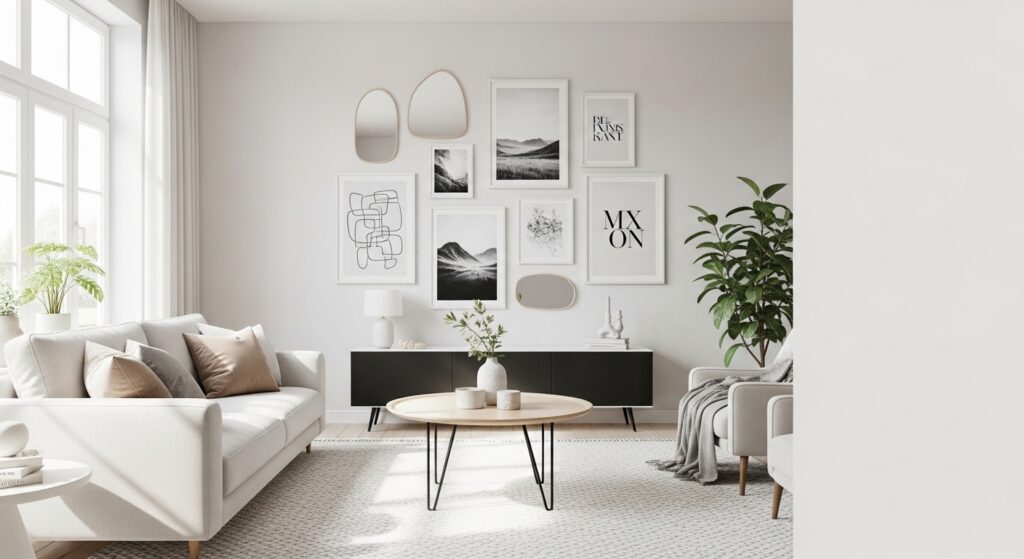
Mirrors break up wall space and reflect light, adding dimension. Small mirrors in between prints enhance the gallery’s aesthetic without crowding the TV.
Use mirrors sparingly and keep them proportional. They provide visual relief and prevent the wall from feeling too dense while complementing the artwork.
10. Vertical Columns on Sides
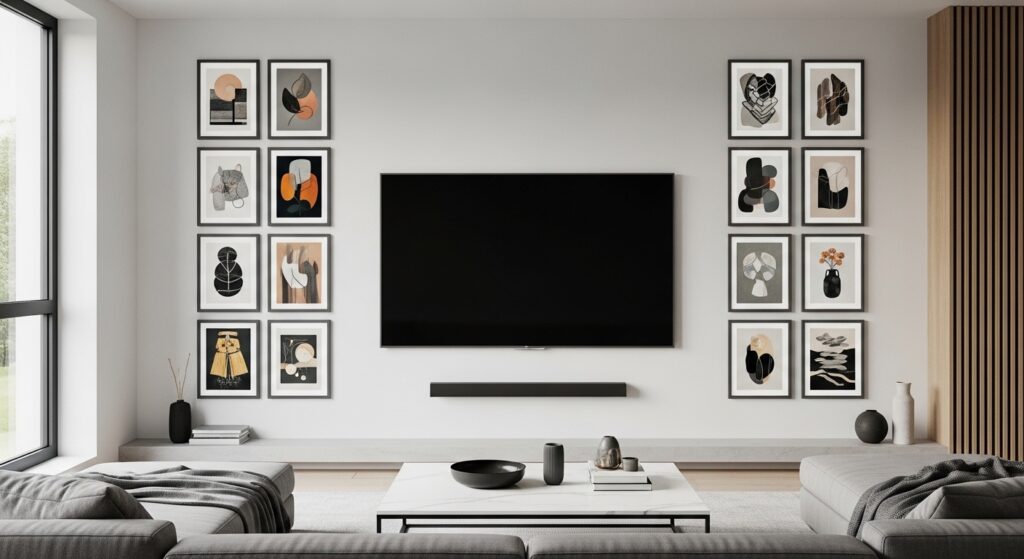
Vertical columns flank the TV, creating a structured gallery without overwhelming the central screen. The symmetry naturally frames the TV.
Keep columns aligned and maintain even spacing. Stick to a unified color scheme or style. This approach works well in rooms with tall ceilings or narrow wall space.
11. Small Clusters Above TV
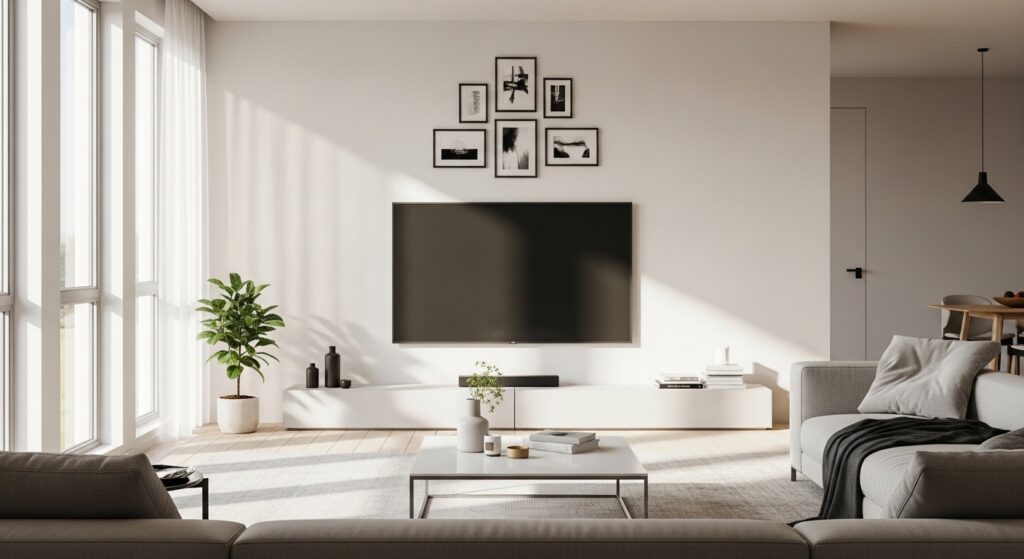
A compact cluster above the TV adds interest without overwhelming the wall. Grouping 3–5 small prints creates a focal area and draws the eye upward.
Keep frames similar in style and spacing consistent. Avoid placing prints too close to the TV screen. This technique maintains balance while enhancing the gallery feel.
12. Mixed Media Gallery
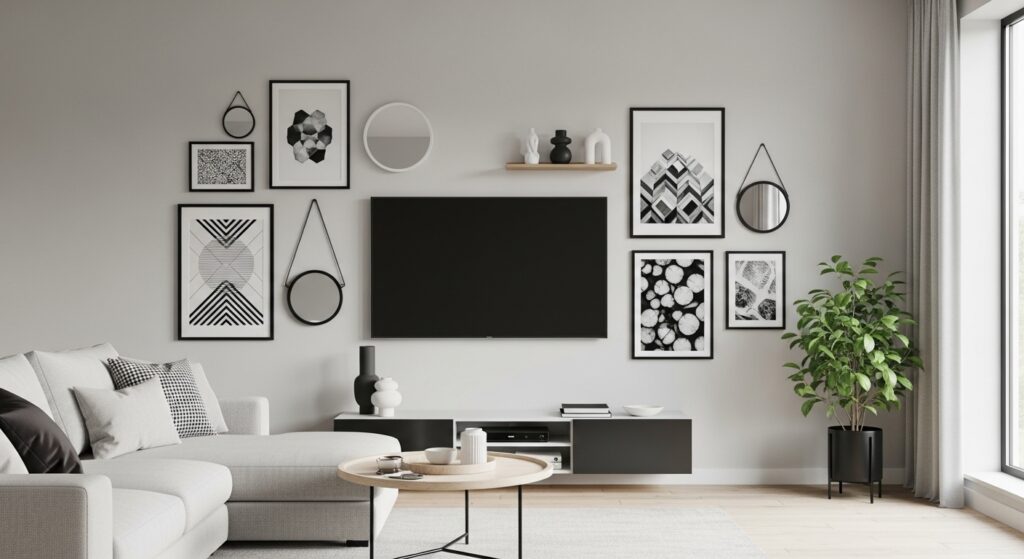
Combining prints with subtle decorative objects creates dimension and personality. Mixed media keeps the gallery visually engaging while maintaining harmony.
Place larger pieces near the TV and smaller supporting items around them. Limit the number of objects to prevent clutter. This creates a modern, layered look.
13. Single Statement Frame Above
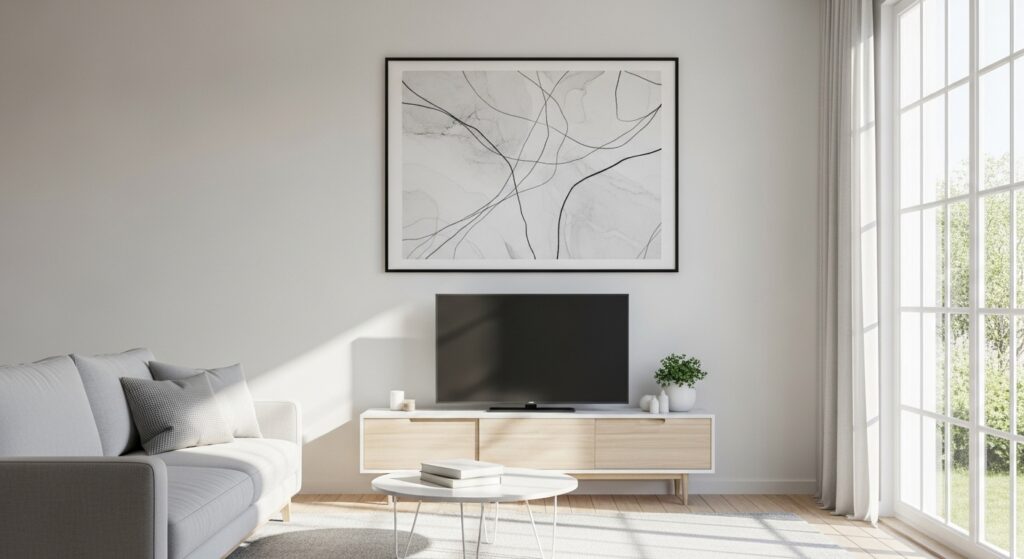
Sometimes less is more. One large statement piece above the TV can anchor the wall and prevent visual chaos.
Choose a print with bold shapes or typography. Ensure the width complements the TV frame. This approach keeps the gallery simple yet impactful.
14. Floating Shelf with Layered Art
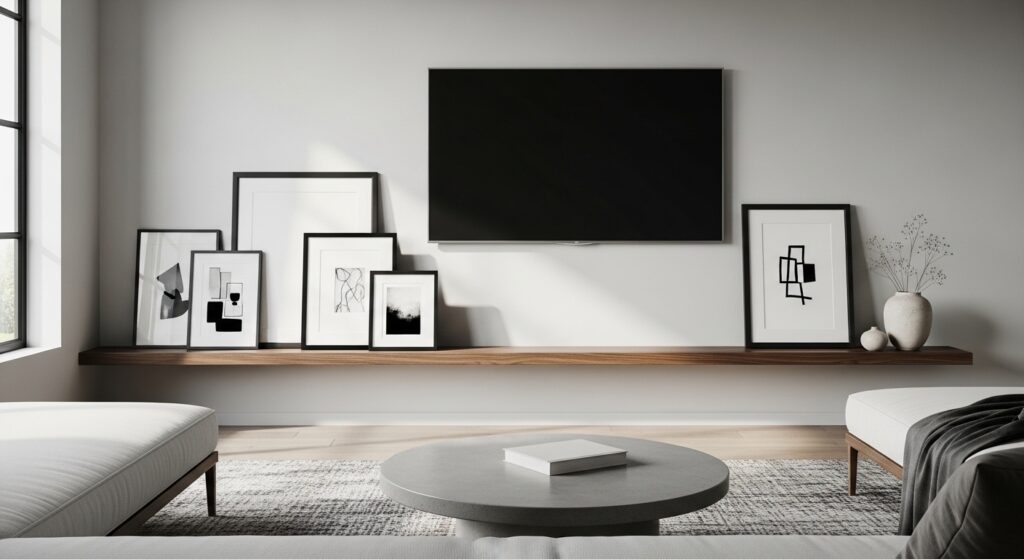
Layering frames on a shelf gives flexibility and avoids overloading wall space. You can mix vertical and horizontal prints for visual interest.
Keep the shelf width slightly shorter than the TV for balance. Minimal objects between frames help maintain a clean, airy gallery wall.
15. Symmetrical Rows on Both Sides
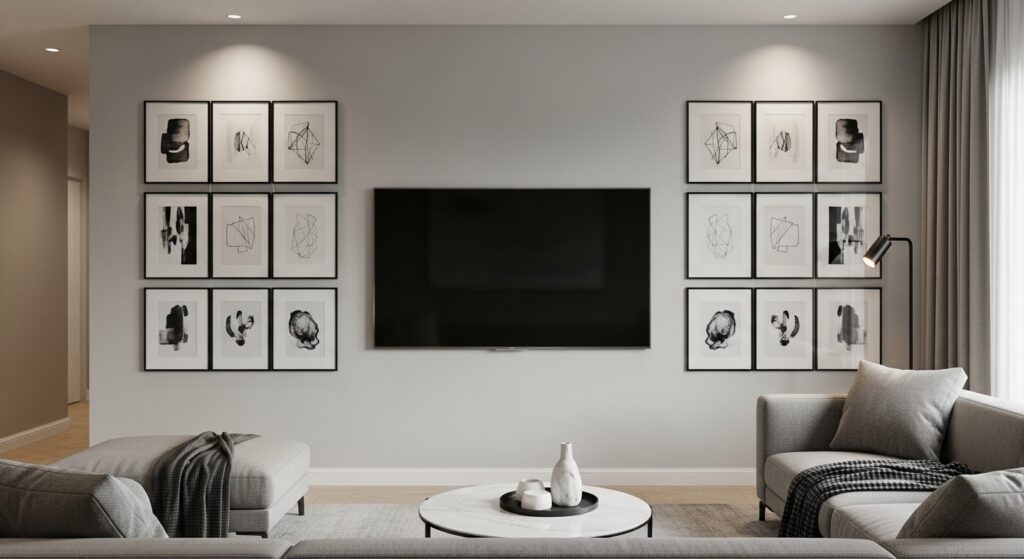
Symmetrical rows on each side of the TV create order and balance. The eye is naturally guided to the center without feeling crowded.
Use frames of identical color and style. Keep spacing consistent top to bottom. This design works well in wider living rooms for a polished gallery effect.
16. Art with Accent Wall
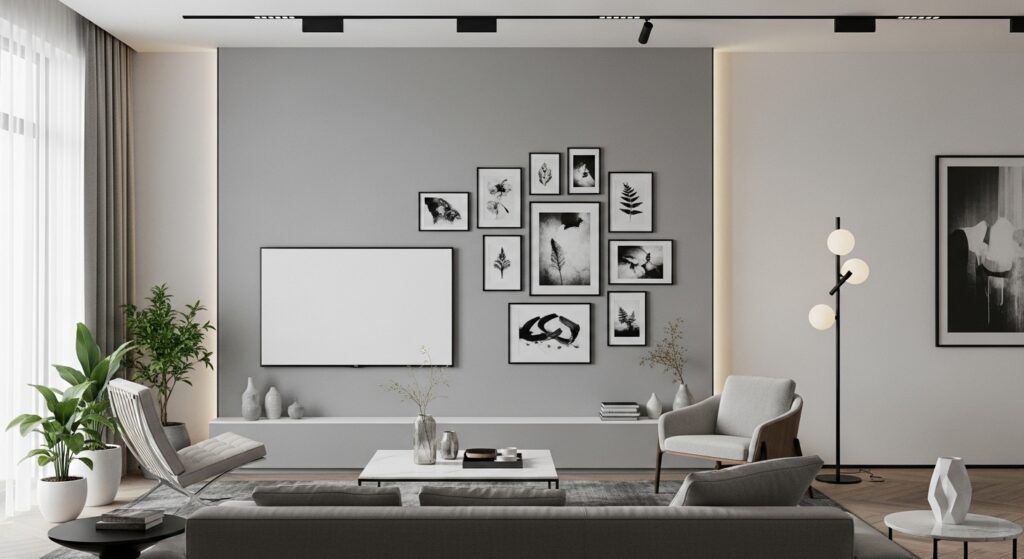
An accent wall allows the TV and surrounding gallery to pop. Black and white art contrasts beautifully against a colored background without adding clutter.
Choose 3–6 prints around the TV and stick to a consistent frame color. The accent wall provides cohesion while keeping the arrangement bold and clean.
17. Narrow Vertical Gallery Column
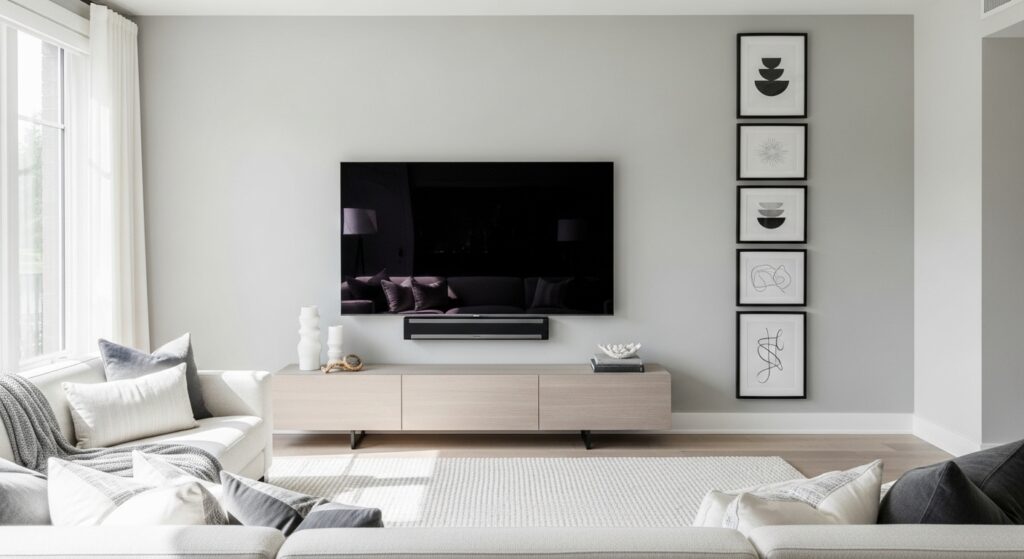
A single vertical column next to the TV adds visual interest while keeping the wall uncluttered. The height draws the eye upward and elongates the space.
Ensure the column is proportionate to the TV height. Keep frames consistent in style and color. This approach balances minimalism with gallery personality.
Conclusion
A TV gallery wall can be elegant and functional. Use balance, consistent frames, and strategic spacing to avoid clutter.
Whether you choose symmetrical grids, layered shelves, or asymmetrical clusters, black and white art keeps the look cohesive. The result is a modern, polished wall that makes a bold statement while keeping your TV integrated seamlessly.