
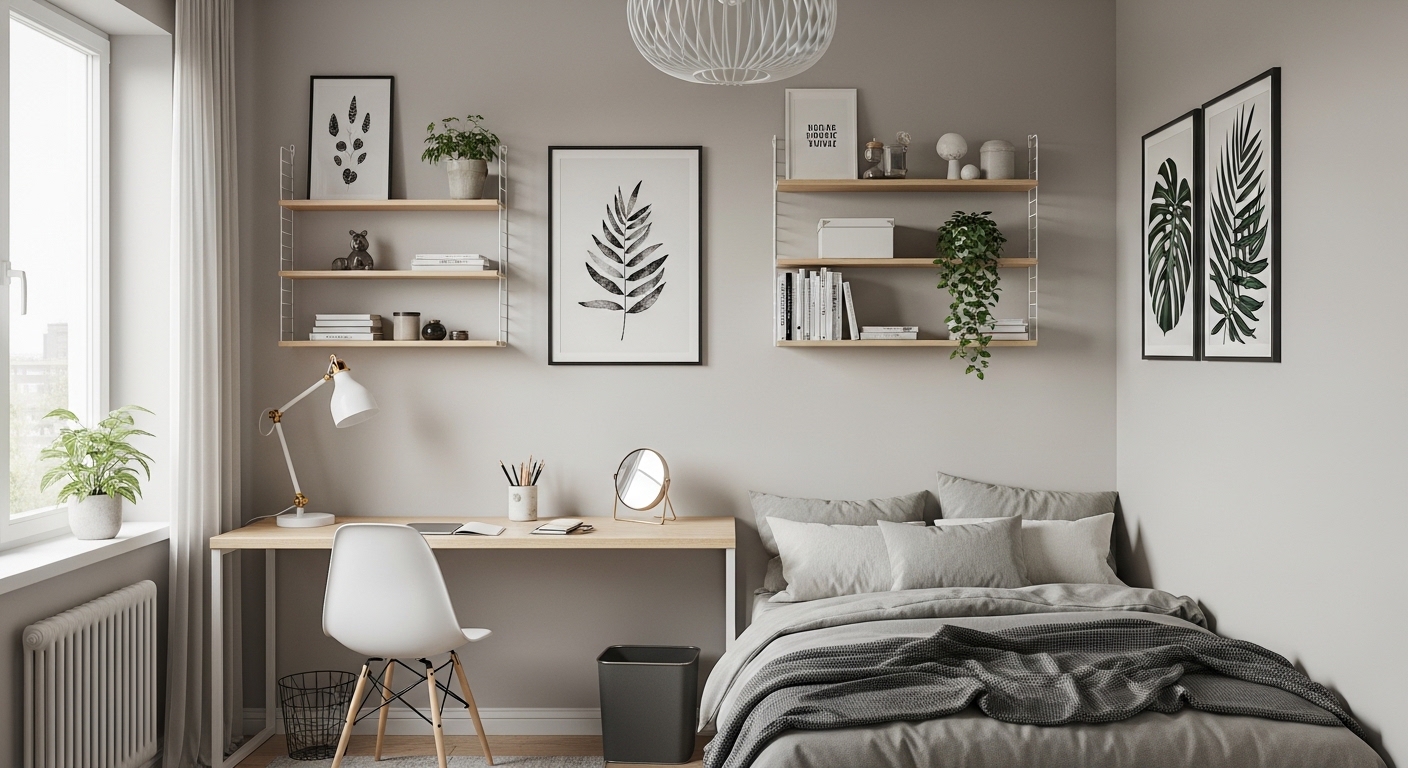
Tiny rooms can feel cramped and uninspiring when walls are empty or cluttered. The right wall art can completely transform a small space, adding personality and style without overwhelming the room. Space-saving wall art uses clever placement, vertical arrangements, and multifunctional designs to make rooms feel brighter, taller, and more open while still looking beautifully curated.
When designed thoughtfully, wall art can do more than decorate—it can visually expand the space, reflect light, and create focal points that draw the eye. Vertical canvases, floating shelves, and mirrors turn compact walls into functional decor, while small, layered pieces add charm without taking up precious floor space.
These 18 ideas are perfect for tiny bedrooms, living rooms, kitchens, or hallways. Each one combines practicality with style to help you maximize space, add color, and make every wall count. With a little creativity, even the smallest rooms can feel airy, organized, and Pinterest-worthy.
1. Vertical Canvas Sets
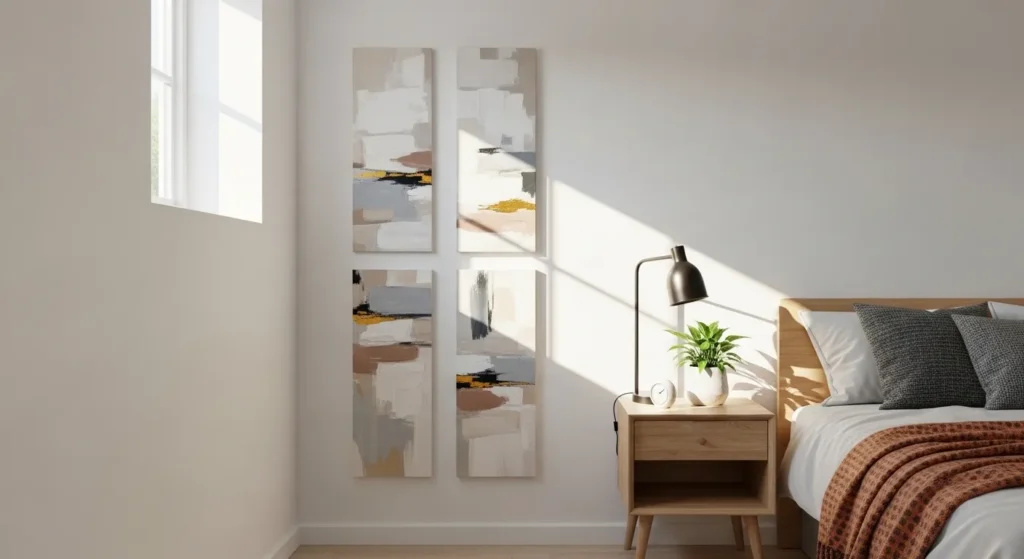
Vertical canvas sets feature slim canvases stacked in a column, drawing the eye upward and elongating walls to create the illusion of height. Their narrow width makes them ideal for corners or tight spaces, and vertical lines in the artwork further enhance the effect. Using abstract patterns or coordinated colors ensures the wall feels elegant and light. This layout transforms small, flat walls into dynamic focal points that add interest without crowding the room.
Arranging multiple panels also creates a visual story. Each canvas can be part of a larger scene or a complementary abstract design, adding depth and movement. Vertical sets work well behind beds, entryways, or in compact living rooms where floor space is limited. By carefully choosing scale and tone, these canvases balance practicality and aesthetics, making a small room feel stylish and expansive at the same time.
2. Floating Shelves with Art
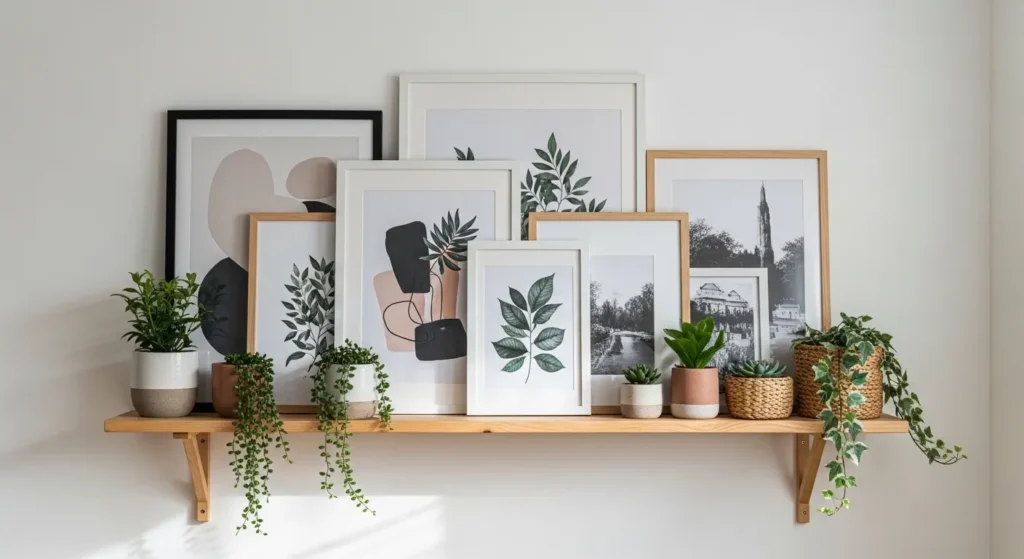
Floating shelves provide both storage and art display, perfect for tiny rooms where wall space is limited. You can lean framed prints, photos, or small decorative objects on them instead of hanging multiple pieces. This creates a layered, dimensional look while keeping the walls clean. The shelf also adds vertical interest and allows you to rotate pieces easily, making the room feel dynamic and fresh.
Using floating shelves lets you combine function with style. Multiple shelves can be staggered at different heights to create a gallery effect, while still maintaining airiness. This technique works well above desks, beds, or small side tables. Coordinating colors, textures, and decor pieces ensures a cohesive appearance that maximizes both beauty and practical use of limited wall space.
3. Mirror Wall Art
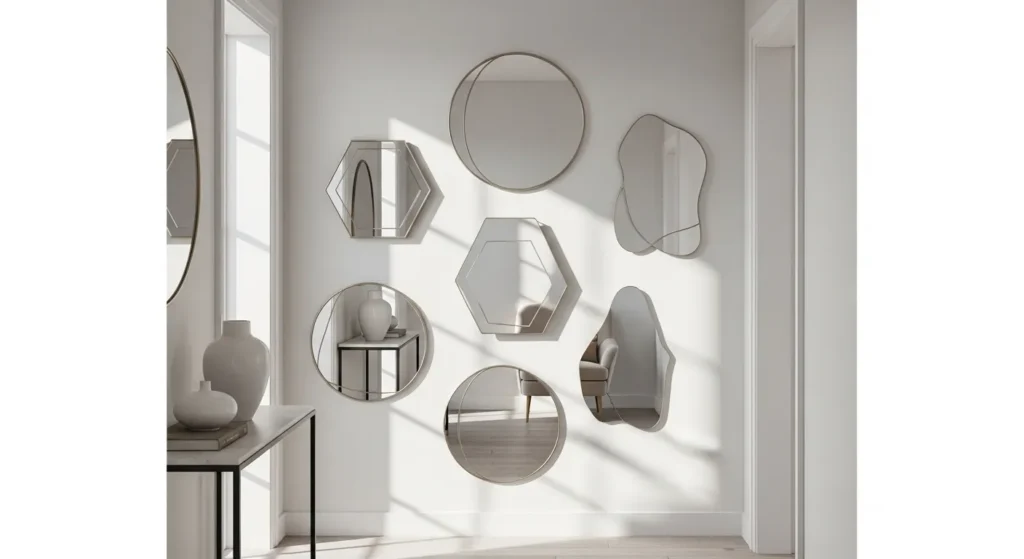
Mirror wall art is perfect for tiny rooms because it adds reflection and depth, instantly making the space appear larger and brighter. Decorative mirrors in geometric, circular, or abstract shapes can act as focal points while reflecting natural or artificial light throughout the room. Slim frames or frameless designs keep the look light and airy, preventing visual clutter. This solution is ideal for hallways, bedrooms, or small living areas where floor space is limited but wall style is desired.
Mirrors can also be arranged in groupings to create a gallery-like effect. A cluster of small mirrors in various shapes or a single oversized statement piece draws attention while visually expanding the wall. This approach makes a compact room feel more open, adding elegance without compromising space or functionality. Reflections also enhance the perception of natural light, giving the entire room a bright, welcoming feel.
4. Multi-Functional Chalkboard Art
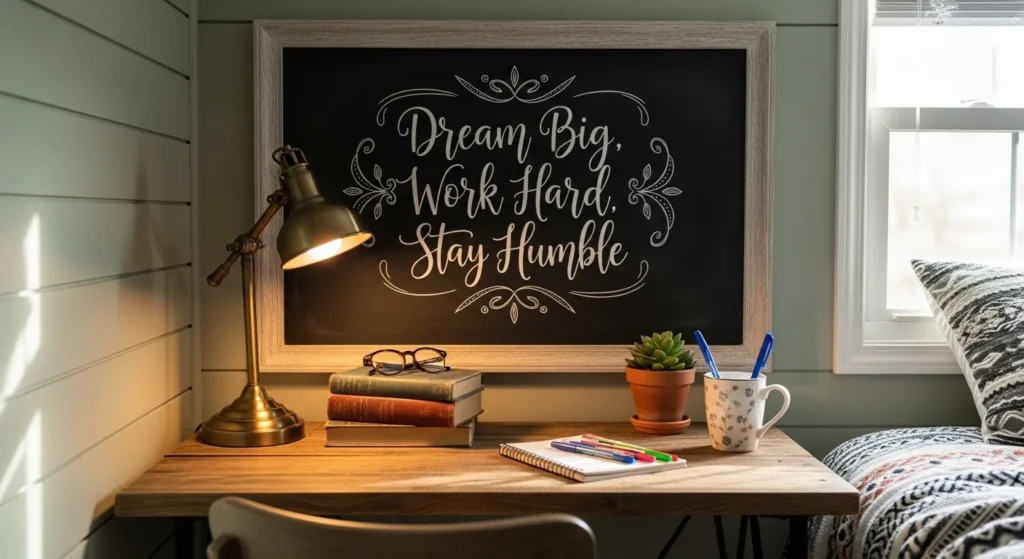
A framed chalkboard or whiteboard serves as both practical surface and decorative element. It can display inspirational quotes, reminders, or rotating artwork while occupying minimal space. Mounted above a desk, nightstand, or entryway console, chalkboard art keeps walls functional yet stylish. Its vertical orientation adds height without taking floor space, making it perfect for tiny rooms where every inch counts.
The dynamic nature of chalkboard art keeps walls fresh and visually engaging. Changing the displayed message or artwork allows the room to feel updated without adding new items. This versatility combines creativity with utility, making the space more personalized and interactive. It’s an ideal solution for kids’ rooms, home offices, or small hallways that need style without clutter.
5. Slim Vertical Photo Ledges
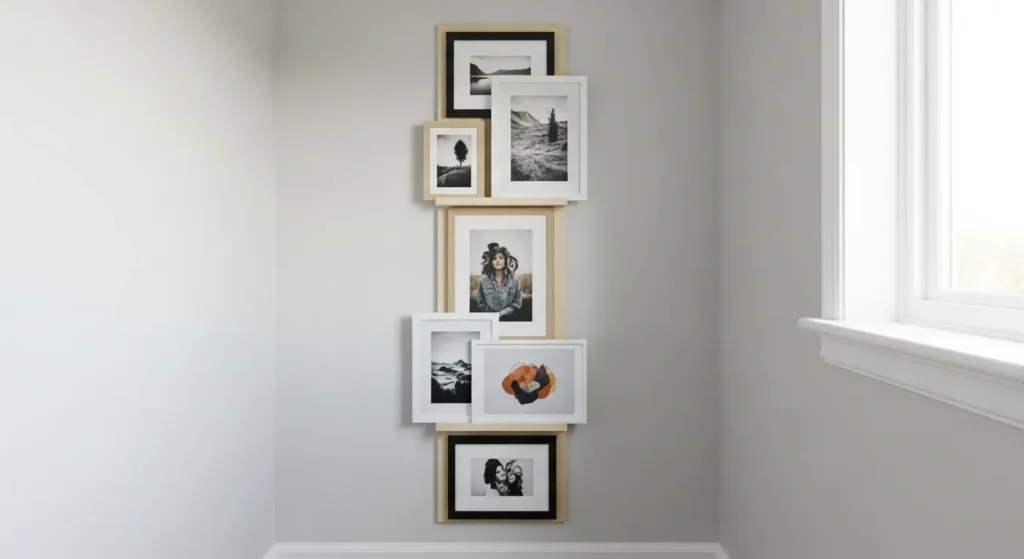
Slim vertical photo ledges allow frames to lean rather than be permanently hung, giving a layered, dimensional look. By stacking multiple frames vertically, you add height and focus without encroaching on floor space. Ledges are particularly effective for narrow walls, small hallways, or above compact furniture. Using similar frame colors or tones creates a cohesive gallery effect that doesn’t overwhelm the space.
Photo ledges also offer flexibility to rotate artwork frequently. You can mix photographs, prints, or small decorative objects for a dynamic, curated display. This method keeps walls organized while adding personality. Vertical arrangements make tiny rooms feel taller and more open, transforming simple frames into a stylish statement.
6. Floating Grid Frames
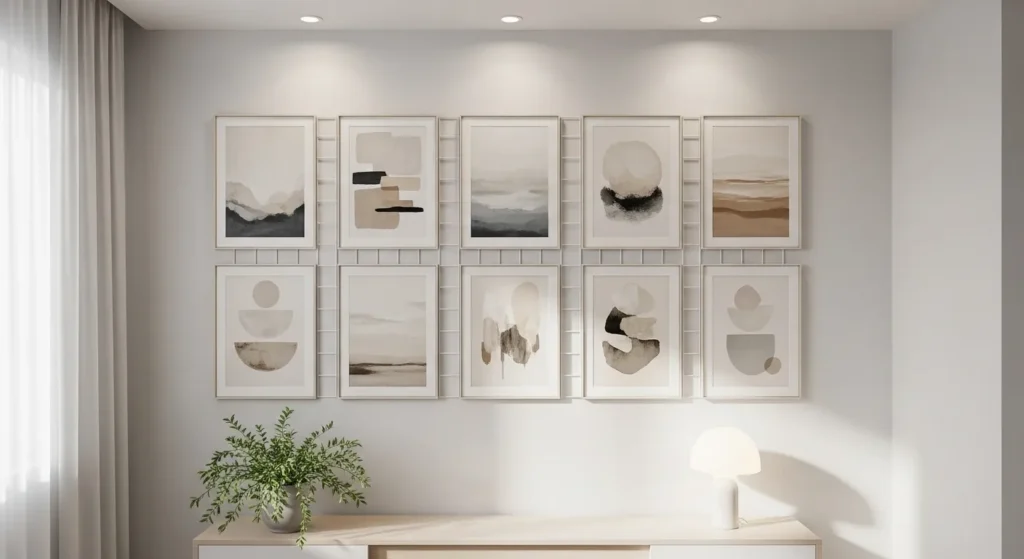
Floating grid frames are modular wall art that maximizes space while creating a structured, elegant display. By arranging small frames in a precise grid, you achieve a gallery effect without taking up floor space. Neutral or matching artwork ensures the display feels cohesive and doesn’t overwhelm the room. This layout works well above desks, small couches, or beds in compact interiors.
The repeated pattern draws the eye upward and outward, giving the illusion of a larger wall. Each frame can feature a different image or coordinated color palette for visual interest. Grid frames allow versatility, letting you swap artwork or photos as desired, making tiny walls feel organized and dynamic.
7. Hanging Textile Art
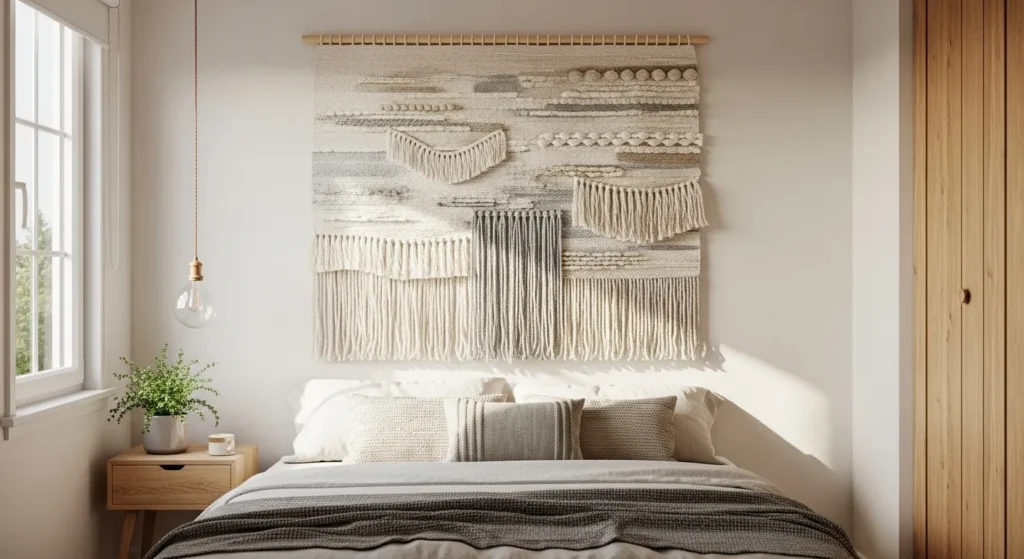
Textile wall art adds texture and visual warmth without occupying floor space. Woven tapestries, macrame hangings, or fabric panels work perfectly for tiny rooms, softening walls and creating a cozy atmosphere. Vertical or moderately sized pieces elongate walls and add subtle color or pattern, making the room feel layered and inviting without cluttering it.
Textiles also bring movement to a static wall. Soft fibers and neutral tones create depth and dimension while complementing furniture and decor. Hanging textile art above beds, sofas, or desks turns empty walls into focal points that feel intimate, stylish, and thoughtfully designed, enhancing the small space’s charm and comfort.
8. Rotating Clipboards Gallery
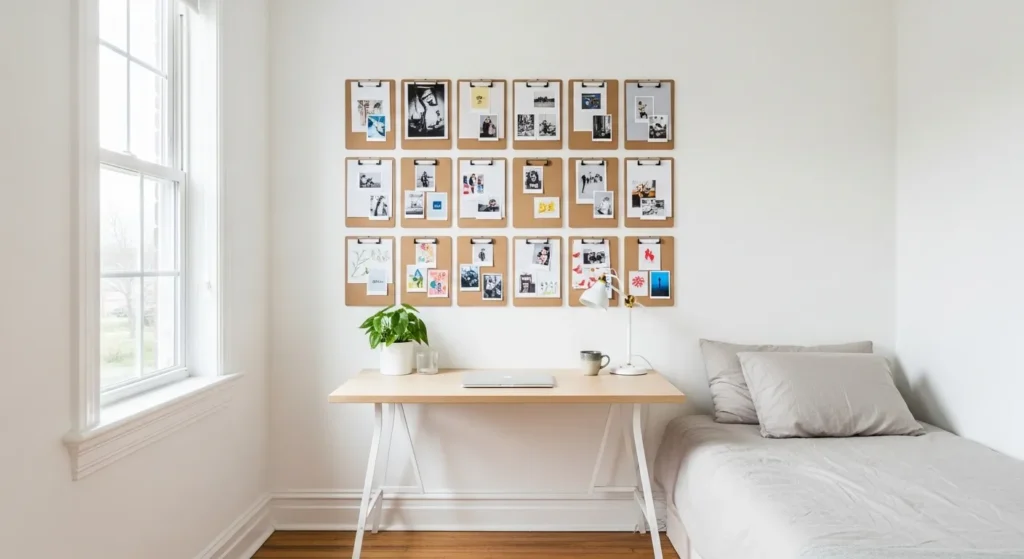
Clipboards offer a flexible, space-saving alternative for wall art. You can hang multiple clipboards and easily swap out photos, prints, or small artworks whenever you want. Their slim profile makes them perfect for narrow walls or compact rooms, while vertical stacking adds visual height. Clipboards turn your wall into a dynamic display that is both functional and decorative.
This gallery style is interactive and adaptable. Rotating art frequently keeps the space feeling fresh and personalized. Clipboards also create an organized, minimalist aesthetic that doesn’t overwhelm small rooms. By grouping them in clusters or columns, tiny walls gain a structured, stylish display that maximizes visual impact without using floor space.
9. Ladder Shelf Wall Art
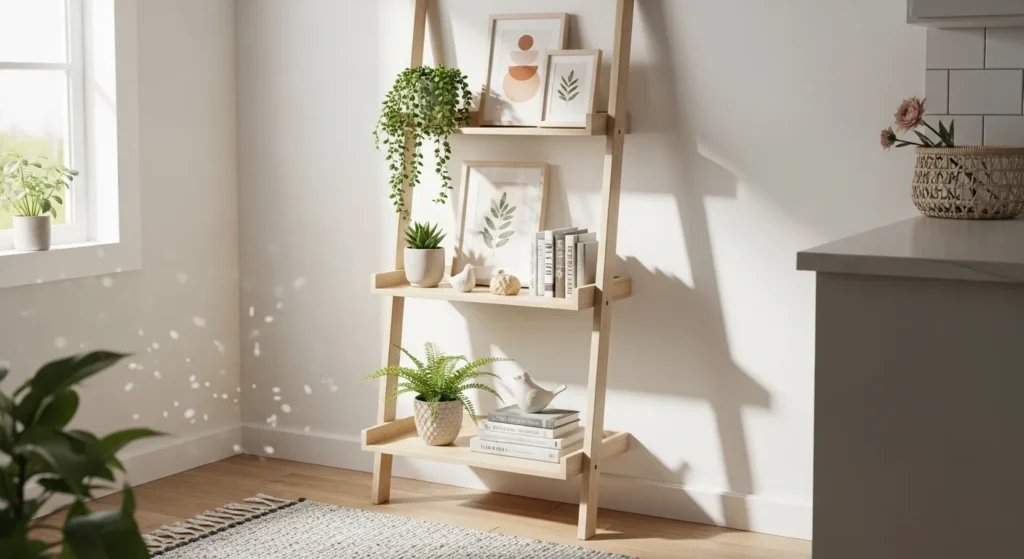
A narrow ladder shelf combines storage and display, functioning as wall art in compact spaces. You can place small plants, framed prints, or decorative objects on the steps, adding vertical interest and color while keeping the floor clear. Its angled design draws the eye upward, giving the illusion of height in tiny rooms.
This arrangement also allows layered styling. By balancing decorative items across the ladder steps, you create depth and visual flow. Ladder shelves work well in bedrooms, living areas, or kitchens with limited wall space. Their multifunctional nature adds style, practicality, and dimension to even the smallest interiors.
10. Wall-Mounted Folding Panels
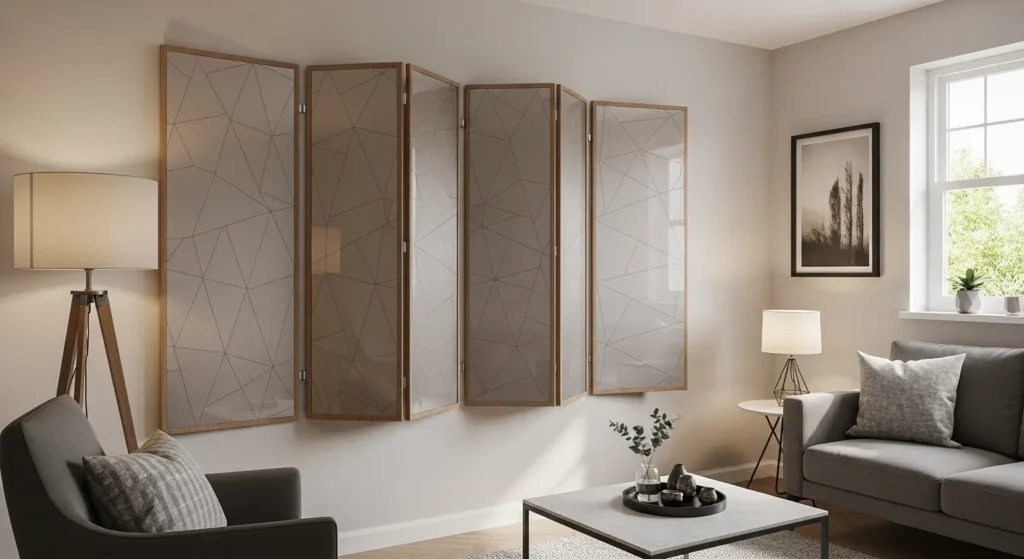
Wall-mounted folding panels act as multifunctional art that saves space while adding visual interest. When mounted flat against the wall, they serve as decorative panels, and they can be partially opened to create movement or temporarily conceal storage. Their slim design takes up almost no floor space, making them perfect for tiny rooms where bulky furniture isn’t an option. Folding panels can feature painted designs, geometric patterns, or textured finishes, providing both style and versatility in a compact layout.
This approach works well in narrow hallways, small living rooms, or bedrooms. Panels can be rotated or adjusted seasonally, keeping the room feeling fresh. By selecting light or reflective colors, folding wall art enhances brightness while creating depth. Even in the tiniest spaces, folding panels add both function and aesthetic appeal, allowing small walls to become dynamic and eye-catching focal points.
11. Modular Wall Grids
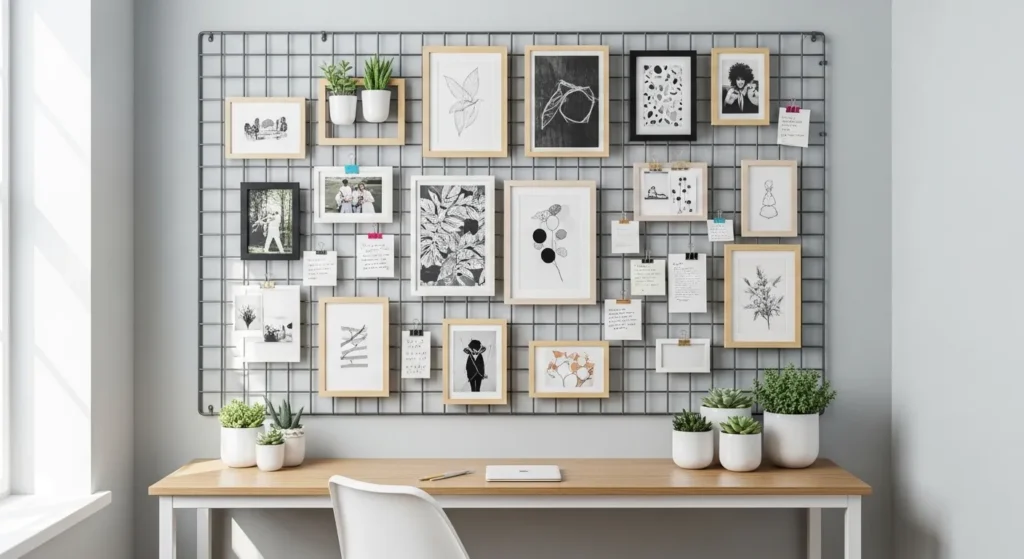
Modular wall grids provide a flexible, organized system for displaying artwork, photos, or small decorative items. Each panel can be customized to hold different objects, and grids can be stacked vertically to maximize wall space without touching the floor. Their open design ensures walls don’t feel heavy, while giving the room a modern, minimalist aesthetic. Modular grids are particularly useful in tiny rooms like home offices, kitchens, or entryways, where organization and space-saving solutions are essential.
The versatility of modular grids allows frequent rotation of displayed items. Prints, photos, or inspirational quotes can be swapped easily, keeping the wall dynamic. They also encourage vertical arrangement, drawing the eye upward to give the impression of height. By combining organization with style, modular grids transform a compact wall into a functional gallery that enhances the room’s visual interest without crowding the space.
12. Overhead Shelving with Art
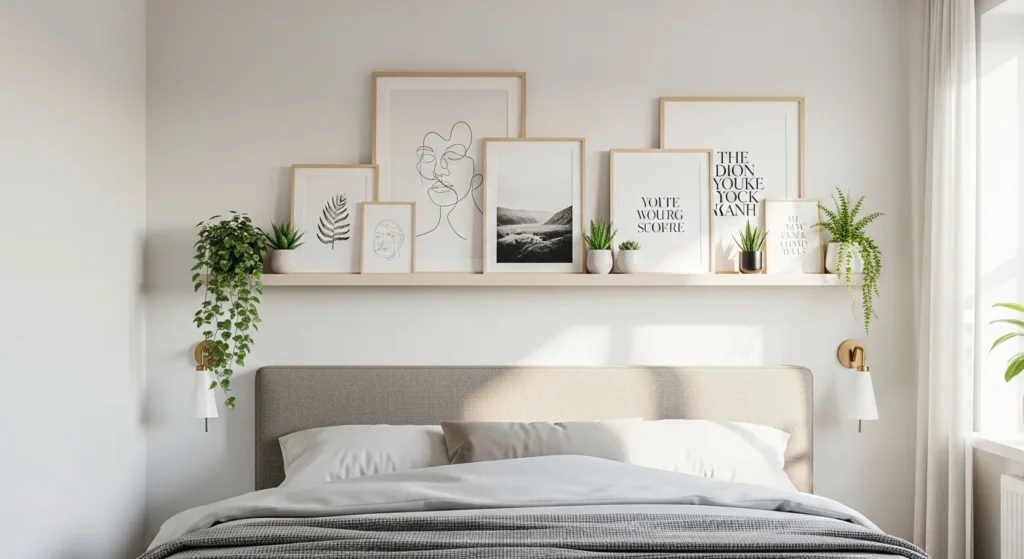
Overhead shelving is a practical solution that transforms wall space into a display area. By placing shelves above furniture, such as beds or desks, you gain space for artwork, photos, or small decor while keeping surfaces clear. This method makes walls feel layered and visually dynamic, creating height and depth in tiny rooms. Shelves can hold multiple frames or small objects, combining aesthetic appeal with practical storage. Neutral colors or light-toned frames enhance the sense of openness and prevent visual overcrowding.
This technique works especially well in compact bedrooms or living rooms. By arranging art in a staggered layout on overhead shelves, you can maintain a cohesive and balanced display. The vertical dimension draws the eye upward, helping the room feel taller. Lightweight frames and decor are ideal for safety and easy adjustment. Overhead shelving maximizes wall utility while keeping the floor uncluttered, making small rooms feel stylish and spacious.
13. Corner Wall Art Displays
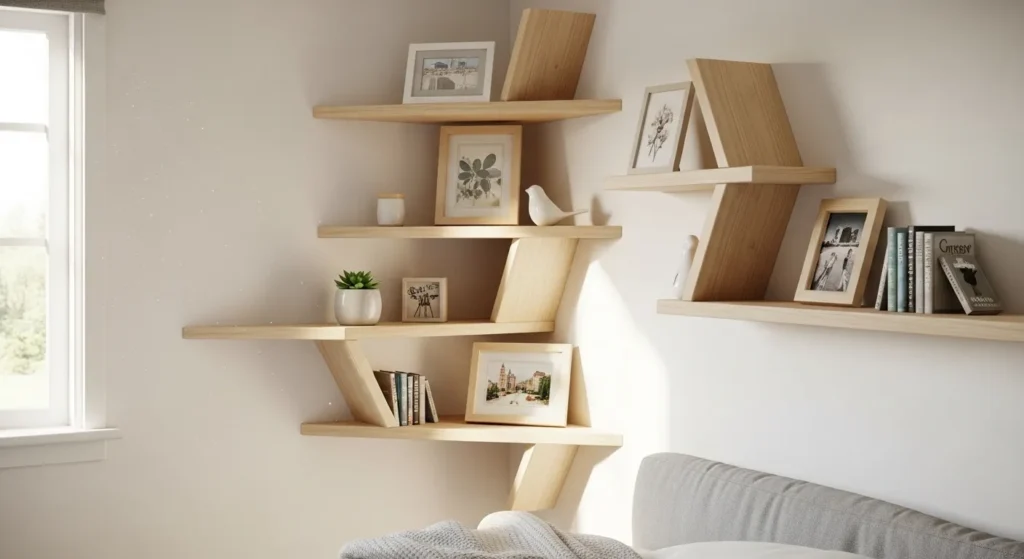
Corners are often underutilized in tiny rooms, but corner wall art displays turn these spaces into focal points. Narrow floating shelves or angled frames can be installed in corners to showcase small artwork, photos, or decorative objects. This arrangement takes advantage of otherwise wasted space, adding interest and depth to the room without occupying floor space. Corners can also be highlighted with vertical arrangements to give the illusion of height.
Layering pieces in a corner creates dimension and draws the eye inward, making the room feel more expansive. By carefully coordinating frame sizes, colors, and textures, you can achieve a curated gallery effect in a tight area. Corner displays are ideal for bedrooms, home offices, or living rooms, providing a unique visual feature that maximizes the compact space.
14. Slim Vertical Frames
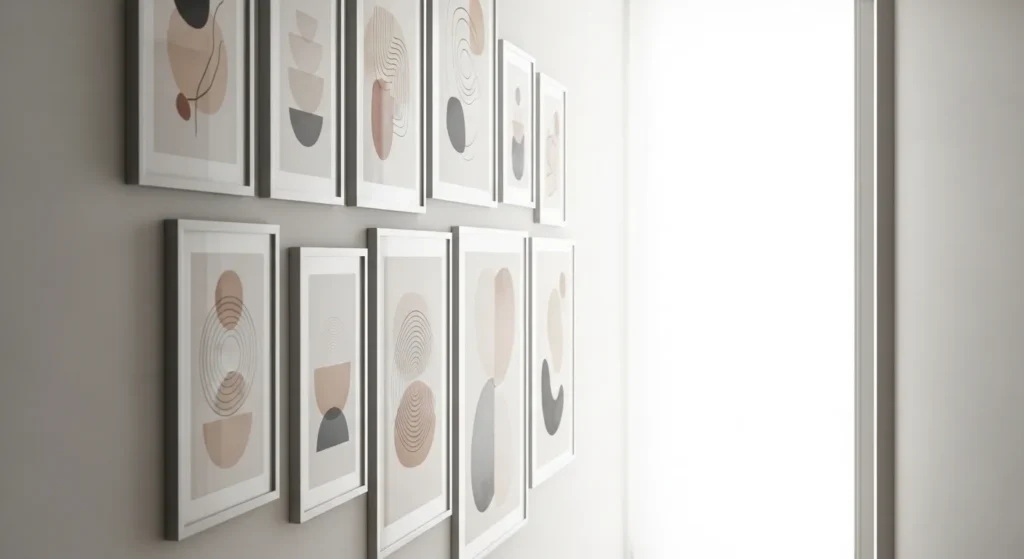
Slim vertical frames are perfect for long, narrow walls where horizontal space is limited. Arranging multiple vertical frames in a row draws the eye upward and creates a sense of height, making small rooms feel more spacious. Frames can hold artwork, photos, or typography prints, allowing personalization while keeping the display visually light and organized. Neutral or monochromatic tones enhance openness, preventing the wall from feeling cluttered.
This vertical strategy works well in hallways, kitchens, or above furniture in small bedrooms. By keeping frames close together, you maintain cohesion while still encouraging the perception of height. Vertical frames can also be rotated or updated easily, giving tiny rooms a dynamic, ever-changing gallery feel. This approach balances function and aesthetics while maximizing limited wall space.
15. Pegboard Wall Art
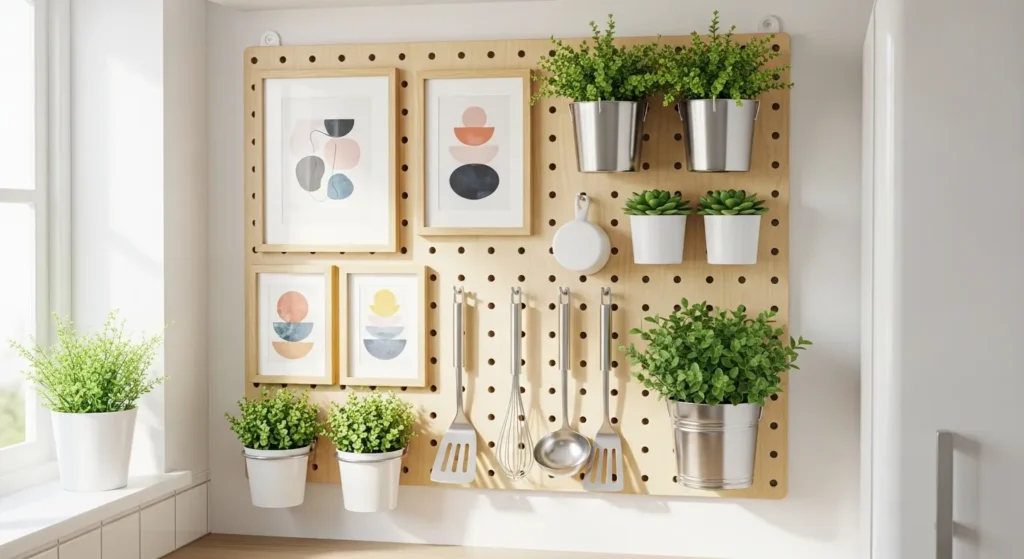
Pegboard walls combine practicality and art in tiny rooms. A pegboard allows you to hang small framed artwork alongside functional items, like keys, plants, or kitchen tools. Its open design prevents the wall from feeling heavy while giving the room a structured and organized look. The pegboard can be painted in a neutral or bright color to coordinate with the decor, adding personality without sacrificing space.
The flexibility of pegboards allows frequent rearrangement of items and art, keeping the wall display fresh and dynamic. Vertical placement maximizes unused wall height, while the grid design provides symmetry and visual balance. This multifunctional solution works in kitchens, offices, or small living rooms, adding both decoration and utility in one compact wall feature.
16. Small Framed Collages
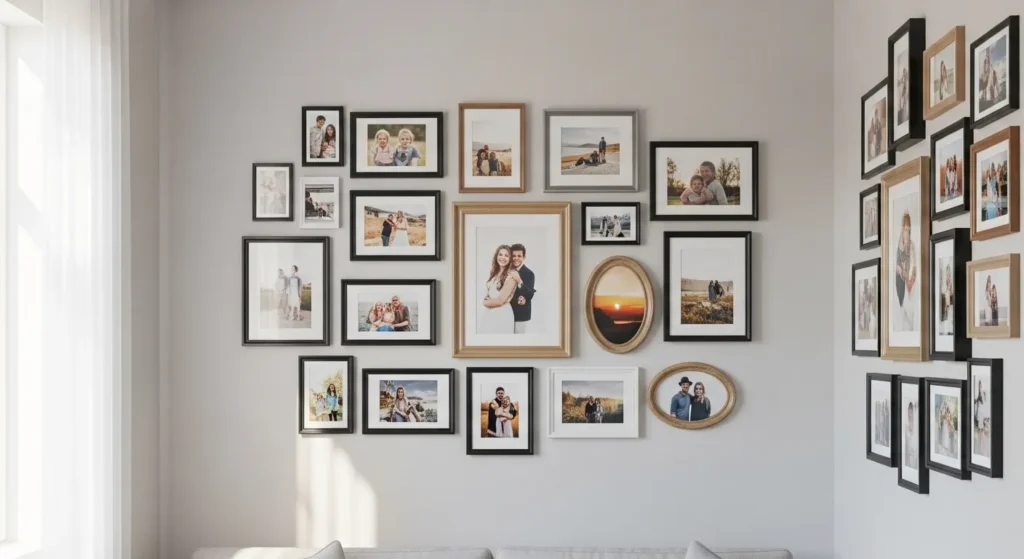
Creating a small framed collage allows multiple pieces of artwork or photos to be displayed in one compact area. By choosing frames of similar tones or textures, you can maintain a cohesive look even when using different images. Vertical or staggered layouts add movement and draw the eye upward, giving the illusion of height and space. Collages keep walls visually engaging without crowding the room.
This method works well above desks, couches, or small side tables. The close arrangement of frames ensures the wall appears curated and organized while maximizing style in a small area. Rotating images or adding seasonal prints keeps the display fresh. A well-executed collage turns a compact wall into a stylish focal point.
17. Narrow Floating Cabinets with Art
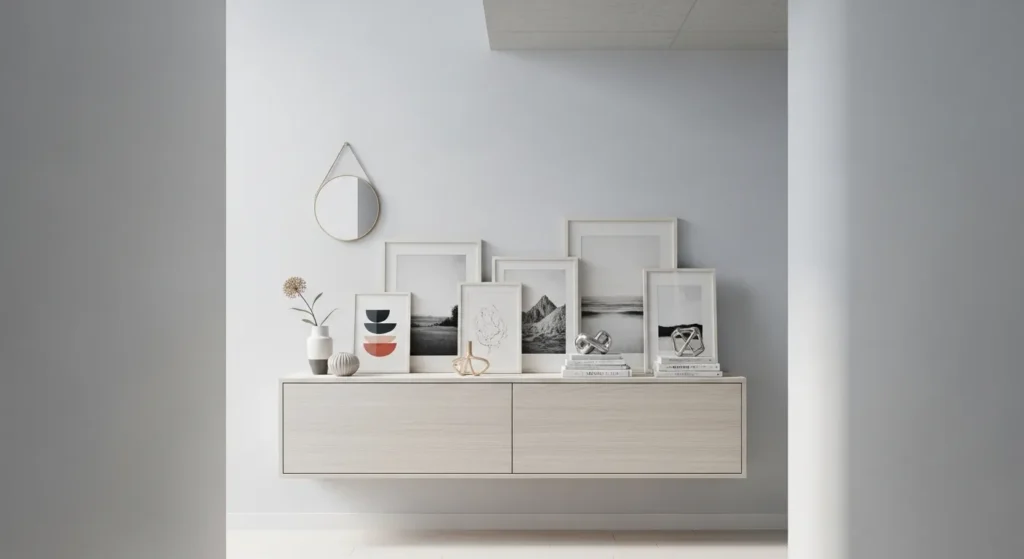
Narrow floating cabinets serve as both storage and wall art display. The top surface allows you to place small frames or decorative objects, while the slim profile keeps the floor clear and the room feeling open. Cabinets can be painted neutral or matching tones to blend seamlessly with the wall, making them unobtrusive while functional.
This dual-purpose design is ideal for entryways, kitchens, or tiny living rooms. By keeping decor minimal and arranging frames strategically, you create visual interest without clutter. The vertical lines of framed prints enhance the perception of height, and the furniture-art combination maximizes utility in compact interiors, making the room feel organized and stylish.
18. Foldable Wall Panels
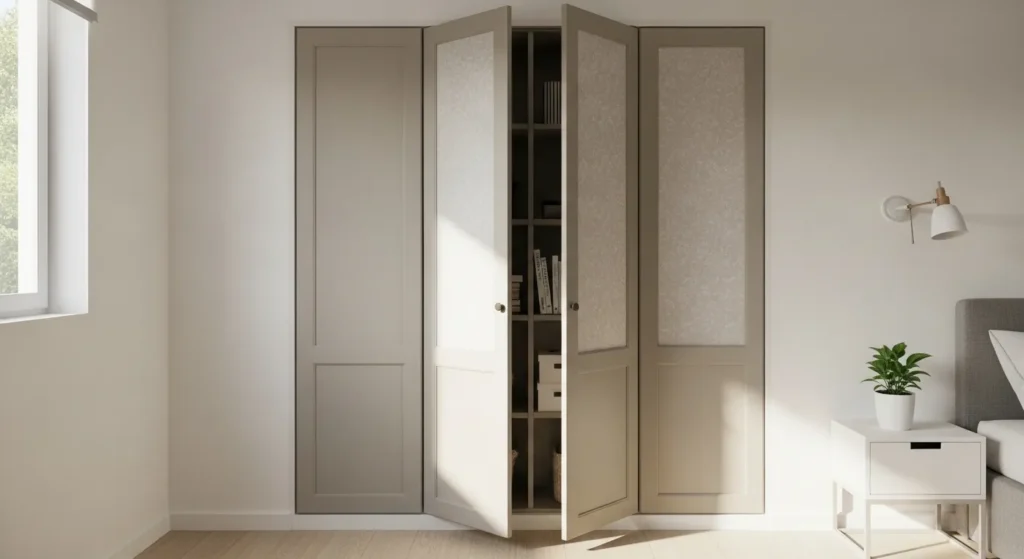
Foldable wall panels can function as both art and space-saving feature. Mounted flat, they act as decorative panels; when partially extended, they create texture and depth on the wall. Panels take up minimal floor space while adding a dynamic visual element, perfect for tiny bedrooms, living rooms, or home offices. Neutral or subtle patterns prevent the display from feeling heavy.
The panels can be rotated or adjusted seasonally, keeping the room visually fresh. Vertical placement enhances height perception, while layered designs add dimension and style. Foldable panels allow tiny walls to be functional, decorative, and visually expansive without sacrificing space, combining practicality with aesthetic appeal.
Conclusion
Space-saving wall art transforms tiny rooms from cramped to curated, stylish, and functional. By focusing on vertical arrangements, reflective surfaces, multifunctional displays, and layered layouts, even the smallest walls can make a big impact. Thoughtful placement and color coordination enhance the sense of space while creating visually engaging focal points.
Practical solutions like floating shelves, pegboards, foldable panels, and narrow cabinets combine storage and style, making compact rooms more organized. Inspirational choices like vertical canvases, textile hangings, and modular grids draw the eye upward and add depth. These strategies maximize every inch of wall space, letting rooms feel taller, brighter, and more expansive.
Ultimately, small walls offer huge potential. With creativity and strategic design, tiny bedrooms, kitchens, living rooms, and hallways can be both beautiful and functional. Space-saving wall art allows personal expression while keeping interiors airy, elegant, and Pinterest-worthy, proving that even the smallest walls can shine.
FAQs
- How can wall art make a small room look bigger?
Space-saving wall art uses vertical arrangements, reflective surfaces, and layered displays to visually expand compact rooms and draw the eye upward. - What types of art are best for tiny spaces?
Vertical canvases, floating shelves, mirrors, and multifunctional panels maximize height and depth while keeping walls uncluttered and visually appealing. - Can floating shelves be used as wall art?
Yes, floating shelves display frames, plants, and decor in a layered arrangement, saving floor space and adding style to compact walls. - How do mirrors help in small rooms?
Mirrors reflect light and surrounding decor, creating depth and the illusion of more space while serving as functional decorative pieces. - Are modular grids or pegboards practical for small walls?
Absolutely. They allow customizable displays for art, photos, or decor, keeping walls organized, dynamic, and visually expansive without crowding the space.