
As an Amazon Associate, I earn from qualifying purchases. This means I may earn a commission if you purchase through links on this page — at no extra cost to you.
The tiny-home movement taught us the two-inch rule: in a small space, two inches is the difference between a hallway and a corridor, between a shelf that works and one that blocks the door. Slim storage is design at its most disciplined — every millimeter considered.
This guide takes that discipline seriously. Instead of twenty product blurbs, it works in order: edit what you own, measure the walls you actually have, match each fixing to its load, then choose slim solutions room by room. Done in that order, slim storage adds capacity without making a small home feel crowded.
Edit First: Slim Storage Only Works on What You Keep
No shelf, however slim, fixes owning too much for the walls you have. Before buying anything, edit with a simple test: if an item has not been used in a year and is not seasonal, sentimental, or a tool you genuinely need, it is taking wall space from something that earns it.
Work one wall at a time, not one room at a time. Empty the wall’s current storage, sort into keep, relocate, and let go, and only then measure what remains. The keep pile tells you what depth and load you actually need — and it is almost always less than the full catalog of things you thought you had to store.
The second edit is about duplicates. Small homes accumulate second sets — two scissors, three phone chargers, a drawer of bags inside bags. Slim storage rewards single sets kept in one visible place; duplicates are what turn a neat shelf into a crowded one within a month.
Measuring for Slim Storage Success
Measure three things before ordering anything: the wall, the walkway, and the reach. The wall gives you width and height. The walkway tells you how deep you can go before the room stops working — a hallway needs clear passage, a bedroom needs room to make the bed, a kitchen needs room to open the oven door. The reach tells you what height is actually usable: daily items within comfortable arm’s reach, rarely used items higher, nothing daily above the top shelf you can reach without a stool.
Record door swings, light switches, vents, and radiators on the same sketch. A shelf that covers a vent or blocks a door swing is not storage, it is an obstruction. Note where studs are, too — a stud finder pass now saves a wall full of failed anchors later.
Depth is where slim storage lives or dies. A shelf six to ten inches deep holds books, jars, and folded clothes without swallowing a room; deeper than that, and it starts to read as furniture rather than wall storage. In a hallway, even six inches can be too much if the passage is already narrow — measure the passage after the shelf goes in, not just the wall before it.
🛒 Shop This Look:
Weight Distribution on Narrow Shelves
Narrow shelves fail in predictable ways, and all of them are fixable at the fixing stage. The rule is simple: match the fixing to the load, and spread the load across as many fixings as the shelf allows.
Heavy items — books, canned goods, tools — belong on fixings into studs. A shelf screwed into studs at two or more points carries real weight without sagging or pulling out. If no stud lines up where you need it, heavy-duty wall anchors rated for the load are the next choice, installed exactly as the packaging instructs, not approximated.
Medium items — folded clothes, small plants, baskets of supplies — suit toggle bolts or quality expanding anchors in drywall. Light items — photos, small decor, a single row of spices — can use adhesive strips, but only within the printed rating and only on a clean, smooth surface. Adhesive on textured paint or dusty plaster is a promise the strip cannot keep.
Test before trusting. Load a shelf gradually, leave it a day, and check for sag or movement before filling it completely. And spread weight toward the fixings and away from the middle of long spans — a shelf that sags in the center is telling you it needs a middle bracket, not lighter books.
Slim Solutions by Room
In the entryway, slim storage earns its keep at coat height and shoe height. A narrow row of hooks and a shallow shoe shelf by the door clears the floor without narrowing the passage. Keep it to what leaves the house daily; the entryway is a transit zone, not a closet.
In the kitchen, walls take what counters cannot. A slim rail for utensils, a narrow shelf for spices, and magnetic strips for knives free drawer and counter space at once. Keep spice shelves shallow — jars in a single row you can see beat two rows where the back row is forgotten. For more kitchen-specific ideas, small kitchen storage ideas that work cover the cabinet and counter side of the same problem.
In the bedroom, the wall beside and above the bed is the most underused slim-storage zone. A floating nightstand shelf replaces a bulky table; a shallow shelf above the bed holds books and a lamp without crowding the pillows. Keep bedroom wall storage closed or curated — open shelves full of clutter next to a bed make a small room feel busy at the exact hour you want calm.
In the bathroom, slim means shallow and moisture-aware. Narrow shelves above the toilet or beside the mirror hold daily items without crowding the sink. Avoid deep shelving that forces you to reach past bottles, and keep anything that rusts or swells away from direct splash zones.
In the hallway, think vertical and flat: a slim coat rail, a narrow console shelf, a row of hooks at staggered heights for bags and coats. Hallways punish depth more than any other room — if you can pass comfortably with a bag on each arm, the depth is right.
Renters: Slim Without Holes
Renters can get most of slim storage’s benefit without drilling. Over-door racks use dead space on a door that already exists. Leaning shelves stand against the wall and move with you. Tension rods and adhesive hooks handle light loads, provided you respect their ratings and your wall surface.
The renter’s rule is to favor freestanding and removable first, adhesive second, and a few well-chosen drilled fixings only where the lease allows and the load demands it. When you do drill, keep the fixings in studs where possible and photograph the wall before and after — it makes move-out repair straightforward rather than a negotiation.
Removable does not mean flimsy. A leaning ladder shelf or a freestanding narrow bookcase gives you real capacity with zero wall damage, and it follows you to the next place. That portability is worth more than a slightly slimmer drilled shelf you have to abandon.
🛒 Shop This Look:
Small-Space Thinking for Wall Art Too
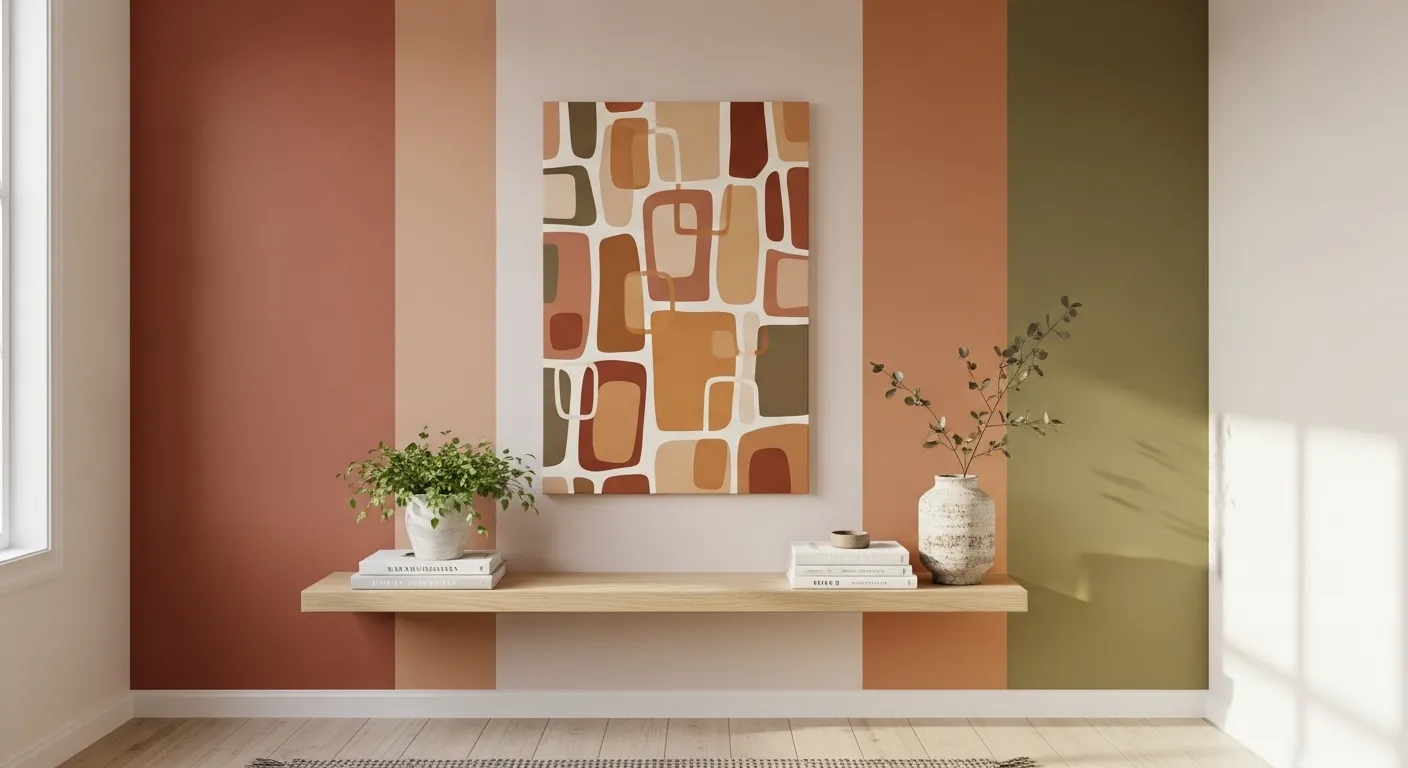
Storage is not the only thing competing for small walls — art is, and the two need to share. A wall that carries both storage and decoration feels intentional when the storage is quiet (plain shelves, matching baskets) and the art is the accent, not the other way around. If a wall is doing heavy storage duty, let the art live on the opposite wall or above eye level, where it does not fight the shelves for attention. Space-saving wall art for tiny rooms shows how to keep walls expressive without giving up the storage they also need to do.
Mistakes That Crowd a Small Room
Depth creep is the most common mistake: each shelf a little deeper than the last until the room has quietly shrunk. Decide the maximum depth for each wall before shopping, and hold it.
Ignoring studs is the most expensive mistake — a shelf that pulls out takes plaster with it and drops everything it held. So is overloading narrow shelves, especially at the center of long spans, and blocking vents, switches, or door swings with storage that looked fine on a blank wall sketch but not in a lived-in room.
The last mistake is filling every wall. A small room needs at least one wall that breathes — no shelves, no hooks, just paint or art. That empty wall is what makes the stored walls read as intentional rather than desperate.
Measuring Cheat Sheet by Room
Depth limits are easier to hold when they are decided per room rather than per product. In hallways, keep shelves and rails shallow enough that two people can pass without turning sideways — for most homes that means no more than a few inches of projection, with hooks rather than shelves where the passage is already tight. In kitchens, a spice or utensil shelf a single jar deep beats a deeper shelf every time, because the back row is where things expire unseen. In bedrooms, a floating nightstand shelf needs only enough depth for a book, a glass, and a lamp base; anything deeper crowds the bed. In bathrooms, a shelf above the toilet or beside the mirror needs just enough depth for bottles standing upright — deeper shelves invite stacking, and stacked bathroom bottles topple.
Height follows the same room logic. Daily items live between hip and eye level, where hands find them without thought. Weekly items can live higher, up to a comfortable reach without a stool. Anything above that is archive storage, not daily storage, and it should be labeled or it will be forgotten. When you sketch a wall, mark these three bands — daily, weekly, archive — before you mark a single shelf, and the shelf positions will place themselves.
The Short Version
Edit first, measure the wall, the walkway, and the reach, match every fixing to its load, and choose slim solutions room by room rather than product by product. Leave one wall empty. A small home stored on those rules gains capacity without losing the feeling of space — which was the whole point of slim storage in the first place.
🛒 Shop This Look: