
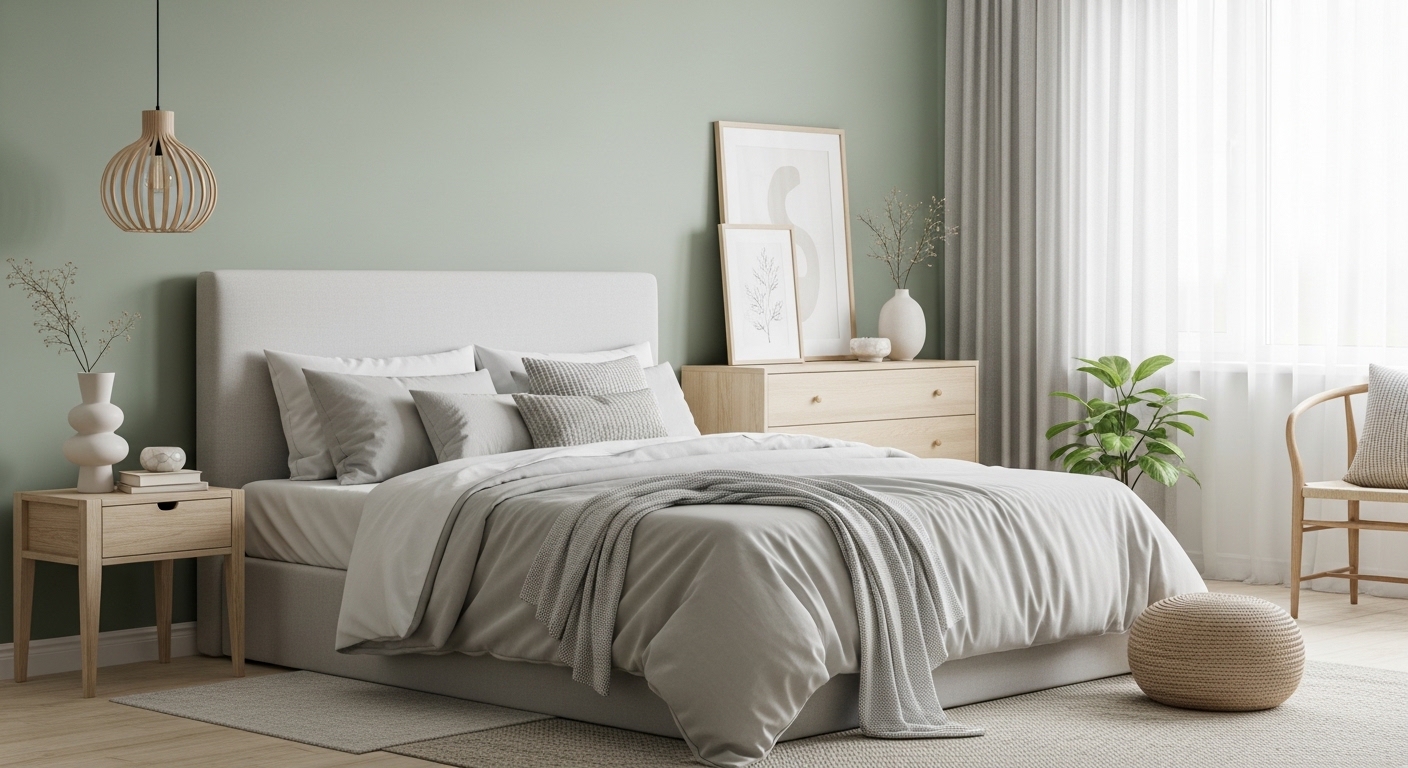
Sage green works because it sits in the middle—neither too bold nor too dull. It brings in color without overwhelming the space, which is exactly what most bedrooms need.
The problem with many “colorful” bedrooms is that they overstimulate. Sage green does the opposite. It softens the environment, reflects natural tones, and creates a space that feels breathable.
Used properly, it doesn’t just look good—it actually changes how the room feels. Below are 21 practical ideas that focus on balance, not decoration overload.
1. Sage Green Accent Wall with Neutral Bedding
Image Prompt: sage green accent wall bedroom with white and beige bedding, soft lighting, calm aesthetic
A sage green accent wall is one of the easiest ways to introduce color without committing to a full redesign. It creates a focal point behind the bed while keeping the rest of the room light and simple. This approach works especially well if your room already has white or neutral tones.
Pair it with neutral bedding—whites, creams, or soft beige—to maintain balance. If everything turns green, the room can feel heavy. One strong wall is enough to define the mood while keeping the space calm and controlled.
2. Sage Green Bedding with White Walls
Image Prompt: sage green bedding on white bed, minimal bedroom, natural light, fresh look
If you don’t want to paint walls, bedding is the smartest entry point. Sage green sheets or a duvet instantly refresh a plain white bedroom. It’s a low-risk change but visually effective.
White walls reflect light and keep the room feeling open, while the green bedding adds just enough color to avoid boredom. This combination works because it’s flexible—you can change the look easily without a full redesign.
3. Sage Green and Wooden Furniture Combo
Image Prompt: sage green bedroom with wooden furniture, natural textures, warm and calm vibe
Sage green pairs naturally with wood because both come from the same visual language—nature. Wooden furniture adds warmth and prevents the green from feeling too cool or flat.
Keep the wood tones light to medium. Dark wood can overpower the softness of sage. The goal is a balanced environment where both elements support each other rather than compete.
4. Two-Tone Walls with Sage Green and White
Image Prompt: two tone bedroom walls sage green and white, clean modern design
Two-tone walls add structure without complexity. Use sage green on the lower half and white on the upper half to keep the room grounded but still bright.
This setup visually expands the room while adding depth. It’s a smarter alternative to full-wall color if you’re worried about making the space feel smaller.
5. Sage Green Curtains with Neutral Room
Image Prompt: sage green curtains in neutral bedroom, soft natural light, airy feel
Curtains are often overlooked, but they carry a lot of visual weight. Sage green curtains can anchor a neutral bedroom without overwhelming it.
Choose light, breathable fabric so the curtains don’t block natural light. The green should feel soft and diffused, not heavy or dramatic.
6. Minimalist Sage Green Bedroom
Image Prompt: minimalist sage green bedroom, clean lines, simple decor, calm space
Minimalism works well with sage green because both focus on simplicity. Keep furniture limited, decor minimal, and let the color do the work.
Avoid layering too many textures or patterns. The strength of this look is in its restraint. When done right, the room feels calm without looking empty.
7. Sage Green Headboard as Focal Point
Image Prompt: sage green upholstered headboard, neutral bedding, elegant calm bedroom
A sage green headboard adds color exactly where you need it—at the center of the room. It draws attention without taking over the entire space.
Pair it with simple bedding and minimal decor so it remains the focal point. This is a good option if you want a controlled pop of color.
8. Sage Green with Beige and Cream Layers
Image Prompt: sage green bedroom with beige and cream layers, soft cozy textures
Layering sage green with beige and cream creates a soft, cohesive palette. These tones naturally blend, making the room feel warm and inviting.
Use this combination in bedding, rugs, and decor. The key is subtle variation, not contrast. Everything should feel connected.
9. Indoor Plants to Enhance Green Theme
Image Prompt: sage green bedroom with indoor plants, natural light, fresh environment
Plants reinforce the sage green theme without adding artificial color. They make the room feel alive and improve the overall atmosphere.
Don’t overcrowd the space. A few well-placed plants are enough to enhance the look without turning the room into a jungle.
10. Sage Green Wall Panels or Molding
Image Prompt: sage green wall panel bedroom, elegant texture, soft lighting
Wall panels painted in sage green add texture and depth. This works better than flat paint if you want a slightly more refined look.
Keep the rest of the room simple so the panels don’t feel heavy. Texture should enhance the space, not dominate it.
11. Sage Green and White Striped Bedding
Image Prompt: sage green and white striped bedding, fresh modern bedroom
Subtle patterns like stripes can add interest without breaking the calm vibe. Sage green and white stripes feel fresh and structured.
Avoid bold or busy patterns. Keep lines clean and simple to maintain the relaxing feel.
12. Sage Green Dresser or Accent Furniture
Image Prompt: sage green dresser in neutral bedroom, minimal decor, soft natural lighting
Instead of spreading sage green across the entire room, you can introduce it through a single furniture piece like a dresser or side table. This approach gives you a controlled pop of color without committing to walls or large textiles. It’s practical and flexible, especially if you like updating your space occasionally without major effort.
Keep the surrounding elements neutral so the furniture stands out naturally. A sage green dresser paired with white walls and light wood flooring creates a clean, balanced look. The key is restraint—one statement piece is enough to influence the mood without making the room feel overly styled or forced.
13. Sage Green with Soft Gray Accents
Image Prompt: sage green bedroom with soft gray accents, modern calm aesthetic, layered neutrals
Sage green and soft gray work well together because both are muted and understated. Neither color fights for attention, which helps maintain a calm and cohesive environment. Gray adds a slightly modern edge, while sage keeps the space from feeling too cold or lifeless.
Use gray in subtle ways—like throws, cushions, or small decor elements. Avoid making gray dominant, or the room can lose its warmth. When balanced properly, this combination creates a layered, sophisticated look that still feels relaxing and easy to live in.
14. Light Wood and Sage Green Balance
Image Prompt: sage green bedroom with light wood furniture, airy natural tones, warm peaceful vibe
Light wood tones naturally complement sage green, creating a connection to nature that feels effortless. This pairing works especially well in bedrooms where you want a soft, organic atmosphere rather than something overly polished or artificial.
Keep the wood finishes simple and avoid heavy staining. Pale oak or similar tones maintain the airy quality of the room. When combined with sage green walls or bedding, the result is a space that feels warm, fresh, and grounded without becoming visually heavy.
15. Sage Green Accent Chair or Bench
Image Prompt: sage green accent chair in bedroom corner, cozy minimal setup, soft textures
Adding a sage green chair or bench is a subtle way to introduce color while also improving functionality. It gives you a dedicated spot for reading, relaxing, or simply placing items without cluttering the bed or floor.
Place it near a window or in an empty corner to create a small, intentional zone within the room. Keep the design simple and avoid overly decorative shapes. The goal is to add comfort and visual interest without disrupting the calm flow of the space.
16. Layered Bedding with Sage Green Tones
Image Prompt: layered sage green bedding with different shades, cozy and soft bedroom look
Using multiple shades of sage within bedding adds depth without introducing new colors. Instead of a flat, single-tone bed, layering creates a more inviting and comfortable look while staying within the same palette.
Mix textures like cotton, linen, and soft knits to enhance the effect. Keep the layering controlled—too many elements can feel messy. The idea is to create a bed that looks comfortable and visually rich without becoming overwhelming.
17. Sage Green Wallpaper with Subtle Pattern
Image Prompt: sage green wallpaper with minimal pattern, calm bedroom design, soft lighting
Wallpaper can add personality, but it needs to be handled carefully in a bedroom. A sage green wallpaper with a very subtle pattern introduces texture and interest without making the walls feel busy or distracting.
Stick to simple, repetitive designs that don’t demand attention. Large or bold patterns can break the calm atmosphere. When done right, wallpaper becomes a background element that quietly enhances the overall look rather than dominating it.
18. Sage Green and White Layered Curtains
Image Prompt: sage green and white layered curtains, soft light filtering, airy bedroom feel
Layering curtains in sage green and white allows you to control both light and mood. The white layer keeps the room bright during the day, while the sage green layer adds depth and softness when closed.
Choose lightweight fabrics so the layers don’t feel bulky. This setup not only improves functionality but also adds a subtle visual richness that makes the room feel more complete without adding clutter.
19. Minimal Decor with Sage Green Base
Image Prompt: minimalist bedroom with sage green base color, clean surfaces, calm atmosphere
When sage green is already present in walls or bedding, it’s better to reduce additional decor. Too many elements can compete with the color and disrupt the calm effect you’re trying to achieve.
Focus on clean surfaces and only a few meaningful items. This approach allows the sage green tone to define the room naturally. The less you add, the more the color itself becomes the feature.
20. Sage Green with Black Accent Details
Image Prompt: sage green bedroom with black accent decor, modern contrast, clean design
A small amount of black can sharpen the softness of sage green and add structure to the room. Think of thin frames, light fixtures, or minimal decor pieces—not large dark surfaces.
The contrast should be subtle, not dominant. Too much black can make the room feel heavy. When used correctly, it adds definition and makes the overall design feel more intentional and refined.
21. Soft Lighting to Enhance Sage Green Tone
Image Prompt: sage green bedroom with warm soft lighting, cozy and relaxing environment
Lighting has a major impact on how sage green appears. Harsh white lighting can make it look dull or washed out, while warm, soft lighting enhances its natural richness and calm tone.
Use lamps, warm bulbs, or indirect lighting to create a relaxed atmosphere. The goal is to support the color, not distort it. Good lighting doesn’t just improve visibility—it defines how the entire room feels.
Conclusion
Sage green works because it strikes a balance most colors fail to achieve. It introduces freshness without being loud, and warmth without becoming dull. That’s why it fits so naturally into bedrooms—it supports rest instead of competing with it. But the color alone isn’t enough. Execution matters more than the shade itself.
If you overload the space with too many elements, even the calmest color will lose its effect. The real impact comes from restraint—pairing sage green with neutrals, natural materials, and simple layouts. Every choice should support the same goal: reducing visual stress and creating a space that feels easy to exist in.
Get the balance right, and the room won’t just look good—it will actually feel different. And that’s the whole point.