
As an Amazon Associate, I earn from qualifying purchases. This means I may earn a commission if you purchase through links on this page — at no extra cost to you.
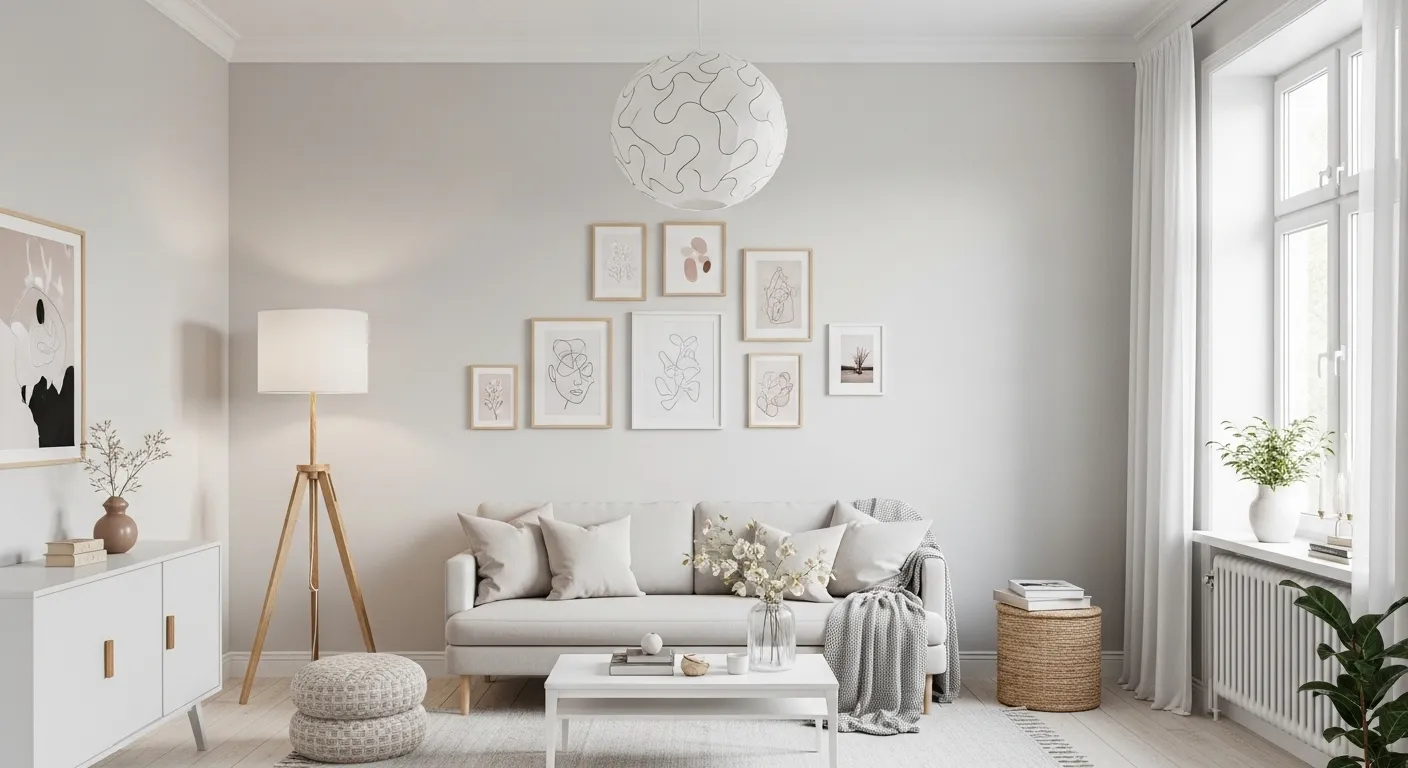
Get inspired with 25 beautiful small gallery wall ideas that don’t feel crowded. Whether you prefer gallery wall or something unexpected, there’s an idea here for you.
By using careful spacing, balanced frames, and thoughtful layouts, small gallery walls can enhance a space while keeping it airy and stylish.
The key is to mix frame sizes, colors, and content strategically. Minimalist pieces, small-scale prints, and cohesive themes help maintain visual interest without clutter.
A well-planned gallery wall transforms small walls into curated focal points that reflect personality and style.
1. Minimalist Black-and-White Prints
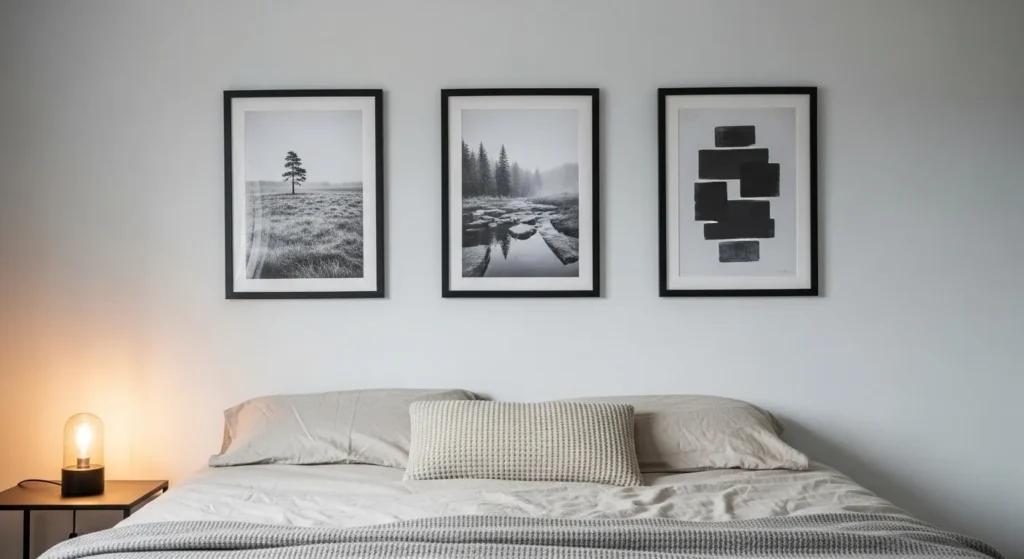
Black-and-white prints create a timeless, minimalist gallery wall that doesn’t overwhelm. Limiting colors keeps the display cohesive, making the wall feel open and curated.
This approach works well for small bedrooms, offices, or entryways. Spacing frames evenly and keeping designs simple ensures the wall remains airy despite the small size.
Minimalist black-and-white galleries add sophistication and calm. They provide visual interest while maintaining a sense of openness in compact spaces.
2. Floating Ledge Display
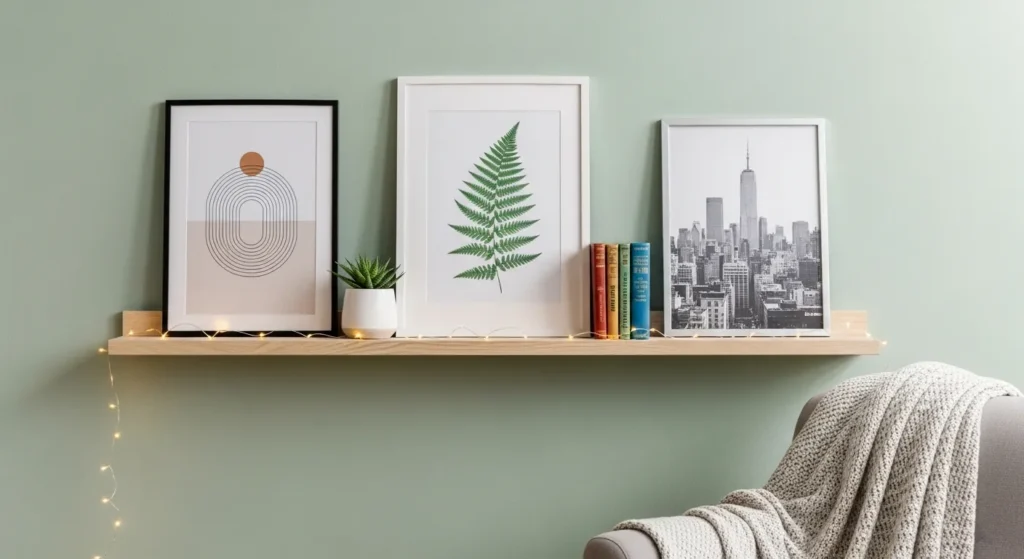
Floating ledges allow for flexible gallery arrangements without the need for nails in every spot. Frames can be layered or rotated while maintaining a clean, uncluttered appearance.
This approach works well for small walls in living rooms, bedrooms, or hallways. The ledge keeps frames slightly off the wall, giving a sense of depth and airiness.
Ledge displays make galleries easy to update. They balance visual interest with simplicity, making small walls feel styled, not cramped.
3. Single Row Gallery

A single row of frames maintains balance in tight spaces. By limiting vertical stacking, the wall appears orderly, open, and proportionate to the room.
This technique works well in hallways, above furniture, or in small kitchens. The horizontal alignment directs the eye naturally along the wall without creating visual clutter.
Single row galleries are simple yet impactful. They give a curated, intentional feel while preserving a sense of space in small rooms.
4. Mix of Frames and Mirrors

Combining mirrors with art adds reflection and depth, making the gallery wall feel larger and lighter. Mirrors also break up the frames visually, preventing overcrowding.
This approach works well above beds, dressers, or small seating areas. The mirror draws the eye, adding dimension while keeping the display balanced.
Mixing mirrors and art creates interest and openness. It allows small walls to feel dynamic without feeling cramped or chaotic.
5. Vertical Staggered Layout
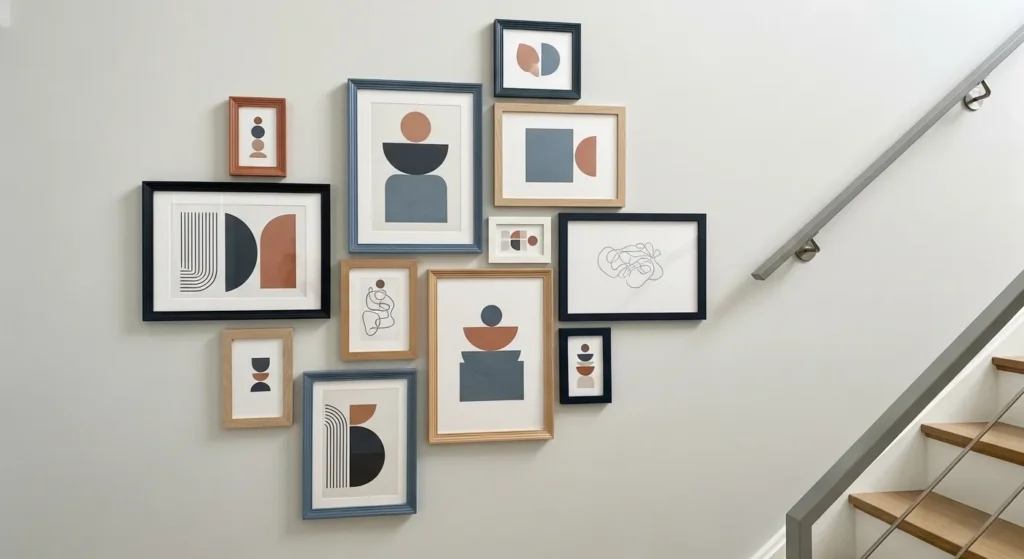
A vertical staggered arrangement emphasizes height rather than width, making small spaces feel taller and more open. The staggered placement adds visual rhythm without overcrowding.
This technique works well in narrow walls, staircases, or corners. Using similar frame colors or styles ensures the display remains cohesive and airy.
Staggered vertical galleries draw attention upward. They maximize small wall space while keeping the display balanced and visually appealing.
6. Grid Layout
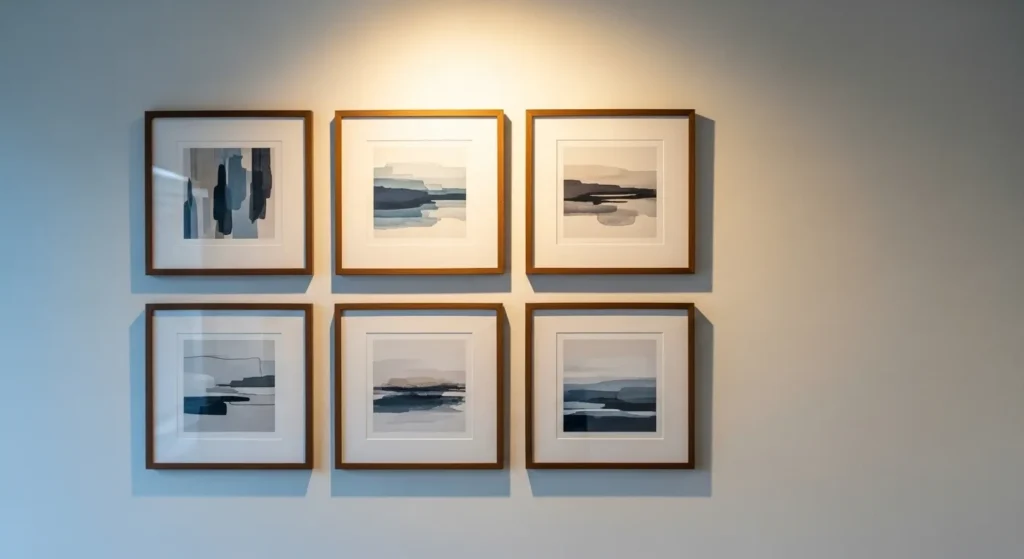
Grid layouts create order and symmetry, ideal for small walls. Equal spacing and frame size provide structure, preventing the gallery from feeling chaotic.
This approach works well in bedrooms, offices, or kitchens. Grids are particularly effective for collections of prints, photos, or illustrations with a common theme.
Grid galleries are simple, neat, and elegant. They make a small wall feel intentional and polished without overwhelming the room.
7. Narrow Vertical Strip

A vertical strip of frames uses slim wall space efficiently. Stacking frames vertically keeps the area organized and visually light, perfect for small or tight spaces.
This technique works well in hallways, beside doorways, or on columns. Limiting the number of frames ensures the wall doesn’t feel crowded or busy.
Vertical strip galleries maximize narrow spaces. They provide a stylish focal point while maintaining a sense of openness and balance in compact rooms.
8. Circular Frame Cluster
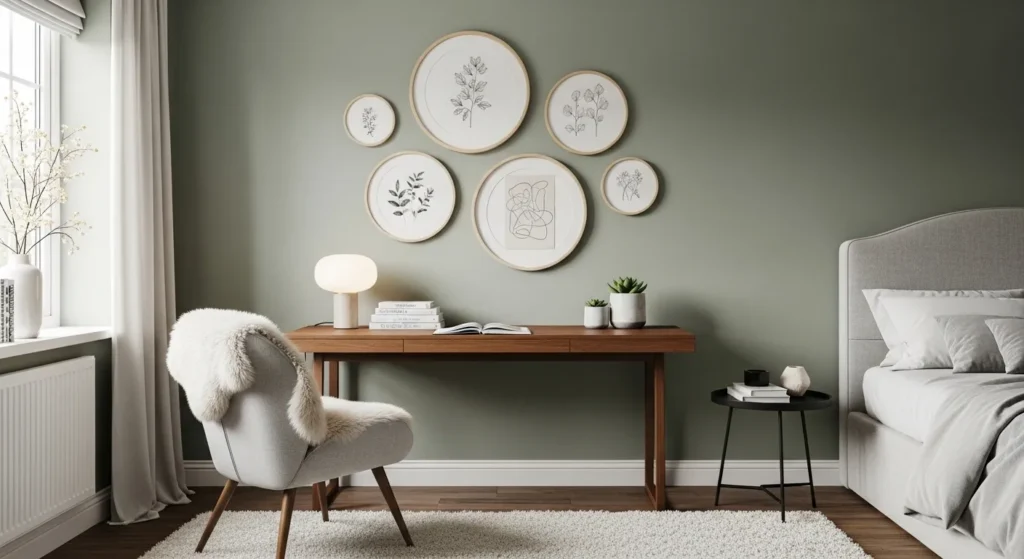
Circular frames soften the look of a gallery wall and create a sense of flow. Using a mix of sizes adds interest without feeling heavy or overcrowded.
This approach works well in bedrooms, living rooms, or hallways. Keeping the colors and themes cohesive ensures the cluster feels intentional and airy rather than cluttered.
Circular frame galleries are playful yet elegant. They provide variety in shape while keeping small walls balanced and visually appealing.
🛒 Shop This Look:
9. Minimalist Color Palette
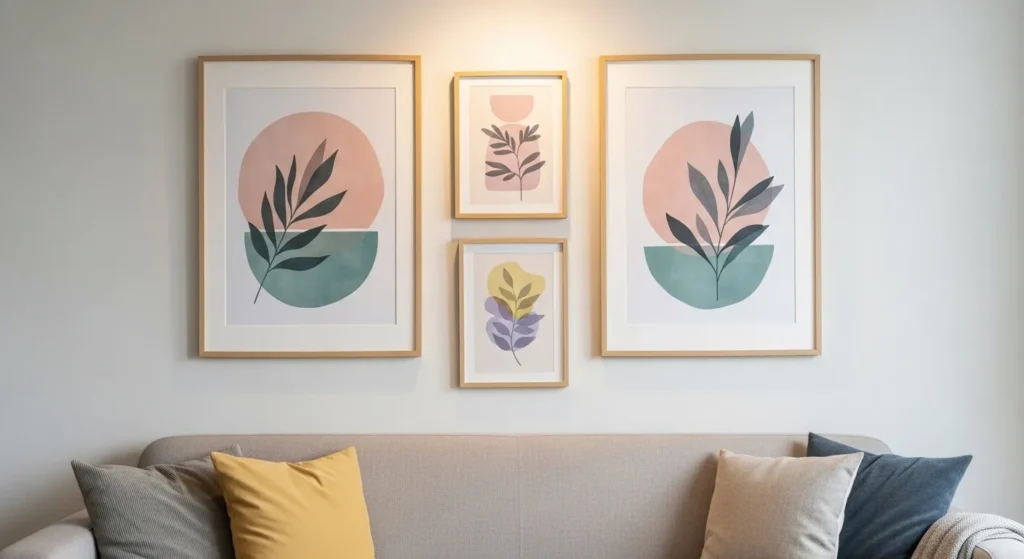
Using a minimalist color palette keeps the gallery wall light and calm. Limiting hues ensures the display enhances the space instead of overpowering it.
This technique works well in bedrooms, kitchens, or living areas. Combining similar tones in frames, mats, or artwork makes the wall feel cohesive and spacious.
A minimalist color approach creates harmony. It allows small gallery walls to feel curated and elegant without appearing cluttered.
10. Floating Shelf with Leaning Art

Leaning art on floating shelves adds a casual, relaxed vibe while keeping frames off the wall. This method allows for easy rotation and layering of pieces.
This approach works well for small walls in hallways, bedrooms, or offices. The shelf provides a base while leaving open wall space, keeping the gallery airy.
Leaning art with shelves offers flexibility and style. It makes small gallery walls feel dynamic without crowding the room.
11. Single Statement Piece with Small Accents
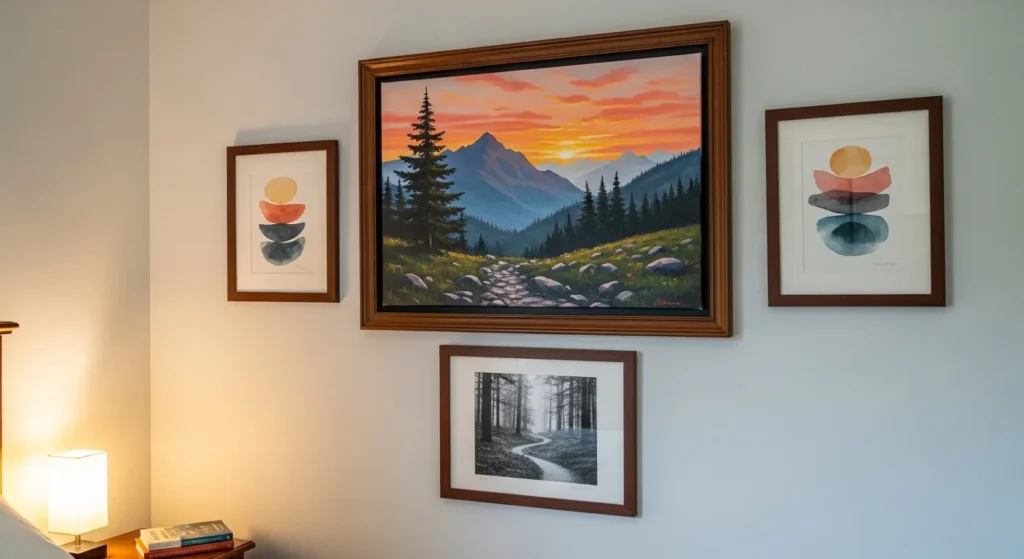
Pairing a single statement piece with smaller accents creates a focal point without overwhelming a small wall. The central piece draws attention while the smaller frames add context and balance.
This technique works well above beds, desks, or chairs. Choosing a cohesive theme or color palette keeps the arrangement polished and airy.
Single statement plus accents keeps walls elegant. It combines impact with restraint, ideal for small spaces that need a subtle gallery effect.
12. Framed Botanical Prints

Botanical prints bring nature indoors while maintaining a calm, uncluttered aesthetic. Slim frames keep the gallery light and visually appealing.
This approach works well in bedrooms, bathrooms, or kitchens. Repeating similar shapes and tones ensures the wall feels organized and open.
Botanical galleries are fresh and timeless. They add charm and personality while keeping small walls from feeling busy or cramped.
13. Floating Ledge with Small Frames

Using a floating ledge allows small frames to be grouped without committing to permanent wall placement. It keeps the display elevated and visually light.
This approach works well above nightstands, desks, or dressers. Frames can be rearranged easily, making the wall versatile and adaptive to seasonal changes.
Floating ledge galleries maximize flexibility and style. They keep small walls organized, airy, and visually engaging without overcrowding.
14. Asymmetrical Layout
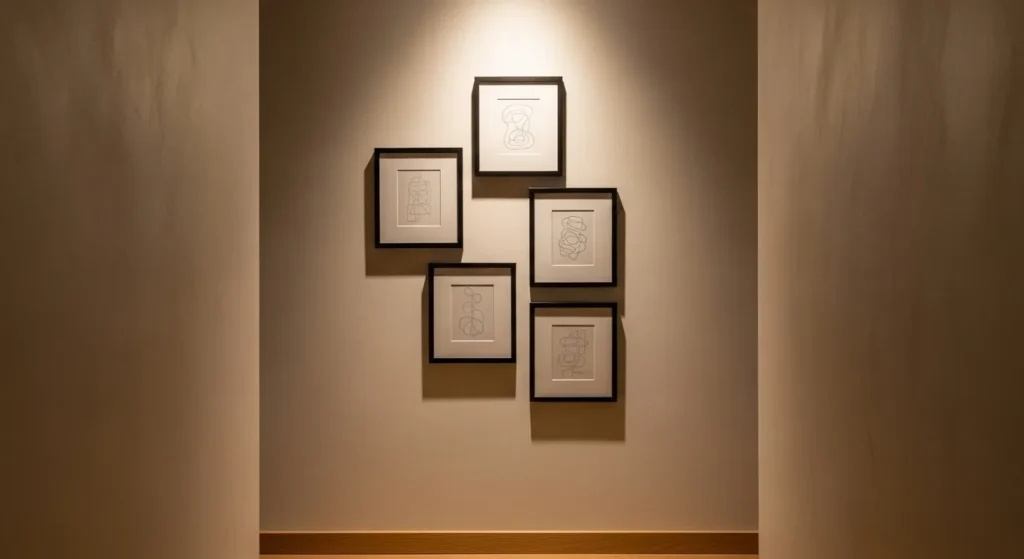
Asymmetrical layouts add visual interest without creating clutter. Keeping consistent spacing and frame sizes ensures the wall remains balanced and open.
This technique works well in narrow spaces, living rooms, or bedrooms. It allows for creativity while maintaining cohesion and a sense of order.
Asymmetrical galleries are dynamic and modern. They make small walls feel curated, stylish, and spacious, proving that you don’t need symmetry to create balance.
🛒 Shop This Look:
15. Framed Illustrations with Plenty of Space

Spacing is key for small gallery walls. Leaving room between frames ensures the artwork stands out while preventing the wall from feeling busy or cluttered.
This technique works well in bedrooms, offices, or entryways. Using simple illustrations or line art keeps the gallery airy and visually calm.
Well-spaced framed illustrations create elegance and clarity. They maintain focus on the artwork while keeping small walls balanced and open.
16. Small Circular Mirrors
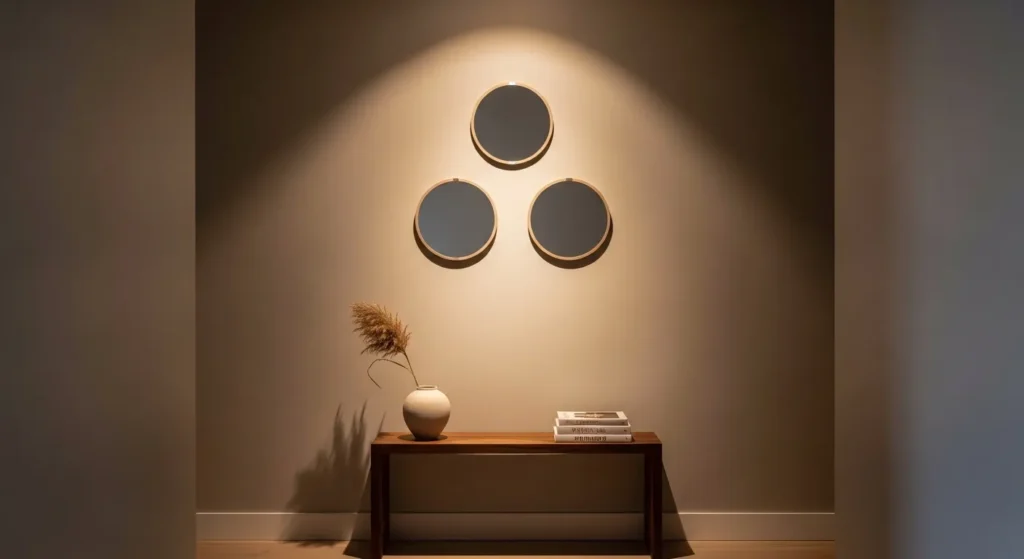
Small circular mirrors add dimension and reflect light, making narrow or small walls feel brighter and more open. Grouping them in clusters creates a subtle gallery effect.
This approach works well in hallways, bedrooms, or bathrooms. Mirrors provide both functionality and style, enhancing space without overwhelming it.
Circular mirror galleries add visual interest and depth. They make walls feel airy while maintaining a sophisticated and light aesthetic.
17. Black Frames with White Mats
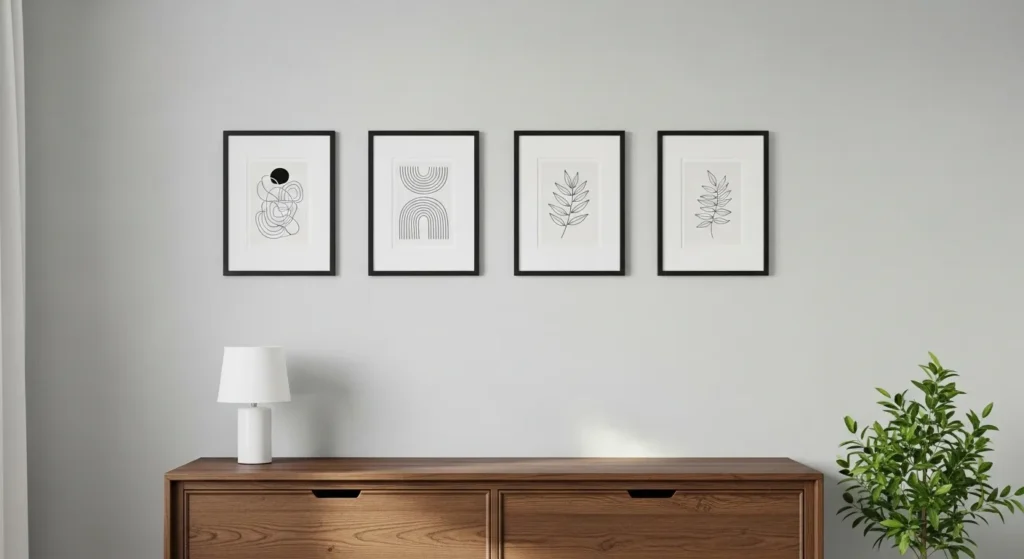
Using black frames with white mats provides contrast while keeping the display minimal. Mats give each piece breathing room, preventing the wall from feeling crowded.
This technique works well in small bedrooms, offices, or living areas. The contrast adds structure and refinement while maintaining a light and open feel.
Framed prints with mats are timeless and elegant. They allow small walls to showcase art without overwhelming the space.
18. Layered Small Frames
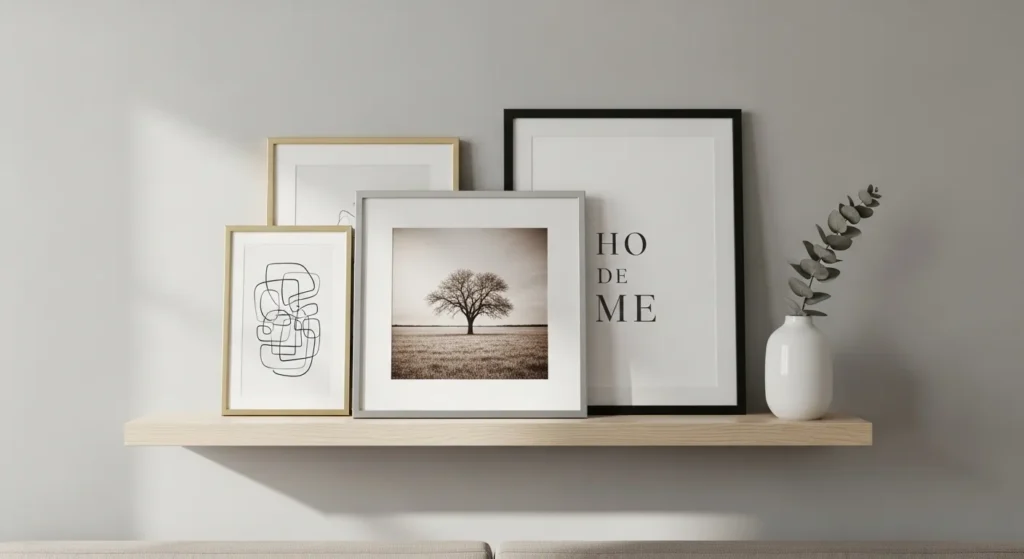
Layering small frames creates depth and visual interest without adding bulk to the wall. Floating shelves make it easy to rotate or adjust pieces.
This approach works well above desks, nightstands, or entryway tables. Layered frames keep the wall dynamic while staying organized and light.
Layered small frames balance creativity and order. They make compact gallery walls feel engaging without crowding the room.
19. Mini Canvas Cluster
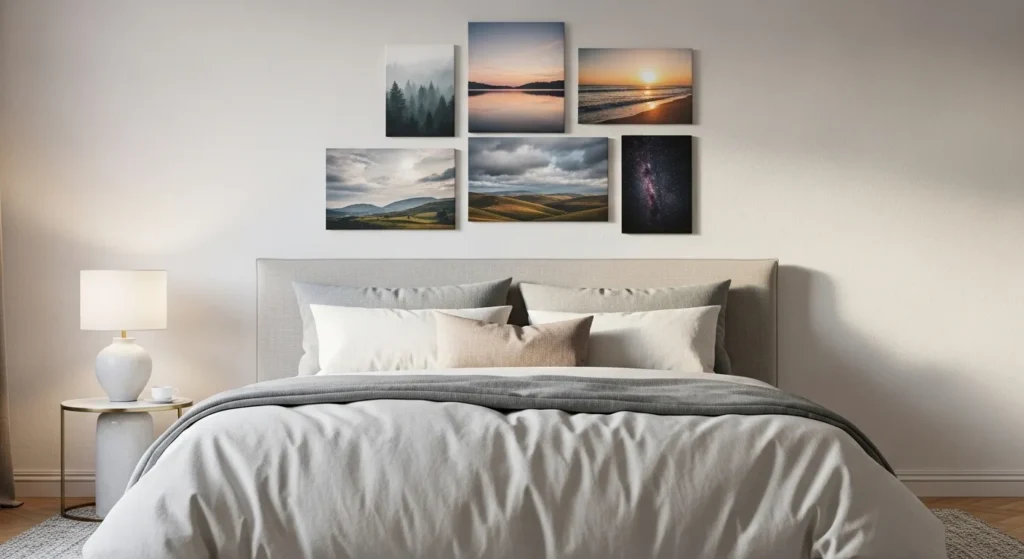
Mini canvases allow for experimentation with art in small spaces. Grouping them loosely keeps the display casual while creating a focal point.
This technique works well in bedrooms, offices, or corners. Keeping a consistent color palette or theme ensures the cluster feels cohesive and not cluttered.
Mini canvas clusters provide charm and personality. They add style and interest while maintaining a light, airy gallery wall.
20. Neutral Watercolor Prints
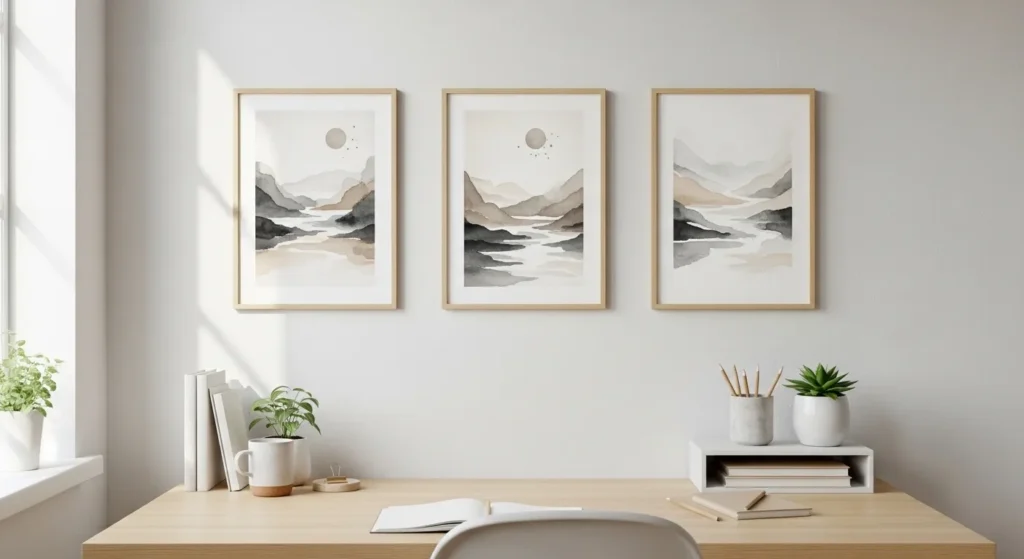
Neutral watercolors bring softness and sophistication to small walls. Their gentle hues prevent visual overload while maintaining elegance.
This approach works well in bedrooms, bathrooms, or living rooms. Pairing neutral prints with light walls keeps the space feeling open and serene.
Neutral watercolor galleries are calming and stylish. They provide a refined statement without overpowering compact walls.
21. Slim Vertical Frames
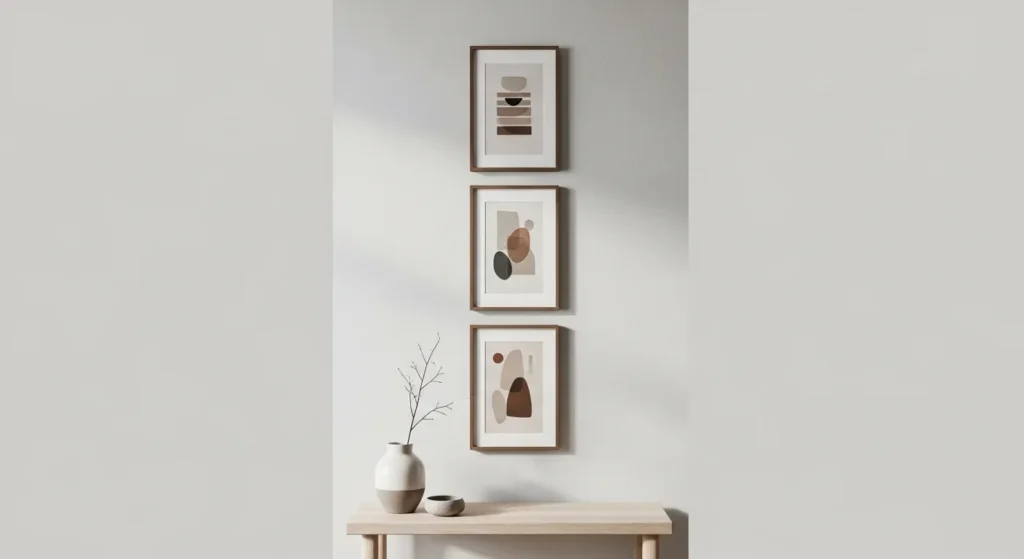
Slim vertical frames maximize narrow spaces efficiently. Stacking frames vertically draws the eye upward and makes walls feel taller and more open.
This approach works well in hallways, beside doors, or small corners. Limiting the number of frames ensures the wall stays airy and uncluttered.
Slim vertical galleries create elegance and balance. They provide focus and style while keeping small walls feeling spacious.
🛒 Shop This Look:
22. Floating Frames with Negative Space

Using floating frames with generous negative space allows each artwork to breathe. The open spacing prevents small walls from feeling cluttered while highlighting individual pieces.
This approach works well above desks, nightstands, or small seating areas. It maintains a clean, airy look while giving the wall a curated, intentional feel.
Floating frames with space create elegance and simplicity. They let each piece stand out while keeping the gallery light and balanced.
23. Color-Coordinated Mini Prints
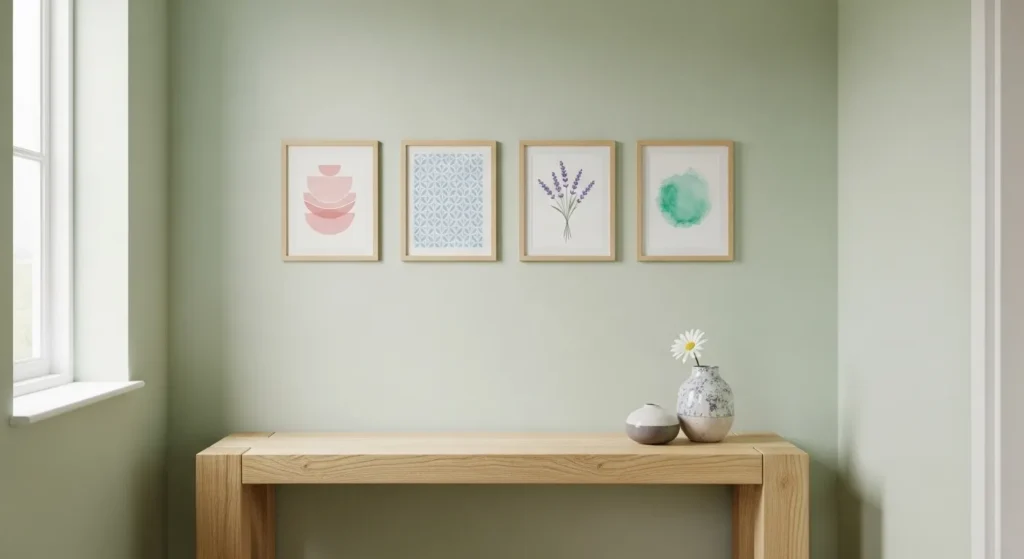
Coordinating colors across mini prints keeps the wall visually cohesive and prevents a crowded appearance. The repetition of tones ties the gallery together.
This technique works well in bedrooms, kitchens, or narrow hallways. Small prints in soft colors maintain openness while allowing for personality and charm.
Color-coordinated mini galleries are stylish and harmonious. They make compact walls feel curated, airy, and thoughtfully designed.
24. Small Sculptural Wall Art
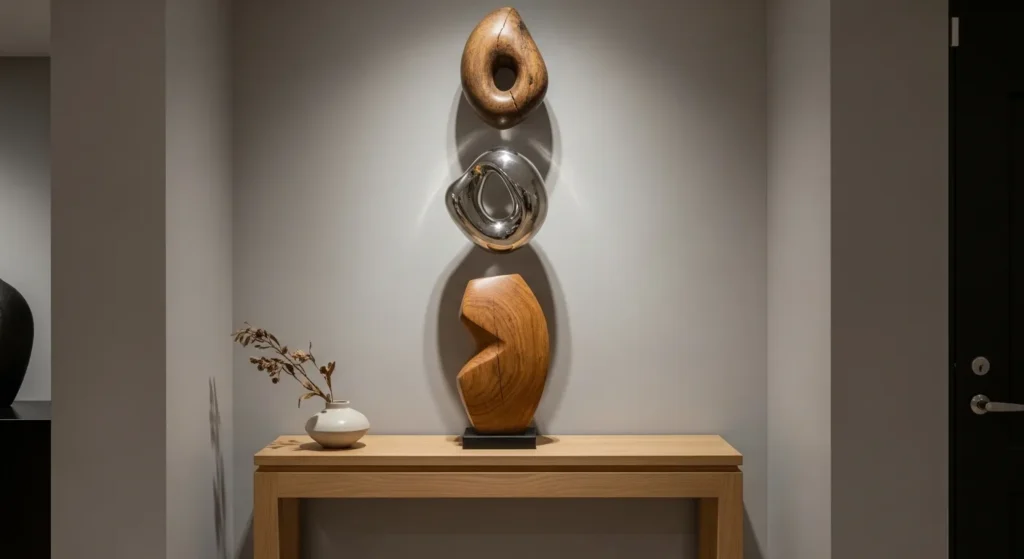
Sculptural wall art adds dimension and texture without requiring large frames. Vertical arrangements create impact while keeping walls uncluttered.
This approach works well in bedrooms, living rooms, or offices. The 3D element draws the eye and adds character while preserving openness.
Sculptural small galleries provide depth and intrigue. They make walls visually appealing and dynamic without feeling crowded.
25. Framed Polaroid or Photo Collage
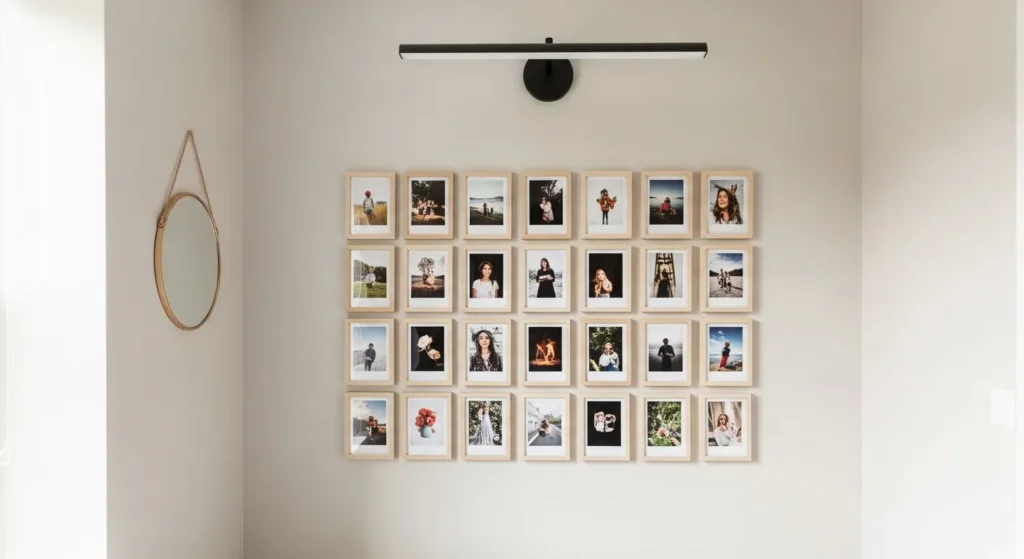
Using small frames for Polaroids or photos allows for a gallery wall full of personality without overwhelming the space. Arranging them in a neat grid keeps the display organized.
This technique works well in bedrooms, offices, or creative spaces. Personal photos make the wall feel intimate while maintaining a clean, airy layout.
Small photo galleries are charming and personal. They showcase memories while keeping compact walls stylish, light, and uncluttered.
Conclusion
Small gallery walls can make a big impact without overwhelming a space. By focusing on spacing, frame size, cohesive color palettes, and thoughtful layouts, even compact walls can feel curated and stylish.
From minimalist prints and floating ledges to sculptural pieces and Polaroid collages, each idea provides a way to display art creatively while maintaining openness. Small gallery walls enhance personality, add visual interest, and transform ordinary walls into intentional, beautiful focal points that don’t feel crowded.