
As an Amazon Associate, I earn from qualifying purchases. This means I may earn a commission if you purchase through links on this page — at no extra cost to you.
Painting has its own language — and not knowing the terms can lead to confusion at the paint store or miscommunication with contractors. This glossary covers 35 essential painting terms every homeowner should know, from basic techniques to professional jargon.
Application Terms
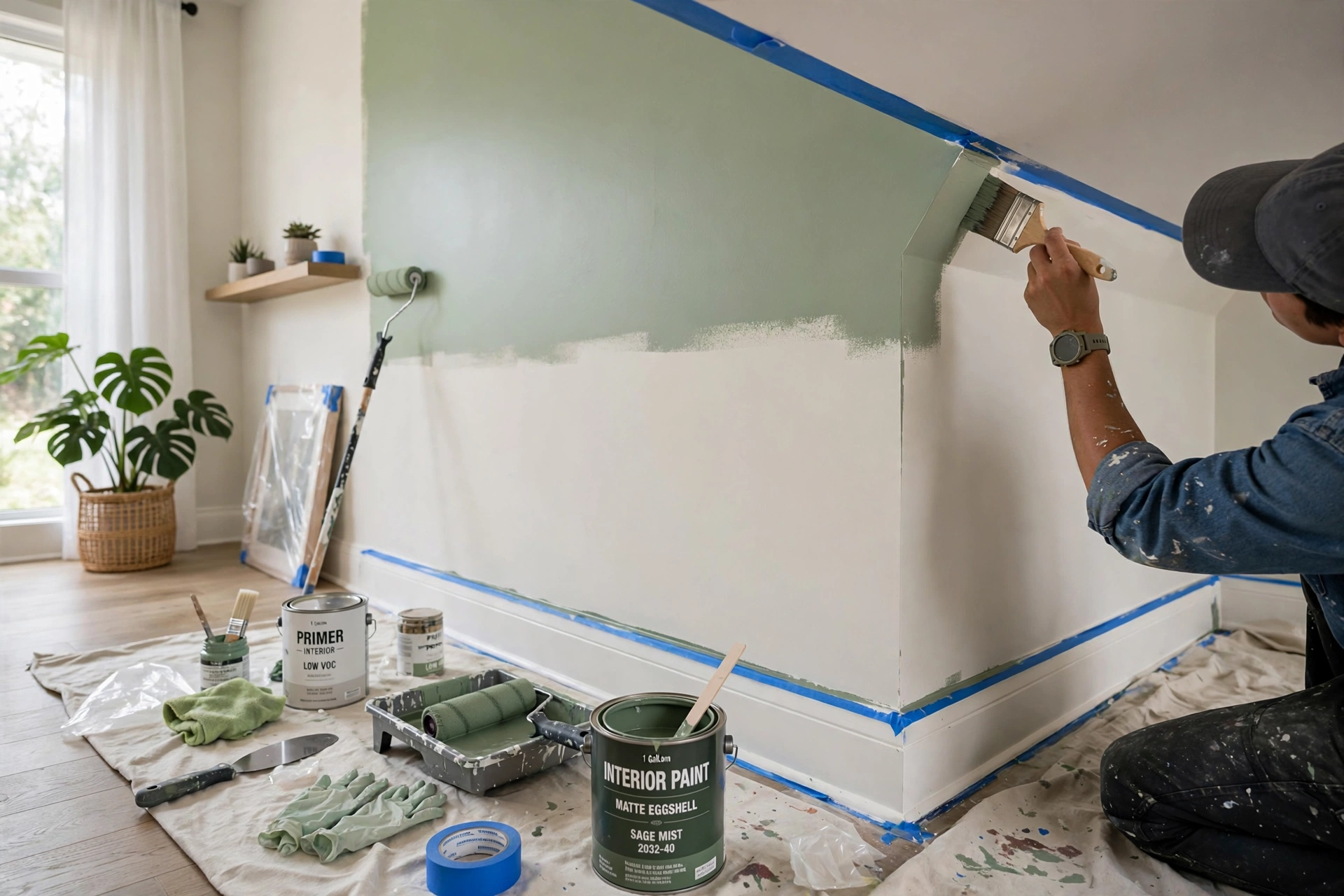
Cutting in: Painting clean edges along trim, ceilings, and corners with a brush before rolling the main area.
Back-rolling: Rolling over sprayed paint to even out texture and improve adhesion.
Wet edge: Keeping the leading edge of painted area wet to avoid lap marks. Always paint into wet paint, never dry.
Layoff: The final light roller pass in one direction to even out stipple texture.
Feathering: Blending the edge of a painted area into the surrounding surface for invisible touch-ups.
Paint Properties
LRV (Light Reflectance Value): Scale of 0-100 measuring how much light a color reflects. Higher = brighter.
Sheen: The gloss level of dried paint, from flat (no shine) to high-gloss (mirror-like).
Hiding power: How well paint covers the surface beneath. Higher hiding = fewer coats needed.
Leveling: Paint’s ability to smooth out brush and roller marks as it dries. Better leveling = smoother finish.
Viscosity: Paint thickness. Too thick = hard to apply; too thin = drips and poor coverage.
Tacky: The sticky stage between wet and dry. Don’t touch or recoat during this phase.
Cure time: Full hardening time (up to 30 days for latex). Different from dry time — paint may feel dry but not be fully cured.
Surface Preparation
Deglossing: Dulling a glossy surface (via sanding or chemical deglosser) so new paint adheres.
Spackle: Paste for filling small holes and cracks. Sands smooth when dry.
Caulk: Flexible sealant for gaps between trim and walls. Paintable caulk is essential for clean lines.
Primer: Base coat that improves adhesion, seals stains, and ensures true color. Not the same as paint.
Bonding primer: Special primer for difficult surfaces (tile, glass, glossy paint). Creates adhesion where regular primer fails.
Color Terms
Undertone: The subtle secondary color beneath the main color (e.g., pink undertone in “neutral” beige).
Saturation: Color intensity. High saturation = vivid; low saturation = muted.
Tint: Color mixed with white (lighter version).
Shade: Color mixed with black (darker version).
Tone: Color mixed with gray (muted version).
Problem Terms
Flashing: Uneven sheen where touch-ups or spot-priming show through the topcoat.
Lap marks: Visible stripes from overlapping roller passes that dried at different rates.
Bleed-through: Stains or old colors migrating through new paint. Requires stain-blocking primer.
Alligatoring: Cracked, reptile-skin pattern from painting over incompatible paint or in extreme temperatures.
Orange peel: Bumpy texture resembling citrus skin, usually from improper spray technique or thick application.
Professional Jargon
Cut pot: Small container for brush work (vs. the main paint tray for rolling).
Holiday: Painter’s term for a missed spot or thin area. “I left a few holidays” means touch-ups needed.
Boxing: Mixing multiple gallons together for color consistency across a large job.
Strike-off: A sample board showing the exact color and finish for approval before full application.
Color and Finish Terms
Hue: The pure color itself — red, blue, green — before any white, black, or gray is added. Value: How light or dark a color is, independent of its hue. Two different hues can share the same value. Chroma: Another word for color intensity, similar to saturation. High-chroma colors are vivid; low-chroma colors are muted. Complementary colors: Opposites on the color wheel (blue/orange, red/green). Placed together they intensify each other — useful for accents, risky for large areas. Analogous colors: Neighbors on the color wheel (blue, blue-green, green). Naturally harmonious; the safest way to build a palette.
Color drenching: Painting walls, ceiling, and trim all the same color for an immersive, cocooning effect. Dramatic and increasingly popular — but unforgiving if you pick the wrong color. Color blocking: Painting bold sections of contrasting color on a wall for graphic impact. Limewash: A textured, mottled paint finish with old-world character, created by applying diluted lime-based paint in crisscross strokes. Chalk paint: Ultra-matte paint that adheres to most surfaces with minimal prep — popular for furniture, less ideal for walls. Milk paint: A traditional, all-natural paint that comes as a powder; creates an authentic chippy, vintage look on furniture. Glazing (decorative): Applying a translucent color layer over a base coat for depth — distinct from the glaze finish on cabinets. Ombre: A gradient effect blending from one color to another, or from dark to light of the same color.
Problem and Repair Terms
Holidays: (already defined above as missed spots) — worth repeating because you’ll hear it on every job site. Runs and sags: Drips of paint that hardened in place, caused by applying too much paint or painting too slowly. Sand out and recoat. Blistering: Bubbles in the paint film from painting over moisture or in excessive heat. Peeling: Paint lifting off in sheets — almost always an adhesion failure from poor prep, painting over dirty or glossy surfaces, or moisture behind the paint. Cracking (checking): Fine cracks from paint applied too thickly or over an incompatible previous coat.
Chalking: A powdery residue on the paint surface, common on aging exterior paint — wipe your hand across it and it comes away white. Paint won’t adhere well until it’s washed off. Mildew: Dark spots from fungal growth in damp areas. Kill it with a mildew remover before painting; painting over it just buries the problem temporarily. Tannin bleed: Brownish stains migrating through paint from wood knots or cedar/redwood — needs a stain-blocking primer, not just another coat. Picture framing / hatbanding: Visible lines where brushed cut-in edges dried before the rolled sections, creating a “frame” effect. Prevent it by maintaining a wet edge. Surfactant leaching: Sticky, brownish streaks on fresh paint in humid conditions (common in bathrooms). Usually washes off once the paint fully cures.
Tools and Equipment Terms
Nap: The length of a roller cover’s fibers. Short nap (3/16″) for smooth surfaces like cabinets and doors; medium nap (3/8″) for standard walls; long nap (3/4″+) for textured surfaces. Wrong nap = wrong texture. Sash brush: An angled brush designed for trim, windows, and cutting in — the angled tip gives you control along edges. Edger: A pad tool with guide wheels for painting along trim without tape. Faster than taping for some painters, less precise than a skilled brush hand. Mil: One-thousandth of an inch — the unit for wet paint film thickness. Pros use mil gauges to verify they’re applying enough paint; too thin means poor durability no matter how good the paint.
Spray tip: The nozzle on a paint sprayer, sized in thousandths of an inch. Smaller tips for thin materials and fine finishes; larger tips for thick paint and broad coverage. Worn tips spray unevenly — a common cause of mysterious finish problems. Back-brushing: Brushing paint into the surface immediately after rolling or spraying it, working it into texture and improving adhesion — standard practice on rough siding and fences. Strainer: A mesh filter for pouring paint into sprayers or trays. Catches dried chunks and debris that would ruin a finish. Cheap insurance; pros never skip it.
How to Use These Terms at the Paint Store
Walking in with the right vocabulary gets you better advice and the right products. Instead of “I need white paint,” try “I need an eggshell-finish interior acrylic with good hiding power for a bedroom — the current color is a dark blue, so I’ll need a tinted primer too.” That one sentence tells the associate your sheen, use case, quality tier, and prep situation.
Ask about LRV when comparing whites and off-whites — it’s printed on most color chips and tells you objectively how light a color is, which beats squinting at chips under fluorescent lights. Mention “blocking” and “cure time” when buying cabinet or trim paint so you get a product formulated to harden properly. And don’t be shy about asking for a “strike-off” or large sample before committing to gallons — any good paint store would rather sell you a $10 sample than watch you return $200 of the wrong paint.
Safety, VOCs, and Cleanup Terms
VOC (volatile organic compounds): Chemicals in paint that evaporate as it dries — the source of “paint smell” and the reason for ventilation. Higher VOC generally means stronger fumes and more environmental impact. Low-VOC: Paint formulated to emit fewer volatile compounds (under 50 g/L for most interior paints). The current standard for interior paint — if you’re buying fresh paint today, it’s almost certainly low-VOC. Zero-VOC: Under 5 g/L — the best choice for bedrooms, nurseries, and anyone sensitive to fumes. Note that adding colorant can raise VOCs slightly, so deep tinted colors aren’t truly zero-VOC.
Mineral spirits: The solvent for cleaning oil-based paint from brushes and tools — and for thinning oil paint. Don’t pour it down drains; let used spirits settle, reuse the clear portion, and dispose of sludge as hazardous waste. Denatured alcohol: A fast-evaporating solvent useful for cleaning shellac-based primers (like BIN) from brushes — water won’t touch shellac. Tack cloth: A slightly sticky cheesecloth for picking up every last speck of sanding dust before painting. Skipping this step is why DIY finishes have dust nibs and pro finishes don’t. Painter’s tape vs. masking tape: Painter’s tape (usually blue or green) is designed for clean removal up to 14 days; beige masking tape bonds harder and can pull paint or leave residue. They’re not interchangeable — use the right one.
The Sheen Scale in Detail
Sheen was defined above, but choosing between the levels deserves more detail. Flat: Zero shine, maximum forgiveness — hides wall imperfections beautifully but scuffs easily and doesn’t wash well. Best for ceilings and low-traffic adult bedrooms. Matte: A whisper more sheen than flat, slightly more washable. The current designer favorite for walls — the sophisticated look of flat with a bit more durability.
Eggshell: Soft, low glow — the workhorse sheen for most walls. Wipes clean reasonably well while still looking soft, not shiny. Satin: Noticeably more shine; very scrubbable. The standard for kitchens, bathrooms, kids’ rooms, and trim in casual homes. Shows imperfections more than eggshell, so walls need to be in good shape. Semi-gloss: Clearly shiny and highly durable — the traditional choice for trim, doors, and cabinets. Highlights every flaw, so prep must be excellent. High-gloss: Mirror-like. Stunning on a perfectly prepped front door or furniture piece; merciless everywhere else. The rule of thumb: the higher the traffic and touching, the higher the sheen — and the better your prep needs to be.
🛒 Shop This Look:
🛒 Shop This Look:
🛒 Shop This Look:



