
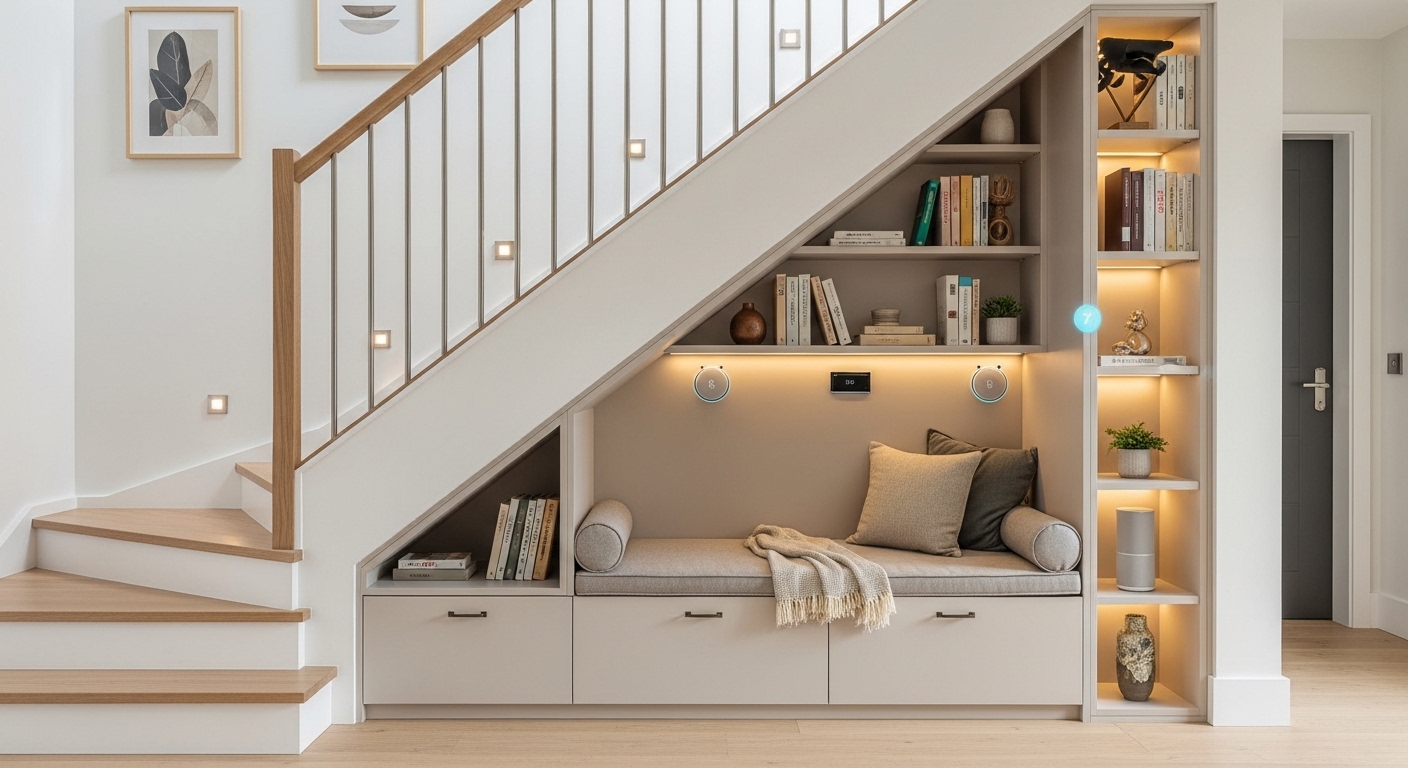
The space under your stairs is one of the most overlooked design opportunities in a smart home. Instead of treating it as awkward leftover square footage, you can turn it into a functional, stylish feature that adds personality and purpose.
With the right wall treatment and layout, this compact area can become storage, display, or even a mini retreat that blends seamlessly into your interior design. Smart under-the-stairs walls are all about maximizing utility while keeping the space visually clean and intentional.
The ideas below focus on smart layouts that elevate everyday living while keeping your interiors polished and practical.
1) Built-In Floating Shelves Display Wall
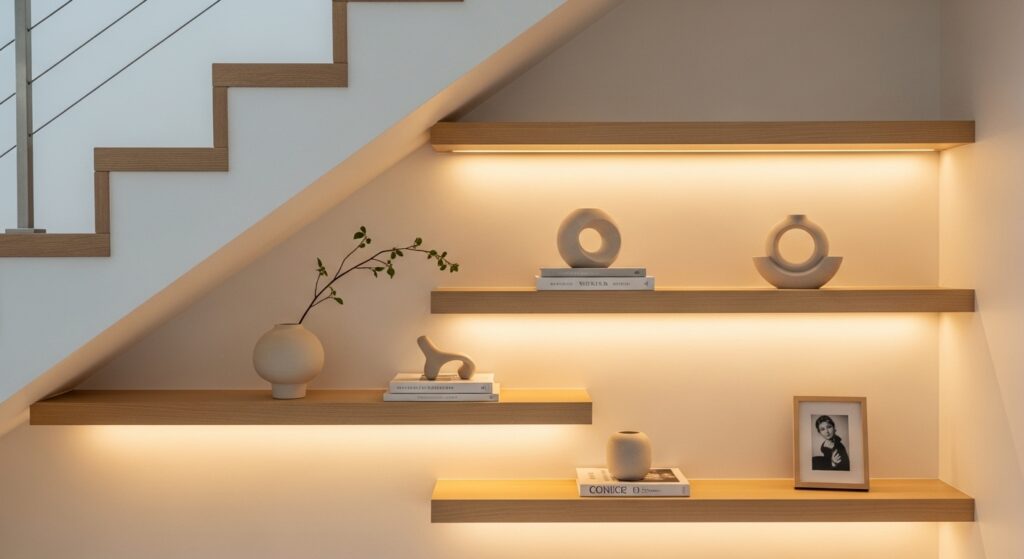
Floating shelves under the stairs instantly convert unused wall space into a curated display zone. By stacking shelves in a stepped arrangement that mirrors the staircase angle, the design feels intentional rather than improvised. Neutral finishes keep the area visually open while allowing books, ceramics, or greenery to add personality. This approach works especially well in smart homes where clean geometry and layered lighting create a polished look. The shelves add depth without crowding the walkway.
Lighting plays a major role in elevating this feature. Soft LED strips beneath each shelf create a warm glow that highlights objects and prevents the nook from feeling shadowed. Because the shelving is wall-mounted, the floor remains clear, preserving movement and openness. The result is a balanced mix of function and decoration — a compact gallery that makes the staircase feel integrated into the overall design instead of separate or forgotten.
2) Hidden Storage Panel Wall
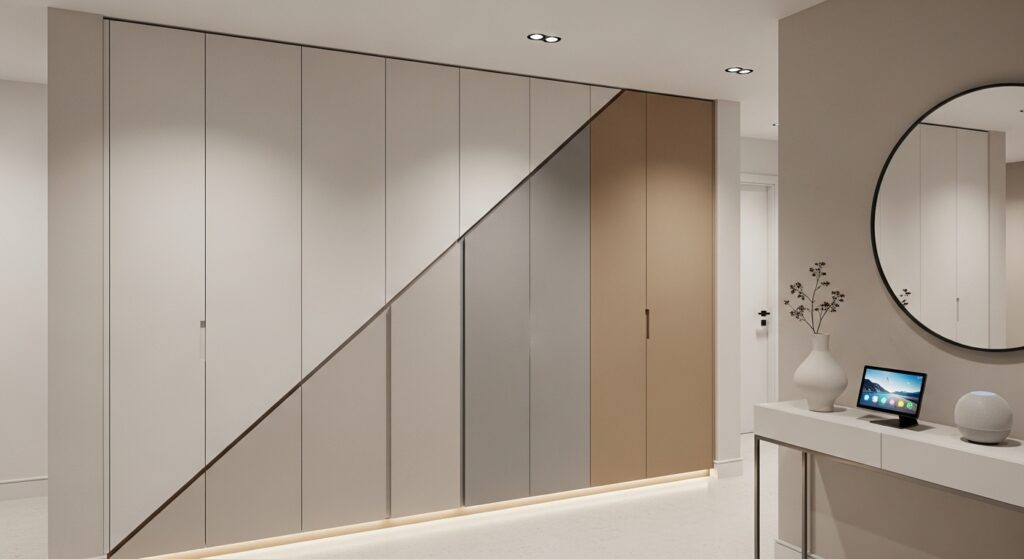
A hidden storage wall transforms under-stair space into a sleek organizational hub while maintaining a minimalist appearance. Flush panels blend into the wall, concealing compartments for shoes, cleaning supplies, or seasonal items. This approach keeps visual clutter out of sight, which is essential in smart homes focused on efficiency and clean aesthetics. The continuous surface makes the staircase feel architecturally intentional rather than pieced together.
Soft-close mechanisms and handle-free doors enhance usability while preserving the streamlined look. Neutral finishes allow the wall to visually recede, helping the hallway feel larger. Because everything is concealed, the area stays calm and tidy even in high-traffic zones. This design proves that smart storage doesn’t need to be obvious — it can be seamlessly embedded into the architecture for a refined, clutter-free environment.
3) Accent Wallpaper Statement Nook
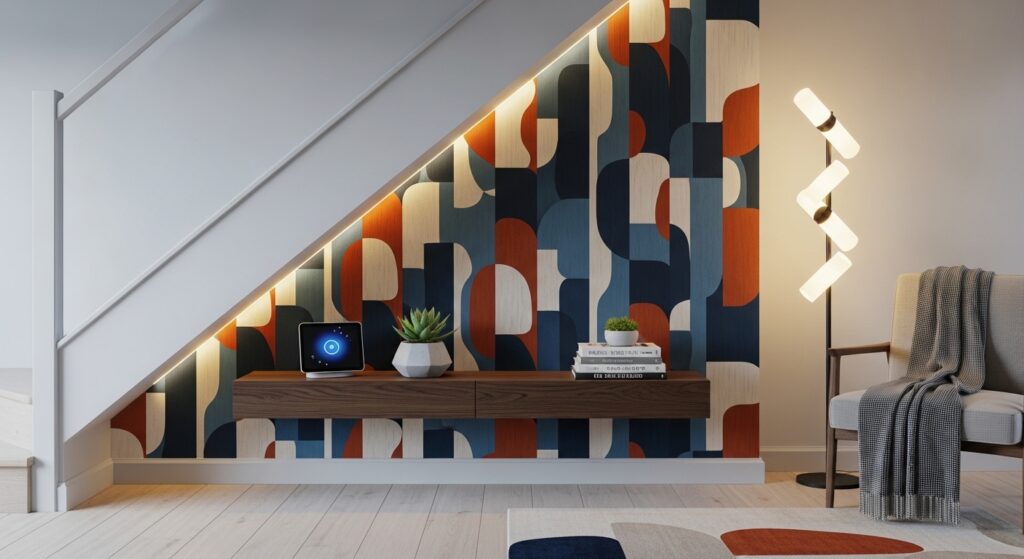
An accent wallpaper wall under the stairs turns a forgotten corner into a focal feature. Bold patterns or textured finishes create contrast against surrounding neutral walls, drawing attention to the architecture. This approach works beautifully in smart homes where intentional visual moments add personality without overwhelming the layout. The angled ceiling naturally frames the wallpaper, making the nook feel like a built-in design statement.
Layered lighting enhances the texture and depth of the pattern, preventing the area from feeling dark. Decorative elements such as a small bench or sculptural piece complete the vignette. Because the wallpaper occupies a compact zone, you can experiment with stronger styles while keeping the rest of the home balanced. The result is a creative highlight that transforms transitional space into an expressive design feature.
4) Compact Reading Nook Wall
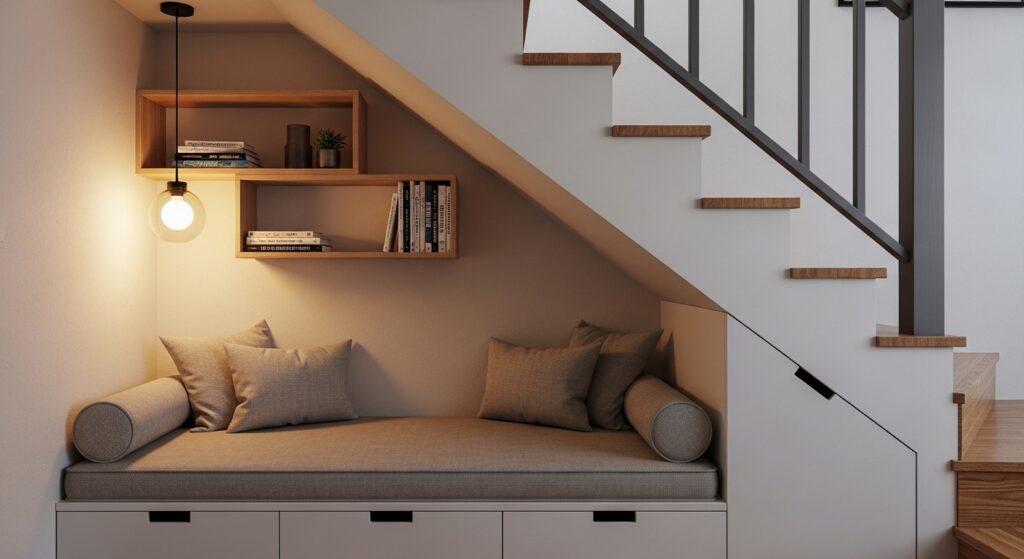
Turning the under-stair wall into a reading nook introduces warmth and purpose to an otherwise unused area. A built-in bench paired with wall-mounted shelves creates a cozy retreat that feels tucked away yet connected to the main space. Soft upholstery and neutral tones prevent the nook from feeling cramped, while layered lighting adds intimacy. This design invites quiet moments without requiring a separate room.
The angled ceiling adds character, making the nook feel custom-designed. Shelving above the bench keeps books accessible while doubling as decor. Smart lighting controls allow brightness adjustments for comfort and energy efficiency. The result is a compact sanctuary that blends relaxation with smart spatial planning, proving even small architectural pockets can support lifestyle moments.
5) Vertical Garden Feature Wall
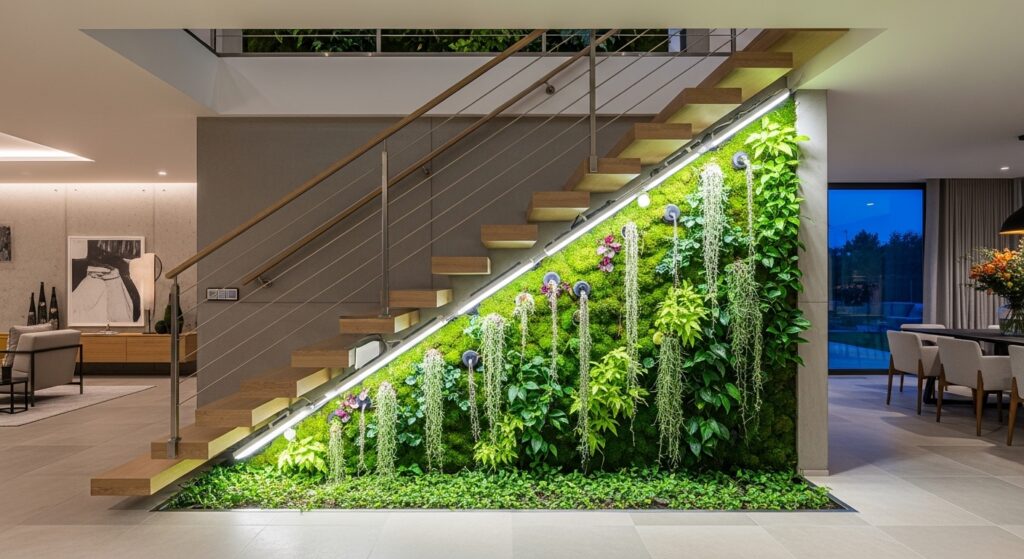
A vertical garden under the stairs introduces organic texture that softens architectural lines. Wall-mounted planters arranged along the stair angle create a living feature that adds freshness and visual movement. This approach works especially well in smart homes focused on wellness and biophilic design. Greenery brightens the area naturally, preventing the space from feeling enclosed.
Integrated grow lights ensure plants thrive even in low-light corners. The layered foliage acts as natural decor, reducing the need for additional styling. Beyond aesthetics, the greenery improves air quality and introduces calming energy. The result is a vibrant wall that transforms transitional space into a refreshing focal point.
6) Smart Workstation Wall

An under-stair workstation creates a productive micro-office without sacrificing floor space. A floating desk paired with vertical organizers maximizes wall storage while keeping the layout streamlined. Neutral finishes maintain visual clarity, ensuring the workspace blends with surrounding decor. This is ideal for smart homes where flexibility and efficiency matter.
Integrated charging ports and concealed wiring keep technology tidy and accessible. Adjustable lighting enhances focus while maintaining a warm atmosphere. Because the workstation is built into an existing niche, it feels intentional rather than temporary. The space becomes a practical productivity zone that coexists seamlessly with daily living.
7) Sculptural Panel Accent Wall

Sculptural wall panels add dimension and artistry to under-stair areas. Raised textures catch light and shadow, creating movement that elevates the architecture. Neutral tones keep the design sophisticated while allowing the panel shapes to stand out subtly. This transforms the staircase wall into a statement feature.
Accent lighting enhances the panel contours, adding depth without clutter. Because the design is wall-focused, the floor remains open and functional. The result is a modern architectural highlight that blends art with structure, making the staircase feel curated and intentional.
8) Minimal Gallery Wall
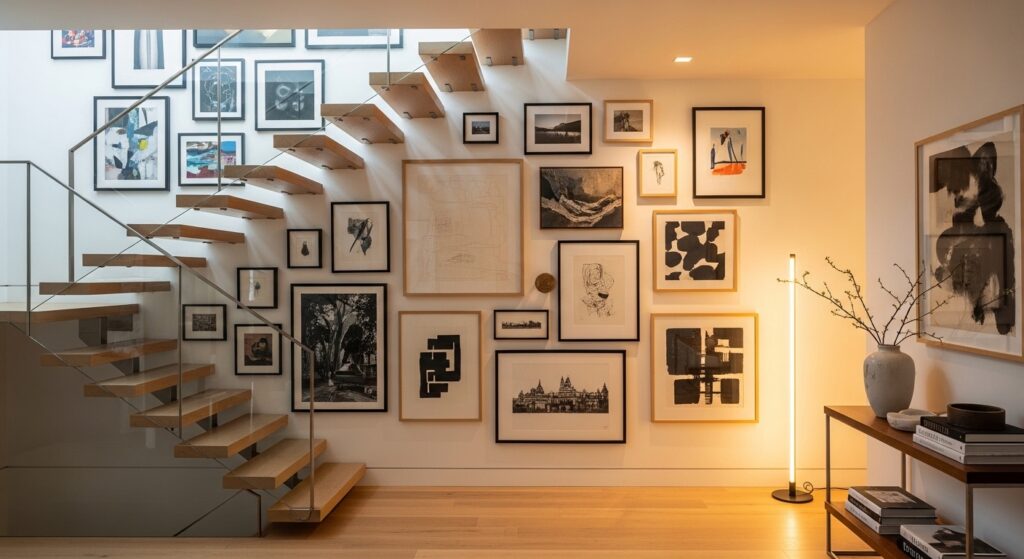
A gallery wall uses the angled staircase line as a natural frame for artwork. Carefully spaced frames create rhythm and personality while maintaining balance. Neutral mats and cohesive color palettes prevent visual overload, keeping the display elegant. This approach turns transitional space into a storytelling feature.
Soft lighting draws attention to the art without overpowering the hallway. The gallery evolves easily, allowing seasonal updates or personal additions. The result is a living wall that adds character and warmth, transforming a simple stair zone into a curated visual journey.
9) Smart Lighting Feature Wall
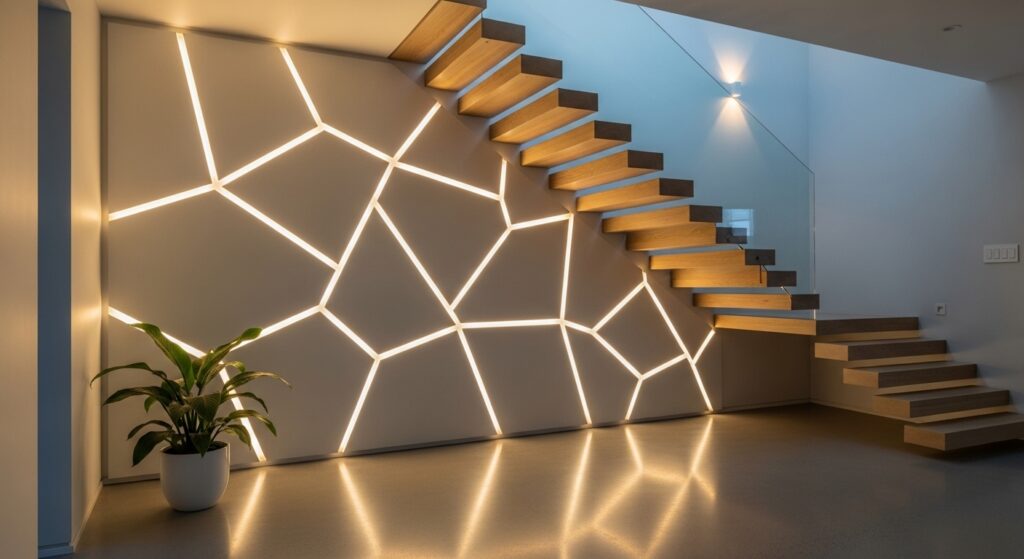
A smart lighting wall transforms the under-stair area into an architectural glow feature. LED strips arranged in geometric patterns create layered illumination that enhances depth. Neutral surfaces allow the light to become the focal point without overwhelming the space. This approach blends technology with design seamlessly.
Programmable lighting lets you adjust mood and brightness throughout the day. The wall becomes both functional illumination and decorative statement. By activating an otherwise dark corner, the staircase area feels intentional and futuristic. The result is a dynamic feature that highlights smart home innovation while elevating everyday ambiance.
10) Built-In Bench and Storage Wall

A built-in bench under the stairs combines seating and storage in one streamlined feature. The wall structure follows the stair angle, creating compartments beneath the seat for shoes, bags, or everyday essentials. Neutral finishes keep the installation visually light, preventing the nook from feeling crowded. In smart homes, multi-functional furniture like this maximizes efficiency while maintaining a clean aesthetic. The bench also creates a natural pause point in entryways or hallways.
Soft cushions and warm lighting make the area feel welcoming rather than purely practical. Hidden drawers preserve a clutter-free appearance, supporting organized daily routines. Because the design is integrated into the wall, it reads as architecture instead of furniture. The result is a functional zone that improves circulation while adding comfort and intention to an often-overlooked corner.
11) Glass Display Cabinet Wall
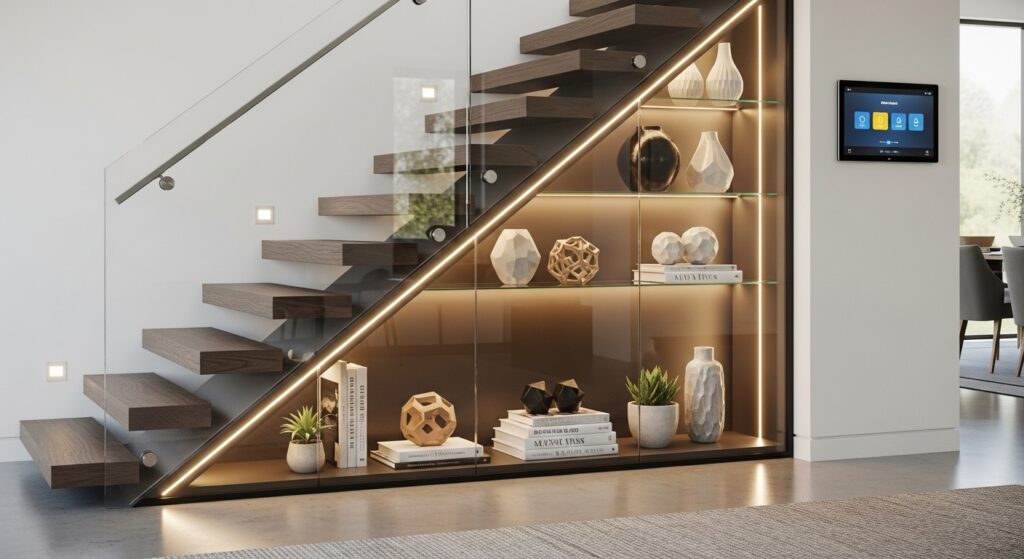
A glass-front display wall transforms under-stair space into a refined showcase. Built-in cabinets with clear panels allow decorative pieces, books, or collectibles to become part of the architecture. This design adds depth and brightness, as glass reflects ambient light and prevents the nook from feeling enclosed. The angled cabinetry mirrors the staircase, reinforcing visual harmony within the layout.
Integrated LED lighting highlights displayed items while adding a soft glow that elevates the hallway atmosphere. Minimal framing keeps the look contemporary and uncluttered. Because storage is both visible and curated, the wall encourages intentional styling. The result is a polished feature that blends organization with display, making transitional space feel purposeful and elegant.
12) Textured Wood Slat Accent Wall
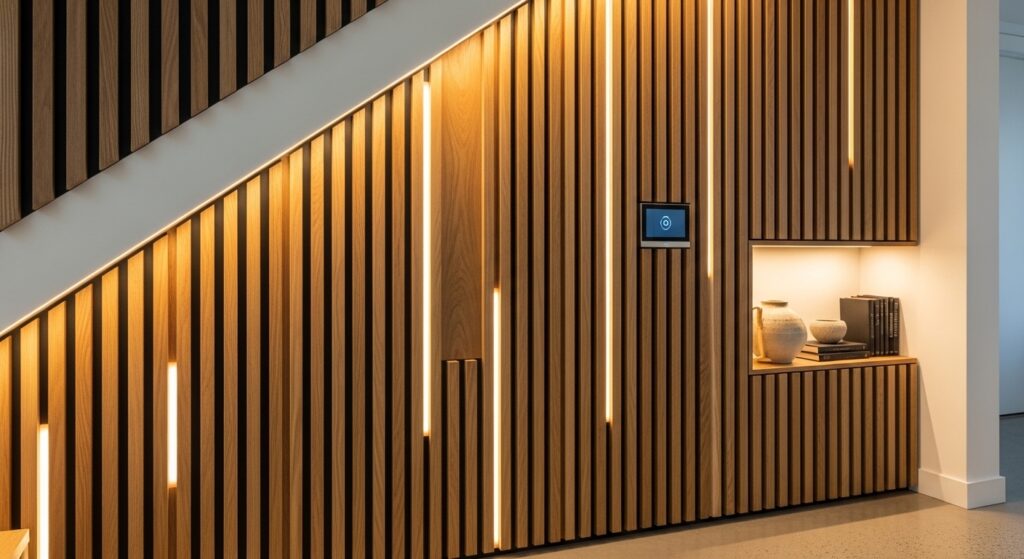
Wood slat paneling introduces warmth and vertical rhythm that enhances the staircase geometry. The repeating lines guide the eye upward, making the area feel taller and more open. Natural finishes soften the architectural edges while creating contrast against smooth surrounding walls. This texture adds character without overwhelming the compact space.
Hidden lighting between slats produces subtle shadows that bring depth to the surface. The material pairs beautifully with modern interiors, adding organic balance to smart technology-driven homes. Because the slats are wall-focused, the floor remains clear for movement. The result is a tactile, inviting feature that elevates the stair zone into a design highlight.
13) Compact Home Bar Wall
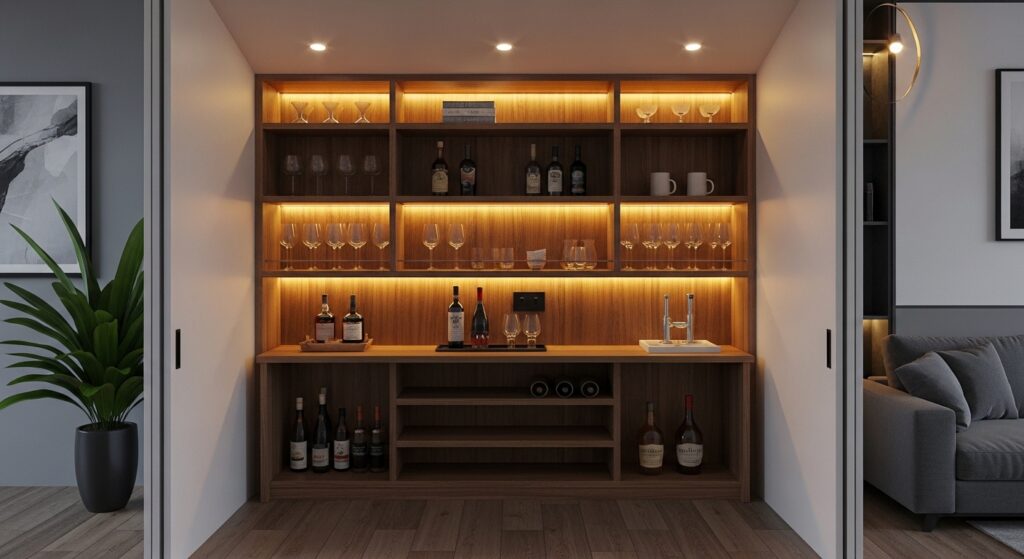
A compact home bar under the stairs turns unused wall space into an entertaining feature. Floating shelves store glassware and bottles, while a small counter provides prep space. Clean lines and neutral finishes maintain cohesion with surrounding decor. This layout makes hosting easier without dedicating an entire room to bar storage.
Accent lighting highlights materials and creates a cozy evening ambiance. Concealed storage keeps essentials organized while preserving a sleek appearance. Because the installation follows the stair angle, the bar feels custom-built. The result is a social focal point that blends function, style, and smart spatial planning.
14) Decorative Mirror Wall
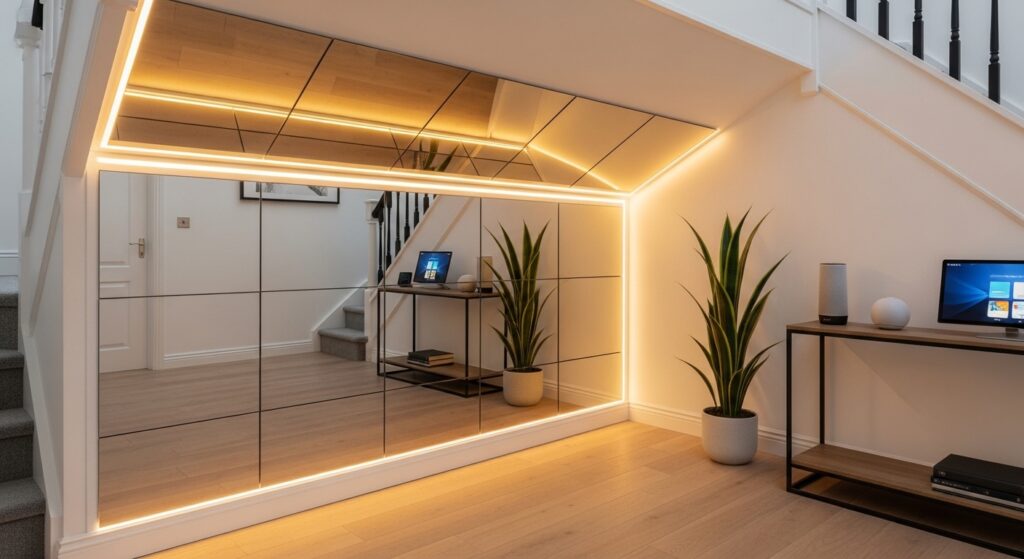
Mirrors are a powerful way to visually expand under-stair areas. A wall of carefully arranged mirror panels reflects light and movement, making the space feel brighter and larger. The angled reflections enhance architectural interest while preventing the nook from appearing closed off. This approach works especially well in narrow hallways.
Soft lighting amplifies the reflective surfaces, adding glow without glare. Framed or frameless panels can match the home’s aesthetic, from minimalist to classic. Beyond aesthetics, mirrors improve spatial perception, making transitions feel more open. The result is a luminous wall that transforms a tight corner into an airy visual feature.
15) Pegboard Utility Wall
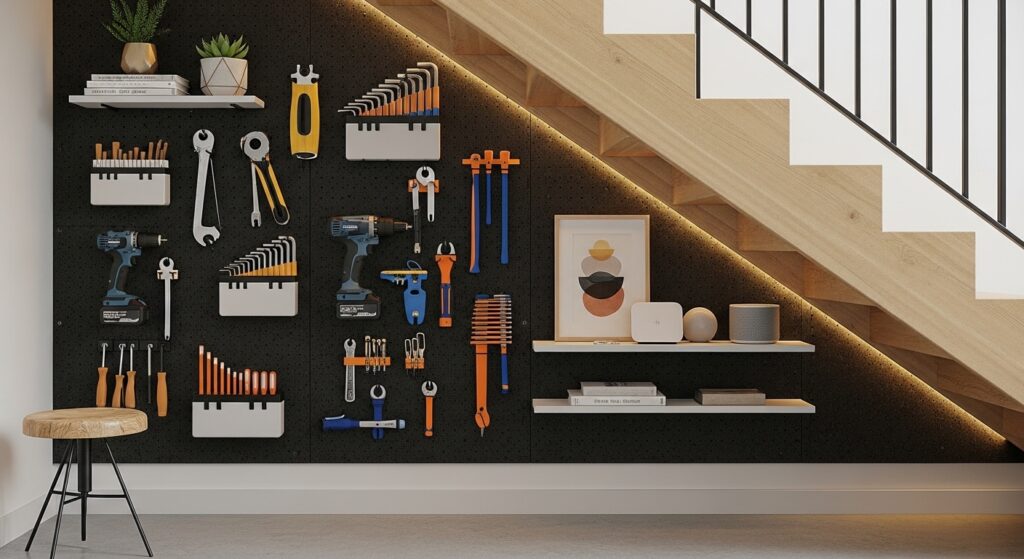
A pegboard wall creates a flexible storage system that adapts to changing needs. Hooks, shelves, and containers can be rearranged easily, supporting everything from tools to decorative accents. This modular design keeps essentials accessible while maintaining a tidy appearance. In smart homes, adaptability is key, and pegboards deliver both order and style.
Neutral colors and clean layouts prevent the wall from feeling cluttered. Integrated lighting improves visibility and highlights organization. Because everything has a designated place, the under-stair zone becomes efficient rather than chaotic. The result is a practical wall that evolves with household routines while staying visually balanced.
16) Cozy Pet Corner Wall
Transforming under-stair space into a pet corner creates a dedicated retreat for furry companions. A built-in bed and small storage shelves keep toys and supplies organized. Soft finishes and warm lighting make the nook feel inviting, blending seamlessly with the home’s decor. This thoughtful feature supports both comfort and cleanliness.
The enclosed angle naturally creates a den-like atmosphere pets enjoy. Durable materials ensure easy maintenance while maintaining style. Because the area is integrated into the wall, it doesn’t disrupt circulation. The result is a charming functional space that enhances daily living for both pets and owners.
17) Smart Charging Station Wall
A charging station wall centralizes devices in a neat, accessible hub. Floating shelves house phones, tablets, or smart accessories while hidden outlets keep cables out of sight. This prevents clutter from spreading across the home and supports organized routines. The compact setup blends technology with design.
Soft lighting improves usability without overpowering the hallway. Cable management systems preserve a clean appearance, reinforcing the smart home aesthetic. Because the station is wall-integrated, it feels intentional and permanent. The result is a streamlined tech zone that simplifies everyday charging needs.
18) Statement Art Feature Wall
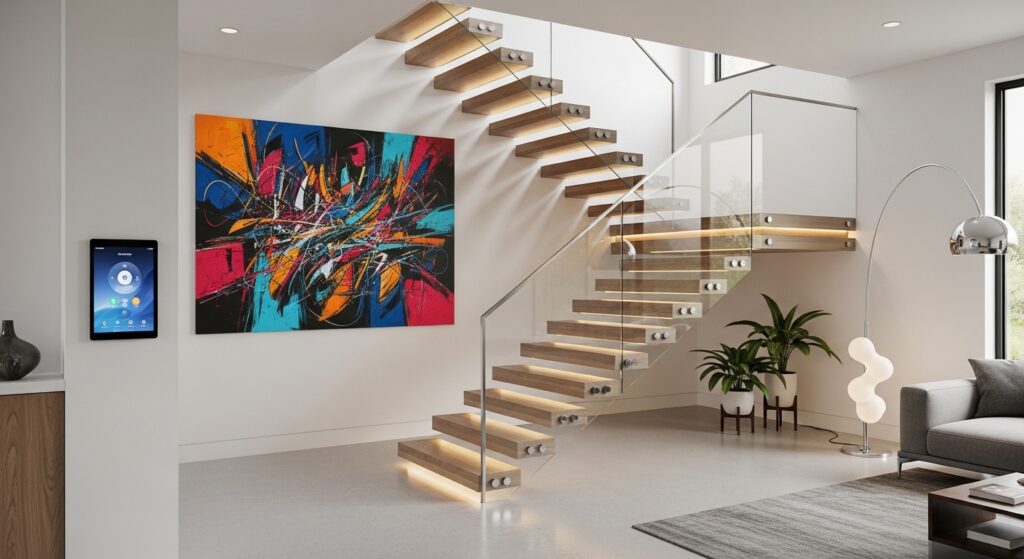
A statement art wall turns the under-stair area into a focal design moment. A single large artwork or curated piece draws attention to the architectural shape, making the nook feel purposeful. Neutral surroundings allow the art to stand out without visual clutter. This approach adds personality and sophistication.
Accent lighting highlights texture and color, creating depth that enhances the staircase silhouette. The installation feels gallery-like, elevating transitional space into an expressive feature. The result is a bold yet refined wall that celebrates creativity while maintaining smart home elegance.
Conclusion
Under-the-stairs walls offer far more potential than simple leftover space. With thoughtful design, these compact areas can support storage, display, relaxation, or technology while enhancing the overall flow of a smart home. Each idea shows how intentional wall treatments transform awkward corners into purposeful features that feel integrated and stylish.
By combining functionality with clean aesthetics, you create spaces that work harder without adding clutter. Whether you prioritize organization, ambiance, or creativity, the right under-stair wall design turns hidden square footage into a highlight. Smart homes thrive on efficiency and beauty — and even the smallest walls can play a meaningful role in achieving both.