
As an Amazon Associate, I earn from qualifying purchases. This means I may earn a commission if you purchase through links on this page — at no extra cost to you.
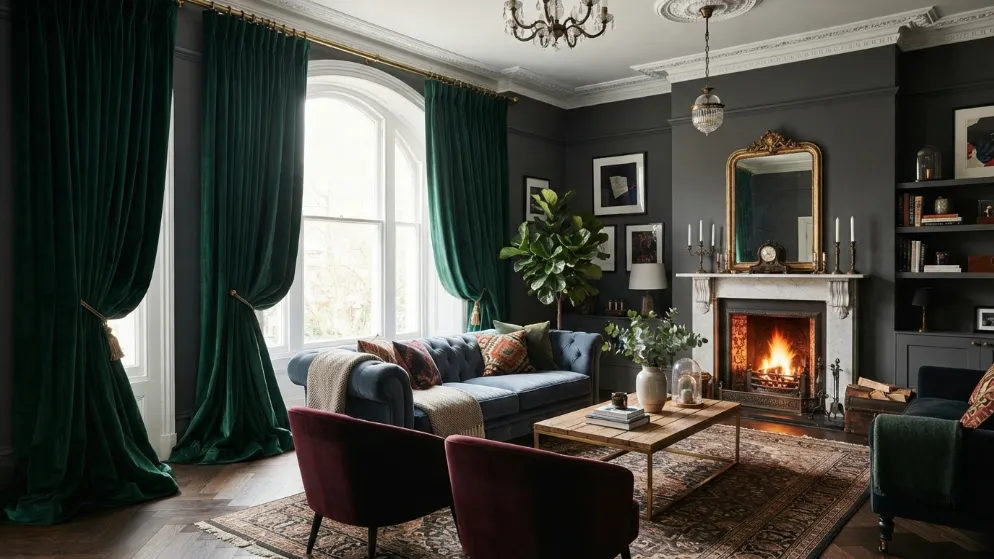
Victorian design has a reputation problem: too much velvet, too many tassels, rooms that feel like museums. Modern Victorian keeps the drama and ditches the dust. It takes the best of the era — the proportions, the craftsmanship, the unapologetic richness — and edits ruthlessly until only the good parts remain. The result is a room with presence: deep color, serious furniture, real ornament, and enough empty space and modern simplicity that people actually want to sit in it.
🛒 Shop This Look:
The edit principle: drama, then restraint
Modern Victorian is an editing exercise. Start by choosing the room’s dramatic moments — usually two or three: a tufted sofa, a chandelier, a wall of molding, a deep wall color. Everything else in the room should be quieter, simpler, and more modern, so the dramatic pieces have room to register. A room where everything is dramatic is a room where nothing is; the eye has nowhere to rest and the drama collapses into noise.
The practical test is to remove one ornate thing at a time and see whether the room improves. In most over-decorated Victorian rooms, removing the smallest ornate object — a tassel, a figurine, a third patterned textile — makes the room look better within a minute. Keep removing until the room feels rich but calm, then stop. That stopping point is the style.
Proportions: the era’s real gift
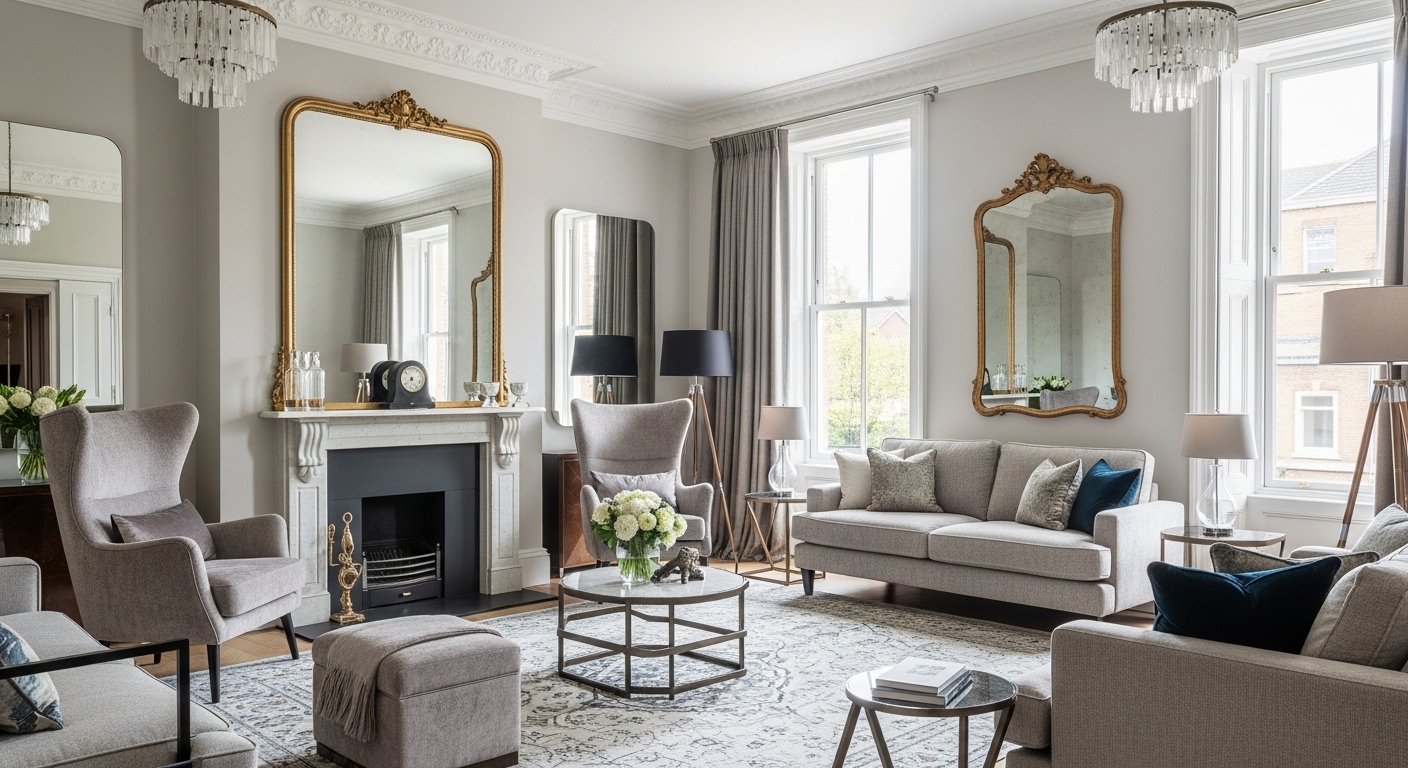
What Victorian rooms get right is proportion: tall ceilings, generous moldings, furniture scaled to the room rather than to a catalog. Even without period architecture, you can borrow the proportions. Hang curtains near the ceiling and let them fall to the floor — the vertical line makes the room feel taller. Hang art and mirrors at a consistent eye level rather than scattered at different heights. Choose a coffee table that is roughly two-thirds the sofa’s length, and a rug that grounds the whole seating group rather than floating beneath the table alone.
Moldings and trim, real or applied, do more for this style than any single furniture piece. A simple picture-rail molding or a painted panel molding on one wall gives the room architectural character that furniture alone cannot. Keep moldings painted the same color as the wall or one shade lighter — contrasting trim on every surface turns the room into a diagram of itself. One wall of molding, or molding carried quietly around the room, is enough.
The sofa: tufted velvet, dosed carefully
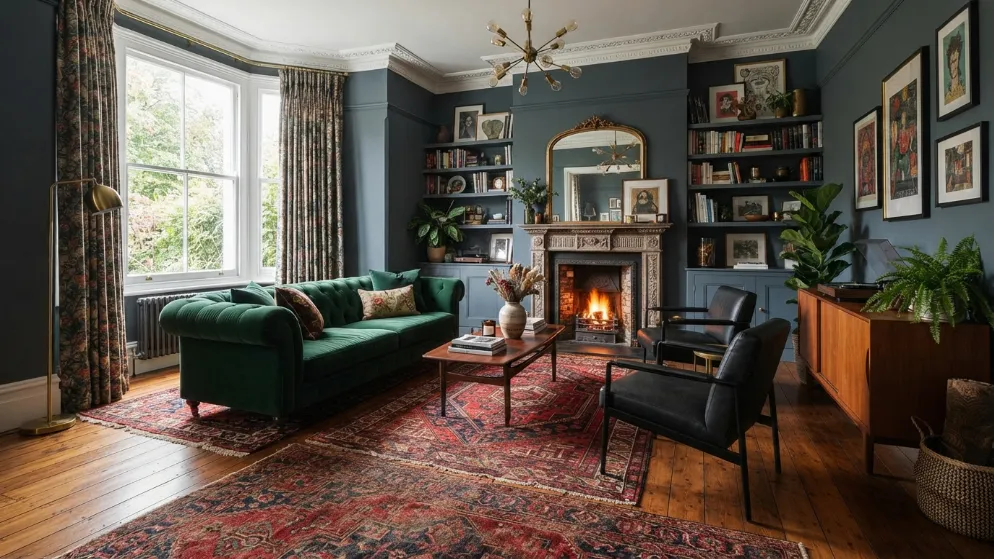
The tufted sofa is the signature piece, and velvet is its natural fabric. A Chesterfield or a modern tufted sofa in a deep tone — emerald, burgundy, navy, or forest green — anchors the room with a single strong statement. The dose rule matters: one tufted piece per room. A tufted sofa plus a tufted chair plus tufted ottomans turns the room into an upholstery showroom. Let the sofa carry the tufting and keep the other seating simpler — a clean-lined armchair, a modern accent chair, a plain slipper chair.
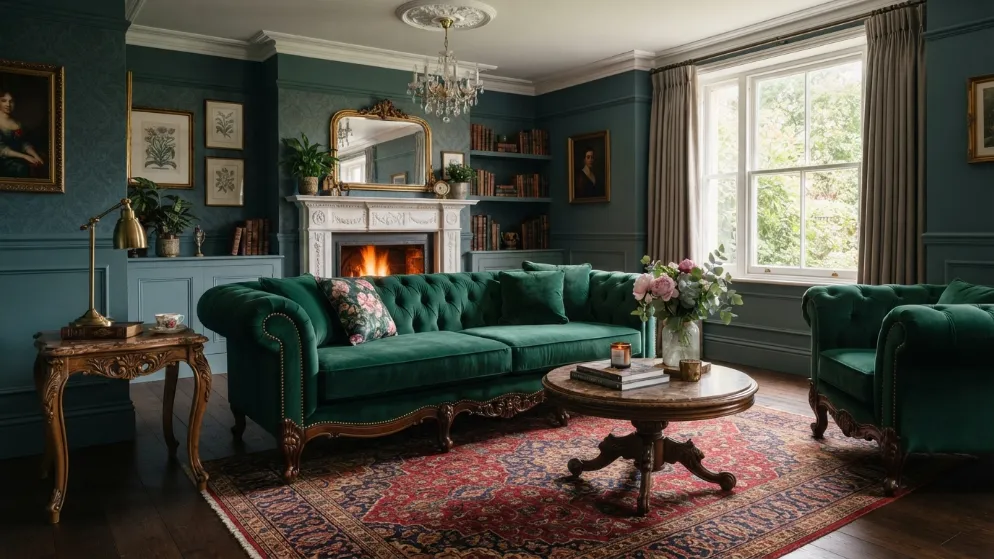
Chesterfield Sofa Velvet, Modern Tufted Couch 3 Seater with Rolled Arms and Nailhead (Green)
Best for making a tufted velvet sofa the striking centerpiece of a modern Victorian living room.
Color: deep jewel tones balanced with warm neutrals
Victorian palettes are deep: emerald, burgundy, navy, plum, charcoal. The modern part is the balance. Walls in a warm neutral — warm white, soft stone, pale greige — let one deep accent wall or one deep sofa carry the drama. A room with deep walls on all four sides plus a deep sofa plus deep curtains is a cave, not a living room. Pick one deep move per sightline: deep wall behind the sofa, or deep sofa against pale walls, or deep curtains against pale walls — not all three at once.
Undertone discipline keeps deep colors from fighting each other. A cool navy sofa next to a warm burgundy curtain looks accidental; two deep colors with the same undertone family look composed. When in doubt, pair one deep color with warm neutrals and metallics — brass, gold, warm wood — rather than adding a second deep color. Metallics are the bridge that lets deep tones share a room without clashing.
Walls: art at scale, mirrors with purpose
Victorian walls like scale. One large piece of art — a landscape, a portrait, an abstract in deep tones — hung at eye level anchors a wall better than a grid of small frames. If you love a gallery arrangement, keep it to one wall, keep frames consistent in tone (all dark wood or all gilt, not a mix), and leave generous space between pieces. A wall crowded edge to edge with frames loses the grandeur it was aiming for.
Mirrors do double work here: they add light and they add ornament. A large arched or gilt mirror above a mantel or console is a classic move, and it suits the style precisely because it is both decorative and useful. One large mirror per room is usually enough; a second one starts competing with the first instead of adding light. Hang mirrors where they reflect something worth seeing — a window, a chandelier, a piece of art — not a blank wall or a television.
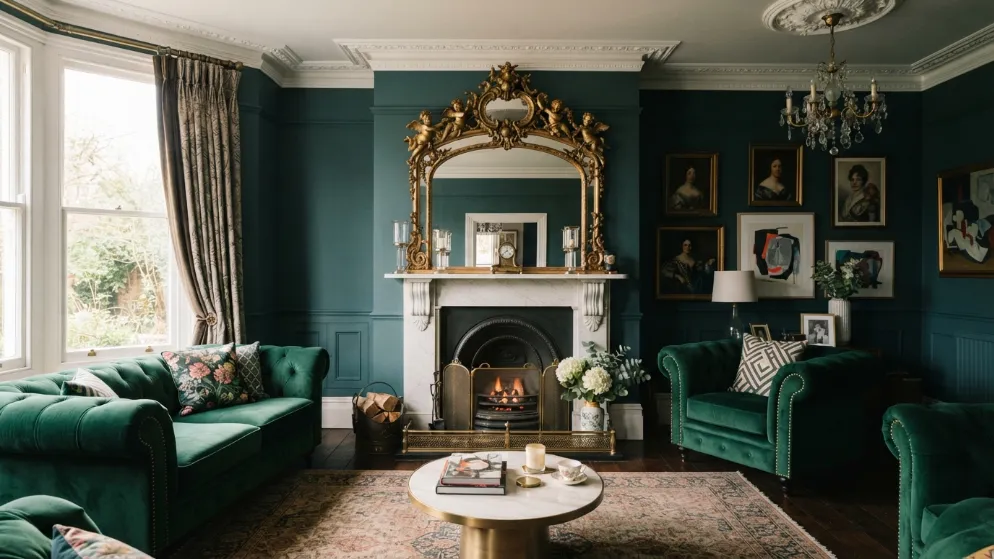
Besdomus Vintage Arched Gold Mirror, 48"x33", Baroque Traditional Ornate
Best for adding grandeur above a mantel or on a feature wall, while amplifying light.
Lighting: the chandelier, sized by rule of thumb
A chandelier is the most Victorian lighting choice and the easiest to get wrong. As a rule of thumb, its width should be roughly half to two-thirds the width of the table or seating area beneath it, and it should hang low enough to feel part of the room — well above head height, but not lost against the ceiling. A chandelier that is too small looks apologetic; one that is too large dominates everything beneath it. Crystal or brass suits the style; keep the design’s lines clean enough that it reads as modern rather than a museum piece.
Chandelier aside, the room still needs lamps. Table lamps beside the sofa and a floor lamp by a reading chair give the layered light that makes velvet and deep colors glow in the evening. A room lit only by a chandelier looks dramatic for ten minutes and tiring after an hour. Put the chandelier on a dimmer so one fixture can serve both a dinner-party glow and a quiet evening.
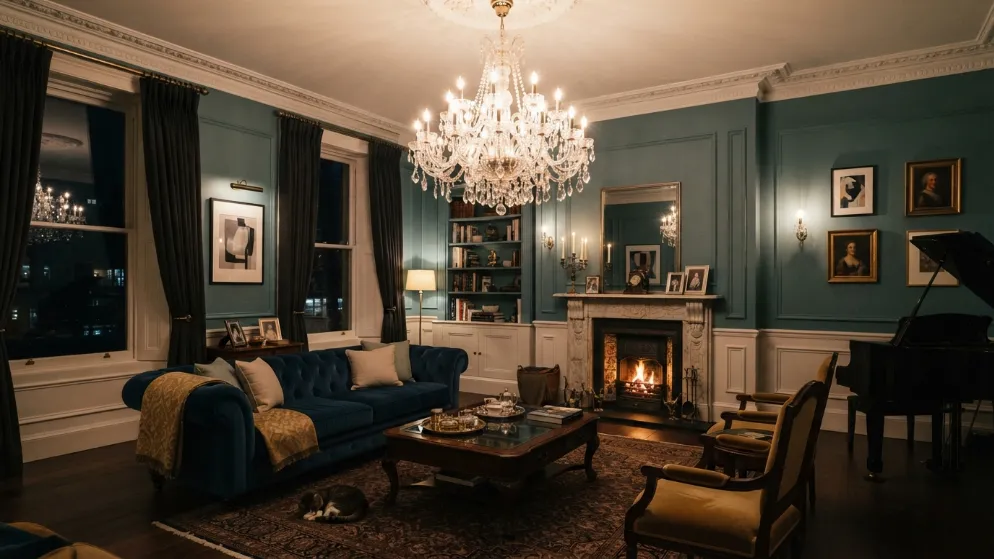
chandiry Round Crystal Chandelier, 31.5 inch, 16-Light Brass Gold
Best for a crystal, brass or gold-finished statement chandelier that highlights high ceilings and ornate details.
Windows: floor-to-ceiling curtains, hung high
Curtains are one of the easiest Victorian wins. Hang the rod near the ceiling, extend it past the window frame on both sides, and let the curtains fall to the floor. The vertical line makes the room feel taller and the windows larger, which is exactly the proportion the style wants. Velvet or a heavy linen in a deep tone suits the drama; sheer panels underneath keep daylight available during the day.
The common mistake is curtains that are too short or too narrow, which make windows look smaller and the room feel unfinished. Curtains should just brush the floor, and when open they should clear the glass almost entirely. If your windows are small, a wider rod and lighter fabric do more for the room than heavier fabric ever will.
ChadMade 106 Wide x 120 Long Inches Velvet Curtain, Burgundy Red, Leon Collection
Best for floor-to-ceiling velvet curtains in a deep burgundy tone that add drama and luxury while framing windows beautifully.
Rugs: one pattern leader, sized to the group
The rug should be big enough for the front legs of the sofa and chairs to sit on it, and it should extend past the coffee table on all sides. This matters more in a Victorian room than most, because the furniture is heavier — a small rug under a tufted sofa makes the whole group look stranded. Measure the seating footprint and add room around it before you buy.
Pattern should follow the one-leader rule: if the sofa is solid, the rug can carry pattern — a muted Oriental, a faded traditional design, a quiet border. If the sofa is already tufted and deep-toned, the rug should be calmer, letting the sofa lead. One pattern leader per seating group keeps the room composed; two competing patterns under the same coffee table make the eye work too hard.
SAFAVIEH Isabella Collection Area Rug, 9′ x 12′, Oriental Design
Best for an Oriental-design rug layered over hardwood floors to add warmth and texture while defining a seating area.
🛒 Shop This Look:
Mixing modern pieces without breaking the spell
Modern pieces are what keep the room from becoming a period set. A clean-lined coffee table beside a tufted sofa, a simple floor lamp beside a gilt mirror, a plain linen cushion on a velvet sofa — each modern note makes the Victorian notes read as choices rather than costume. The mix works when the modern pieces share the room’s color temperature: warm woods, brass, and warm neutrals bridge both sides.
The ratio to aim for is roughly two-thirds Victorian character, one-third modern simplicity. More modern than that and the room loses its identity; less and it tips back into museum territory. If you are unsure whether a modern piece belongs, check its silhouette: simple, low, and unadorned pieces blend in; shiny, angular, high-tech pieces fight the room.
Seating beyond the sofa: the accent chair’s job
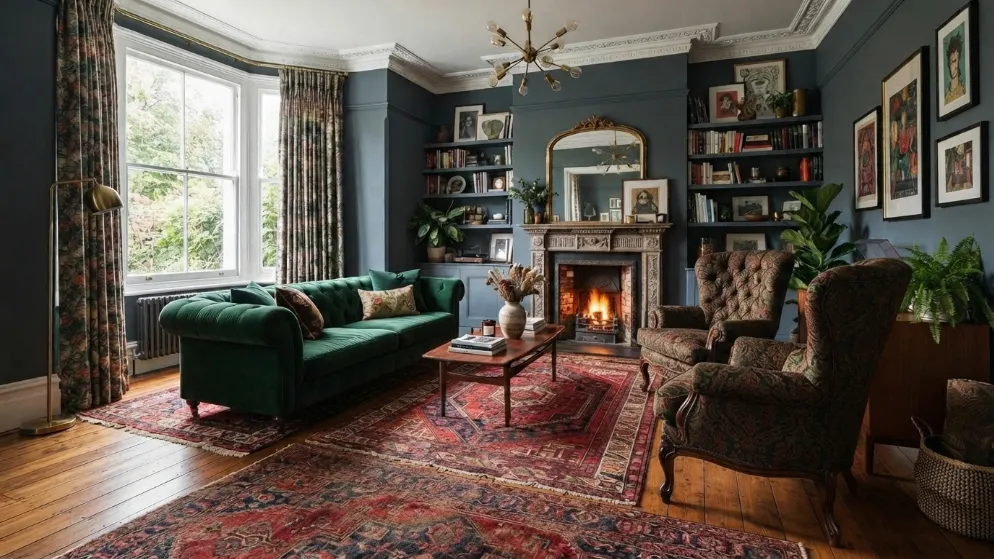
An accent chair in a Victorian room should do a specific job: a reading chair by a lamp and a window, a conversation chair facing the sofa, a small chair that lets a third person join the group without dragging furniture. A high-back, button-tufted chair suits the style, but keep it to one — two tufted chairs plus a tufted sofa is the upholstery showroom again. The second chair, if you need one, should be simpler: a clean armchair in linen or leather that lets the tufted pieces lead.
WQSLHX Velvet Accent Arm Chair, High Wingback, Button-Tufted, with Gold Legs (Red)
Best for a high-back, button-tufted velvet accent chair that creates intimate seating near windows or alongside a sofa.
Small rooms and rented rooms
Victorian drama scales down if you pick one dramatic moment and let the rest stay simple. In a small room, choose the sofa or the chandelier or the accent wall — not all three — and keep walls light and furniture low enough not to crowd the ceiling. A large mirror opposite a window borrows light and adds the ornament the style wants without taking floor space.
Renters can get most of the look without structural changes: a large rug, floor-to-ceiling curtains on an existing rail extended wider, lamps, a velvet throw, and one gilt-framed mirror. Applied molding is usually a step too far for a rental, but a tall mirror and high curtains deliver much of the same vertical drama. If the walls are a cold rental white, warm textiles and warm lamplight correct the feeling more than any single furniture purchase.
Where money shows, and where it does not
Spend where the body meets the room: the sofa’s comfort, the rug underfoot, and the lighting that shapes everything else. A well-made tufted sofa and a rug that is actually large enough will do more than any decorative object. Save on small ornaments, tassels, and matched accessory sets — Victorian rooms look better with fewer, better things than with a full set of anything, and secondhand pieces with honest wear fit the style better than shiny new imitations.
Old furniture is an advantage here. A carved console, a gilt mirror, or a solid wood table with wear looks collected rather than worn out, and often costs less than new. Check drawers, joints, and stability before finish — a beautiful piece that wobbles is not a bargain, however good it looks.
Mistakes that turn drama into a museum
The most common mistake is ornament overload: tufted everything, tassels everywhere, patterned rug plus patterned curtains plus patterned cushions. The second is symmetry taken too far — matched everything on both sides until the room looks like a hotel lobby; a little asymmetry keeps it a home. The third is cool lighting on warm, deep materials, which flattens velvet and wood alike — warm bulbs and dimmers fix it. The fourth is a rug too small for the seating group, which ungrounds the heaviest furniture in the room. The fifth is a chandelier hung too high, where it lights the ceiling instead of the room.
A starter plan
Start with the sofa and the light. Make sure the sofa is comfortable and one deep, solid color, add lamps beside seating, and put a rug under the group big enough for front legs. Then choose one deep accent and repeat it in one other place — a cushion, a throw, a piece of art. Then hang one large mirror or piece of art at eye level on the main wall, and hang curtains high and wide. Live with those layers for a week before adding anything ornate — you will see clearly what the room still needs, and just as clearly what it does not.
For more ideas in this room, explore more living room ideas, and see how the same classic language changes in Italian living rooms, which trade Victorian weight for studied ease, and in Scottish living rooms, which trade it for cozy restraint.
🛒 Shop This Look:



