
As an Amazon Associate, I earn from qualifying purchases. This means I may earn a commission if you purchase through links on this page — at no extra cost to you.
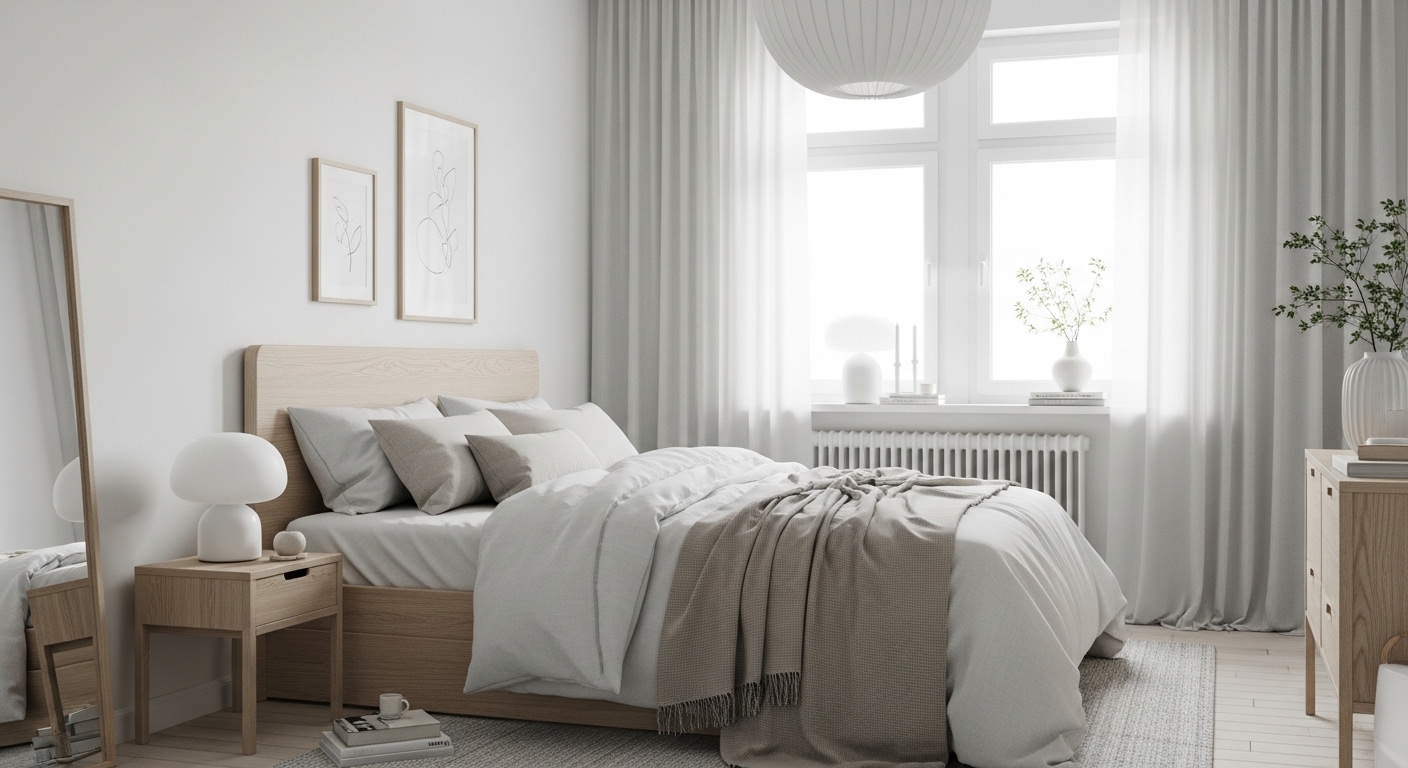
Swedish bedrooms look calm because they are built on restraint: light walls, pale wood, simple furniture, and very little clutter. The style is often called Scandinavian, but the Swedish version has its own character, a little warmer and more lived in than the starkest minimalism, with textiles and wood doing the work that decoration does elsewhere. This guide is about building that feeling in a real bedroom: choosing the right whites and woods, keeping furniture simple, layering textiles for warmth, and editing until the room feels calm rather than empty.
White Walls Done Right
White is the base of a Swedish bedroom, but not all whites work. A stark, blue-white can feel cold, especially in a north-facing room or in winter. A warm white, one that leans very slightly toward cream, keeps the room bright without the chill. Test whites the same way you test any paint: a large patch, checked in morning light, evening light, and lamplight. The right white disappears and lets the wood and textiles speak. The wrong white becomes the loudest thing in the room.
If repainting is not an option, white bedding and light curtains shift a room most of the way toward Swedish. The walls matter less than the overall lightness. Keep window treatments sheer or light, keep furniture away from windows where possible, and let daylight do as much work as it can. A Swedish room should feel bright in the middle of the day without lamps on.
Pale Wood Is the Warmth
Wood is what keeps a Swedish bedroom from feeling sterile. Pale woods, ash, birch, light oak, and pine, add warmth without darkness, and they suit the style better than dark walnut or mahogany. A light wood bed frame, bedside tables, or a bench gives the room its warm note. Mixing two pale woods is fine; mixing pale wood with a dark wood statement piece usually is not, because the dark piece becomes a focal point the style does not want.
Wood should appear in a few places, not everywhere. A frame, two nightstands, and one bench or chair give enough. Wood on every surface, floors included, can still work if the walls and bedding stay light, but in a small room it risks feeling like a cabin rather than a calm bedroom. Balance wood with white and textile so no single material dominates.
The Bed as the Anchor
Swedish bedrooms are built around a simple bed. A low platform frame, or a simple wooden frame with a plain headboard, suits the style better than an ornate or upholstered statement bed. The bed should look restful, not impressive. Dress it in layers of neutral textiles: white or cream sheets, a light duvet, a wool or linen throw, and pillow covers in white, cream, or soft grey. The layering is the decoration. A bed with four textures in quiet tones looks richer than a bed with one bold pattern.
Keep the pillow count low. Two sleeping pillows and one or two accent pillows are enough. A Swedish bed is made to be slept in, not displayed, and a pile of decorative pillows that must be removed nightly works against the calm the room is supposed to give. The same restraint applies to the bedside tables: a lamp, a book, a glass of water. Anything more is clutter by another name.
🛒 Shop This Look:
Textiles: Where the Softness Lives
Because Swedish rooms use so little color and decoration, textiles carry the softness. Linen bedding, a wool throw, a cotton rug, and curtains in a natural weave all add the tactile warmth that paint and wood alone cannot. Choose natural fibers where you can, because they age better and feel better than shiny synthetics. A linen duvet that wrinkles slightly looks right in a Swedish room. A perfectly smooth synthetic one looks out of place.
Layer textiles by weight, not by color. A light sheet, a medium duvet, and a heavier throw give the bed depth through texture rather than pattern. Rugs should be flat or low pile in a natural tone, large enough to anchor the bed, not a small decorative rug floating in the middle of the floor. Curtains should be light and simple, linen or cotton, hung to let daylight through.
Light the Swedish Way
Swedish lighting is low, warm, and layered, a habit formed by long dark winters. Bedside lamps with warm bulbs, a soft overhead light kept dim in the evening, and candles or a small lantern where safe all suit the style. Avoid a single bright ceiling light as the only source, because it flattens the room and kills the warmth the textiles worked to build. Dimmer switches, where possible, are worth more than any single lamp.
Natural light matters as much as lamps. Keep windows clear, use sheer curtains, and place a mirror where it catches daylight. A mirror in a simple wood frame above a dresser or opposite a window doubles the light and suits the style. Avoid heavy or ornate frames, which fight the simplicity the room is built on.
Storage That Keeps the Calm
A Swedish bedroom stays calm because clutter has somewhere to go. Closed storage, wardrobes with doors, drawers, and baskets, hides the everyday mess that would otherwise break the feeling. Open shelves work only when they are edited: a few books, one object, and empty space. Shelves packed tight look like storage overflow, not design, whatever the style.
Functional storage is part of the style, not a compromise of it. A simple wardrobe, a chest of drawers in pale wood, and under-bed boxes for seasonal items all keep the room tidy without adding visual noise. The test is simple: if you can tidy the room in five minutes, the storage is working. If tidying means finding new places for things, the room needs fewer things or better storage, not more decoration.
🛒 Shop This Look:
Swedish Bedrooms in Dark Winters
Swedish design was shaped by long dark winters, and the bedroom version of that lesson is lighting plus textiles. When daylight is scarce, a Swedish bedroom leans on warm lamps, candles where safe, and heavier layers: a wool throw over the duvet, a thicker rug, curtains that close fully at night. The room stays light in palette but gains warmth in feel, which is the combination that keeps it from feeling cold in February. If your Swedish room feels right in summer but chilly in winter, add warmth before adding color. A heavier throw and warmer bulbs usually solve it.
Winter also rewards mirrors more than summer does, because every bit of daylight matters. A mirror placed to catch the window, even a small one, brightens the room more than an extra lamp in the corner. Keep the mirror frame simple and the glass clean. In a season when light is scarce, a dusty mirror is a wasted one.
Adding Personality Without Breaking the Calm
A Swedish bedroom can tip into anonymity if nothing in it belongs to a specific person. The fix is one or two personal items chosen with the same restraint as everything else: a framed photograph in a simple frame, a stack of books you actually read, a handmade object, a plant in a plain pot. These items work because they are few and because they mean something. A shelf of souvenirs does not. The rule is the same as for everything in this style: one personal item with a story beats five decorative ones without.
Art follows the same rule. One large quiet piece, an abstract print in soft tones, a simple landscape, a black and white photograph, suits a Swedish bedroom better than a gallery wall of mixed frames. If you love a gallery wall, keep the frames identical and the palette quiet, and leave space between pieces. The wall should feel considered, not collected at random.
Swedish style suits small bedrooms because light colors and simple furniture make a room feel larger, but small rooms need the same restraint applied harder. One wood tone, one textile palette, and closed storage keep a small room calm. Too many small decorative objects shrink it fast. Choose fewer, larger pieces: one good mirror, one basket, one art piece in a simple frame.
In a shared bedroom, Swedish calm helps because it leaves room for two people without visual argument. Keep shared surfaces, nightstands and dressers, as clear as possible, and give each person one closed storage spot. A calm shared room is less about matching tastes than about agreeing on less stuff on display.
Mistakes That Make Swedish Rooms Feel Cold or Empty
The most common mistake is confusing calm with empty. A room with white walls, a bed, and nothing else does not feel Swedish. It feels unfinished. The warmth comes from wood, textiles, and light, and without them the room is just bare. Add those three before deciding the room needs decoration. Usually it does not.
The second mistake is all-white sterility: white walls, white bedding, white furniture, no wood, no texture. The fix is wood and textile, not color. A wood frame, a linen throw, and a woven rug warm the room without breaking the palette. The third mistake is the opposite: adding strong color or busy pattern because the room feels plain. A Swedish room that suddenly has a red accent wall is no longer Swedish. If the room feels plain, it almost always needs texture or light, not color.
🛒 Shop This Look:
A Starter Plan for a Swedish Bedroom
Work in this order. First, set the base: warm white walls or, if you cannot paint, white bedding and sheer curtains. Second, choose one pale wood and use it for the bed frame and nightstands. Third, layer the bed with neutral textiles in varied textures. Fourth, fix the lighting with warm bedside lamps and one mirror placed for daylight. Fifth, add closed storage so clutter has a home. Sixth, add one simple art piece or one plant, and stop. Live with the room for a week before adding anything else. A Swedish bedroom improves with editing, and the week will show you whether the room needs anything at all.
Swedish calm is not a look you buy. It is a habit of choosing less, choosing light, and letting wood and textile do the decorating. Built that way, the room stays calm in every season, suits small spaces and shared ones, and ages without dating. For a related calm style built on a different method, Zen bedroom design starts from what you remove rather than what you add. For more bedroom ideas in the same spirit, explore more bedroom ideas.