
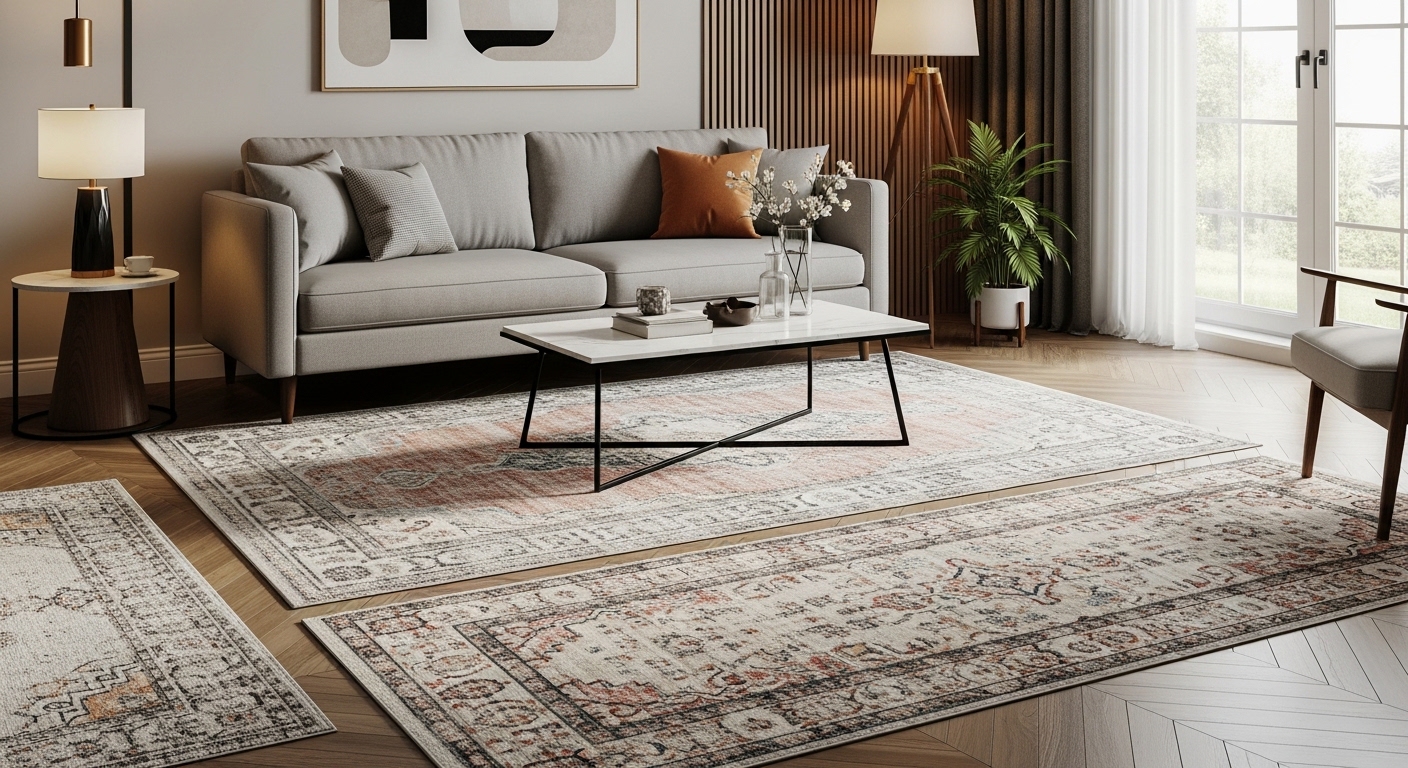
A rug is one of the most powerful design elements in a living room because it defines the layout, adds warmth, and visually connects all furniture pieces. Even if everything else in the room stays the same, changing the rug can completely transform the atmosphere. It can make the space feel cozier, more modern, more luxurious, or more balanced, depending on the style you choose.
From oversized neutral foundations to bold patterned statements, rugs influence comfort, texture, and visual flow. The right choice enhances proportions, improves harmony, and elevates the entire interior without requiring major renovations.
1. Large Area Rug to Anchor the Room
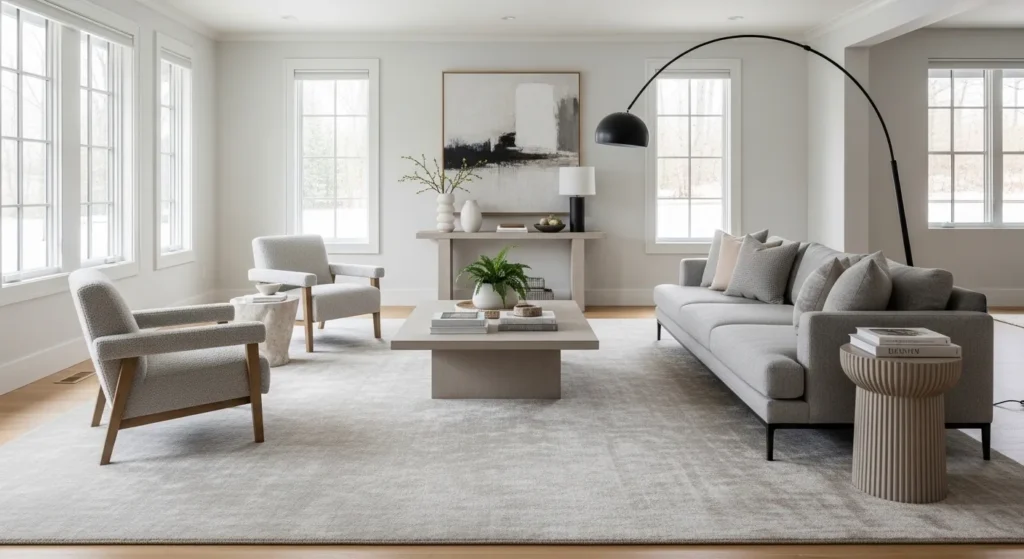
A large area rug is one of the most effective ways to unify a living room. When the rug is big enough to sit under the front legs of the sofa and chairs, it creates a cohesive seating zone. This layout technique visually anchors the furniture and prevents the space from looking disconnected or incomplete. It also helps define the living area, especially in open-concept homes.
Choosing a rug that feels slightly oversized is often better than selecting one that is too small. A larger rug makes the room appear more spacious and intentional. Neutral tones work best if you want flexibility and a timeless foundation that complements future decor changes.
2. Neutral Minimalist Rug
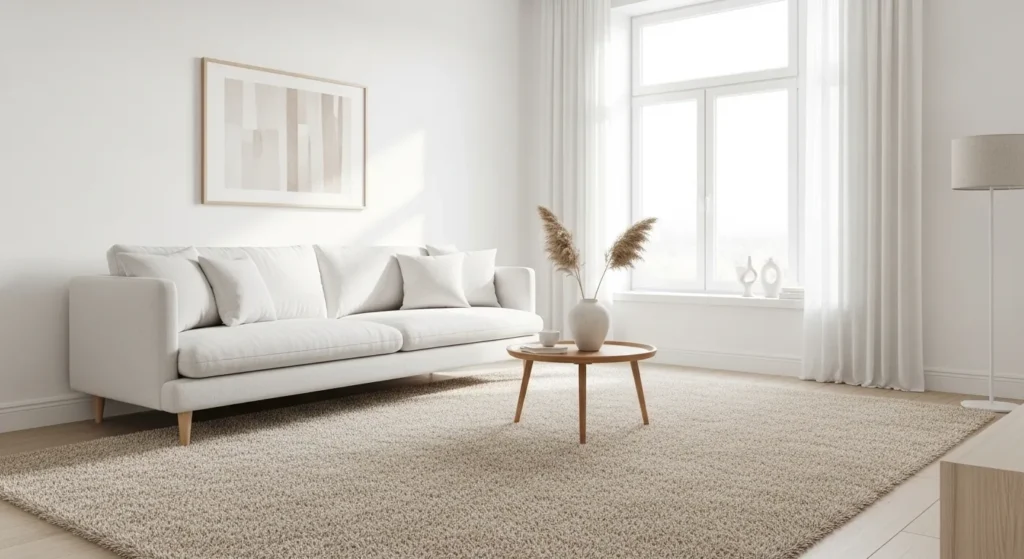
A neutral minimalist rug in shades like beige, cream, taupe, or soft gray creates a calm and sophisticated base. It blends seamlessly with modern furniture and allows other elements such as artwork, pillows, or accent pieces to stand out. This type of rug works especially well in spaces that follow clean lines and simple styling principles.
Because it does not compete with other design features, a neutral rug promotes balance and harmony. It also adapts easily to seasonal decor updates. If you prefer a peaceful, clutter-free environment that feels elegant and refined, this style is a practical and timeless choice.
3. Bold Patterned Rug
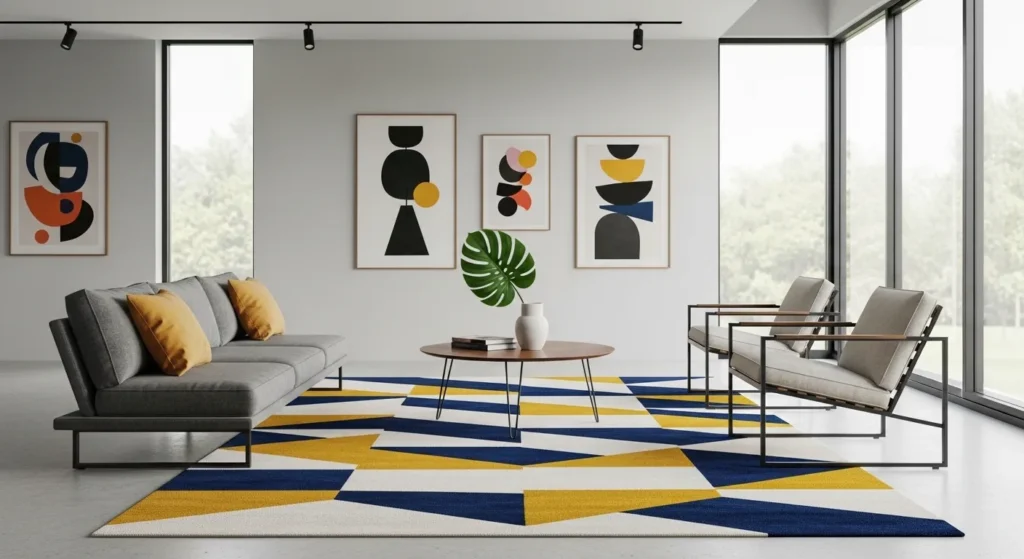
A bold patterned rug can instantly become the centerpiece of your living room. Designs such as geometric shapes, abstract patterns, or traditional motifs add visual energy and personality. This is particularly effective when the furniture and walls are simple and neutral, allowing the rug to take on the role of statement piece.
When using a strong pattern, it is important to maintain balance throughout the room. Keep surrounding decor understated so the rug remains the focal point. This approach transforms an ordinary living space into a dynamic and visually engaging environment without requiring major changes.
4. Layered Rugs for Added Depth
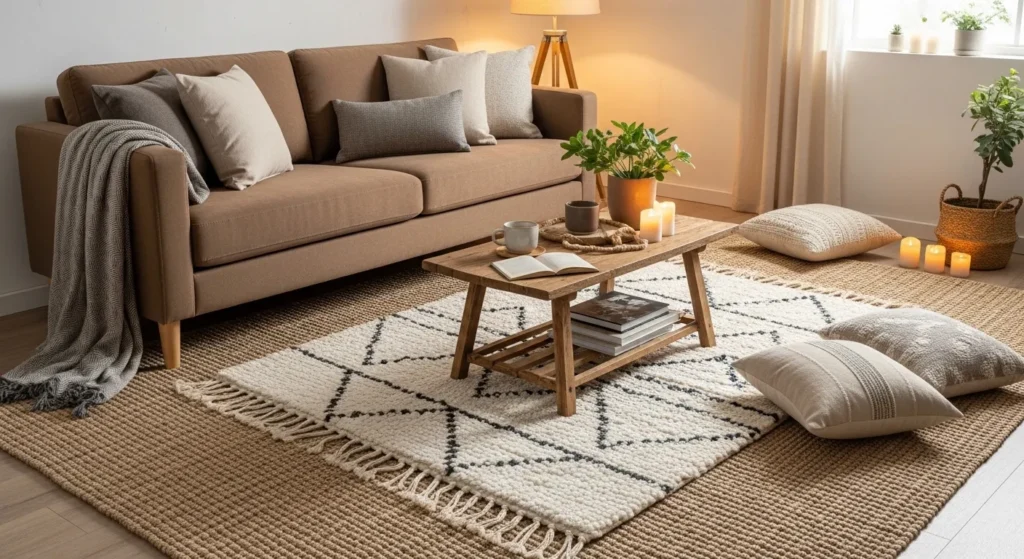
Layering rugs is a creative way to introduce texture and dimension. Start with a large neutral base rug, then add a smaller patterned or textured rug on top. This method creates depth and makes the room feel thoughtfully styled. It is especially popular in bohemian and contemporary interiors.
Layering also allows you to experiment with different materials, such as combining jute with wool or cotton. The mix of textures enhances warmth while maintaining a cohesive color palette. This technique adds character and makes the space feel more curated and visually interesting.
5. Jute or Natural Fiber Rug
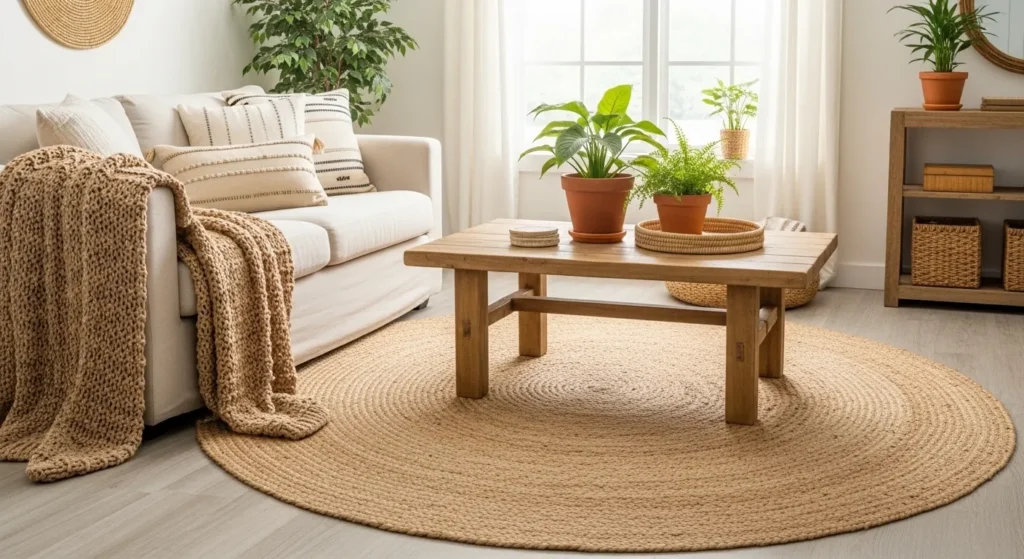
Natural fiber rugs like jute or sisal introduce earthy texture and warmth. Their organic appearance works beautifully with wooden furniture and neutral color schemes. These rugs create a relaxed, grounded atmosphere that feels welcoming and comfortable.
They are also highly practical, making them suitable for high-traffic areas. The durability of natural fibers ensures long-lasting performance while maintaining style. If you prefer a simple, organic aesthetic that enhances natural materials, this rug choice is an excellent foundation.
6. Plush High-Pile Rug
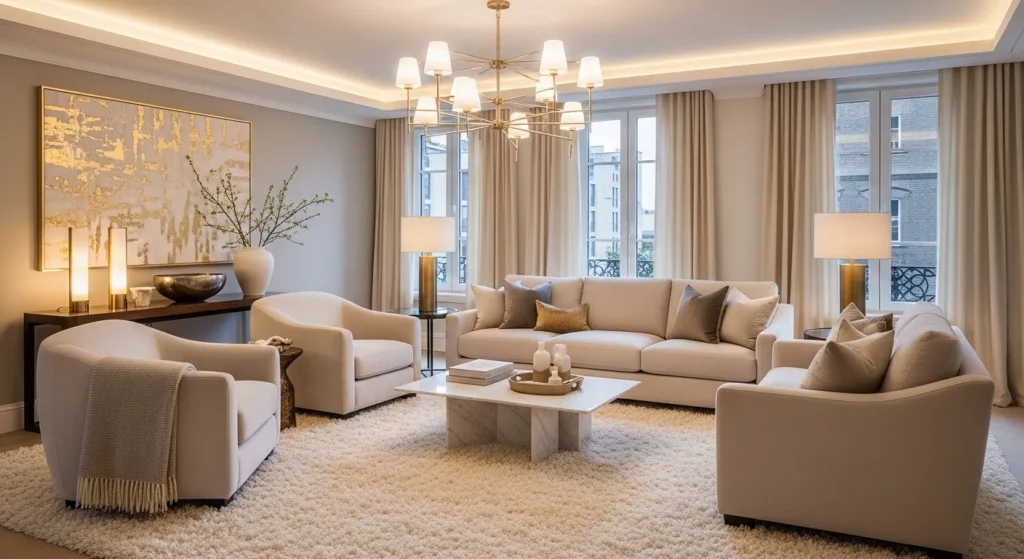
A high-pile rug adds softness and comfort underfoot, instantly increasing the cozy factor of the room. Its thick texture creates warmth and makes the space feel more inviting, especially during colder seasons. This style is ideal for relaxation-focused living rooms.
Beyond comfort, plush rugs contribute to a sense of luxury. When combined with soft lighting and comfortable seating, they elevate the atmosphere. The tactile quality of the rug enhances the overall experience of the room and makes it feel more intimate.
7. Round Rug for Visual Flow
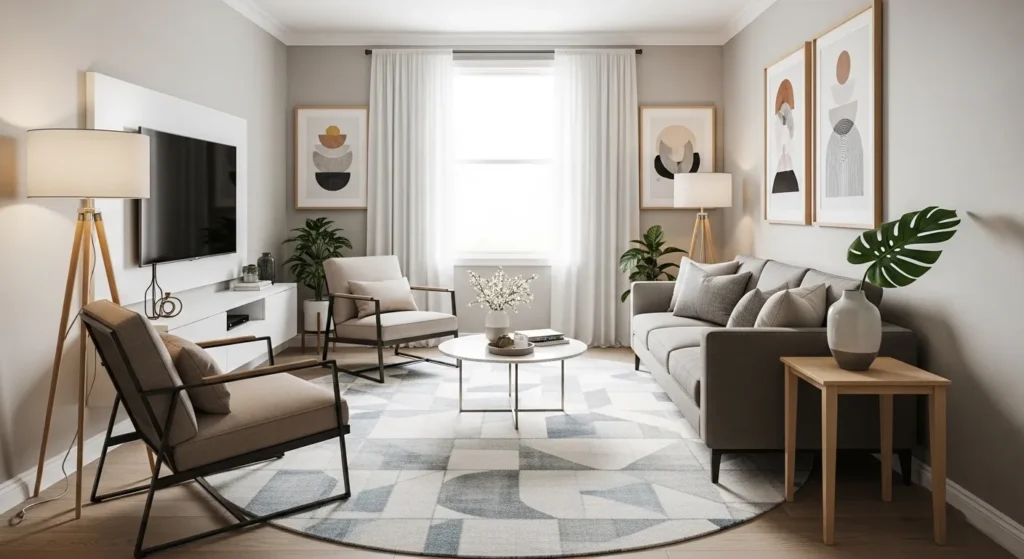
Round rugs soften the geometry of a living room and introduce better visual flow. They work particularly well in smaller spaces or under round coffee tables. The circular shape breaks up straight lines and adds movement to the layout.
This style helps create a defined seating area while keeping the design interesting. It can also make compact rooms feel less rigid and more dynamic. A round rug is a simple yet impactful way to refresh the overall structure of the space.
8. Black and White Contrast Rug
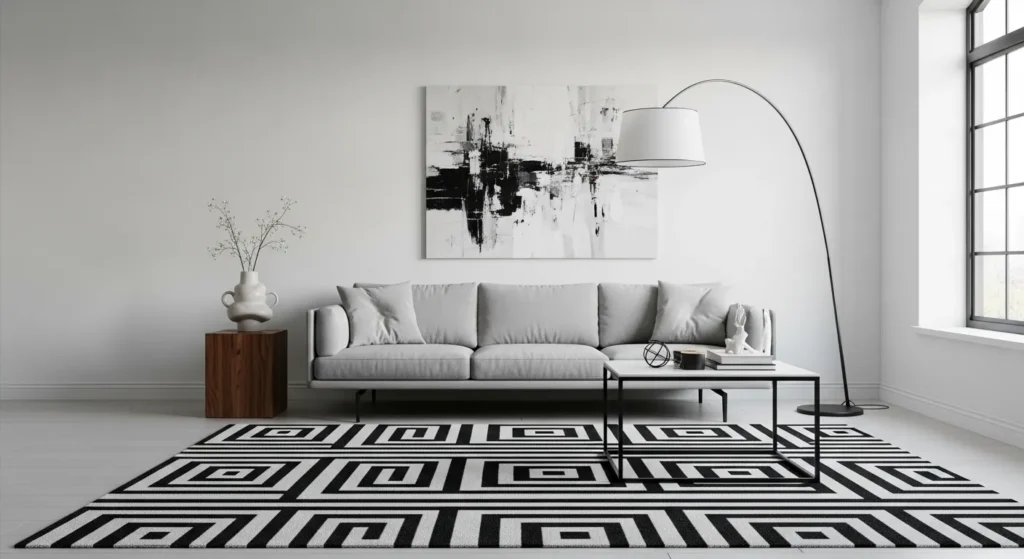
A black and white rug brings strong contrast and contemporary appeal. The combination of light and dark tones creates a striking visual effect that fits perfectly in modern interiors. It adds structure and clarity to the design.
This style works best in rooms that use simple furniture and limited color palettes. The rug becomes the centerpiece while keeping the rest of the space clean and organized. It is an excellent choice for achieving a bold yet balanced look.
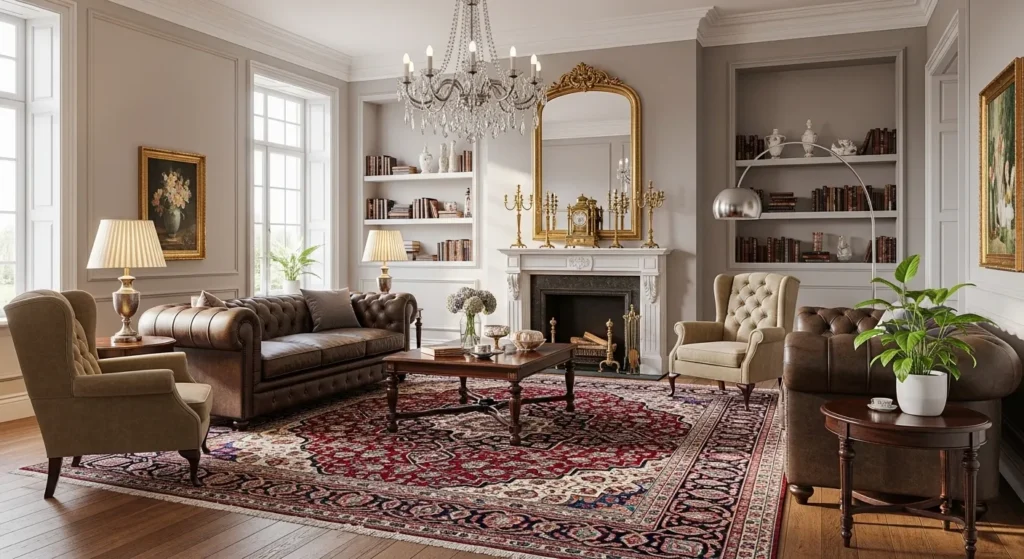
9. Vintage or Persian-Style Rug
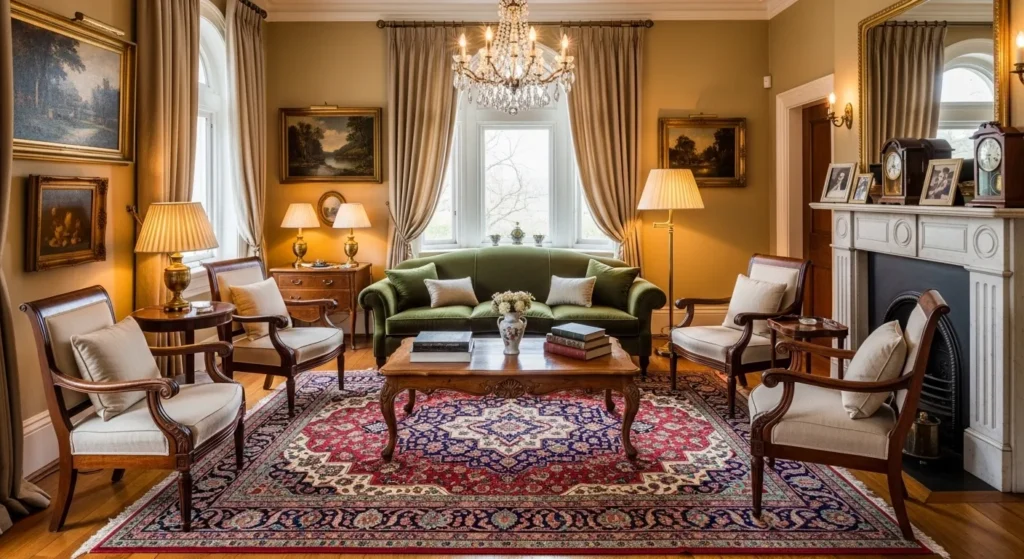
A vintage or Persian-style rug instantly adds character and depth to a living room. These rugs often feature detailed patterns and rich tones that bring history and sophistication into the space. Even in modern interiors, a traditional rug can create a beautiful contrast that feels curated and thoughtfully designed. It works especially well when paired with neutral furniture, allowing the intricate design to stand out without overwhelming the room.
This style also introduces warmth through its complex color combinations. The layered patterns naturally hide wear, making them practical for busy households. A vintage rug can transform a plain living room into a space that feels elegant, artistic, and timeless.
10. Colorful Statement Rug
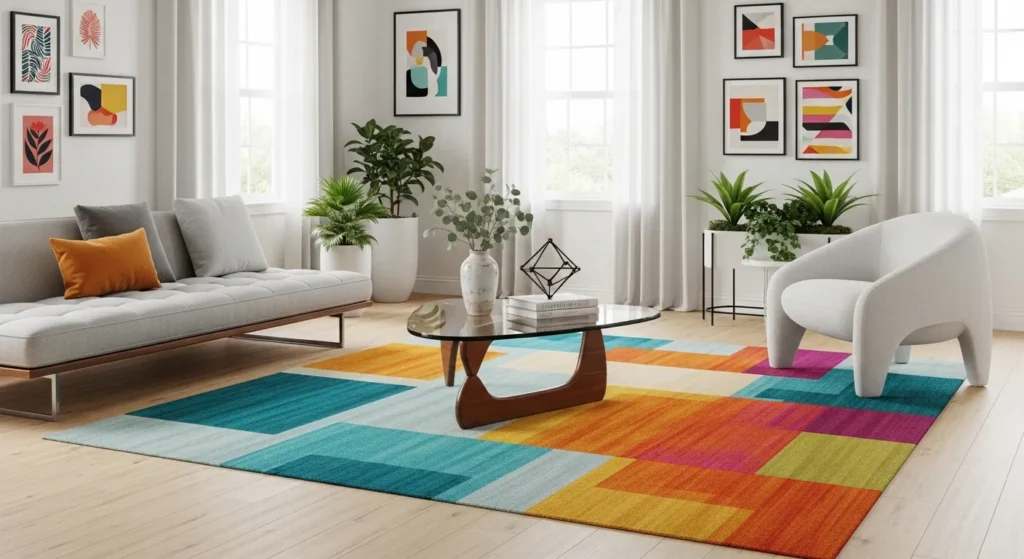
A colorful statement rug is perfect if you want your living room to feel energetic and expressive. Bold shades such as deep blue, terracotta, emerald, or multi-color designs can immediately change the atmosphere. This type of rug becomes the focal point, adding personality and creativity to an otherwise simple space. It works well in rooms with neutral walls and furniture.
When using strong colors, balance is important. Keep surrounding decor minimal so the rug remains the highlight. This approach creates visual impact without clutter. A statement rug can redefine the mood of the entire room and make it feel vibrant and unique.
11. Textured Wool Rug
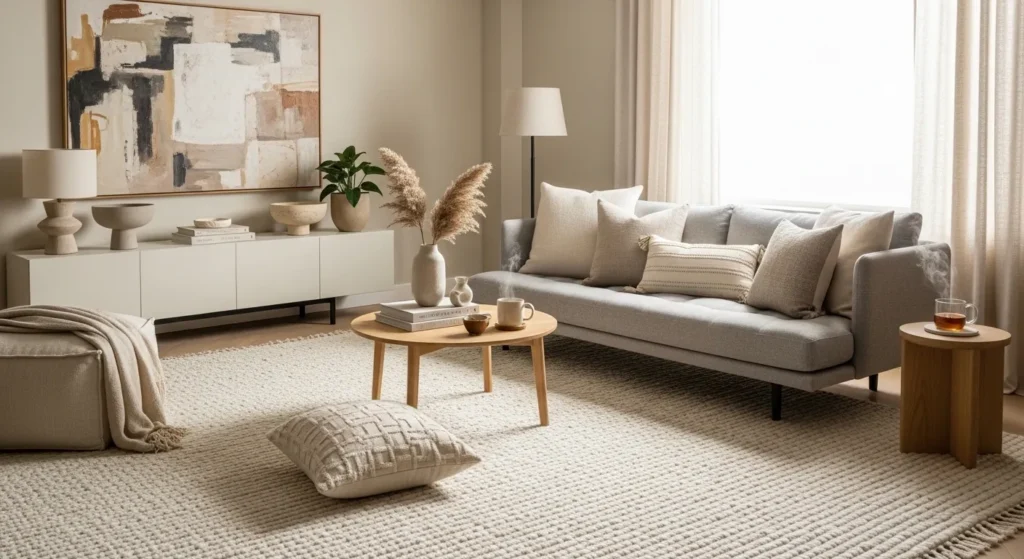
A textured wool rug adds subtle depth without relying on bold patterns or colors. Wool naturally has a rich texture that enhances warmth and comfort. It is durable, soft, and long-lasting, making it a practical option for everyday living spaces. The texture alone can make the room feel more layered and visually interesting.
Wool rugs fit easily into modern, classic, and transitional designs. Their natural fibers complement neutral palettes beautifully. If you want something understated yet refined, a textured wool rug offers balance between style, comfort, and functionality.
12. Multi-Tone Neutral Rug
A rug that blends multiple neutral shades creates depth while maintaining harmony. Combining tones like beige, cream, and soft gray allows the rug to coordinate with different furniture pieces. This design approach works well in rooms where you want subtle contrast without strong color statements.
Multi-tone rugs are especially useful for tying together different materials in the room, such as wood, fabric, and metal. They create cohesion naturally. The layered neutral effect keeps the space calm while still adding visual interest and sophistication.
13. Oversized Rug in Open-Concept Space
In open-concept homes, a large rug helps define the living area and separate it from dining or kitchen zones. This creates structure within a spacious layout. Without a rug, furniture can appear disconnected, but the right size instantly organizes the room.
The rug acts as a visual boundary, grounding the seating arrangement. Choosing a design that complements nearby spaces ensures smooth flow throughout the home. This is a practical and stylish solution for modern open layouts.
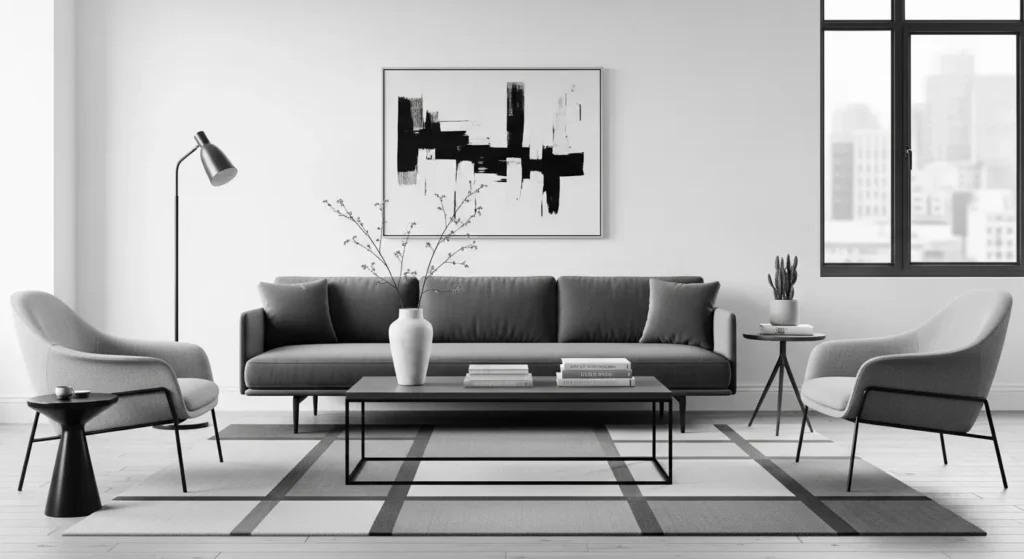
14. Minimal Monochrome Rug
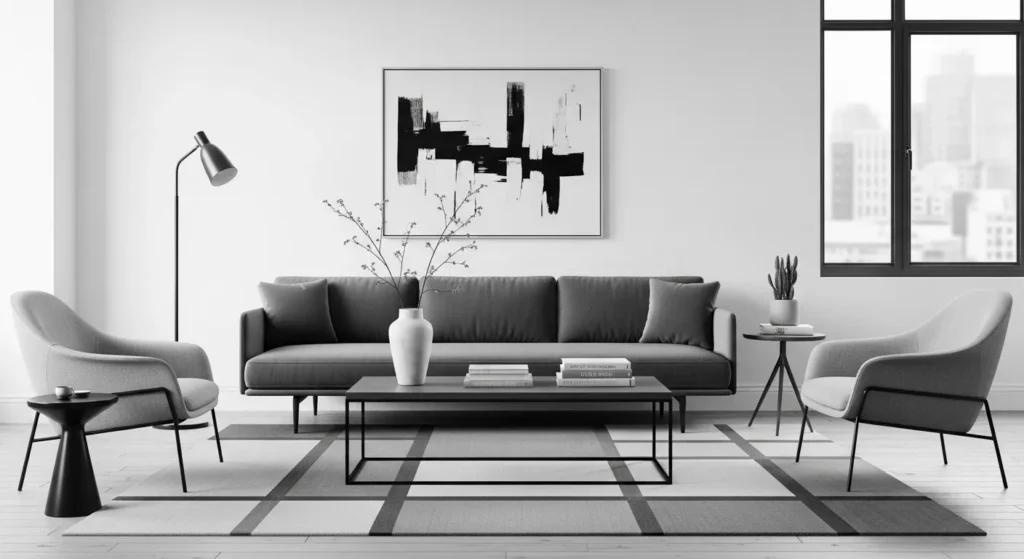
A monochrome rug uses variations of a single color to create subtle depth. This approach keeps the design simple while still adding texture and interest. It works beautifully in modern interiors that prioritize clean lines and understated elegance.
Because the color scheme remains unified, the space feels calm and balanced. This style supports a sophisticated atmosphere without drawing too much attention away from furniture or artwork.
15. Geometric Design Rug
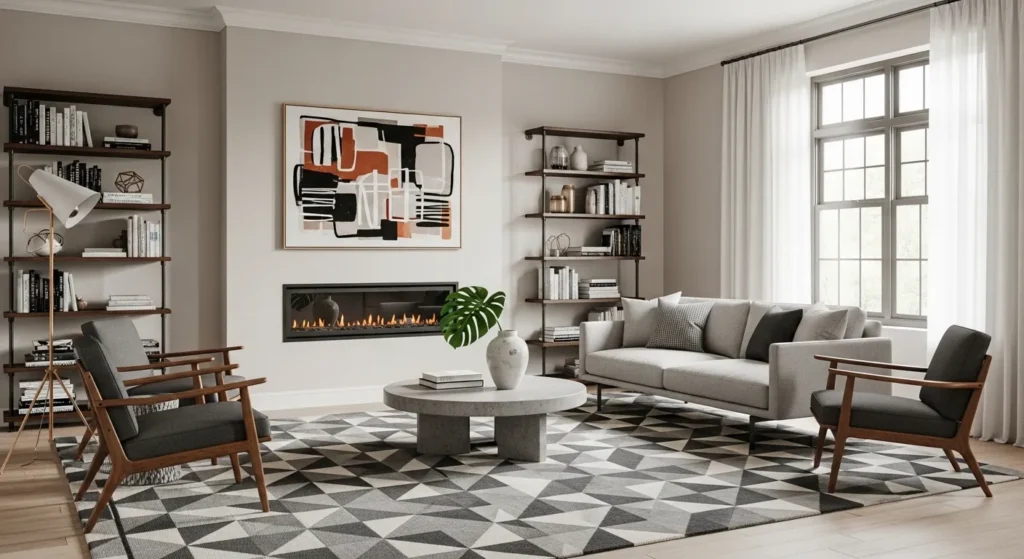
Geometric rugs introduce structure and movement into a living room. Their sharp lines and repeating shapes create a modern aesthetic that feels organized and dynamic. This style works particularly well in contemporary spaces.
Pairing a geometric rug with simple furniture ensures balance. The pattern becomes a design feature while the rest of the room remains visually calm. This creates harmony between boldness and simplicity.
16. Soft Pastel Rug
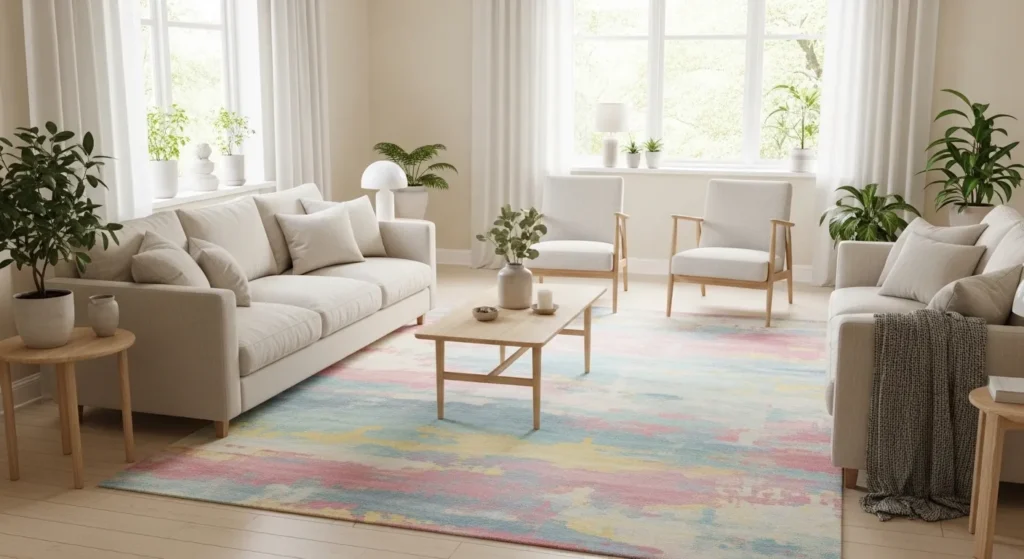
Pastel rugs add gentle color without overwhelming the room. Soft shades like blush, pale blue, or muted green create a light and refreshing atmosphere. They are ideal for bright spaces that need a subtle touch of personality.
Pastels work well with neutral furniture and natural lighting. The result is a soothing environment that feels welcoming and uplifting without being intense.
17. Dark Contrast Rug
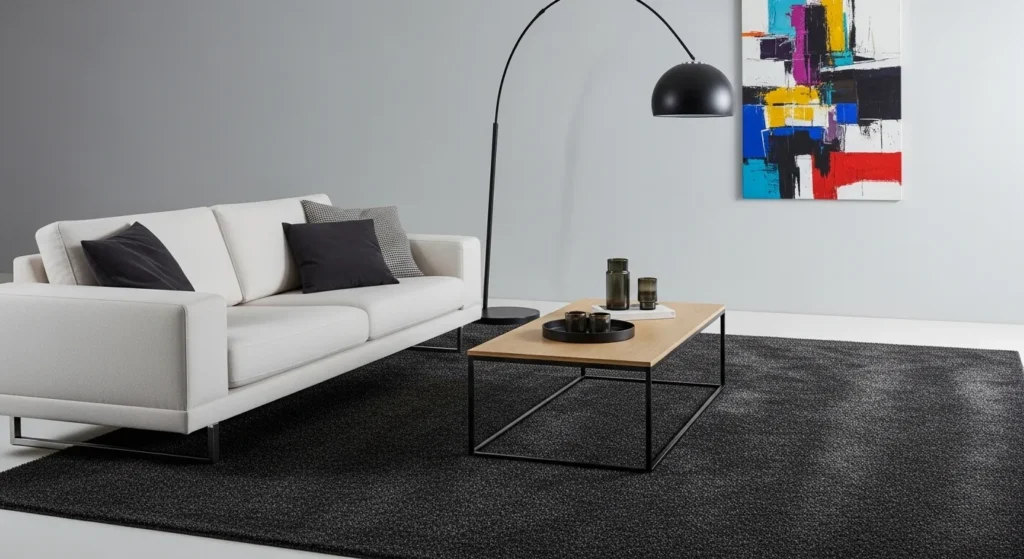
A dark rug creates strong contrast in a light-colored room. It grounds the furniture and adds depth to the design. This approach is especially effective in modern interiors with white or beige walls.
Dark tones help define the seating area clearly and can make the furniture stand out beautifully. It is a confident design choice that adds sophistication.
18. Coastal-Inspired Rug
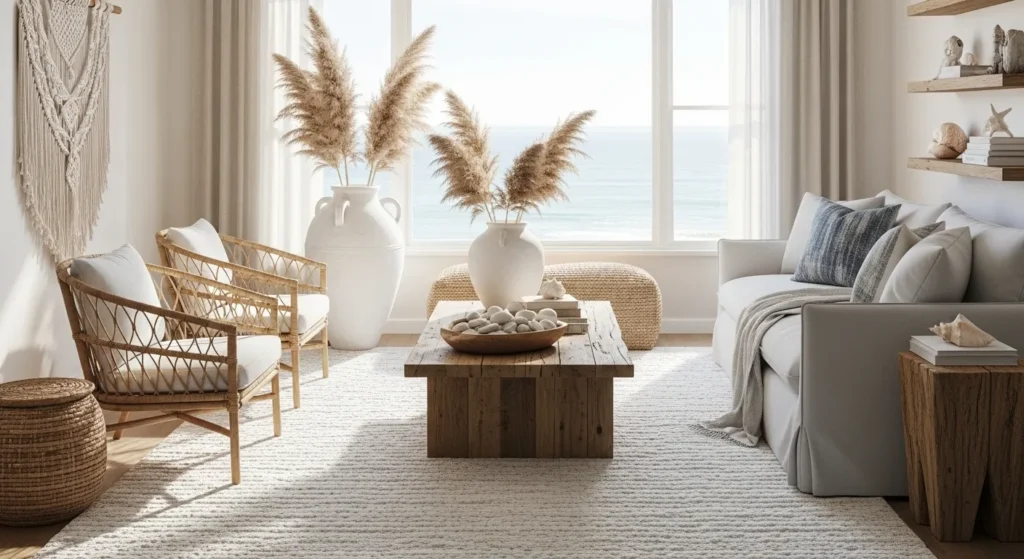
Coastal rugs typically feature light colors and natural textures. Shades of sand, soft blue, and woven materials create a relaxed and breezy atmosphere. This style enhances natural light and keeps the space feeling open.
The combination of soft tones and organic materials brings calmness to the room. It is perfect for creating a fresh and peaceful living environment.
19. Custom-Sized Rug
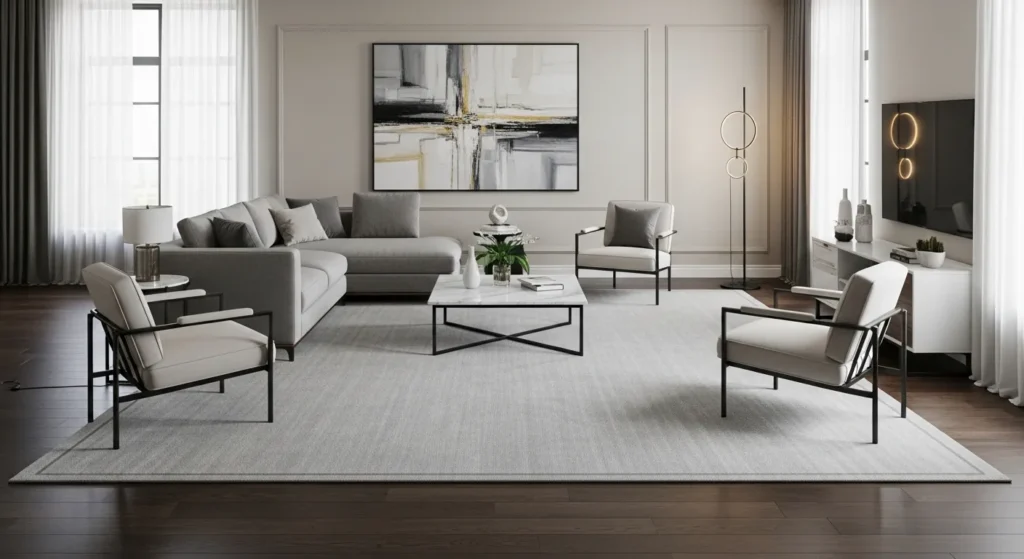
A custom-sized rug ensures perfect proportions for your specific room layout. Standard sizes do not always fit unique spaces, but a tailored rug creates a seamless and polished look. This makes the design feel intentional and balanced.
Custom rugs are especially useful in irregularly shaped rooms. When the rug fits correctly, the entire space looks more professional and visually harmonious.
Conclusion
The right living room rug has the power to completely transform your space without changing anything else. It can define the layout, add warmth, introduce texture, and create balance between furniture and decor. Whether you choose a large neutral foundation, a bold patterned statement, a soft textured design, or a custom-fit option, the rug becomes the anchor that ties the entire room together.
When selecting a rug, focus on size, material, color, and how it supports your overall style. A well-chosen rug does more than decorate the floor — it enhances comfort, improves visual harmony, and elevates the atmosphere of the room. With the right choice, your living room instantly feels more polished, inviting, and complete.