
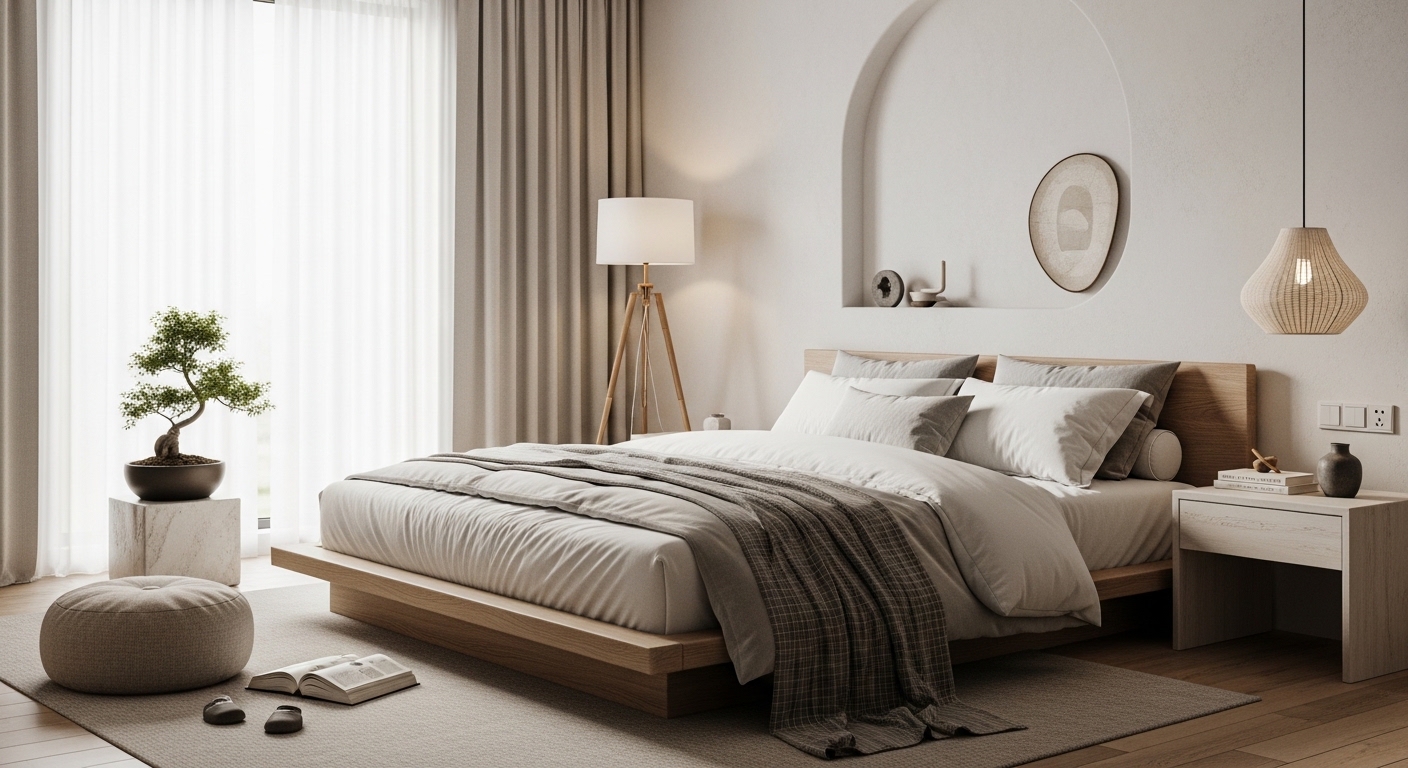
A Zen bedroom isn’t about copying a specific style—it’s about removing what doesn’t belong. Most bedrooms feel stressful not because they lack decor, but because they have too much of it.
Visual noise, harsh lighting, mismatched colors—these things quietly affect your mood. A Zen approach strips everything down to what actually helps you rest.
The ideas below focus on practicality. Not fake minimalism, not expensive trends—just real ways to make your space feel calmer and more controlled.
1. Neutral Color Palette with Soft Contrast
Image Prompt: zen bedroom with neutral tones, beige white and soft gray palette, minimal decor, calm lighting
Start with colors that don’t demand attention. Whites, beiges, and soft grays create a quiet base that allows your mind to slow down. Bright or overly dark colors can feel stimulating, even when you don’t notice it consciously. Neutral tones reduce that effect.
But don’t make everything identical. Slight contrast—like off-white walls with a warmer beige bed—adds depth without chaos. The goal is visual harmony, not flatness. When colors blend naturally, your brain doesn’t have to “work” to process the space.
2. Low Platform Bed for Grounded Feel
Image Prompt: low platform bed in minimalist zen bedroom, natural wood frame, simple bedding, peaceful atmosphere
A low bed changes how the room feels instantly. It brings everything closer to the ground, which subconsciously creates a sense of stability. High beds can feel disconnected, while lower ones feel more rooted and calm.
Keep the frame simple—wood works best. Avoid bulky headboards or heavy designs. The idea is to reduce visual weight. When the bed looks lighter, the entire room feels more open and breathable.
3. Decluttered Space with Only Essentials
Image Prompt: clean clutter free zen bedroom, minimal furniture, organized space, soft natural light
Clutter is the biggest enemy of a calm bedroom. It doesn’t just take up space—it constantly pulls your attention. Even if you ignore it, your brain doesn’t.
Remove everything that doesn’t serve a purpose. That includes unnecessary decor, extra furniture, and random items on surfaces. Keep only what you actually use or genuinely value. A clear space leads to a clear mind, and that’s not just a cliché—it’s practical reality.
4. Natural Materials Like Wood and Linen
Image Prompt: zen bedroom with wooden furniture, linen bedding, earthy textures, soft lighting
Synthetic materials often feel cold and artificial. Natural materials like wood, cotton, and linen add warmth without adding visual clutter. They also age better, which helps maintain a calm aesthetic over time.
Wooden furniture with simple finishes works best. Linen bedding adds softness without looking too polished. The goal is a space that feels real and grounded, not overly designed.
5. Soft, Indirect Lighting Only
Image Prompt: soft ambient lighting in zen bedroom, warm lamps, no harsh lights, cozy calm environment
Harsh lighting ruins the entire mood of a bedroom. Bright white lights make the space feel like an office, not a place to rest. Soft, indirect lighting is essential for a Zen feel.
Use lamps, warm bulbs, or hidden lighting instead of overhead glare. The light should feel diffused and gentle. If your lighting feels aggressive, your brain stays alert. If it feels soft, your body naturally relaxes.
6. Minimal Wall Decor with Meaning
Image Prompt: zen bedroom wall with single artwork, minimal decor, calming aesthetic
Empty walls are better than cluttered ones, but that doesn’t mean completely blank. The key is intentional decor. One meaningful piece is stronger than five random ones.
Choose artwork or elements that feel calming—not loud or overly detailed. Think nature-inspired prints or simple designs. The goal is to support the atmosphere, not distract from it.
7. Indoor Plants for Natural Calm
Image Prompt: zen bedroom with indoor plants, soft sunlight, natural green elements
Plants introduce life into the room without creating chaos. They soften the space and make it feel more breathable. Even a single plant can change the energy of a room.
But don’t overdo it. Too many plants turn into maintenance and visual clutter. Choose low-maintenance options and place them where they naturally fit.
8. Hidden Storage to Reduce Visual Noise
Image Prompt: zen bedroom with hidden storage, clean surfaces, minimalist furniture
Visible storage often looks messy, even when organized. Hidden storage keeps the room looking clean without constant effort. Beds with storage underneath or closed cabinets work well.
The less you see, the calmer the space feels. This isn’t about hiding things randomly—it’s about designing the room so clutter doesn’t exist in the first place.
9. Soft Textures Without Overlayering
Image Prompt: zen bedroom with soft bedding, minimal layered textures, cozy but simple look
Comfort matters, but too many layers create visual chaos. Instead of piling on blankets and cushions, choose a few high-quality pieces that feel good and look simple.
Soft textures like cotton and wool add warmth without overwhelming the space. The key is restraint—comfort without excess.
10. Neutral Bedding with Subtle Variation
Image Prompt: neutral bedding in beige and white tones, soft textures, zen bedroom aesthetic
Your bed is the focal point, so it needs to feel calm, not busy. Neutral bedding in shades of white, beige, or soft gray creates a clean and restful look. Avoid bold patterns or high-contrast designs that pull attention and break the calm.
That said, don’t make everything identical. Slight variation in tones—like cream sheets with a warm beige throw—adds depth. This keeps the bed from looking flat while still maintaining a peaceful feel.
11. Open Space Around Furniture
Image Prompt: zen bedroom with spaced furniture, open floor area, airy minimal layout
A crowded layout makes even a clean room feel stressful. Leaving space between furniture pieces allows the room to “breathe.” This creates a sense of openness that directly affects how relaxed you feel.
Avoid pushing too many items into the room just because there’s space. Function matters more than filling gaps. When furniture is spaced properly, movement feels easier and the room naturally feels lighter.
12. Sliding Doors or Simple Curtains
Image Prompt: zen bedroom with soft curtains, minimal window treatment, natural light flowing
Heavy drapes or complex window treatments can feel overwhelming. Simple curtains or sliding panels keep the look clean and functional. They allow light to flow while maintaining privacy.
Choose light fabrics that move easily and don’t block too much light. Natural light is one of the strongest contributors to a peaceful environment, so don’t restrict it unnecessarily.
13. Earth-Toned Accent Pieces
Image Prompt: zen bedroom with earth tone accents, subtle decor in brown and beige shades
A completely neutral room can sometimes feel too plain. Earth-toned accents—like muted browns, clay, or sand colors—add warmth without disrupting the calm vibe.
Use them sparingly in items like cushions, small decor, or throws. These accents should support the space, not dominate it. The goal is balance, not contrast.
14. Simple Nightstand Setup
Image Prompt: minimal nightstand with lamp and one decor piece, clean zen bedroom look
Your nightstand shouldn’t be a storage dump. Keep only the essentials—maybe a lamp, a book, or one small decor item. Too many objects create unnecessary distraction, especially before sleep.
A clean nightstand makes your routine feel more intentional. It also reduces mental clutter, which directly affects how quickly you relax at night.
15. Calm Scent Elements Like Candles or Diffusers
Image Prompt: zen bedroom with candle or diffuser, soft lighting, relaxing atmosphere
Smell plays a bigger role than most people realize. Subtle scents like lavender, sandalwood, or chamomile can help your body relax faster. A candle or diffuser can quietly enhance the environment.
But keep it minimal. Strong or mixed scents can become overwhelming. The idea is a light, consistent aroma that supports rest—not something that dominates the room.
16. Floor Seating or Meditation Corner
Image Prompt: zen bedroom meditation corner with floor cushion, soft light, peaceful setup
A small meditation or floor seating area adds purpose to the room beyond just sleeping. It creates a space for quiet time, reading, or reflection without adding clutter.
Keep it simple—a cushion, a mat, maybe one calming element like a plant. This reinforces the idea that the bedroom is a place for slowing down, not just crashing at night.
17. Soft Rugs for Warmth and Quiet
Image Prompt: soft neutral rug in zen bedroom, cozy and minimal floor setup
Hard floors can feel cold and slightly uninviting. A soft rug adds warmth and reduces noise, making the space feel more comfortable and grounded.
Stick to neutral tones and simple textures. Loud patterns or bright colors defeat the purpose. The rug should blend in, not stand out.
18. Balanced Symmetry for Visual Stability
Image Prompt: symmetrical zen bedroom setup, matching lamps and balanced layout
Symmetry creates a sense of order, which naturally feels calming. Matching lamps, balanced decor, or evenly spaced furniture can make the room feel stable and controlled.
This doesn’t mean everything must be identical, but visual balance matters. When one side feels heavier than the other, it creates subtle tension. Symmetry removes that.
19. No Tech Zone or Hidden Electronics
Image Prompt: zen bedroom without visible electronics, clean and distraction free space
Visible screens and wires break the calm instantly. Phones, TVs, and gadgets keep your brain in active mode, even when you’re trying to rest.
If you can’t remove them completely, hide them. Keep cables out of sight and avoid placing screens in direct view of the bed. The less tech you see, the easier it is to disconnect mentally.
Conclusion
A Zen bedroom isn’t built by adding more—it’s built by removing what doesn’t belong. Most people overcomplicate their spaces, thinking more decor equals better design. In reality, every unnecessary item adds friction to your environment, even if you don’t consciously notice it.
The real goal is control. When your space is clean, balanced, and intentional, your mind follows the same pattern. Neutral colors, natural materials, soft lighting, and minimal distractions aren’t just aesthetic choices—they directly affect how you rest and reset.
If you apply even half of these ideas properly, the difference will be noticeable. Not just visually, but mentally. Your bedroom should feel like a place where everything slows down—and that only happens when you stop adding and start refining.