
As an Amazon Associate, I earn from qualifying purchases. This means I may earn a commission if you purchase through links on this page — at no extra cost to you.
elegantte and beige kitchens aren’t just a trend—they’re a strategy. They reflect light, reduce visual noise, and create a sense of space that darker palettes struggle to match. If you want a kitchen that feels open, peaceful, and quietly luxurious without trying too hard, this combination works every time.
Related: Black and White Kitchen Cabinet Ideas That Always Work Related: Grey and Beige Kitchen Ideas That Feel Modern and Warm
Explore more kitchen ideas for inspiration.
Let’s talk about your kitchen. If it feels like something’s missing, these 20 white and beige kitchen ideas that feel bright and calm might be the answer. From simple swaps to bold statements, there’s an idea here with your name on it.
1. Soft Beige Cabinets with Crisp White Walls
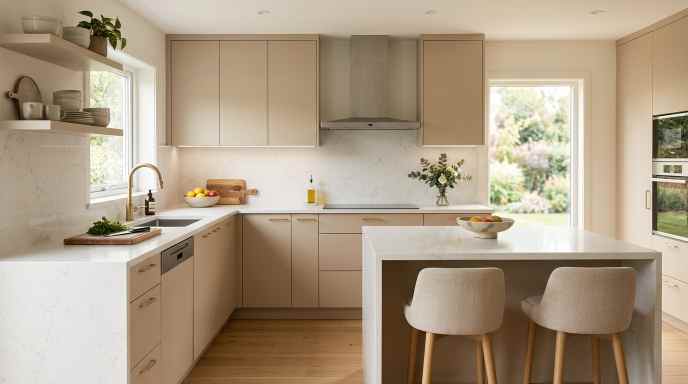
Soft beige cabinets bring warmth without overpowering the space. When paired with bright white walls, they create a subtle contrast that feels calm rather than sharp. The white reflects light and keeps the room feeling open, while beige adds depth so the kitchen doesn’t feel empty or cold. This combination works especially well in smaller kitchens where brightness matters most.
To get the look right, avoid glossy finishes and go for matte or satin surfaces. Add small details like brushed metal handles or textured cabinet fronts to prevent the design from feeling flat. The idea is not perfection but balance—something that looks effortless but still intentional.
2. White Marble Countertops with Beige Base Cabinets
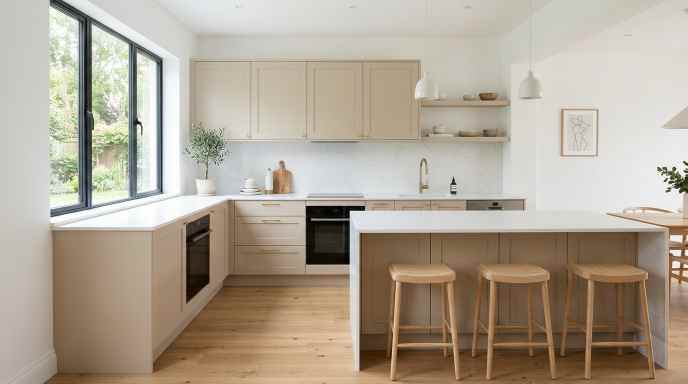
White marble countertops instantly make a kitchen feel premium, even if the rest of the design is simple. When paired with beige base cabinets, the contrast feels elegant without being loud. The natural veining in marble adds movement, which keeps the neutral palette from becoming boring.
Beige cabinets help tone down the boldness of marble, making the space feel livable rather than showroom-like. Add warm metallic accents like brass or gold to tie everything together. Keep upper cabinets white or minimal so the countertop remains the focal point.
3. All-White Kitchen with Beige Textures
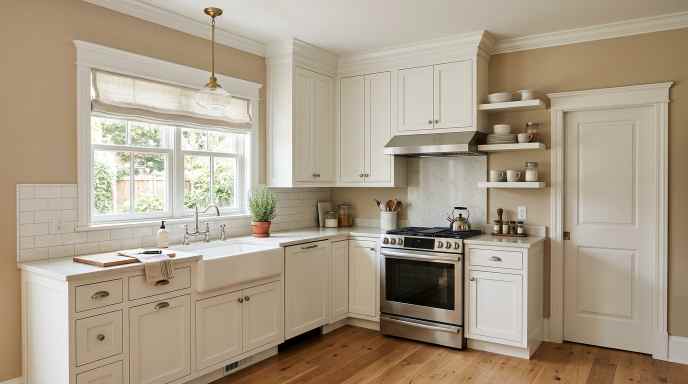
An all-white kitchen can easily feel too sterile, but adding beige textures changes everything. Think woven bar stools, linen curtains, or textured rugs. These small additions soften the space and make it feel more lived-in without compromising brightness.
The trick is to keep the base clean and layer warmth through materials instead of color overload. Beige acts as a quiet supporting element, helping the kitchen feel comfortable rather than cold. This approach works especially well for modern minimalist spaces.
4. Beige Backsplash with White Cabinets
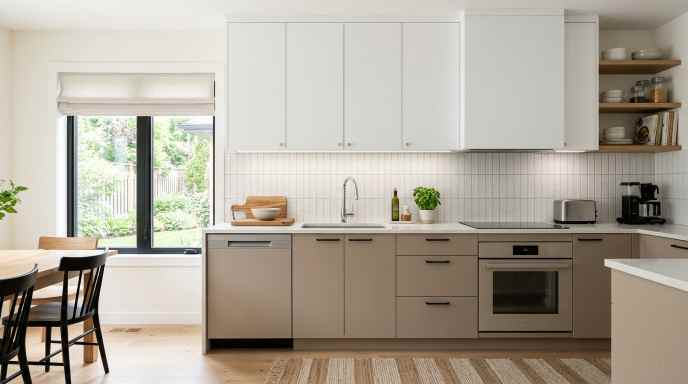
A beige backsplash behind white cabinets adds depth without disrupting the calm feel of the kitchen. Instead of going for bold patterns, stick to subtle tones and textures like stone or matte tiles. This creates visual interest without overwhelming the space.
White cabinets keep the kitchen looking clean and bright, while the beige backsplash adds just enough contrast to avoid monotony. It’s a smart way to introduce warmth without committing to darker colors that might make the space feel smaller.
5. White Open Shelving with Beige Walls
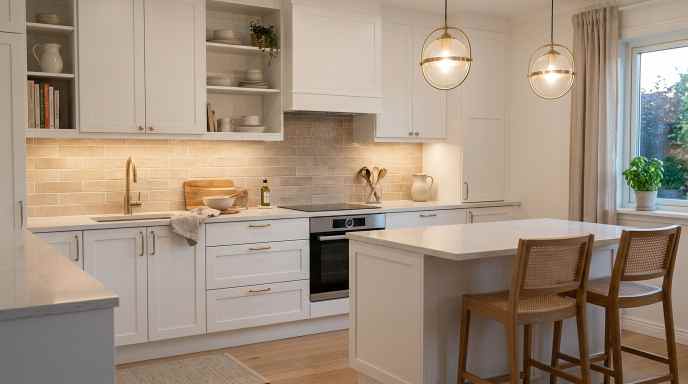
White open shelves against beige walls create a soft layered look that feels both modern and inviting. The beige background adds warmth, while the white shelves keep things visually light. This setup works well in kitchens where you want to display items without making the space feel cluttered.
Keep the shelf styling minimal—neutral dishes, glass jars, or wooden accents. Too many colors will break the calm aesthetic. The focus should be on simplicity and breathing space, not decoration overload.
6. Beige Cabinets with White Quartz Countertops
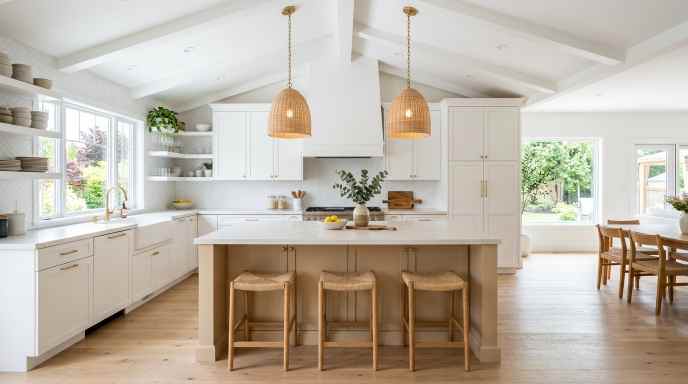
White quartz countertops are practical and visually clean. When combined with beige cabinets, they create a smooth and cohesive look that feels modern but not cold. Quartz also reflects light well, helping brighten the entire kitchen.
Beige cabinets keep the design grounded, making the kitchen feel more welcoming. This combination works well for everyday use because it hides wear better than all-white setups while still looking polished.
7. Two-Tone Cabinets in White and Beige
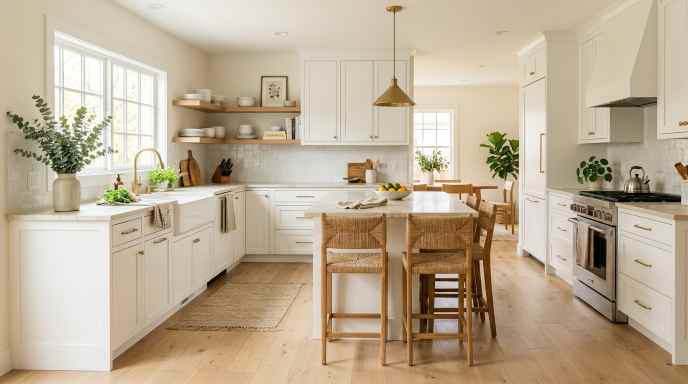
Two-tone cabinets are a simple way to add depth without complicating the design. Using white for upper cabinets keeps the space feeling open, while beige on the lower cabinets adds stability and warmth.
This setup also has a practical advantage—lower cabinets tend to get dirtier, and beige hides marks better than white. The result is a kitchen that looks clean with less effort, which matters more than aesthetics alone.
8. Beige Island with White Kitchen Surround
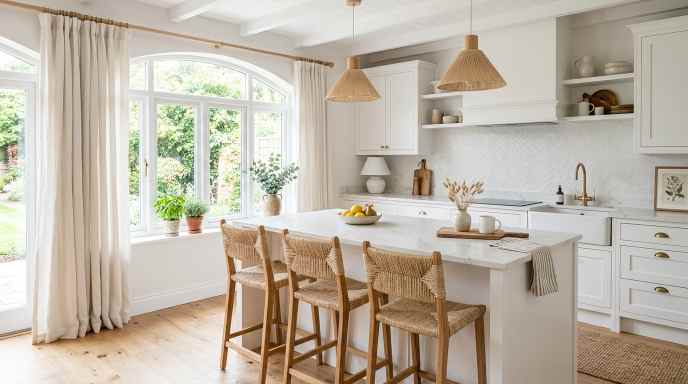
A beige kitchen island in a mostly white kitchen creates a natural focal point without being too bold. It adds contrast while still keeping the overall tone calm and cohesive.
Use the island as a design anchor—add pendant lighting or subtle decor to draw attention. This approach works well in open kitchens where you want one element to stand out without breaking the neutral theme.
9. White Cabinets with Beige Wooden Flooring
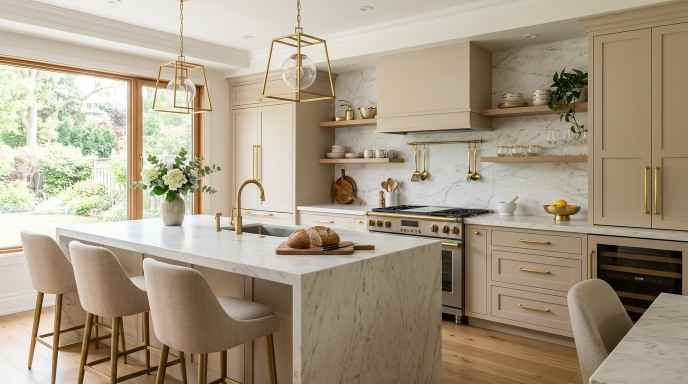
White cabinets combined with beige-toned wooden flooring create a warm yet clean look. The floor adds texture and prevents the kitchen from feeling too plain, while white cabinetry keeps everything bright.
Natural wood tones also make the space feel more organic and less artificial. This combination works especially well in homes aiming for a Scandinavian or minimalist style.
10. Beige Walls with White Trim and Cabinets
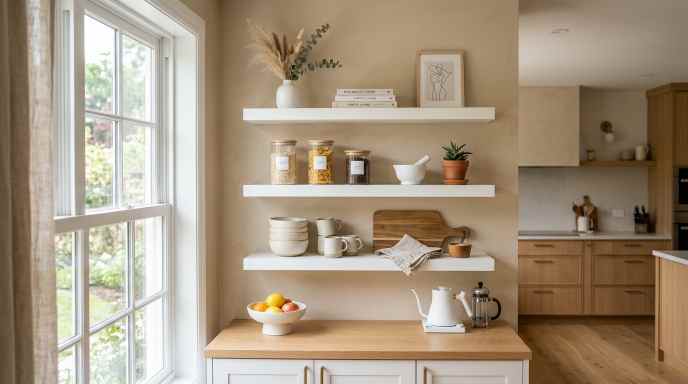
Beige walls can make a kitchen feel warm and welcoming without making it dark. Pairing them with white cabinets and trim creates a classic look that doesn’t go out of style.
The contrast between wall and cabinetry is subtle but effective. It adds depth without making the space feel busy, which is key for maintaining a calm atmosphere.
🛒 Shop This Look:
11. White Subway Tiles with Beige Grout
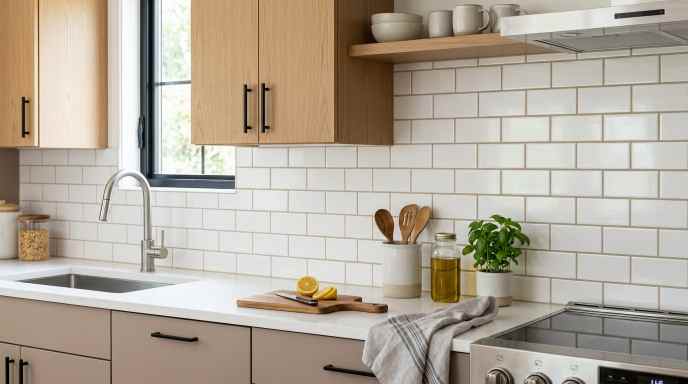
White subway tiles are common, but beige grout changes the entire feel. Instead of sharp contrast, it softens the look and blends everything together more naturally.
This small detail makes the kitchen feel less clinical and more relaxed. It’s a low-cost upgrade that has a noticeable visual impact.
12. Beige Cabinets with White Ceiling and Lighting
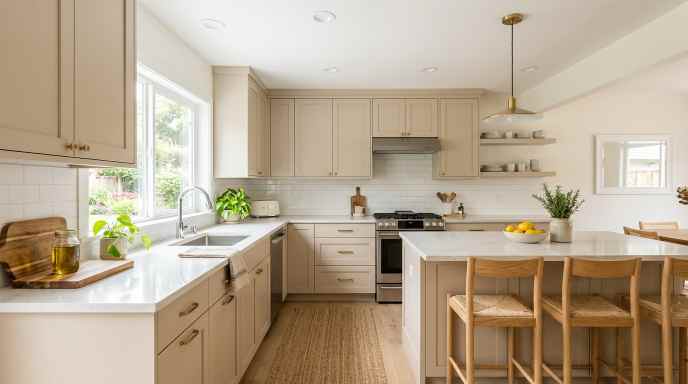
A white ceiling helps reflect light and keeps the kitchen feeling open. When paired with beige cabinets, it creates a balanced environment that feels both warm and bright.
Lighting plays a major role here. Use soft white lighting instead of harsh tones to maintain the calm effect. The goal is a space that feels easy on the eyes at any time of day.
13. White Kitchen with Beige Curtains
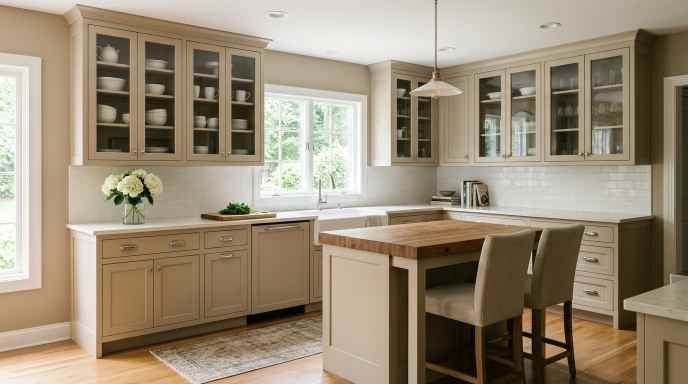
Beige curtains in a white kitchen add softness without blocking light. They introduce texture and warmth in a subtle way that doesn’t overpower the design.
Choose light, breathable fabrics like linen to keep the airy feel intact. Heavy materials will ruin the openness you’re trying to create.
14. Beige Stone Backsplash with White Cabinets
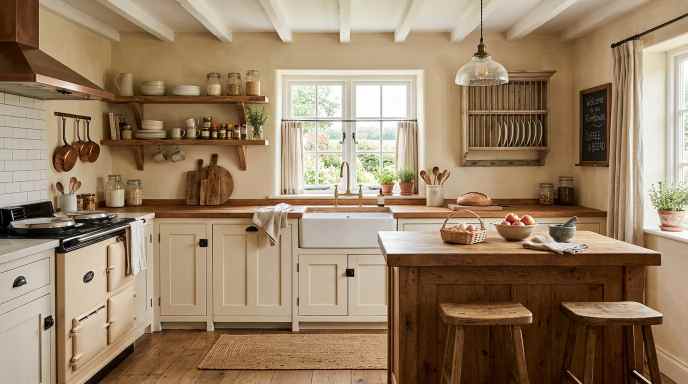
A beige stone backsplash adds natural texture and makes the kitchen feel more high-end. Unlike plain tiles, stone has variation that brings life into the space.
White cabinets keep the overall look clean while letting the backsplash stand out slightly. This balance creates a refined but relaxed aesthetic.
15. White Cabinets with Beige Countertops
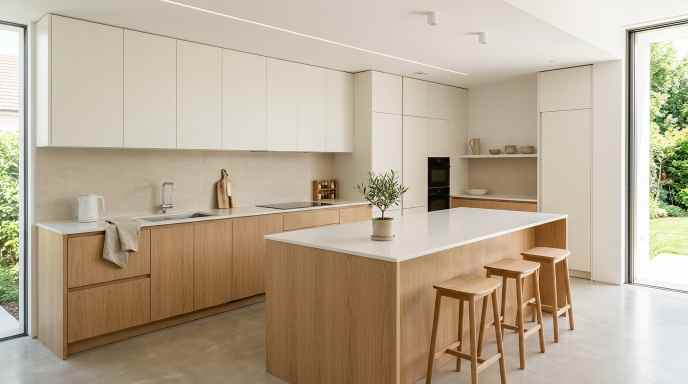
Beige countertops are more forgiving than pure white ones. They hide stains better while still maintaining a light and clean appearance.
Pairing them with white cabinets creates a soft contrast that feels comfortable and practical. This is a smart choice for busy kitchens where maintenance matters.
16. Minimalist White and Beige Kitchen
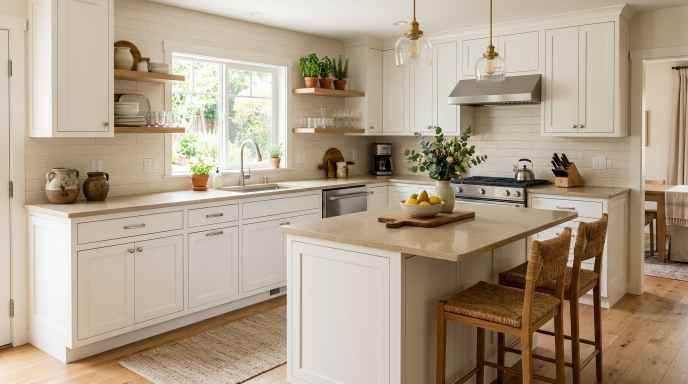
A minimalist kitchen in white and beige focuses on simplicity and function. No unnecessary decor, no clutter—just clean lines and neutral tones.
This approach makes the kitchen feel larger and more organized. It’s not about removing personality but about removing distractions.
17. Beige Cabinets with Glass and White Accents
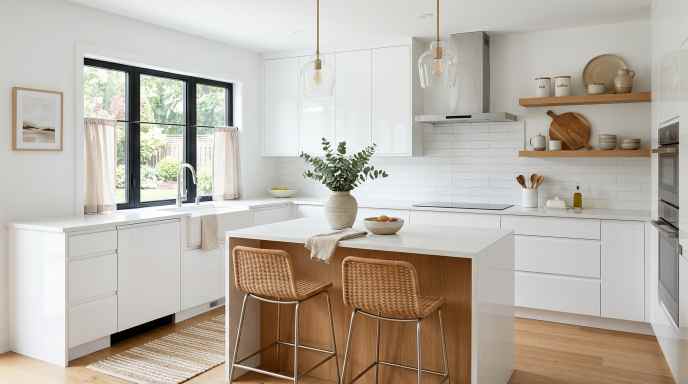
Adding glass elements to beige cabinets breaks up solid surfaces and adds visual interest. It also makes the kitchen feel lighter.
White accents tie everything together and prevent the design from feeling too heavy. This combination feels balanced and slightly upscale.
🛒 Shop This Look:
18. White Kitchen with Beige Rugs
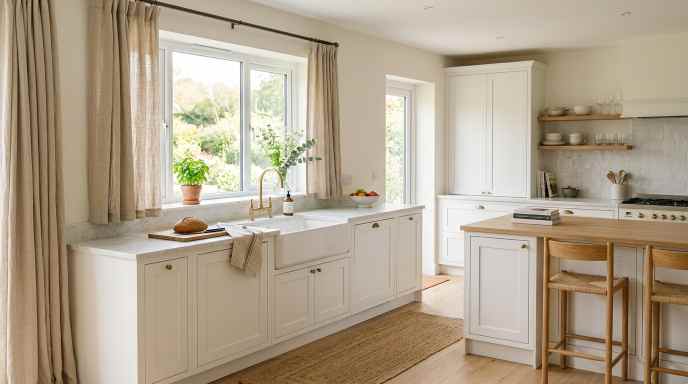
A beige rug in a white kitchen adds comfort and warmth underfoot. It also helps define areas in open layouts.
Choose a subtle pattern to add interest without overwhelming the space. This is a simple way to make the kitchen feel more lived-in.
19. Beige and White Farmhouse Style Kitchen
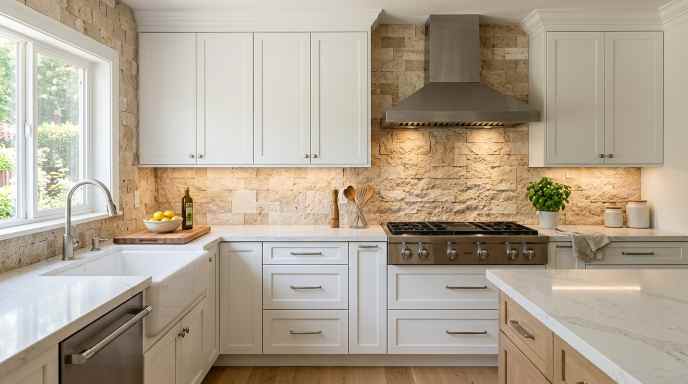
Farmhouse kitchens naturally suit beige and white palettes. The combination enhances the cozy, welcoming feel without making the space dark.
Use natural materials like wood and stone to complete the look. Keep the colors soft to maintain brightness while still feeling rustic.
20. Bright White Kitchen with Beige Accents
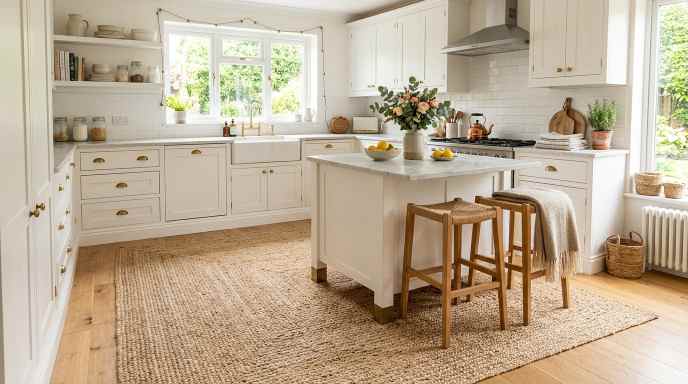
A mostly white kitchen with small beige accents is one of the safest ways to achieve this style. It keeps everything bright while adding just enough warmth.
Use beige in decor, seating, or small details rather than large surfaces. This approach gives flexibility—you can easily update the look without major changes.
Conclusion
White and beige kitchens work because they solve a real problem—most kitchens feel either too dull or too overwhelming. This combination avoids both extremes. White brings light, clarity, and openness, while beige adds warmth, softness, and a sense of comfort that pure white can’t deliver on its own. Together, they create a space that feels balanced, not forced.
The key is execution. If everything is the same shade, it becomes flat. If contrast is too strong, it loses the calm effect. The smartest approach is layering—mixing textures, finishes, and subtle tone differences to create depth without noise. Whether you go minimal, modern, or slightly rustic, this palette adapts easily.
If your goal is a kitchen that feels brighter, calmer, and easier to live in daily—not just something that looks good in photos—white and beige is one of the few combinations that consistently delivers.
FAQs
<plants and herbsck-heading”>1. What’s the difference between white and beige kitchens, and which is better?
White kitchens use pure or cool-toned whites for a crisp, modern feel that emphasizes clean lines and brightness. Beige kitchens incorporate warm, neutral tones that feel more organic and grounded, creating a softer aesthetic.
The practical difference matters: beige is typically more forgiving with dirt and imperfections, making it a smarter choice for busy households with kids or pets. White feels more spacious and airy but requires more frequent cleaning to maintain that pristine appearance. The “better” choice isn’t about which color is objectively superior—it’s about your lifestyle. Choose white if you want dramatic brightness and a minimalist environment.
Choose beige if you prefer warmth, visual softness, and a lived-in elegance that masks everyday wear.
2. How do I keep white cabinets from looking yellow or dingy over time?
This is the biggest concern homeowners have with white kitchens, and it’s valid. Discoloration happens through three main culprits: UV sunlight exposure, heat from cooking, and improper maintenance.
Start by choosing high-quality cabinet finishes with built-in UV protection. Look for cabinet paints or lacquers specifically formulated to resist yellowing. Next, install UV-blocking window treatments to slow discoloration from natural light—this alone makes a significant difference. Finally, establish a maintenance routine: clean cabinets regularly with mild soap and water, never abrasive cleaners that strip protective coatings.
Some homeowners refresh cabinet paint every 7-10 years as preventive maintenance, which is far cheaper than full cabinet replacement and keeps the kitchen looking fresh.
3. Are white and beige kitchens going out of style?
No—and this is important for your investment. Neutral kitchens are timeless design choices because they’re inherently versatile and allow your personal style to shine through without fighting the backdrop.
While kitchen trends shift yearly (farmhouse fades, maximalism rises), white and beige remain consistently among the most desirable finishes in real estate markets. Homebuyers feel confident purchasing homes with neutral kitchens because they can easily envision personalizing the space.
This longevity matters if you care about resale value. Unlike trendy colors that feel dated in five years, a well-executed white or beige kitchen will look contemporary for decades.
4. How do I prevent a white kitchen from looking sterile or clinical?
The key to avoiding that cold, hospital-like feeling is layering. A white kitchen needs texture, warmth, and personality to feel inviting.
Introduce natural materials: warm wood open shelving, textured backsplash tiles, marble countertops with veining, or a woven-texture island. Use warm-toned lighting throughout—aim for 2700K LED bulbs rather than cool 4000K, which flattens the space. Add greenery through potted plants and herbs on shelves or windowsills.
Style open shelving with meaningful items: beautiful cookbooks, ceramic pieces, and serving dishes displayed intentionally. Incorporate soft furnishings: a quality area rug, linen bar towels, and cushioned seating. The combination of these elements transforms a sterile white shell into a warm, lived-in gathering space.
5. Can I mix white and beige in the same kitchen?
Absolutely—this is actually one of the most popular and sophisticated approaches to neutral kitchen design.
Use white as your dominant base (cabinets and walls) and layer beige through secondary surfaces (island, countertops, or flooring). This creates visual depth and interest while maintaining the calm, cohesive aesthetic. The critical rule: ensure both whites and beiges are from the same undertone family. Mixing a cool white with warm beige creates visual discord and makes the space feel unintentional.
If your white has cool, slightly gray undertones, choose beige with similar cool undertones. If your white is warm-toned, match it with warm beige. This harmony is what makes the combination feel designed rather than accidental.
🛒 Shop This Look:
6. How important is lighting in a white/beige kitchen, and what type works best?
Lighting is absolutely critical—it’s the difference between a bright, inviting kitchen and a dull, disappointing one. Neutral kitchens are entirely dependent on light to showcase their appeal.
Layer three types of lighting for the best results. Ambient lighting (ceiling fixtures or recessed lights) provides overall illumination. Task lighting (under-cabinet strips, pendant lights over the island) ensures you can work safely and see food preparation clearly. Accent lighting (small fixtures highlighting open shelving or architectural details) adds depth and visual interest.
Throughout all fixtures, use warm white bulbs (2700K) for a calming, flattering appearance. This warm tone looks infinitely better than cool white (4000K) in neutral kitchens—it actually enhances the cream and beige tones rather than making them look washed out.
7. Are beige kitchens better for hiding dirt and stains?
Yes, but with important nuance. Beige is objectively more forgiving than white with everyday wear—dark spills, water marks, and dust are less noticeable on beige surfaces.
However, beige kitchens aren’t stain-proof. Darker spills still show, and mineral deposits from water remain visible. For maximum practicality, choose mid-to-warm beige tones (avoid very light, pale beige) and opt for matte or satin finishes rather than high-gloss. Sealed countertops and backsplashes matter far more than cabinet color when it comes to stain resistance—invest in quality sealing regardless of whether you choose white or beige.
The bottom line: beige is more practical for families prioritizing low maintenance, but excellent sealing and smart material choices matter more than color alone.
8. What countertop materials work best with white/beige kitchens?
Three materials consistently excel with neutral kitchen palettes.
Quartz is the most practical choice: non-porous, durable, requires minimal maintenance, and comes in finishes that complement both white and beige beautifully. Natural stone (marble, granite, limestone) adds visual interest and luxury. Marble is stunning but stains easily—avoid very light marble if you have young children. Granite is more practical, and leathered or honed finishes hide fingerprints better than polished versions.
Butcher block or other wood countertops add warmth and organic texture that prevents neutral kitchens from feeling cold. Seal wood properly if you choose this route. The worst choice: high-gloss surfaces that show every fingerprint and water spot, which is exhausting with neutral colors that already require careful maintenance.
9. How do I add personality to a neutral kitchen without making it busy?
This is about intentionality over quantity. Successful neutral kitchens feel curated, not bland.
Choose a cohesive accent—whether that’s a consistent green plant collection, warm wood tones, or blue-toned accessories—and repeat it throughout the space. This creates a visual thread that feels intentional rather than random. Display meaningful items: cookbooks you actually use, ceramic pieces you love, quality serving dishes. Style open shelving thoughtfully with empty space between items.
Add art—a simple framed print or photography above the sink or on a feature wall makes the space feel personal. Incorporate a quality area rug, linen bar towels, and perhaps a cushioned seating area. Every item should feel purposeful; you’re not decorating to fill space but curating items that reflect your taste. This restraint is what makes neutral kitchens feel sophisticated rather than impersonal.
10. Can I achieve a white/beige aesthetic on a budget?
Yes—and this is where neutral kitchens truly shine as an affordable option. You don’t need a complete renovation to transform your space.
Start with the highest-impact, lowest-cost change: painting existing cabinets white or beige. Cabinet paint specifically formulated for kitchens costs a fraction of new cabinets and completely transforms the space. Follow with hardware replacement—swapping cabinet pulls and knobs is inexpensive but noticeable.
Add plants and textiles next: greenery is affordable and instantly softens the space, while a quality area rug and new kitchen towels add warmth. Consider budget-friendly elements like peel-and-stick backsplash tiles (surprisingly effective), open shelving installation, or a simple floating shelf display.
An affordable kitchen island (or even a mobile cart styled to look like an island) creates the aesthetic without major investment. Many successful neutral kitchen transformations happen gradually through these incremental swaps rather than requiring a complete overhaul—which makes white and beige kitchens uniquely achievable on any budget.
For more articles like this, please visit our Home Page.