
As an Amazon Associate, I earn from qualifying purchases. This means I may earn a commission if you purchase through links on this page — at no extra cost to you.
Get inspired with 20 beautiful coastal bedroom ideas that feel light and breezy. Whether you prefer coastal design or something unexpected, there’s an idea here for you.
Explore more bedroom ideas for inspiration.
The goal is to create a space that feels open and relaxed, like fresh air is constantly moving through it. That comes from color, texture, and restraint—not decoration overload. These ideas focus on what actually works.
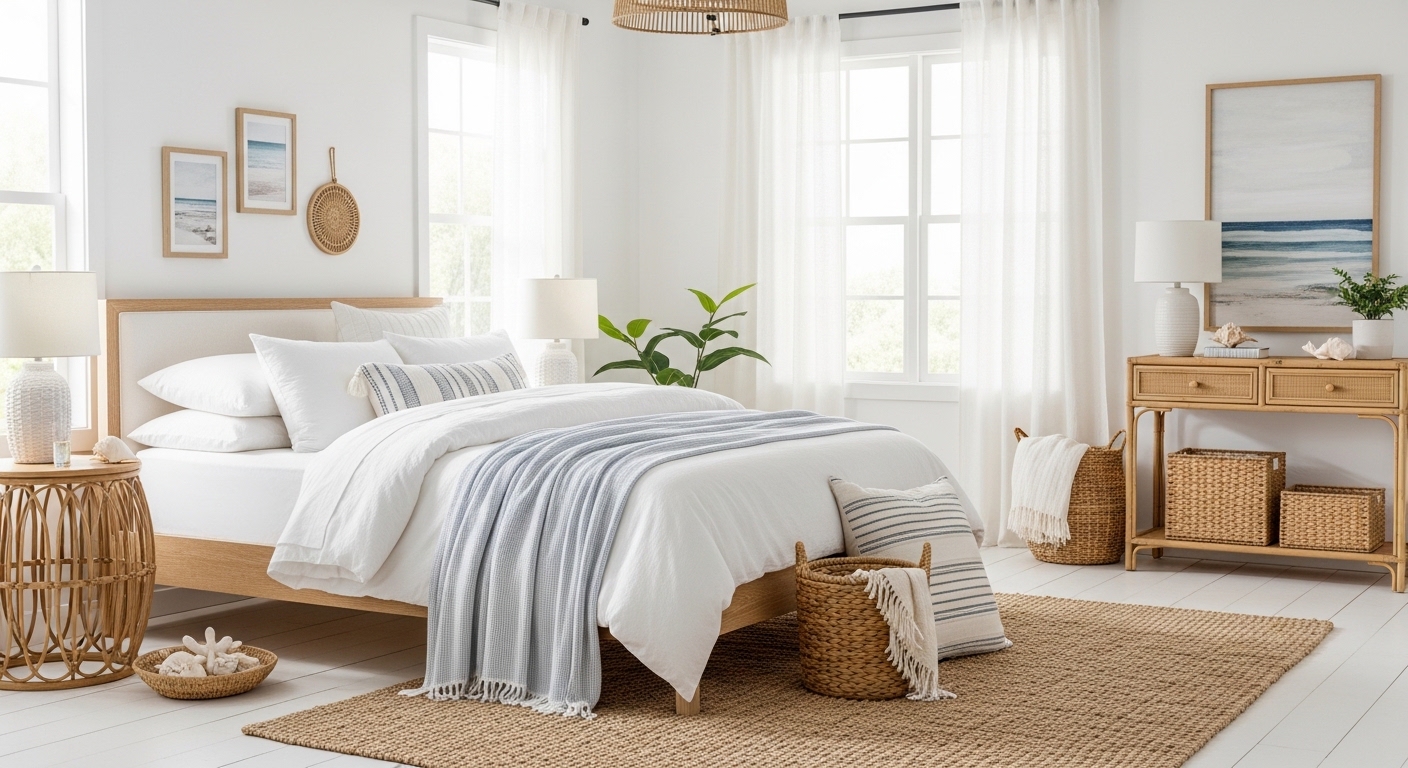
1. White Base with Soft Blue Accents
White should dominate the space because it reflects light and keeps everything feeling open. Soft blue accents—like cushions, throws, or artwork—add just enough color to suggest a coastal vibe without overwhelming the room.
Avoid deep or overly saturated blues. Those can make the space feel heavier than intended. Stick to washed-out tones that feel like they’ve been softened by sunlight. The balance between white and blue is what creates that breezy effect.
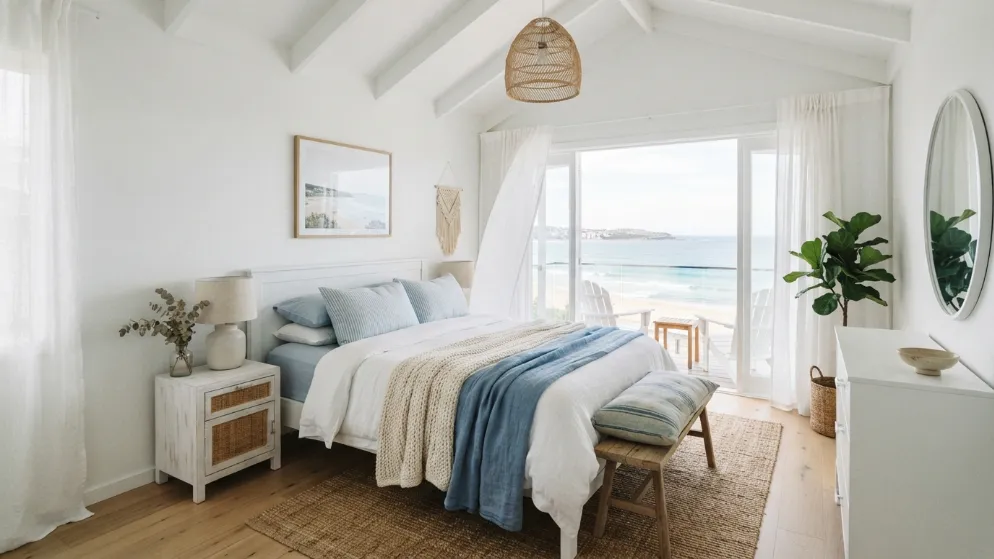
2. Light Wood Furniture for Natural Warmth
Light wood tones bring warmth without making the room feel dense. They pair naturally with white and soft blues, creating a relaxed and organic look that feels effortless.
Avoid dark or heavy furniture, which can visually weigh down the space. Keep lines simple and finishes natural. The goal is furniture that blends into the room rather than dominating it.
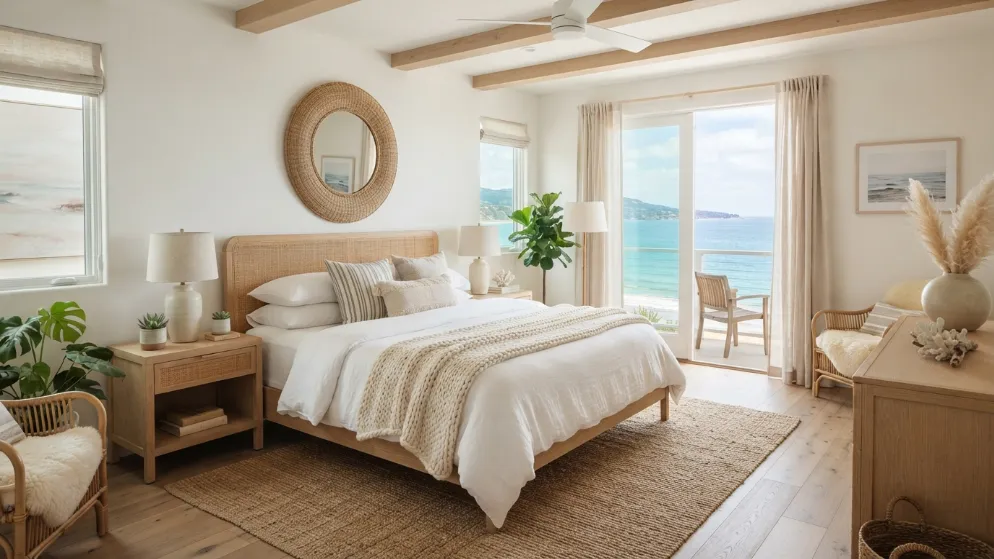
3. Sheer Curtains for Maximum Light
Heavy curtains block light and ruin the airy feel. Sheer curtains allow sunlight to filter through while maintaining privacy. They also move slightly with air, which adds to the relaxed atmosphere.
Choose lightweight fabrics that don’t feel stiff or structured. The more natural the flow, the better the room will feel. This is one of the simplest but most effective changes you can make.
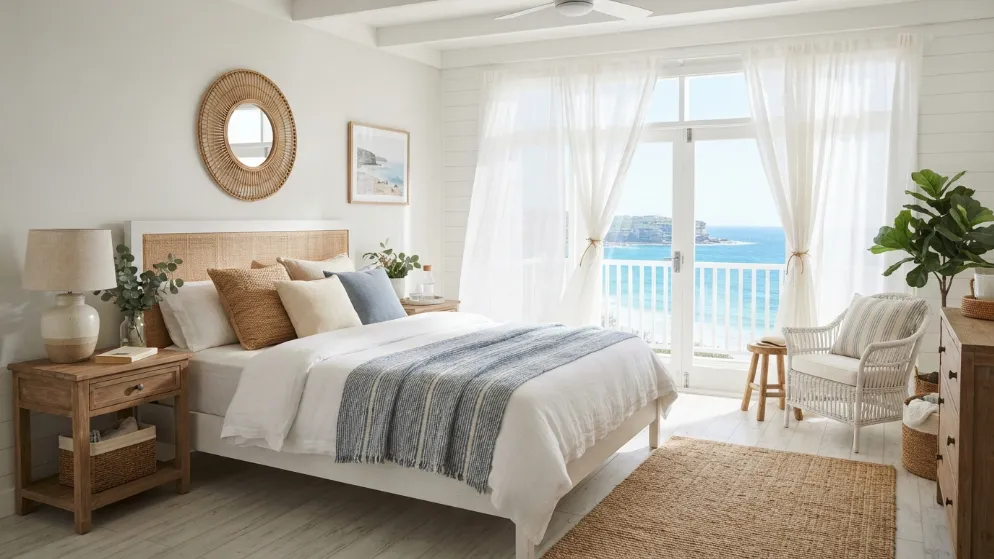
4. Neutral Bedding with Subtle Texture
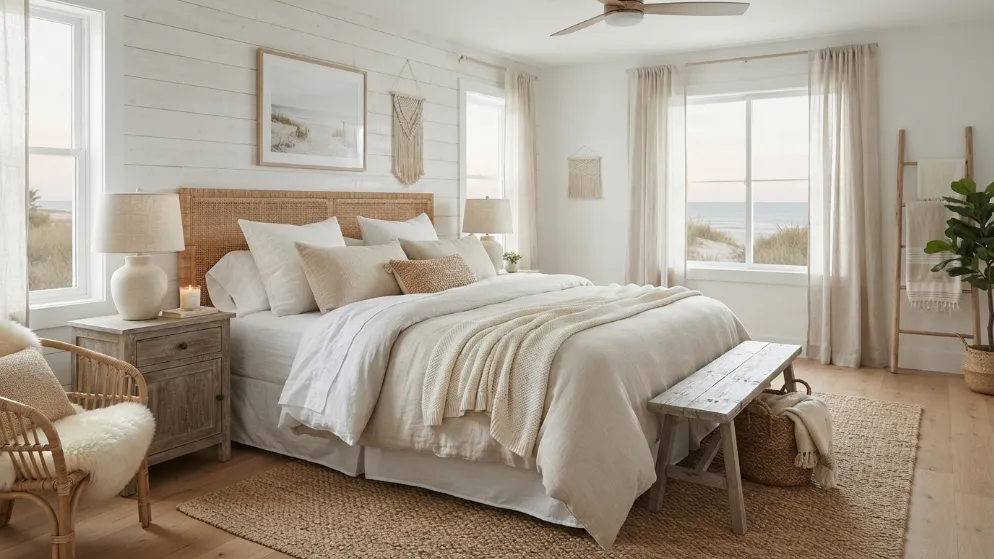
Keep bedding neutral—white, cream, or soft beige. This maintains brightness while allowing other elements to stand out subtly. Texture matters more than color here.
Use materials like linen or cotton to add depth. Avoid heavy layering or bold patterns. The bed should feel inviting, not visually busy.
5. Coastal-Inspired Minimal Wall Art
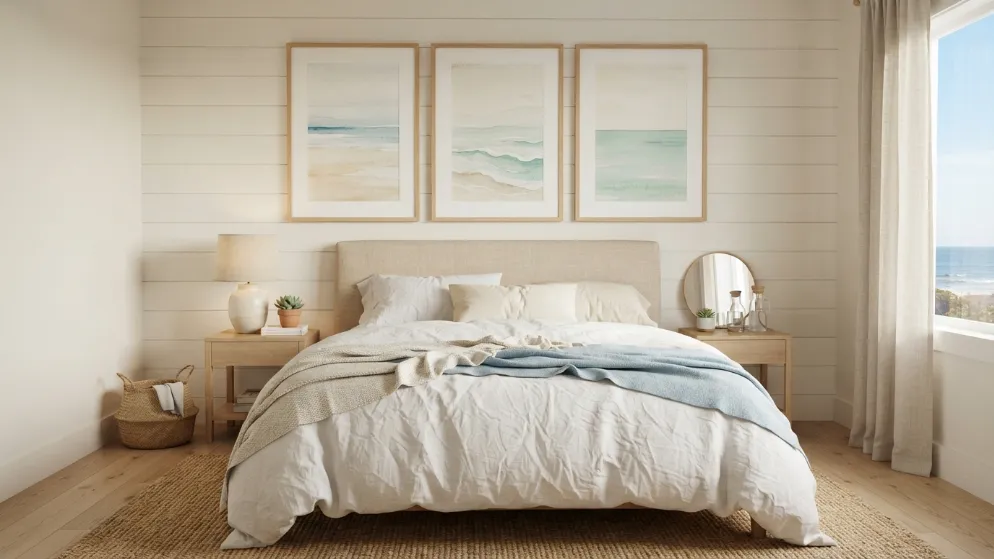
Wall decor should be minimal and intentional. One or two pieces with ocean tones or abstract coastal themes are enough to suggest the style.
Avoid overcrowding walls with multiple frames or loud prints. Too much decor breaks the calm effect and turns the room into a themed space instead of a relaxing one.
6. Woven Elements for Texture
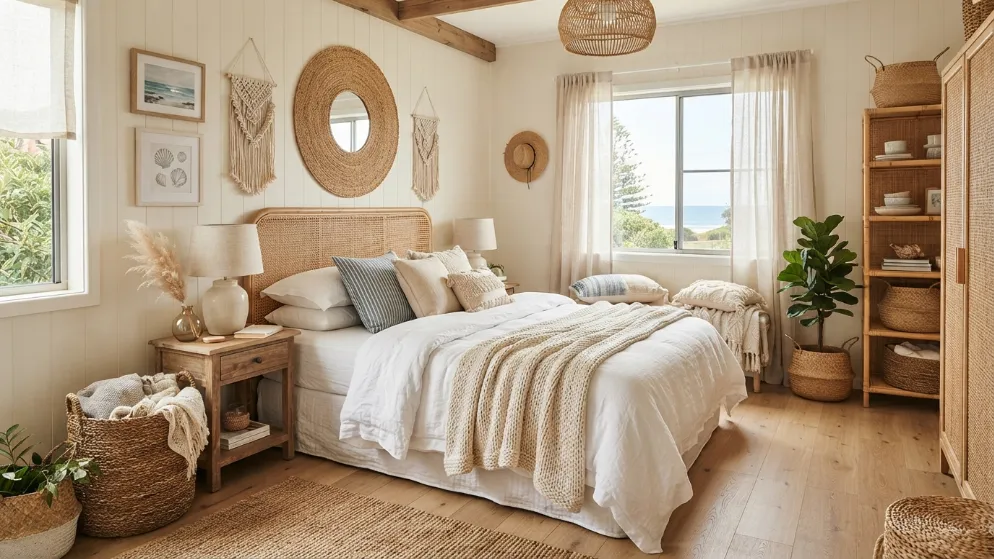
Woven materials like rattan, jute, or wicker add texture without adding visual weight. They introduce a natural, beach-like feel that complements the overall theme.
Use them in baskets, light fixtures, or small decor pieces. Keep it controlled—too many textures can feel messy rather than calm.
7. Soft Blue Feature Wall
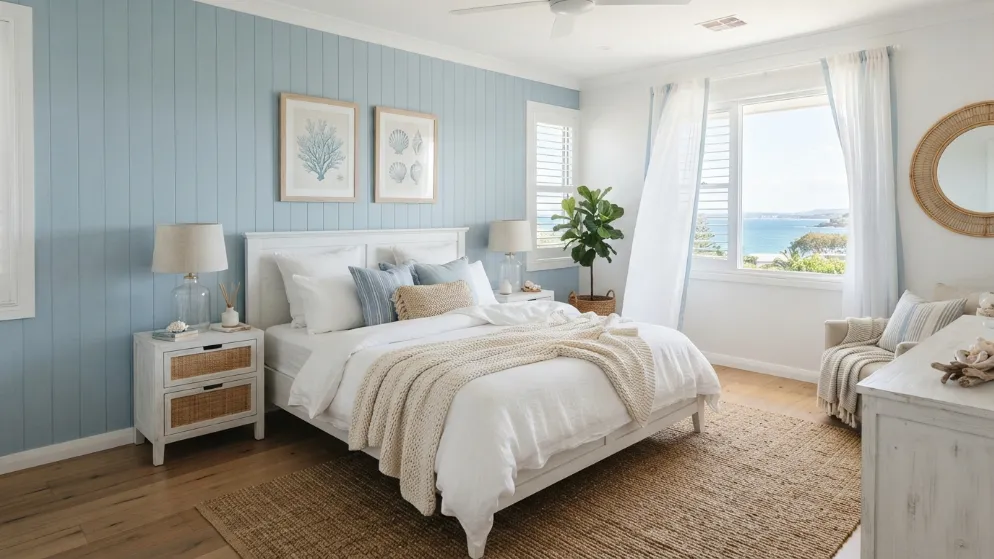
A soft blue wall can act as a focal point while maintaining the relaxed tone. It adds color without making the room feel enclosed.
Pair it with white furniture and neutral decor so the color doesn’t dominate. The goal is subtle presence, not bold contrast.
8. Minimal Furniture Layout
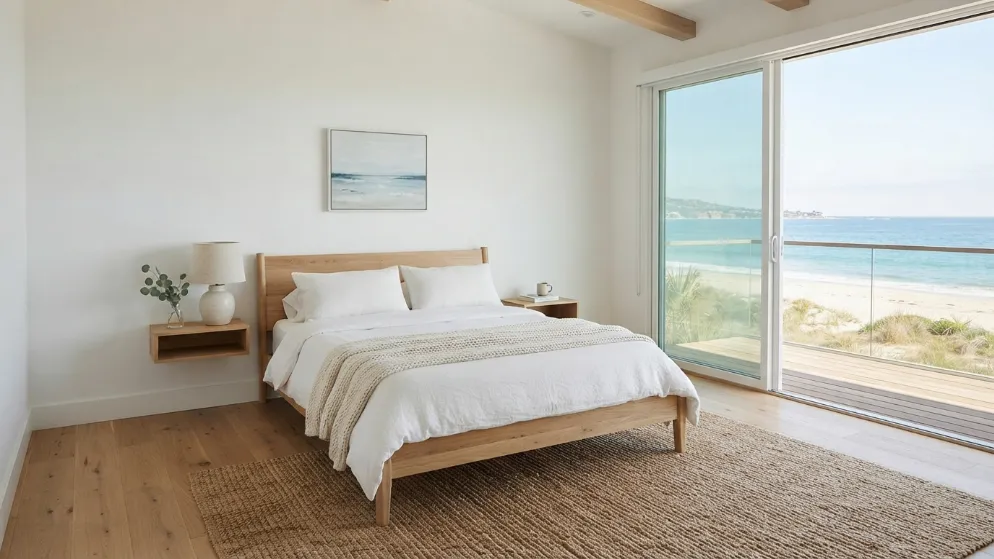
Overfilling the room kills the breezy feel instantly. Stick to essential furniture only—bed, nightstand, maybe a chair.
Leave space between items so the room can “breathe.” Open areas are just as important as the furniture itself in coastal design.
9. Natural Fiber Rug for Warmth
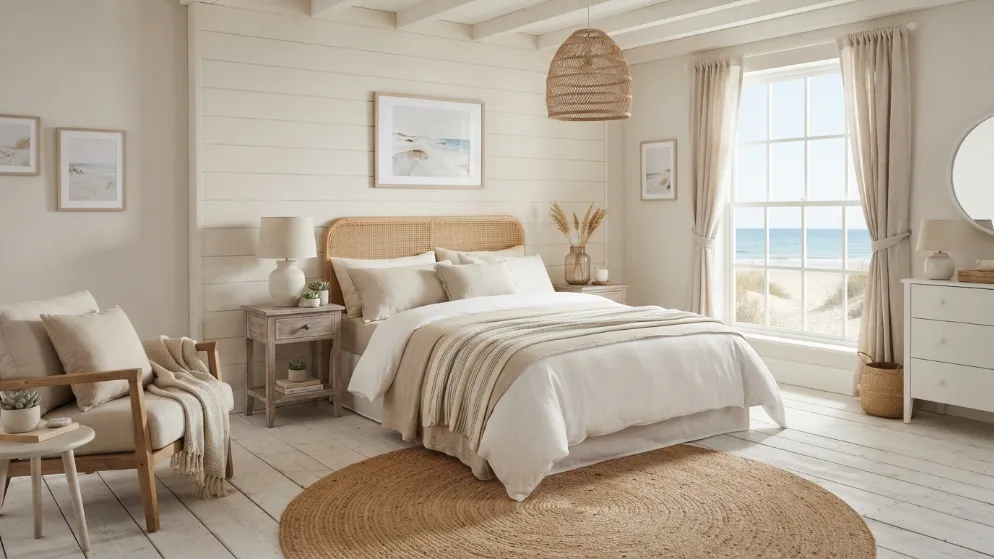
A jute or natural fiber rug adds warmth and texture without disrupting the color palette. It grounds the room while still keeping it light.
Avoid dark or heavily patterned rugs. The rug should support the space, not become the main focus.
10. White and Beige Layered Palette
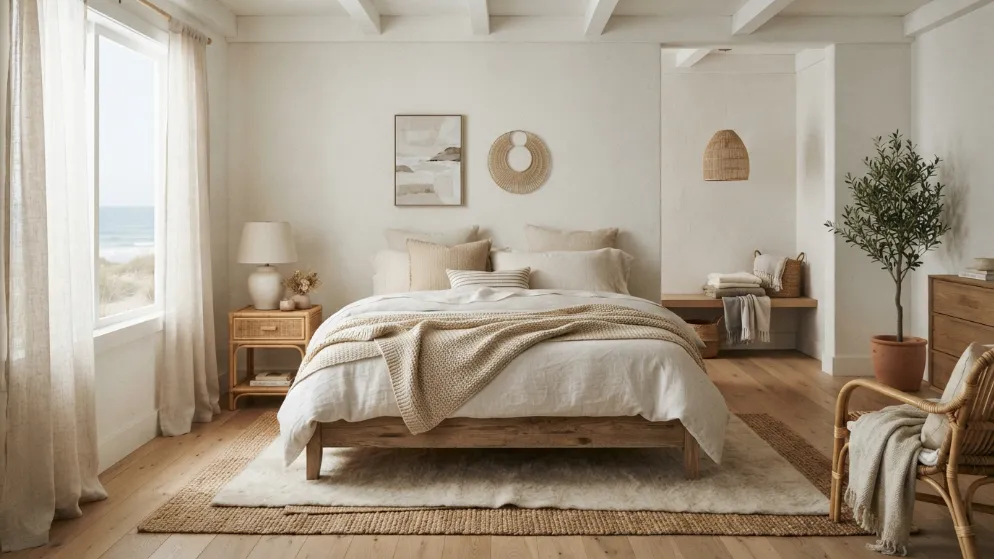
Layering white and beige creates a soft, warm version of coastal style. It feels relaxed without relying heavily on blue tones.
Use slight variations in shades to avoid a flat look. This combination works well if you prefer a more neutral coastal aesthetic.
🛒 Shop This Look:
11. Driftwood or Weathered Finishes
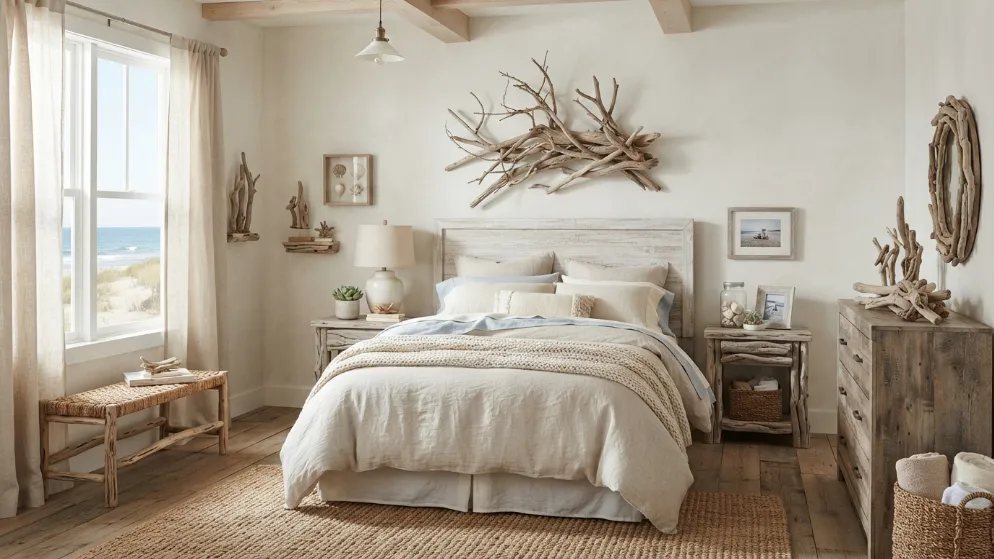
Weathered or driftwood-style finishes add character without making the room feel heavy. These pieces look slightly aged and imperfect, which fits naturally into a coastal setting where nothing feels overly polished.
Use them sparingly—maybe in a headboard, frame, or small decor item. The idea is to suggest a coastal influence, not turn the room into a themed display. Subtlety is what keeps the space calm and believable.
12. Soft Lighting with Warm Undertones
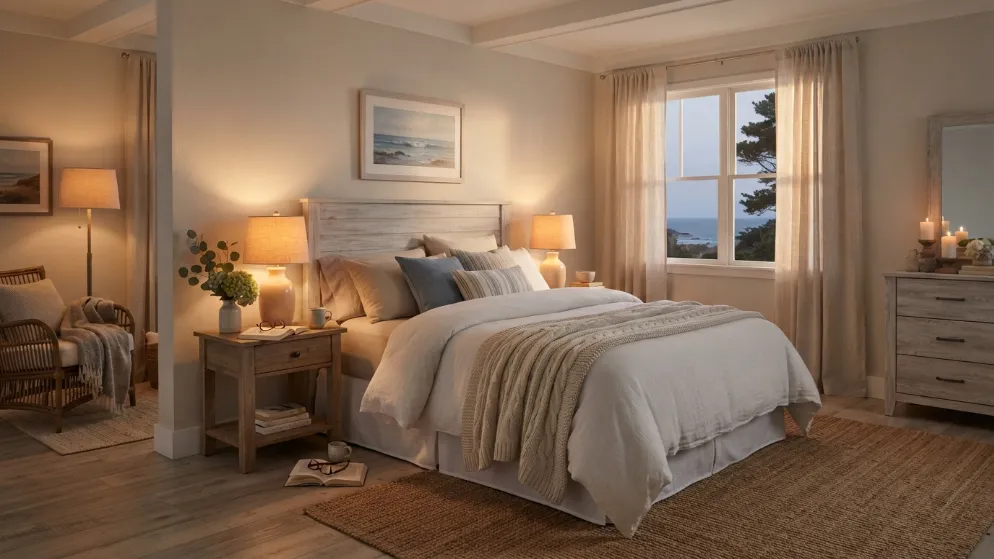
Lighting defines how the room feels at night. Bright white lights can make a coastal bedroom feel cold and artificial. Warm, soft lighting keeps the space relaxed and inviting after sunset.
Use table lamps, wall lights, or diffused fixtures instead of harsh overhead lighting. The goal is a gentle glow that complements the natural tones rather than overpowering them.
13. Blue and White Striped Textiles
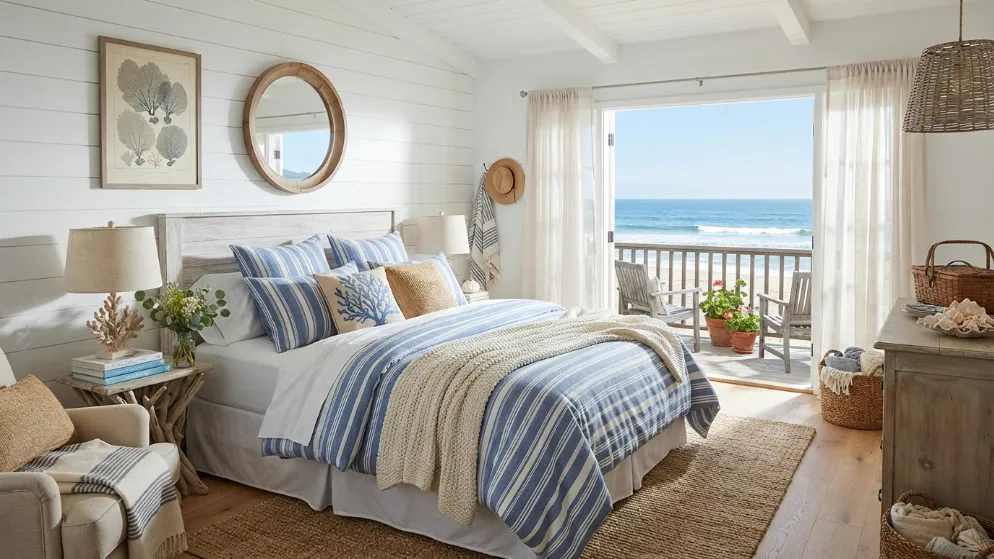
Stripes are one of the few patterns that fit naturally into coastal design. Blue and white stripes feel fresh, structured, and subtly nautical without being overwhelming.
Keep the pattern limited to one or two elements like cushions or a throw. Too many striped items can make the room feel busy instead of relaxed. Balance is what keeps the look clean.
14. Open Shelving with Minimal Styling
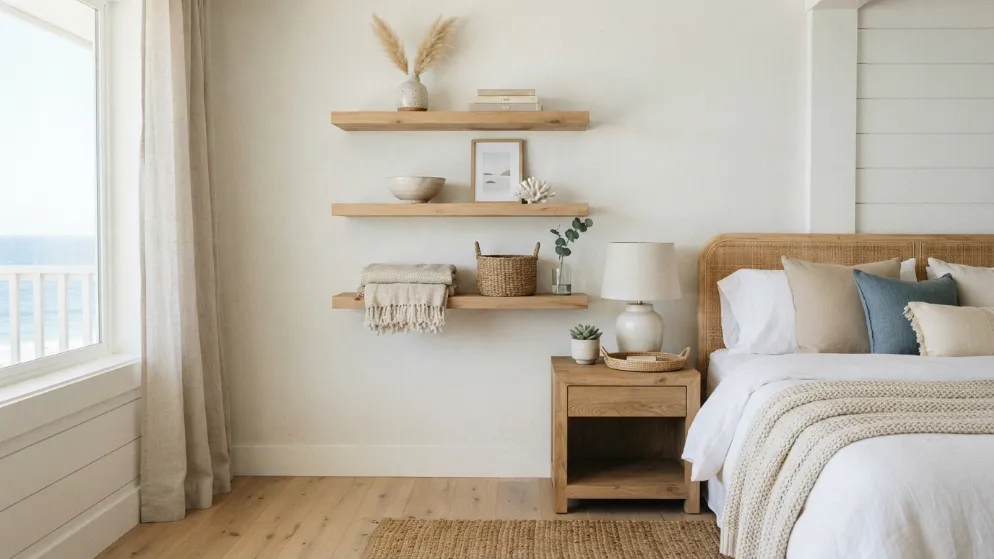
Open shelves can work if they’re styled with restraint. Use them to display a few neutral items—books, ceramics, or small decor pieces that align with the color palette.
Avoid overloading the shelves. Too many objects create clutter, which directly conflicts with the breezy feel you’re trying to achieve. Empty space is just as important as what you place.
15. Subtle Coastal Decor Elements
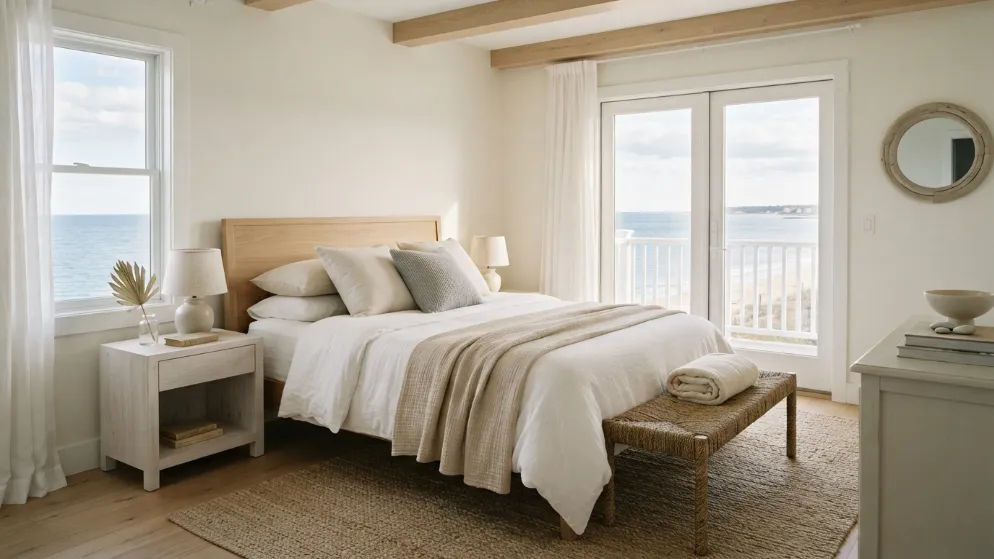
A few coastal-inspired items can reinforce the theme, but they should never dominate the room. Think one or two subtle references like a shell, coral piece, or ocean-inspired object.
The mistake most people make is over-decorating. When every item screams “beach,” the room loses its calm. Keep it understated so the space still feels like a bedroom first.
16. White Ceiling to Reflect Light
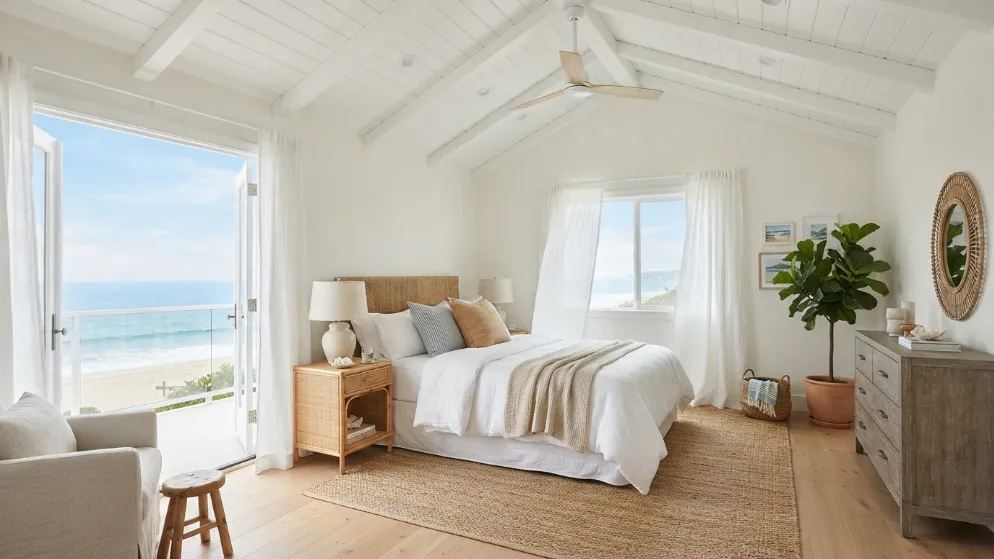
A white ceiling helps bounce light around the room, making it feel larger and more open. This is especially important in coastal design where brightness is key.
Avoid darker ceiling colors or heavy finishes. Keeping it simple ensures the room maintains that light, upward openness that contributes to the overall airy effect.
17. Glass and Light Reflective Surfaces
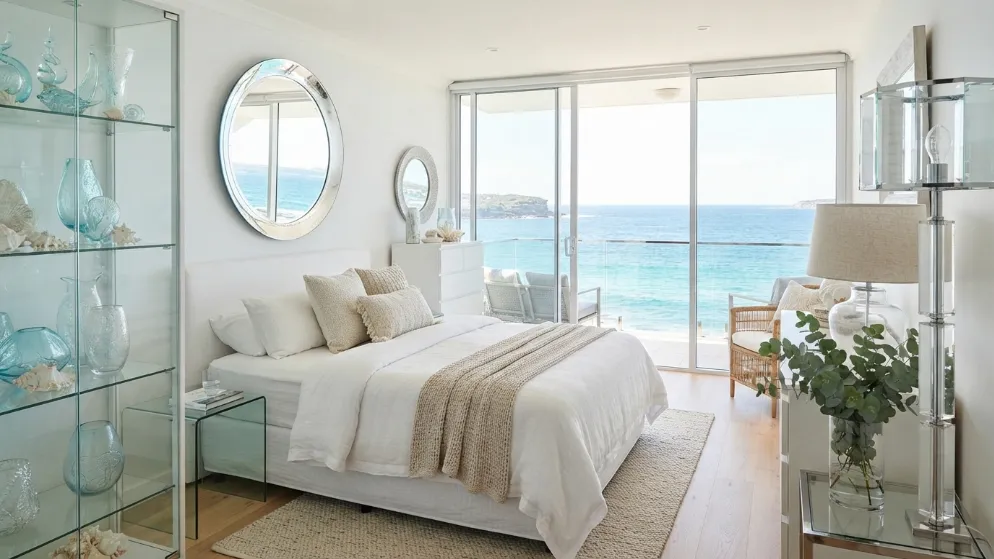
Glass elements like vases, lamps, or mirrors help reflect light and enhance the brightness of the space. They add a clean, subtle shine without adding visual weight.
Use them in moderation. Too many reflective surfaces can feel cold. The goal is to amplify natural light, not create a glossy or artificial environment.
18. Soft Blue and Green Combination
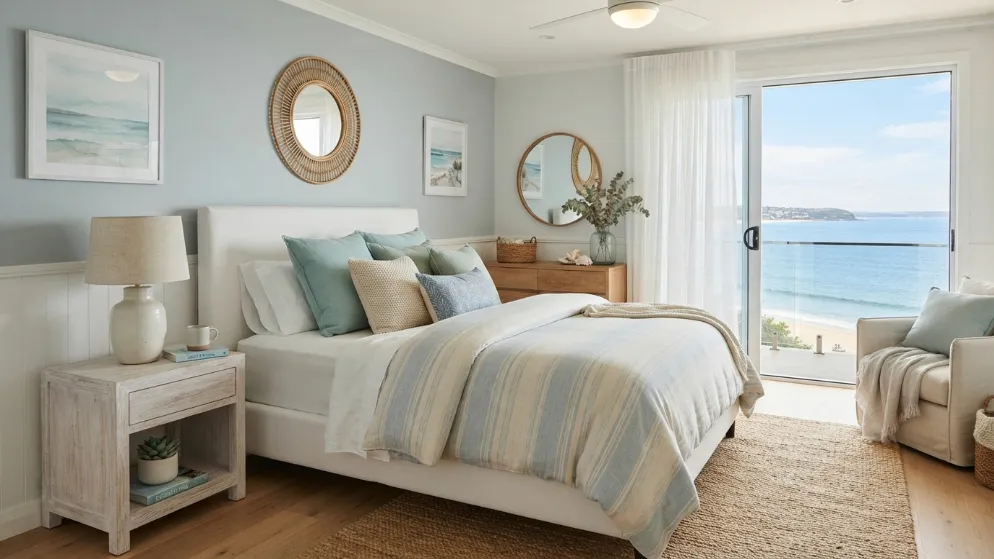
Mixing soft blues with hints of green creates a more natural ocean-inspired palette. It feels closer to real coastal environments where colors blend rather than stand apart.
Keep both tones muted and balanced. Strong contrast between them can disrupt the calm effect. When blended properly, they create a smooth, relaxing visual flow.
🛒 Shop This Look:
19. Simple Bed Frame with Clean Lines
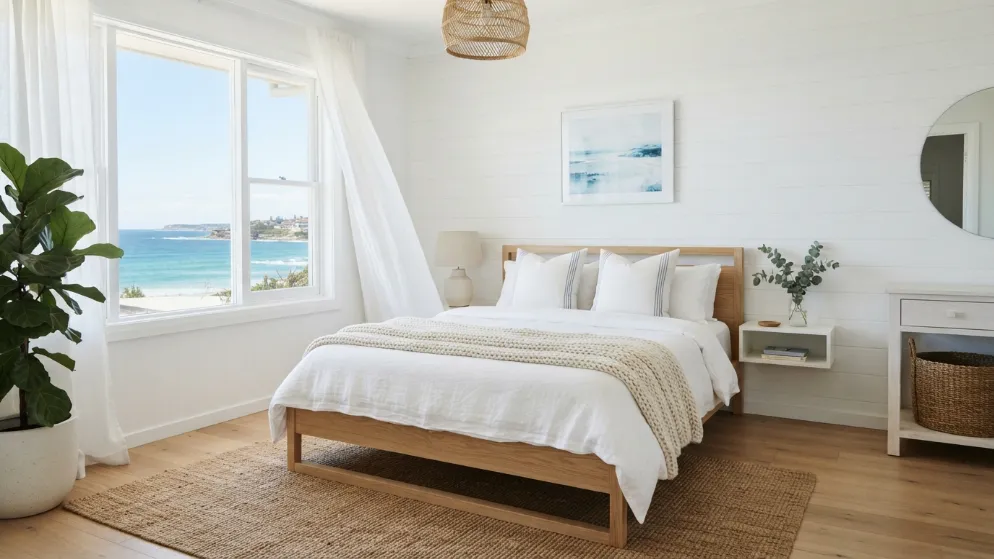
A bulky or decorative bed frame can dominate the room and ruin the light feel. Choose a simple design with clean lines that blends into the space rather than standing out.
Light wood or white finishes work best. The bed should feel like part of the room, not the center of attention. This keeps the overall design cohesive and uncluttered.
20. Open, Uncluttered Surfaces
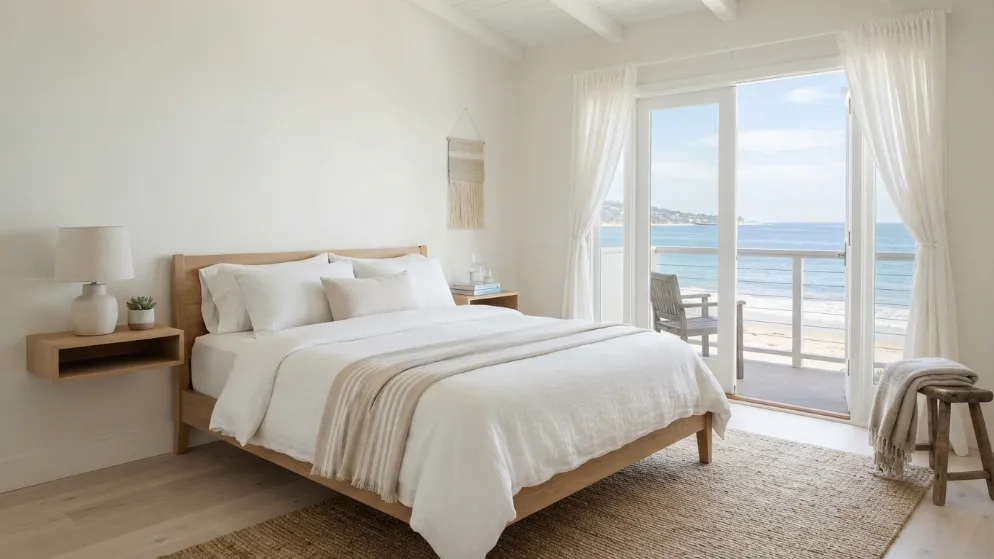
Clear surfaces are essential for maintaining a breezy atmosphere. Nightstands, dressers, and other areas should only hold a few necessary or meaningful items.
Clutter builds visual pressure, even if it’s small. Keeping surfaces open makes the room feel easier to exist in. It also reduces the effort needed to maintain the look over time.
Conclusion
A coastal bedroom only works when it feels effortless. The moment you start forcing the themeall costs many decorations or heavy elements, it loses its purpose. This style isn’t about recreating a beach—it’s about capturing the feeling of openness, light, and ease.
The most important factors are simple: keep the palette light, use natural materials, allow space between elements, and avoid clutter at all costs. Everything should support airflow and visual calm. If something feels heavy or unnecessary, it probably doesn’t belong.
Get the balance right, and the room won’t just look coastal—it will feel like a place where your mind can actually slow down. That’s what makes the difference.
10 Key Questions About Creating a Coastal Bedroom
1. What defines a coastal bedroom style, and is it just beach house vibes?
Coastal goes beyond beach houses. It’s about capturing that light, breezy, relaxed feeling—whether you live by the ocean or in the mountains.
The essence? Soft, natural colors inspired by sand, sea, and sky. Clean lines. Breathable fabrics. An overall sense of calm and openness.
You can create coastal vibes anywhere. It’s not about nautical decor—it’s about the feeling of space, air, and freedom.
2. What’s the difference between coastal and nautical bedroom design?
Big difference. Nautical is themed: rope, anchors, sailboats, navy stripes.
Coastal is more subtle and sophisticated. Think soft whites, warm sand tones, driftwood textures, and ocean-inspired blues. It’s about the feeling of the coast, not decorative references to it.
Nautical can feel theme-y. Coastal feels timeless and elegant.
3. What color palette works best for a coastal bedroom?
Soft whites, creams, pale blues, and warm sand tones are your foundation.
Add depth with soft grays, warm grays with blue undertones, or gentle seafoam. Keep everything light and airy—avoid dark or saturated colors.
Accent with warm wood tones (driftwood, natural oak). These neutral palettes let your space breathe and feel open, even if it’s actually small.
4. How important is natural light in a coastal bedroom?
Critical. Coastal style is built on light and airiness.
If your room gets good natural light, maximize it: sheer white curtains that diffuse but don’t block sunlight. If light is limited, compensate with great artificial lighting and pale colors that reflect light.
Window treatments matter—lightweight linen or cotton beats heavy velvet.
🛒 Shop This Look:
5. What window treatments work best for a coastal bedroom?
Sheer white curtains, natural linen, or light linen blends are perfect.
They filter light beautifully and maintain that breezy feel. Avoid heavy drapes or anything too formal.
Roman shades in natural linen or pale blue work too. Simple, clean, functional—that’s the coastal aesthetic.
6. What bedding materials create that authentic coastal feel?
Natural fibers are non-negotiable: 100% cotton, linen, or linen blends.
Linen especially feels coastal—slightly textured, breathable, and naturally beautiful. Choose white, cream, soft blue, or pale gray.
Layering is key: crisp sheets, lightweight duvet, and a linen throw. This combination feels both luxe and effortless—very coastal.
7. How do I incorporate wood textures without making it look rustic?
Light, pale wood is your friend. Driftwood-finish furniture, whitewashed wood, or natural oak work beautifully.
Avoid dark, heavy wood. A light wood bed frame, simple nightstand, or weathered wooden shelf adds warmth without weight.
Woven wood elements (jute rug, woven baskets, rattan accents) add texture while maintaining that airy feel.
8. What role do plants and natural elements play in coastal bedrooms?
Plants and natural elements are essential. They breathe life into neutral palettes.
Potted plants in corners, on shelves, or by the window add softness and reinforce nature. Dried pampas grass, driftwood pieces, or smooth stones add organic texture.
These aren’t just decor—they complete the coastal story. They make the space feel connected to nature, which is the whole point.
9. Can I do a coastal bedroom on a budget?
Absolutely. This style is actually one of the most budget-friendly.
Paint is your foundation: soft white or cream transforms a room instantly ($30-60). Add affordable natural elements: plants ($5-15), a jute rug ($30-80), simple curtains ($20-40).
Thrifted wood pieces, DIY driftwood displays, and budget lighting complete the look. Coastal doesn’t require expensive purchases—it requires good styling.
10. What mistakes do people make when designing coastal bedrooms?
Using too much color. Coastal works because of restraint. If every surface is decorated, it loses the airy feeling.
Adding too much nautical decor. Anchors and sailboats aren’t coastal—they’re cliché. Keep it minimal and let the palette do the work.
Neglecting lighting. Poor lighting destroys the breezy vibe instantly. Invest in soft, warm dimmable lights.
Using heavy, dark materials. Coastal is light. Dark furniture, dark wood, heavy curtains—avoid these.
Loved this idea? Discover even more beautiful home styling tips and room transformations on our homepage → Homeis Decor