
As an Amazon Associate, I earn from qualifying purchases. This means I may earn a commission if you purchase through links on this page — at no extra cost to you.
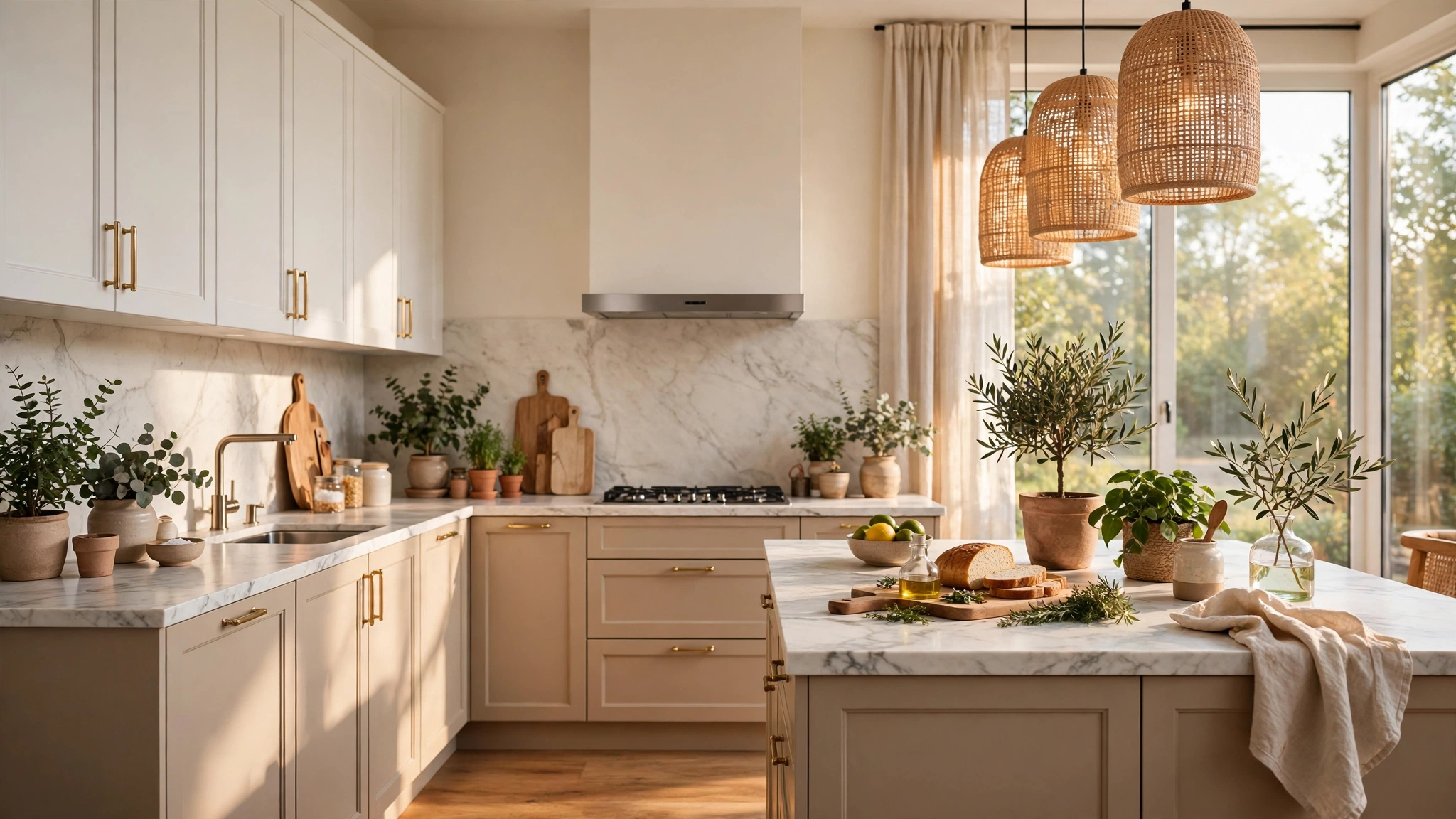
The best kitchen countertop decor balances style and function: a wooden cutting board leaned against the backsplash, a tray corralling oils and salt, fresh greenery in a vase, and a pretty utensil crock cover the essentials for most kitchens. Keep roughly 75% of your counter space clear and group decorative items in odd-numbered clusters of three or five. Below are twelve specific ideas with realistic price ranges, styling formulas, and the mistakes that make counters look cluttered instead of curated. Related: What Are the Standard Kitchen Countertop Heights.
The 12 Best Kitchen Countertop Decor Ideas
1. Leaning Wooden Cutting Boards
Nothing warms up a kitchen faster than a stack of wooden cutting boards leaned against the backsplash. They add height, texture, and a lived-in feel — and they double as functional tools when you need extra prep space.
What to buy: Look for acacia, walnut, or olive wood boards in graduated sizes. John Boos and Totally Bamboo make excellent mid-range boards ($25–$60 each). IKEA’s PROPPMÄTT bamboo board is a budget standout at around $10–$15. For a splurge, an end-grain walnut board from a maker on Etsy runs $80–$150.
How to style: Lean two or three boards of different heights against the backsplash near the stove or prep zone. Place the tallest in back, shortest in front. Round boards break up all the rectangles in a kitchen and photograph beautifully.
What to avoid: Don’t line up five identical boards like soldiers — vary the wood tones, shapes, and sizes. And skip plastic boards for display; they read as cheap even when they’re not.
2. A Corral Tray for Oils and Everyday Items
A tray is the single most effective anti-clutter tool on a countertop. It takes the olive oil, salt cellar, pepper mill, and soap dispenser that would otherwise scatter across the counter and turns them into one intentional vignette.
What to buy: Marble trays ($30–$70 at Crate & Barrel, CB2, or Amazon), acacia wood trays ($20–$40 at Target or World Market), or a vintage brass tray from a flea market or Etsy ($15–$50). Size matters — aim for 12 to 18 inches long.
How to style: Place the tray next to the range with your cooking oil, a salt pig or cellar, and a small plant or candle. Keep it to three or four items max.
What to avoid: A tray crammed with eight bottles is just organized clutter. Edit ruthlessly — if you don’t reach for it daily, it doesn’t earn tray space.
3. Fresh Greenery or a Vase of Stems
Every styled kitchen photo you’ve ever admired has one thing in common: something alive. A vase of eucalyptus, olive branches, or even grocery-store flowers instantly makes a kitchen feel finished.
What to buy: A simple ceramic or glass vase, 8–14 inches tall ($15–$45 at H&M Home, Zara Home, or CB2). For stems, eucalyptus lasts two to three weeks; olive branches and pampas grass last months. Trader Joe’s sells eucalyptus bunches for about $4.
How to style: Tall stems go in a corner of the counter or on an open shelf; a small bud vase with a single stem works on a tray or next to the sink. Keep the vase shape simple so the greenery is the star.
What to avoid: Dusty fake plants. If you go faux, invest in realistic stems ($20+ per stem) and dust them monthly — cheap silk plants are worse than no plants.
4. A Beautiful Utensil Crock
You need somewhere to put your spatulas and wooden spoons anyway — make it a design moment. A stoneware or ceramic crock in a color that echoes your kitchen palette turns a necessity into decor.
What to buy: Le Creuset stoneware crocks ($45–$60) are the gold standard and come in every color. Budget options: Threshold stoneware crocks at Target ($15–$20) or IKEA’s RIMFORSA ($10). Choose a crock at least 6 inches tall so utensils don’t topple.
How to style: Place it near the stove with wooden spoons, a whisk, and tongs. Stick to wood, black, or stainless utensils — a rainbow of plastic handles ruins the effect.
What to avoid: Overstuffing. Ten utensils max. If it looks like a porcupine, edit it down.
5. A Small Herb Garden
A row of potted herbs on a sunny windowsill or counter edge is decor that pays rent — basil, rosemary, and thyme look great and get used in cooking.
What to buy: Matching terracotta pots ($3–$8 each at garden centers) or a long planter box ($20–$40). Starter herb plants run $3–$5 each. Self-watering planters ($25–$45 on Amazon) help if you forget to water.
How to style: Group three to five pots together rather than scattering singles. Matching pots are key — mismatched nursery pots look messy.
What to avoid: Leggy, half-dead herbs. Replace them when they get sad; a dying plant is anti-decor.
6. Apothecary Jars for Pantry Staples
Decanting flour, sugar, pasta, and coffee into glass jars turns everyday staples into a display. It works especially well on open shelving or a deep countertop stretch.
🛒 Shop This Look:
What to buy: Anchor Hocking or Ball glass canisters ($8–$20 each depending on size). IKEA’s KORKEN jars with bamboo lids ($5–$12) are a clean, affordable option. Buy a matching set rather than mixing styles.
How to style: Line up three jars of graduated heights with the most photogenic contents (colorful pasta, coffee beans, oats). Add simple labels if you’re the organized type.
What to avoid: Decanting things you’ll never use up — stale flour in a pretty jar is still stale flour. Only decant what you cycle through regularly.
7. A Cake Stand for Produce
A cake stand elevates a bowl of lemons, artichokes, or seasonal fruit into a centerpiece. It’s one of the cheapest high-impact styling tricks in the book.
What to buy: Marble cake stands ($25–$50 at Crate & Barrel or Amazon), wood pedestal stands ($20–$40), or a vintage milk-glass stand from Etsy ($15–$35). A 10–12 inch diameter works for most counters.
How to style: Pile it with one type of produce — all lemons, all green apples, all artichokes. Monochrome groupings look intentional; a mixed fruit salad looks like leftovers.
What to avoid: Letting produce rot on display. Refresh weekly.
8. A Stack of Beautiful Cookbooks
Cookbooks with gorgeous covers are decor. Stack two or three horizontally and top them with a small object — a candle, a tiny plant, a salt cellar.
What to buy: You probably own these already. If buying for looks, “Salt Fat Acid Heat,” “Ottolenghi Simple,” and “The Flavor Bible” all have display-worthy covers ($20–$35 each).
How to style: Stack horizontally, largest on bottom. Two to four books max, then a small object on top to finish the vignette.
What to avoid: A teetering tower of twelve books. And don’t display cookbooks you hate — someone will open one.
9. A Linen Runner or Folded Tea Towels
Textiles soften all the hard surfaces in a kitchen. A narrow linen runner along a galley counter or a neat stack of folded tea towels adds color and pattern without taking up functional space.
What to buy: Linen runners ($25–$60 on Etsy or Rough Linen). Quality tea towels: Williams Sonoma or Schoolhouse ($12–$20 each), or a set from IKEA ($8 for a 4-pack).
How to style: Fold tea towels in thirds and stack two or three. A runner works best on a long, uninterrupted counter run — not chopped up between appliances.
What to avoid: Novelty prints and stained towels on display. Keep the cute dish towels in a drawer.
10. A Statement Paper Towel Holder
If a paper towel holder lives on your counter permanently, it might as well look good. Weighted marble, brass, or matte black holders elevate this mundane object.
What to buy: Marble holders ($30–$50 at CB2 or Amazon), brass ($40–$70), or the simple matte black Umbra Tug ($20). Look for a weighted base so it doesn’t tip when you tear a sheet one-handed.
How to style: Tuck it at the end of the counter near the sink, not center stage. It’s supporting decor, not the star.
What to avoid: The flimsy wire kind that wobbles. If it can’t stand up to one-handed tearing, it’s not earning counter space.
11. A Leaning Art Print or Small Framed Photo
A small framed print leaned against the backsplash adds personality and a shot of color. Kitchens often skip wall art entirely, which is a missed opportunity.
What to buy: 5×7 or 8×10 frames ($8–$25 at Target, IKEA, or Amazon). Print your own photos or buy affordable art prints on Etsy ($10–$30). Choose art with food, botanical, or abstract themes.
How to style: Lean (don’t hang) a single frame against the backsplash at the end of a counter run, or layer a small frame in front of a cutting board. Keep it away from the stove’s grease zone.
What to avoid: Anything valuable or irreplaceable — kitchens are humid and greasy. Use prints, not originals.
🛒 Shop This Look:
12. A Scented Candle or Reed Diffuser
Kitchens should smell as good as they look. A candle or diffuser in a pretty vessel adds ambiance and covers cooking odors between meals.
What to buy: Nest, Capri Blue (Volcano), or Diptyque for splurge candles ($30–$75). Budget-friendly: Target’s Threshold candles ($8–$12) or IKEA’s scented candles ($5–$10). Reed diffusers ($20–$40) are flame-free and last months.
How to style: Place on a tray or stack of books, away from the stove. One scent at a time — competing fragrances are worse than none.
What to avoid: Overpowering scents near food prep areas. Stick to citrus, herbal, or clean linen scents; skip heavy florals in the kitchen.
The Styling Formulas That Always Work
If twelve ideas feel overwhelming, memorize these three formulas — they work in any kitchen:
The Corner Trio: Tall item in back (cutting board or vase with stems) + medium item (utensil crock or jars) + low item (candle or small plant). Vary heights by at least 4 inches between each piece.
The Tray Vignette: Tray + oil bottle + salt cellar + one living thing (herb pot or bud vase). Everything contained, everything intentional.
The Lean Layer: Cutting board leaned against backsplash + small frame leaned in front of it + candle or bud vase beside them. Three layers of depth in twelve inches of counter.
Budget Breakdown: Three Tiers
Under $50 total: IKEA bamboo board ($12), eucalyptus from Trader Joe’s ($4), a Threshold candle ($10), and a stack of cookbooks you already own. Total: roughly $26 — and it will look like you tried.
Around $150: Acacia tray ($30), stoneware utensil crock ($20), ceramic vase + stems ($35), marble paper towel holder ($35), linen tea towels ($20). This is the sweet spot for a polished look.
$300+: Marble tray ($60), Le Creuset crock ($55), olive wood boards ($90 for two), quality reed diffuser ($35), framed art print ($40). Investment pieces that last years.
What Not to Do: 6 Countertop Mistakes
1. Covering every inch. Counters need breathing room to function. If you can’t chop an onion without moving decor, you’ve gone too far.
2. Matching sets of everything. A kitchen where every accessory is the same brand and color looks like a showroom, not a home. Mix wood, ceramic, glass, and metal.
3. Decor near the stove that can’t handle heat and grease. Paper, fabric, and unsealed wood don’t belong within two feet of a burner.
4. Appliance garage overflow. The coffee maker, toaster, stand mixer, and air fryer all out at once is not “decor” — it’s a small appliance store. Store what you don’t use daily.
5. Fake food. Plastic fruit in a bowl fooled no one in 1995 and fools no one now.
6. Ignoring the backsplash zone. The 6-inch strip between counter and backsplash is prime styling real estate — lean boards and frames there rather than pushing everything to the wall.
Frequently Asked Questions
How much countertop should I leave clear?
Aim to keep 70–75% of your counter surface clear for actual cooking. Decorate the perimeter — corners, the strip along the backsplash, and the ends of counter runs — and leave the central work zones open.
What’s the one decor item with the biggest impact?
A tray. It instantly organizes the visual chaos of oils, salt, and soap into a single intentional arrangement, and it costs $20–$40. If you buy one thing from this list, make it a tray.
How do I decorate a very small kitchen counter?
Pick one formula — the tray vignette — and stop there. One beautiful tray with three items beats five scattered objects in a small space. Use the backsplash ledge for a leaning board to add height without footprint.
Should kitchen decor match the rest of my house?
It should coordinate, not match. Pull one or two colors or materials from adjacent rooms (the wood tone of your dining table, the black of your living room frames) so the kitchen feels connected without being identical.
How often should I refresh countertop decor?
Seasonally is plenty — swap stems, change the candle scent, rotate the produce on the cake stand. A five-minute refresh every few months keeps the kitchen feeling intentional rather than stale.
By Ella Knight
🛒 Shop This Look:



