
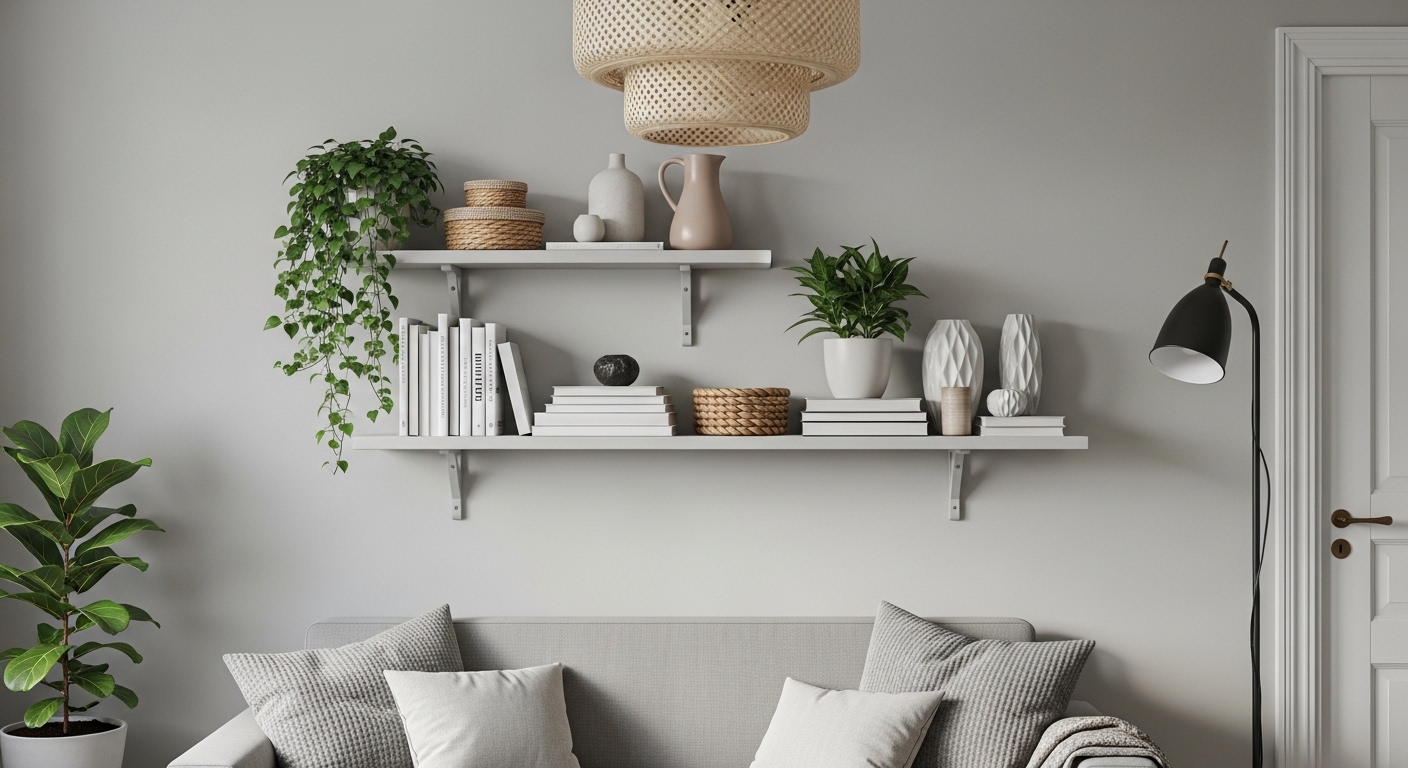
Small walls are often ignored. They feel too narrow, too awkward, or too empty to decorate properly. But leaving them blank can make a room feel unfinished and unbalanced, especially in small homes or apartments where every inch matters. Many people struggle to figure out how to decorate these tight spaces without making them look cluttered or overwhelming.
The good news is that floating shelves are one of the smartest small wall decor solutions. They add storage without bulk, display personality without taking floor space, and create visual height that makes a room feel bigger. With the right styling approach, even the smallest wall can become a beautiful focal point that feels intentional and thoughtfully designed.
If you’ve been staring at a blank wall wondering what to do with it, these floating shelf styling tips will completely change how you see your space.
1. Start with a Balanced Color Palette
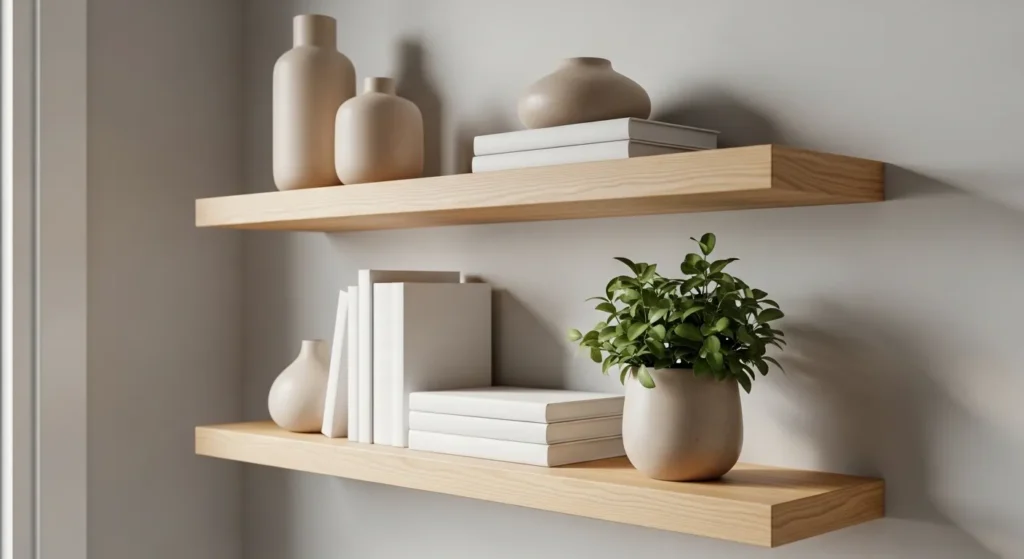
When styling floating shelves on a small wall, the color palette sets the entire mood. Choosing two to three cohesive tones creates harmony and prevents the space from feeling chaotic. For example, pairing soft whites, warm wood, and muted greenery instantly makes the shelves feel calm and curated. This approach works beautifully in small apartments where too many bold colors can make walls feel crowded instead of stylish.
A balanced color scheme also helps objects feel connected rather than random. If your room already has beige curtains or a wooden coffee table, repeat those tones on your shelves. This repetition creates visual flow across the space. Small walls especially benefit from consistency because it keeps the design clean and prevents visual overload, making the room feel more spacious and thoughtfully styled.
2. Mix Vertical and Horizontal Elements
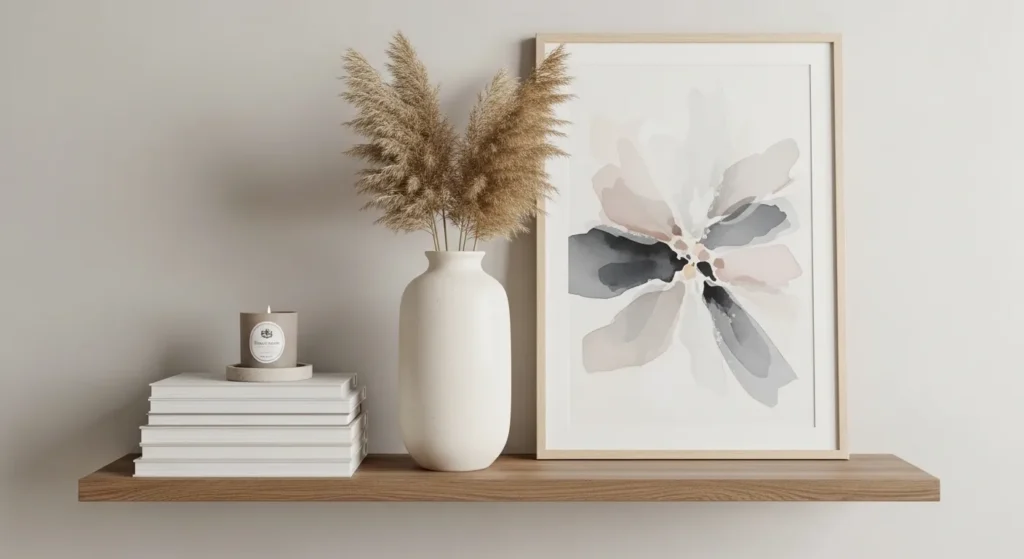
One common mistake when styling floating shelves is placing everything at the same height. On a small wall, this makes the display look flat and uninspired. Instead, combine vertical pieces like tall vases or upright books with horizontal stacks of books or trays. This creates natural movement and keeps the eye traveling across the shelf, which adds dimension and depth.
Layering vertical and horizontal shapes makes even a narrow wall feel dynamic. A tall ceramic vase beside a short stack of books instantly creates contrast. Lean a framed print behind smaller decor pieces to build subtle layers. This technique is especially effective in compact spaces because it adds visual interest without requiring more items, helping you style smarter instead of fuller.
3. Use Odd Numbers for Styling
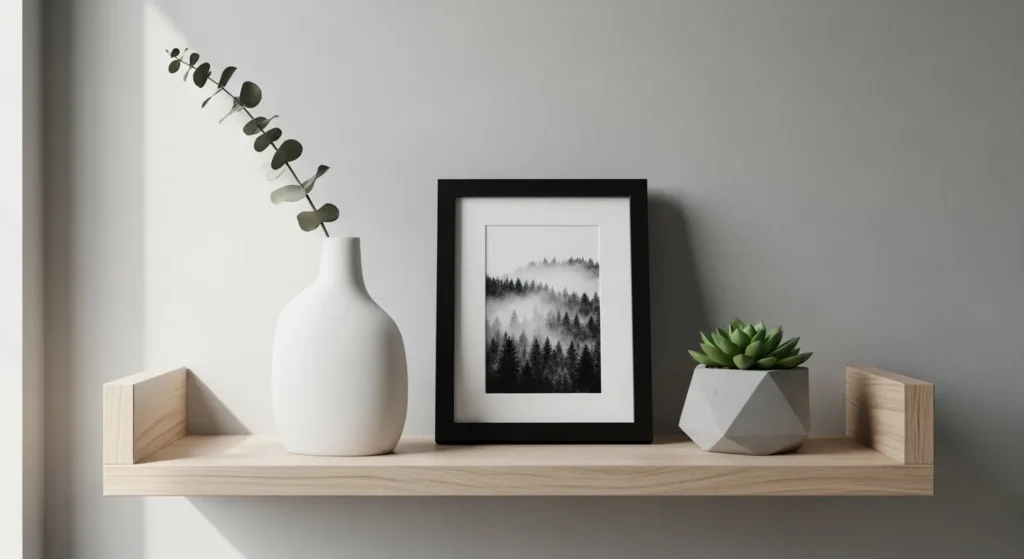
There is a reason designers often group decor in odd numbers. Arrangements of three or five items naturally feel more balanced and less rigid than even-numbered groupings. On a small wall shelf, this trick becomes even more powerful because it creates effortless visual harmony without overcrowding the space.
Try placing three objects of varying heights together. For example, a small plant, a medium-sized framed photo, and a taller decorative vase. The variation keeps the eye engaged while maintaining order. Using odd numbers also prevents shelves from looking too symmetrical or stiff, giving your small wall a relaxed and intentionally styled appearance.
4. Incorporate Natural Textures
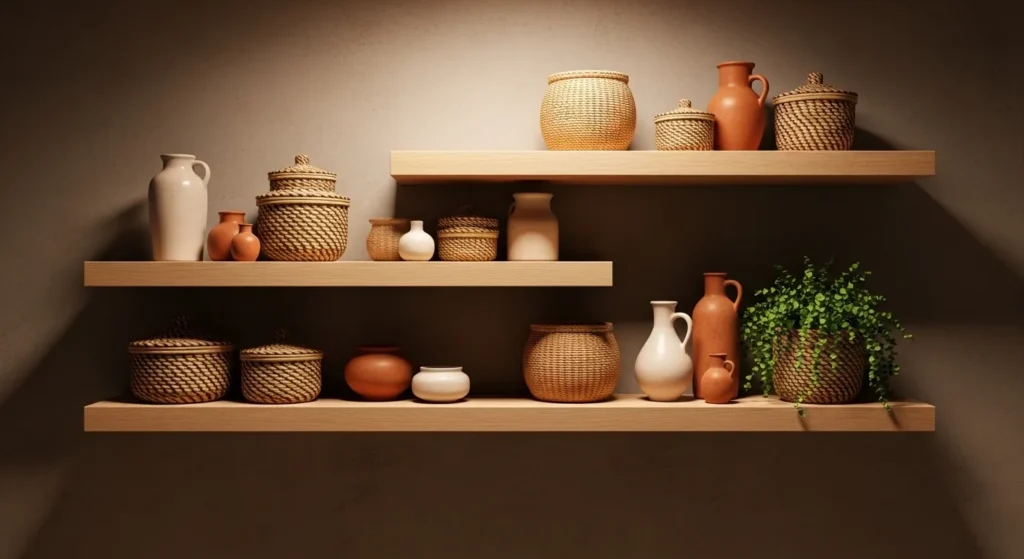
Small walls can easily feel flat if everything on the shelf is smooth or glossy. Adding natural textures like woven baskets, ceramic pottery, wood frames, or linen-covered books instantly warms up the space. Texture adds depth without needing bold color, which is perfect for compact rooms where subtle styling works best.
A mix of materials keeps your floating shelves interesting while still cohesive. Pair a smooth ceramic vase with a woven basket or a wooden bead garland. These contrasts create dimension while staying soft and inviting. Natural textures also make a room feel more grounded and cozy, which is especially important in small living rooms, bedrooms, or entryways.
5. Leave Breathing Room
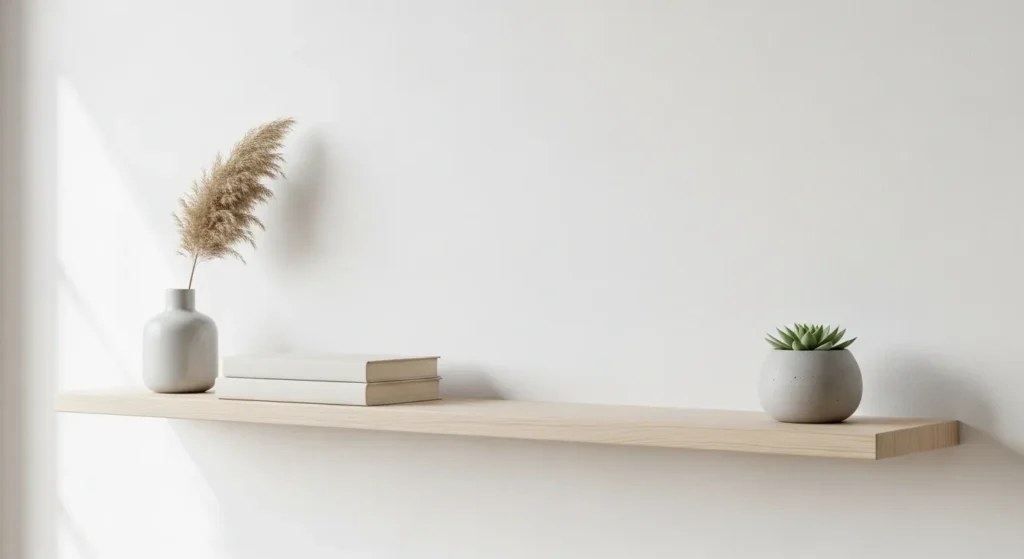
One of the most important floating shelf styling tips for small walls is knowing when to stop. Overfilling shelves makes a small wall feel heavy and cramped. Instead, allow negative space between objects. That empty space is not wasted — it actually highlights your decor and gives the room a clean, modern feel.
Breathing room allows each item to stand out. A single sculptural vase with open space around it can look far more elegant than five crowded pieces squeezed together. Especially in small homes, restraint is powerful. When you step back and see visual space around your decor, the entire room instantly feels lighter and more spacious.
6. Layer Artwork for Depth
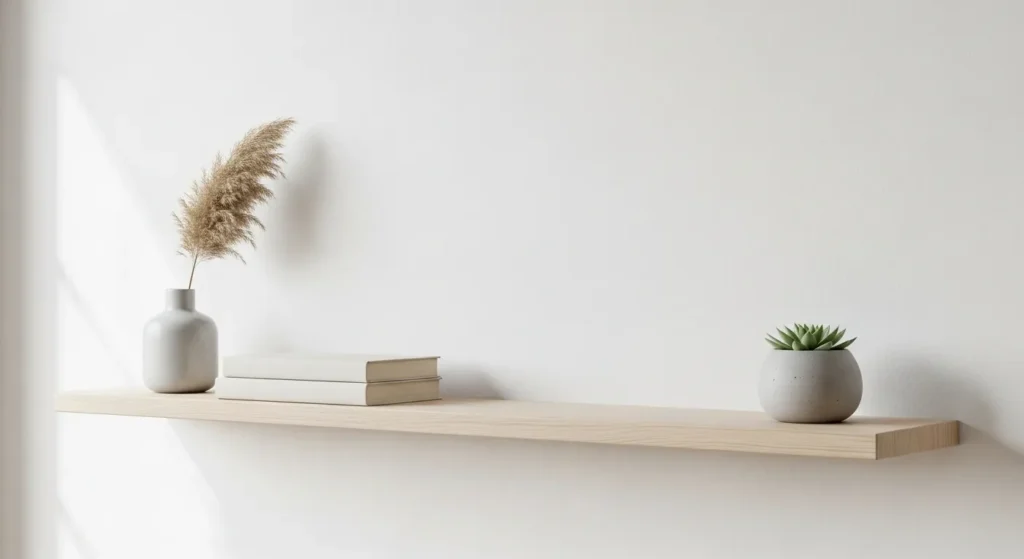
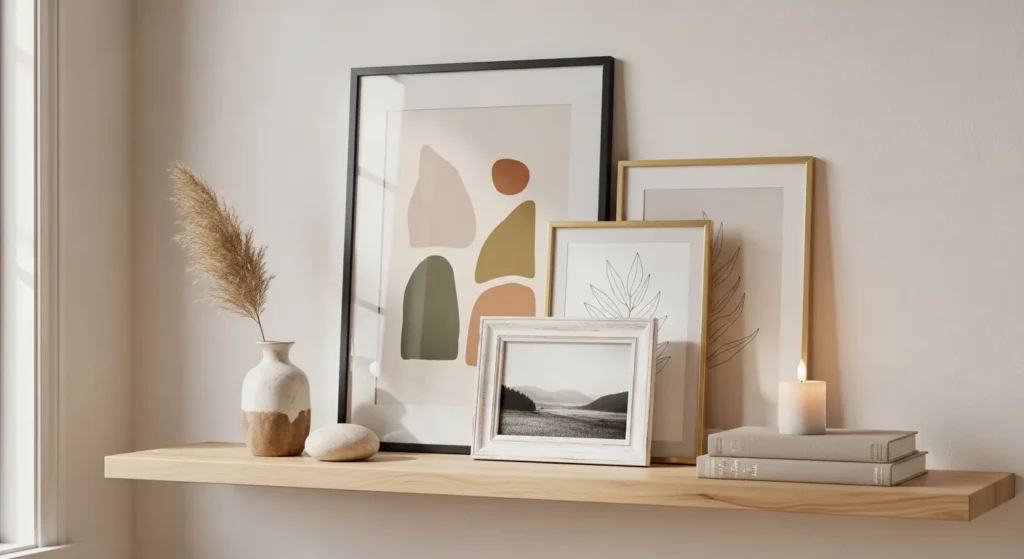
Instead of hanging every frame directly on the wall, try leaning artwork against the wall on your floating shelf. Layer a larger frame in the back and place a smaller one slightly in front. This creates depth and dimension, which is essential for styling small walls without drilling too many holes.
Layered art gives your shelf a curated, collected look. It feels relaxed yet intentional. This approach works especially well in living rooms or home offices where personality matters. By stacking frames gently and mixing sizes, you create a visually rich display without overwhelming the limited wall space.
7. Add Greenery for Freshness
Greenery instantly transforms floating shelves from simple storage into living decor. Even one small trailing plant can soften the lines of a shelf and bring movement into the space. On small walls, plants add life without requiring large decorative objects.
Choose compact plants like pothos, succulents, or small ferns. Let one plant gently cascade over the edge to create softness. The organic shapes contrast beautifully with straight shelf lines. This simple addition makes a small wall feel fresh, vibrant, and more connected to nature.
8. Keep It Light for Small Spaces
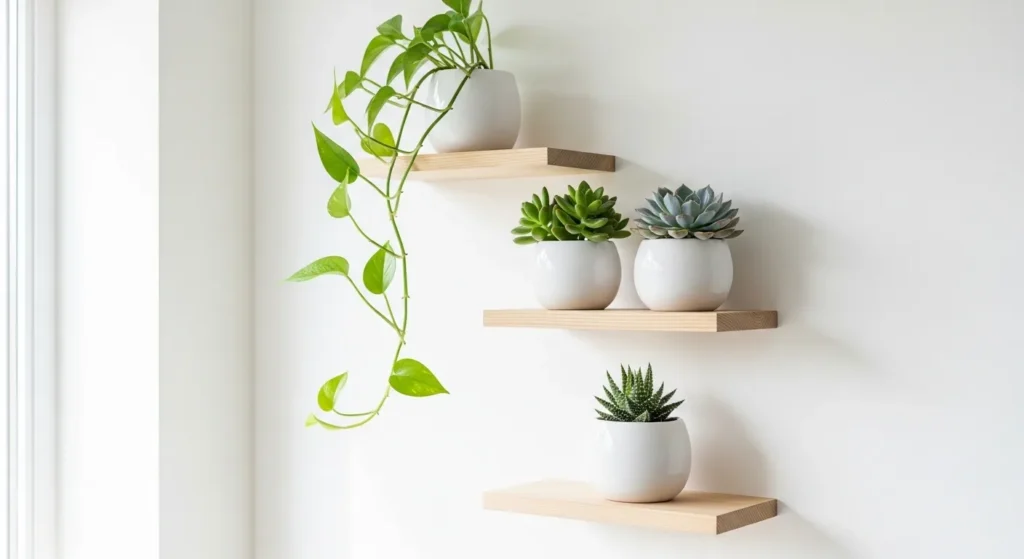
Light colors help small walls feel open and expansive. White, cream, pale wood, and soft gray reflect light and prevent shelves from feeling visually heavy. This is especially important in tight rooms where darker tones can make walls appear closer.
When styling floating shelves in a compact area, choose lighter decor pieces and avoid overly dark clusters. A soft, monochromatic palette keeps the focus on shape and texture rather than bold contrast. The result is an airy, modern look that enhances your small wall instead of shrinking it.
9. Anchor the Shelf with a Large Statement Piece
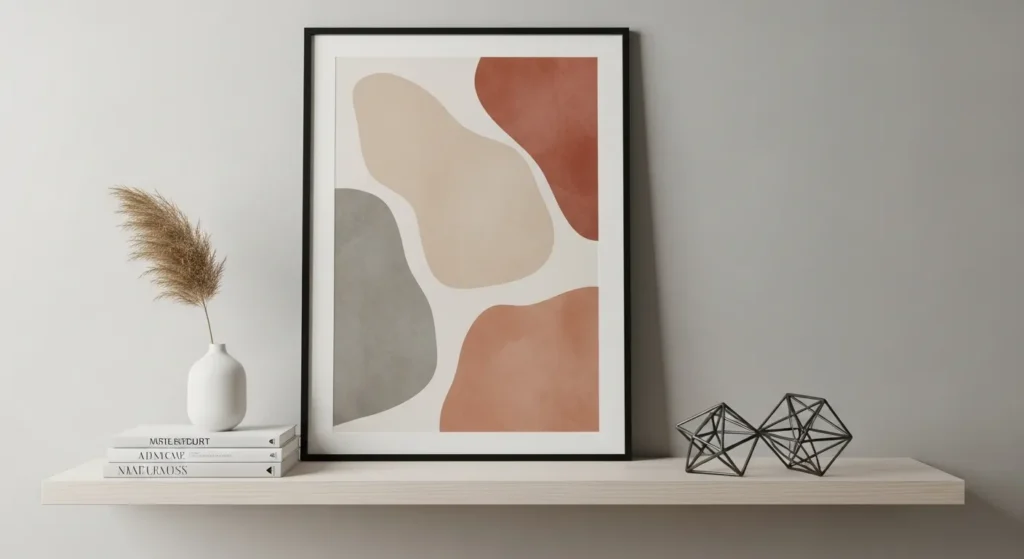
A large framed print sits at the center of the floating shelf, leaning confidently against the wall. Smaller decorative objects are layered in front, creating a grounded and balanced look that feels intentional rather than scattered.
This technique is about anchoring your shelf with one dominant focal point. On a small wall, tiny decor pieces alone can look random and disconnected. A larger statement piece gives the arrangement structure and prevents the shelf from feeling underwhelming. It visually “holds” the space and makes everything else feel curated.
To implement this, choose one oversized frame, mirror, or bold artwork that fits the width of your shelf without overpowering it. Lean it against the wall instead of hanging it. Then build around it with two to three smaller items.
Extra tip: Make sure the statement piece relates to your room’s overall color palette so the shelf blends naturally into the space.
10. Use Books as Styling Foundations
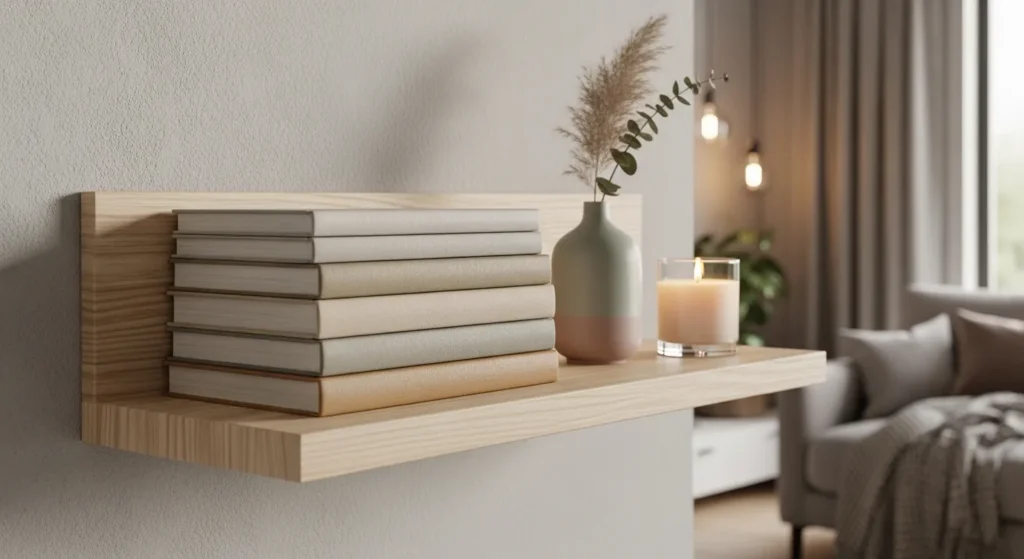
Hardcover books are stacked neatly in horizontal piles, with a small ceramic vase and candle resting on top. The layers instantly create height variation and structure without adding visual clutter.
Books work because they act as platforms. Instead of placing decor directly on the shelf, stacking books gives smaller objects importance and dimension. This trick is especially helpful on small floating shelves where every inch matters. It creates levels without installing additional shelves.
Choose books with neutral or coordinated covers to maintain a cohesive look. Stack two to four books and place a decorative object on top to add vertical interest.
Extra tip: Turn books spine-in if the colors clash, creating a clean and minimalist aesthetic.
11. Vary Shelf Heights for Visual Flow
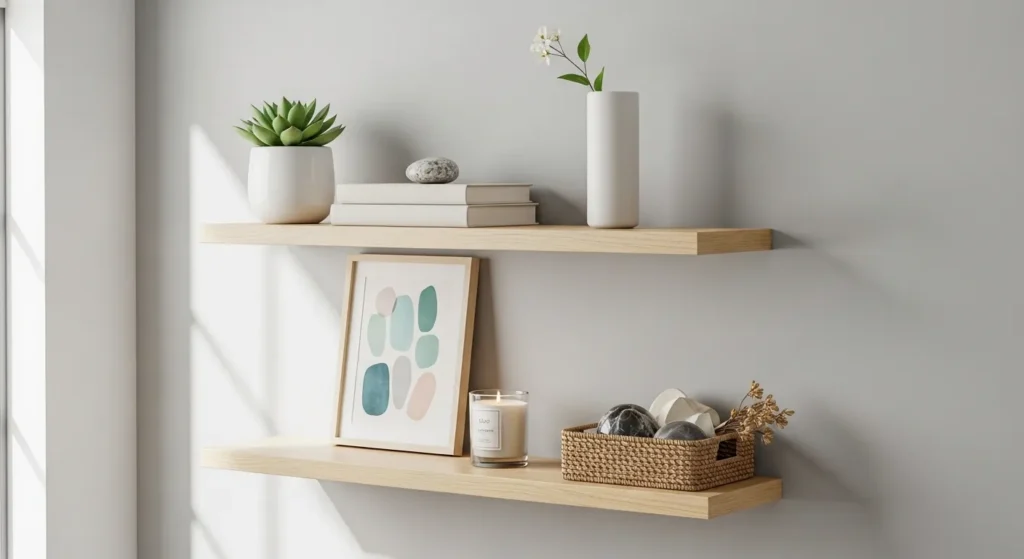
Two floating shelves are mounted at slightly different heights instead of perfectly aligned. The staggered arrangement creates movement and draws the eye upward, making the small wall feel taller and more dynamic.
This works because visual flow is essential in small spaces. Perfect symmetry can sometimes feel stiff and boxed in. Slight variation in height adds softness and makes the display feel thoughtfully designed rather than predictable.
When installing shelves, experiment with spacing before drilling. Use painter’s tape to outline positions and step back to evaluate the visual balance.
Extra tip: Keep decor balanced across both shelves so one side does not appear heavier than the other.
12. Create a Mini Gallery Shelf
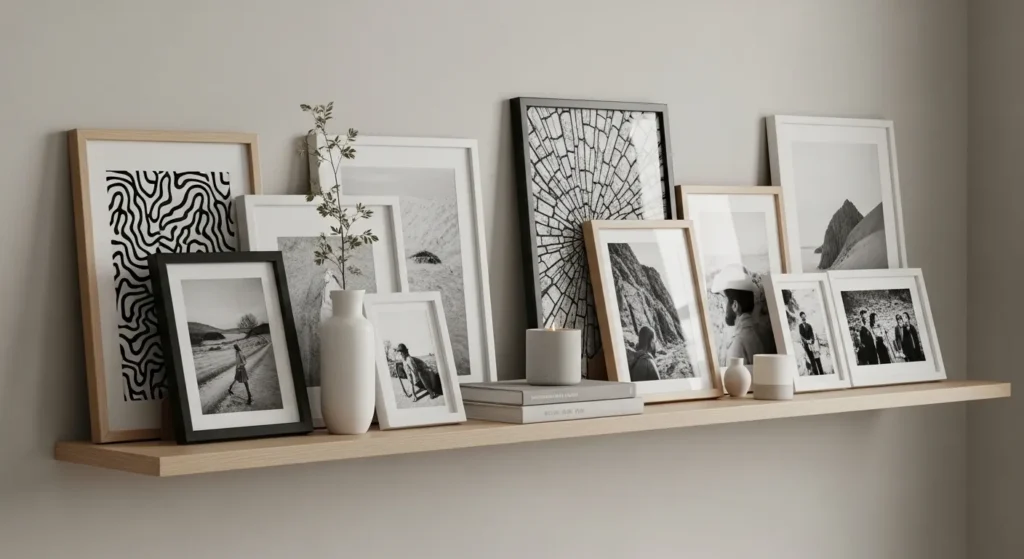
A floating shelf becomes a mini gallery with multiple small frames leaning casually against the wall. Black and white prints mixed with simple frames create a cohesive but personal display.
This works beautifully for small walls where hanging multiple frames might look busy. By placing them on a shelf instead, you can overlap and rearrange them easily without committing to nail holes. It gives flexibility while maintaining style.
Choose frames in similar finishes to keep the look unified. Layer larger frames at the back and smaller ones in front for depth.
Extra tip: Keep spacing tight but intentional to avoid the shelf looking messy.
13. Incorporate Functional Decor
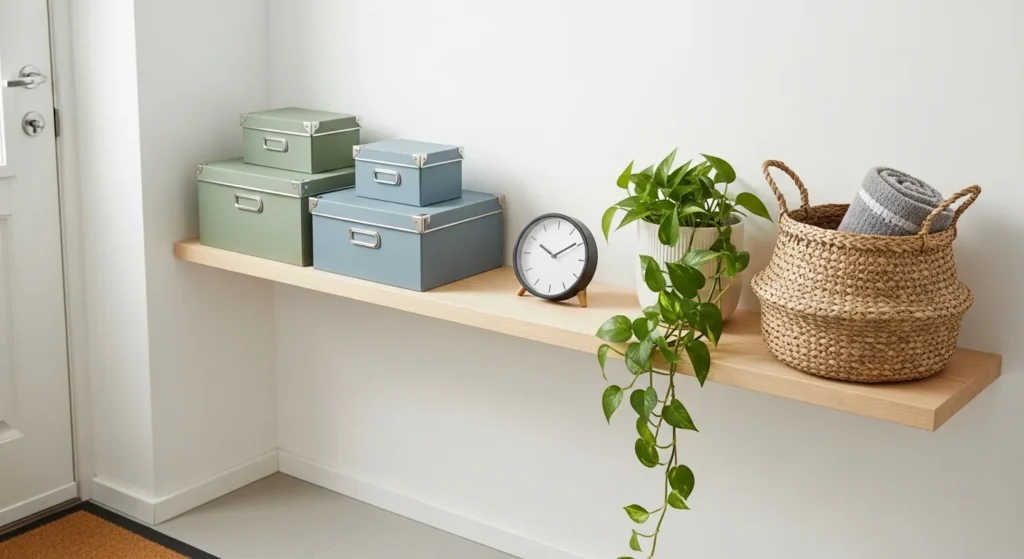
A floating shelf holds decorative storage boxes, a small clock, and a woven basket. Everything looks stylish but also serves a clear purpose in the room.
In small homes, shelves should not only look good but also work hard. Functional decor keeps clutter controlled while enhancing the aesthetic. Storage boxes can hide keys, chargers, or paperwork while still matching your design theme.
Choose containers that complement your color palette. Woven baskets, linen boxes, or matte storage bins work well for small walls.
Extra tip: Limit visible everyday items to maintain a clean and curated appearance.
14. Add Lighting for Depth
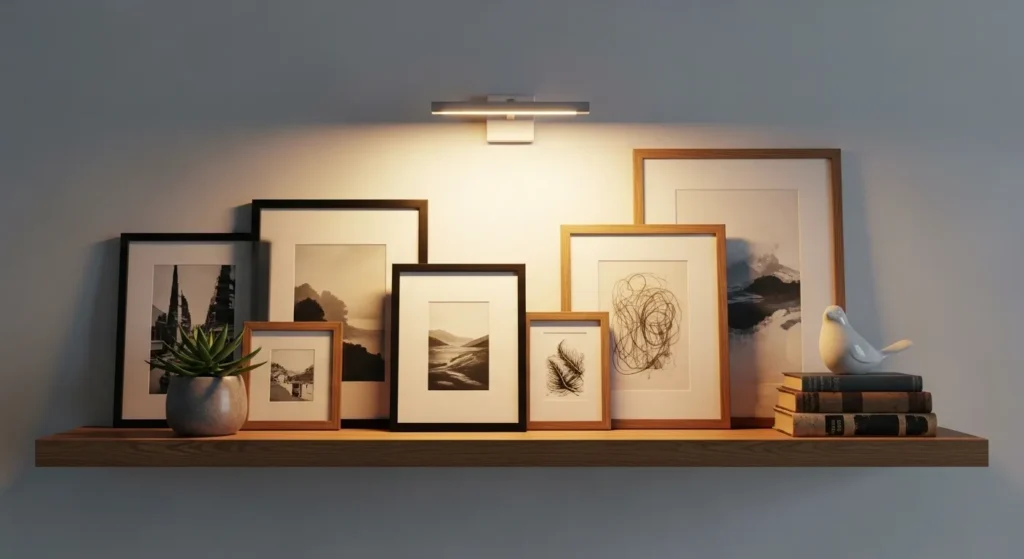
A small picture light mounted above the floating shelf casts a warm glow over framed art and decorative objects. The lighting adds dimension and makes the shelf feel like a feature wall.
Lighting works because it creates depth through shadows and highlights. On a small wall, this added dimension makes the styling feel elevated and intentional rather than flat. Even subtle lighting can dramatically enhance shelf decor.
Install a compact battery-operated picture light or small sconce above the shelf. Aim it toward your main focal piece.
Extra tip: Choose warm light to create a cozy and inviting atmosphere.
15. Stick to a Theme
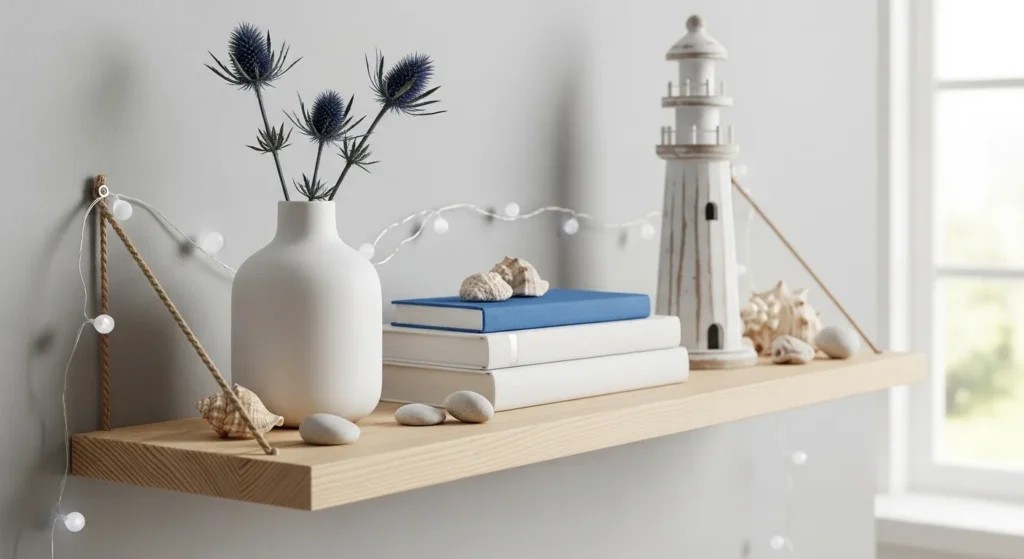
A shelf styled entirely in a coastal theme features soft blue accents, white ceramics, and natural wood tones. The consistent theme makes the small wall feel purposeful and cohesive.
A clear styling theme prevents visual confusion. When too many styles mix together, small shelves can feel chaotic. Choosing one design direction keeps everything streamlined and visually pleasing.
Decide on a theme like modern minimal, farmhouse, coastal, or boho. Then select decor that aligns with that direction.
Extra tip: Keep the theme subtle to avoid overwhelming the small space.
16. Use Mirrors to Reflect Light
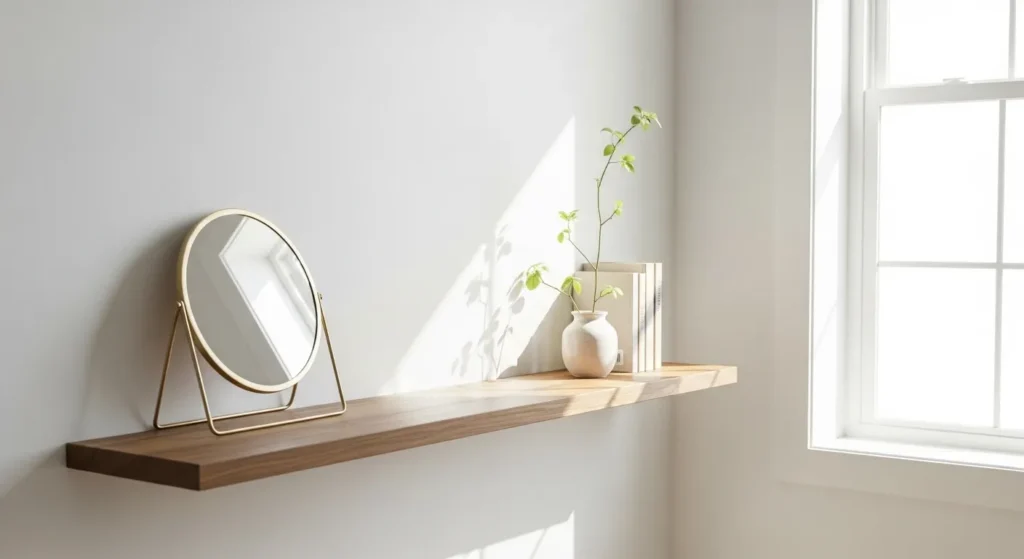
A small round mirror leans against the wall on the floating shelf. It reflects natural light and instantly makes the wall appear larger.
Mirrors are powerful tools for small spaces. They create the illusion of depth and bounce light around the room. On narrow walls, this effect helps prevent the area from feeling tight or boxed in.
Choose a mirror proportional to your shelf width. Lean it instead of hanging for a relaxed look.
Extra tip: Place the mirror where it can reflect a window or light source for maximum brightness.
17. Balance Heavy and Light Objects
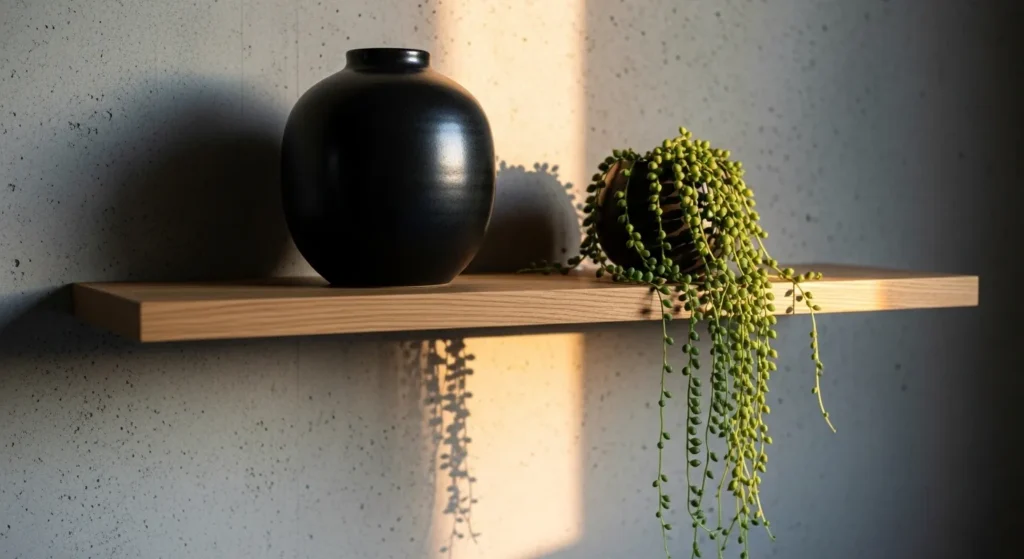
One side of the shelf holds a solid ceramic vase, while the other side features a delicate trailing plant. The visual weight feels balanced rather than lopsided.
Balancing heavy and light objects ensures your shelf does not look tilted or awkward. On small walls, imbalance becomes more noticeable because the area is compact.
Place heavier or darker objects toward the ends and lighter pieces toward the center to create stability.
Extra tip: Step back and photograph your shelf to check visual balance objectively.
18. Use Vertical Space Above the Shelf
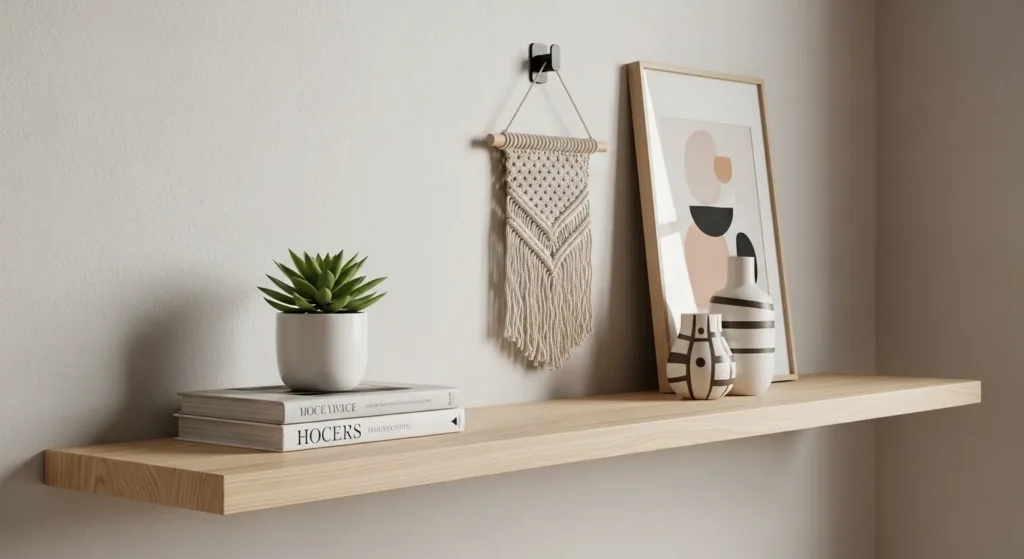
The floating shelf is styled simply, while a small piece of wall art hangs slightly above it. The combination uses both horizontal and vertical space effectively.
This works because small walls benefit from layered height. Styling only the shelf can leave the upper wall feeling empty. Adding something subtle above extends the visual display.
Install a small hook or hang lightweight art above the shelf without crowding it.
Extra tip: Keep spacing intentional so both elements feel connected.
19. Rotate Decor Seasonally
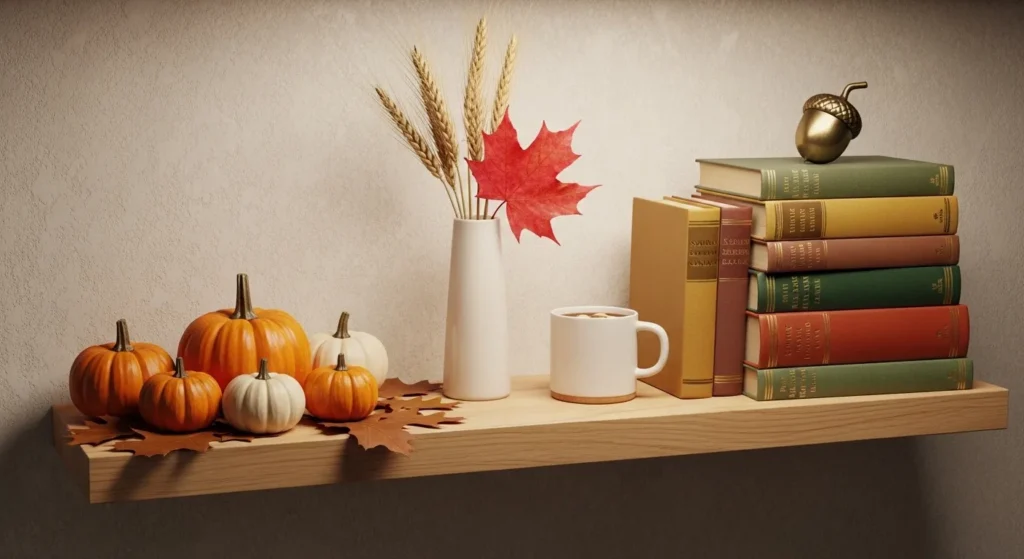
The shelf features subtle seasonal touches, like small autumn decor pieces in warm tones. The arrangement feels fresh without overwhelming the small space.
Rotating decor keeps floating shelves exciting throughout the year. In small homes, even minor changes can refresh the entire room’s atmosphere.
Swap out a few items each season rather than redesigning the entire shelf.
Extra tip: Store off-season decor in labeled bins to make switching easy.
20. Keep Scale Proportional
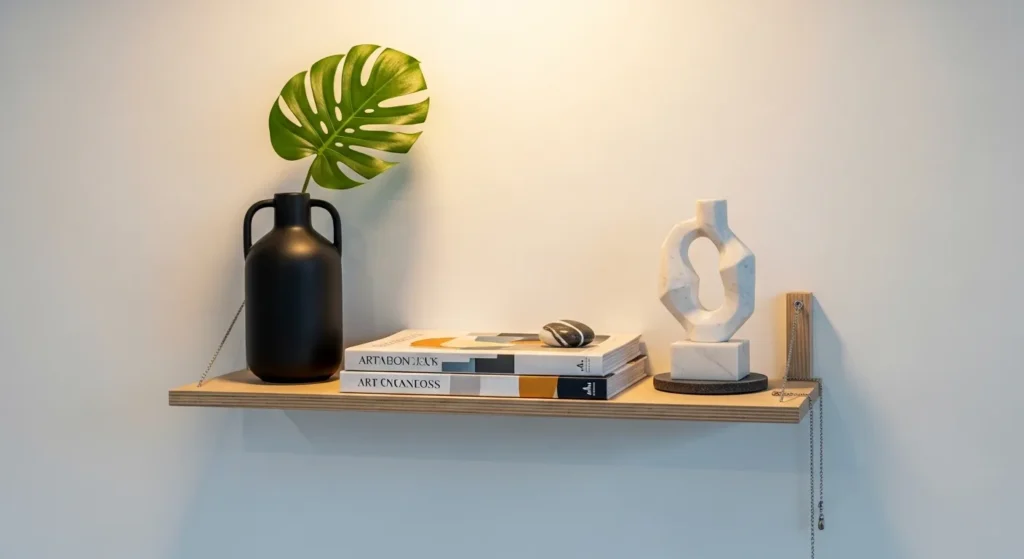
Decor items sit comfortably within the shelf width, neither too large nor too tiny. Everything feels proportionate and intentional.
Scale is critical for small wall styling. Oversized items can overpower narrow shelves, while tiny decor can disappear visually.
Measure your shelf depth and width before buying decor. Choose pieces that fill about two-thirds of the shelf height for balance.
Extra tip: Avoid placing too many small trinkets that create visual noise.
21. Edit Ruthlessly
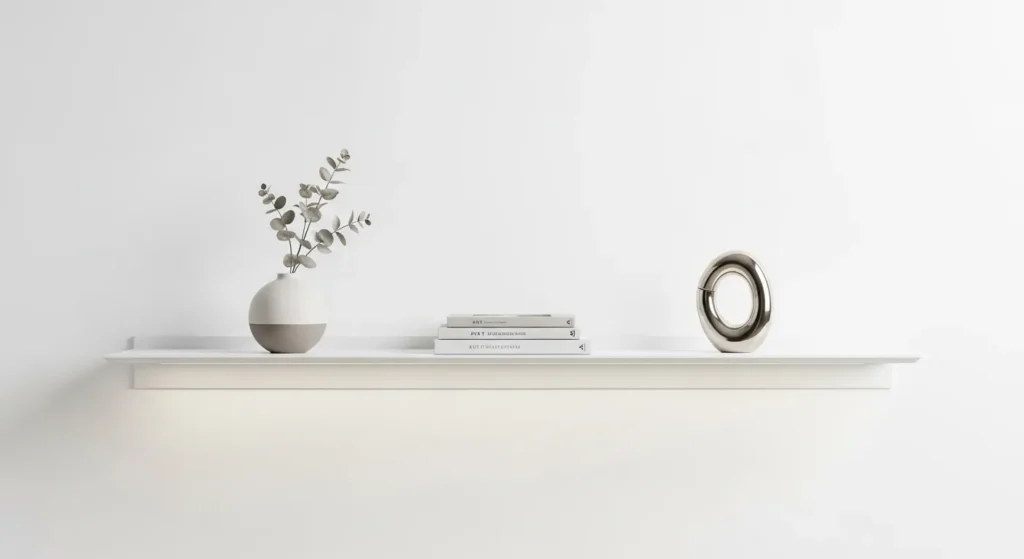
A floating shelf holds only three carefully selected pieces. The simplicity feels elegant and intentional.
Editing is the most powerful styling tip for small walls. Removing unnecessary items often improves the design more than adding new ones. Negative space creates sophistication and clarity.
After styling your shelf, remove one item and reassess. If it looks better, keep it that way.
Extra tip: Remember that restraint makes small spaces look refined.
Conclusion
Floating shelves are one of the smartest small wall decor solutions available. They add storage, personality, and structure without taking up valuable floor space. When styled intentionally, they can completely transform even the narrowest wall into a meaningful focal point.
The key to beautiful floating shelf styling is balance. Balance color, texture, scale, and spacing. Small walls demand thoughtful design, but they also offer incredible opportunities to create cozy, curated moments within your home.
With these styling tips, your floating shelves will no longer feel like an afterthought. They will feel intentional, refined, and perfectly suited to your small space.
SEO FAQs
- How do you style floating shelves without cluttering them?
Use a limited color palette, vary object heights, and leave negative space between items to maintain a clean and balanced look. - What should I put on floating shelves in a small room?
Mix decorative items like framed art, plants, and ceramics with functional pieces such as storage boxes or books. - How many items should be on a floating shelf?
There is no fixed number, but group items in odd numbers and avoid overfilling to keep the shelf visually light. - Are floating shelves good for small walls?
Yes, floating shelves are ideal for small walls because they provide storage and style without adding bulky furniture. - How high should floating shelves be installed?
Floating shelves are typically installed at eye level, but height may vary depending on ceiling height and room layout.