
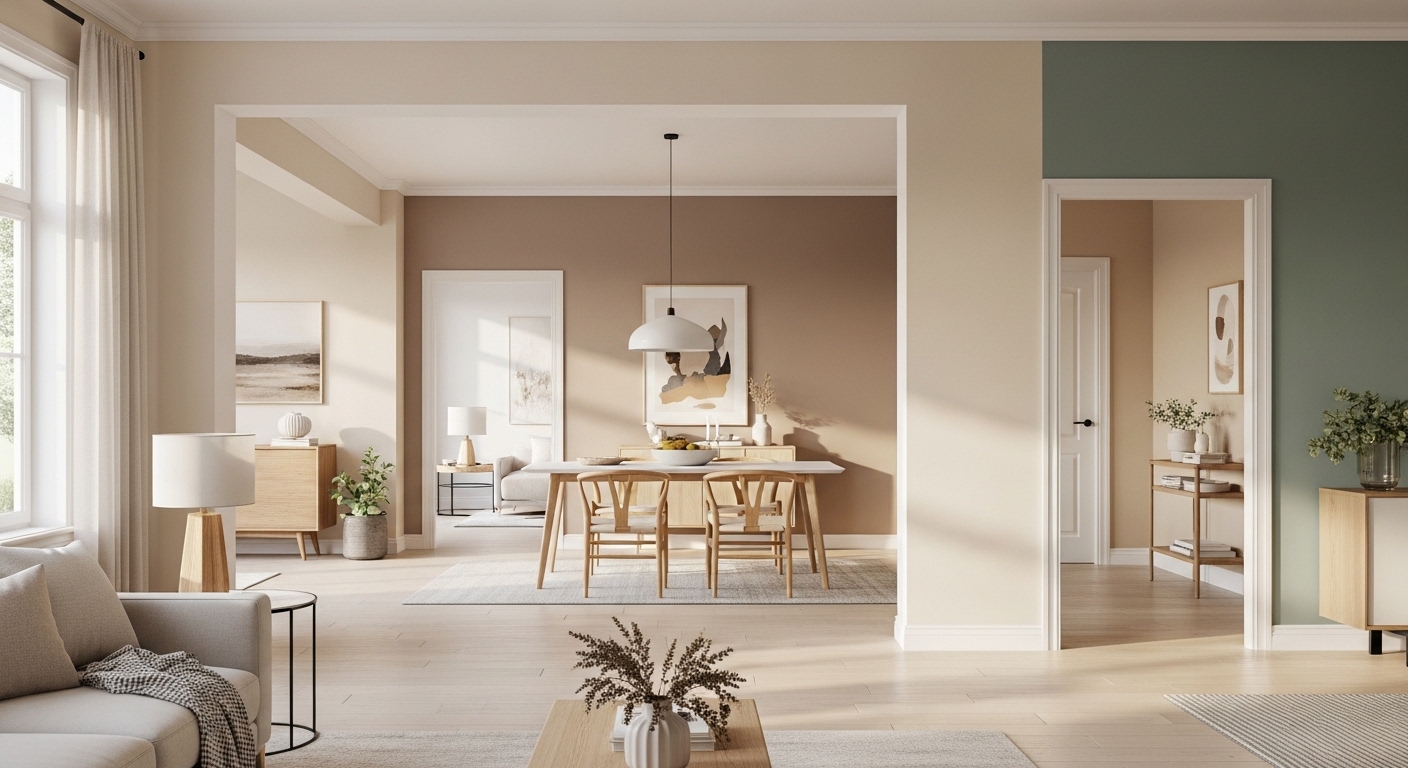
Choosing paint colors that flow between rooms can make your home feel cohesive, elegant, and visually spacious. Without a thoughtful color strategy, spaces can feel disjointed, cramped, or chaotic. Designers emphasize the importance of color harmony to create continuity, balance, and a sense of calm throughout the home.
A well-planned color flow connects rooms naturally while highlighting each area’s personality. By considering undertones, complementary shades, and transitions, you can create a seamless visual journey. Subtle variation, consistent palettes, and mindful accent choices allow each room to feel distinct yet part of a unified whole.
Here are 22 tips and strategies for choosing paint colors that create a natural, flowing connection between rooms.
1. Start with a Neutral Base
Image Prompt: open-plan living and dining area painted in soft neutral tones, airy modern interior
Starting with a neutral base ensures continuity throughout your home. Shades like warm beige, soft gray, or creamy ivory create a calming foundation that blends seamlessly from room to room.
Use the neutral base on walls and trim to provide a versatile canvas for accent colors. This approach keeps transitions smooth, makes furniture and artwork pop, and allows small rooms to feel open, cohesive, and thoughtfully designed.
2. Consider Undertones Carefully
Image Prompt: hallway painted in soft gray with warm undertones, adjacent rooms in complementary shades
Undertones determine whether colors harmonize or clash between spaces. A beige with pink undertones may feel warm in one room but look off in another. Designers recommend evaluating paint samples in different lighting before committing.
Test colors in morning and evening light. Matching undertones ensures that each room flows naturally into the next, creating a subtle but sophisticated connection that feels seamless and intentional.
3. Use a Limited Color Palette
Image Prompt: small home with open-plan spaces painted in complementary soft neutrals
Limiting your palette to three to four colors keeps spaces cohesive and visually appealing. Too many contrasting colors can create a chaotic, disconnected feel.
Choose a dominant neutral, a complementary accent, and a secondary shade. Repeat these across rooms for consistency. This strategy ensures each space feels connected while still allowing for individual personality in bedrooms, kitchens, or living areas.
4. Gradate Colors Between Spaces
Image Prompt: living room flowing into dining area with progressively deeper neutral tones
Using gradation helps rooms transition smoothly. Light to dark or cool to warm tones create a natural progression that feels elegant and intentional.
For example, a soft beige in the hallway can deepen into a richer taupe in the living room. Gradation maintains cohesion while subtly differentiating spaces, creating visual interest without disrupting the overall flow.
5. Highlight Key Architectural Features
Image Prompt: small hallway with trim painted a contrasting neutral, doors in complementary shade
Painting trim, molding, or doors in coordinating shades reinforces flow. Subtle contrasts emphasize architectural details while keeping walls harmonious.
Use a slightly darker or lighter shade than the main wall color. This adds depth and sophistication, helping rooms feel distinct yet connected. Architectural accents act as visual bridges between spaces, enhancing continuity.
6. Use Accent Walls Strategically
Image Prompt: small living room with a soft accent wall in muted sage, neutral surrounding walls
Accent walls can add personality without disrupting flow. Choose a complementary shade from your palette rather than a contrasting color to maintain continuity.
Apply accent walls in focal areas like behind a bed or sofa. This introduces subtle interest while keeping transitions smooth. Thoughtful placement ensures your accent walls feel intentional and stylish.
7. Carry Color Through Accessories
Image Prompt: open-plan living room with throw pillows and vases matching wall colors in adjacent spaces
Repeating colors in furniture, textiles, and decor reinforces flow. Even if rooms have slightly different wall shades, tying in accessories maintains harmony.
Use cushions, rugs, or wall art to echo the main color scheme. This creates a cohesive, curated aesthetic, making the home feel thoughtfully designed and visually continuous.
8. Stick to a Cohesive Finish
Image Prompt: small kitchen and hallway with soft matte neutral paint, coordinated trim
The finish of paint can impact flow. Glossy, matte, and eggshell finishes reflect light differently and can make the same color look inconsistent.
For continuity, select similar finishes across connected rooms. Matte or satin finishes generally provide soft, unified aesthetics. Consistent finish ensures colors transition naturally, enhancing a polished, designer-approved look.
9. Use Transitional Hues in Small Spaces
Image Prompt: narrow hallway painted in soft beige, opening into a living room with pale taupe
In narrow spaces, choosing a transitional hue helps connect two rooms. A shade that’s slightly warmer or cooler than adjoining rooms creates a visual bridge without jarring contrast.
This strategy allows compact areas to feel spacious and cohesive. It’s perfect for hallways, landings, or small connecting rooms, ensuring smooth movement between distinct spaces while preserving style.
10. Consider Natural Light
Image Prompt: sunlit living room painted in soft neutral, adjacent room with complementary warm light
Light dramatically changes how colors appear. North-facing rooms may need warmer tones, while south-facing spaces can handle cooler shades. Assess how natural light affects color flow between rooms.
Place samples on multiple walls at different times of day. Adjust undertones to ensure consistent transitions, making all rooms feel bright, welcoming, and harmoniously connected.
11. Repeat a Signature Color
Image Prompt: open-plan home with a muted teal color repeated in multiple rooms
Choosing a signature color and repeating it subtly throughout your home creates instant cohesion. It can appear on one wall, a door, or even in accessories, tying spaces together visually.
This technique ensures that, even if rooms have different primary colors, the eye perceives a continuous flow. Soft, muted tones work best for subtle repetition, making spaces feel connected, stylish, and intentionally designed without being overpowering.
12. Use Complementary Colors
Image Prompt: small living room painted in soft gray flowing into dining area with muted blue walls
Complementary colors are opposite on the color wheel but balance each other beautifully when used thoughtfully. Pairing muted complements creates harmony without monotony.
For example, a soft gray living room transitioning into a muted blue dining area keeps the spaces distinct yet visually connected. Complementary shades add depth and interest while maintaining a sophisticated, flowing design throughout your home.
13. Transition with Neutrals
Image Prompt: hallway painted in warm taupe leading to a cream-colored bedroom
Neutrals act as natural connectors between rooms. Using a neutral wall or trim in transition areas softens contrasts between bolder shades and ensures smooth color flow.
Hallways, staircases, and entryways are perfect for this approach. Neutral transitions provide continuity, reduce visual tension, and allow accent colors in adjacent rooms to shine without creating chaos.
14. Use Color Families
Image Prompt: open kitchen and living area painted in varying shades of warm beige and soft taupe
Choosing colors from the same family—warm tones, cool tones, or pastels—creates a subtle gradient across rooms. This maintains individuality in each space while ensuring visual unity.
For instance, a soft taupe hallway can lead into a creamy beige living room. Color families enhance flow, prevent visual clashes, and make the home feel thoughtfully coordinated and designer-approved.
15. Incorporate Patterns Carefully
Image Prompt: small hallway with striped wallpaper leading into soft beige living room
Patterns can bridge two colors or rooms when used subtly. Soft stripes, geometric prints, or textured walls act as visual transitions without overwhelming the space.
Use one patterned wall as a focal point or corridor accent. By connecting the colors in the pattern to adjacent rooms, the flow feels natural and stylish, adding dimension and personality while maintaining cohesion.
16. Use Transitional Flooring
Image Prompt: open-plan home with consistent wood flooring connecting living room and dining area
Floor color or finish also affects color flow. A consistent floor helps unify different wall colors, making transitions feel seamless.
Wood tones, tiles, or neutral carpets create continuity that ties contrasting wall colors together. This ensures rooms feel connected visually, even if walls differ, and enhances the overall sense of spaciousness.
17. Test Colors Together
Image Prompt: paint swatches taped on a wall showing multiple colors for adjoining rooms
Testing color samples in adjoining rooms is crucial. Colors may look different depending on lighting, furniture, and neighboring shades, affecting flow.
Paint large swatches and observe them throughout the day. This prevents clashes, ensures harmony, and allows you to adjust undertones, resulting in a smooth, visually connected, and cohesive interior.
18. Consider Ceiling Color
Image Prompt: small living room with soft white ceiling coordinating with warm beige walls
Ceilings influence how colors flow visually. Painting ceilings a consistent shade or complementary tone across rooms creates unity and adds height perception.
Even subtle differences can affect transitions. Coordinated ceilings help rooms feel connected while maintaining individuality, elegance, and a balanced visual flow.
19. Use Accent Decor for Transition
Image Prompt: small hallway with vases and cushions reflecting living room color
Repeating colors from adjacent rooms in decor items helps the eye perceive flow. Pillows, rugs, or artwork in shades from the next room create a smooth transition.
This technique links spaces without repainting walls and enhances a curated, designer-approved look. It’s subtle, flexible, and perfect for maintaining harmony between distinct rooms.
20. Maintain Consistent Undertones
Image Prompt: series of rooms painted in soft neutrals with warm undertones
Even if colors differ, consistent undertones create cohesion. Warm or cool undertones repeated across rooms prevent jarring transitions and make the palette feel intentional.
Check swatches under natural and artificial light to ensure they harmonize. This approach maintains elegance and continuity, ensuring every room feels part of a unified design story.
21. Use Color to Define Zones
Image Prompt: open-plan living and dining area with complementary wall colors defining zones
In open-plan layouts, color helps delineate functional zones without interrupting flow. Subtle variations in shade indicate separate areas while keeping the palette connected.
For instance, a muted sage in the dining space paired with soft cream in the living area highlights zones visually. This technique enhances both continuity and clarity of purpose within rooms.
22. Trust Your Instincts
Image Prompt: painter applying soft neutral paint to adjoining rooms
Finally, trust your intuition when selecting colors. While guidelines help, your personal style and comfort matter most. Harmonious flow comes from observing, adjusting, and ensuring colors feel right together.
Test, step back, and visualize your home as a whole. Your instincts, combined with design principles, ensure a seamless, balanced, and stylish color flow that connects every room beautifully.
Conclusion
Choosing paint colors that flow between rooms is essential for creating a cohesive, harmonious home. Designer-approved strategies like consistent undertones, complementary shades, and neutral transitions help small and large spaces feel connected, stylish, and inviting.
From subtle gradients and accent decor to consistent flooring and ceilings, these techniques make transitions seamless while highlighting each room’s individuality. Thoughtful planning ensures your home feels curated, airy, and visually expansive, with each space contributing to a unified, elegant design.
When done well, a well-flowing color palette transforms the home experience, making movement between rooms effortless, calming, and aesthetically beautiful.
FAQs
How do I make different colors feel connected between rooms?
Use consistent undertones, a limited palette, and transitional hues to create cohesion.
Can bold colors flow between rooms?
Yes, when paired with neutrals, accents, or complementary shades to maintain balance.
Do flooring and ceiling colors affect flow?
Absolutely. Consistent floors and complementary ceilings enhance visual continuity between spaces.
How many colors should I use in a home?
Limiting to 3–4 main colors across rooms maintains harmony while allowing variety.
Should I consider lighting when choosing flowing colors?
Yes, natural and artificial light can change how colors appear, impacting room-to-room transitions.