
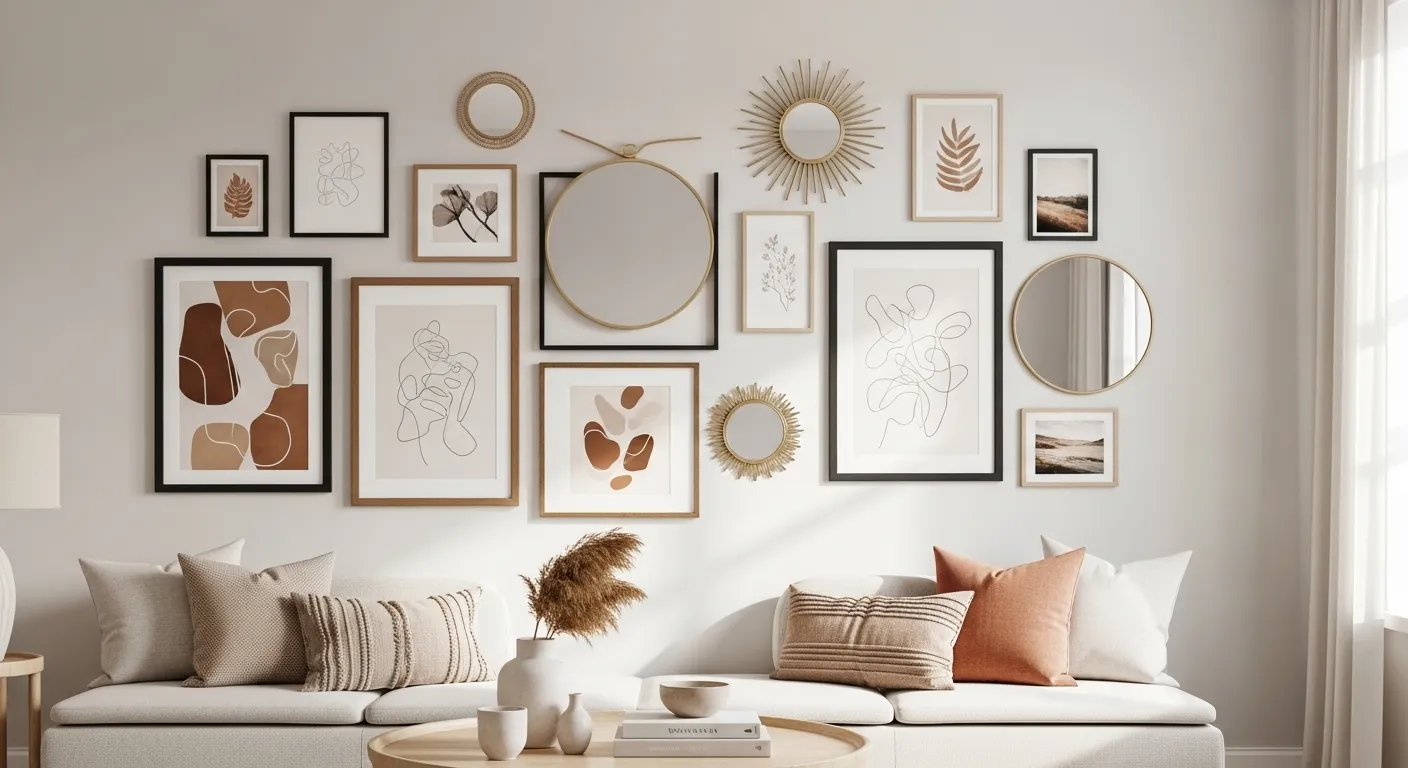
Gallery walls are a fantastic way to personalize a space, but mixing in mirrors can amplify natural light, make rooms feel larger, and create a dynamic, visually balanced display.
Combining art and mirrors enables creativity while maintaining harmony, reflecting personality, style, and enhancing the space.
These 30 ideas show how to integrate art and mirrors for maximum impact. From strategic placements to creative shapes, sizes, and layering techniques, each concept helps brighten your home while keeping gallery walls elegant and timeless.
1. Symmetrical Arrangement with Mirror Center
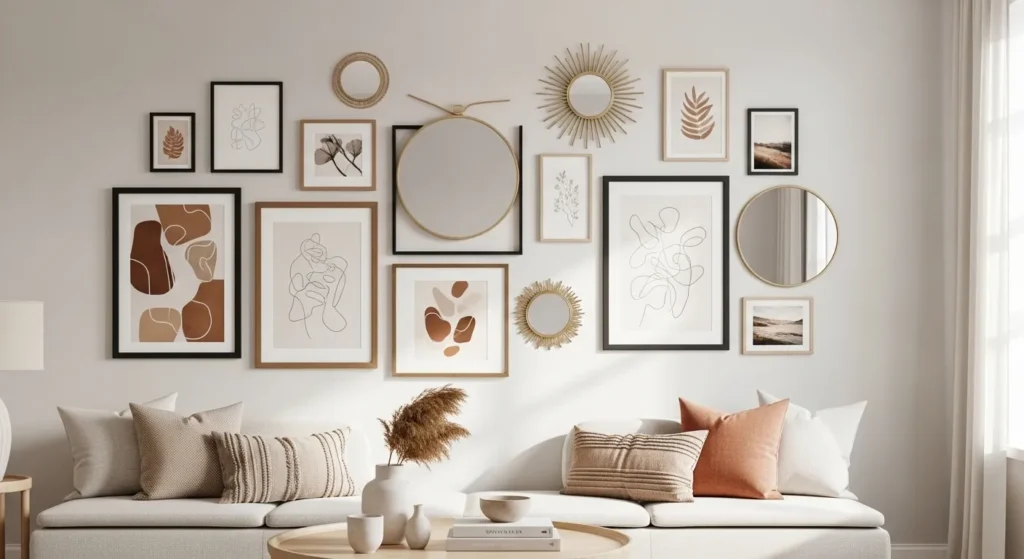
Placing a mirror in the center of a symmetrical gallery wall draws attention and balances the surrounding artwork. The mirror reflects natural or artificial light, enhancing brightness and giving the illusion of space.
This setup works well in living rooms, dining areas, or entryways. Framing the mirror and art in similar tones or styles ensures cohesion while maintaining visual interest.
Using symmetry with mirrors provides both aesthetic appeal and functionality. The reflected light lifts the space, and the structured layout creates a polished, timeless gallery wall.
2. Layered Frames with Small Mirrors
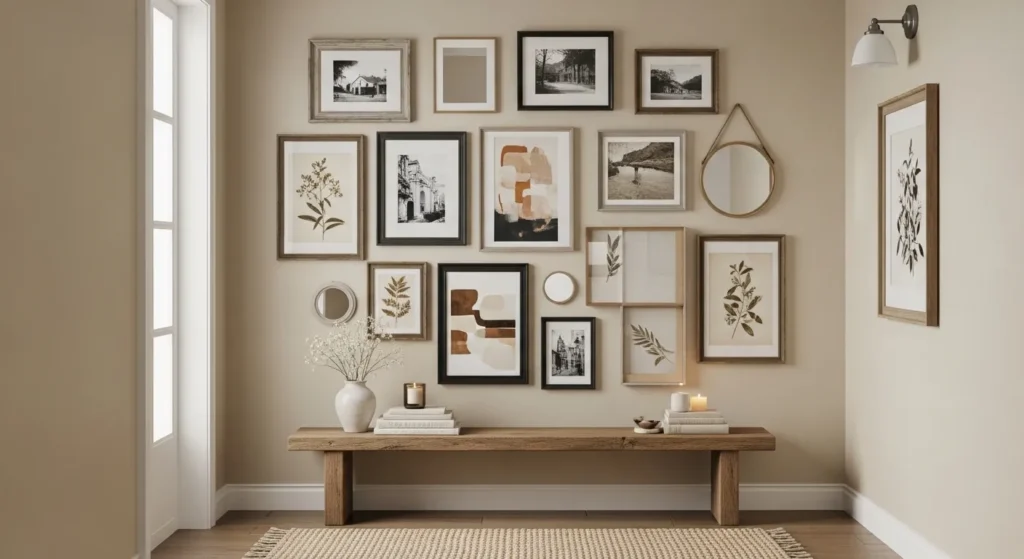
Layering small mirrors among framed art creates depth and adds sparkle to gallery walls. The mirrors catch and reflect light, subtly brightening the room while allowing the artwork to remain the focal point.
This technique works well in hallways or compact living spaces. The variety of frame sizes, orientations, and spacing creates movement while keeping the wall balanced.
Small mirror inserts offer versatility. They can be moved or updated over time, keeping the gallery wall dynamic and fresh without disrupting the overall harmony.
3. Geometric Mirror Accents

Using geometric mirrors such as hexagons, diamonds, or triangles adds a modern twist to a gallery wall. Their reflective surfaces create contrast and light play, making the room feel larger and more dynamic.
This approach works best in contemporary or modern interiors. Pairing the mirrors with minimal or abstract art ensures the wall feels cohesive rather than busy.
Geometric mirrors bring structure to irregular arrangements. They provide functionality by reflecting light while serving as decorative elements, combining style and practicality seamlessly.
4. Tall Mirror with Vertical Art

A tall mirror paired with vertical art emphasizes height, making small spaces like hallways or narrow living rooms feel more spacious. The reflective surface enhances natural light and creates a sense of openness.
This layout works in small entryways or apartments. Matching frame styles or colours ensures cohesion while letting the mirror shine as a central element.
Using vertical emphasis draws the eye upward, visually elongating the room. The combination of art and mirror balances style with practicality, enhancing both décor and light distribution.
5. Circular Mirrors Among Art

Circular mirrors soften the edges of rectangular frames, creating balance and rhythm in a gallery wall. They reflect light from windows or lamps, brightening the surrounding artworks and the room overall.
This technique works well with eclectic or transitional interiors. Placing mirrors strategically prevents the wall from feeling cluttered while maintaining energy and movement.
Round mirrors provide a playful contrast to angular frames. They break monotony, add elegance, and serve as functional decor, making the gallery wall more dynamic and light-filled.
6. Mixed Mediums: Canvas, Print & Mirror
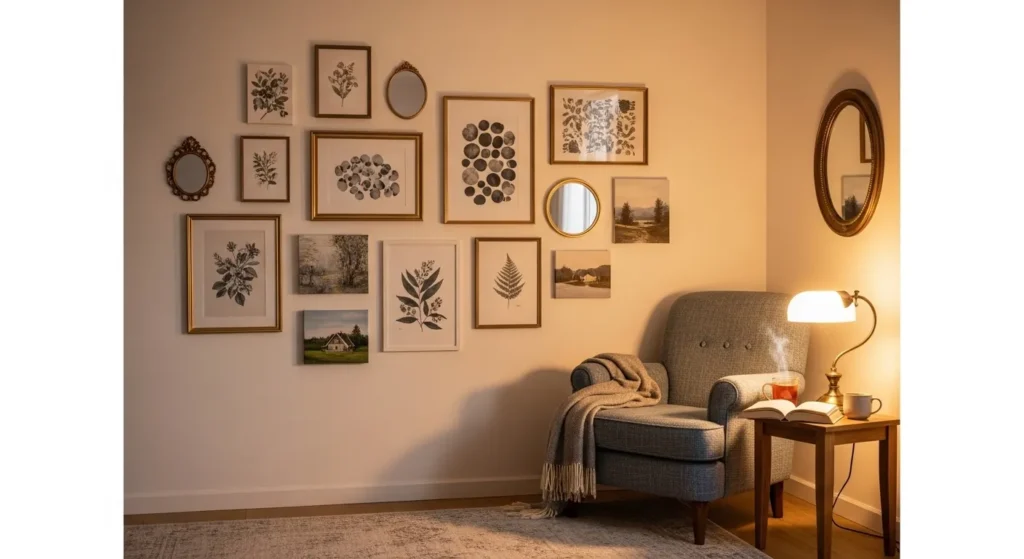
Combining multiple mediums adds texture and visual interest. Canvas paintings, framed prints, and mirrors together create a layered, curated look while mirrors amplify natural light in compact spaces.
This approach works in living rooms, bedrooms, or home offices. Mixing mediums encourages creativity and allows personal artwork or collectibles to shine alongside functional mirrors.
The variety of textures and reflective surfaces enhances depth. The gallery wall becomes an interactive focal point, balancing style, personality, and light enhancement in a single design.
7. Large Mirror as Anchor

Using a large mirror as the base of a gallery wall anchors the arrangement and instantly reflects light throughout the room. It balances the composition while making the space feel larger and more inviting.
Smaller artworks above the mirror create layered interest. Maintaining a consistent colour palette or frame style ensures cohesion, allowing the mirror to enhance light without overpowering the display.
This technique is perfect for narrow walls or over sofas. The mirror serves as both a practical light enhancer and a stylish design element, ensuring the gallery wall has big visual impact.
8. Mirrored Frames
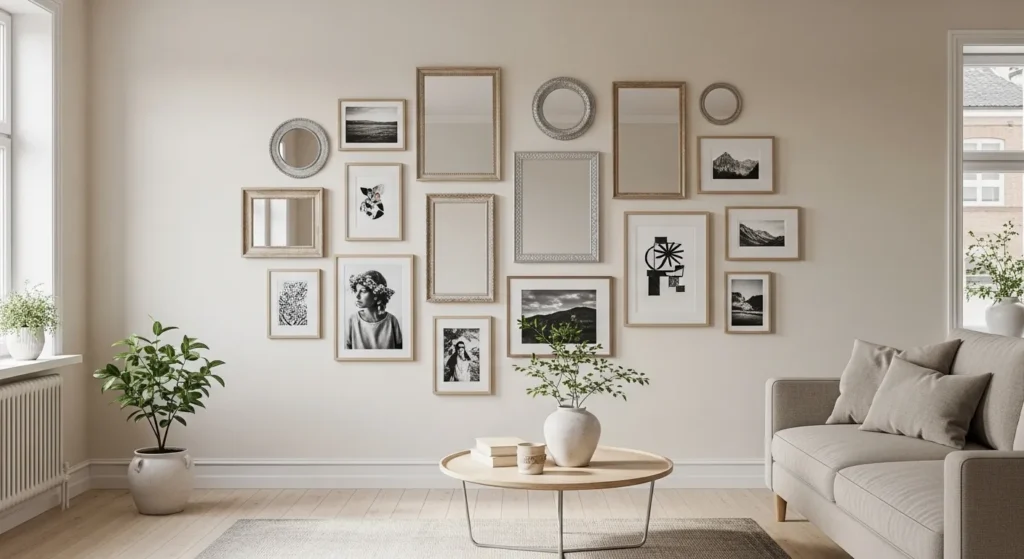
Mirrored frames blend seamlessly with artwork, allowing reflections to enhance light while keeping the wall cohesive. Framing mirrors like art pieces adds elegance and ensures they complement surrounding prints or photographs.
This technique works well in living rooms, bedrooms, or hallways. By keeping a consistent frame style or colour, mirrored frames feel intentional rather than scattered, creating a polished, curated display.
Mirrored frames provide both beauty and functionality. They reflect light, add depth, and maintain balance within the gallery wall, making even small spaces feel brighter and more dynamic.
9. Asymmetrical Layout with Mirrors
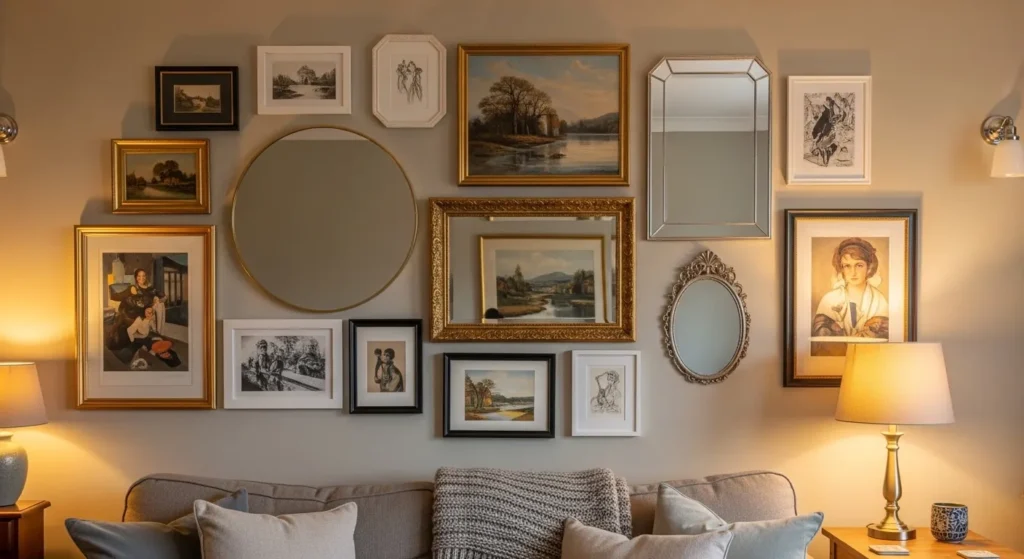
Asymmetrical layouts create energy and movement on a gallery wall. Adding mirrors in irregular positions balances the composition while reflecting light, making small rooms appear larger and more inviting.
This design works beautifully in eclectic, modern, or transitional interiors. Using a consistent colour palette or complementary frame finishes ensures the wall feels cohesive despite the playful arrangement.
Mirrors in asymmetrical layouts act as both functional and decorative elements. They break up patterns of art, create depth, and add light, enhancing the gallery wall’s impact without overwhelming the space.
10. Overlapping Layers
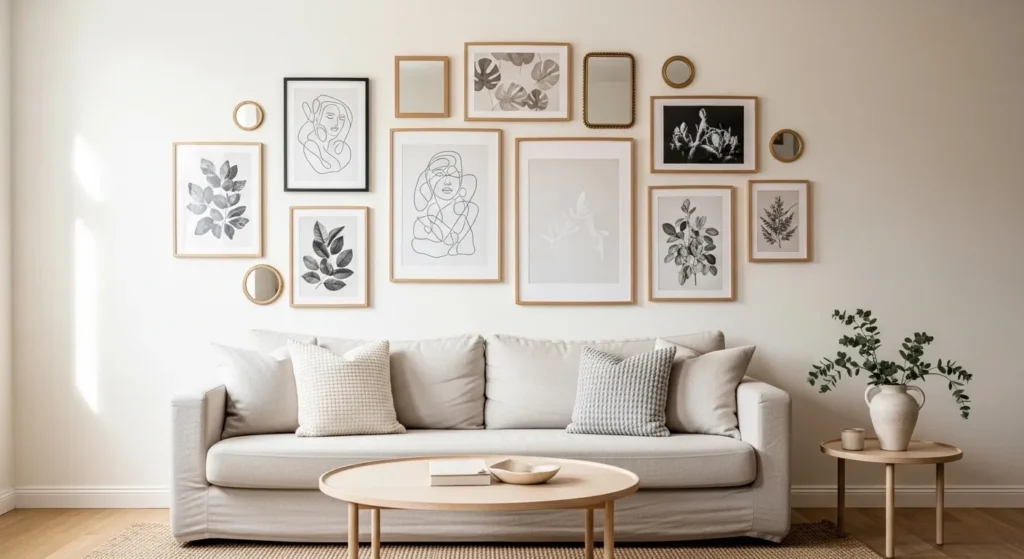
Overlapping art and mirrors create depth and a sense of texture on gallery walls. Layering elements allows light to bounce off mirrors while drawing attention to individual artworks.
This technique works well in small living rooms or bedrooms. Careful layering ensures the arrangement feels curated rather than cluttered, allowing each piece to shine while benefiting from mirrored reflections.
Layered arrangements provide visual interest and versatility. The mirrors reflect light, creating movement and depth, while the overlapping artwork adds sophistication and a dynamic focal point in compact spaces.
11. Mirrored Corner Feature

Mirrors placed in gallery wall corners can reflect light from multiple angles, brightening a small space while creating an unexpected visual focal point. Pairing them with art enhances the layered, curated look.
This approach works well in living rooms, hallways, or bedrooms where natural light is limited. Corner mirrors help expand the perception of space while supporting a cohesive gallery arrangement.
Corner gallery walls with mirrors bring creativity and function. They make the room feel larger, add reflective highlights, and provide balance when combined with framed art, creating an impactful design in compact areas.
12. Mix of Round and Rectangular

Mixing shapes such as round mirrors with rectangular or square artwork creates visual contrast and interest. The mirrors add light and reflection, while the structured frames keep the arrangement balanced.
This technique works well in eclectic, modern, or transitional interiors. Choosing complementary frame colours or finishes ensures cohesion and prevents the wall from feeling chaotic.
Combining shapes enhances the gallery wall’s dynamic quality. Mirrors reflect light and break up angular lines, making small spaces feel larger and more engaging while maintaining timeless style.
13. Horizontal Mirror Strip
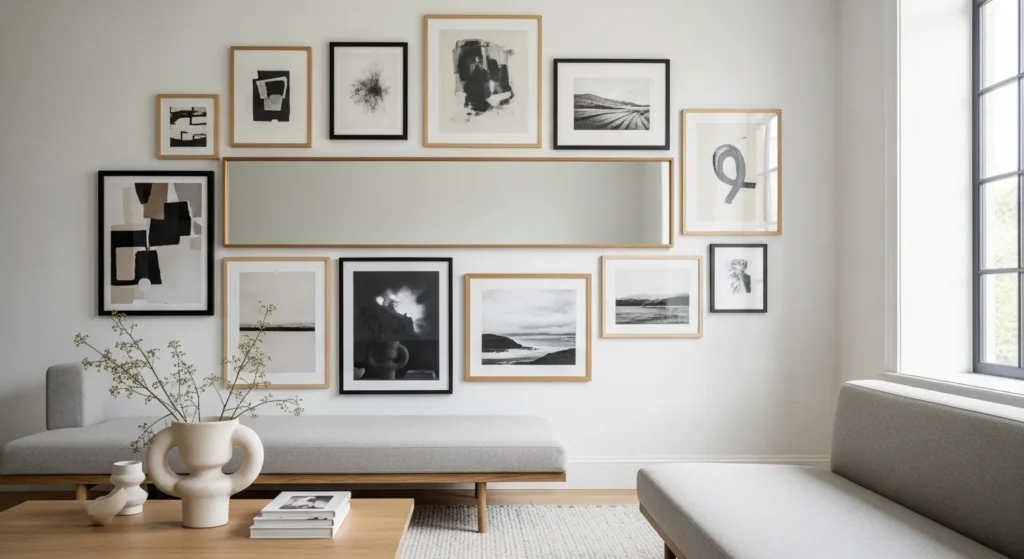
A horizontal mirror strip anchors the gallery wall and reflects light across the room. Placing art around it draws the eye while creating depth and dimension, especially in narrow or small spaces.
This layout works well over sofas, sideboards, or desks. The horizontal line adds structure while maintaining visual interest, letting mirrors and art coexist harmoniously.
Horizontal mirror strips maximize light and impact. They create the illusion of width, add elegance, and provide a practical reflective element while supporting a curated, stylish gallery display.
14. Layered Mirrors with Floating Shelves
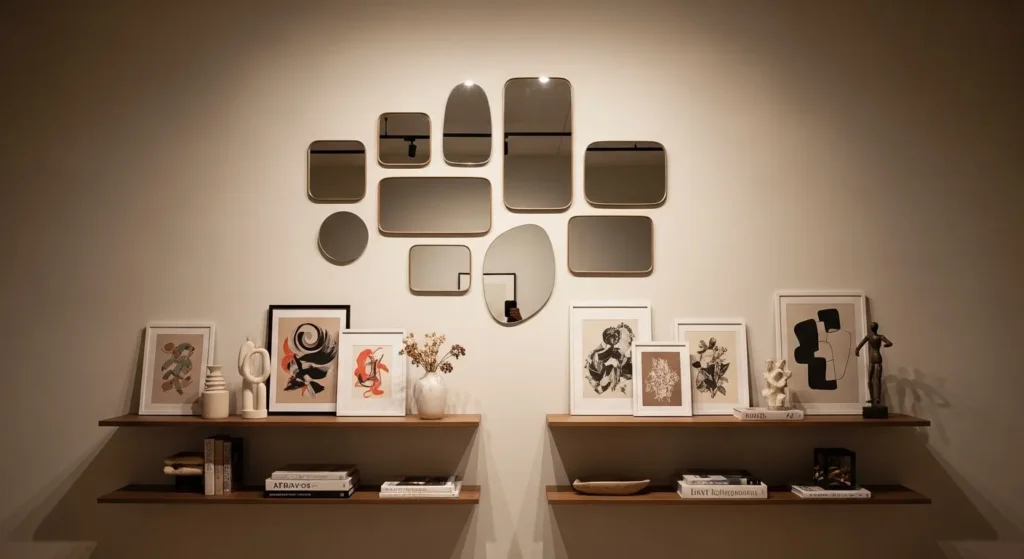
Layering mirrors with floating shelves allows functional decor to integrate with art. The mirrors reflect light, while shelves provide space for framed prints, plants, or sculptures, enhancing depth and interest.
This technique works beautifully in living rooms, entryways, or compact apartments. Combining reflective surfaces with display objects creates a gallery wall that feels intentional, curated, and three-dimensional.
Mirrors in layered arrangements increase brightness and dimension. They complement surrounding artwork and objects, creating a striking, light-enhancing feature wall that balances style and function.
15. Mirrored Sunburst
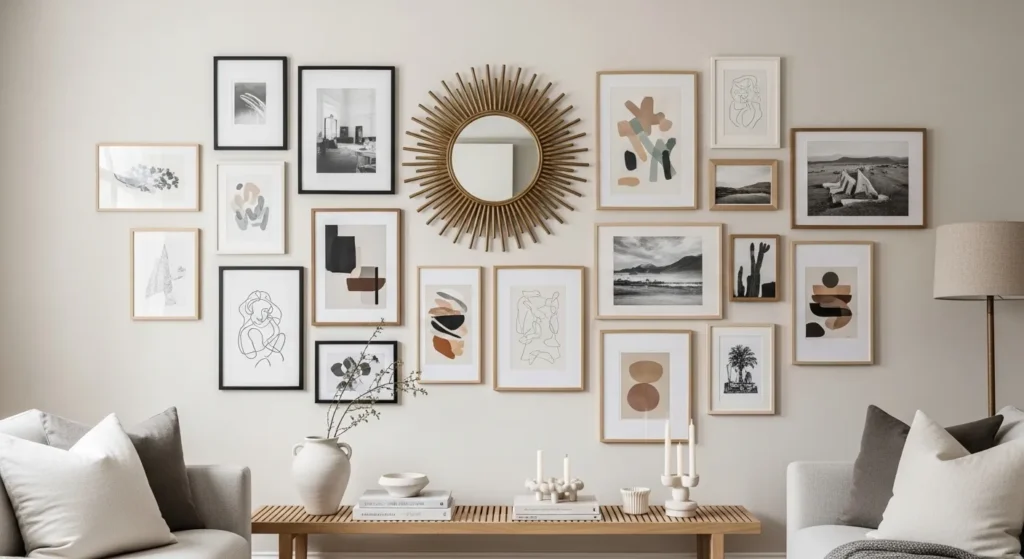
A sunburst mirror adds instant drama and elegance to a gallery wall. Its reflective surface draws light into the room while serving as a striking focal point among artwork.
This design works well in living rooms, entryways, or bedrooms. Pairing it with smaller framed prints maintains balance while ensuring the mirror stands out without overpowering the space.
Sunburst mirrors combine style and function. They reflect light, add dimension, and create a radiant centerpiece, giving gallery walls a dynamic and timeless appeal in any room.
16. Vintage Mirror Accents
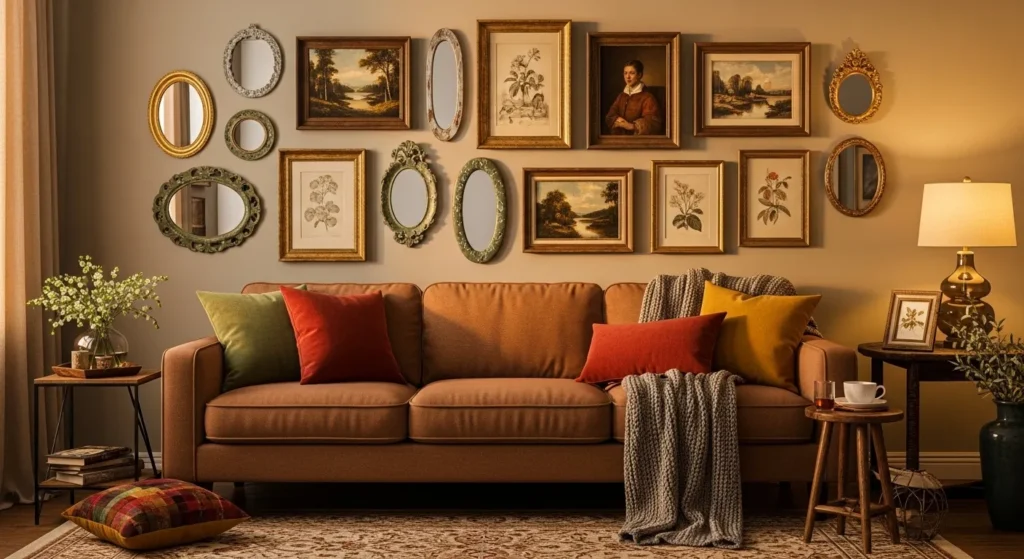
Vintage mirrors add character and charm to gallery walls. Their aged finishes reflect light subtly, creating a softer glow while complementing classic or eclectic artwork.
This technique works beautifully in transitional, rustic, or eclectic interiors. Mixing old-world mirrors with art prints balances history and modernity, giving the gallery wall personality and sophistication.
Vintage mirrors provide depth and interest. Their reflective surfaces enhance natural light, while the worn finishes add warmth, ensuring a curated, timeless gallery wall that feels inviting and stylish.
17. Mirrored Frames with Bold Art
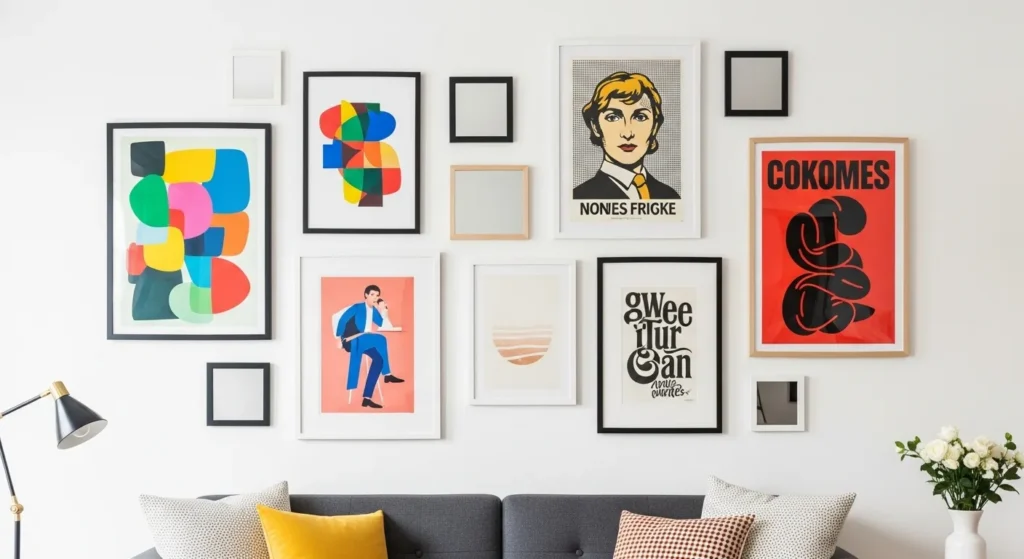
Pairing mirrored frames with bold art allows light reflection to offset vibrant colours, balancing intensity and creating a cohesive wall display. The mirrors provide breaks that enhance visual flow.
This approach works well in modern or eclectic spaces. Using frames in matching finishes or complementary colours ensures harmony while letting artwork remain the focus.
Mirrors enhance the gallery wall’s impact. They reflect light, add depth, and allow bold art to shine without overwhelming the space, creating a balanced, luminous arrangement.
18. Cluster of Small Mirrors
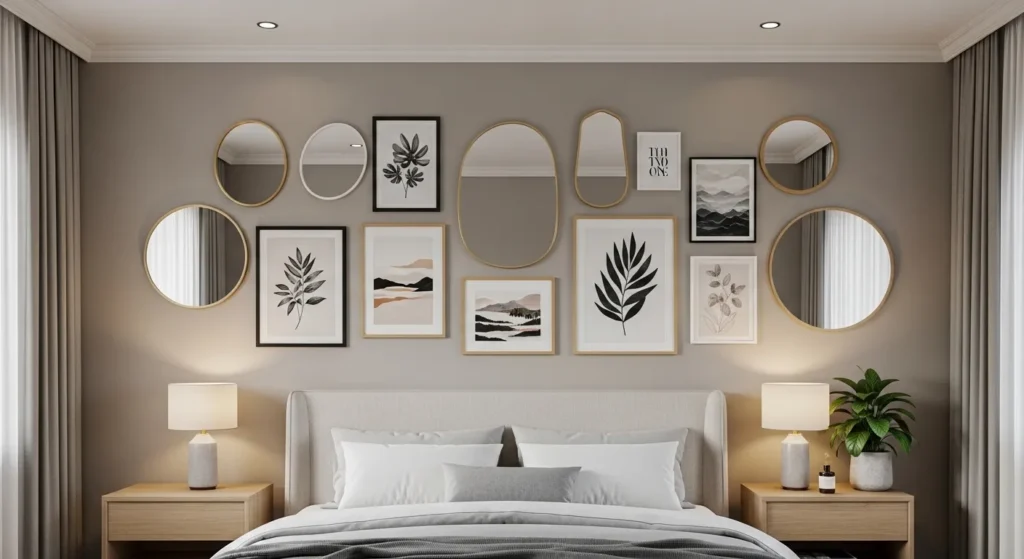
Clustering small mirrors together creates a sparkling, light-enhancing effect on a gallery wall. Their reflective surfaces brighten the room and add dimension while highlighting surrounding artwork.
This layout works beautifully in narrow hallways, bedrooms, or living rooms. Keeping mirror shapes or frame colours consistent ensures a curated, intentional look while adding a playful touch.
Grouped mirrors provide both decorative charm and practical light reflection. They enhance the gallery wall’s aesthetic, making the space feel airy, dynamic, and visually interesting.
19. Mirrored Art Frames

Mirrored frames blur the line between art and mirror, serving as decorative elements while reflecting light. They add sophistication and depth to a gallery wall without additional artwork needed.
This idea works well in modern or contemporary interiors. Using mirrored frames of various shapes or sizes creates visual rhythm while brightening the space naturally.
Mirrored art frames maximize functionality and style. They create light, depth, and a polished look, making gallery walls feel dynamic and thoughtfully designed in any small or large room.
20. Irregular Mirror Shapes

Irregular mirror shapes introduce creativity and movement into a gallery wall. Their reflective surfaces bounce light around the room while breaking up the rigidity of standard frames.
This approach works well in contemporary or eclectic interiors. Using a mix of sizes and orientations creates visual interest while keeping the arrangement cohesive.
Irregular mirrors enhance depth and light. They provide a unique focal point, complement surrounding artwork, and make the gallery wall feel lively, playful, and luminous.
21. Layered Wall with Mirrors and Floating Ledges
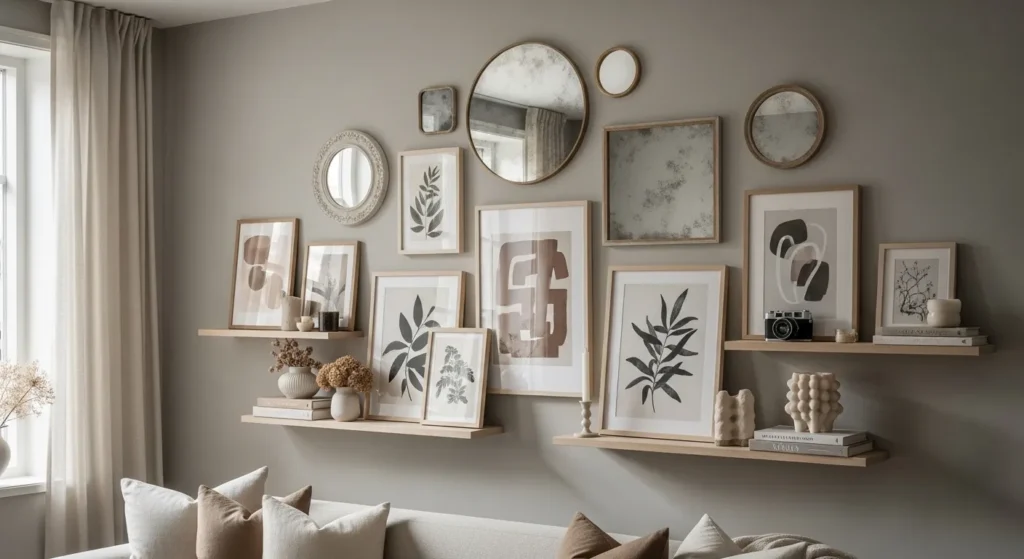
Combining mirrors with floating ledges allows dynamic layering. Mirrors reflect light and create depth, while shelves display framed art or objects, adding dimension and functionality to the gallery wall.
This layout works well in small apartments or living rooms. Layering ensures each element is visible while contributing to a balanced and stylish wall design.
Mirrors and ledges together maximize visual impact. They brighten the room, create depth, and provide versatility, making the gallery wall a striking and functional feature in any space.
22. Mirrors with Minimalist Art
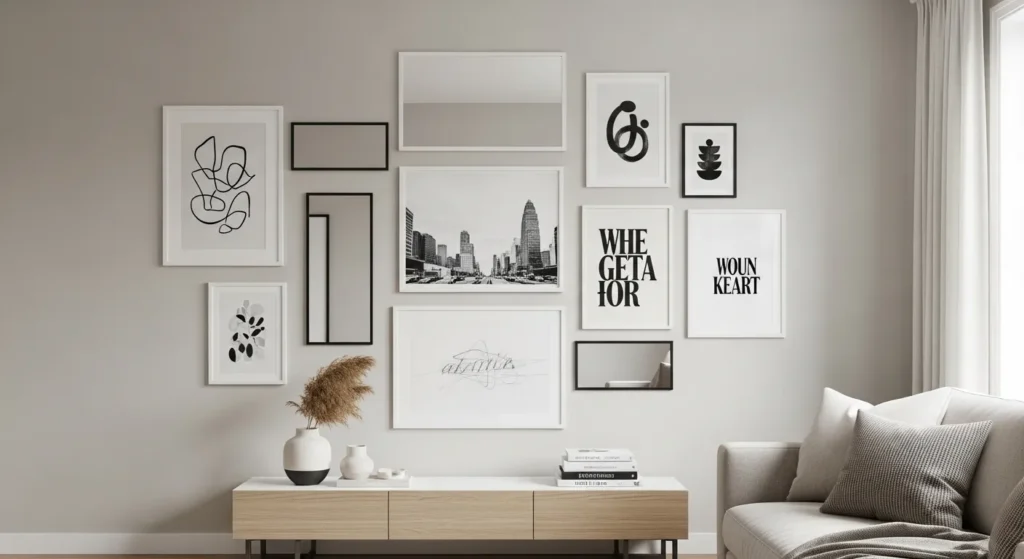
Combining minimalist art with mirrors creates a clean, balanced gallery wall. The mirrors reflect light while the simple prints provide subtle visual interest, maintaining a modern, airy aesthetic.
This approach works well in contemporary or Scandinavian interiors. Using consistent frames ensures cohesion while the mirrored elements add depth and brightness without overpowering the wall.
Mirrors with minimalist art enhance small spaces. They create a sense of openness and light, allowing the wall to feel curated, sophisticated, and visually appealing.
23. Mirrors as Frames
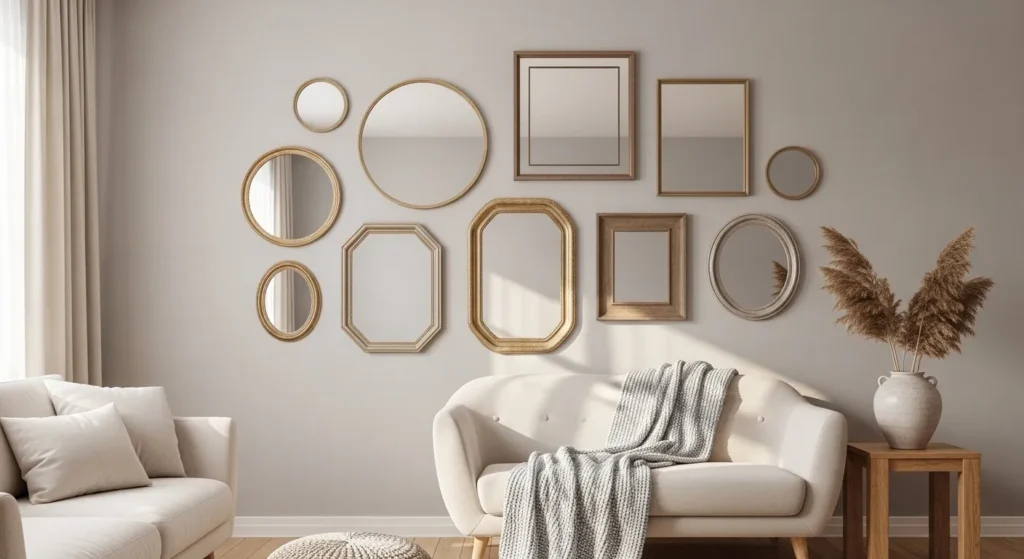
Using mirrors as framed “artwork” makes the wall reflective, dynamic, and functional. Each mirror becomes both décor and a light-enhancing element, creating a bright, lively display.
This idea works well in entryways, living rooms, or bedrooms. Mixing mirror shapes and sizes keeps the wall interesting while maintaining a cohesive, intentional layout.
Mirrors as frames maximize light reflection and depth. They offer a unique twist on traditional gallery walls, creating impact without needing additional artwork, perfect for small or dimly lit rooms.
24. Angled Mirrors
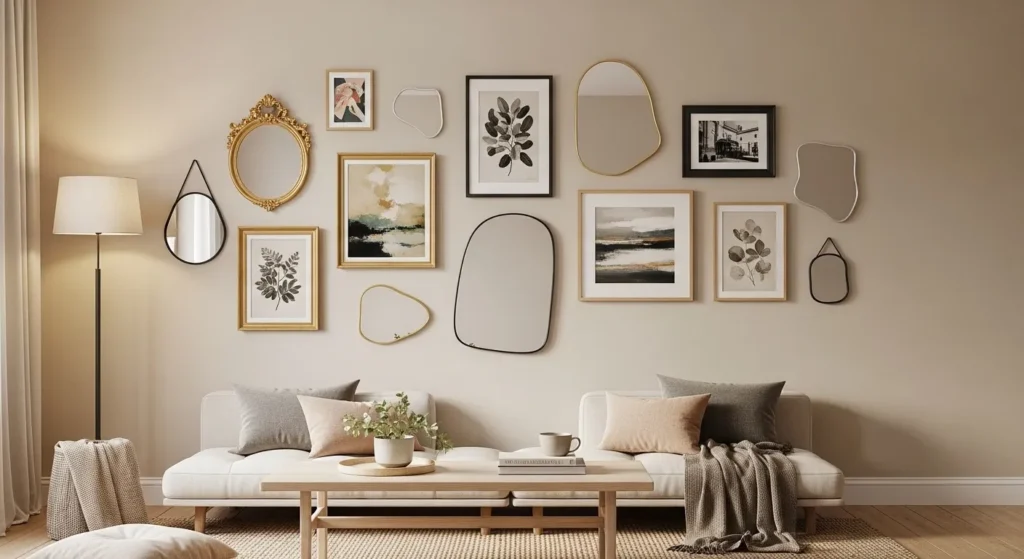
Angled mirrors catch and reflect light from multiple directions, adding dimension and movement to a gallery wall. They create visual interest while brightening the surrounding space.
This layout works beautifully in compact rooms or hallways. The irregular reflections complement framed artwork, giving the wall a playful yet curated look.
Angled mirrors add versatility and function. By reflecting light creatively, they enhance depth, make rooms feel larger, and turn a simple gallery wall into a dynamic design feature.
25. Mirrors with Black Frames
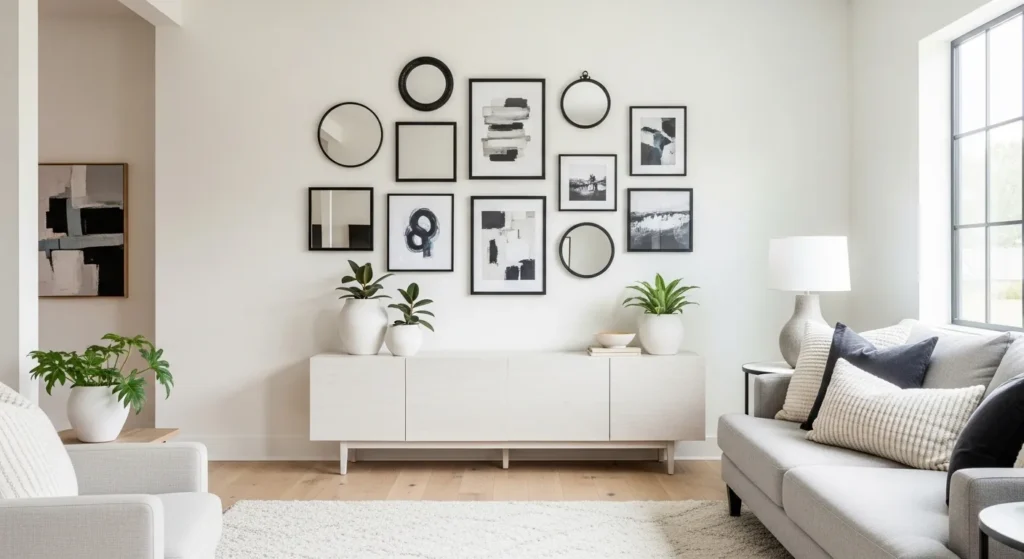
Black-framed mirrors add structure and contrast to a gallery wall. Their reflective surfaces amplify light, while the bold frames tie together surrounding artwork, creating a cohesive and polished display.
This approach works well in modern or industrial interiors. Using black frames unifies mixed media and provides a strong visual anchor, preventing the wall from feeling chaotic.
Mirrors with black frames balance function and style. They reflect light, define space, and complement artwork, producing a gallery wall that’s sophisticated, luminous, and timeless.
26. Overlapping Mirrors and Art
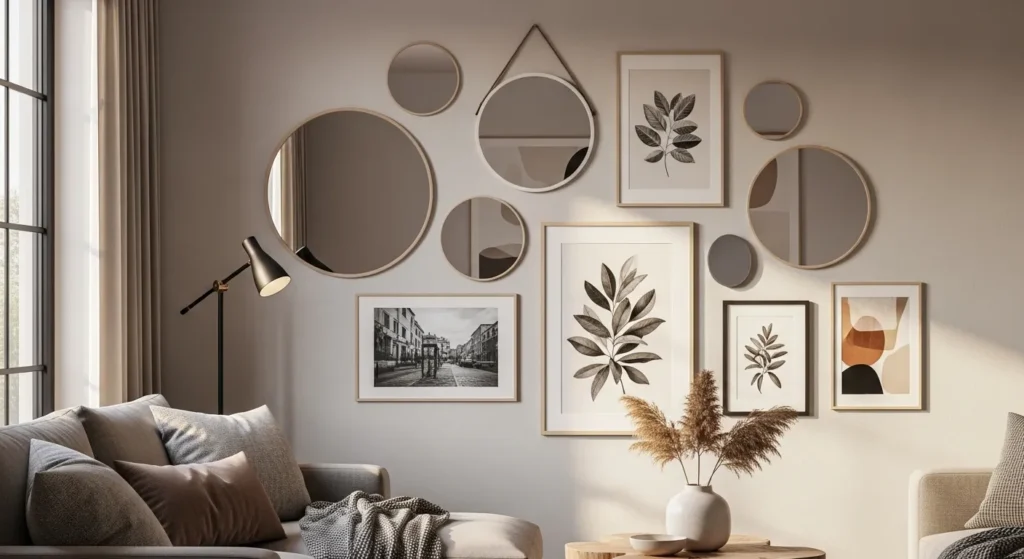
Overlapping mirrors with artwork creates depth and layered interest. Mirrors reflect light across the wall, making small spaces feel larger, while overlapping elements add texture and dimension.
This layout works well behind couches, desks, or beds. Layering mirrors and art ensures the wall feels intentional while creating a dynamic visual composition.
Overlapping arrangements balance style and function. They add brightness, showcase creativity, and make a gallery wall feel curated and lively without overwhelming the room.
27. Large Statement Mirror
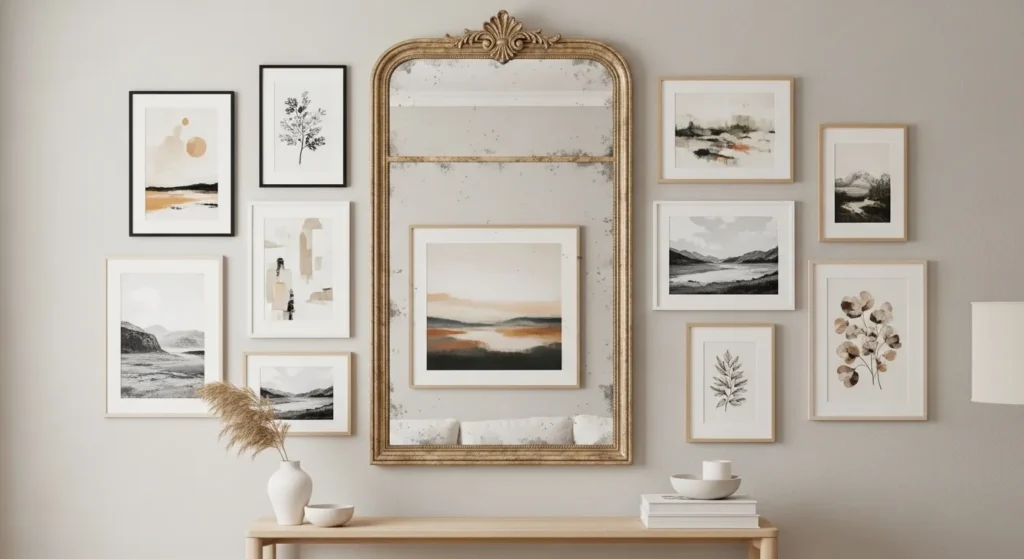
A large mirror acts as a focal point, reflecting light and enhancing the room’s sense of space. Surrounding artwork frames the mirror, creating a balanced and elegant gallery wall.
This approach works well in living rooms, dining areas, or entryways. Keeping a consistent colour palette or frame style ensures cohesion while letting the mirror shine as a functional and stylish centerpiece.
The large mirror draws the eye, reflects natural and artificial light, and creates depth. Combined with surrounding art, it makes a gallery wall visually striking and practical.
28. Mirrors with Textured Art
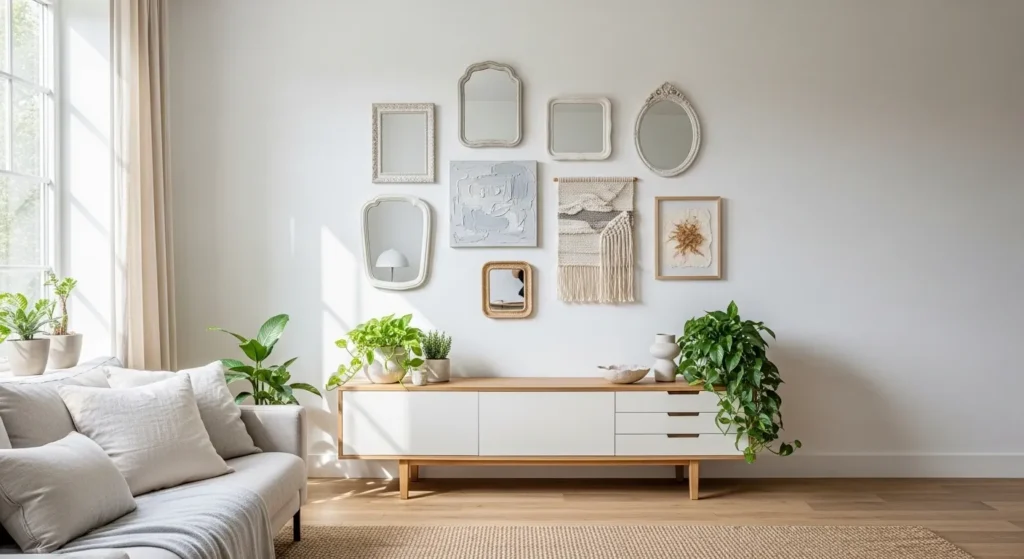
Combining mirrors with textured art adds dimensionality to a gallery wall. Mirrors reflect light, while textures create interest and contrast, enhancing the room’s visual appeal.
This technique works well in eclectic, bohemian, or modern interiors. Choosing complementary tones ensures harmony, while varied textures keep the arrangement dynamic and engaging.
Mirrors with textured art maximize visual impact. They brighten the space, create depth, and provide a layered, sophisticated feature wall that balances function and style.
29. Mirror Tiles Interspersed
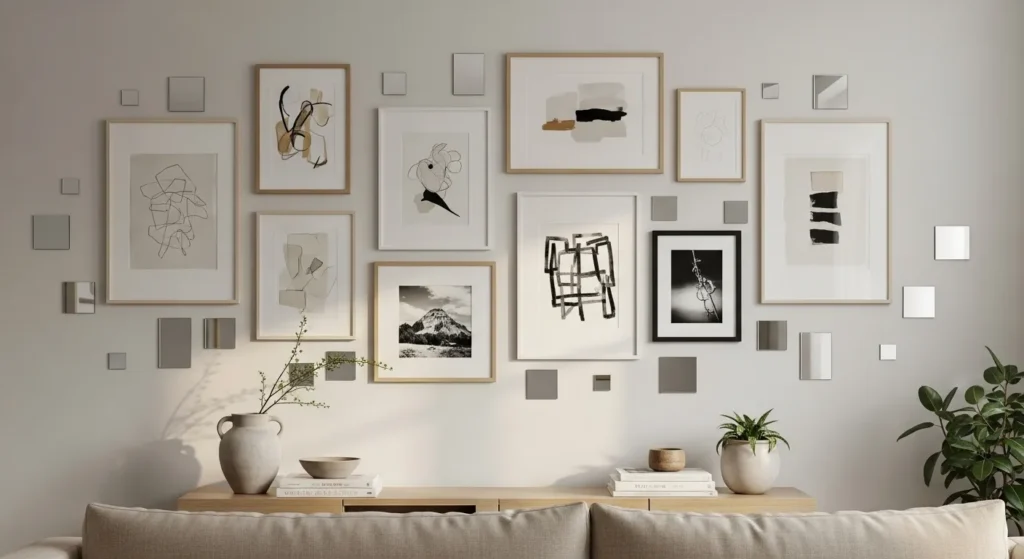
Mirror tiles create a modular and reflective accent on gallery walls. They break up patterns of framed art while reflecting light, enhancing brightness and spatial perception.
This approach works well in living rooms, kitchens, or hallways. The small tiles can be rearranged or updated over time, adding versatility while maintaining cohesion with surrounding art.
Mirror tiles provide subtle sparkle and depth. They enhance light, complement artworks, and make gallery walls feel contemporary, balanced, and stylish.
30. Mirrors with Metallic Frames
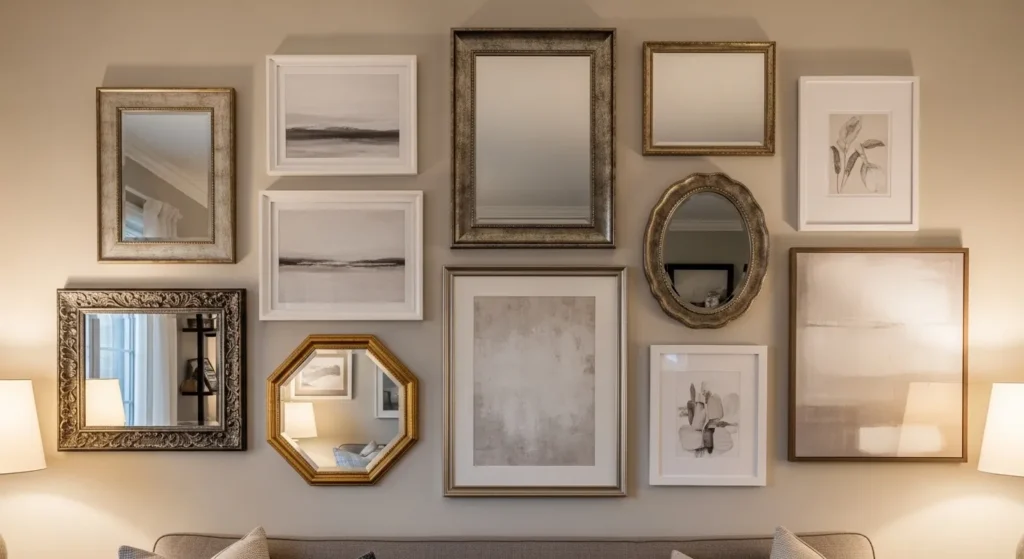
Metallic-framed mirrors add glamour and elegance to gallery walls. Their reflective surfaces brighten the room, while warm metallic tones tie together surrounding artwork, creating a cohesive, stylish display.
This technique works beautifully in living rooms, bedrooms, or dining areas. Metallic finishes complement natural light and neutral décor, adding sophistication without overwhelming the wall.
Mirrors with metallic frames combine function and style. They reflect light, provide depth, and enhance the gallery wall’s impact, creating a radiant, enduring focal point in any space.
Conclusion
Mixing art and mirrors in gallery walls is a simple yet transformative way to enhance both style and light. Mirrors reflect natural and artificial light, making small spaces feel larger, while art adds personality, colour, and character.
The 30 ideas above show how to balance functionality with aesthetics, whether through symmetry, layering, creative shapes, or metallic finishes. By thoughtfully integrating mirrors into gallery walls, you can create bright, dynamic, and timeless displays that elevate any room while reflecting your personal style.