
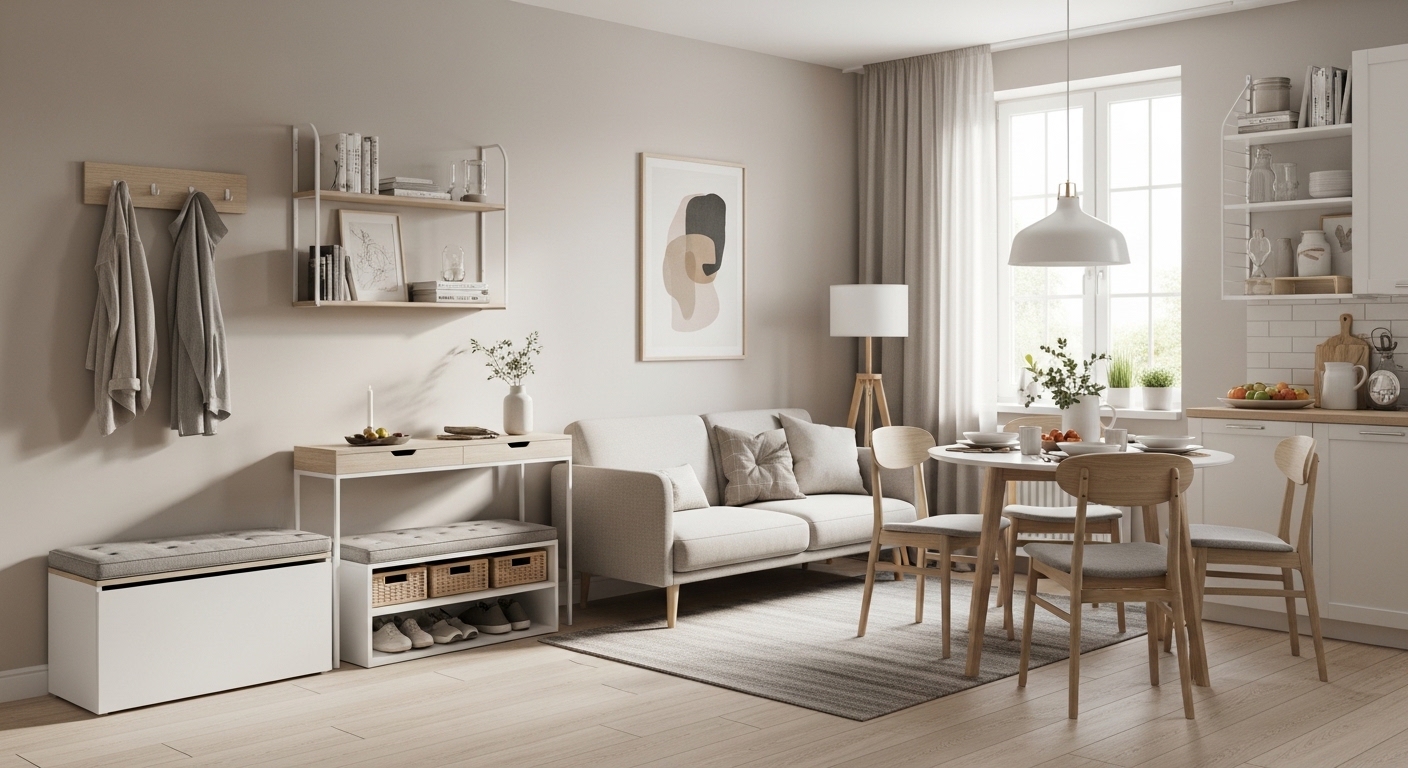
Designing a small living room and dining room combo requires smart planning. When space is limited, every piece of furniture must serve a purpose while still looking stylish. The goal is to create a clear separation between the two areas without blocking light or making the room feel crowded. With the right layout and design choices, even a compact space can feel open and comfortable.
The key is balance. By using rugs, lighting, furniture placement, and color coordination, you can define each zone while keeping the overall design cohesive. These ideas will help you create a functional layout that looks organized, modern, and visually spacious.
1. Use Separate Rugs to Define Each Area
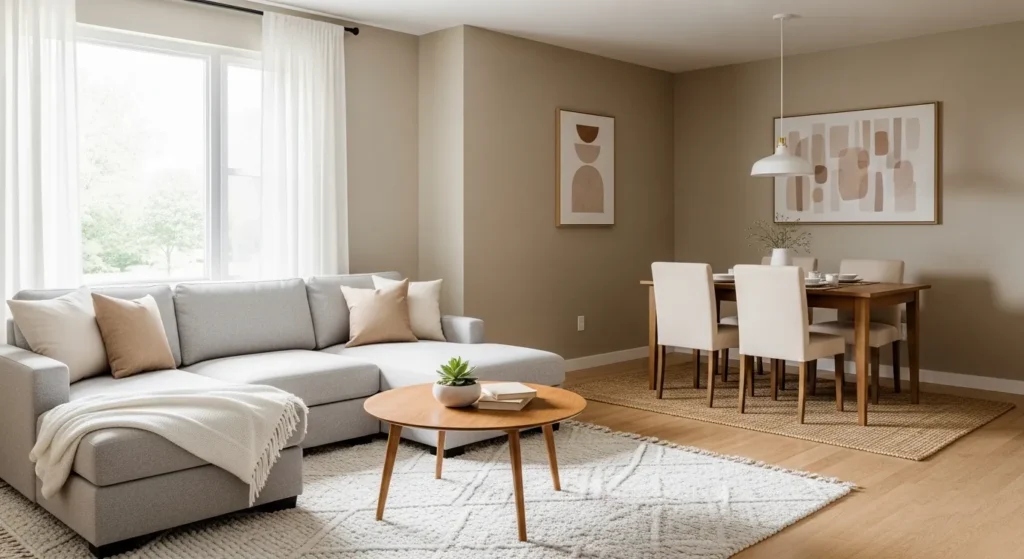
One of the easiest ways to divide a small combo space is by using rugs. Place one rug under the living room seating area and another under the dining table. This creates a visual boundary between the two zones without needing walls or partitions. The rugs help organize the layout naturally and improve overall structure.
Choose rugs that complement each other in color and style to maintain harmony. They do not have to match exactly, but they should feel connected. This technique instantly makes the space look intentional and well-designed.
2. Let the Sofa Act as a Divider
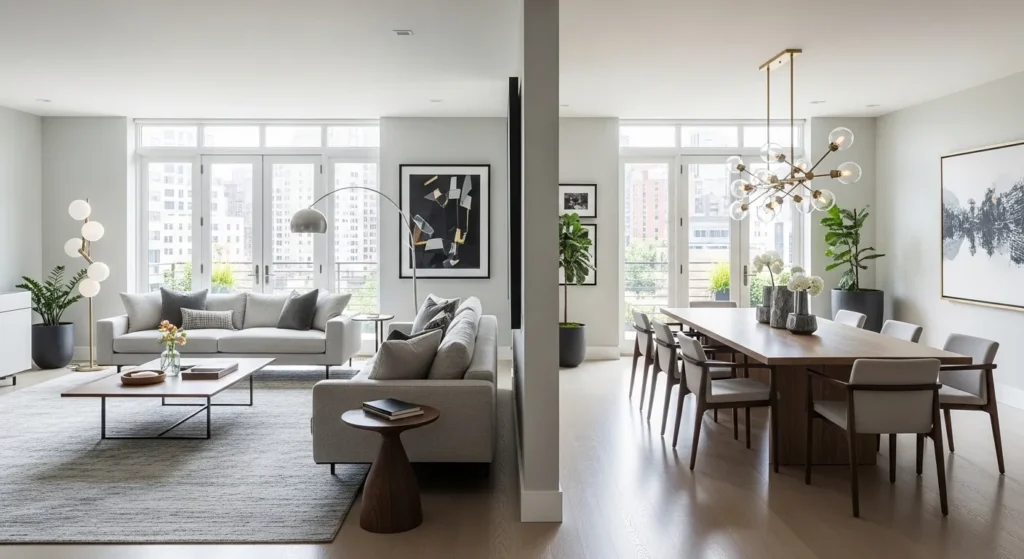
Positioning the sofa with its back facing the dining area is a practical way to separate the two spaces. This layout creates a natural division while keeping the room open and airy. The sofa essentially becomes a soft boundary between the lounge and eating zones.
This method works especially well in rectangular rooms. It allows both areas to feel distinct without using bulky partitions. The result is a clean and functional layout that maintains flow.
3. Choose a Compact Dining Table
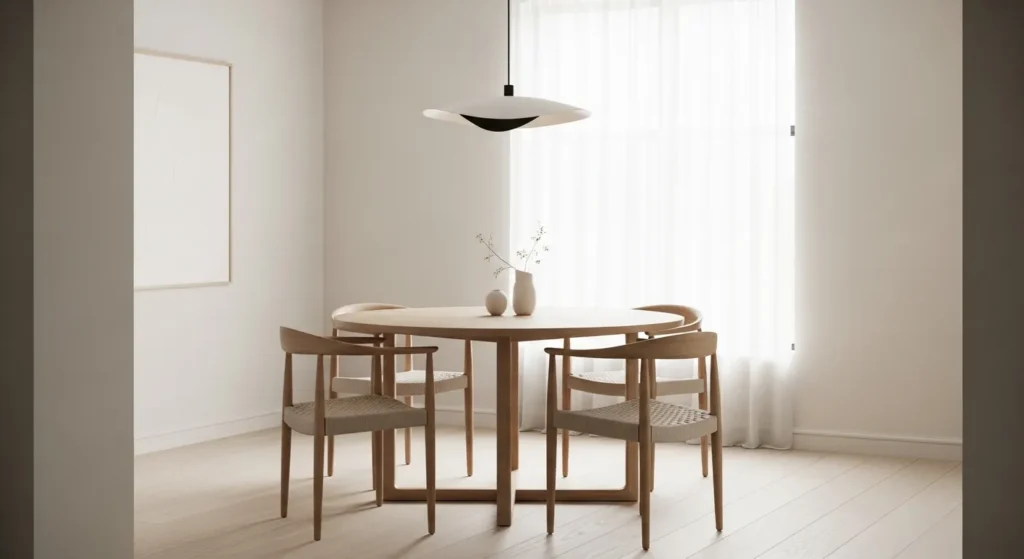
In small combo rooms, oversized dining tables can overwhelm the space. Instead, choose a compact round or square table. These shapes take up less room and improve movement around the area. Round tables are particularly useful because they reduce sharp corners and improve flow.
A smaller table still provides enough seating while keeping the room open. Slim-legged designs also help maintain a light and uncluttered appearance.
4. Use Multi-Functional Furniture
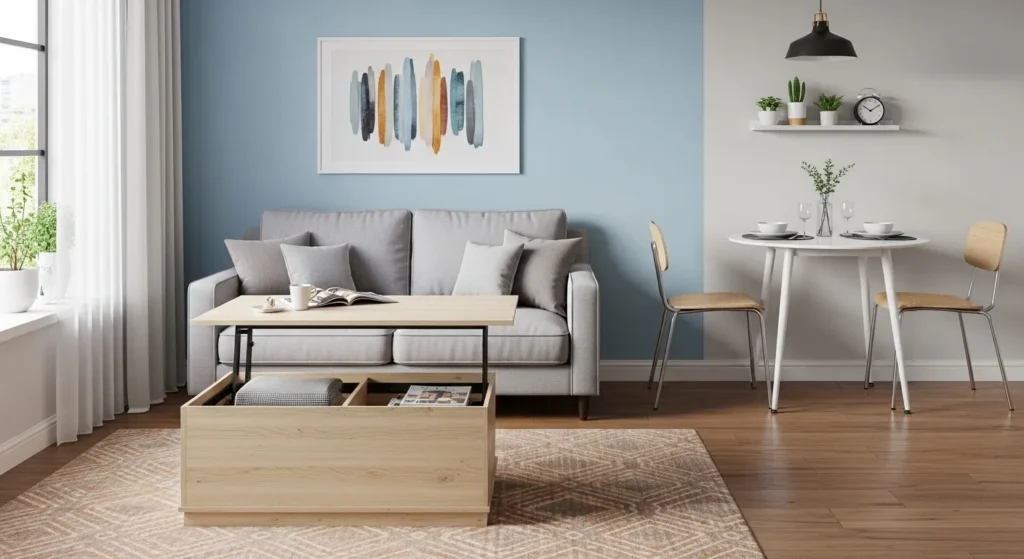
Multi-functional furniture is essential in small spaces. Pieces like storage ottomans, extendable tables, or nesting tables help maximize functionality without adding clutter. These items serve more than one purpose, which saves valuable space.
This approach ensures the room remains practical while still looking stylish. Choosing smart furniture allows both living and dining areas to work efficiently together.
5. Add a Console Table Behind the Sofa
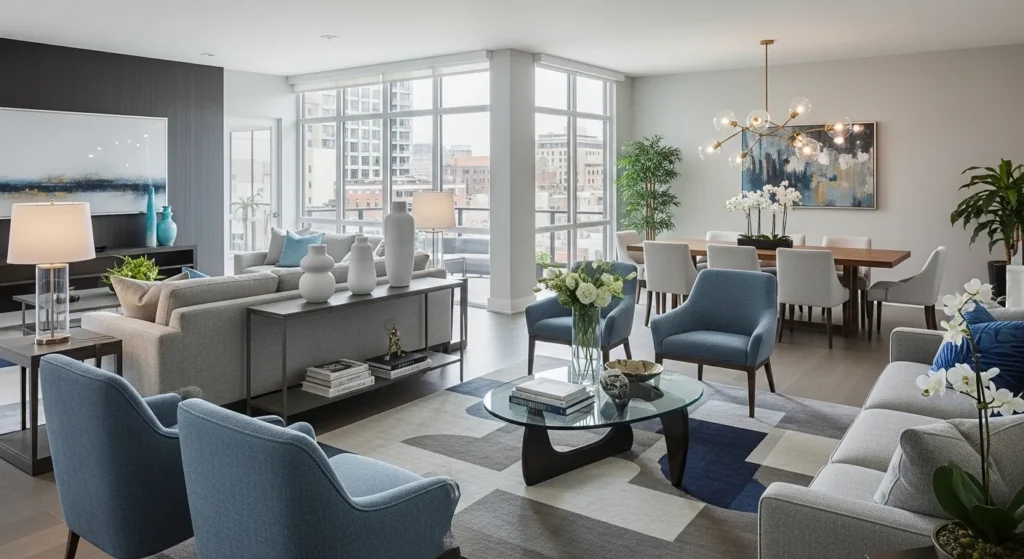
A slim console table placed behind the sofa enhances separation between zones. It acts as a buffer while adding surface space for decor or storage. This simple addition improves structure without making the room feel crowded.
The console table also creates a polished and finished look. It visually defines the living area while keeping the overall design open.
6. Use Lighting to Separate the Spaces
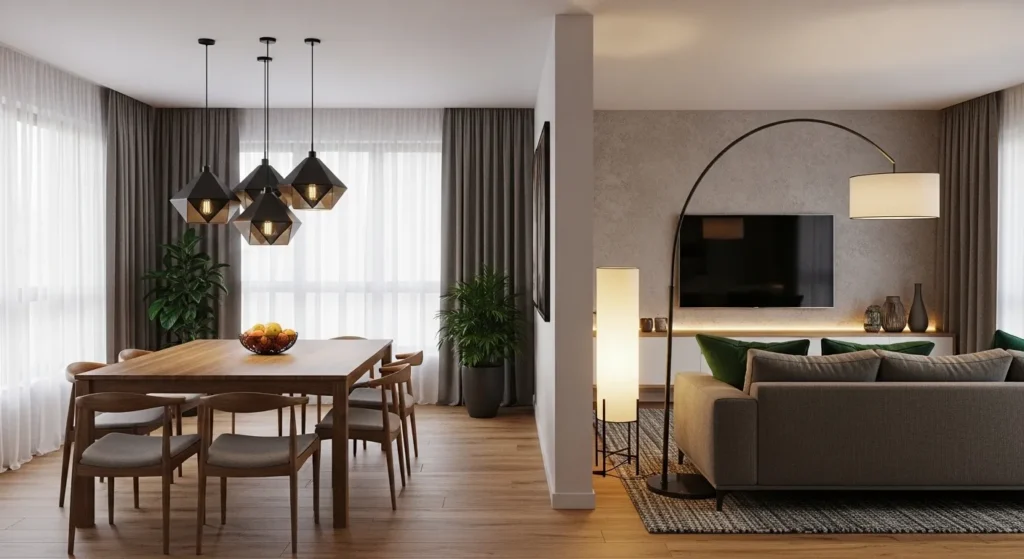
Lighting can clearly define each area. For example, a pendant light above the dining table highlights that space, while a floor lamp or ceiling light can emphasize the living room. Different lighting styles create subtle separation.
This technique improves both function and atmosphere. It ensures each zone has its own identity while maintaining connection within the room.
7. Keep a Consistent Color Palette
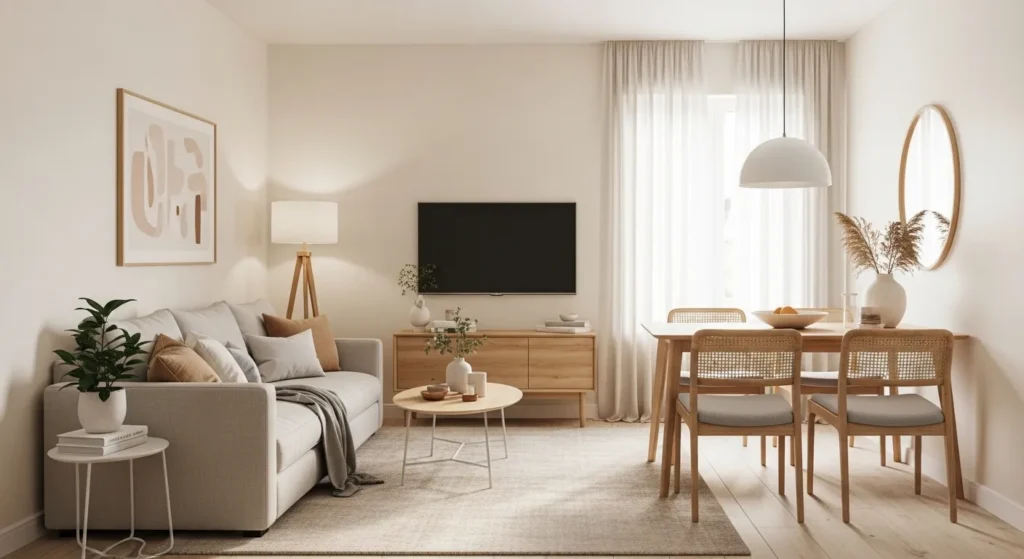
Using the same color scheme in both areas creates harmony. When walls, furniture, and decor share similar tones, the room feels unified and larger. Neutral shades like beige, gray, or soft white work especially well.
Consistency prevents visual clutter. A coordinated palette makes the space look thoughtfully designed rather than divided.
8. Use Vertical Storage Solutions
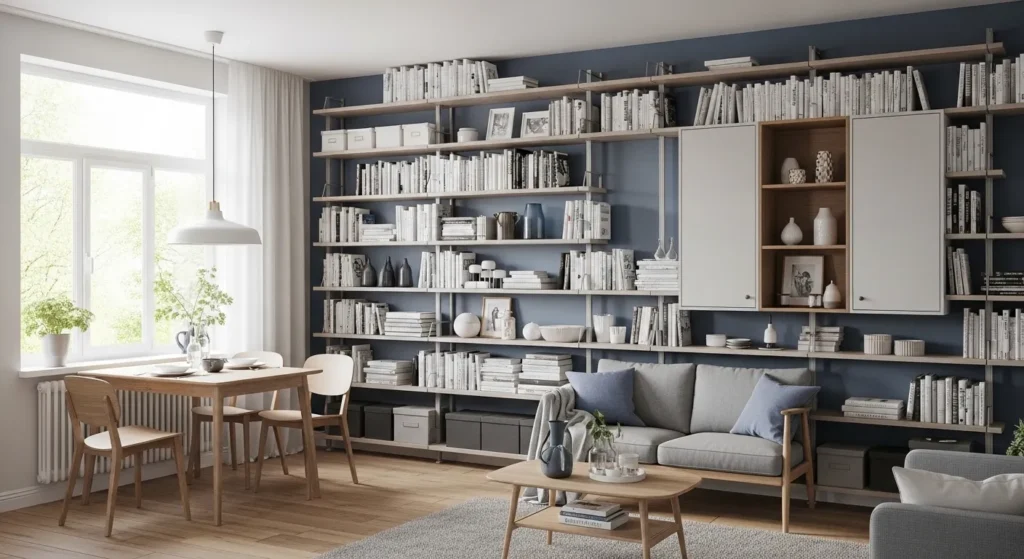
When floor space is limited, go vertical. Tall shelves, wall-mounted cabinets, or floating units provide storage without occupying valuable room area. This keeps the layout organized and functional.
Vertical storage also draws the eye upward, making the ceiling feel higher. It improves both practicality and visual balance.
9. Align Furniture Along the Walls
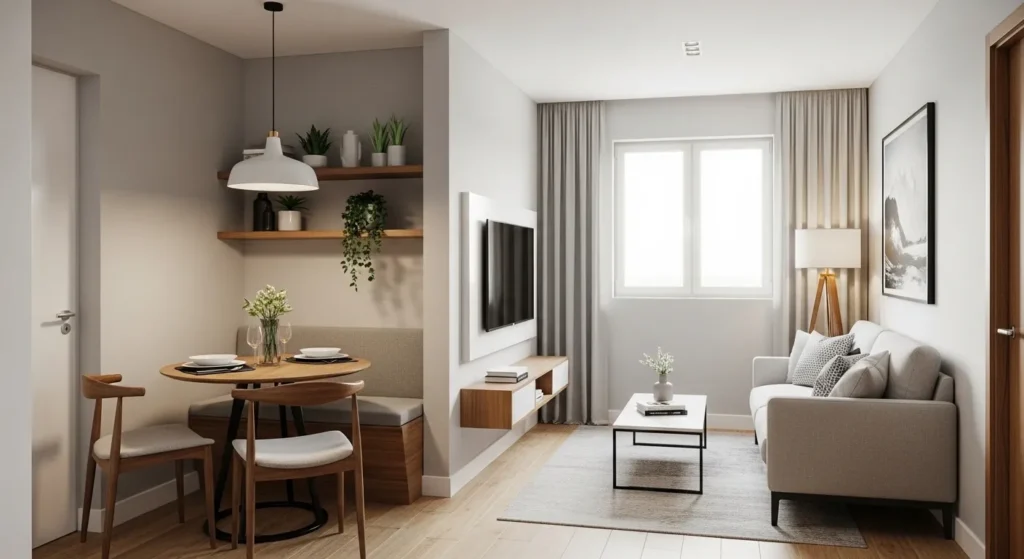
Placing furniture along the walls helps open up the center of the room. This improves movement and prevents overcrowding. Keeping pathways clear is essential in small combo spaces.
This layout creates a clean and structured appearance. It maximizes available space while maintaining comfort.
10. Use a Dining Bench Instead of Chairs
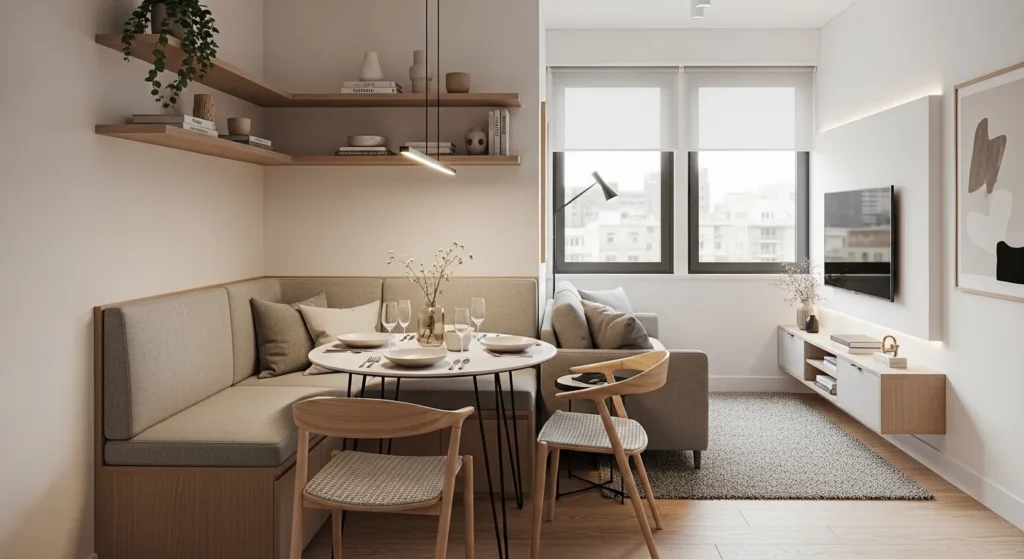
Replacing traditional dining chairs with a bench saves space and improves flexibility. A bench can slide completely under the table when not in use, freeing up walking space. This makes it ideal for compact layouts where every inch matters.
Benches also allow more seating in a smaller footprint. They create a cleaner visual line compared to multiple chairs, helping the room feel less crowded while maintaining functionality.
11. Choose Light and Airy Furniture
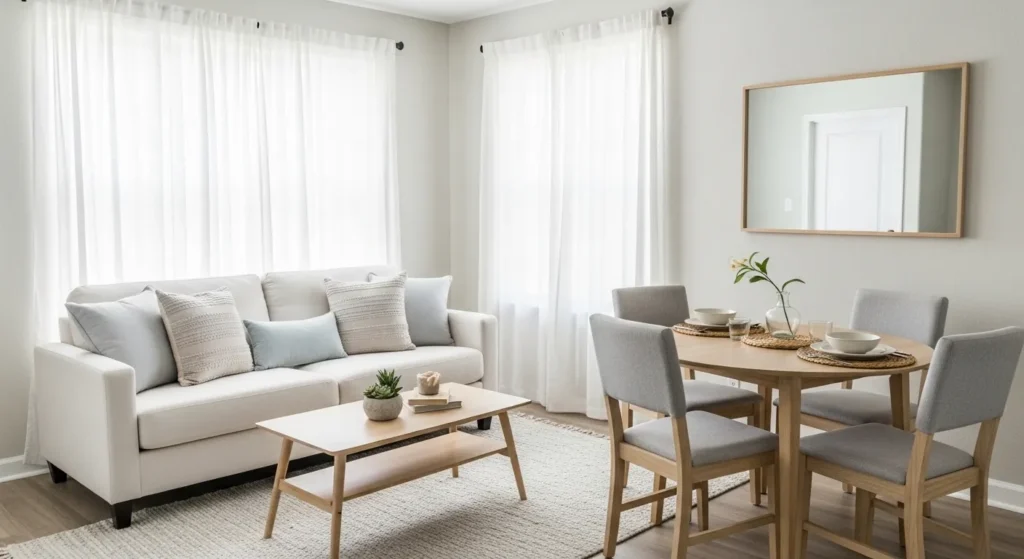
Light-colored furniture helps keep the room visually open. Shades like white, beige, soft gray, or natural wood reflect light and prevent the space from feeling heavy. Dark, bulky furniture can overwhelm small combo rooms.
Using lighter tones makes both areas feel connected and spacious. This approach improves brightness and gives the entire layout a fresh, modern appearance.
12. Add a Statement Lighting Fixture Above the Dining Table
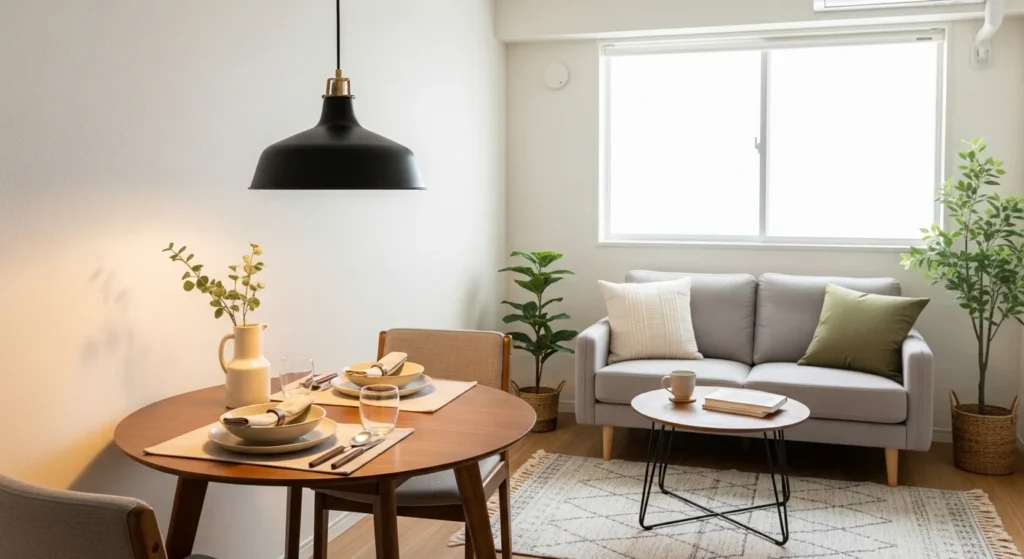
A bold pendant or chandelier above the dining table clearly defines that area. It acts as a visual anchor and separates the dining space from the living zone without physical barriers. Lighting becomes both functional and decorative.
This strategy draws attention upward, improving the perception of height. It also adds personality and style to the dining section while keeping the rest of the room simple.
13. Use a Slim Divider Shelf
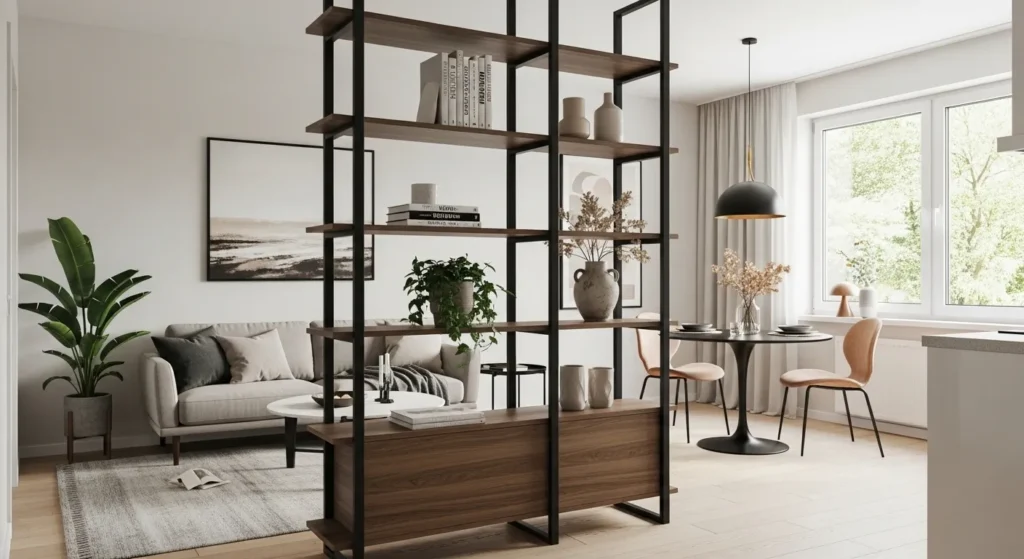
An open shelving unit can function as a subtle room divider. It separates the two areas while still allowing light and visibility to pass through. This keeps the space open rather than boxed in.
The shelves also provide storage or display opportunities. This solution adds structure, improves organization, and enhances visual balance in compact layouts.
14. Keep Decor Minimal and Intentional
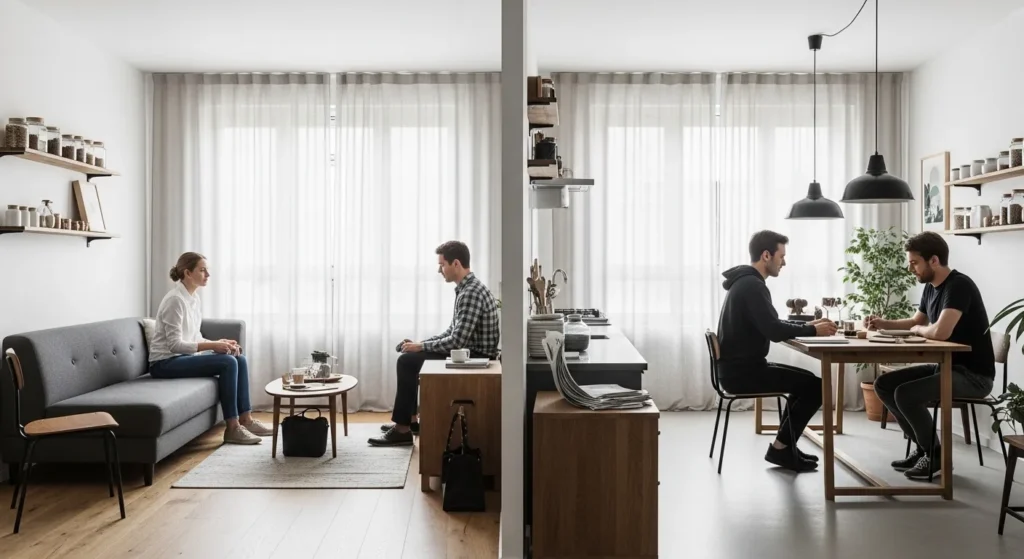
Too many decorative items can make a small space feel crowded. Instead, choose a few meaningful pieces that enhance the design. Minimal styling keeps the room visually calm and organized.
Simple decor improves flow and prevents distractions. A clean layout allows both living and dining areas to function properly without visual overload.
15. Use Mirrors to Create Depth
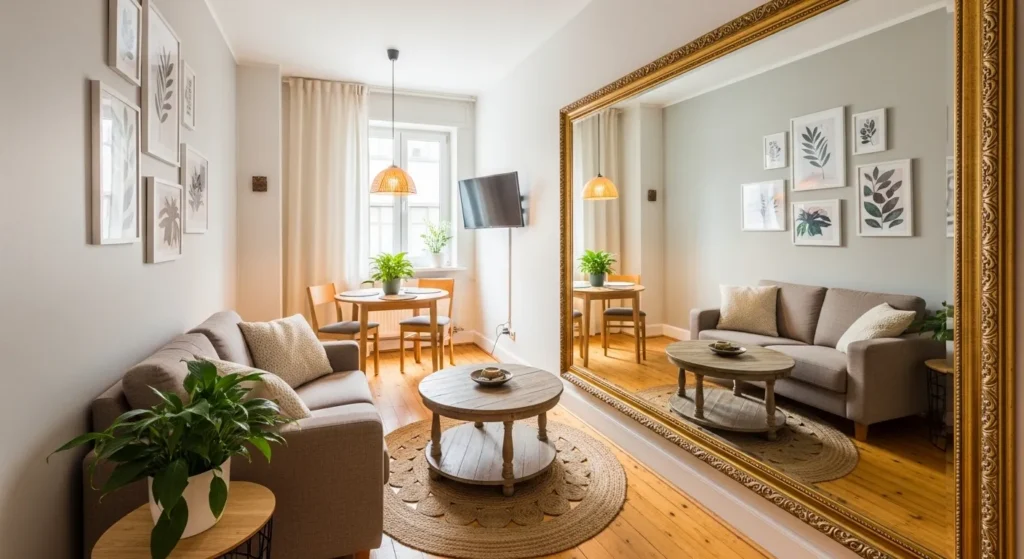
Mirrors are powerful tools in small spaces. Placing a large mirror near the dining or living area reflects light and creates the illusion of more space. This makes the room appear larger and brighter.
Mirrors also enhance the overall design when framed properly. They improve depth while maintaining elegance and simplicity.
16. Choose Furniture with Slim Profiles
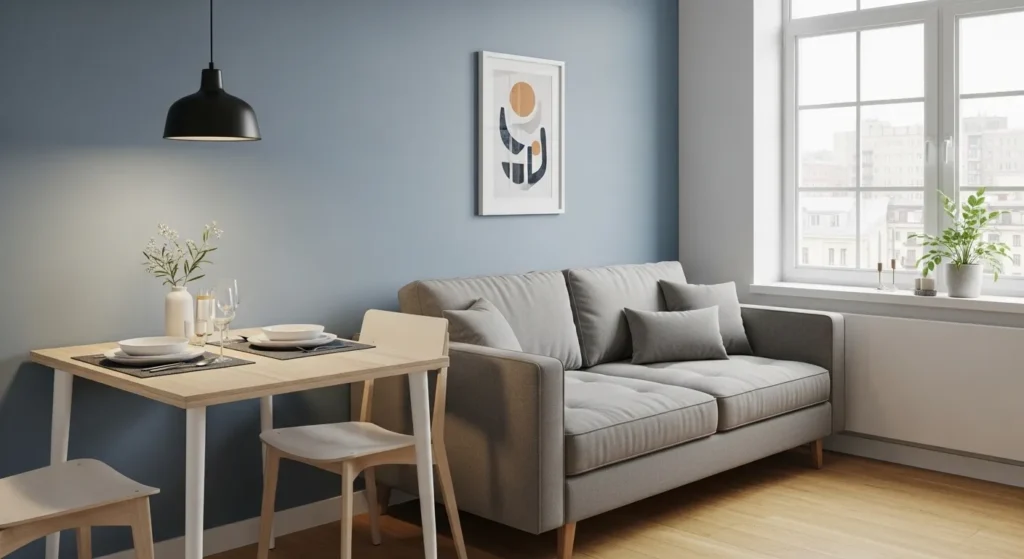
Furniture with slim legs and lightweight frames keeps the space open. Avoid oversized or bulky designs that dominate the room. Narrow silhouettes allow light to pass through and maintain visual flow.
This approach improves movement and prevents overcrowding. Slim-profile furniture ensures both areas feel balanced and comfortable.
17. Create One Unified Design Theme
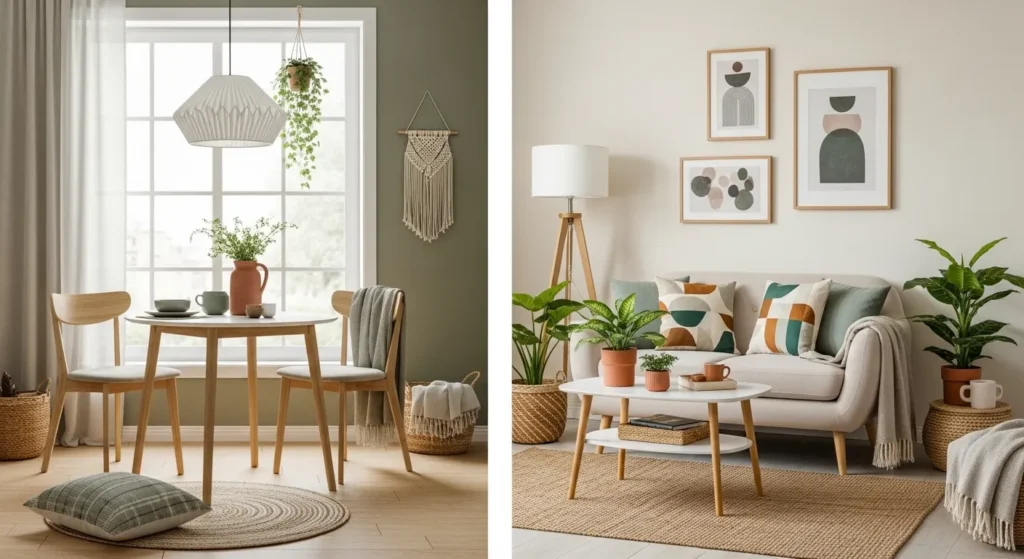
Maintaining one consistent design style across both areas is essential. Whether modern, rustic, minimal, or contemporary, the theme should flow naturally between the living and dining spaces.
A unified style makes the layout feel intentional and professionally designed. When colors, textures, and furniture follow the same direction, the entire room feels harmonious and complete.
Conclusion
Designing a small living room and dining room combo is not about limiting your creativity — it is about using space intelligently. With the right layout strategies, you can clearly define both areas while maintaining flow, comfort, and visual balance. Simple changes like rugs, lighting, furniture placement, and consistent color schemes can completely transform the atmosphere of the room.
The most important factor is harmony. When both zones feel connected through style and structure, the space looks larger and more organized. Focus on functionality first, then layer in design details that reflect your personal taste. With thoughtful planning, even a compact room can feel open, practical, and beautifully designed.
15 Essential Questions About Small Living Room Dining Room Combos
1. What’s the biggest challenge with combining living and dining in small spaces?
Defining separate zones without walls is the primary challenge. You need visual separation so the space doesn’t feel chaotic or cramped.
Both functions need to feel intentional, not like the room is confused about its purpose. Strategic design creates distinct areas within one space.
Without proper planning, combined spaces feel cluttered and neither function works well. Thoughtful layout prevents this.
2. How do I visually separate living and dining areas without walls?
Rugs are the most effective tool. A dining rug under the table defines that zone. A separate rug anchors the seating area.
Furniture arrangement creates natural boundaries. Position the sofa and dining table to face different directions—this psychological separation works beautifully.
Different ceiling heights, lighting, or subtle color changes can also separate zones without permanent walls.
3. What furniture arrangement works best for combo spaces?
Float your furniture rather than pushing it against walls. This defines the seating area and maximizes space perception.
Position your dining table perpendicular or at an angle to your seating area rather than parallel. This creates visual separation.
Ensure walking paths between zones remain clear. Traffic flow prevents the space from feeling cramped.
4. Should I use the same flooring throughout a combo space?
Continuous flooring feels cohesive and makes the space seem larger. Different flooring in different zones can work but risks feeling chaotic.
If using one flooring type, rugs create visual distinction between dining and living areas beautifully.
Avoid too much visual change—it chops up small spaces and makes them feel smaller.
5. What dining table size works in a small combo living room?
A table that seats 4-6 works best. Oversized tables overwhelm small spaces and limit seating area.
Round tables take up less visual space than rectangular tables. They’re ideal for small combo rooms.
Extendable tables offer flexibility for entertaining while taking up minimal space daily.
6. How do I arrange seating so both functions feel balanced?
Angle your seating to face the dining area slightly. This acknowledges both zones while maintaining separate functions.
Position dining chairs away from the sofa so they’re not directly adjacent. This creates psychological separation.
Ensure both areas have their own focal points—TV or artwork for living, a window or art for dining.
7. What lighting strategy works for combo spaces?
Layer lighting with separate fixtures for each zone. Overhead dining light, separate living room lighting, plus accent lighting.
This allows you to use lighting to define zones. Bright dining area, cozier living area lighting prevents visual chaos.
Dimmers give you flexibility to adjust lighting based on whether you’re entertaining or relaxing.
8. Can I use an open shelving unit to separate living and dining?
Yes, beautifully. A shelf unit acts as a visual divider while remaining open and not blocking sight lines.
This creates definition without the permanence of walls. It’s practical for small spaces.
Style the shelves thoughtfully so they look intentional—displayed objects, plants, books—not like random storage.
9. What color palette works for combo spaces?
Unified color palette throughout feels cohesive and larger. Use the same wall color in both zones.
Subtle variation (slightly different tones of the same color) can define zones without visual chaos.
Avoid completely different colors in living vs. dining—this chops up small spaces and makes them feel disjointed.
10. How do I prevent a combo space from feeling cramped or chaotic?
Minimize furniture quantity. Choose pieces that do double duty when possible. A bench under a window seats and stores.
Keep sightlines clear. Avoid tall furniture that blocks views across the room. Low-profile pieces maintain openness.
Ruthless organization prevents clutter. Every item should earn its place through function or beauty.
11. What’s the best way to handle storage in a combo living-dining space?
Built-in shelving or storage benches serve multiple purposes and save floor space.
Wall-mounted storage keeps floor clear and makes spaces feel larger. Vertical storage is essential in small combo rooms.
Furniture with hidden storage (ottomans, benches, tables) maximizes function without taking visual space.
12. Should the dining area have its own decorative style or match the living room?
Unified styling feels most cohesive in small spaces. Both areas should look like they belong together.
Subtle variation works—maybe different art or accessories—but avoid completely different aesthetics.
Cohesion makes small combo spaces feel intentional and larger. Disconnected styling makes them feel cramped.
13. How do I make a small combo space work for entertaining without it feeling claustrophobic?
Arrange furniture strategically to maximize floor space. Push pieces back or angle them to open the center.
Use vertical space: wall-mounted shelves, floating tables, hanging décor. This prevents floor clutter.
Clear pathways through both zones so guests can move freely. Cramped traffic flow kills the entertaining vibe.
14. What window treatments work best for combo living-dining spaces?
Light, uncluttered window treatments maximize visual space. Sheer curtains, Roman shades, or simple panels work beautifully.
Avoid heavy drapes that make small spaces feel smaller and darker. Keep treatments minimal and elegant.
Good natural light makes combo spaces feel larger and more functional. Maximize window clarity.
15. What mistakes do people make with living-dining combos?
Over-furnishing. Too much furniture makes small spaces feel cramped. Choose essentials and leave breathing room.
Murky color schemes. Dark colors in small spaces feel claustrophobic. Light colors maximize perceived space.
Poor lighting definition. Without separate lighting zones, the space feels confused about its purpose.
Disjointed style. Completely different aesthetics in living vs. dining makes small spaces feel chaotic.
Ready to maximize your combo living-dining space? Discover more small space design inspiration and practical strategies on our homepage. Explore how to create beautiful, functional spaces that work hard for dual purposes. Visit homeisdecor.com and find comprehensive combo space design ideas plus 16 more actionable concepts to optimize your small living-dining area into an efficient, beautiful sanctuary that works perfectly for both relaxing and entertaining today.