
As an Amazon Associate, I earn from qualifying purchases. This means I may earn a commission if you purchase through links on this page — at no extra cost to you.
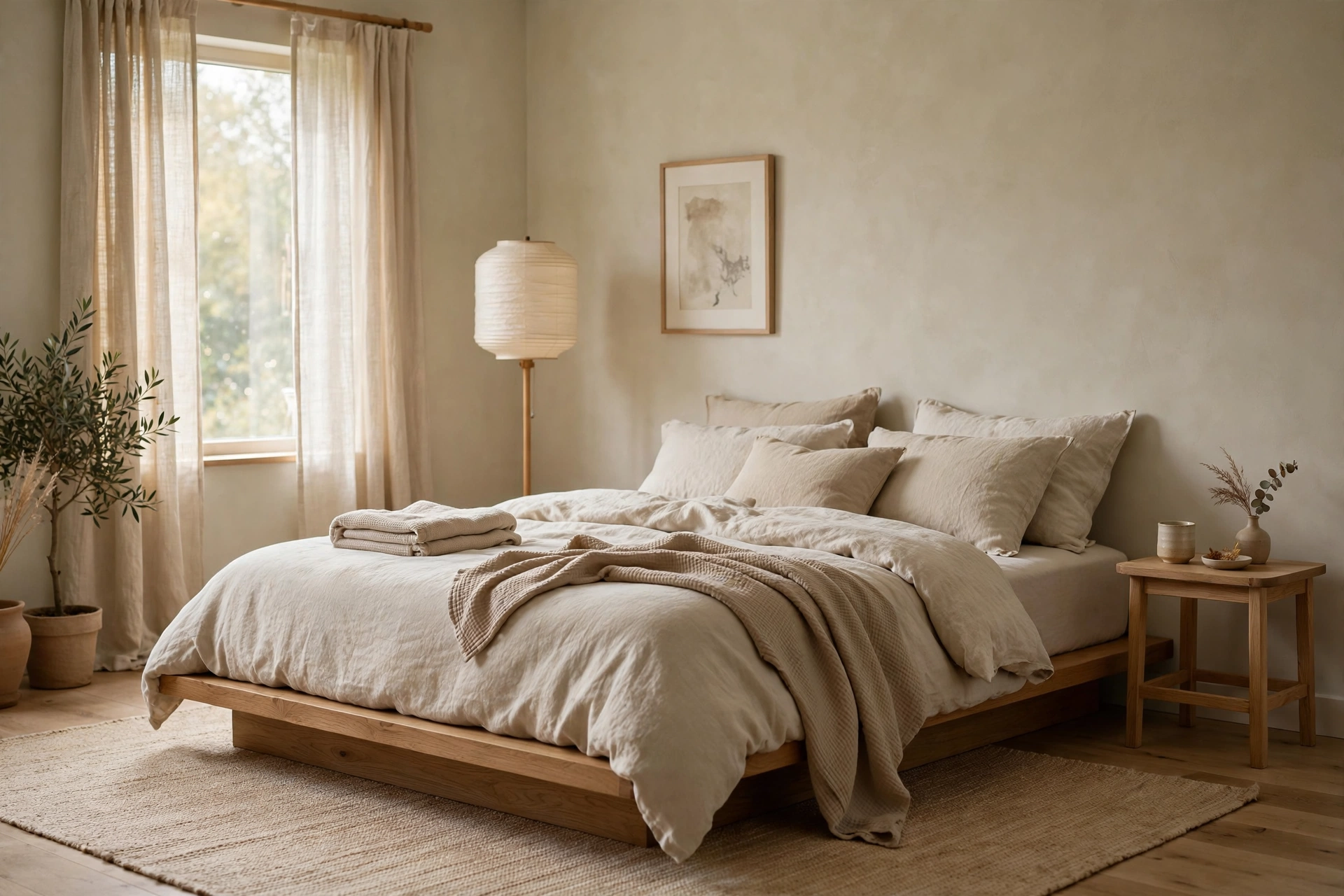
Japandi bedroom style blends Japanese minimalism with Scandinavian coziness, creating a calm, uncluttered space that feels warm rather than stark. Key elements include a low-profile platform bed, natural materials (light wood, linen, rattan, stone), a muted earth-tone palette of whites, beiges, and soft grays, and intentional negative space. Every item has a purpose — there’s no decorative clutter. The result is a bedroom that promotes rest through simplicity, craftsmanship, and connection to nature.
The Philosophy Behind Japandi
Japandi draws from two design traditions that share core values: Japanese wabi-sabi (finding beauty in imperfection and simplicity) and Scandinavian hygge (coziness and contentment). Both prioritize quality over quantity, natural materials, and spaces that support wellbeing. In the bedroom, this translates to a room that actively helps you decompress.
Key Elements of a Japandi Bedroom
Low-Profile Furniture
Beds sit close to the floor — platform beds or simple frames without tall headboards. Nightstands are minimal, often just a small stool or floating shelf.
Natural Materials
Light oak, ash, bamboo, linen, wool, rattan, and stone dominate. Avoid plastic, high-gloss finishes, and synthetic-looking materials.
Muted Earth-Tone Palette
Whites, warm beiges, soft grays, muted greens, and the occasional charcoal accent. No bright colors or high-contrast patterns.
Intentional Negative Space
Walls are mostly bare — perhaps one piece of art or a single shelf. Surfaces are clear. The emptiness is the design.
Soft, Diffused Lighting
Paper lanterns, rice-paper shades, and warm-toned bulbs. Avoid harsh overhead lighting; use floor and table lamps instead.
10 Japandi Bedrooms Annotated
The most successful Japandi bedrooms share these traits: a textured neutral rug grounding the bed, linen bedding in white or oatmeal, one wooden accent piece (like a bench or screen), a single plant (often a sculptural one like a fiddle-leaf fig), and art that’s abstract and muted. Notice what they don’t have: TV, cluttered nightstands, bold patterns, or more than 2–3 decorative objects total.
The Japandi Color Palette in Detail
Japandi color is disciplined but not monotonous. The foundation is warm neutrals — whites with a creamy cast, warm beiges, oatmeal, soft greige — layered with muted natural tones like sage, clay, soft charcoal, and warm gray. Bright white, pure black, and saturated brights have no place here; even the darkest accents are softened (charcoal instead of black, terracotta instead of orange).
A working ratio: Aim for roughly 60% light neutrals (walls, bedding, large surfaces), 30% mid-tone naturals (wood furniture, rugs, curtains), and 10% deeper accents (a charcoal throw, a dark wood bench, black metal lamp frames). This ratio keeps the room feeling light while giving the eye enough depth to rest on.
Wall colors that work: Warm white, soft beige, pale greige, and very light warm gray. If you want slightly more color, muted sage or a pale clay tone on one wall adds warmth without breaking the calm. Avoid cool blue-grays — they push the room toward stark Scandinavian rather than warm Japandi.
Accent colors, used sparingly: Muted forest green (in a plant or a single textile), soft terracotta, warm stone, and natural linen tones. Introduce them through textiles and objects, never through large painted surfaces — Japandi walls stay quiet so the materials can speak.
🛒 Shop This Look:
Materials Guide: What to Buy and What to Avoid
Materials are the soul of Japandi — the style works because every surface invites touch. Prioritize authenticity: real wood over wood-look laminate, real linen over polyester “linen-look,” actual stone or ceramic over plastic imitations.
Woods: Light oak, ash, beech, bamboo, and pale walnut are the core palette. Keep wood tones consistent within the room — mixing pale oak with dark espresso wood creates the visual noise Japandi tries to eliminate. One wood tone for large pieces, with small variations acceptable in accessories.
Textiles: Linen (bedding, curtains), wool (rugs, throws), cotton in natural weaves, and rattan or seagrass (baskets, lamp shades, chair seats). Texture matters more than pattern — a nubby wool throw adds more Japandi character than any printed fabric.
Stone and ceramic: Travertine, sandstone, handmade-look ceramics, and matte concrete in small doses. A stone lamp base, ceramic vases, or a travertine side table grounds the room’s softness with something solid and ancient-feeling.
Paper: Rice paper lamp shades and shoji-style screens are signature Japandi elements. They diffuse light beautifully and add a distinctly Japanese note that separates Japandi from plain minimalism.
What to avoid: High-gloss finishes, chrome and shiny metals (brushed brass or matte black hardware is fine), plastic anything, synthetic-looking faux finishes, busy patterns, and mirrored furniture. If a material looks like it is pretending to be something else, it does not belong.
Japandi Bedroom Elements, Piece by Piece
The bed: A low platform bed in light wood is the non-negotiable centerpiece — no tall headboards, no upholstered statement frames. Platform beds sit 10–14 inches off the floor including the mattress. If replacing the bed is not in the budget, removing a tall headboard and switching to low-profile bedding gets you most of the way there.
Nightstands: Keep them minimal — a small wooden stool, a floating shelf, or a simple cube. Each nightstand holds a lamp and at most one or two small items (a book, a small dish). If your nightstand has drawers, use them; visible clutter on the surface defeats the purpose.
Bedding: Linen or washed cotton in white, oatmeal, natural, or soft gray. Layer simply: fitted sheet, duvet, and one or two pillows per sleeper plus maybe a single lumbar cushion. Skip the seven-pillow hotel stack — Japandi beds look intentionally unmade in a calm way, not styled within an inch of their life.
The rug: A textured neutral rug — wool, jute, or a wool-jute blend — large enough to extend at least 18 inches beyond the bed on the sides. The rug grounds the low bed visually and adds the warmth that keeps minimalism from feeling cold.
Lighting: A paper lantern pendant or a simple linen-shade pendant as the main fixture, plus warm bedside lamps. All bulbs warm white (2700K). Avoid recessed downlights as the primary source — they create harsh pools of light that fight the soft Japandi mood.
Storage: Closed storage only. A low wooden dresser or wardrobe with clean lines; baskets for the few visible items. Japandi has no tolerance for open clutter — if it does not have a home behind a door or inside a basket, it does not stay in the room.
🛒 Shop This Look:
Art and decor: One or two pieces maximum — abstract art in muted tones, a handmade ceramic vase, a single sculptural object. Every decorative item should earn its place; when in doubt, leave it out.
Plants: One sculptural plant — an olive tree, a fiddle-leaf fig, or a large snake plant in a simple ceramic or clay pot. One strong plant beats five small ones scattered around.
Three Budget Tiers: Japandi at Any Price
Japandi is more about editing than spending, which makes it achievable at nearly any budget. All figures below are approximate totals for transforming an average bedroom:
Refresh tier (approximately $200–$500): Declutter ruthlessly (free and the most impactful step), switch to linen-look or real linen bedding in a neutral tone, replace harsh bulbs with warm ones, add one paper lantern shade over the existing fixture, and introduce a jute or wool rug if the floor is bare. This tier is mostly subtraction plus textiles.
Mid tier (approximately $800–$2,000): Everything above, plus a simple light-wood platform bed frame, matching minimal nightstands or stools, a quality wool rug, and one real plant in a ceramic pot. This is where the room starts reading unmistakably Japandi.
Full investment (approximately $3,000+): Solid wood furniture throughout, real linen bedding sets, a designer paper pendant, handmade ceramics, and possibly repainting walls in a warm neutral. The difference at this tier is material authenticity — everything you touch feels real.
Start at whatever tier fits, but never skip the free step: no amount of spending creates Japandi in a cluttered room.
Common Japandi Mistakes
- Going too stark. Removing everything without adding warmth creates a waiting room, not a sanctuary. Japandi needs texture — linen, wool, wood grain, a plant — to feel calm rather than empty.
- Mixing wood tones. Pale oak bed plus dark walnut dresser plus orange pine shelf reads as chaos. Commit to one wood family for the room’s large pieces.
- Clutter creep. Japandi bedrooms degrade faster than any other style because every added object is so visible. Build a habit: for every new item that enters the bedroom, one leaves.
- Wrong lighting temperature. Cool-white bulbs in paper lanterns destroy the entire mood. Check every bulb in the room — 2700K warm white, no exceptions.
- Fake minimalism. Shoving clutter into overflowing closets while the surfaces look clean is not Japandi — it is staging. The philosophy includes honest simplicity: own less, not just hide more.
- Ignoring the bed’s visual weight. A tall, bulky bed frame dominates a Japandi room no matter what surrounds it. Bed height is the single most impactful furniture choice in this style.
Styling Tips That Make It Feel Warm, Not Empty
The difference between serene and sterile comes down to small, deliberate warmth cues. Leave the bed slightly rumpled rather than military-crisp — linen looks better lived-in. Let one beautiful object sit alone on a surface with real breathing room around it; negative space is a design element, not wasted space. Layer two textile textures on the bed (linen duvet plus a wool throw at the foot) for depth without pattern. Keep one natural scent in the room — cedar, hinoki, or plain beeswax — because Japandi is a full-sensory calm. And allow a single imperfect, handmade item: a wobbly ceramic vase or an uneven woven basket embodies wabi-sabi far better than anything machine-perfect.
Frequently Asked Questions
What is the difference between Japandi and minimalism?
Minimalism is about having less; Japandi is about having the right things. A minimalist room can feel cold and gallery-like, while Japandi deliberately adds warmth through natural materials, texture, and craftsmanship. Think of Japandi as minimalism with a soul — every object is both useful and beautiful.
Can I do Japandi in a small bedroom?
Yes — Japandi suits small bedrooms exceptionally well. The low furniture keeps sight lines open, the light palette makes the room feel larger, and the decluttering requirement solves the small-room clutter problem by design. A low platform bed and one rug can transform a 10×10 room.
Is Japandi going out of style?
Japandi is built on centuries-old design traditions rather than a trend cycle, which gives it unusual staying power. Specific interpretations will evolve, but the core — natural materials, craftsmanship, calm — has been desirable for generations and is unlikely to feel dated.
What colors should I absolutely avoid in a Japandi bedroom?
Neon or saturated brights, stark blue-whites, true black in large amounts, and high-contrast patterns like chevron or bold geometrics. None of these are evil in general design — they simply contradict the calm, nature-derived palette that defines the style.
Do I need to get rid of my TV?
A visible TV contradicts Japandi’s restful intent — bedrooms in this style are for sleep and quiet, not screens. If the TV must stay, conceal it in a closed cabinet or cover it when not in use. Many people find removing the bedroom TV improves their sleep regardless of style.
How to Start Your Japandi Bedroom
Begin by decluttering — remove everything non-essential. Then invest in quality basics: good linen bedding, a simple wooden bed frame, and one beautiful light fixture. Add warmth with a wool rug and a plant. Stop there. Japandi is about restraint; if you’re unsure whether to add something, don’t.
🛒 Shop This Look:



