
As an Amazon Associate, I earn from qualifying purchases. This means I may earn a commission if you purchase through links on this page — at no extra cost to you.
We installed five wallpaper types — peel-and-stick vinyl, paste-the-wall non-woven, traditional prepasted, grasscloth-look vinyl, and budget paper peel-and-stick — and tracked them for six months. Vinyl (both formats) looked essentially new at six months; non-woven held up well in dry rooms; budget paper showed edge lift and fading by month four.
Results at 6 Months
Peel-and-Stick Vinyl: 9/10
Looked new. Zero edge lift, no fading, wiped clean. The durability surprise — matches traditional vinyl in real-world wear.
Traditional Vinyl: 9/10
Equally pristine. Slightly better seam invisibility. The benchmark.
Paste-the-Wall Non-Woven: 8/10
Excellent in the bedroom. Not for bathrooms. Scuffed slightly more in the hallway but cleaned fine.
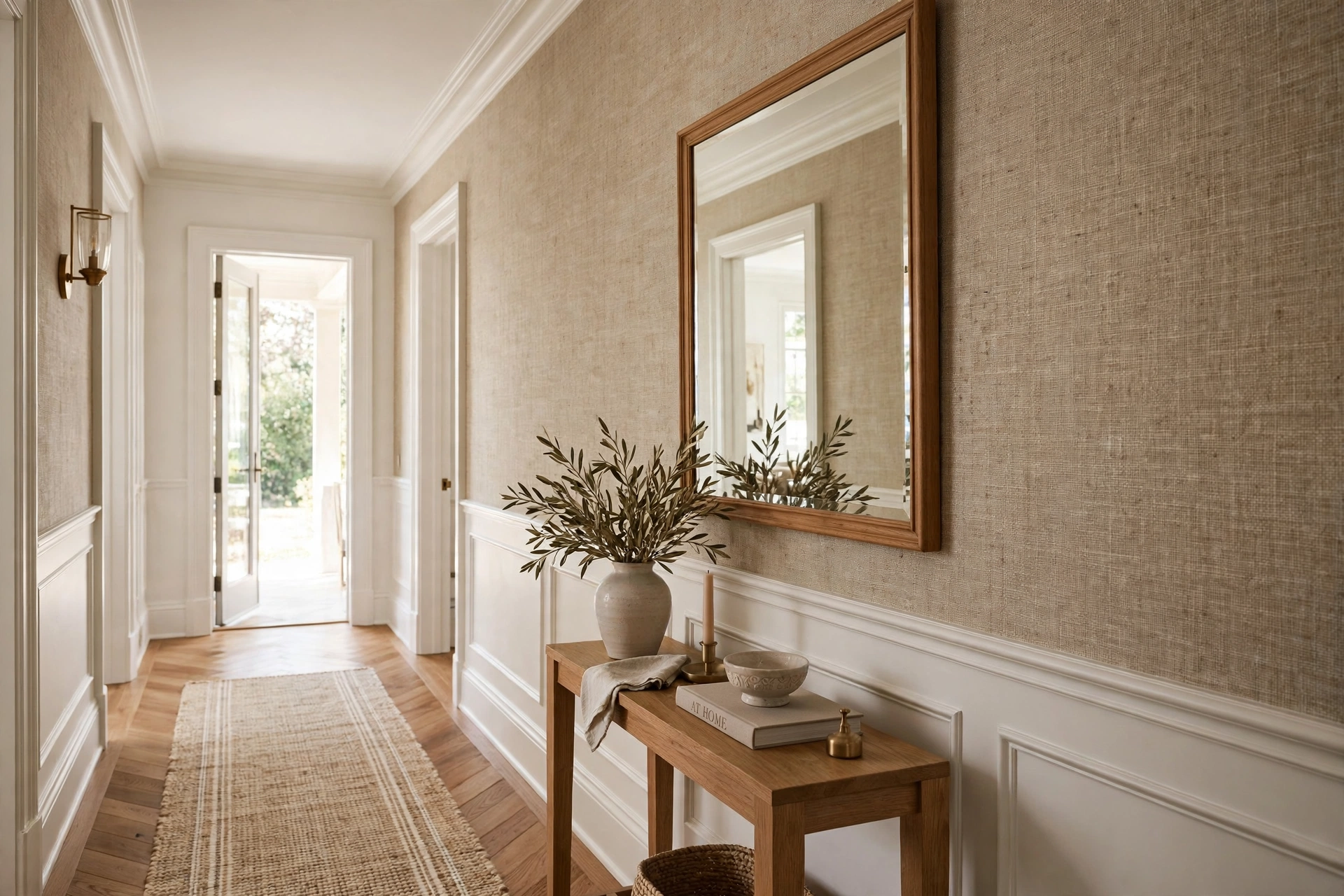
Grasscloth-Look Vinyl: 8/10
Texture hid everything. Slight edge curl in the bathroom strip — dry rooms only.
Budget Paper Peel-and-Stick: 5/10
Edge lift by month three, fading by month four, one seam opened. False economy.
Key Takeaways
- Vinyl is king — format matters less than material.
- Budget paper peel-and-stick is the only real loser.
- Bathrooms demand vinyl, non-negotiable.
- Quality vinyl inks held color twice as long as budget prints.
Wallpaper Materials and How They Wear
Durability differences between wallpaper types come down to material science — what the wear layer is made of, how it handles moisture, and how it responds to cleaning. Here is how the common materials compare on the properties that determine lifespan.
Solid vinyl and vinyl-coated: A vinyl wear layer over a paper or fabric substrate. This is the durability benchmark for residential wallpaper: scrubbable, moisture-resistant, and resistant to fading. Vinyl’s non-porous surface means stains sit on top rather than soaking in, so most marks wipe off with a damp cloth. In manufacturer guidance, vinyl is consistently the recommended choice for kitchens, bathrooms, hallways, and any high-traffic area.
Non-woven (paste-the-wall): A blend of synthetic and natural fibers that is dimensionally stable — it does not expand when pasted, which makes seams stay tight over time. Durability is good in dry rooms: it resists tearing, breathes (reducing trapped-moisture issues), and handles light cleaning. It is not scrubbable like vinyl and should not be used where it will face direct water or steam.
🛒 Shop This Look:
Traditional paper: Printed paper with no protective coating. The least durable common option: it fades faster in sunlight, cannot be washed (moisture damages the surface and can reactivate paste), and scuffs easily. Its place is low-traffic, low-moisture rooms where its matte, authentic look is the priority — formal dining rooms, ceilings, powder rooms with excellent ventilation.
Grasscloth and natural fibers: Woven from sisal, jute, seagrass, or similar materials. The texture hides minor wear and scuffs well, but the fibers stain easily, cannot be scrubbed, and seams remain visible by nature of the material. Durability is highly location-dependent: fine in a dry bedroom, risky anywhere near water or cooking.
Peel-and-stick vinyl vs. peel-and-stick paper: The adhesive format matters less than the face material. Peel-and-stick vinyl offers essentially the same wear properties as pasted vinyl; peel-and-stick paper shares traditional paper’s vulnerabilities plus an adhesive that can weaken in heat and humidity. Budget peel-and-stick products are frequently thin paper — the category’s durability reputation suffers because of the cheapest products, not the format itself.
Room-by-Room Guidance
Bathrooms: Vinyl only, and even then only with adequate ventilation. Manufacturer guidance is consistent: steam is wallpaper’s enemy, and non-vinyl materials in bathrooms show edge curl and adhesive failure. A bathroom with no exhaust fan is not a wallpaper candidate at all — fix ventilation first.
Kitchens: Vinyl for any wall near cooking activity; grease in the air settles on every surface and only scrubbable vinyl cleans fully. Keep wallpaper away from direct splatter zones behind the stove regardless of material — that area belongs to tile or stainless.
Hallways and entryways: High-traffic, high-contact areas. Vinyl or scrubbable non-woven. These walls take scuffs from bags, shoes, and shoulders — washability matters more than any other property here.
Bedrooms and living rooms: Any material works. This is where paper, grasscloth, and delicate prints earn their place — low moisture, low contact, and stable temperatures let less-durable materials last their full potential lifespan.
Sun-exposed walls: Fading is a material-plus-ink issue. Vinyl with quality lightfast inks resists fading best; traditional paper fades fastest. Check manufacturer lightfastness ratings for walls receiving direct sun for hours daily, and consider UV-filtering window film as protection for any wallpaper investment.
What Determines How Long Wallpaper Lasts
Material sets the ceiling; these factors determine whether a given installation reaches it.
🛒 Shop This Look:
- Installation quality. Seam tightness, full adhesive coverage, and proper booking (resting) time for pasted papers decide whether edges stay down for a decade or lift in a year. Most premature wallpaper failure is installation failure, not material failure.
- Wall preparation. Clean, primed, smooth walls hold wallpaper far longer than dusty or glossy ones. Wallpaper primer specifically matters — it regulates adhesion so the paper bonds firmly but remains removable.
- Humidity and ventilation. Chronic dampness weakens paste and feeds mold behind any wallpaper type. Bathrooms without fans, kitchens without hoods, and exterior walls with condensation issues all shorten wallpaper life regardless of material.
- Sun exposure. UV breaks down inks and can embrittle some materials over years. South- and west-facing walls age wallpaper fastest.
- Cleaning habits. Vinyl that gets wiped down when splattered lasts; vinyl left grimy does not. Conversely, scrubbing non-washable paper destroys it — matching cleaning method to material is essential.
- Ink and print quality. Lightfastness ratings indicate fade resistance. Higher-quality printing holds color years longer than budget prints, particularly in sun-exposed spots — one of the genuine differences between price tiers.
Under good conditions, quality vinyl wallpaper commonly lasts 10–15 years; non-woven 8–12 in dry rooms; traditional paper 5–10 depending on exposure. These are manufacturer-typical ranges, not guarantees — installation and environment move individual results substantially.
Cleaning and Maintaining Wallpaper by Material
Vinyl (solid or coated): The easiest. Wipe with a damp sponge and mild dish soap for marks; rinse with a clean damp cloth. Address stains promptly — even scrubbable vinyl stains if grime bakes on for months. Avoid abrasive pads and harsh solvents, which dull the wear layer.
Non-woven: Light wiping with a barely damp cloth. Test in an inconspicuous spot first. Never saturate — excess water can reach the paste layer.
Paper and grasscloth: Dry methods only. Dust with a soft brush attachment on low vacuum suction, or wipe gently with a dry cloth. For spots on grasscloth, a barely damp cloth blotted (never rubbed) sometimes works — but assume any moisture is a risk and test first.
General maintenance: Dust walls annually — airborne grime accumulates invisibly and eventually dulls every wallpaper type. Keep bathroom and kitchen wallpaper wiped down more often. Re-check seams yearly; a tiny lifted edge caught early can be re-glued with seam adhesive in seconds, while a neglected one keeps peeling.
Signs It Is Time to Replace
- Seam lifting that keeps returning after re-gluing — the adhesive has failed and the paper will not re-bond permanently.
- Fading with visible pattern ghosts where pictures hung — the color shift is irreversible.
- Yellowing from aged paste or smoke exposure that cleaning does not remove.
- Bubbling from moisture behind the paper — investigate the moisture source before replacing, or the new paper will fail the same way.
- Stains that do not respond to appropriate cleaning for the material — the wear layer is compromised.
- Brittleness or cracking when touched — the material has aged past its service life.
Wallpaper Durability FAQs
Does more expensive wallpaper always last longer? Not always, but price correlates with durability more honestly in wallpaper than in many decor categories — the premium typically buys a thicker wear layer, better inks, and a more stable substrate. The exception is delicate luxury materials (silk, hand-painted paper), which cost more and last less; you are paying for beauty, not durability.
Can wallpaper survive in a bathroom with a shower? Vinyl can, with conditions: an exhaust fan run during and 20 minutes after every shower, no wallpaper inside the shower enclosure itself, and sealed edges. Without ventilation, no wallpaper type is advisable.
Why do seams open up? The usual causes are insufficient paste at the seam during installation, wall movement (new construction settling), or humidity cycling that expands and contracts the substrate. Re-glue promptly with seam adhesive before dust gets under the lifted edge.
Is peel-and-stick less durable than pasted wallpaper? The adhesive is the difference, not necessarily the durability. Quality peel-and-stick vinyl performs comparably to pasted vinyl in dry rooms; its weaknesses show in heat and humidity, where the pressure-sensitive adhesive can soften. In bathrooms or hot climates, pasted wallpaper is the safer choice.
How do I make wallpaper last as long as possible? Choose the right material for the room, prep and prime walls properly, ensure good installation, ventilate moisture-prone rooms, clean appropriately for the material, and catch small seam issues early. Durability is mostly decisions, not luck.
Peel-and-Stick Adhesive: What to Know
Peel-and-stick wallpaper uses pressure-sensitive adhesive rather than paste, which changes both installation and longevity. The adhesive bonds on contact and reaches full strength over roughly 24–72 hours, which is why manufacturers advise against repositioning panels repeatedly — each lift weakens the bond. Heat is the main enemy: walls in direct sun or near heat sources can soften the adhesive over time, leading to edge curl. On the plus side, removal is clean on properly primed walls, making peel-and-stick the lowest-commitment way to try wallpaper. For best results, apply it to smooth, primed, dust-free walls at room temperature, smooth from the center outward to push out air, and avoid stretching the material during application — stretched vinyl slowly contracts back, opening seams.
🛒 Shop This Look:



