
As an Amazon Associate, I earn from qualifying purchases. This means I may earn a commission if you purchase through links on this page — at no extra cost to you.
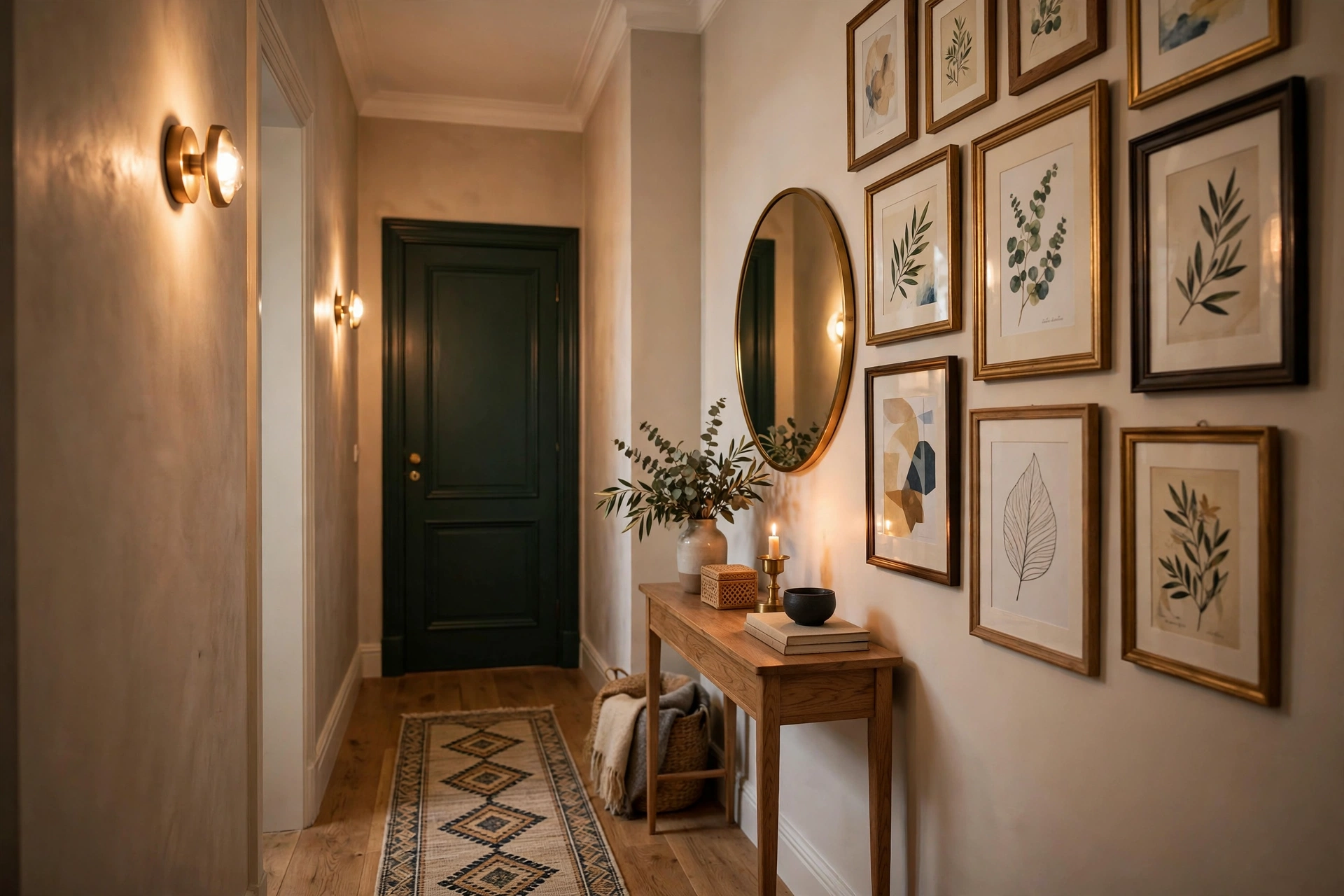
Decorate a small hallway with a narrow console table, a large mirror, vertical art, and good lighting. Keep the walkway clear (minimum 36 inches) and use the walls — not the floor — for decor and storage.
Key Pieces
Mirror: Elongates the hallway visually. Go large.
Narrow console: 10-12 inches deep max. Holds keys, decor.
Art: Vertical pieces or a tight gallery draw eyes forward.
Runner rug: Adds color and guides movement.
Lighting
Hallways are often dark. Add wall sconces, a flush-mount ceiling light, or LED strips. Good lighting transforms a hallway from tunnel to transition space.
What to Avoid
Bulky furniture, too many small frames (looks cluttered), dark colors (absorbs the little light available), and anything that narrows the walkway below 36 inches.
Light It Right First
Most hallways are lighting afterthoughts — a single sad ceiling fixture, if that. But hallways are also usually windowless, which means lighting does more work here than in any other room. Good lighting is the foundation; everything else is decoration.
🛒 Shop This Look:
- Replace the builder fixture: A flush-mount or semi-flush fixture with character (a small lantern, a sculptural flush mount) instantly upgrades the space. This is a 30-minute swap with outsized impact.
- Add wall sconces: In a long hallway, sconces every 6–8 feet create rhythm and eliminate the “tunnel” feeling. Plug-in sconces with cord covers work in rentals — no electrician needed.
- Layer the light: Overhead for general light, plus a table lamp on a console or LED picture lights over art. Layered light makes a hallway feel like a room, not a passage.
- Choose warm bulbs: 2700K warm white. Hallways in cool white light feel institutional; warm light feels residential and welcoming.
- Consider a dimmer: Hallways are transition spaces used at all hours. A dimmer lets the hallway be bright by day and softly lit at night.
Mirrors: The Hallway’s Best Friend
No decor element does more for a hallway than a mirror. Mirrors bounce light, create the illusion of depth, and give you a last look before leaving. A few guidelines:
- Go big: One large mirror beats three small ones. A full-length or oversized mirror on the wall makes a narrow hallway feel twice as wide.
- Place it to catch light: A mirror opposite a doorway or at the end of the hallway reflects light from adjacent rooms into the dark corridor. A mirror facing a blank wall just reflects a blank wall.
- Try a mirror gallery: If one big mirror feels too stark, a curated set of 3–5 mirrors in mixed shapes creates interest while still bouncing light. Keep frames in the same finish family for cohesion.
- Lean, don’t hang (sometimes): A tall mirror leaned against the wall at the end of a hallway adds casual elegance and needs only one anchor point for safety.
Choosing the Right Runner
A runner is the fastest way to make a hallway feel finished. It adds color, pattern, softness underfoot, and it literally guides the eye down the corridor — which makes the hallway feel intentional rather than leftover.
- Size it right: The runner should span most of the hallway’s length, stopping 6–12 inches short of each end. Width-wise, leave 4–6 inches of floor visible on each side. Too short looks apologetic; wall-to-wall looks like carpet.
- Go washable: Hallways are high-traffic. A washable rug (or an indoor-outdoor rug) will look good years longer than a delicate one. This is not the place for a vintage silk rug.
- Pattern hides dirt: Busy patterns — Persian-style, geometric, striped — disguise the foot traffic that would show immediately on a solid rug.
- Use a rug pad: A thin pad keeps the runner from sliding and bunching, which is both a tripping hazard and an annoyance. Low-profile pads made for runners add grip without bulk.
- Direction matters: Stripes or directional patterns should run lengthwise to elongate the hallway. Patterns running across visually chop it shorter.
Storage That Doesn’t Block the Path
Hallways are circulation first, storage second. Anything you add must respect the walkway — generally you need 36 inches of clear passage, and never less than 30.
- Slim console tables: A 10–12 inch deep console against the wall holds keys, mail, and a lamp without intruding on the path. Look for “sofa tables” or “entryway tables” in narrow depths.
- Wall-mounted everything: Floating shelves, wall hooks, and wall-mounted organizers keep the floor clear. A row of hooks at 60 inches high holds coats and bags; a floating shelf above holds the overflow.
- Recessed storage: If you have a deep wall (between studs is 3.5 inches), a recessed shelf or niche adds storage with zero protrusion. Bigger project, but the cleanest result.
- Over-door organizers: The back of a hallway closet door or bedroom door is free real estate for shoes, accessories, or cleaning supplies.
- A bench with storage: In a wider hallway or at the hallway’s end, a storage bench gives you seating for putting on shoes plus hidden storage inside. Keep it under 16 inches deep.
Walls: Color, Wallpaper, and Art
Hallway walls are a gallery waiting to happen. Because you move through the space rather than sitting in it, hallways tolerate bolder choices than living rooms:
- Wallpaper: A hallway is the ideal low-commitment wallpaper zone — small square footage means even pricey paper stays affordable, and you experience it in passing, so bold patterns never overwhelm. Peel-and-stick options make it renter-friendly.
- Gallery walls: Hang art in a single horizontal row at eye level (center around 57 inches) for a classic look, or do a salon-style cluster on one feature wall. Keep frames consistent in color for cohesion in narrow spaces.
- Board and batten or wainscoting: Adding molding to the lower third of hallway walls brings architectural character to bland corridors. Paint it the same color as the walls for subtle texture, or a contrasting color for drama.
- Bold paint: A dark, moody hallway with good lighting and mirrors can feel like a boutique hotel corridor. Hallways are also the safest place to try a color you’re nervous about — if you hate it, it’s a small area to repaint.
Narrow vs. Wide: Different Rules
Narrow hallways (under 4 feet wide): Keep walls light, use one long runner, one statement mirror, and minimal furniture — maybe just hooks. Every item must earn its inches. Avoid anything that protrudes more than 6 inches from the wall. Art should be small and hung in a tight row to create rhythm without bulk.
Wide hallways (5+ feet): You have room to treat it as a gallery. Add a console table, a gallery wall of art, a bench, layered lighting. A wide hallway can handle a bold wall color or wallpaper — there’s enough volume that dark colors won’t press in. Consider zoning: an art zone, a storage zone, a seating nook at the end.
🛒 Shop This Look:
L-shaped or turning hallways: The turn is an opportunity. Place a statement piece — a chair, a large plant, a striking piece of art — at the turn where the eye naturally lands. Light the turn well; dark corners in turning hallways feel unsafe.
Common Mistakes
- Leaving it blank: The biggest hallway mistake is treating it as non-space. Bare walls, no rug, bad lighting — it makes the whole home feel unfinished, because you pass through it constantly.
- Blocking the path: A beautiful console that forces everyone to sidle past defeats the purpose. Measure your clear walkway after placing furniture, not before.
- Too many small frames: A scattered collection of tiny frames looks cluttered in a narrow space. Go bigger and fewer: 3–5 substantial pieces beat 12 small ones.
- Ignoring the ceiling: Hallways have ceilings too. A painted ceiling (a soft color, or even wallpaper) adds unexpected polish. At minimum, make sure the ceiling fixture is worth looking at.
- Forgetting the end of the hallway: The wall you face walking down the hall is a focal point. Give it something: art, a mirror, a small table with a lamp. A blank end wall makes the hallway feel like it leads nowhere.
Frequently Asked Questions
How do you decorate a long narrow hallway?
Light walls, one long runner, a large mirror to bounce light, and a rhythm of art or sconces along one wall. Keep furniture minimal — hooks or a very slim console at most. The goal is to make the length feel like a gallery, not a tunnel.
What color should I paint a small hallway?
Light, warm neutrals are the safe choice — they keep the space bright. But don’t rule out drama: a dark, moody hallway with good lighting and mirrors can feel like a boutique hotel corridor. If the hallway connects rooms with different colors, pick a neutral that bridges them.
Can you put furniture in a hallway?
Yes, if the hallway is wide enough. Maintain at least 30–36 inches of clear walkway. Slim consoles (10–12 inches deep), wall-mounted shelves, and narrow benches work. In hallways under 4 feet wide, stick to wall-mounted items only.
How do I make a hallway feel wider?
Horizontal stripes or a runner with a horizontal pattern, a large mirror on the long wall, light wall colors, and keeping the floor visible (no bulky furniture). Hanging art lower than usual (center at 54–57 inches) also helps — it draws the eye across rather than up the narrow walls.
What’s the best lighting for a hallway with no windows?
Layered warm lighting: a decent overhead fixture for general light, plus sconces or picture lights to eliminate the tunnel effect. Aim for light every 6–8 feet in a long hallway so there are no dark stretches. A dimmer lets you drop the level at night.
🛒 Shop This Look:



