
As an Amazon Associate, I earn from qualifying purchases. This means I may earn a commission if you purchase through links on this page — at no extra cost to you.
To clean canvas wall art safely, dust with a soft dry microfiber cloth or feather duster using light strokes. For stubborn spots, slightly dampen the cloth (wring until almost dry) and dab gently — never rub or saturate. Avoid water on unsealed canvases, and never use chemical cleaners, Windex, or abrasive materials.
Routine Dusting (Monthly)
Use a clean, dry microfiber cloth or soft feather duster. Work top to bottom in light strokes. For textured canvas (impasto), use a soft brush to get into crevices. This prevents dust buildup that dulls colors over time.
Spot Cleaning
For sealed/varnished canvas:
Dampen a microfiber cloth, wring thoroughly, and dab the spot. Follow immediately with a dry cloth. Test in an inconspicuous corner first.
For unsealed canvas:
Stick to dry methods only. Try a white art eraser (kneaded eraser) for light marks. If the spot won’t budge with dry cleaning, consult a professional — water can cause permanent staining on unsealed canvas.
What NOT to Do
- Don’t use Windex or glass cleaner — chemicals damage paint and varnish
- Don’t soak the canvas — water warps the stretcher bars
- Don’t scrub — rubbing removes paint, especially on cheaper prints
- Don’t use paper towels — they leave lint and can scratch
- Don’t clean in direct sunlight — heat + moisture causes spots
First: Know What Kind of Canvas You Have
Cleaning advice changes depending on what is actually on your wall, so identify your piece before you touch it.
Original painting (acrylic or oil on canvas)
Originals are usually finished with a varnish that seals the paint. A sealed surface tolerates very light damp cleaning; an unvarnished or matte-finish original is far more delicate and should be cleaned dry only.
Printed canvas (giclée or mass-produced print)
Most affordable canvas wall art is ink printed on cotton or polyester canvas, sometimes with a thin protective coating. The surface is usually durable enough for dry dusting, and often handles a barely-damp cloth — but the ink can lift if rubbed, so always test first.
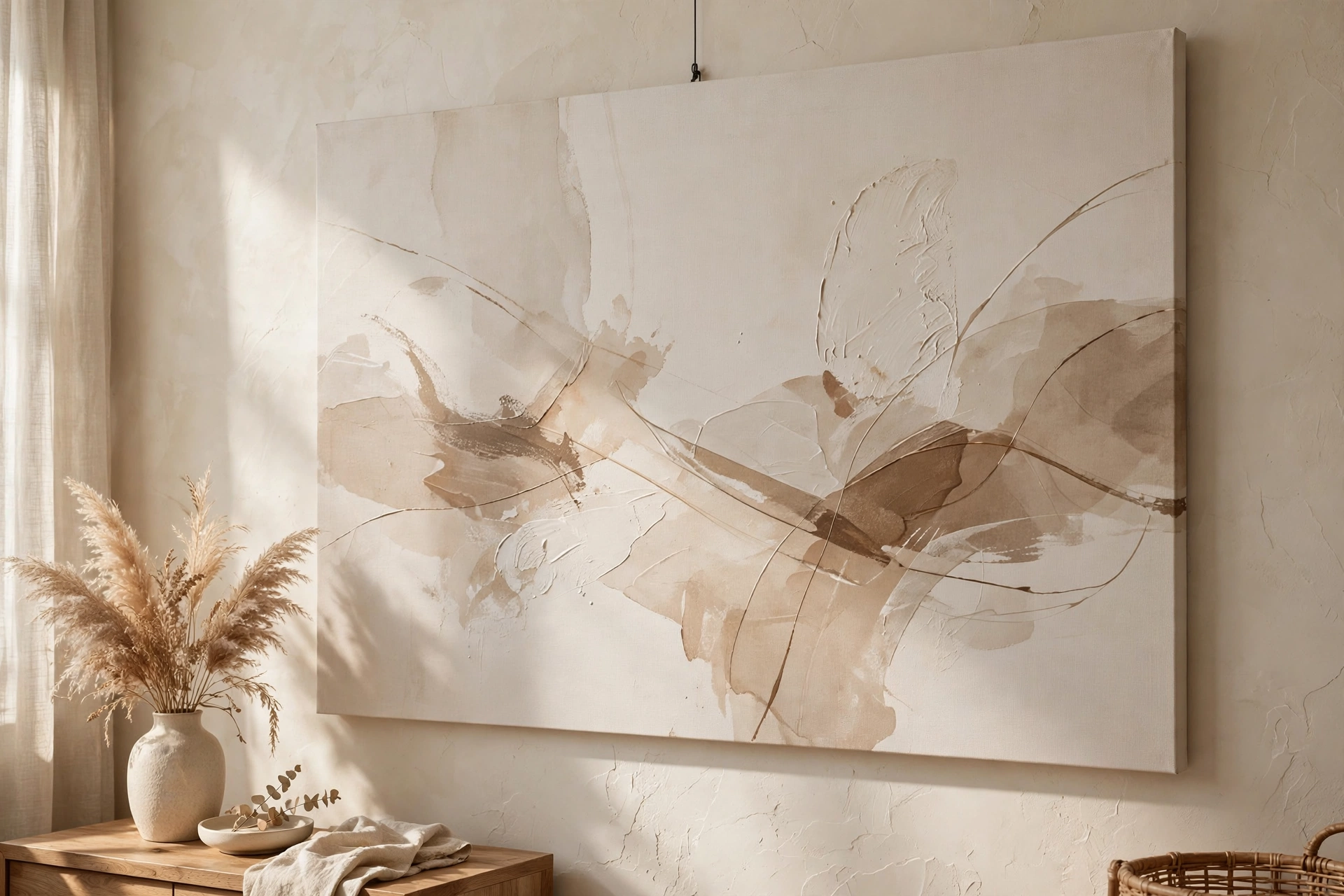
Heavily textured canvas (impasto)
Thick, raised paint holds dust deep in its crevices. A soft dry brush is the right tool; pressing a cloth into the texture can break off paint ridges.
Not sure which you have? Check the back of the piece or the product listing. If you bought it as a print and it has a smooth, uniform surface, treat it as a printed canvas.
What You Will Need
- Clean, dry microfiber cloths (at least two — one for cleaning, one for drying)
- Soft feather duster or clean soft-bristle paintbrush for textured areas
- White kneaded eraser for light marks on unsealed canvas
- A bowl of lukewarm water for barely-dampening the cloth
- Cotton swabs for tight spots and edges
- Clean, well-lit workspace with the art laid flat if you are removing it from the wall
Deep Clean: Step-by-Step
For a canvas that has not been cleaned in years or looks visibly dull, follow this process. Work in a cool room, out of direct sunlight.
1. Take the art down. Working on the wall invites drips and accidental pressure against the wall. Lay the piece face-up on a clean, dry table covered with a towel.
2. Dry dust first. Brush the entire surface top to bottom with a feather duster or soft brush. Use barely any pressure — let the tool do the work. For impasto textures, use a clean dry paintbrush to sweep inside the crevices.
🛒 Shop This Look:
3. Test your damp cloth. Dampen a microfiber cloth and wring it until it feels almost dry — no drips, no visible wetness. Touch it to an inconspicuous bottom corner. Wait a minute. If the color looks unchanged, you are safe to continue.
4. Work in small sections. Dab or gently wipe one small area at a time, then immediately follow with a dry cloth. Never leave moisture sitting on the surface. Move methodically so you do not miss sections or re-dirty areas you just cleaned.
5. Address the edges and back. The sides of a gallery-wrapped canvas collect dust, and the back can harbor cobwebs. Dust the stretcher bars and back of the canvas with a dry brush — never get the back wet, since raw canvas absorbs water.
6. Let it air dry flat. Before rehanging, leave the piece lying flat in a ventilated room for an hour or so. Hanging it while damp traps moisture against the wall.
Protecting Canvas Art Long-Term
Cleaning less often is the best way to avoid damage, so set the piece up for success.
Hang away from kitchens and bathrooms. Cooking grease, steam, and humidity are the three biggest enemies of canvas art. If you love art in the kitchen, choose pieces behind glass or in less exposed spots.
Avoid direct sunlight. UV fades inks and paints over time, and heat makes canvases expand and contract, stressing the stretcher bars. Indirect light is ideal.
Dust on a schedule. A quick dry dusting every month or two keeps buildup from ever becoming a deep-clean job.
Consider a varnish for originals. If you own an unvarnished acrylic painting you value, a conservator can apply an isolation coat and varnish that makes future cleaning far safer. This is a job for a professional, not a first DIY.
FAQs
Can I use baby wipes on canvas art?
No. Baby wipes contain moisturizers and mild detergents that leave residue on paint and varnish. Stick to a barely-damp microfiber cloth with plain water.
What about rubbing alcohol or hand sanitizer for stubborn spots?
Do not use them. Solvents like alcohol can dissolve varnish and lift ink or paint. If a spot survives dry and barely-damp cleaning, it is a job for a professional conservator.
My canvas has yellowed. Can I whiten it?
Yellowing is usually varnish aging or smoke exposure, and it cannot be fixed by cleaning — it requires professional varnish removal and revarnishing. Do not try to bleach or scrub it.
Is it safe to use a vacuum with a brush attachment?
Only on the lowest suction and with a soft brush attachment, keeping the nozzle slightly off the surface. A handheld feather duster is safer for most pieces.
How do I clean the back of the canvas?
Dry dust only with a soft brush. The back is raw canvas and absorbs water easily, which can warp the piece.
🛒 Shop This Look:
Dealing with Specific Issues
Grease splatter (kitchen): Blot (don’t wipe) with dry cloth, then consult professional.
Smoke damage: Professional cleaning recommended — DIY risks setting the stain.
Mold/mildew: Isolate immediately, consult a conservator. Don’t attempt DIY on valuable pieces.
When to Call a Professional Conservator
Some situations are beyond safe DIY. Call a professional art conservator when:
- The piece has monetary or sentimental value you cannot afford to risk
- There is flaking, cracking, or lifting paint
- Water damage, tide lines, or warping is visible
- Mold or mildew is present — spores spread easily and are a health concern
- Smoke or soot has penetrated the surface
- An old varnish has yellowed and needs removal
To find one, search for a conservator through a national conservation association in your country (for example, the American Institute for Conservation has a find-a-conservator directory). Many offer free or low-cost assessments. Expect professional cleaning of a moderately sized piece to cost roughly what a quality reproduction would — which is why reserving this option for pieces that matter to you makes sense.
Environmental Care: Humidity, Temperature, and Placement
Canvas is a natural fiber stretched over wood. It responds to its environment like any natural material, so placement matters as much as cleaning.
Humidity
High humidity (consistently above about 65%) encourages mold and can loosen the canvas from its stretcher. Very low humidity (below 30%) makes canvas and wood brittle. A normal lived-in home, roughly 40-55% relative humidity, is ideal. Avoid hanging valuable canvas art in bathrooms, directly above radiators, or near frequently opened exterior doors.
Temperature swings
Canvas and stretcher bars expand and contract at different rates. Repeated swings — like a wall that bakes in afternoon sun and cools at night — loosen the canvas over time, creating sag. This is a slow process, but it is irreversible without restretching, which is a professional job.
Air circulation
Art hung tight against a cold exterior wall can develop condensation behind it in winter. If the back of a frame feels damp when you take it down, leave a small gap between the art and the wall using bumper pads, or move it to an interior wall.
How to Dust Canvas Art Without Scratching: Technique Details
The technique matters as much as the tool. For flat printed canvases, use a clean dry microfiber cloth folded into a pad, and glide it across the surface in one direction with almost no downward pressure. Lift the cloth between strokes instead of dragging back and forth — back-and-forth scrubbing is what causes micro-scratches on printed surfaces.
For textured originals, hold the brush at a low angle and sweep debris out of the texture valleys, working in the direction of the paint strokes where you can see them. Rotate to a clean section of cloth or rinse your brush as soon as you notice gray buildup, since a dirty tool just redistributes dust.
More FAQs
Can I use a steam cleaner on canvas?
No. Steam drives moisture deep into the canvas and can delaminate prints from their coating, warp stretcher bars, and soften varnish unevenly. Keep all cleaning dry or barely damp.
The canvas sags. Will cleaning fix it?
No — sagging is a structural issue, not a cleanliness issue. Sometimes tightening the corner keys on the stretcher bars helps, but restretching is delicate work best left to a framer or conservator.
Can I use glass cleaner on the glass of a framed canvas print?
If your canvas is framed behind glass, you can clean the glass with glass cleaner — but spray the cleaner onto the cloth, never onto the glass, so liquid cannot seep under the frame edges and reach the canvas.
How often should I deep clean canvas art?
With regular monthly dusting, most pieces never need more than a light annual wipe-down of visibly dull areas. Full deep cleaning every few years is plenty, and originals under varnish can go longer between cleanings.
🛒 Shop This Look:



