
As an Amazon Associate, I earn from qualifying purchases. This means I may earn a commission if you purchase through links on this page — at no extra cost to you.
Your front door is your home’s handshake — the first impression visitors get. In 2026, the trend is toward rich, confident colors that add personality without clashing with the home’s exterior. Whether you want classic appeal or modern boldness, here are the shades designers are recommending, organized by house style.
Trending Front Door Colors for 2026
Deep Green
Forest, hunter, and sage greens continue their reign. They feel natural, sophisticated, and work with brick, siding, and stone alike. Try: Rosepine, Evergreen Fog, or Studio Green.
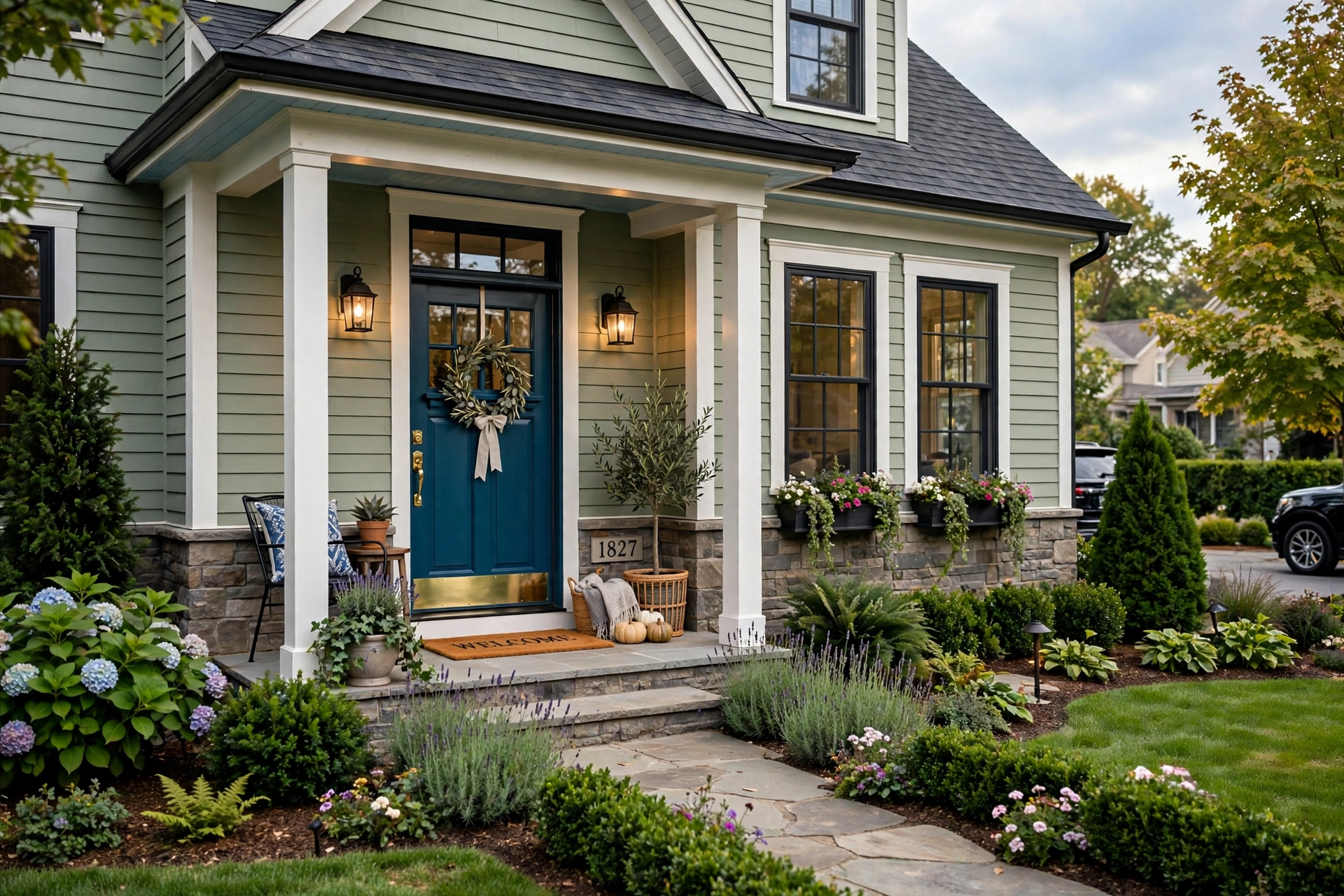
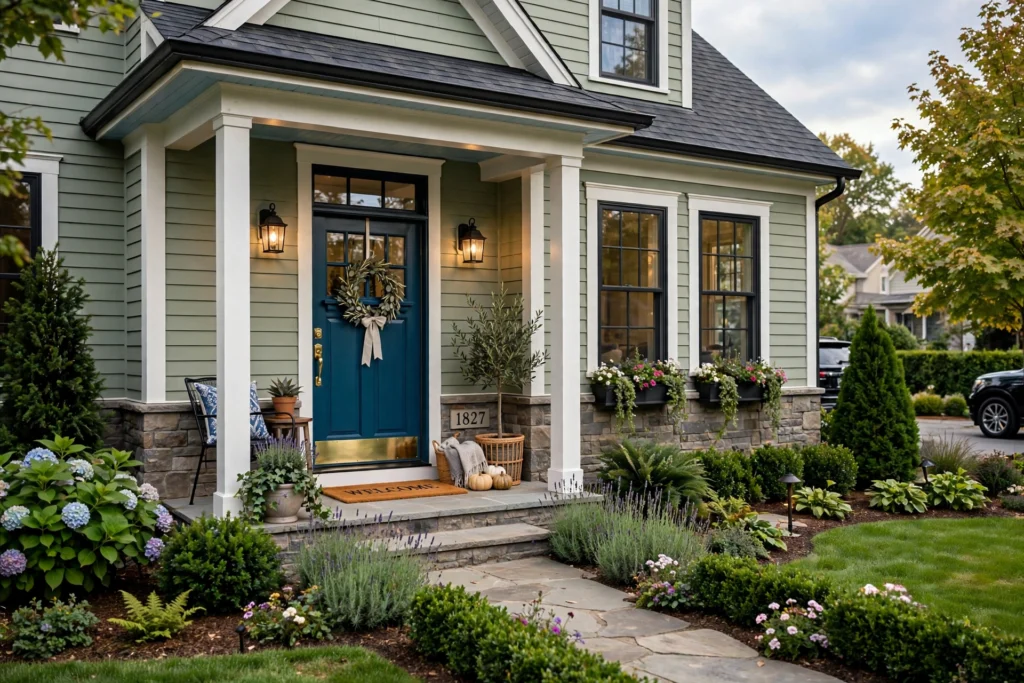
A timeless choice that reads as both classic and contemporary. Navy doors look stunning against white, gray, or brick exteriors. Try: Hale Navy, Naval, or Inkwell.
Warm Black
Not stark black — soft, warm blacks with brown undertones. Elegant and modern without feeling harsh. Try: Iron Ore, Tricorn Black (warmed with the right undertone), or Caviar.
Rust-Oleum 369383 Advanced Dry Door & Trim Paint, Quart, Satin Black
Best for a warm black front door that stays elegant and modern.
Terracotta & Clay
Earthy, welcoming, and very 2026. These warm oranges work beautifully with neutral siding and natural landscaping. Try: Cavern Clay, Copper Mountain.
Classic Red
The traditional “welcome” color never truly goes out of style. In 2026, deeper, muted reds outperform bright cherry. Try: Brick red, barn red, or deep cranberry.
Choosing for Your House Style
Colonial/Traditional: Black, navy, deep red, or forest green. Classic and stately.
Craftsman/Bungalow: Deep green, warm brown, or muted teal. Earthy and authentic.
Modern: Matte black, charcoal, or bold orange-red. Clean and striking.
Farmhouse: Sage green, warm white, or soft black. Approachable and timeless.
Coastal: Navy, teal, or coral. Breezy and cheerful.
Practical Considerations
Use exterior-grade paint in satin or semi-gloss for durability against weather and handling.
Consider your hardware: Brass pops against green and navy; matte black suits any color; chrome needs cooler tones.
Test in daylight: Door colors shift dramatically in direct sun vs shade. Paint a test board and prop it against the door for 48 hours.
Check HOA rules: Many associations restrict door colors. Verify before buying paint.
EHOMEWARE Entry Door Handle and Single Cylinder Deadbolt Lock and Key, Satin Brass Finish
Best for brass hardware that pops against green and navy doors.
Mensarix Front Door Handle and Deadbolt Set, Matte Black
Best for matte black hardware that suits any door color.
Matching Your Door Color to Your Home’s Exterior
The “right” front door color depends enormously on what surrounds it. Start with your siding or brick: white, cream, and light gray exteriors can handle almost any door color — they’re the most forgiving canvases. Beige and tan siding pair best with warm door colors (deep green, warm red, bronze, warm black) and can clash with cool blues. Red brick is the trickiest: it already brings strong warm color, so the best door colors are deep greens, navy, black, or cream — avoid reds and oranges that compete with the brick, unless you want the whole facade shouting.
Consider your roof and trim too. A brown roof warms up the whole palette; a gray or black roof cools it down. Your trim color is your door’s nearest neighbor — the door should relate to the trim, either by complementing it or by providing deliberate contrast. A classic formula that rarely fails: trim in crisp white, door in a saturated color with some depth. And don’t forget the landscape: a door color that echoes something in your garden (deep green with lush plantings, terracotta with warm stone) feels rooted and intentional.
How to Test a Front Door Color Before You Paint
Front doors are uniquely hard to test because you see them in harsh, changing outdoor light — and because repainting a door you hate is a miserable job. Don’t rely on a tiny swatch. Paint a large sample board (a foam core board or a piece of primed plywood) with two coats of your candidate color and prop it against the door. Live with it for several days, checking it in morning light, midday sun, evening shade, and under your porch light at night. Colors shift dramatically outdoors: navy can look almost black in shade and vividly blue in sun; greens swing between gray and jewel-toned depending on the light.
Peel-and-stick paint samples are especially useful for doors since you can stick them right on the surface and see them at full scale. Test at least two or three finalists — the comparison is what reveals undertones. And photograph the samples: cameras neutralize some of the eye’s color adaptation and can reveal casts you don’t notice in person. One more tip: check the color from the street, not just up close. Your door is viewed from 20 feet away far more often than from two feet, and some colors that look rich up close read as flat or muddy at distance.
Choosing the Right Paint and Finish for a Front Door
A front door takes more punishment than any other painted surface in your home — direct sun, driving rain, temperature swings, and constant handling. Use an exterior-grade paint even if your door is under a porch roof; interior paint will fail outdoors. For the paint type, a high-quality exterior acrylic enamel gives you the hardness and color retention you need. If your door gets intense afternoon sun, look for paints with UV-resistant formulas and consider that darker colors absorb more heat — on a metal door in a hot climate, very dark colors can actually cause the paint to fail prematurely or make the door hot to touch.
For sheen, semi-gloss is the traditional and practical choice: it’s durable, scrubbable, and its subtle shine makes the color look richer. High-gloss is the statement option — stunning on a well-prepped door, especially in classic colors like black, navy, or red — but it shows every imperfection, so the prep work must be flawless. Satin is a fine middle ground if you want less shine. Whatever sheen you choose, proper prep is non-negotiable: clean thoroughly, sand to scuff the old finish, spot-prime bare areas, and apply two full coats. A front door is small enough that there’s no excuse to rush it.
Best for a crisp, classic semi-gloss finish on a front door and trim.
Zinsser Bulls Eye 1-2-3 Primer Sealer Stain Killer, 1 Quart
Best for prepping a front door before painting, including spot-priming bare areas.
Front Door Color Mistakes to Avoid
Choosing from a tiny chip indoors. Paint store lighting lies, and a one-inch chip can’t represent how a color behaves at door scale in daylight. Always test large and test outside. Ignoring the undertone. That “perfect gray-green” might have a blue undertone that turns icy against your warm brick. Compare candidates side by side — undertones reveal themselves in comparison. Going too trendy without commitment. A very of-the-moment color (remember the brief mustard-door era?) can date your home’s first impression. If you love trends, lean toward the deeper, more classic version of the trendy hue.
Forgetting the hardware. Your door color and hardware finish should be on speaking terms. Warm brass or bronze hardware loves warm door colors; polished nickel or matte black works with cooler tones. If you’re painting the door anyway, it’s the perfect moment to update dated hardware — it’s a small cost with outsized impact. Painting in bad conditions. Don’t paint a door in direct hot sun (the paint skins over before it levels) or when rain is expected within the drying window. A mild, overcast day is ideal.
Front Door Color FAQs
Should my front door match my shutters? It doesn’t have to match, but it should coordinate. The classic approach is shutters and door in the same color family or the same color — it unifies the facade. A contrasting door with matching shutters also works if the contrast is deliberate (navy door, white shutters, for example).
What color door is best for resale? If selling soon, stick with broadly appealing classics: black, navy, deep green, or a warm neutral. Bold, highly personal colors can polarize buyers. That said, a freshly painted door in any tasteful color beats a peeling one — condition matters more than hue.
How often should I repaint my front door? A quality exterior paint job on a front door typically lasts 5–7 years, less on south-facing doors in harsh sun. Repaint when you see fading, chalking, or wear around the handle — the door is small, so a refresh is a weekend project, not a saga.
Front Door Colors by Architectural Style
Certain door colors have a natural affinity for certain architectures — not rules, but strong starting points. Colonial and traditional: Classic black, deep navy, or heritage red. These homes are about symmetry and timelessness, and the door should honor that. A glossy black door on a colonial is essentially never wrong. Craftsman and bungalow: Earthy, nature-derived colors — deep forest green, warm bronze, rich teal, or a stained wood finish. Craftsman architecture celebrates natural materials, so the door color should feel like it grew there.
Ranch: Ranch homes are long and low, so the door needs to create a focal point — turquoise, warm red, or a confident teal works beautifully. Avoid colors that disappear against the facade; the ranch’s challenge is visual interest, and the door is your best tool. Modern and contemporary: Bold minimalism — vivid orange-red, chartreuse, bright yellow, or stark black. Modern architecture can handle (and often demands) a door with real punch; timid colors look like indecision against clean lines. Victorian: Rich, complex colors — deep plum, teal, burgundy, or even a sophisticated multi-tone scheme. Victorians were painted boldly in their era; honoring that spirit with a deep, layered color suits the architecture far better than playing it safe.
Cottage: Cheerful and welcoming — sage green, sky blue, butter yellow, or classic red. Cottage doors get to be charming in a way other styles can’t quite pull off. When in doubt, look at the best-kept homes in your neighborhood with similar architecture and note what works — local precedent is data, not copying.
🛒 Shop This Look:
🛒 Shop This Look:
🛒 Shop This Look:



