
As an Amazon Associate, I earn from qualifying purchases. This means I may earn a commission if you purchase through links on this page — at no extra cost to you.
Grasscloth wallpaper is natural wallcovering woven from grasses, jute, sisal, or hemp — prized for its organic texture and subtle color variation. Pros: unmatched natural warmth, hides wall imperfections, timeless appeal. Cons: expensive ($8–$15+/sq ft installed), shows seams, stains easily, and hates moisture. It’s a luxury choice for low-traffic, dry rooms.
What Grasscloth Looks and Feels Like
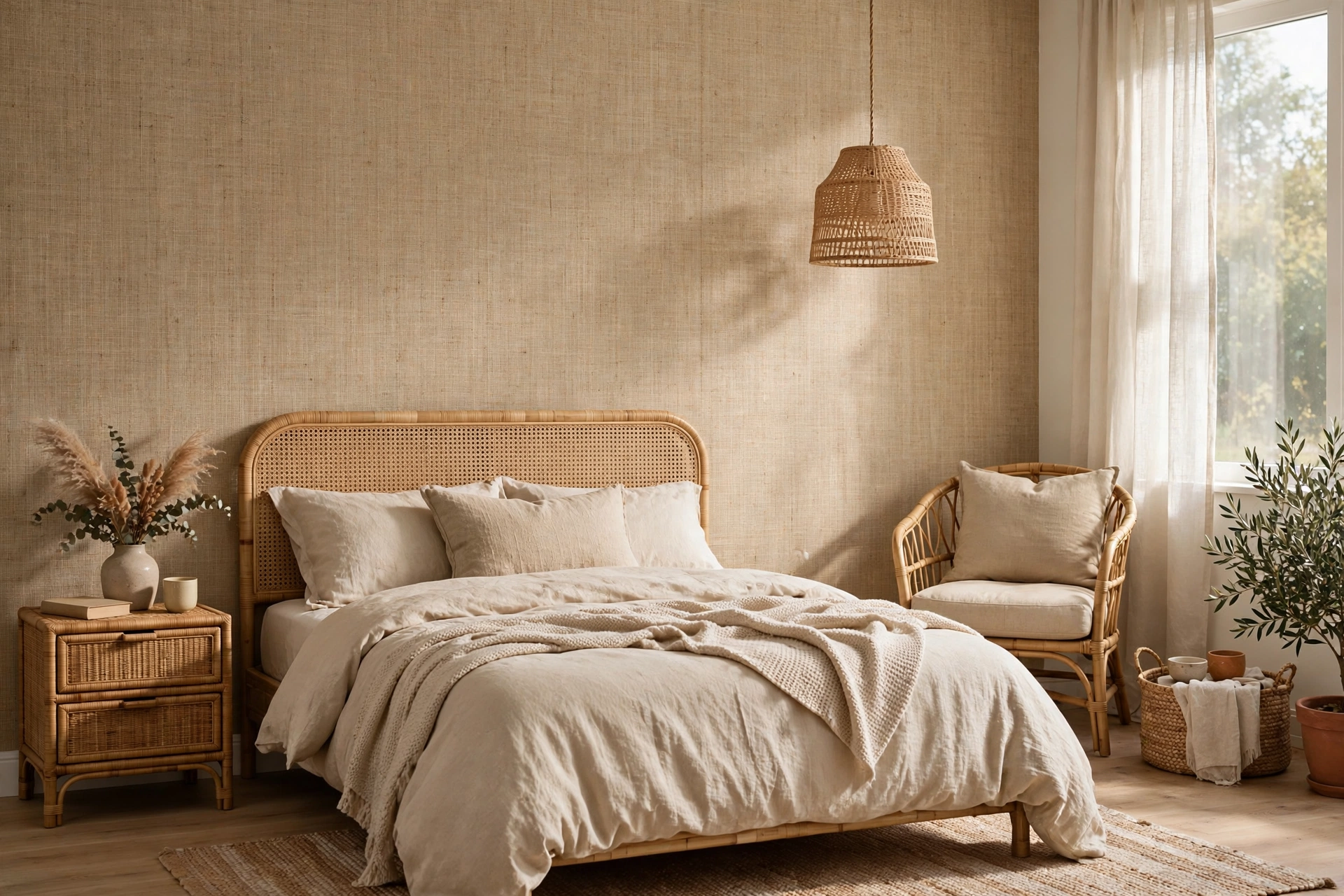
Unlike printed wallpaper, grasscloth has real physical texture — you can see and feel the individual woven fibers. Colors are inherently variegated; no two panels match exactly, which is the point. It reads as quiet luxury: calm, tactile, expensive without shouting.
Pros
- Gorgeous natural texture nothing synthetic fully replicates
- Hides minor wall imperfections better than flat paint or smooth paper
- Timeless — grasscloth has been stylish for decades
- Each installation is subtly unique
Cons
- Price: $100–$300+ per roll plus professional installation (DIY is not recommended)
- Seams are visible — panel-to-panel color variation is inherent
- Stains easily and can’t be scrubbed; not for kitchens, baths, or kids’ rooms
- Moisture causes warping and discoloration
- Removing it is a miserable, often wall-damaging job
Where to Use It (And Where Not To)
Best rooms: dining rooms, home offices, primary bedrooms, formal living rooms — dry, low-traffic, adult spaces.
Avoid: bathrooms, kitchens, kids’ rooms, hallways, rentals. For the look without the risk, vinyl grasscloth-look wallpaper gives 80% of the texture at 20% of the cost and none of the moisture fear.
Faux Grasscloth: The Practical Alternative
Embossed vinyl “grasscloth” wallpapers mimic the texture convincingly, cost $1–$3 per square foot, install DIY (including peel-and-stick versions), wipe clean, and survive bathrooms. Purists can tell the difference up close; guests cannot.
Installation Notes
Real grasscloth demands a professional. The material can’t be smoothed aggressively (it crushes the weave), seams need careful butting without overlap, and pattern matching is an art. Budget $3–$7 per square foot for installation on top of materials.
Grasscloth vs. Other Natural Wallcoverings
Grasscloth is often lumped together with every textured wallcovering, but the natural-fiber family has distinct members worth telling apart. Cork wallpaper is made from thin sheets of cork bark — it’s warmer to the touch, has a more uniform honeycomb pattern, and handles light moisture better than grasscloth, though it lacks grasscloth’s woven texture. Raffia and paperweave wallcoverings are tightly woven like grasscloth but from processed paper or palm fibers; they look similar from across the room but cost significantly less and accept paste more forgivingly. Sisal wallcovering is the coarsest of the bunch — thick, rope-like fibers with dramatic texture that hides wall flaws brilliantly but shows seams even more than standard grasscloth.
🛒 Shop This Look:
The practical takeaway: if you want grasscloth’s look but need a more forgiving install, paperweave is the closest compromise. If maximum texture is the goal, sisal delivers it but demands a flawless installer. Cork sits in the middle on price and durability, and it’s the only natural option I’d consider for a room with occasional humidity. Each one absorbs light differently too — hold samples against your actual wall and look at them in morning and evening light before committing, because natural fibers shift color noticeably throughout the day.
Caring for Grasscloth: Cleaning and Maintenance
Grasscloth’s biggest lifestyle cost isn’t money — it’s maintenance discipline. Because the fibers are natural and unsealed, grasscloth cannot be scrubbed or wet-cleaned. Here’s what actually works:
- Regular dusting: Vacuum with a soft brush attachment every few months, working top to bottom. A dry microfiber cloth works for spot dusting.
- Spots and splashes: Blot immediately with a dry cloth — never rub, which pushes stains into the weave. For dry debris, a piece of masking tape lifts crumbs without damaging fibers.
- Grease or food stains: These are nearly permanent on natural grasscloth. Prevention (keeping it out of kitchens and dining splash zones) is the only real strategy.
- Humidity control: Keep indoor humidity below 50% if possible. Grasscloth swells and warps in damp air, and prolonged moisture invites mildew in the natural fibers.
Before committing to a room, be honest about how the space gets used. A formal dining room that hosts dinner twice a month is fine. A breakfast nook where kids eat toast daily is not. Some manufacturers now offer lightly sealed grasscloth that resists staining better — ask your supplier specifically, because standard unsealed grasscloth is still the default and behaves exactly as described above.
The True Cost of Grasscloth: A Full Breakdown
The sticker price of the rolls is only the beginning. A realistic budget for a single 10-by-12-foot room with one grasscloth feature wall (roughly 120 square feet) looks like this: materials at $8–$15 per square foot run $960–$1,800; professional installation at $3–$7 per square foot adds $360–$840; wall prep (skim-coating, since grasscloth telegraphs every bump) can add $200–$500. That puts a single accent wall at roughly $1,500–$3,100, and a full room at two to three times that.
Why is installation so expensive? Grasscloth panels can’t be smoothed aggressively without crushing the weave, seams must be butted — never overlapped — with panels from the same dye lot, and the installer works around the material’s inherent color variation instead of against it. This is specialist work, and cheap installers produce visibly worse results than with standard wallpaper. Get at least two quotes from installers who can show you completed grasscloth jobs specifically. Finally, factor in the exit cost: removing grasscloth years later often damages drywall, so budget for skim-coat repairs when you eventually redecorate. It is a long-term commitment in every sense.
Choosing Grasscloth Colors for Your Room’s Light
Because grasscloth is variegated by nature, color selection works differently than with paint. Order full-size samples — not swatches — and tape them to the wall for at least three days. Natural fibers look dramatically different under warm evening lamps versus cool daylight, and the texture casts micro-shadows that change with the sun’s angle.
🛒 Shop This Look:
A few guidelines that hold up well: in north-facing rooms (cool, indirect light), warm-toned grasscloths in honey, tan, or wheat prevent the space from feeling cold and gray. In bright south-facing rooms, cooler neutrals like gray-beige or silvered jute balance the warm sunlight. Dark rooms benefit from lighter grasscloth that bounces available light; deep chocolate or charcoal grasscloths are stunning but only in rooms with generous natural or artificial light. And always check that all your rolls come from the same dye lot — lot-to-lot variation in grasscloth is far more noticeable than with printed wallpaper, and mixing lots across one wall guarantees visible banding.
Grasscloth in 2026: Is It Still Worth It?
Grasscloth has survived every trend cycle for decades, and its current position is interesting: it’s simultaneously more popular (the organic-modern and Japandi movements love natural texture) and easier to live without (faux alternatives have never been better). So is the real thing still worth the premium? It depends on what you’re buying. If you’re buying texture you can feel — the genuine woven dimensionality that changes as light moves across it — nothing synthetic fully replicates it, and in a formal dining room or primary bedroom where you’ll live with it for a decade, the real thing earns its price daily. Natural materials also age with character rather than just wearing out; a ten-year-old grasscloth wall looks lived-in in a way vinyl never manages.
If you’re buying the look — the general impression of woven texture from six feet away — the math favors faux. Modern embossed vinyls capture the visual effect convincingly, and in rooms with real life happening (kids, pets, entertaining), the washability advantage isn’t minor — it’s the difference between a wall that survives and one that doesn’t. A reasonable middle path gaining traction: real grasscloth on one feature wall in a low-traffic adult space, quality faux on the rest or in harder-working rooms. You get the authentic texture where you’ll actually notice it and practicality where you need it. One final consideration — resale: grasscloth is polarizing enough that some buyers see “expensive wallcovering I’ll have to remove” rather than luxury. In a home you might sell within five years, faux (easily removable) or a stunning paint treatment is the safer investment. In a forever home, buy the real thing and enjoy it.
Sampling Grasscloth the Right Way
With grasscloth, the sample is the decision — and most people sample wrong. Order the largest samples available (many suppliers offer 8×10-inch or larger memo samples; some sell single panels). A 2-inch swatch cannot show you the variegation, the weave scale, or the seam behavior that define the material. Request two samples from different dye lots if possible and place them side by side: this previews the panel-to-panel variation you’ll live with, and if the difference shocks you, grasscloth may not be for you — that variation is the product, not a defect.
Live with samples taped to the actual wall for a full week, observing them in morning, midday, and evening light, and — critically — touch them. Grasscloth’s texture is tactile; some weaves feel pleasantly nubby, others surprisingly rough or prone to snagging. If you have cats, press a claw-like object lightly against the sample: sisal-type weaves are essentially premium scratching posts, and it’s better to learn that from a sample than from a $2,000 wall. Finally, test-clean the sample: dab it with a damp cloth and see what happens. If the mere thought of that test makes you anxious, that’s useful data about whether you’ll enjoy living with an unsealed natural wallcovering. The right grasscloth, properly sampled, is a joy for decades; the wrong one, chosen from a tiny swatch, is an expensive lesson.
🛒 Shop This Look:



