
As an Amazon Associate, I earn from qualifying purchases. This means I may earn a commission if you purchase through links on this page — at no extra cost to you.
Why Bathrooms Are the Hardest Room for Wallpaper
A bathroom is not one environment. It is several, and wallpaper experiences all of them in a single day. A hot shower fills the air with steam. Splashes hit the wall beside the basin. Condensation forms on cooler surfaces. Cleaning products get wiped across the surface. A wallpaper that looks perfect on installation day can fail in any of these moments, and the failure usually starts where you cannot see it: behind a seam, under an edge, or inside the paste layer.
That is why bathroom wallpaper deserves a different buying logic from wallpaper anywhere else. In a bedroom, pattern and colour lead the decision. In a bathroom, moisture behaviour leads, and everything else follows. Get the moisture logic right and the pattern becomes a safe choice. Get it backwards and even the most beautiful paper will peel, bubble, or grow dark spots within a season.
The Three Bathroom Zones
Before choosing any wallpaper, map your bathroom into three zones. This single step prevents most bad purchases.
The dry zone is the wall area that never gets splashed and dries quickly: the wall opposite the shower, the upper wall above a half-tiled section, or the wall in a powder room that has no shower at all. Almost any bathroom-suitable wallpaper works here, provided the room has some ventilation.
The splash zone covers the walls beside the basin, around the bath rim, and near the toilet. These walls get regular droplets and frequent wiping. Only moisture-resistant materials belong here, and seams need sealing.
The wet zone is inside the shower enclosure and the wall directly behind taps and showerheads. Wallpaper does not belong here, whatever the label says. Constant direct water defeats paste, seeps behind seams, and traps moisture against the wall. Tile, waterproof panels, or paint made for wet areas are the honest choices for this zone.
If your bathroom is small, the zones overlap more than you expect. Steam reaches every wall in a compact bathroom, so treat a small bathroom as if the whole room were a splash zone, even if only one wall gets direct droplets.
Wallpaper Materials That Survive Bathrooms
Not all wallpaper is built the same way, and the material matters far more than the pattern. Here is how the main types behave in bathroom conditions.
Solid vinyl wallpaper has a vinyl surface layer that resists water and wipes clean. It is the most forgiving bathroom material because splashes sit on the surface instead of soaking in. Its weakness is at the seams: if water gets behind a seam, it stays there, hidden, and the damage shows up late. Sealed seams are not optional with vinyl in a bathroom.
Vinyl-coated wallpaper has a thinner vinyl layer over a paper base. It handles light splashes and wiping, but it is less resistant than solid vinyl and less suited to steamy rooms. It works well in powder rooms and in the dry zone of a full bathroom.
Non-woven wallpaper is made from a blend of fibres rather than paper, which makes it more dimensionally stable when damp: it does not expand and contract as much as paper. It is breathable, easier to hang and to remove, and a good choice for ventilated bathrooms. It is not waterproof, so it belongs in dry and light-splash areas, not in the wet zone.
Peel-and-stick wallpaper uses a self-adhesive backing instead of paste. Its advantage is reversibility: it goes up without paste and comes down without stripping, which suits renters and anyone who likes to change a look often. Its weakness in bathrooms is adhesion. In sustained steam, edges lift and corners curl. That is a manageable flaw in a powder room or dry zone, because a damaged strip is easy to replace, but it is a poor choice for a steamy family bathroom.
What to avoid in bathrooms: uncoated paper wallpaper absorbs moisture, stains, and peels quickly. Natural grasscloth and fabric-backed papers trap moisture and are difficult to clean. Metallic foil papers look striking but show every flaw once moisture gets underneath, and they are unforgiving to repair.
🛒 Shop This Look:
What “Bathroom-Safe” Labels Actually Mean
There is no single universal test behind the words “bathroom-safe” on a wallpaper listing. Different manufacturers use the term for different levels of resistance, and some use it loosely. Treat the label as a starting point, not a guarantee, and check the specifics instead.
Look for the material description first: solid vinyl or vinyl-coated tells you more than any badge. Then look for washability descriptions. A paper described as washable tolerates light wiping. One described as scrubbable tolerates firmer cleaning. Neither description means the paper can sit in direct water. If a listing does not state the material clearly, that silence is itself information: move on to one that does.
Pay equal attention to the adhesive. Paste-the-wall products and pre-pasted products behave differently in steam, and the manufacturer’s own paste recommendation matters. Using a generic paste where a moisture-resistant adhesive is specified is one of the most common reasons bathroom wallpaper fails early. If the product page names a specific adhesive type, follow it rather than substituting whatever is already in the cupboard.
Finally, be sceptical of any claim that a wallpaper is fully waterproof. A wallpaper surface can be water-resistant while its seams, edges, and paste layer remain vulnerable. The honest question is never “is this paper waterproof” but “where does water get in, and what stops it”. Seams, edges, and the wall underneath are where that question gets answered.
Ventilation Decides More Than the Wallpaper Does
A bathroom with strong ventilation forgives many wallpaper choices. A bathroom without it punishes all of them. Before buying wallpaper, answer the ventilation question honestly.
A working exhaust fan that runs during showers and keeps running for a while afterwards changes the whole calculation. It pulls steam out before it settles on walls. A window that opens and actually gets opened does similar work, though less reliably in cold or rainy weather. A bathroom with neither a fan nor an openable window is a hard environment for any wallpaper, and in that case paint is usually the wiser choice until ventilation is fixed.
Check the fan itself, not just its existence. A fan clogged with dust, venting into a ceiling cavity instead of outside, or switched off at the wall the moment the shower ends is not doing its job. Clean the grille, confirm where it vents, and get into the habit of leaving it running after a shower. This one habit extends the life of bathroom wallpaper more than any premium material.
Doors matter too. A bathroom door kept shut with no gap underneath traps steam inside. A small gap under the door lets replacement air in so the fan can actually move air out. If your fan seems weak, the missing door gap is a common and easily fixed cause.
Installation That Holds Up in Steam
Bathroom wallpaper fails during installation more often than during use. The steps below are the ones that matter most in damp rooms.
Start with a dry, smooth wall. Never paste over a damp wall, a flaking surface, or old adhesive residue. Moisture trapped behind new paper guarantees failure. Fill holes, sand rough patches, and let filler and primer dry fully before hanging anything.
Prime and size the wall. A primer seals the surface so paste adheres evenly instead of soaking into bare plaster in patches. Sizing, a thin preparatory coat, further improves adhesion and makes future removal far easier. Skipping this step is the most common shortcut behind early peeling.
Plan around fixtures before you paste. Work out where the basin, mirror, towel rails, and toilet sit, and plan seams so they do not land right beside a splash source. A seam beside a tap is a seam that will be tested daily. Cutting around fixtures neatly also prevents small gaps where steam enters behind the paper.
Seal every edge and seam. After hanging, go over seams and edges with a seam roller and, where the product allows it, a seam sealant. Pay special attention to the bottom edge near the bath and basin, and to corners, where lifting starts. A sealed seam is the difference between a splash that wipes off and a splash that creeps behind the paper.
Let it cure before steaming. Give freshly hung wallpaper a full day, ideally longer, before running a hot shower in the room. Paste needs time to set, and steam during curing weakens adhesion across the whole wall, not just at the edges. If the bathroom is the only one in the house, plan the job for a day when a hot shower can wait.
🛒 Shop This Look:
Maintenance: How to Keep Bathroom Wallpaper Alive
Once wallpaper is up in a bathroom, maintenance is mostly inspection. Walk the room every few weeks and look at seams, corners, and the wall behind the basin. A lifting edge caught early is a small repair: clean, dry, re-adhere, and seal. The same edge ignored for months becomes a strip that has to come down.
Clean with a soft, damp cloth and a mild cleaner, and dry the surface afterwards rather than leaving it wet. Avoid abrasive pads, which damage vinyl coatings and open the surface to moisture. In hard-water areas, wipe splashes promptly so mineral deposits do not build up along seams.
Watch for dark spots, which usually mean mould or mildew forming where moisture lingers. Small spots on a vinyl surface can often be cleaned, but spots that return in the same place point to moisture behind the paper, and that needs investigation rather than repeated cleaning. Do not paint over mould or paste over it: find the moisture source first.
When a strip is damaged beyond repair, replace the strip, not the wall. Keep a spare roll from the same batch if you can, because dye lots vary and a later roll may not match exactly. If you did not keep a spare, replace a full section from corner to corner so the change looks intentional rather than patched.
Wallpaper or Paint in a Bathroom?
Paint is the safer default in bathrooms, and it is worth saying so plainly. Moisture-resistant paint tolerates steam, wipes clean, and is easy to touch up when a patch fails. Wallpaper wins on pattern, texture, and the finished look of a feature wall. The choice is not about which is better in general but about which room you have.
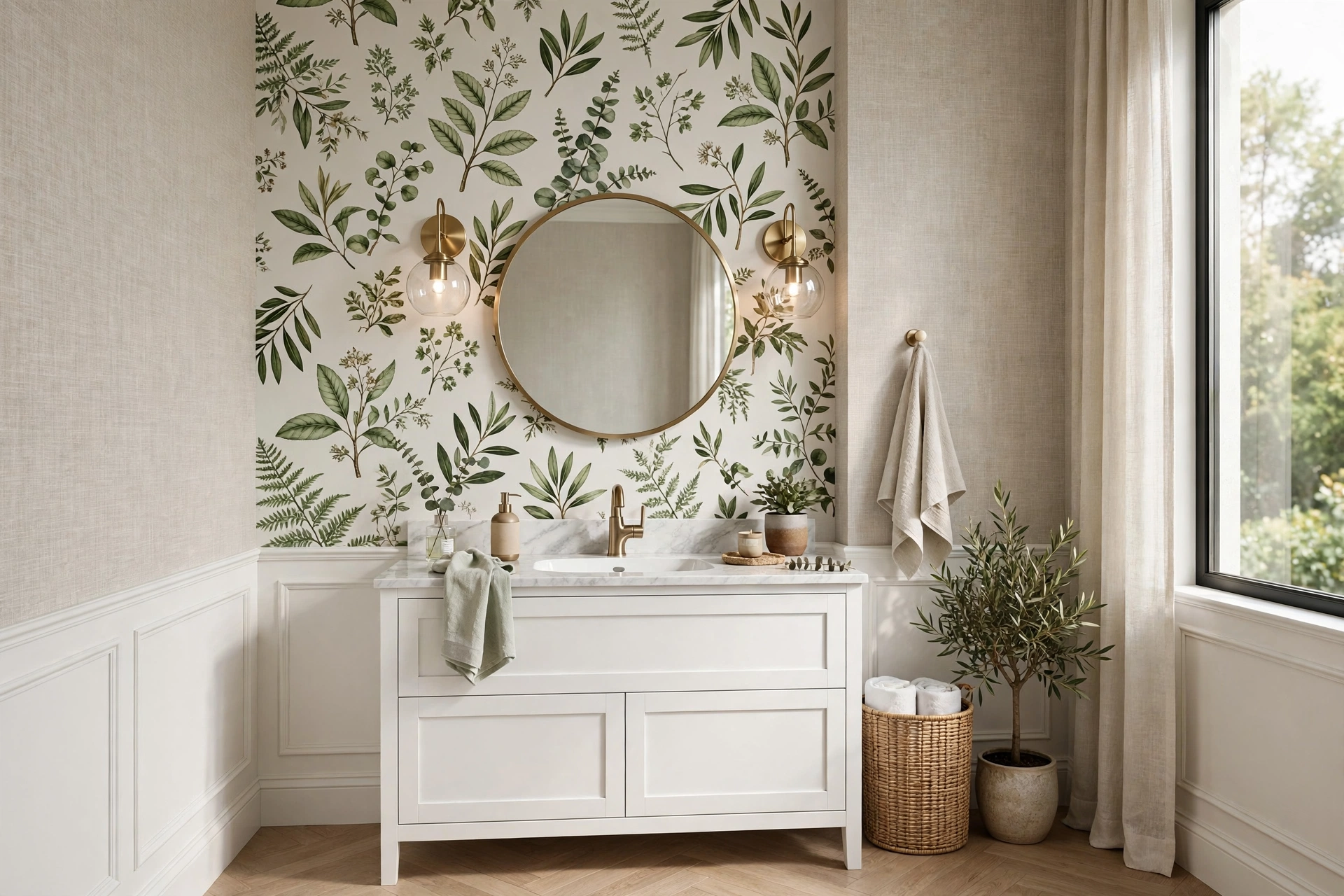
Choose wallpaper when the bathroom is ventilated, the paper sits in the dry or light-splash zone, and you value the look enough to maintain seams and edges. Choose paint when ventilation is weak, the room is small and steamy, or the walls take direct splashes. Many bathrooms end up with both: tile or paint in the wet zone, wallpaper on the dry feature wall. That combination gives you the look where it survives and durability where it matters.
If you are leaning towards paint instead, the companion guide to choosing white paint colours covers undertones, finishes, and sampling in detail, and the paint colours and wallpaper ideas hub gathers the wider colour and wall-finish guides. For renters or anyone who wants a reversible option, the guide to peel-and-stick wallpaper for bathrooms explains where the adhesive holds and where it lifts.
Mistakes That Ruin Bathroom Wallpaper
Papering over damp walls. The most expensive mistake, because the whole job fails and the wall underneath may be worse afterwards.
Skipping primer and sizing. Paste soaks unevenly into bare plaster, adhesion varies across the wall, and removal later damages the surface.
Papering inside the shower. No domestic wallpaper survives constant direct water. Tile the wet zone and keep paper outside it.
Leaving seams unsealed. An unsealed seam beside a basin is an open invitation to moisture, and the damage hides until it is serious.
Steaming a fresh installation. A hot shower during curing weakens paste across the wall. Give it a full day first.
Choosing paper for pattern alone. A beautiful uncoated paper in a steamy bathroom is a short-lived purchase. Material first, pattern second.
Ignoring the fan. A clogged or unused exhaust fan undoes every other good decision. Fix ventilation before hanging paper.
Frequently Asked Questions
Can I wallpaper a bathroom with no exhaust fan? It is risky. Without a fan or an openable window, steam stays on the walls and every material degrades faster. Fix ventilation first, or choose paint for that room.
Should I wallpaper behind the toilet or vanity? Behind the vanity is usually a splash zone, so only moisture-resistant materials with sealed seams belong there. Behind the toilet, access for future repair is awkward, so weigh that before papering a wall you cannot easily reach.
How do I remove bathroom wallpaper later? Non-woven and peel-and-stick papers usually come down cleanly, especially if the wall was primed and sized first. Traditional pasted papers need soaking and scraping, and steam removal in a bathroom can damage the wall if rushed. Good preparation at installation time is what makes removal easy years later.
Does bathroom wallpaper add value to a home? A well-kept bathroom feature wall can make a bathroom feel finished and cared for, which helps presentation. Peeling or mould-spotted wallpaper does the opposite. Condition matters more than the paper itself.
🛒 Shop This Look:
For the reversible option, read the guide to peel-and-stick wallpaper for bathrooms. For the paint alternative, see how to choose white paint colours, and browse the paint colours and wallpaper ideas hub for the wider wall-finish guides.