
As an Amazon Associate, I earn from qualifying purchases. This means I may earn a commission if you purchase through links on this page — at no extra cost to you.
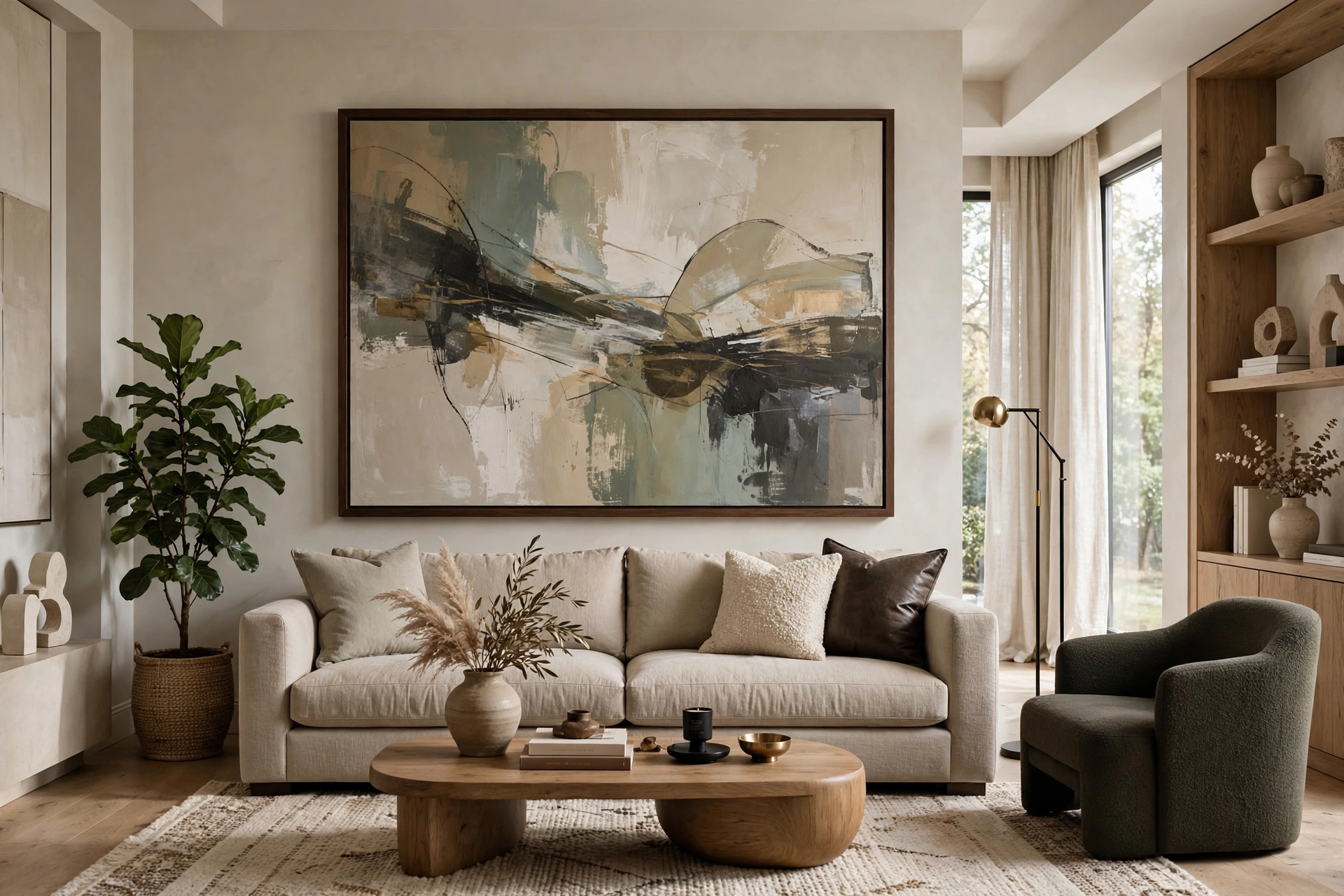
Expensive wall art is worth it for large statement pieces in main living areas where you’ll see it daily, and for original art that may appreciate. For most rooms, mid-range art ($50-150) offers 90% of the visual impact at a fraction of the cost. The key insight: expensive framing makes cheap art look premium, while cheap framing makes expensive art look cheap.
When Expensive Art IS Worth It
- Original art from living artists: Supports creators, potentially appreciates, one-of-a-kind
- Large statement pieces: Quality is visible at scale — cheap large prints often look pixelated
- Heirloom pieces: Art you’ll keep for decades justifies higher cost per year
When It’s NOT Worth It
- Trendy pieces: That neon sign might feel dated in 2 years
- Kids’ rooms: They’ll outgrow themes quickly
- Rental properties: Landlord restrictions limit options
- Gallery walls: Multiple mid-range pieces look better than one expensive piece surrounded by cheap ones
Our Blind Test
We showed 20 people two abstract prints — one $25 (Etsy), one $250 (gallery). Only 7/20 correctly identified the expensive one. But when we put both in quality frames, 14/20 chose the expensive print as “looking better” — proving that presentation matters more than the art’s price.
What You Are Actually Paying For
“Expensive art” covers very different products. Understanding the categories helps you decide where your money actually goes:
Original art
One of a kind, made by hand. You are paying for the artist’s time, skill, materials, and reputation — plus the fact that no one else owns this exact piece. Originals from emerging artists can start in the low hundreds; established artists run into the thousands and beyond. This is the only category with real appreciation potential.
Limited edition prints
A set number of prints from an original, usually signed and numbered by the artist. You are paying for scarcity and the artist’s name. Quality is generally high — these are produced to gallery standards on archival materials.
Open edition prints and giclées
Unlimited reproductions, often very high quality. A good giclée on archival paper or canvas can look nearly identical to an original at normal viewing distance. You are paying for image licensing and print quality, not scarcity.
Mass-produced decor prints
The affordable art most homes actually have. Quality varies enormously — paper weight, ink quality, and color accuracy separate the good from the muddy. At large sizes, cheap prints can show banding or pixelation that is invisible in the product photo.
The honest takeaway: the jump from a $15 mass print to a $60 quality giclée is usually visible. The jump from a $60 giclée to a $600 limited edition is mostly about scarcity and provenance, not what your eyes see on the wall.
Where to Buy Art at Every Budget
Under $50
Printable art shops (digital downloads you print yourself), thrift stores, and student art sales. The print-it-yourself route gives you enormous choice for very little money — the frame becomes the main expense.
$50-200
The sweet spot for most homes. Independent artists on marketplaces like Etsy, quality giclée printers, and local art fairs. At this range you can buy originals from emerging artists — small works, but genuinely one of a kind.
$200-1000
Established independent artists, galleries, and limited editions. Buy here when you want a statement piece for a main living area, or when you are deliberately collecting an artist whose work you follow.
🛒 Shop This Look:
$1000+
Galleries, art consultants, auctions. At this level, buy what you love from artists you believe in — treat any appreciation as a bonus, not the reason, unless you are working with a professional advisor.
How to Make Affordable Art Look Expensive
This is where the real value lives. These techniques close most of the visual gap between budget and premium art:
Invest in the frame, not just the art. As noted above, a $50 print in a $60 frame reads as a $300 piece. Choose frames with real weight and clean joinery — thin plastic frames are the single biggest “cheap art” tell.
Use mats generously. A wide mat (3-4 inches) around a small print makes it look gallery-curated. White or off-white mats are timeless; match the mat to the lightest tone in the artwork.
Go big. Small art on a big wall looks lost no matter what it cost. One large piece — even an affordable one — has more presence than several small expensive ones scattered around. When in doubt, size up.
Hang it right. Center at 57 inches, level, with proper spacing from furniture. Crooked or oddly-placed art undermines even genuinely valuable pieces.
Light it. A simple picture light or well-placed directional lighting makes any art look intentional and important. Galleries do this for a reason.
Choose cohesive palettes. Art that shares a color family with the room looks deliberate and high-end, even when every piece was affordable.
Caring for Art So It Holds Its Value
If you do buy pieces worth protecting, basic care preserves both appearance and resale value:
- Keep art out of direct sunlight — UV fades inks and pigments, and damage is irreversible.
- Use UV-protective glass or acrylic for framed pieces in bright rooms.
- Maintain stable humidity; avoid hanging valuable pieces in bathrooms or above fireplaces.
- Keep certificates of authenticity, receipts, and any artist documentation together — provenance matters enormously for resale.
- For originals, consider archival framing with acid-free mats and backing, which prevents the yellowing and deterioration that cheap framing materials cause over decades.
FAQs
Is art a good investment?
For most buyers, no — buy art because you love living with it. The art market is illiquid, unpredictable, and heavily favors established names. Originals from emerging artists you genuinely admire are the reasonable middle ground: you support a living artist, and there is a small chance the work appreciates. But the return you can count on is daily enjoyment.
Should I buy a set or individual pieces?
Individual pieces chosen over time almost always look better than a matching set bought in one click. Sets read as “decorated”; collected pieces read as “curated.” The exception is a deliberate diptych or triptych designed as one composition.
Canvas print vs. framed print — which looks more expensive?
A well-done gallery-wrapped canvas looks modern and substantial with no framing cost. A framed print with a generous mat looks more traditional and gallery-like. Neither is inherently classier — what matters is quality of execution and appropriateness to the room.
🛒 Shop This Look:
How much should I budget for art in a room?
A practical guideline: allocate roughly 5-10% of your room’s furnishing budget to wall art, weighted toward the rooms you use most. One strong piece in the living room beats thin coverage everywhere.
What about AI-generated or mass-produced “art”?
There is nothing wrong with affordable prints for decoration — most homes are full of them. Just know what you are buying: decoration, not collectibility. And give the frame the budget instead; presentation is where affordable art wins or loses.
The Sweet Spot
For most buyers: spend $30-80 on the art, $40-80 on quality framing. A $50 print in a $60 frame looks like a $300 piece. That’s the best value in wall art.
Red Flags When Buying Higher-Priced Art
Spending more only makes sense when the premium buys something real. Watch for these warning signs:
- No artist information. If a piece costs several hundred dollars but you cannot find the artist’s name, background, or other work, you are likely overpaying for a mass-produced print with gallery-style markup.
- “Limited edition” with no edition size. A genuine limited edition states the total number (e.g., “edition of 50”) and your print’s number. Vague “limited” claims without numbers are marketing, not scarcity.
- Inflated “original price” discounts. Constant 70%-off sales on “gallery” art sites mean the sale price is the real price. Judge the art at the price you would actually pay.
- No return policy. Art looks different in person. Reputable sellers — galleries included — allow returns within a reasonable window. A final-sale policy on an expensive piece is a risk you should not take sight unseen.
- Pressure tactics. “Only one left at this price” and countdown timers are retail tricks, not how genuine art is sold. Walk away and see if you still want it tomorrow.
Getting More From the Art You Already Own
Before buying anything new, audit what you have. Art that currently looks tired often just needs better presentation:
Reframe one piece. Take your favorite affordable print out of its thin original frame and put it in a wider, better-quality frame with a fresh mat. The transformation is startling — many people assume they bought new art.
Rearrange into a gallery wall. Individual small pieces that look lost on their own gain presence as a composed group. Plan the layout on the floor first, keep spacing consistent (2-3 inches between frames), and center the whole arrangement at eye level.
Relocate. Art you have stopped seeing in the hallway becomes new again in the bedroom. Rotating pieces between rooms is free and surprisingly effective — your eyes had simply adapted to the old placement.
Edit ruthlessly. Sometimes a room does not need more art; it needs less. Removing the weakest piece often makes the remaining ones look better, because each gets more visual breathing room.
More FAQs
Does expensive art need special insurance?
Standard homeowner’s or renter’s insurance covers art up to certain limits, but valuable individual pieces often need to be scheduled separately. If a piece would be painful to replace out of pocket, ask your insurer about a rider — it is usually inexpensive relative to the piece’s value. Keep purchase documentation and photos regardless.
Should kids’ rooms really get only cheap art?
The point is not that kids’ rooms deserve worse art — it is that their tastes change fast and their rooms take more abuse. Durable, affordable pieces you will not mourn when they get a crayon addition are the pragmatic choice. Save the investment pieces for rooms with longer horizons.
🛒 Shop This Look:



