
As an Amazon Associate, I earn from qualifying purchases. This means I may earn a commission if you purchase through links on this page — at no extra cost to you.
No, white kitchens are not going out of style — but they’re evolving. Stark, all-white kitchens are giving way to warmer whites, mixed materials, and two-tone designs. White remains the most popular and timeless kitchen choice, but today’s white kitchens incorporate warm wood, textured backsplashes, and brass accents rather than the cold, clinical all-white look of the 2010s. White is safe for resale and never truly dates.
What’s Changing
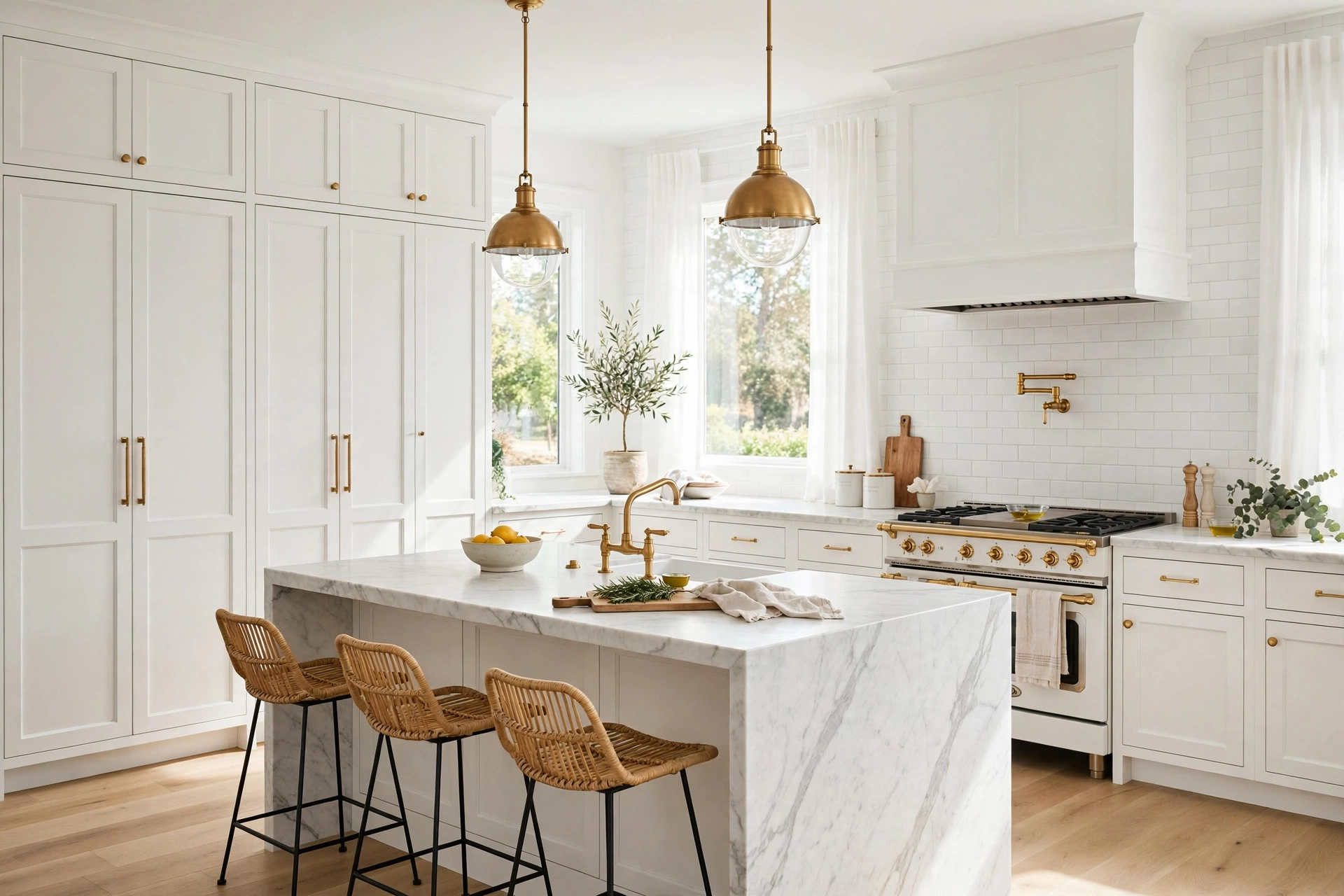
The sterile, monochromatic white kitchen is fading. What’s replacing it: warm whites (not blue-whites), natural wood islands paired with white perimeter cabinets, textured white tile instead of flat subway, and mixed metals.
What’s Staying
White as a foundation color isn’t going anywhere. It’s the most versatile, resale-friendly, and light-enhancing choice. Designers still specify white more than any other cabinet color.
How to Keep White Current in 2026
- Choose warm whites (White Dove, Alabaster) over stark whites
- Add a wood island or open shelving for warmth
- Use textured backsplash tile, not flat
- Mix in brass or black hardware
- Consider a contrasting island color
Why White Endures: The Design Principles
White kitchens persist for structural reasons, not just habit, and understanding those reasons explains why the style survives every predicted demise. First, white maximizes perceived light. Kitchens are workspaces — chopping, reading recipes, checking whether food is done — and all of that is easier in a bright room. White cabinets reflect both natural and artificial light deeper into the room than any color can, which is a functional advantage no trend can obsolete.
Second, white is the most forgiving backdrop for change. Wall color, hardware, lighting, textiles, and accessories can all be swapped over the years while white cabinets stay put, and every new combination works. A navy kitchen commits you to navy-compatible choices for a decade; a white kitchen lets you redecorate around it endlessly. This adaptability is why white is the default recommendation for anyone unsure — it preserves every future option.
Third, white reads as clean, and cleanliness is a kitchen’s core emotional requirement. This is partly cultural and partly practical: white shows dirt, which sounds like a disadvantage until you realize it means a white kitchen is honest about its state. A kitchen that looks clean because it is clean inspires more confidence than one that merely hides grime. In an era of heightened hygiene awareness, that visual honesty is an asset.
Finally, white has the broadest buyer acceptance of any cabinet color, which matters for resale (more on that below). These four factors — light, adaptability, cleanliness signaling, and resale — are permanent. Trends cycle; physics and psychology do not.
The Evolution of the White Kitchen: A Brief History
The white kitchen has reinvented itself roughly every decade, which is precisely why it never dies — each generation thinks it is killing the white kitchen when it is actually just updating it.
The early-2000s Tuscan kitchen gave way to the 2010s all-white kitchen: white shaker cabinets, white subway tile, white marble-look counters, stainless appliances, gray walls. It was bright, clean, and — eventually — ubiquitous to the point of sterility. By the late 2010s, design criticism of the “all-white everything” kitchen was loud: cold, impersonal, builder-grade.
What followed was not the death of white but its maturation. The 2020s white kitchen kept white as the foundation and layered in everything the 2010s version lacked: warm wood tones (white oak islands, open shelving), texture (zellige tile, fluted details, honed stone), mixed metals (brass and black instead of all-chrome), and warmer whites (White Dove and Alabaster replacing stark blue-white). The color did not change; the styling around it did.
🛒 Shop This Look:
This pattern — white persists, the supporting cast rotates — is the strongest evidence that white is not a trend but a classic. Compare it to genuinely dated choices: the 1970s avocado kitchen did not evolve; it vanished. White evolves, which is what classics do. Expect the 2030s white kitchen to look different from today’s in its details while remaining recognizably white at its core.
2026 White Kitchen Styling: The Details That Matter
A current white kitchen is defined less by the cabinets (still white) than by five styling decisions around them:
1. Warm whites, not stark whites. The single biggest shift. Stark, blue-undertoned whites (the 2010s default) now read as cold and commercial. Warm whites with yellow or greige undertones — White Dove, Alabaster, Swiss Coffee — feel inviting while still reading as white. Test undertones against your flooring and countertop: the wrong undertone is the most common reason a white kitchen feels “off.”
2. Wood for warmth. A white oak island, butcher-block accents, or open wood shelving against white perimeter cabinets is the defining combination of the current era. The wood provides the organic warmth that all-white kitchens lack, and the contrast makes both materials look better. Even small doses — wood bar stools, a wooden cutting board collection — shift the feeling.
3. Texture over flatness. Flat subway tile and polished counters made 2010s kitchens feel sterile. Current white kitchens layer texture: handmade-look zellige tile with visible variation, honed (matte) stone counters, fluted or reeded cabinet details, limewash or textured plaster on a feature wall. Texture gives white surfaces the depth that flat white lacks.
4. Mixed metals. The matchy-matchy era (all stainless, all chrome) is over. Brass or champagne-bronze hardware and faucets with black accents, or black hardware with brass lighting, adds the jewelry-like detail that elevates white from basic to designed. Pick two metals maximum and repeat each at least twice so the mix looks intentional.
5. One contrasting moment. A dark island (navy, black, deep green), a statement range hood, or dramatic stone on the island — one confident contrast keeps a white kitchen from feeling monotonous. The key word is one: a single contrasting element is design; five is chaos.
White Kitchen Pitfalls (And How to Avoid Them)
White is forgiving, but not foolproof. These are the mistakes that make white kitchens feel cheap or cold:
Wrong undertone: A cool, blue-white cabinet next to warm wood floors creates a subtle but persistent clash that makes the whole kitchen feel discordant. Always compare cabinet white, trim white, and countertop white together — “white on white” only works when the undertones agree. When in doubt, warm whites are safer with wood floors and warm lighting.
Flat lighting: A single overhead light in a white kitchen creates harsh shadows and glare off all those reflective surfaces. White kitchens need layered lighting — under-cabinet task lights, pendant lights over the island, and dimmable overheads — to look warm rather than interrogation-bright.
🛒 Shop This Look:
No texture: All-smooth white (flat cabinets, polished counters, glossy tile) is what made the 2010s version feel sterile. Every white kitchen needs at least two textural elements — honed stone, handmade tile, wood grain, woven bar stools — to give the eye something to land on.
Neglected maintenance: White shows everything, which is a feature only if you maintain it. Grease film on cabinets near the range, yellowing caulk, and grimy grout are all more visible on white. A degreasing wipe-down routine and prompt touch-ups keep white looking intentional rather than tired. Choose cabinet paint with a scrubbable finish (satin or semi-gloss on cabinets, unlike walls) so cleaning does not damage the surface.
Builder-grade details: White shaker cabinets with hollow-core details, thin countertops, and basic hardware read as rental-grade regardless of color. If the budget is tight, spend it on hardware, lighting, and one upgraded surface rather than spreading it thin — these are what separate a designed white kitchen from a default one.
White vs. Color Cabinets: Resale and Longevity Compared
For homeowners weighing white against the current enthusiasm for green, blue, or wood-tone cabinets, the comparison comes down to risk tolerance and timeline.
On resale, white remains the safest choice by a wide margin. It photographs well, appeals to the broadest buyer pool, and never triggers the “we’d have to repaint the kitchen” objection that colored cabinets can. Real estate professionals consistently report that white kitchens show best and generate the fewest buyer objections. If you plan to sell within five years, white is the rational choice — it is the only cabinet color that is never a compromise for resale.
On longevity of personal enjoyment, the answer is more nuanced. A white kitchen you find boring is worse than a green kitchen you love, because you live with it daily and sell it once. The current styling playbook — warm whites, wood, texture, mixed metals — has made white kitchens genuinely beautiful again, not just safe. Most people who choose white today are choosing it enthusiastically, not by default.
The hybrid approach deserves mention: white perimeter cabinets with a colored or wood island. This captures white’s resale safety and light-maximizing benefits across most of the kitchen while adding the personality and warmth of color where it counts. It is also the easiest configuration to update later — repainting or restyling an island is a weekend project.
Bottom line: white is not going out of style because it was never fully “in style” in the trend sense — it is the baseline against which trends are measured. Choose it with current styling, maintain it well, and it will look right for decades.
The Verdict
White kitchens are like blue jeans — they evolve but never disappear. If you love white, go for it with current styling. It will look good for decades.
🛒 Shop This Look:



