
As an Amazon Associate, I earn from qualifying purchases. This means I may earn a commission if you purchase through links on this page — at no extra cost to you.
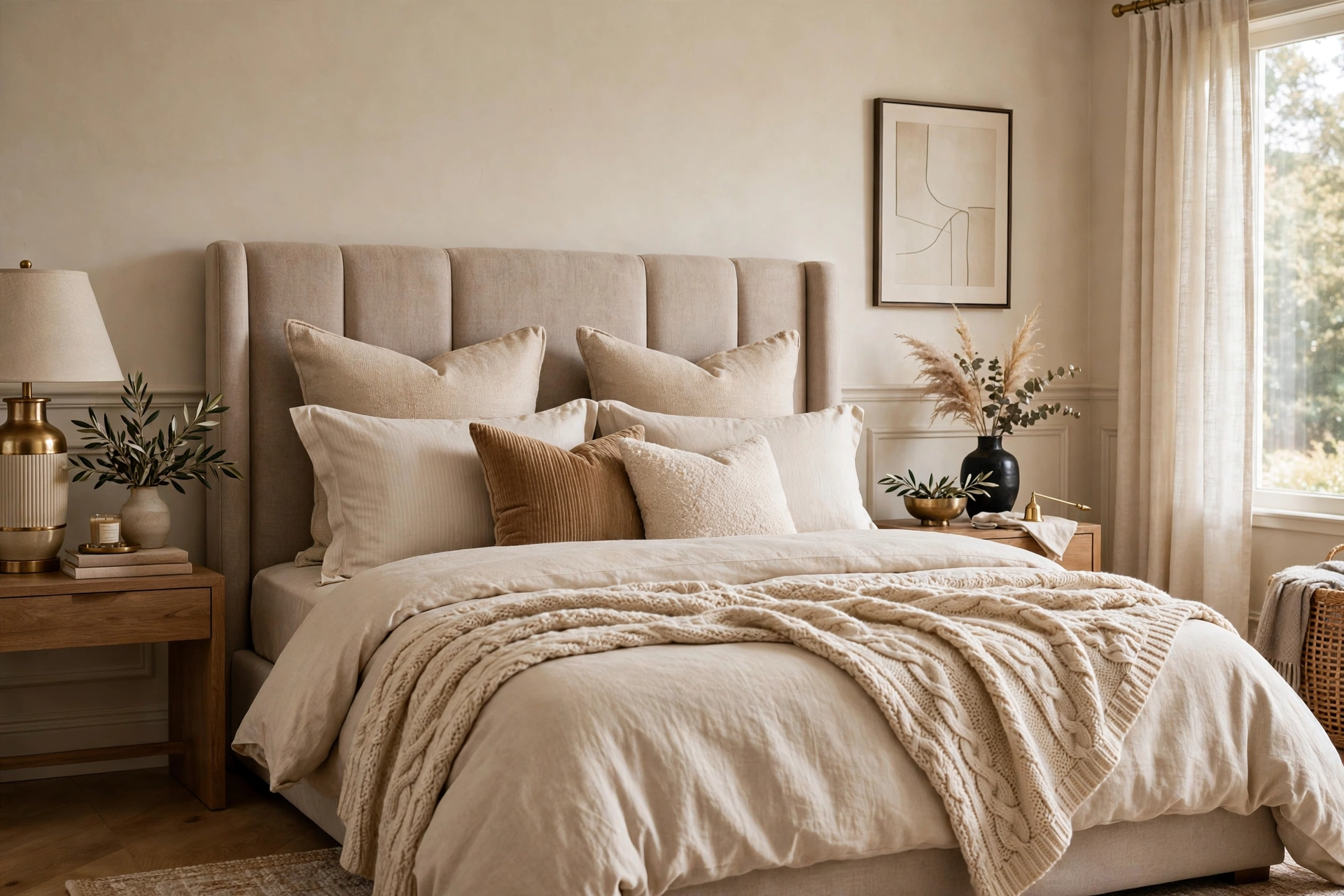
The right number of pillows on a bed depends on the look you want: 2 sleeping pillows for a clean minimalist style, 4–6 for a classic hotel look, and 6–8 for a plush, luxurious feel. Designers generally recommend odd numbers for decorative pillows (3 or 5) because asymmetry looks more natural. A foolproof formula: 2 sleeping pillows + 2 Euro shams + 1–3 decorative pillows. Any more than 8 total pillows and you’re spending more time arranging than sleeping.
5 Styling Formulas
1. Minimalist (2 Pillows)
Two sleeping pillows, laid flat or propped against the headboard. Clean, modern, zero fuss. Best for small beds and people who hate clutter.
2. Classic (4 Pillows)
Two sleeping pillows + two Euro shams (26×26″) propped in front. Timeless and tidy. Works on queen and king beds.

Beckham Hotel Collection Euro Size Throw Pillows (Set of 2), 26 x 26 Down Alternative Pillow Insert
Best for the classic Euro sham layer in front of sleeping pillows.
3. Hotel Luxe (6 Pillows)
Two sleeping pillows + two Euro shams + two standard decorative pillows. The classic luxury hotel look. Balanced and inviting.
Coop Home Goods Essence Adjustable Throw Pillow Inserts 20×20, Set of 2, Adjustable Down Alternative
Best for the standard decorative pillows in the hotel luxe layer.
4. Plush (7–8 Pillows)
Add a lumbar pillow or two smaller accent pillows to the hotel formula. Cozy and abundant without going overboard.
PANOD Decorative Modern Long Lumbar Pillow Cover 12 x 24, Soft Velvet, Grey (cover only)
Best for the lumbar pillow added to the hotel formula for a plush look.
5. Maximalist (8+ Pillows)
Layer multiple sizes, textures, and patterns. Looks amazing in photos; requires commitment in real life. Best for guest rooms or styling shoots.
Pillow Arrangement Tips
Place largest pillows at the back, smallest in front. Mix textures (linen, velvet, knit) but keep colors in the same family. Remove decorative pillows at night — or get a storage bench so they have a home. And always fluff: a quick karate-chop to the center of each pillow gives that designer dent.
Pillow Arrangements by Bed Size
The right pillow count depends heavily on your bed size — what looks lush on a king looks crowded on a full. For a twin or twin XL, keep it simple: two sleeping pillows (or one, if it’s a daybed styled as a sofa) plus one decorative pillow or a single lumbar. The bed is narrow, so restraint reads as intentional. For a full or double bed, two sleeping pillows plus two Euro shams fill the width nicely; add one lumbar or accent pillow in front for a finished look — four to five pillows total is the sweet spot.
Queen beds are the most versatile: two sleeping pillows, two Euro shams, and one to three decorative pillows (five to seven total) create the classic layered look without overwhelming the bed. King beds can handle — and actually need — more: two king sleeping pillows, two to three Euro shams across the back, and two to three decorative pillows in front. A king with only four pillows looks underdressed because of all that width. California kings, being narrower but longer, follow the queen formula with slightly fewer Euros.
Choosing the Right Pillow Types and Fills
Not all pillows are for sleeping, and mixing up their jobs is the key to a bed that looks great and sleeps well. Sleeping pillows should be chosen for your sleep position: side sleepers need firm, lofty pillows to fill the shoulder gap; back sleepers do best with medium support; stomach sleepers need soft, flat pillows. Down and down-alternative fills are the most moldable for decorative styling — they take that coveted “karate chop” dent and look plush. Memory foam and latex pillows sleep wonderfully but look stiff and blocky as decor, so keep them as your back-row sleepers, hidden behind the pretty layers.
Best for side sleepers who need firm, lofty support to fill the shoulder gap.
Euro shams (26-by-26-inch square pillows) are the workhorses of bed styling — they create the tall back layer that gives the whole arrangement height. Decorative throw pillows in 18- or 20-inch squares add the personality, and a lumbar pillow (roughly 12-by-24 inches) across the front ties everything together. For inserts, size up: use a 20-inch insert in an 18-inch cover. The overstuffed look reads as luxurious; an insert that exactly matches the cover looks flat and sad.
Best for overstuffing an 18-inch cover for a plush, luxurious look.
How to Mix Colors, Patterns, and Textures Like a Designer
The secret to a designer-looking bed is controlled variety. Start with a color palette of two to three colors pulled from your room — your bedding, wall color, or a piece of art. Then vary the pattern scale: one large-scale pattern (a bold floral or wide stripe), one small-scale pattern (a tiny geometric or dot), and one solid to give the eye a rest. Two patterns of the same scale compete; mixing scales creates harmony.
Texture does as much work as color. Combine at least three textures — linen, velvet, chunky knit, silk, or faux fur — and the bed instantly looks richer, even in a neutral palette. A good formula: linen Euro shams for structure, a velvet accent pillow for depth, and a nubby knit lumbar for warmth. As for arrangement, place larger pillows in back and smaller in front, and don’t be afraid of odd numbers — three or five decorative pillows look more natural than four. Step back and squint: if the bed reads as one cohesive color story rather than a collection of random pillows, you’ve nailed it.
Simple&Opulence 100% Linen Euro Sham Pillow Covers Belgian Flax, Set of 2, 26″ x 26″ (covers only)
Best for linen Euro shams that give the bed structure.
Pillow Care: Washing, Fluffing, and When to Replace
Decorative pillows need less washing than sleeping pillows, but they still collect dust. Most decorative covers are removable — wash them according to the fabric’s care label, usually on gentle. Down and down-alternative inserts can go in the washer on gentle with mild detergent; dry them thoroughly with dryer balls to restore loft (damp down clumps and can mildew). Foam inserts should be spot-cleaned only.
Fluff decorative pillows daily with a quick shake and a karate chop to the top center — it takes ten seconds and keeps the bed looking styled rather than slept-in. As for replacement: sleeping pillows should be replaced every 1–2 years (fold one in half — if it doesn’t spring back, it’s done), while quality decorative pillows and Euro shams can last 3–5 years with washable covers. If a decorative pillow has gone permanently flat or its cover is pilled beyond saving, it’s time. And here’s a practical tip from the minimalist camp: if you dread the nightly ritual of stacking pillows on the floor, you have too many. The best number is the one you’ll actually maintain.
Seasonal Pillow Swaps: A Fresh Bed Four Times a Year
You don’t need a new bed to get a new bedroom — swapping decorative pillows seasonally is the fastest, cheapest room refresh there is. Keep your foundation constant (neutral Euro shams and sleeping pillows in white, cream, or soft gray) and rotate just the front decorative layers. Spring calls for botanical prints, light linen, and fresh greens; summer suits airy blues, crisp stripes, and breezy textures; fall welcomes velvet, rust, mustard, and chunky knits; winter invites faux fur, deep jewel tones, and metallic accents.
Store off-season pillows in vacuum bags or breathable storage bins — compressed, they take up shockingly little space. This approach is also budget-smart: instead of buying eight new pillows each season, you buy two or three accent covers and reuse the same inserts year-round. Standard insert sizes (18″, 20″, lumbar) accept endless covers, so build a small library of covers over time rather than buying complete pillows. A seasonal swap takes twenty minutes and makes the bedroom feel intentionally designed rather than decorated once and forgotten.
Guest Bedroom vs. Primary Bedroom: Different Rules
Your primary bedroom should prioritize how you actually live: if you read in bed, keep the decorative count manageable so the nightly clear-off isn’t a chore. Many design lovers secretly strip their beds to two pillows for real life and only do the full styling for photos — there’s no shame in a “photo version” and a “Tuesday version.” Choose pillows you genuinely like touching, since you’ll handle them daily.
Guest bedrooms play by different rules: here, the visual welcome matters most, because guests experience the bed as a first impression. Go ahead with the fuller arrangement — it signals care and hospitality. But keep guest comfort practical: leave the sleeping pillows clearly identifiable (white or cream, at the back), don’t bury them under so many decorative layers that guests can’t find them, and skip heavily scented pillows or anything with rough embellishments like sequins or beads that irritate skin. A small card or mention of where to put the decorative pillows at night is a thoughtful touch that guests genuinely appreciate.
Where to Splurge vs. Save on Bed Pillows
Splurge on: Sleeping pillow inserts and Euro shams — you spend a third of your life on sleeping pillows, and quality Euros form the visible backbone of the whole arrangement. Good down or down-alternative inserts hold their shape for years; cheap ones go flat in months. Save on: Trendy accent pillow covers. The mustard velvet pillow that’s everywhere this year will feel dated next year — buy the affordable version, enjoy it, and replace it guilt-free. Inserts for decorative pillows can also be budget-friendly; since they’re mostly for show, mid-range down-alternative works fine.
The sweet spot for most beds: invest in two great sleeping pillows and two quality Euro inserts, then have fun with affordable decorative covers in standard sizes. Washable covers are worth a small premium — being able to throw a cover in the wash instead of replacing a whole pillow pays for itself the first time coffee spills. And measure before you buy: “standard,” “queen,” and “king” pillow sizes vary slightly by brand, and a cover that’s even an inch off looks sloppy. When in doubt, size the insert up one inch from the cover for that plush, designer look.
🛒 Shop This Look:
🛒 Shop This Look:
🛒 Shop This Look:



