
As an Amazon Associate, I earn from qualifying purchases. This means I may earn a commission if you purchase through links on this page — at no extra cost to you.
Dark sofas hide stains better; light sofas hide dust, pet hair (light-colored), and lint better — neither is universally cleaner. The real deciding factors are your lighting, your pets’ fur color, and how much natural light the room gets. Here’s how to choose for your actual life.
What Each Color Shows
- Light sofa shows: dark pet hair, denim dye transfer, food stains, ink, dirt from hands
- Light sofa hides: dust, light pet hair, lint, light crumbs, fading from sun
- Dark sofa shows: dust, light pet hair, lint, crumbs, fading/bleaching from sun
- Dark sofa hides: dark pet hair, most food stains, denim transfer, general grime
The Pet Hair Rule
Match your sofa to your pet, not your walls. White dog → light sofa. Black cat → dark sofa. This single decision matters more than any other for daily appearance.
Light and Room Size
- Small/dark rooms: light sofas reflect light and feel airier — the room looks bigger.
- Large/bright rooms: dark sofas ground the space and add contrast; they won’t overwhelm.
- South-facing bright rooms: dark fabrics fade faster in strong sun — factor in fading.
Style Impact
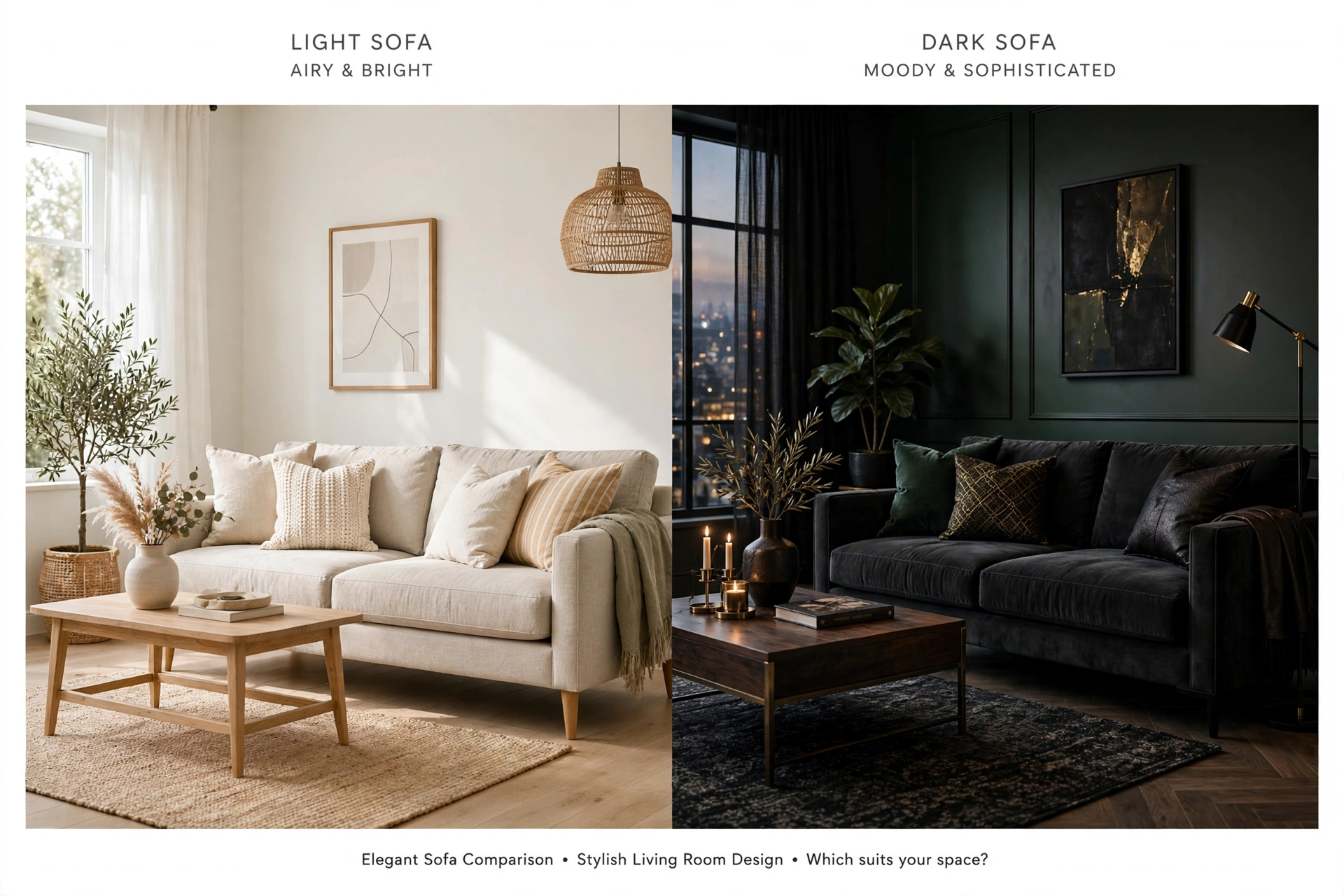
- Light sofas: read modern, airy, Scandinavian. Show every pillow and throw (good for styling).
- Dark sofas: read cozy, dramatic, grounded. Make colorful pillows pop.
- Mid-tone (the compromise): greige, camel, warm gray — hide the most overall and suit every style.
Stain Test Results
On performance fabrics, most common stains (coffee, wine, ketchup) clean completely regardless of color — the fabric matters more than the shade. On standard fabrics, dark colors forgive 2–3× more before looking worn.
Frequently Asked Questions
Do white sofas get dirty fast?
With performance fabric and reasonable habits, no — they wipe clean. With standard fabric and kids/pets, yes, noticeably within months.
What color sofa is most timeless?
Mid-tone neutrals: greige, oatmeal, warm gray, camel. They hide wear, suit any style, and don’t date.
The Dirt Science: What Actually Lands on a Sofa
Not all “dirt” is equal, and different colors fail against different enemies. Understanding the four categories helps you choose honestly.
- Dust and lint: light gray, everywhere, constant. Highly visible on dark sofas — especially black and navy. Nearly invisible on light sofas. This is the daily-visibility winner for light colors.
- Body oils and hand grime: slightly dark and yellowish. Shows on light sofas as darkened armrests and headrests over months. Invisible on dark sofas. This is the long-term enemy of white and cream.
- Food and drink stains: coffee, wine, tomato, curry. High contrast on light sofas; camouflaged on dark ones. On performance fabrics, most lift completely regardless of color — the fabric matters more than the shade here.
- Pet hair: pure contrast physics. Light hair vanishes on light sofas and screams on dark ones; dark hair does the reverse. There is no color that hides both.
- Sun fading: dark dyes break down faster under UV. A navy sofa in a south-facing window will show fading within a couple of years; a light sofa fades too, but the change is far less noticeable.
Fabric Changes the Color Equation
- Performance fabrics flatten the difference: stain resistance means a light performance sofa can out-clean a dark standard-fabric one. If you love light but fear stains, performance fabric is the bridge.
- Textured weaves (bouclé, heavy linen, chenille) hide everything better than flat weaves at the same color — the texture breaks up stains and wear visually. A textured oatmeal sofa is one of the most forgiving choices that exists.
- Velvet shows pressure marks and “bruising” on dark colors (the pile crushes lighter where people sit). Light velvets hide this better but show stains more. Performance velvets split the difference well.
- Leather follows the same light/dark rules with one twist: dark leather develops patina that looks intentional, while light leather shows dye transfer from jeans — the famous blue-jean stain on cream leather is real and stubborn.
- Patterned fabrics (small geometrics, subtle stripes, tone-on-tone textures) hide more than any solid color, light or dark. If maximum forgiveness is the goal, pattern beats color.
Choose by Household: The Decision Matrix
Young Kids, No Pets
Go dark or mid-tone in performance fabric. Kids produce food stains, art supplies, and sticky hands — all high-contrast on light. A charcoal or warm gray performance sofa wipes clean and forgives the rest. If your heart wants light, choose a washable slipcover sofa instead.
Pets That Shed
Match the pet, then go one shade darker. Golden retriever → camel or warm beige. Black lab → espresso or charcoal. The “one shade darker” trick means the hair that does show blends rather than contrasts. Add a washable throw on the favorite spot regardless.
Cats That Scratch
Color matters less than weave — choose a tight flat weave (canvas, microfiber) in a mid-tone. Cats damage texture more than color; a mid-tone tight weave shows neither claw pulls nor hair badly.
Adults Only, Low Chaos
Choose freely. Without kids or pets, a light sofa in a quality fabric stays beautiful for years with basic care. This is the household where the cream bouclé sofa of your dreams is actually practical.
Allergy Household
Leather in a mid-to-dark tone — it does not harbor dust mites or dander, and darker leather hides the frequent wipe-downs it will get.
Maintenance: What Each Choice Demands
Keeping a Light Sofa Beautiful
- Vacuum weekly with an upholstery attachment — dust is invisible on light fabric until it becomes grime.
- Treat spots immediately; dried stains bond with light fibers permanently.
- Wash or professionally clean slipcovers every 3–6 months.
- Rotate and flip cushions monthly so body-oil darkening develops evenly instead of in one seat.
- Keep throws on the most-used seats — they take the wear and wash easily.
Keeping a Dark Sofa Beautiful
- Lint-roll or vacuum twice weekly — dust and light lint are the dark sofa’s daily enemy.
- Keep it out of direct sun or accept fading; rotate cushions to fade evenly.
- Dark shows fewer stains, which means stains get ignored — do a quarterly deep clean anyway, because embedded grime shortens fabric life.
- Use a fabric shaver seasonally; pilling is more visible on dark fabrics.
The Case for Mid-Tones
If this decision is paralyzing, the data points to the middle: warm grays, greige, camel, oatmeal, and mushroom hide the widest range of sins. They do not show dust as badly as black, do not show stains as badly as white, fade gracefully, and work with every decor style from Scandinavian to traditional. Designers default to mid-tone neutrals for client projects precisely because they are the lowest-regret choice — and low regret is a genuine form of luxury.
Slipcovers: The Best of Both Worlds
Cannot decide between light and dark? A slipcovered sofa lets you have both — and solves the maintenance question entirely.
- Washability changes everything. A white slipcovered sofa with kids is practical in a way a white upholstered sofa is not: the cover goes in the washing machine. Stains stop being permanent and become laundry.
- Seasonal color changes: keep a light set for spring/summer and a dark set for fall/winter. Two slipcover sets cost less than one reupholstery and give you a new sofa twice a year.
- Fit matters: custom or semi-custom slipcovers (measured to your sofa model) look tailored; one-size stretch covers look like what they are. Budget for the fitted version — the difference is visible from across the room.
- Fabric choice for slipcovers: medium-weight cotton duck, linen blends, or performance fabrics. Avoid anything too thin (shows the sofa beneath) or too heavy (will not tuck cleanly).
- The lived-in look is the point: slipcovers are not supposed to look drum-tight. The relaxed, slightly rumpled aesthetic is the style — embrace it rather than fighting for upholstery-crisp lines.
Protecting the Investment You Chose
- Throws as armor: a washable throw on the most-used seat absorbs the body oils, pet hair, and snack crumbs that age a sofa. It is not hiding the sofa — it is preserving it. Choose throws that complement the decor so they read as styling.
- Arm caps: the arms get the most hand contact and the most wear. Matching or coordinating arm covers add years to both light and dark sofas.
- Sun management: UV is the great equalizer — it fades dark sofas visibly and weakens all fibers. Sheers on the sunny window, or simply rotating the sofa 180 degrees annually if the room allows, distributes exposure.
- The professional clean cycle: every 12–18 months for daily-use sofas, regardless of color. Dark sofas hide the grime that is silently breaking down fibers; light sofas show you exactly when it is time. Either way, the calendar — not the appearance — should trigger the appointment.
- Scotchgard-style protectors: fabric protectors buy you reaction time on spills — minutes instead of seconds. They are not force fields, and they need reapplication after professional cleaning, but on light sofas especially they are cheap insurance.
The Verdict, By Priority
If you rank your priorities honestly, the answer usually emerges: lowest daily maintenance → light sofa (dust is invisible). Best stain camouflage → dark sofa (grime disappears). Maximum longevity of appearance → mid-tone textured performance fabric (hides everything moderately). Most flexibility → slipcovered sofa (change your mind seasonally). There is no universally cleanest color — only the color whose particular dirt you mind least, in the fabric that forgives your household’s particular chaos.
🛒 Shop This Look:
🛒 Shop This Look:
🛒 Shop This Look:



