
As an Amazon Associate, I earn from qualifying purchases. This means I may earn a commission if you purchase through links on this page — at no extra cost to you.
Hide ugly kitchen appliances with these 7 solutions: use an appliance garage (a dedicated cabinet with a roll-up or pocket door), store small appliances in deep drawers with outlets, create a coffee bar station in a pantry or closet, use decorative covers or skins for fridges, install panel-ready appliances that match cabinets, corral countertop appliances on a rolling cart that tucks away, or simply declutter to one essential appliance per zone. The goal is clear counters with everything accessible.
Solution 1: The Appliance Garage
A dedicated cabinet — either built-in or freestanding — with a door that hides small appliances. The best versions have:
- Roll-up tambour door or pocket door (doesn’t swing into space)
- Interior outlet for toaster/coffee maker (use without removing)
- Pull-out shelf for heavy items like stand mixers
Cost: $150–$500 for a cabinet; $50–$100 to retrofit an existing cabinet with a door kit.
Solution 2: Deep Drawer Storage
Store the Instant Pot, blender, and food processor in deep lower drawers instead of on the counter. Add a power strip inside the cabinet if you want to use them without lifting out. This works especially well for heavy appliances you use weekly, not daily.
Convert a pantry, closet, or unused cabinet into a coffee station. All the gear (machine, grinder, mugs, beans) lives behind a door. Open in the morning, close when done. This removes 3–4 items from the counter instantly.
Solution 4: Decorative Appliance Covers
For appliances that must stay out (like a fridge), covers and skins help:
- Fridge: Peel-and-stick stainless steel or chalkboard contact paper ($20–$40)
- Microwave: A simple fabric cover or placing it inside a cabinet
- Dishwasher: Panel-ready models accept a cabinet door front
Solution 5: Panel-Ready Appliances
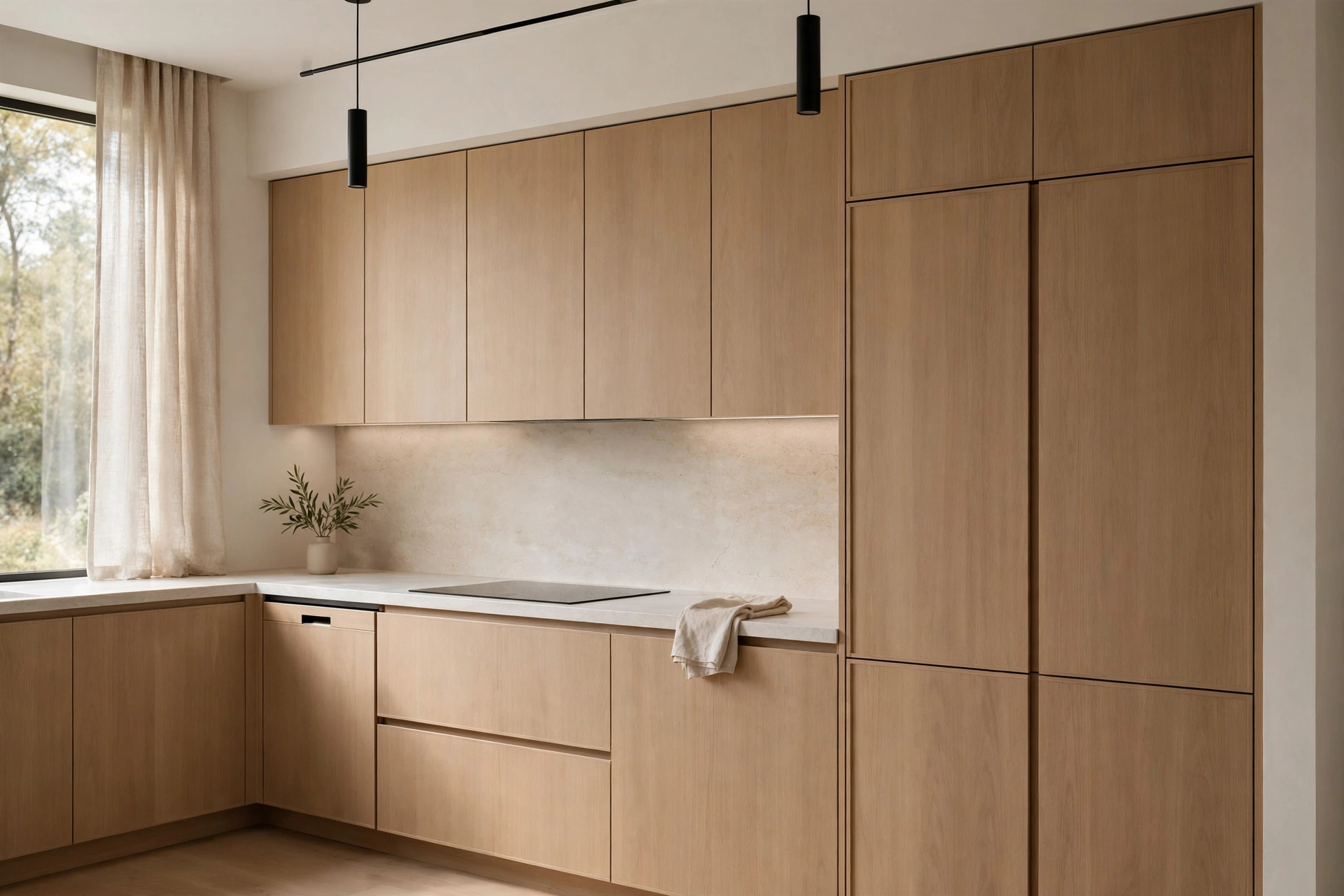
The ultimate solution: appliances designed to accept cabinet panels so they disappear completely. Available for dishwashers, refrigerators, and trash compactors. Cost: 20–30% premium over standard models, but the seamless look is unmatched.
Solution 6: The Rolling Cart
A stylish bar cart or kitchen cart ($40–$80) holds 2–3 small appliances and rolls into a pantry or closet when not in use. When you need them, roll it out. Best for occasional-use items like bread makers or juicers.
🛒 Shop This Look:
Solution 7: The Ruthless Declutter
Be honest: Do you use the bread maker? The yogurt maker? The second blender? Most kitchens have 2–3 appliances that haven’t been touched in a year. Donate or sell them. The best way to hide an ugly appliance is to not own it.
Rule of thumb: If you haven’t used it in 6 months, it doesn’t deserve counter space.
What About the Fridge?
The fridge is the hardest to hide because of its size. Options:
- Panel-ready model (best, but expensive)
- Counter-depth model (less protrusion, sleeker look)
- Peel-and-stick covering to match cabinets
- Position it at the end of a cabinet run where it’s less prominent
- Keep the front clear — no magnets, photos, or clutter (biggest visual improvement, costs $0)
Quick Win: The 10-Minute Tidy
Right now, walk into your kitchen and remove every appliance you haven’t used this week. Put them in a closet or cabinet. Leave only daily essentials. Step back and look — this alone transforms most kitchens.
— Ella Knight
The Appliance Audit: Decide What to Hide and What to Display
Before buying a single cabinet organizer or roll-up door, take ten minutes to audit your appliances. Hiding everything creates its own problem: a kitchen where making toast requires opening three doors. The goal isn’t an empty counter — it’s a counter where every visible item earns its place.
Walk through your kitchen and sort each appliance into one of three groups:
- Daily drivers: coffee maker, kettle, toaster — used at least once a day. These stay out unless they’re genuinely ugly, because hiding them adds friction to your busiest routine.
- Weekly workers: stand mixer, blender, food processor, air fryer. Used often enough that deep storage is annoying, but not daily. These are the prime candidates for appliance garages, deep drawers, or rolling carts.
- Occasional guests: waffle iron, ice cream maker, bread machine. Used monthly or less. These belong in a pantry, high cabinet, or closet — out of the kitchen entirely.
Most kitchens have two or three daily drivers, four to six weekly workers, and a handful of occasional guests. Your hiding strategy should focus on the weekly workers — that’s where the clutter lives.
Also be honest about visual appeal. Some appliances are design objects: a matte-black espresso machine or a retro-style stand mixer can anchor a countertop rather than ruin it. The appliances worth hiding are the beige, the bulky, and the mismatched — the ones that clash with everything around them.
🛒 Shop This Look:
How to Style the Appliances You Keep Out
The appliances that survive the audit still need to look intentional. A coffee maker sitting alone on six feet of bare counter reads as clutter; the same machine grouped with intention reads as a coffee station.
- Corral with a tray: Place daily appliances on a large wooden or marble tray. The tray creates a visual boundary that says “this is a station,” not “this is where things landed.” Choose a tray big enough for the machine plus mugs or accessories.
- Group by zone: Keep the coffee maker, grinder, and mugs together in one corner. Keep the toaster near the bread box. Zones make a kitchen feel organized even with appliances visible.
- Coordinate colors: If your small appliances are a rainbow of brands and colors, the counter will always look busy. When replacing items, stick to one finish family (all stainless, all black, all white). You don’t need to replace everything at once — just stop adding new colors.
- Tame the cords: A visible cord instantly makes an appliance look messier. Use adhesive cord clips to route cords behind the machine, or a cord shortener to take up slack. This single fix is free and makes a bigger difference than most people expect.
- Elevate one hero piece: If you own one genuinely attractive appliance, give it the best counter position and let it be the star. Everything else hides.
Renter-Friendly Ways to Hide Appliances
No drilling, no permanent changes — these options come with you when you move:
- Rolling cart with a curtain: A three-tier rolling cart holds a surprising number of small appliances. Add a tension rod and a cafe curtain across the front, and it looks like furniture. Roll it to a closet when guests come.
- Freestanding pantry cabinet: A tall, narrow cabinet (around 24 inches wide) placed at the end of a counter run can house a coffee station, toaster, and blender behind closed doors. No installation required.
- Over-the-fridge zone: The cabinet above the fridge is usually wasted space. It’s a fine home for occasional-use appliances you can reach with a step stool — just not daily items.
- Closet conversion: A nearby coat or linen closet with an added shelf and a power strip becomes a hidden appliance garage. The door closes and the kitchen is clean.
- Fabric covers: For appliances that must live on the counter, fitted fabric covers in a neutral linen hide the visual noise. They also protect against dust and grease. Just remove them before use — never operate a covered appliance.
Ventilation and Safety: What Not to Do
Hiding appliances inside cabinets is safe for storage, but running them inside enclosed spaces is a different story. Heat-producing appliances — toasters, toaster ovens, air fryers — need airflow. Never operate one inside a closed cabinet; the heat buildup can damage the cabinet and, in extreme cases, create a fire risk. If you want to use an appliance inside an appliance garage, keep the door fully open during use and for several minutes after.
Steam is the quieter enemy. Coffee makers and kettles release moisture that warps cabinet interiors and encourages mold over time. If your hidden coffee station lives behind a door, leave the door open while brewing and wipe down surfaces weekly.
Watch your electrical load too. A power strip inside a cabinet powering a coffee maker, toaster, and kettle simultaneously can overload a single outlet. Spread high-draw appliances across different outlets, and use a strip with surge protection and an on/off switch so you can cut power when everything is stored.
Common Mistakes to Avoid
- Hiding daily items too deep: If you use the coffee maker every morning and it lives behind two doors and a pull-out shelf, you’ll stop putting it away within a week. Convenience beats aesthetics for daily routines.
- Buying storage before auditing: Measure what you actually own before buying an appliance garage or cart. Oversized storage for three small items wastes the space you were trying to save.
- Forgetting the landing zone: When you pull the stand mixer out of its drawer, where does it go? Plan a clear counter area nearby, or you’ll end up balancing it on the stove.
- Ignoring weight: A stand mixer can weigh 25 pounds. Storing it on a high shelf you have to lift down is a back injury waiting to happen. Heavy items belong at counter height or in low drawers.
- Hiding everything: A kitchen with zero visible appliances can feel sterile and uninviting, like a showroom. Keeping one or two attractive items out makes the space feel lived-in and warm.
Frequently Asked Questions
Can you hide a refrigerator?
Fully hiding a fridge means going panel-ready — a model designed to accept cabinet door fronts so it blends into the cabinetry. It’s a bigger investment (panel-ready fridges typically cost more than standard models, plus the panels), but it’s the only way to truly make a fridge disappear. For a cheaper fix, peel-and-stick stainless or matte wraps can tone down an ugly fridge without replacing it.
Do appliance garages damage cabinets?
Not if used correctly. The main risks are heat and steam from operating appliances inside them. Store appliances in the garage, but pull heat-producing ones out (or open the door fully) during use. Wipe down interior surfaces occasionally to prevent moisture damage.
What’s the cheapest way to hide countertop appliances?
Decluttering is free — most counters hold appliances that could live elsewhere. After that, a rolling cart with a curtain (typically $40–$80 for the cart) is the cheapest real hiding solution. Fabric covers for individual appliances run about $10–$20 each.
Should I hide my microwave?
If it’s a countertop model, yes — microwaves are among the bulkiest visual offenders. Moving it into a cabinet, a pantry shelf, or a dedicated microwave shelf above the counter frees a surprising amount of space. Just make sure there’s ventilation clearance (usually a few inches on each side, per the manual) and easy access to the outlet.
🛒 Shop This Look:



