
As an Amazon Associate, I earn from qualifying purchases. This means I may earn a commission if you purchase through links on this page — at no extra cost to you.
Closed storage is better for small homes because it hides visual clutter — and visual clutter makes rooms feel smaller. Use open shelving sparingly for display and daily-use items; hide everything else behind doors. The 70/30 rule: 70% closed, 30% open.
Why Closed Wins
Open shelves require constant curation. Every item is visible, so every item must be beautiful and organized. In real life, this is exhausting. Closed storage lets you be human — toss things in, close the door, done.
When Open Works
Display beautiful dishware, books, or plants. Store daily-use kitchen items for easy access. Create a styled vignette on 1-2 shelves. Open storage in the right spots adds personality.
30-Day Maintenance Test
Open shelves need weekly dusting and constant rearranging. Closed cabinets need monthly wiping. In small homes where every surface is visible, the maintenance difference is significant. Choose open shelving only where you’ll maintain it.
Best of Both
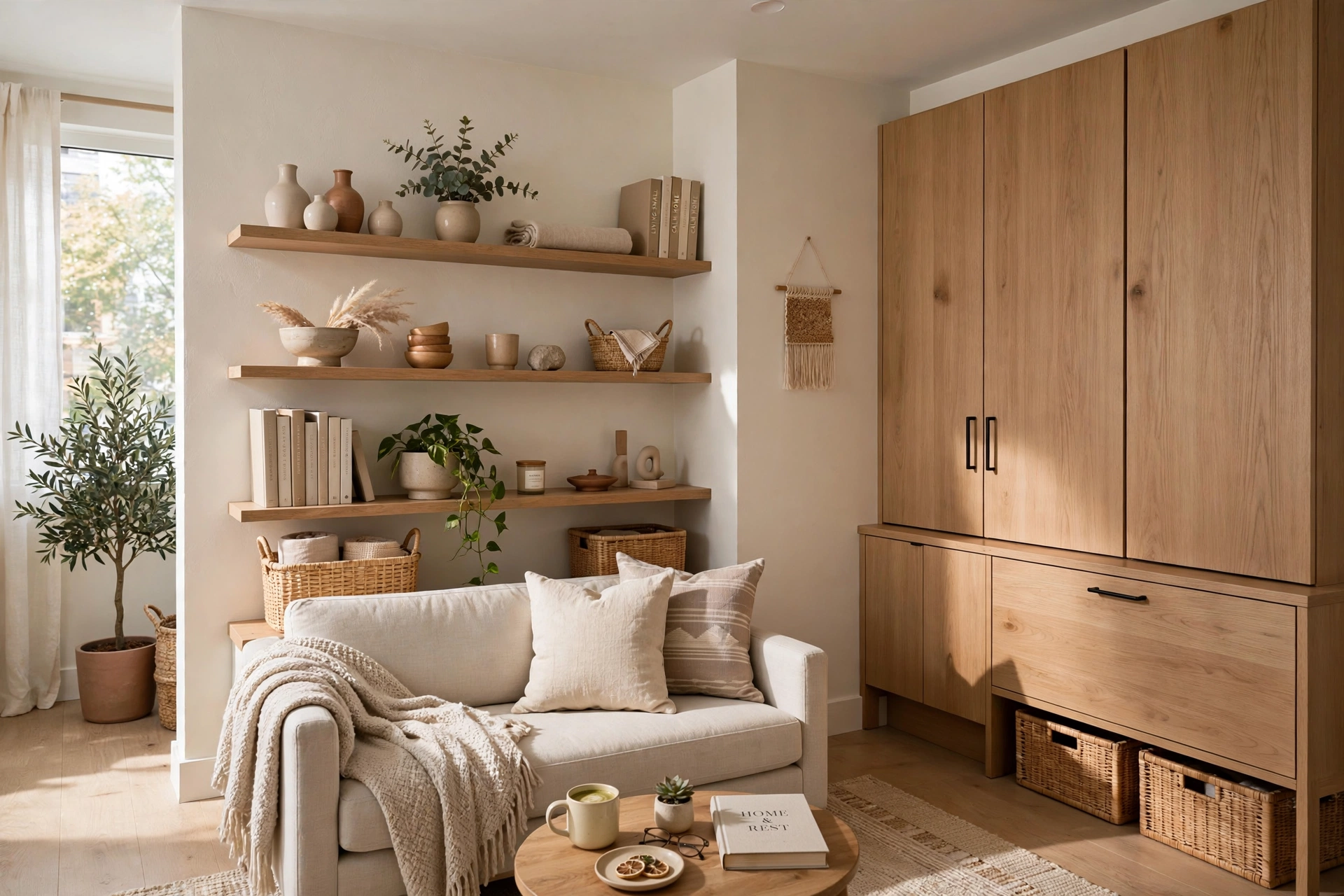
Glass-front cabinets: the look of open with dust protection. Open shelves with baskets: visual texture hiding clutter. Floating shelves for display + closed credenza below for storage.
🛒 Shop This Look:
The Honest Pros and Cons of Each
Open Storage
Pros: Makes small rooms feel larger (no visual bulk from cabinet doors); everything is visible so you actually use what you own; cheaper than cabinetry; easier to rearrange; forces editing, which keeps clutter down; displays beautiful items as decor.
Cons: Everything must look good — or at least look intentional — all the time; collects dust and cooking grease, so items need regular wiping; visual noise can make a small room feel chaotic; no hiding the ugly-but-necessary (cleaning supplies, mismatched containers); requires ongoing styling discipline.
Closed Storage
Pros: Hides visual clutter completely; protects contents from dust and grease; calmer, more streamlined look; can hold mismatched, ugly, or purely functional items; lower daily maintenance.
Cons: Cabinetry costs more than shelving; bulky doors can make small rooms feel smaller and darker; “out of sight, out of mind” leads to forgotten items and duplicate purchases; deep cabinets become black holes without organizers; doors need clearance to open, which eats floor space.
Where Open Storage Works Best
- Kitchens — for daily dishes: Open shelves near the dishwasher for everyday plates, bowls, and glasses work beautifully because high turnover means no dust buildup. Keep the rarely-used wedding china behind doors.
- Home offices: Open shelving for books, supplies, and reference materials keeps everything at hand. Use matching bins on some shelves for the ugly stuff.
- Bathrooms — for display-worthy items: Rolled towels, attractive bottles, and plants look great on open shelves. Medicines, cleaning products, and personal items belong behind a door.
- Entryways: Open hooks and a shelf for keys, bags, and daily items beat a closed closet for grab-and-go convenience. Just limit it to what you actually use daily.
- Anywhere you want the room to breathe: Replacing a bulky bookcase with floating shelves can make a small living room feel noticeably larger.
Where Closed Storage Wins
- Kitchens — for everything else: Pots, pans, small appliances, food storage, cleaning supplies. Kitchens generate grease and grime that settles on open shelves; closed cabinets protect your things and your sanity.
- Bedrooms: Clothes, linens, personal items. Open clothing storage (like garment racks) looks great in photos and chaotic in real life unless your wardrobe is extremely curated.
- Kids’ spaces: Toys, craft supplies, and games multiply. Closed storage with labeled bins keeps the chaos containable. Open storage in a kid’s room is a promise you’ll regret.
- Utility and cleaning supplies: No one needs to see the mop. Ever.
- Small rooms that already feel busy: If a room has a lot going on — patterns, colors, activity — closed storage calms it down. Open storage adds visual information; closed storage subtracts it.
The Hybrid Strategy Most Small Homes Need
The best small homes don’t choose — they layer. A practical formula:
- 70% closed, 30% open is the sweet spot for most rooms. Enough closed storage to hide the mess of real life, enough open storage to keep the room feeling airy and personal.
- Open at eye level and above, closed below: Open shelves mounted higher on the wall keep sight lines clear while lower cabinets hide the bulk. This is why the “open shelves above, cabinets below” kitchen works so well.
- Open for display, closed for function: If it’s beautiful or used daily, it can live in the open. If it’s ugly or used rarely, it goes behind a door. Run every item through this filter.
- Use closed containers on open shelves: The cheat code. Baskets, boxes, and bins on open shelving give you the airy look of open storage with the hidden mess of closed storage. Label them so you can find things.
How to Style Open Shelves Without the Clutter Look
Open shelves fail when they’re treated as extra storage. They succeed when they’re treated as display with storage benefits. The difference is curation:
- Leave breathing room: Aim for shelves that are 70–80% full at most. Negative space is what separates “styled” from “stuffed.”
- Group in odd numbers: Threes and fives look intentional; pairs look sparse and fours look crowded. This applies to stacks of bowls, groups of jars, and clusters of decor.
- Vary heights: A shelf with everything at the same height looks like a store display. Mix tall (vases, pitchers), medium (stacked bowls), and short (small plants, candles) for visual rhythm.
- Repeat materials: White ceramics + wood + glass is a combination that almost always works. Pick two or three materials and repeat them across shelves for cohesion.
- Anchor with something large: One bigger piece per shelf (a large platter, a piece of art leaned against the wall, a substantial plant) gives the eye a resting place.
- Edit ruthlessly, then edit again: If you wouldn’t photograph it, it probably shouldn’t be on the open shelf. Move it to closed storage without guilt.
Making the Decision: A Room-by-Room Cheat Sheet
If you’re renovating or refurnishing and need a quick answer per room:
🛒 Shop This Look:
- Small kitchen: Closed lowers, one or two open uppers for daily dishes. Glass-front cabinets are the middle ground — the look of open with the protection of closed.
- Small living room: Closed media console (hides cables and clutter), open shelving or a styled bookcase for books and decor. One open element per wall maximum.
- Small bedroom: Mostly closed — dresser, closet, nightstand drawers. One open shelf or a leaning shelf for books and a plant is plenty.
- Small bathroom: Closed vanity for the functional stuff, one open shelf for towels and display. Medicine cabinet (mirrored, closed) over the sink.
- Entryway: Mostly open — hooks, a shelf, a tray. This is the one zone where open wins outright, because speed matters more than tidiness at the door.
Frequently Asked Questions
Do open shelves get dusty?
Yes — that’s the honest answer. In kitchens, they also collect a fine film of cooking grease. Items used daily stay clean through use; decorative items need dusting every week or two. If you hate dusting, limit open shelving to one or two shelves and keep the rest closed.
Is open storage cheaper than cabinets?
Almost always. Floating shelves or simple bracket shelves cost a fraction of custom or even stock cabinetry. That’s a genuine advantage in kitchens and offices. Just factor in the ongoing time cost of keeping them styled and clean.
How do I make open shelves look good in a rental?
Use freestanding open shelving (bookcases, baker’s racks, leaning shelves) instead of wall-mounted — no holes, no landlord issues. Style with the same curation rules, and use baskets for anything unattractive.
What’s the best mix for a small kitchen?
Closed base cabinets (for pots, appliances, and cleaning supplies) with one or two open shelves for daily dishes and a few beautiful items. This gives you the airy feel without the maintenance burden of a fully open kitchen.
Can I convert closed cabinets to open shelving?
Yes — removing upper cabinet doors is a popular (and reversible) update. Store the doors and hardware so you can reattach them later. Paint or wallpaper the cabinet interiors first, since the insides of cabinets are rarely finished to display standard. This works best on one bank of cabinets, not the whole kitchen.
Open Storage in Small Kitchens: Making It Work
Kitchens are where the open-vs-closed debate gets most heated, so here’s the detailed playbook. The golden rule: open shelves for the beautiful and the daily, closed cabinets for everything else.
- What earns open shelf space: everyday dishes, glasses, a few cookbooks, one or two decorative items (a plant, a piece of art). These are things that look good and get used often enough to stay clean.
- What stays behind doors: mismatched mugs, plastic containers, small appliances, spices (they fade in light and collect grease), cleaning supplies, anything chipped or stained.
- The grease factor: open shelves near the stove collect a sticky film. Either keep shelves away from the cooking zone or accept wiping them down weekly. Glass-front cabinets give you the display look with grease protection.
- Weight limits matter: dishes are heavy. A shelf of stacked plates can weigh 40+ pounds. Use proper brackets anchored into studs — drywall anchors alone will eventually fail under dish weight.
- Depth: 10–12 inches is ideal for dishes. Deeper shelves waste space and let things get lost; shallower won’t hold dinner plates.
Transitioning Gradually: The Low-Risk Test
Not sure which camp you’re in? Test before committing:
- The one-shelf experiment: clear a single shelf or remove one cabinet door. Live with it for a month. If you love the look and maintain it easily, expand. If it stresses you out, you’ve learned something cheaply.
- Start with a low-stakes room: try open shelving in the laundry room or home office before the kitchen. You’ll learn your real tolerance for visible storage without the pressure of the home’s most-used room.
- Photograph your shelves: take a phone photo of your open storage. The camera reveals clutter your eyes have adapted to. If the photo looks good, your styling is working.
🛒 Shop This Look:



