
As an Amazon Associate, I earn from qualifying purchases. This means I may earn a commission if you purchase through links on this page — at no extra cost to you.
Stuck staring at a room that feels unfinished? You’re not alone. These 15 painting tricks make small rooms look bigger solve the most common design dilemmas — with solutions for every budget, space, and skill level.
Related: How To Make Your Small Room Look Taller With Art
Even subtle tricks like two-tone walls or reflective finishes make a room feel airy. Understanding how color and patterns interact with light helps you design small spaces that appear larger, brighter, and more inviting.
1. Light, Neutral Wall Colors
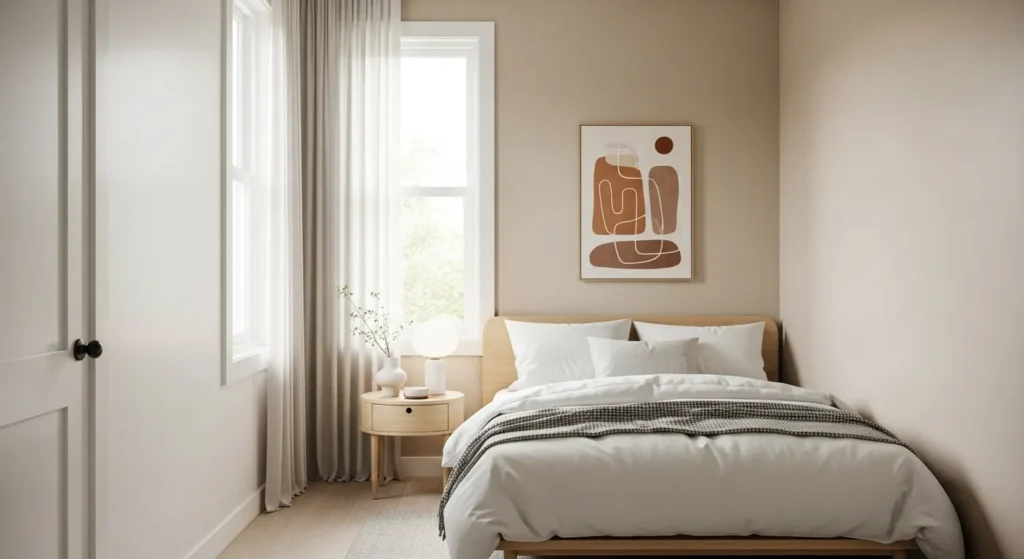
Using light, neutral colors opens up a small room. Whites, creams, and pale grays reflect more light, making the space feel airy and larger than it is.
Pair with minimal furniture and simple decor. Avoid dark tones on all walls, as they can shrink the space visually. Light colors create an instant sense of openness.
2. Horizontal Stripes

Painting horizontal stripes creates the illusion of width. The eye follows the lines across the wall, making narrow rooms feel broader.
Use subtle contrasts between stripe colors for a clean effect. Avoid overly bold or thick stripes, which can overwhelm a small space.
3. Vertical Stripes
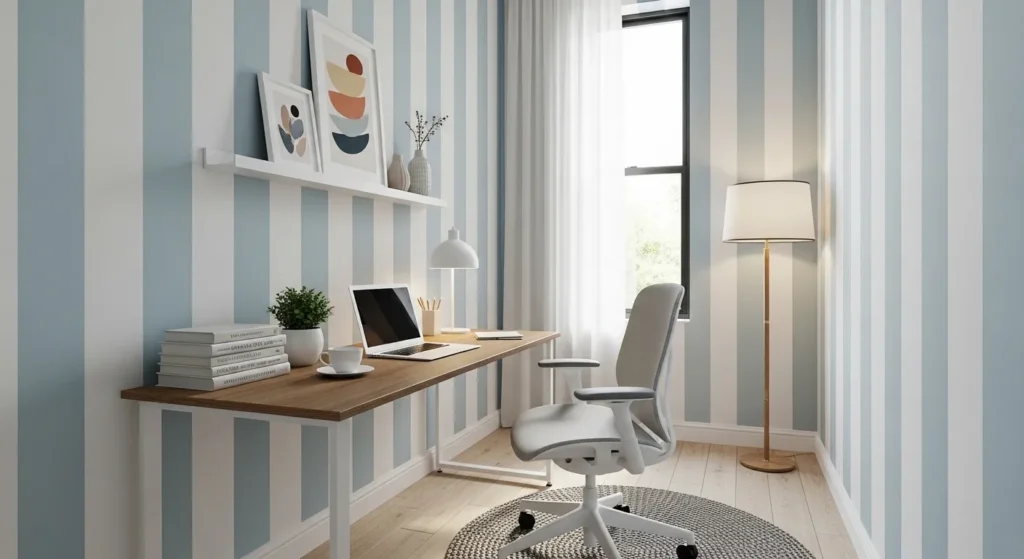
Vertical stripes make ceilings appear taller. Narrow spaces feel more open and airy when the eye is drawn upward along the lines.
Use soft or muted colors to avoid feeling busy. Vertical stripes are especially effective in rooms with low ceilings.
4. Accent Walls
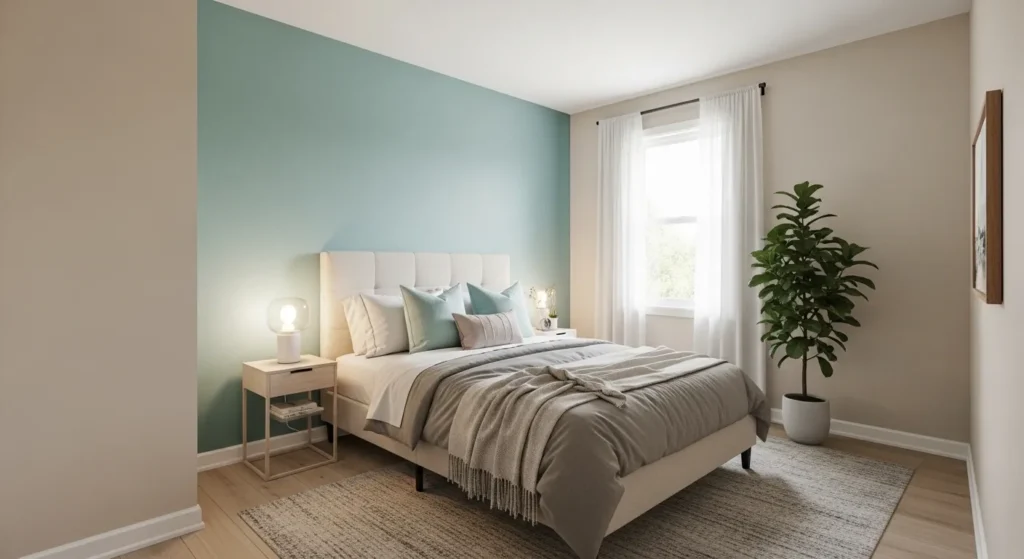
Adding a single accent wall can make a room feel larger by creating depth. Darker or richer colors on one wall draw attention without closing in the space.
Keep other walls light and neutral. Position the accent wall strategically, such as behind a bed or sofa, to anchor the room visually.
5. Monochromatic Color Scheme

Using different shades of the same color makes the room feel cohesive and expansive. Monochromatic palettes reduce visual breaks, tricking the eye into seeing more space.
Add texture through fabrics or accessories to prevent the space from feeling flat. This approach works for both modern and traditional interiors.
🛒 Shop This Look:
6. Lighter Ceilings
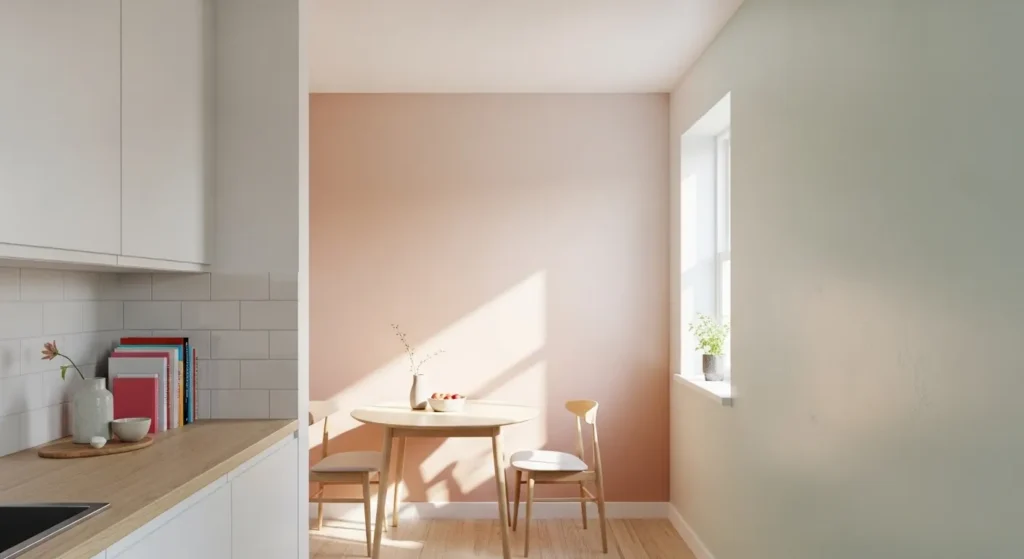
Painting the ceiling lighter than the walls makes the room feel taller. Light-reflecting ceilings enhance openness and prevent a boxed-in feeling.
Even a slightly lighter tone than the walls works. White or pale shades keep small spaces from feeling cramped.
7. Glossy Finishes
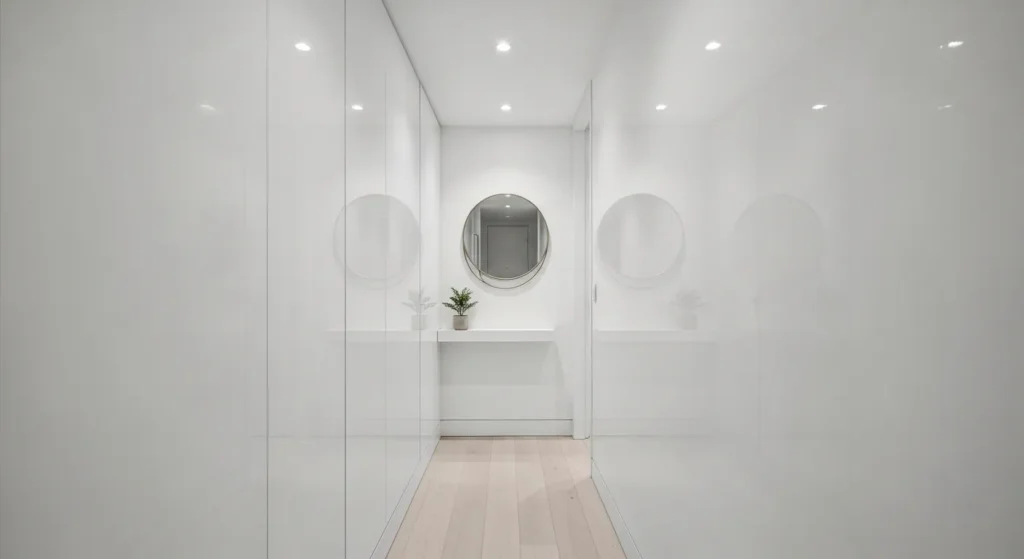
Glossy or semi-gloss paint reflects light, creating the illusion of extra space. Small rooms appear brighter and more open when walls subtly mirror light.
Use glossy finishes selectively to avoid glare. Pair with light colors to maximize the sense of expansion.
8. Two-Tone Walls
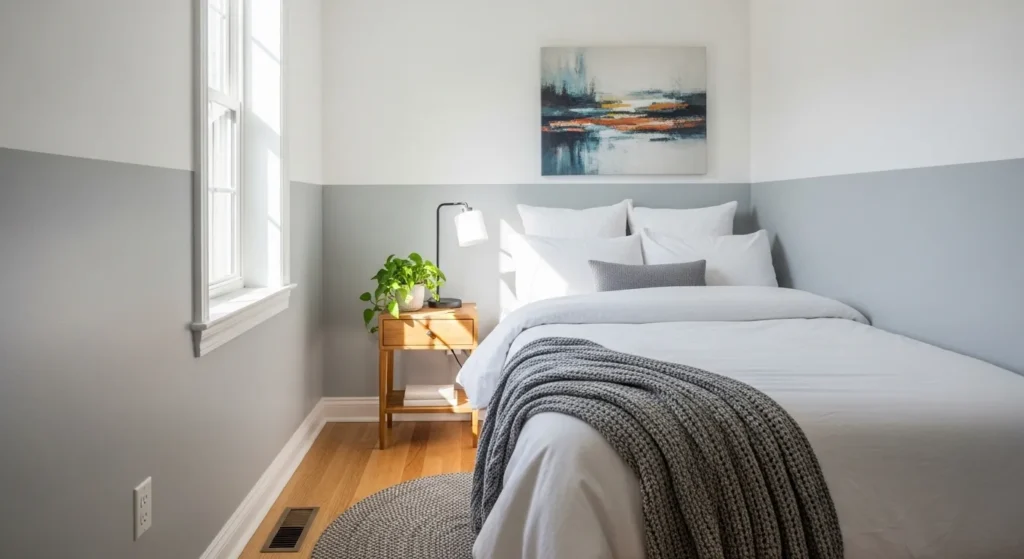
Two-tone walls can define space and create depth. Lighter upper walls lift the ceiling visually, while a slightly darker lower portion anchors the room.
Keep the transition line horizontal and simple. This trick adds dimension without making the room feel crowded.
9. Light-Colored Trim
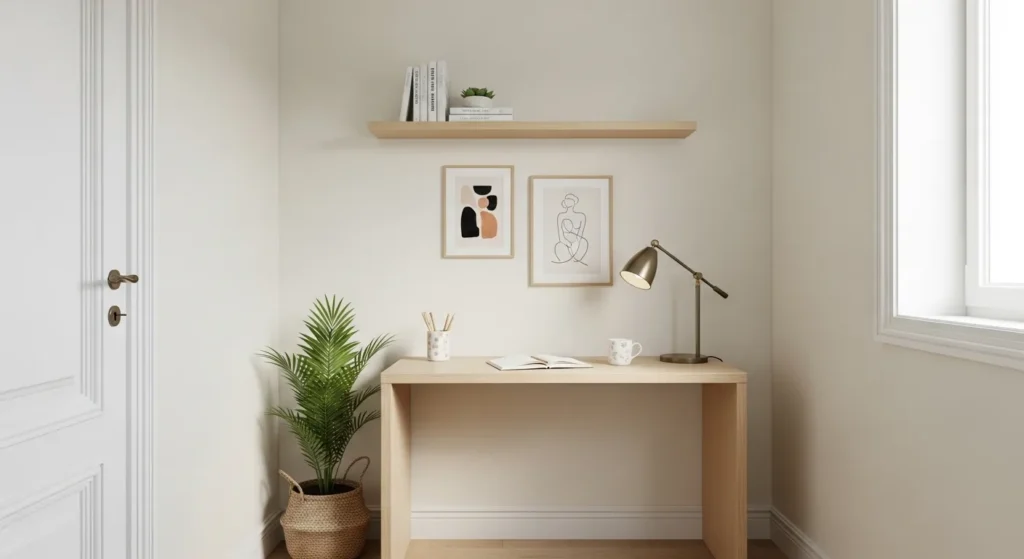
Painting trim and moldings in a light shade that matches walls makes corners and edges recede. The room appears larger and more continuous.
Avoid dark trims that break up the space. Light trim subtly expands the perception of the room without overpowering design.
🛒 Shop This Look:
10. Strategic Use of Dark Colors
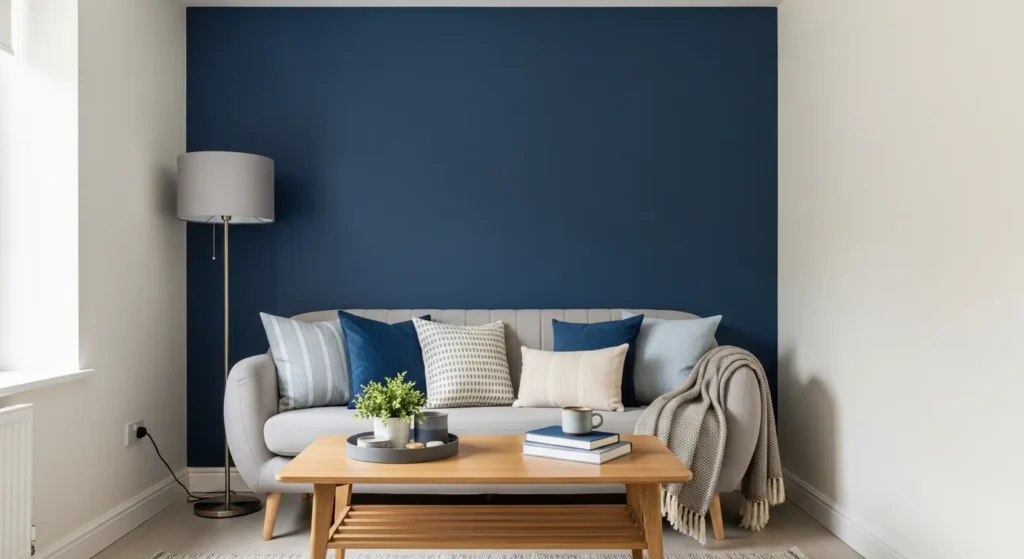
Using a dark color on one wall can create depth, making the room feel bigger in proportion. The contrast tricks the eye into perceiving more space.
Keep surrounding walls light to avoid shrinking the room. This works best on a wall opposite the main entry or behind key furniture.
11. Diagonal Patterns
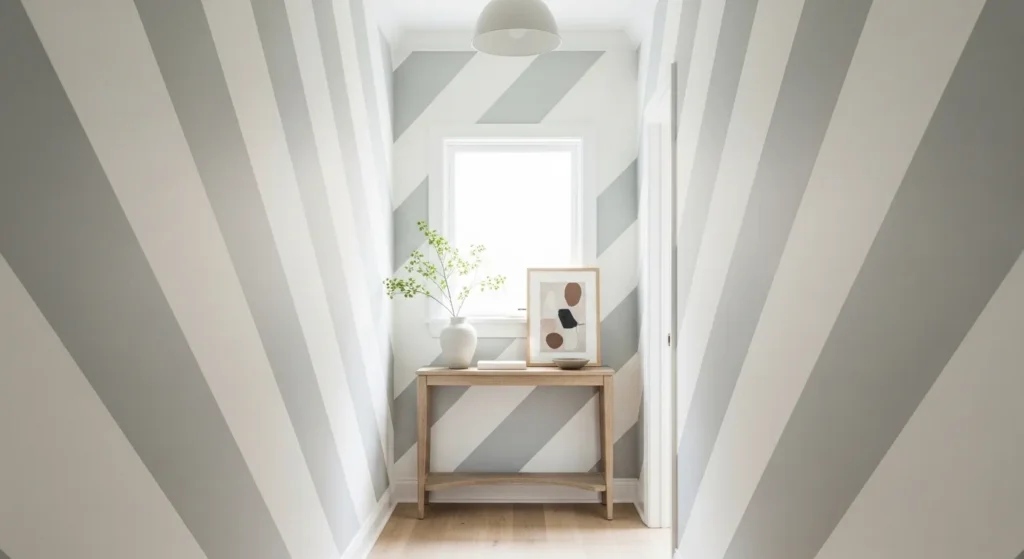
Diagonal stripes create movement and visual interest while tricking the eye into perceiving a larger space. Lines angled across walls or floors make rooms feel longer or wider.
Use soft, muted colors to prevent the pattern from feeling overwhelming. Diagonal designs work well on a single feature wall or across the floor for continuity.
12. Painted Ceiling Beams
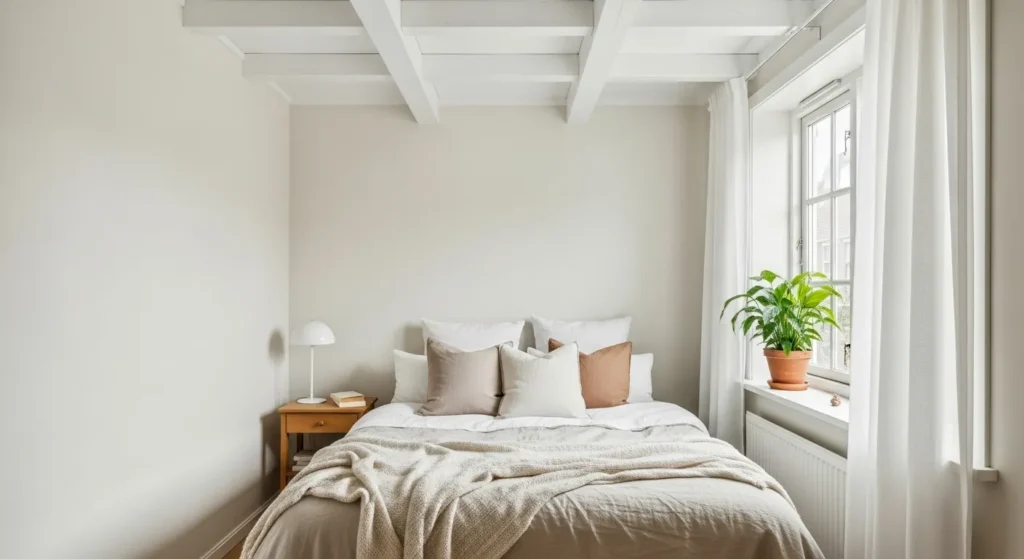
Painting ceiling beams or molding in a lighter color than walls lifts the ceiling visually. It adds dimension while making the room feel taller.
Pair with neutral wall colors to maximize openness. This subtle trick adds architectural interest without shrinking the space.
13. Reflective Paint Accents
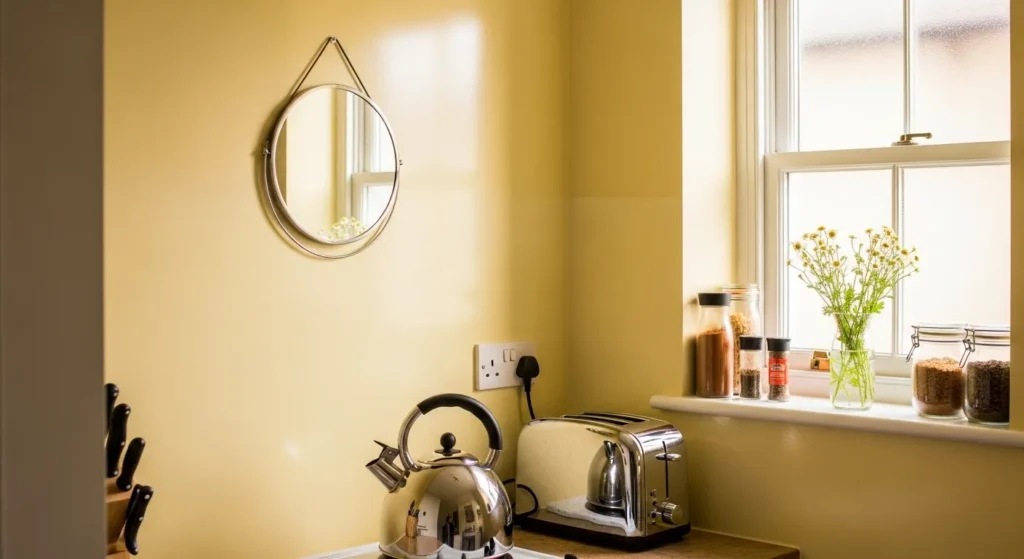
Reflective paint, such as satin or eggshell finishes, bounces light around the room. It enhances brightness and gives the illusion of larger space.
Focus on walls opposite windows or light sources for maximum effect. Even small reflective areas can dramatically open up a compact room.
🛒 Shop This Look:
14. Pale Floors and Matching Walls

Matching light floors and walls creates a seamless visual flow, making rooms feel more expansive. The continuity tricks the eye into seeing one extended surface.
Add texture through rugs or fabrics to prevent flatness. This approach works especially well in narrow or small apartments to maximize perceived space.
15. Highlighting Architectural Features
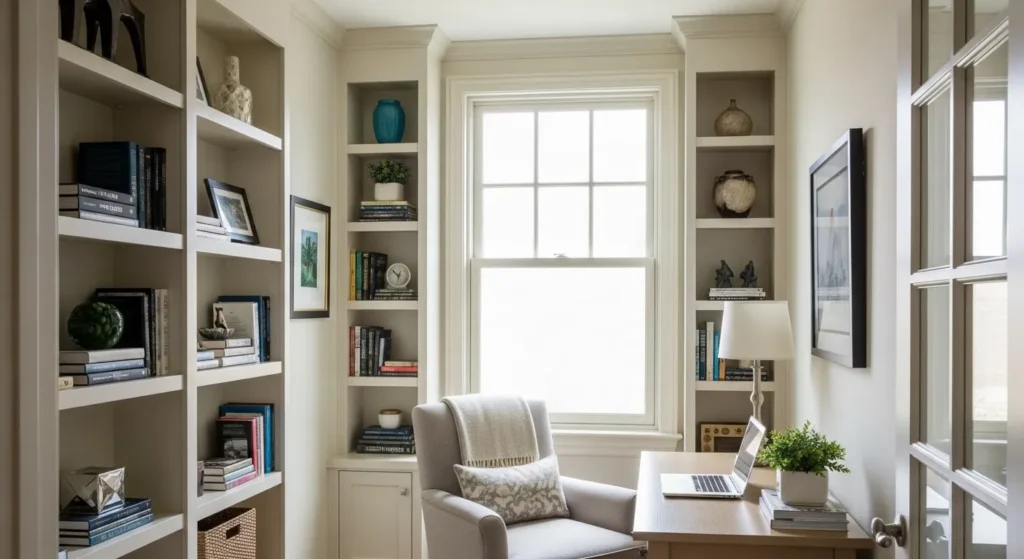
Painting architectural features slightly lighter or darker than walls emphasizes depth. Highlighting moldings, niches, or shelves draws the eye and creates dimension.
This technique adds character while expanding the perceived size. Subtle contrasts in tone make the room feel layered and visually interesting without overcrowding.
Conclusion
Paint is a powerful tool for expanding small rooms visually. Light colors, strategic stripes, and accent walls add depth and dimension.
Combine neutral tones, reflective finishes, and clever contrasts to maximize space perception. With these painting tricks, even the smallest rooms can feel open, airy, and effortlessly stylish.
Choosing the Right Sheen for Small Spaces
Paint sheen affects how spacious a room feels just as much as color does, yet most people default to flat or eggshell without considering the alternatives. In small rooms, a subtle reflective quality bounces light around and visually pushes walls outward. Eggshell and satin finishes are the sweet spot. They reflect enough light to brighten the space without highlighting every wall imperfection the way semi-gloss would.
Reserve flat or matte paint for ceilings in small rooms. A flat ceiling absorbs light rather than reflecting it downward, which paradoxically makes the ceiling feel higher because your eye is not drawn to it. This is especially effective in rooms under eight feet tall. For trim and molding in a small space, consider painting it the same sheen as the walls rather than defaulting to semi-gloss white. The slight contrast in texture still defines the trim, but eliminating the color break keeps the eye moving smoothly around the room instead of stopping at every edge. Related: How to Update Oak Cabinets Without Painting.
Bathrooms and kitchens break the rules slightly because moisture demands more washable finishes. In these small spaces, satin on the walls handles humidity while still contributing to the light-bouncing effect. Just avoid going glossier than satin on large wall areas. High-gloss walls in a tiny powder room can feel like being inside a lacquered box rather than an airy space.
Common Painting Mistakes That Shrink a Room
The fastest way to make a small room feel smaller is painting the walls and ceiling in sharply contrasting colors. A dark ceiling over light walls visually lowers the ceiling height, which is the opposite of what you want. If you love a moody ceiling color, extend it at least a foot down the walls to blur the transition line. Your eye reads the blurred boundary as farther away than a hard edge.
Another frequent mistake is stopping paint at the wrong place. When painting an accent wall, amateurs often stop exactly at the corner. This creates a hard vertical line that chops the room into segments. Instead, carry the accent color around the corner by six to twelve inches onto the adjacent wall. This designer trick, sometimes called color wrapping, makes the accent feel intentional and continuous rather than pasted on.
Skipping primer on a color change is a false economy that shows up as uneven coverage requiring extra coats. In small rooms where every wall is close to the eye, patchy coverage is far more noticeable than in a large space viewed from distance. One coat of quality primer followed by two finish coats gives the smooth, uniform surface that small rooms need to feel polished rather than cramped. The primer coat also lets you evaluate the color at full saturation before committing to the finish layers.
Painting Tricks by Room Type
Bedrooms benefit most from the monochromatic approach. Paint walls, trim, and even the ceiling in closely related tones of the same color family. A soft warm white on walls with a barely-there deeper tone on the ceiling creates depth without contrast. This works because bedrooms are viewed mostly in soft evening light, where subtle tonal shifts read as cozy rather than flat.
Small home offices need a different strategy since they are used in bright daylight. Here, a light cool color like pale blue-gray or soft sage on the walls behind the desk reduces screen glare by cutting wall brightness in your peripheral vision. Keep the wall facing the window slightly lighter to balance the natural light. This targeted approach matters more than any single color choice because office eye strain comes from contrast extremes, not from the wall color alone.
Narrow hallways and entryways respond well to horizontal emphasis. A chair rail or painted wainscot line at the standard thirty-six inches, with a slightly darker tone below and lighter above, stretches the perceived width. In a hallway under four feet wide, this single trick can make the space feel a full foot wider. Paint the inside of the front door the same color as the hallway walls to extend the sightline when the door stands open.