
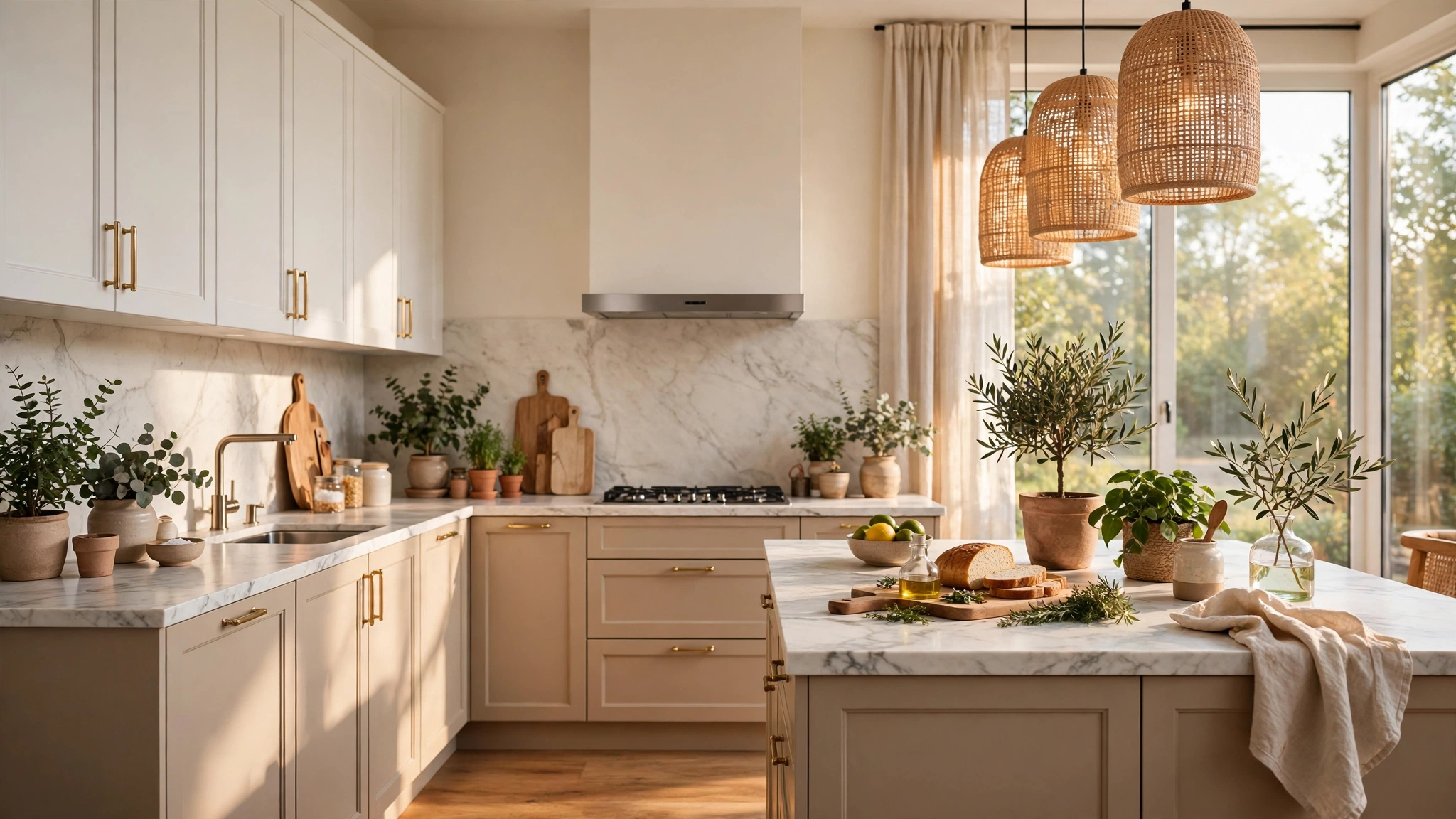
The kitchen is where a holiday visit really happens. Guests drift in for coffee before anyone is properly awake, they lean against the counter while something simmers, and they look for a glass of water without wanting to interrupt the cook. A guest-ready kitchen is not a redesigned kitchen. It is the same room, cleared, set out, and easy to read, so everyone can help themselves without asking where everything is.
That is the aim of this guide. You will not need new cupboards, a new colour scheme, or a full redecoration. You will need a clear stretch of counter, a drinks spot guests can find on their own, seating that does not block the cooking, and a few small touches that make the first morning feel calm. If your holiday living room is where guests settle in the evening, this is the room that looks after them in the morning.
Start with the work, not the decor
Begin with how the kitchen will be used, not with how it will look in a photograph. Think about the first cup of tea, the breakfast plates, the snack that appears halfway through the afternoon, and the washing-up that follows a shared meal. When you know those moments, the decisions get simpler. The room does not need to impress guests. It needs to let them move, pour, sit, and tidy up without getting in the cook’s way.
Walk the room as a guest would, from the doorway to the kettle, from the fridge to a seat, and from a seat back to the sink. Notice where you pause, where you reach across someone, and where a door or a drawer gets in the way. Those small pauses are the work. Fix them first, and the decorating will take care of itself. If a bigger change feels tempting, pause and ask whether it would help anyone pour a drink or find a plate more easily. If it would not, leave it for another season. If you would like help thinking through the layout, our services can help you plan the small changes that make the biggest difference.
Clear the counters — and keep one stretch clear
Counters are the first thing guests notice, because they are where everything happens. Start by taking away what does not need to be out. Put the small appliances you will not use every day back in a cupboard, move the post and the paperwork to another room, and give the fruit bowl, the chopping board, and the everyday cooking tools a clear home of their own. The aim is not an empty counter. It is a counter with room to work, room to set down a plate, and room for a guest to put a mug without moving three other things first.
Then protect one stretch of counter and keep it clear all day. It might be the end of an island, the counter beside the kettle, or a quiet corner away from the hob. That is the landing place for trays, for a plate that is waiting to be served, and for the mug a guest sets down while they talk. Just as a clear surface in the guest bathroom makes mornings easier, a clear stretch here stops the kitchen from feeling crowded before cooking has even begun. Wipe it down in the evening, leave it empty overnight, and it will be ready for the first person up.
Give drinks a home of their own
Most guests will ask for a drink far more often than they ask for anything else, so give drinks a home of their own. Choose one spot, close to the kettle or the fridge but away from the hob, and keep it simple. A tray with mugs, a small jug, a few glasses, and the tea and coffee you use every day is enough. Add a small bowl for spoons, a cloth for spills, and a place for used mugs to gather, and guests will know exactly where to go without opening every cupboard.
Keep water easy to find, too. A jug in the fridge, a glass beside it, and a second jug on the drinks tray will save a dozen small questions. If guests have slept well in a comfortable holiday guest room, they will still wake up thirsty, and a clear drinks spot lets them help themselves while the house is still quiet. In the evening, the same tray can hold the glasses for a quiet drink, so the kitchen stays calm after the meal instead of turning into a second round of washing-up.
Make seating and flow easy to read
Guests need a place to sit that does not block the cooking. If you have stools at an island or a table in the corner, make that the sitting place, and keep the cooking side clear. Pull the stools out a little, leave space behind them for someone to pass, and put a small cushion or a folded throw on each seat if the morning is cool. When seating is easy to see, guests settle there naturally instead of standing in the middle of the room, in the cook’s way.
Flow matters just as much as seating. The path from the door to the fridge, from the fridge to the sink, and from the sink to the table should stay open, even when the room is full. Move the bin to the edge of that path, not in the middle of it, and keep the dish rack where a guest can reach it without stepping across the cook. The flow should feel as easy as the welcome at the Thanksgiving entryway, where the first step inside sets the tone for the whole visit. A clear path tells guests they are welcome to move around, and it tells the cook they will not be crowded.
The first-morning kitchen scan
The first morning sets the tone, so give the kitchen a short scan before anyone else is up. It takes only a few minutes, and it is the most useful habit in this whole guide. Start at the door, look at the room as a guest will see it, and ask one simple question at each spot: can a guest find what they need, use it, and put it back without asking? If the answer is yes, leave it alone. If it is not, fix that one spot and move on.
Check the kettle and the drinks tray first, then the clear stretch of counter, then the sink. Is there a clean cloth, room in the dish rack, and a clear space for a used plate? Look at the table next. Are the chairs pulled out, is there a place for a bowl and a mug, and is the light on if the morning is dark? Finish at the door. Is there a hook for a coat, a clear path in, and a bin that is not overflowing? Small checks like these stop small problems from becoming the story of the morning.
Smells and sound: the quiet welcome
A kitchen welcomes guests through smell and sound long before anyone comments on how it looks. Open a window for a short while in the morning, even on a cold day, and let the room breathe. If you are cooking, keep the extractor on and the door to the rest of the house open for a little while after, so the smell of cooking does not settle in every room. A simple scent from the kitchen itself, like fresh coffee, warm bread, or a pot of water with orange peel and a cinnamon stick, is usually enough. Keep it gentle, so guests notice it without feeling overwhelmed.
Sound matters, too. A quiet radio, a playlist at a low volume, or simply the sound of the kettle and low conversation can make the kitchen feel lived in rather than silent. Keep the volume low enough that no one needs to raise their voice, and turn it down when the table is set. If the house is busy, a calm kitchen gives guests a place to pause. If the house is quiet, it gives them a gentle start to the day.
Use what you already own
You do not need to buy anything new. A plain tray, a jug you already love, a few matching mugs, and a folded cloth can do most of the work. Use a bowl for fruit, a few stems from the garden in a small vase, and the serving plates you already own. When everything comes from the house itself, the kitchen feels like itself, only tidier and more welcoming.
Guest-kitchen fixes by spot
| Spot | Quick fix | What it gives guests |
|---|---|---|
| Counter | Clear one stretch and keep it empty | Room for trays, plates, and mugs |
| Sink/Fridge | Wipe the sink and chill a jug of water | A clear sink and a drink to find |
| Table | Pull out chairs and set out bowls and mugs | A place to sit without clearing space first |
| Door/Hook | Hang a hook and clear the path in | A place for a coat and an easy way in |
A kitchen that is ready, not redone
Set the table simply, with bowls, mugs, and a jug of water, and keep anything tall in the middle low so guests can see each other. Leave a hook by the door, a clear path in, and a folded cloth nearby for spills. Then stop. A guest-ready kitchen is not finished when it looks new. It is finished when guests can find a drink, sit down, and feel at home, without you having to redecorate the whole room.




1 thought on “Holiday Kitchen Ideas: A Guest-Ready Kitchen Without Redecorating the Whole Room”
Comments are closed.