

As an Amazon Associate, I earn from qualifying purchases. This means I may earn a commission if you purchase through links on this page — at no extra cost to you.
Living room curtains should just kiss the floor — the hem grazing the floor without pooling or floating. This “kiss” length looks tailored and intentional. Hang the rod 4–6 inches above the window frame and extend it 3–6 inches beyond each side for the most flattering result.
The 4 Curtain Lengths, Ranked
1. Kiss (Best for Living Rooms)
Hem touches the floor lightly. Clean, tailored, works with every style. The safest choice and the one designers specify most.
2. Puddle (Formal/Traditional Only)
2–4 extra inches pooling on the floor. Romantic and luxurious but collects dust and pet hair — high maintenance. Only for formal rooms without pets or kids.
3. Float (Casual)
Hem hovers ½–1 inch above the floor. Practical (easy vacuuming underneath) but can look unintentional if not precisely even. Good for rentals.
4. Sill (Not for Living Rooms)
Ends at the windowsill. Fine for kitchens and bathrooms; looks stubby and cheap in living rooms. Avoid.
How to Measure
- Decide rod placement: 4–6 inches above the frame (or at ceiling height for drama)
- Measure from the rod down to the floor
- For “kiss” length: that’s your panel length
- For puddle: add 2–4 inches
- Buy the next standard size up if between sizes — hemming is cheap
Width Matters Too
Panels should total 1.5–2× the window width for proper fullness when closed. Two panels per window is standard. Skimpy curtains (panels that barely cover the window) are a common mistake — when in doubt, go wider.
Rod Placement Rules
- Height: 4–6″ above frame; higher = taller-looking windows
- Width: 3–6″ beyond frame each side; wider = larger-looking windows + more light when open
- Low ceilings: mount at ceiling, use long panels — draws the eye up
Curtain Fabrics and Fullness for Living Rooms
Length gets the attention, but fabric determines how curtains actually look hanging in your living room. Linen and linen-blends are the designer favorite for living rooms: they drape beautifully, filter light softly, and their natural slubs add texture that reads as effortless sophistication. They wrinkle, but the wrinkles are part of the charm in casual and modern rooms. Cotton canvas and duck cloth are sturdier and more structured — good for tailored looks, less good for flowing drape. Velvet is the luxury play: it blocks light, insulates against drafts, and brings drama and richness, but it demands a formal or moody room to avoid looking overdressed, and it collects dust and pet hair relentlessly.
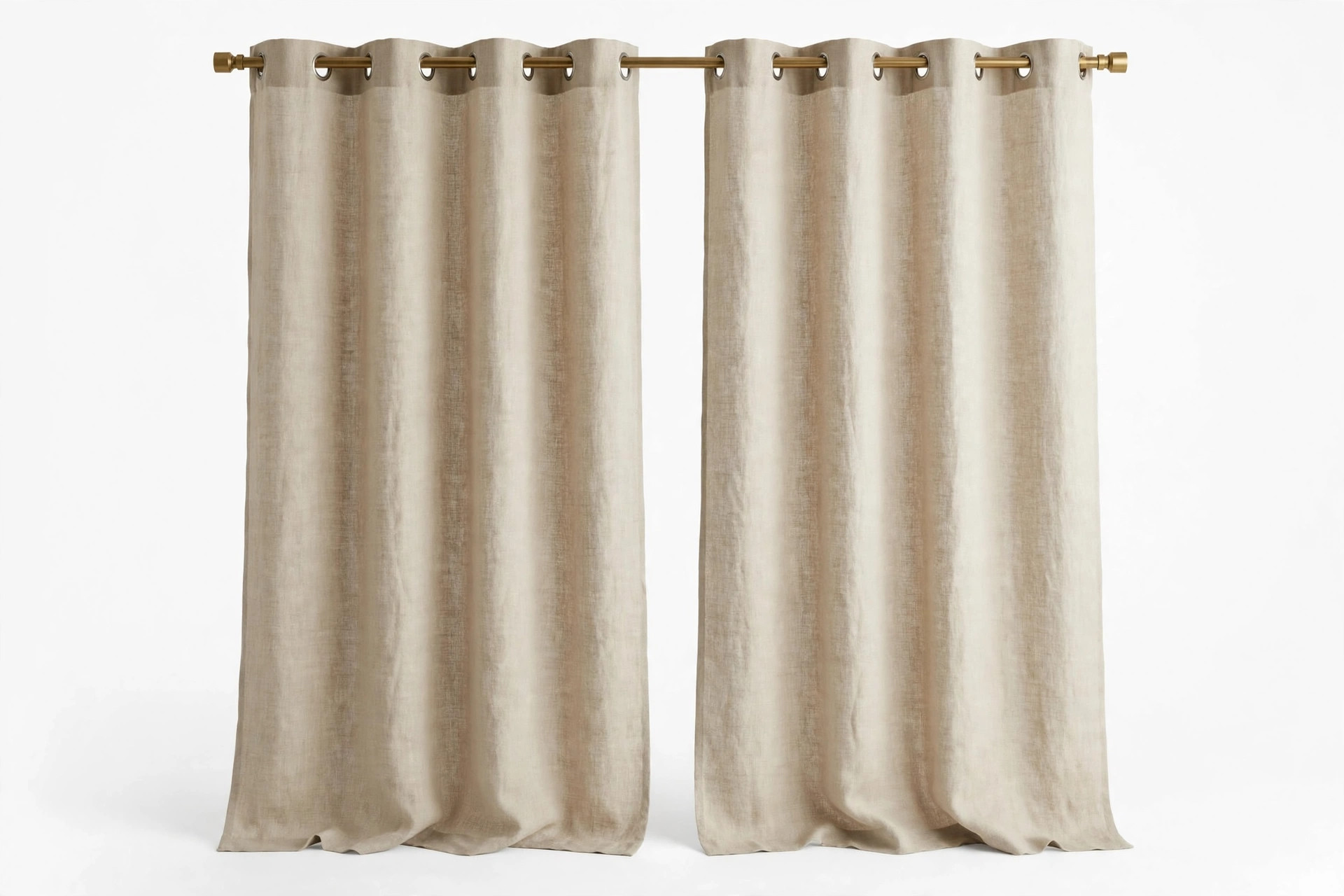
Best for a relaxed, tailored kiss-length look in living rooms.
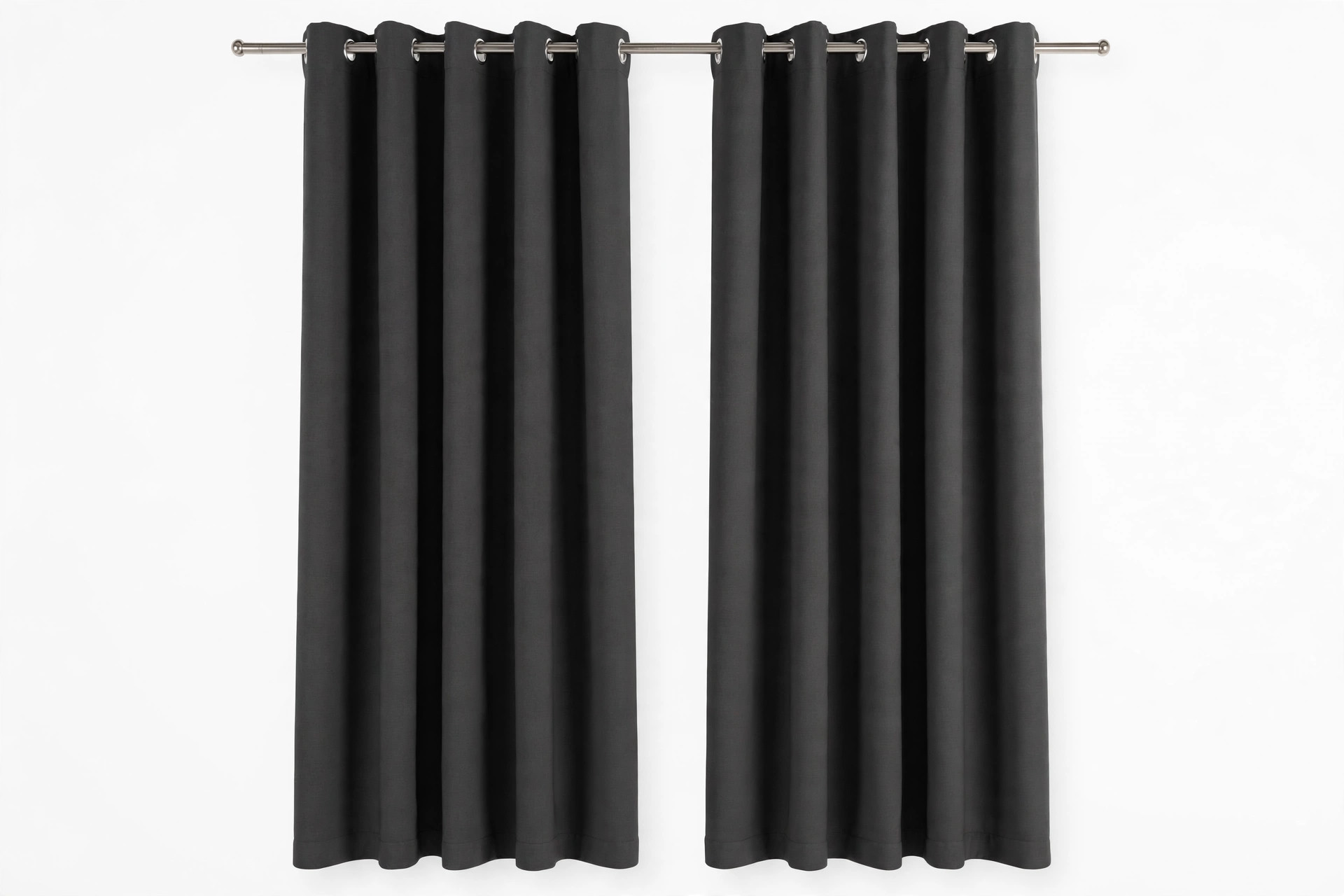
Best for formal living rooms where blocking light and drafts matters.
Sheers deserve their own consideration. Used alone, sheers provide daytime privacy while flooding the room with light — ideal for living rooms with great views where you never want to block the outlook. Layered under heavier drapes, sheers give you three light levels: sheers alone (daytime privacy), drapes open (full view), drapes closed (nighttime privacy and insulation). This layered approach is the most functional window treatment possible and looks professionally designed. Choose sheer fabrics in white, ivory, or natural tones; colored sheers tint the room’s light in ways that get tiring.

NICETOWN White Sheer Curtains, 96 inches Long, Rod Pocket Voile Sheer, 2 Panels, W54 x L96
Best for daytime privacy while keeping the view and light.
Lining transforms curtain performance. Unlined curtains show sunlight through the fabric (fine for sheers, problematic for colored drapes that fade). Standard lining adds body, improves drape, and protects the face fabric from sun damage — worth it for any curtain you expect to keep for years. Blackout lining is essential for media rooms and anyone sensitive to morning light, but it makes curtains stiffer and heavier; reserve it for where darkness matters. Thermal interlining (a flannel-like layer) insulates drafty windows noticeably — a real energy consideration for old windows, not just marketing.
Header style — how the curtain attaches to the rod — affects both looks and function. Pinch pleats (the tailored, sewn-in folds) are the most formal and the best-draping; they need drapery hooks and rings or a traverse rod. Grommets (metal rings punched through the fabric) are modern and casual, sliding easily — but the large folds they create need wide stacking space when open. Rod pockets are the simplest and cheapest but gather unevenly and are hard to open and close daily. Back tabs give a clean pleated look similar to pinch pleats with easier installation. For living rooms where curtains open and close daily, prioritize smooth-gliding headers (grommets or rings) over pretty-but-stubborn ones.
Special Cases: Bay Windows, Sliders, and Odd Sizes
Standard advice assumes standard windows; real living rooms are rarely so cooperative. Bay windows need either a bay-specific curved rod (which follows the bay’s angles with flexible joints) or individual rods on each window section with curtains that meet at the corners. The curved rod with one continuous curtain treatment looks more custom and allows curtains to draw across the whole bay; individual treatments offer more light control per section. For deep bays with a window seat, sill-length or just-below-sill curtains avoid fabric pooling on the seat — the one case where short curtains in a living-adjacent space are correct.
Sliding glass doors are the trickiest common case. The rod must extend far enough beyond the door frame that fully opened panels stack completely clear of the glass — otherwise you lose light and the door’s function daily. This usually means a rod 12 to 24 inches wider than the door on the stacking side(s). One-way draw (all panels stacking to one side) needs less total width than center-draw; choose based on your furniture layout and which side has wall space. Vertical blinds are the utilitarian alternative, but curtains look infinitely better — the extra rod width is worth it.
Extra-wide windows (over 100 inches) need multiple panels — typically 3 to 4 — and a sturdy rod with center support brackets to prevent sagging. Wide windows are also where the 2x fullness rule matters most; skimping on width here is glaringly obvious. For unusually tall windows, standard 96-inch panels may not reach — look for 108-inch or 120-inch lengths (increasingly available) rather than accepting floating curtains. Short windows in living rooms should still get floor-length curtains hung high — the “sill length is fine” advice applies to kitchens and baths, not living rooms, where short curtains read as a mistake.
Radiators under windows, common in older homes, complicate floor-length curtains: fabric resting on a hot radiator is a fire risk and blocks heat. Solutions include sill-length curtains (acceptable when a radiator forces the issue), curtains that end just above the radiator, or a radiator cover that creates a shelf the curtains can fall behind. Arched or angled windows may need custom solutions — inside-mounted shades for the arch with curtains on the rectangular portion below is the standard professional approach.
Styling Curtains With Your Decor
Curtains are among the largest textile surfaces in a living room — they function as a design element, not just a utility. The foundational choice is pattern versus solid. Solid curtains in a color pulled from the room (or a neutral like white, ivory, or greige) are the safe, versatile choice — they frame the view without competing with furniture patterns. Patterned curtains make a statement and can carry a room’s design, but they demand that other patterns in the room defer to them. The rule: the boldest pattern in the room gets to be the star; everything else supports. If your rug is bold, choose solid curtains; if your furniture is solid, patterned curtains add the interest.
Layering sheers with drapes is the single most impactful styling upgrade for living room windows. The combination looks custom and expensive, provides flexible light control, and adds the textile depth that makes rooms feel finished. Install a double rod (sheers on the inner rod, drapes on the outer) — the hardware costs little and the effect is transformative. Keep the sheer simple and the drape as the feature, or vice versa; two competing patterns in layers fight each other.
Best for layering sheers under drapes and spanning wide windows.
Tiebacks and holdbacks are the jewelry — use them deliberately. They suit formal, traditional, and romantic rooms, creating elegant swags that show off the window and let in maximum light. In modern and minimalist rooms, skip tiebacks entirely — the clean fall of the fabric is the look. If you use them, position holdbacks about one-third up from the floor (not at the middle — that creates an unflattering pooch), and match the holdback finish to your curtain rod hardware for cohesion.
HIKMLK Leaf Shaped Curtain Holdbacks, 2pcs, Handmade Metal Curtain Side Holders, Piano Black
Best for formal and traditional rooms, holding drapes elegantly to the side.
Hardware finishes should echo the room’s other metals — the curtain rod is visible design, not invisible utility. Black rods suit modern and farmhouse rooms, brass and gold warm up traditional and eclectic spaces, brushed nickel matches cool contemporary palettes, and wood rods suit rustic and traditional rooms. The finials (rod ends) are a small detail with outsized impact; choose simple, proportional finials rather than oversized statement pieces that compete with the curtains themselves.
Curtain Hardware: Rods, Rings, and Installation
Hardware quality determines whether curtains function beautifully or fight you daily. The rod diameter should suit the curtain weight: 1-inch rods handle sheers and light cottons; medium and heavy drapes (velvet, lined linen) need 1.5-inch or larger rods to prevent bowing. For spans over 72 inches, a center support bracket is non-negotiable regardless of rod thickness — even stout rods sag under curtain weight across long spans, and sagging rods make curtains hang crookedly and glide poorly.
Mounting hardware must anchor into structure, not just drywall. Curtains — especially lined, full drapes — are heavy; a rod pulling out of drywall is a common and damaging failure. Use wall anchors rated for the load at minimum, and drive into studs wherever possible. For plaster walls, pre-drill to avoid cracking. The bracket projection (how far the rod sits from the wall) matters too: curtains need 3 to 4 inches of clearance to hang freely and clear the window trim; sheers behind drapes on a double rod need the inner rod close to the wall and the outer rod projected further.
Rings and glides are the moving parts that make or break daily use. Metal rings on a metal rod glide smoothly and quietly; plastic glides on a track are even smoother but less visible (good for pinch-pleat formality). Count rings generously — roughly one ring per 4 inches of rod width ensures even gathering. For traverse rods (with cords or wands), quality of the internal mechanism matters enormously; cheap traverse rods jam within a year, while good ones glide for decades. If curtains will open and close daily, invest in the hardware — it is the difference between a pleasure and a chore.
LULARINE 42 Pack Curtain Rings with Clips, 1.26″ Interior Diameter, Metal Drapery Rings, Black
Best for smooth, daily opening and closing on a metal rod.
Finials and end caps deserve a final thought: they prevent rings from sliding off, obviously, but they also finish the composition. Scale finials to the rod and the room — oversized finials on a thin rod look clownish; tiny finials on a substantial rod look unfinished. And buy an extra bracket and a few extra rings when you purchase — hardware gets discontinued, and future-you will be grateful when a ring breaks or you reconfigure.
Common Curtain Mistakes to Avoid
Hanging the rod too low is the most widespread curtain mistake — a rod mounted just above the frame visually compresses the window and the room. The 4-to-6-inches-above rule exists because it elongates the window; in rooms with high ceilings, mounting closer to the ceiling elongates even more dramatically. The only wrong height is the one that makes windows look smaller than they are.
Skimpy width runs second: panels that barely cover the window when closed, with no stacking room when open, look cheap and block light unnecessarily. The 1.5x-to-2x fullness rule is a minimum, not an aspiration — when in doubt, add another panel. Related: rods that end at the frame edge, forcing open curtains to cover the glass. Extending the rod 3 to 6 inches beyond each side is not decorative excess; it is functional necessity for light and view.
Wrong length for the room’s formality is third. Puddling in a casual family room with kids and pets collects grime and gets trampled; floating an inch above the floor in a formal living room looks unfinished. Match the length to the room’s reality: kiss for most living rooms, puddle only for formal low-traffic spaces, float for rentals and casual rooms where practicality wins. And hem precisely — uneven hems (common with ready-made panels on uneven floors) are visible from across the room; measure each panel in place rather than assuming floors are level.
Finally, the set-and-forget mistake: curtains need seasonal attention. Vacuum or shake out dust quarterly (curtains are giant dust collectors), check that hems have not stretched unevenly, re-steam wrinkles after washing, and inspect hardware annually — brackets loosen, rings wear, cords fray. Curtains that are maintained look intentional for a decade; neglected ones look tired in two years regardless of what they cost.
Frequently Asked Questions
Should living room curtains touch the floor?
Yes — just barely. The “kiss” (grazing the floor) is the standard designer recommendation for living rooms.
How far above the window should curtains hang?
4–6 inches above the frame is standard. In rooms with low ceilings, hanging at ceiling height makes the room feel taller.
🛒 Shop This Look:
🛒 Shop This Look:
🛒 Shop This Look:



