
As an Amazon Associate, I earn from qualifying purchases. This means I may earn a commission if you purchase through links on this page — at no extra cost to you.
The Real Answer: Neither Is Cleaner
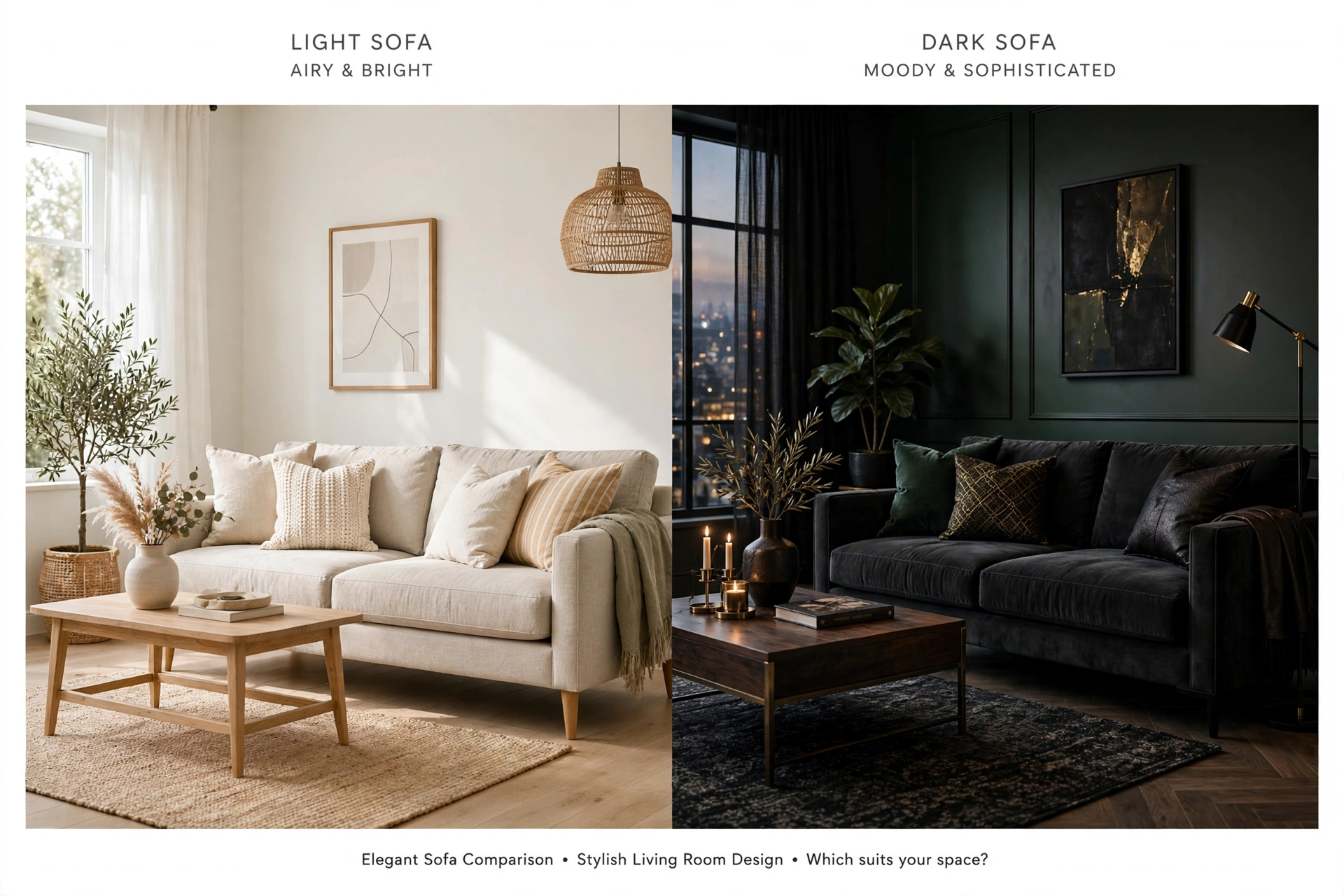
Ask which sofa color shows less dirt and you will get confident, contradictory answers, because the question is incomplete. A light sofa and a dark sofa do not hide and show the same things. A light sofa hides dust, light pet hair, lint, and light crumbs, and shows dark pet hair, denim dye, food stains, and muddy marks. A dark sofa hides dark pet hair, most food stains, and general grime, and shows dust, light pet hair, lint, and crumbs. Neither is universally cleaner. The right color depends on what kind of dirt your household actually produces.
That is the key insight, and it reframes the whole decision. Instead of asking which color is cleaner in general, ask what your home deposits on a sofa every day, and choose the color that hides that specific dirt.
What Each Color Shows and Hides
Light sofas — cream, beige, pale grey, off-white — show anything darker than themselves. Dark pet hair stands out immediately. Blue denim transfers dye to pale fabric where jeans rub against cushions, especially on armrests and seat edges. Coffee, red wine, tomato sauce, and mud all read clearly on a light surface. What light sofas hide is equally specific: household dust, light-colored pet hair, lint from pale clothing, and light crumbs blend in and barely register.
Dark sofas — charcoal, navy, chocolate, black — invert the picture. Dust settles visibly on a dark surface, light pet hair glows against it, and lint and crumbs show up plainly. But dark pet hair disappears, most food stains blend in, denim transfer is nearly invisible, and the general grime of daily use barely shows. A dark sofa can look presentable for much longer between deep cleans in a household whose dirt is mostly dark.
Sunlight complicates both. Dark sofas fade and bleach visibly in strong sun, especially on the arms and back that face a window, and that fading is uneven and hard to reverse. Light sofas also fade, but the change is far less noticeable because there is less color to lose. In a sun-drenched room, fading alone can tip the decision toward light.
The Pet Hair Rule
If you have pets, match the sofa to the pet, not to the walls. A white or cream dog means a light sofa, because its hair will blend in rather than announcing itself on every cushion. A black cat or dark-coated dog means a dark sofa, for the same reason. This single decision matters more for daily appearance than any other factor, because pet hair is the dirt that appears every single day, unlike a spill that happens occasionally.
For mixed households — a light dog and a dark cat, for instance — a mid-tone or patterned fabric splits the difference better than either extreme. A warm greige, a muted taupe, or a subtle tweed hides both light and dark hair reasonably well, because neither color dominates the surface. Pattern and texture, covered below, help here too.
🛒 Shop This Look:
Fabric Matters as Much as Color
Color gets all the attention, but fabric decides how dirt behaves. A tight, smooth weave shows less and cleans more easily than a loose, nubby one, because dirt sits on the surface rather than working into the fibres. Leather wipes clean in seconds, which makes it forgiving for spills, but it shows scratches and needs conditioning to stay supple. Fabric absorbs spills, which makes stains harder, but it hides scratches and feels warmer.
Texture is a secret weapon. Bouclé, tweed, and subtle patterns break up the surface visually, so dust, hair, and light marks disappear into the texture instead of standing out on a flat plane. A flat, solid-color fabric in any shade shows everything. If you love a light color but dread the upkeep, a textured light fabric will forgive far more than a smooth one.
Removable, washable covers change the equation entirely. A light sofa with covers you can actually remove and wash is easier to live with than a dark sofa you cannot clean properly. Before buying, check whether covers come off, whether cushion covers are separate from the frame cover, and whether the fabric’s cleaning code suits your life. Codes are printed on the tag: W means water-based cleaning, S means solvent-based, WS means either, and X means vacuum only. A sofa with an X code and light fabric in a house with children is a commitment you should understand before you make it.
Room Size, Light, and How the Sofa Feels in the Space
Color also shapes the room, and that matters as much as dirt. A light sofa opens up a small or dark room, reflects light, and makes the space feel larger and airier. A dark sofa anchors a large, bright room, grounds the furniture arrangement, and makes a space feel cozier and more intentional. In a north-facing room with little natural light, a dark sofa can make the room feel heavy; in a sun-filled room with pale walls, a dark sofa provides contrast that keeps the room from washing out.
Consider the floor and walls too. A dark sofa on a dark floor disappears into the room, while a light sofa on a pale floor does the same. Contrast between sofa and surroundings defines the furniture visually, and a sofa that blends into the floor reads as a shapeless mass rather than a piece of furniture. You do not need a dramatic contrast — a mid-tone sofa between a pale floor and darker walls, or vice versa, usually looks most settled.
Decide by Household, Not by Rule
Run through your household honestly and the answer usually emerges.
Young children. Food, drinks, muddy hands, and art supplies are the daily dirt, and most of it is dark or colorful. A dark or mid-tone sofa hides it best, and washable covers matter more than color alone. If your heart is set on light, choose a textured fabric with removable covers and accept that spot-cleaning becomes a routine.
Pets. Match the sofa to fur color, as above. Add texture to hide hair between vacuuming, and keep a lint roller or rubber glove by the sofa — a quick daily pass matters more than color choice.
Adults only, no pets. Dirt is mostly dust and the occasional spill, which means either color works. Choose by room and light instead: light for small or dark rooms, dark for large or bright ones.
Sun-drenched living room. Lean light, because dark fading will show within a couple of years on sun-facing surfaces, and no cleaning fixes fading. If you must have dark, keep the sofa out of direct sun or use curtains during the harshest hours.
Rental or frequent redecorator. A mid-tone neutral — greige, warm grey, muted taupe — is the most flexible choice. It hides both light and dark dirt reasonably, suits changing wall colors, and does not dominate the room.
Living With Each Color: The Maintenance Playbook
Light sofas reward fast habits. Deal with spills immediately, before they set, using the cleaning method the fabric code allows. Keep throws on the arms and seat edges where denim and hands make contact — these are the zones that show wear first, and a throw is washable where a sofa is not. Vacuum weekly with an upholstery attachment, because dust worked into light fabric eventually greys it.
Dark sofas reward a different routine. Dust and lint are the enemy, so a weekly vacuum and a lint roller pass keep them looking sharp. Wipe leather dark sofas with a damp cloth to lift dust before it builds up, and condition leather a few times a year so it does not dry and crack. Keep dark fabric out of direct sun, or accept fading as part of the bargain.
For both colors, cushion care matters. Rotate and flip loose cushions regularly so wear and fading spread evenly rather than concentrating on one favorite seat. Plump cushions after use instead of leaving them compressed, and keep the sofa out of direct contact with radiators, which dry fabric and leather alike.
🛒 Shop This Look:
Throws and Covers: The Practical Compromise
If you cannot decide, or if you love a color your household will punish, throws and slipcovers are the honest solution. A washable throw across the seat and arms protects exactly the zones that take the most wear, and it can be changed with the seasons or washed after a spill. A full slipcover goes further: it lets you keep a light look with dark-sofa practicality, because the cover, not the sofa, takes the dirt.
Slipcovers have their own trade-offs — they shift, they need refitting after washing, and they suit relaxed styles better than tailored ones — but for households with children or pets, they are often the difference between a sofa you enjoy and a sofa you guard. Buy a second set if you go this route, so one can be in the wash while the other is on the sofa.
Before You Buy: The Checks That Prevent Regret
Take a fabric swatch home and live with it for a few days. Look at it in your room’s actual light, morning and evening, because showroom lighting flatters every color. Rub it with a pair of jeans to check denim transfer on light fabrics, and press pet hair into it if you have animals. Sit on the sofa in the store, but judge the color at home — that is where it has to live.
Check the construction details that affect cleaning. Removable cushion covers, a frame that can be vacuumed underneath, and legs that let you clean beneath the sofa all make maintenance easier regardless of color. A sofa that is hard to clean will look dirty faster in any shade.
🛒 Shop This Look:
The Bottom Line
There is no cleaner color, only a better match for your household. Dark hides dark dirt and shows dust and light hair. Light hides dust and light hair and shows dark dirt and stains. Match the sofa to your pets’ fur, your children’s habits, and your room’s sun, choose a textured or patterned fabric to forgive daily wear, and prefer removable covers whenever you can. Get those decisions right and either color will look good for years; get them wrong and even the most careful cleaning routine will feel like a losing battle.
If you are still shopping, sofas under 1000 covers budget-friendly options across colors and fabrics, and leather versus fabric goes deeper into how material choice affects longevity. For the room around the sofa, the living room ideas hub collects layouts and color schemes that put the decision in context.



