
As an Amazon Associate, I earn from qualifying purchases. This means I may earn a commission if you purchase through links on this page — at no extra cost to you.
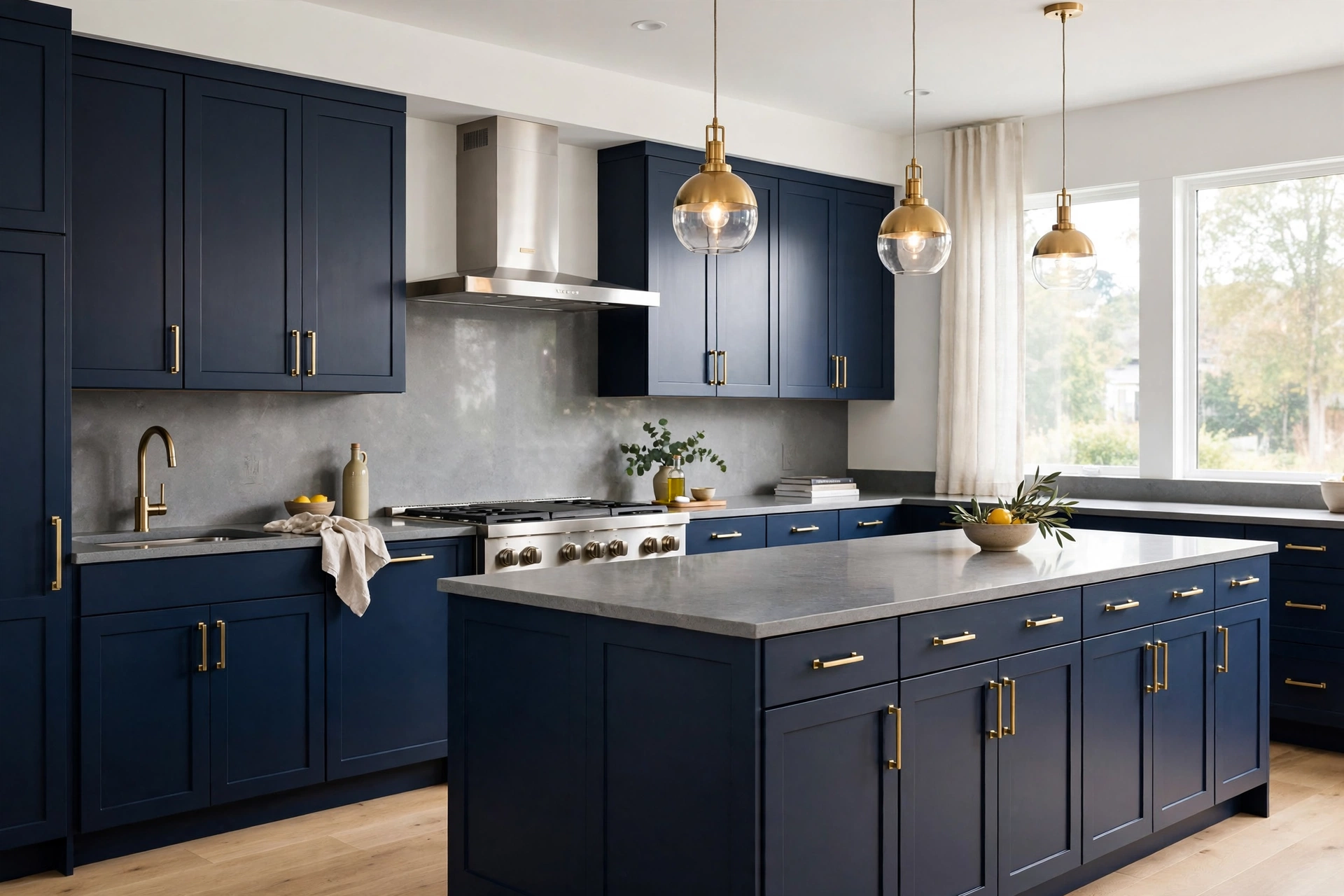
White, navy blue, sage green, and warm wood tones all pair beautifully with grey countertops. White cabinets create a clean, classic look. Navy adds sophistication. Sage green brings warmth that balances grey’s coolness. Natural wood adds organic texture. Avoid grey-on-grey unless you vary the tones significantly — matching greys can look flat. The best choice depends on whether your grey leans warm or cool.
Matching Undertones
Cool grey countertops (blue undertones): Pair with white, navy, charcoal, or cool-toned wood.
Warm grey countertops (beige undertones): Pair with cream, sage green, warm wood, or greige cabinets.
Best Pairings
White Cabinets + Grey Counters
The foolproof combo. Crisp, clean, timeless. Works with any grey.
Sophisticated and modern. The contrast is striking without being harsh.
Sage Green + Warm Grey
Organic and calming. The green warms up the grey beautifully.
Natural Wood + Grey
White oak or walnut with grey quartz is a designer favorite — warm meets cool.
What to Avoid
Don’t pair cool grey counters with orange-toned oak — they clash. Avoid all-grey kitchens without texture variation; they feel cold and flat. And skip busy patterns if your grey has heavy veining.
Reading Your Grey Countertop First
Before choosing a cabinet color, identify exactly which grey you have — “grey” covers a wide range, and the wrong pairing is the most common source of regret. Hold a pure white sheet of paper against the countertop in daylight. If the counter reads blue or steely next to the paper, it is a cool grey. If it reads beige, taupe, or warm next to the paper, it is a warm (greige-leaning) grey. This five-second test prevents the classic mistake of pairing warm cream cabinets with a cool blue-grey counter, a combination that makes both surfaces look dirty.
🛒 Shop This Look:
Next, assess the pattern and veining. A solid or subtly speckled grey (common in quartz) acts as a neutral background that lets bold cabinet colors shine. A heavily veined grey marble or marble-look quartz is already a statement — pair it with quieter cabinet colors so the two do not compete. As a rule: busy counters want calm cabinets, and calm counters can handle bold cabinets. Finally, note the counter’s lightness. Light grey counters pair with almost anything. Mid-tone and dark grey counters need lighter cabinets (white, cream, light wood) to keep the kitchen from feeling heavy — dark cabinets on dark counters close a kitchen in fast.
Cabinet Colors That Work: A Deeper Look
White cabinets remain the safest and most popular pairing for a reason: white has no undertone conflicts, reflects maximum light, and lets the grey countertop be the subtle star. For cool greys, choose a crisp white with minimal warmth (like Chantilly Lace or Decorator’s White). For warm greys, choose a soft white with a whisper of warmth (like White Dove) so the white does not look stark against the beige-leaning stone. White-on-light-grey is timeless; white-on-dark-grey is dramatic and modern.
Navy blue cabinets with grey countertops create one of the most striking combinations in current kitchen design. Navy’s depth makes light and mid-tone grey counters glow by contrast. This pairing works best when the grey leans cool — navy and warm greige-grey can clash slightly, so test samples together. Keep the rest of the kitchen light (white backsplash, light floors) so the navy reads as an accent rather than a cave. Related: How to Style Kitchen Countertops.
Sage green cabinets are the bridge color: green sits between warm and cool, so sage harmonizes with both grey families. With cool grey counters, sage adds organic warmth that prevents the kitchen from feeling sterile. With warm grey counters, sage deepens the natural, earthy mood. Sage works especially well in kitchens with wood floors or butcher-block accents.
Natural wood cabinets — white oak, walnut, or light ash — add texture and warmth that painted cabinets cannot. White oak with cool grey quartz is a current designer favorite: the wood’s warmth balances the stone’s coolness in a way that feels both modern and inviting. Walnut with mid-tone grey reads richer and more traditional. If your grey counter has warm undertones, stick to warm wood species (oak, walnut, cherry); if cool, ash and lightly stained oak work best.
Black or charcoal cabinets pair beautifully with light grey counters for a bold, contemporary kitchen. The key is contrast: the counter must be clearly lighter than the cabinets, and you need strong lighting plus light walls and backsplash to balance the darkness. This is a high-commitment look — stunning when done well, oppressive when the kitchen is small or dim.
Greige cabinets with warm grey counters create a soft, tonal, monochromatic kitchen that feels calm and sophisticated. The trick is separation: the cabinet color and counter color must differ by several shades, or the kitchen melts into one flat beige-grey mass. Add contrast through hardware (matte black or aged brass) and a backsplash with some pattern or texture.
Kitchen vs. Bathroom Guidance
In kitchens, you see the cabinet-counter pairing across a large area and in varied light, so undertone harmony matters most. Test large samples — paint a foam board with the cabinet color and prop it against the actual countertop slab. Small chips lie. Also consider the backsplash as mediator: a white subway tile backsplash between navy cabinets and grey counters gives the eye a resting place and makes the whole combination feel intentional.
In bathrooms, the vanity is smaller and the lighting is usually warmer and dimmer, which shifts how colors read. Cool grey counters can look flat under warm bathroom lighting — warm up the pairing with a wood vanity or warm-white painted vanity rather than crisp white. In small bathrooms, keep the vanity color light regardless: a dark vanity with grey counters in a 40-square-foot bathroom feels cramped.
Lighting’s Role in the Decision
Grey is the most light-sensitive neutral — the same counter can read blue-grey in morning light and greige under warm evening bulbs. Evaluate your pairing under the lighting you actually have. North-facing kitchens with cool daylight intensify blue undertones; if your grey already leans cool, a north-facing room may push it toward icy, and warmer cabinet colors (cream, warm wood, sage) will balance it. South-facing kitchens bathe everything in warm light, which flatters cool greys but can make warm greys look muddy — crisper whites and cooler cabinet tones work better there.
🛒 Shop This Look:
Bulb color temperature matters too. Bulbs rated 2700K–3000K (warm white) add yellow to everything; 4000K–5000K (cool/daylight) keeps greys true. If you love your grey counter’s cool tone, do not wash it out with overly warm bulbs — choose 3000K–3500K as a compromise that keeps both the counters and your skin tones looking good.
Backsplash, Hardware, and Floor Pairings
The cabinet color is the headline, but these supporting choices make or break the combination. Backsplash: with bold cabinets (navy, black, sage), keep the backsplash simple — white or light handmade-look tile. With white or neutral cabinets, the backsplash can carry more personality: patterned cement tile or a full-height stone slab. Hardware: matte black hardware grounds light cabinets with grey counters; brushed brass or champagne bronze warms up the combination; polished nickel keeps it crisp and classic. Floors: warm wood floors forgive almost any cabinet-counter pairing by adding organic warmth; cool grey tile floors double down on the grey and demand warmer cabinets to compensate.
Frequently Asked Questions
Can I do grey cabinets with grey countertops? Yes, but the tones must differ clearly — light grey counters with charcoal cabinets, or vice versa. Add texture variation (honed counters, shaker cabinets, textured backsplash) so the kitchen does not read as one flat grey surface.
What is the most timeless combination? White cabinets with light-to-mid grey counters. It has looked right for decades and works in every style from farmhouse to modern. If resale matters, this is the answer.
Do the cabinets need to match the island? No — a contrasting island is one of the easiest ways to add design interest. A navy or wood island with white perimeter cabinets and grey counters throughout is a classic designer formula. Keep the countertop consistent across both for cohesion.
How do I test combinations without committing? Get a sample of the actual countertop material (fabricators give these free), paint large foam boards with cabinet color samples, and view them together in your kitchen at different times of day. Never decide from a tiny paint chip held against a phone photo of the counter.
Two-Tone Cabinet Strategies With Grey Counters
Two-tone kitchens — one color for perimeter cabinets, another for the island — pair exceptionally well with grey countertops because the grey acts as a neutral bridge between the two cabinet colors. The most reliable formula: white or light perimeter cabinets, a saturated island color (navy, deep green, charcoal, or warm wood), and the same grey countertop running across both. The countertop’s consistency is what keeps the two cabinet colors from feeling disconnected. A second approach inverts this: colored perimeter cabinets with a light wood or white island — this works when the kitchen is large enough that the perimeter color does not overwhelm. Whichever you choose, keep the ratio around 70/30: one cabinet color should clearly dominate, with the second as an accent. A 50/50 split tends to look indecisive rather than designed.
What About Pantries, Laundry Rooms, and Bars?
Secondary spaces with grey countertops follow the same undertone rules but allow more playfulness since the stakes are lower. Laundry rooms are ideal for bolder cabinet colors — deep green or navy cabinets with a grey counter make a utilitarian room feel intentional, and you spend little enough time there that a strong color never tires. Butler’s pantries and wet bars can go moodier than the main kitchen: charcoal or black cabinets with grey counters and brass hardware create a jewel-box effect that contrasts beautifully with a light main kitchen. Mudrooms with grey counters (common in the form of a durable quartz on a storage bench) do best in hardworking, wipeable finishes — painted cabinets in satin or semi-gloss, in colors that hide scuffs (mid-tones rather than white or black).
Resale Considerations
If you might sell within five years, weight your choice toward broad appeal. White cabinets with grey counters are the safest resale combination — they photograph well, suit every style of furnishing a buyer might own, and never read as dated. Navy and sage are currently popular enough to be resale-neutral in most markets, though very dark or unusual colors (black, emerald, terracotta) narrow the buyer pool slightly. Wood cabinets in classic species (white oak, walnut) hold their value well; trendy stained finishes date faster. One practical note: whatever you choose, keep a record of the exact paint color and sheen — buyers and their inspectors always ask, and touch-up paint in the precise color is a small detail that signals a well-maintained home.
🛒 Shop This Look:



