
As an Amazon Associate, I earn from qualifying purchases. This means I may earn a commission if you purchase through links on this page — at no extra cost to you.
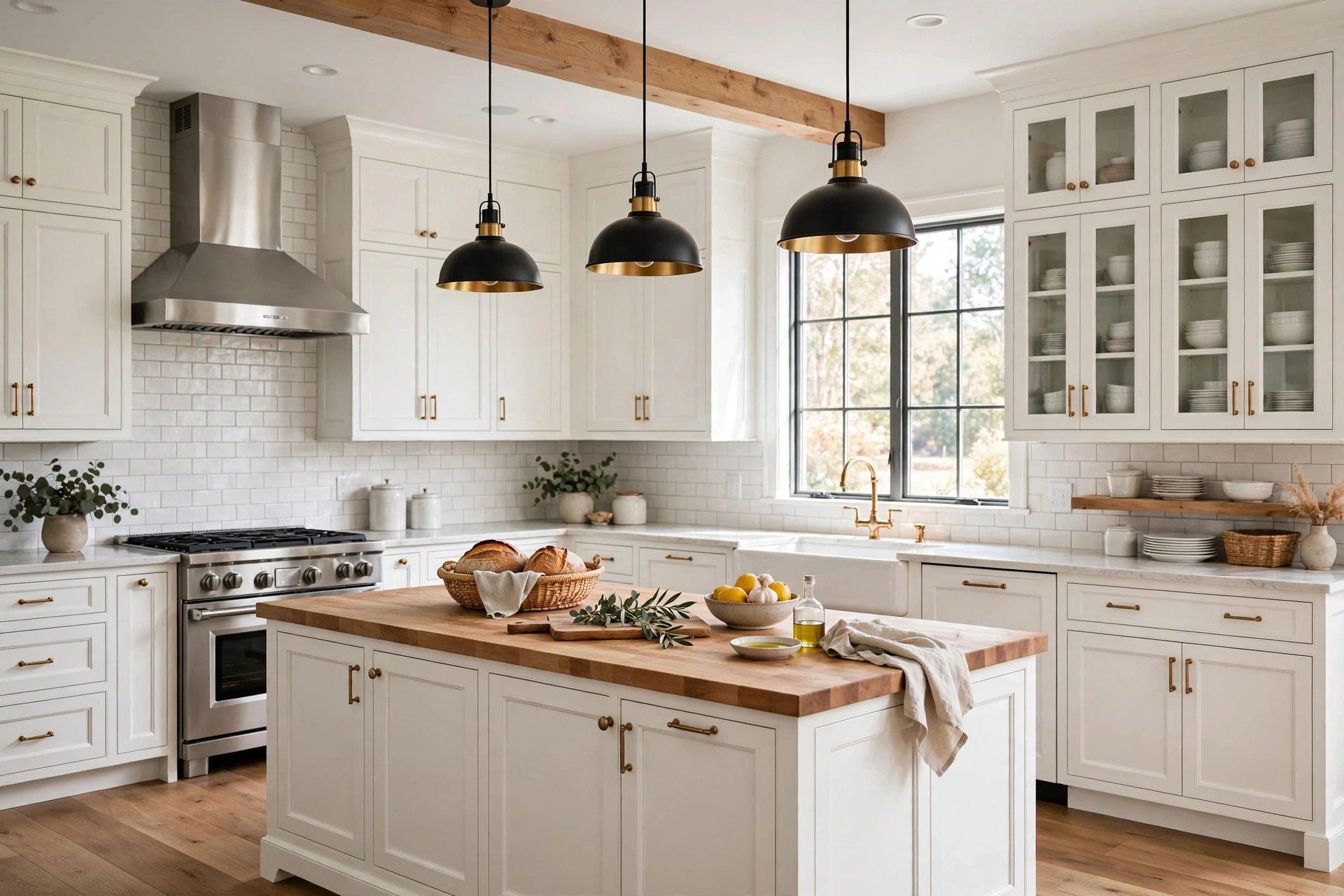
A Shaker cabinet is a kitchen cabinet door style featuring a flat center panel surrounded by a simple four-piece frame with clean, square edges. Named after the Shaker religious community known for minimalist craftsmanship, this style emerged in the 1700s and remains the most popular cabinet door profile today thanks to its versatility across traditional, transitional, farmhouse, and modern kitchens.
Key Characteristics
Shaker doors have five parts: four frame rails and stiles forming a rectangle, plus a recessed flat center panel. The lines are crisp and unadorned — no curves, no bevels, no ornamentation. This simplicity is exactly why they work everywhere.
Why Shaker Is So Popular
Versatility
Paint it white for farmhouse, navy for traditional, or black for modern — the same door works. Change hardware from cup pulls to sleek bar handles and the whole vibe shifts.
Timelessness
Unlike trendy door styles that date quickly, Shaker has looked current for decades. It’s a safe choice for resale.
Affordability
The simple construction makes Shaker one of the most affordable door styles, available at every price point from IKEA to custom cabinetmakers.
Easy to Clean
Flat surfaces with minimal crevices wipe down easily — a practical win in kitchens.
Shaker Variations
Standard Shaker: Square edges, the classic look.
Beveled Shaker: Slight angle on the frame’s inner edge for subtle detail.
Slim Shaker: Narrower frame for a more contemporary feel.
Wide-Rail Shaker: Thicker frame, often seen in craftsman styles.
Styling Shaker Cabinets
Hardware makes the difference: oil-rubbed bronze cup pulls for farmhouse, polished nickel knobs for traditional, matte black bar pulls for modern. The door is a blank canvas.
Shaker vs Other Popular Door Styles
Understanding how Shaker compares to the alternatives helps you decide whether it is genuinely right for your kitchen or just the default choice everyone lands on. Slab (flat-panel) doors are Shaker’s main modern rival — completely flat with no frame whatsoever, they suit ultra-contemporary and Scandinavian kitchens beautifully. Slab is even easier to clean than Shaker since there are literally no crevices, but it shows every fingerprint and offers zero visual detail, which can read as stark or cold in traditional homes. Shaker’s simple frame gives it a warmth and crafted feel that slab lacks.
🛒 Shop This Look:
Raised-panel doors are Shaker’s traditional opposite: the center panel is raised and often beveled, surrounded by more elaborate framing with curves and details. They suit formal traditional kitchens but look dated in contemporary spaces, cost more due to complex milling, and their crevices trap grease and dust. Recessed-panel doors sold under other names are close cousins of Shaker — the difference is often just marketing. True Shaker has square, crisp edges; many generic “recessed panel” doors have softer or beveled edges that read slightly more traditional and less crisp.
Beadboard doors (vertical grooves routed into the center panel) lean cottage and farmhouse — charming and full of character, but harder to clean, with grooves that trap cooking grease over time. Glass-front doors are not really a competing style but an accent: most designers mix a few glass fronts for display uppers with Shaker everywhere else, getting visual variety without committing the whole kitchen. Inset versus overlay construction matters too — inset Shaker (doors sitting flush inside the face frame) looks custom and furniture-like but costs significantly more than standard full-overlay Shaker and demands precise installation. For most kitchens, full-overlay Shaker hits the sweet spot of looks, cost, and practicality.
When choosing, be honest about your home’s architecture. Shaker’s neutrality is a strength, but in a sleek modern home with handleless slab cabinetry everywhere else, Shaker can look like a compromise rather than a choice. Conversely, in a 1920s craftsman, Shaker (especially in a wide-rail variant) looks original to the house. The door style should converse with the architecture, not fight it — Shaker wins that conversation in most homes, which is exactly why it dominates the market.
Choosing Finishes and Colors for Shaker Cabinets
Shaker’s flat surfaces take color beautifully, which is why finish choice transforms the identical door so dramatically. White Shaker remains the safest and most popular choice — it brightens kitchens, suits every style from farmhouse to coastal, and carries the broadest resale appeal of any option. Warm whites with creamy undertones suit traditional kitchens; crisp cool whites suit modern spaces. If white feels stark, greige (the grey-beige hybrid) is the current neutral of choice for those who want timelessness with more depth — it hides minor grime better than pure white while staying neutral.
For bolder looks, navy Shaker reads classic rather than trendy when paired with brass hardware and marble-look counters — it has enough history in traditional design to avoid dating quickly. Forest green and sage have surged in popularity and pair beautifully with natural wood tones, aged brass, and butcher-block accents. Black Shaker makes a dramatic statement but demands a large, well-lit kitchen or works best as an island accent; full black cabinetry in a small or dim kitchen feels heavy and can hurt resale. Wood-stained Shaker in white oak or walnut is the choice for organic modern and craftsman kitchens, letting natural grain show through the simple frame.
Sheen matters as much as color. Satin is the standard for painted cabinets — wipeable and durable without looking plasticky. Semi-gloss is tougher and more moisture-resistant but highlights every imperfection, so it demands excellent prep and spraying rather than brushing. Matte finishes look sophisticated but mark more easily and are harder to clean — a poor choice near ranges. Two-tone kitchens (white or light perimeter with a navy, green, or wood island) are a proven way to get color without full commitment — the island becomes the focal point while the perimeter stays timeless and resale-friendly.
Whatever you choose, sample at full scale. Paint a full door sample (not a tiny chip) and live with it in your kitchen’s actual light for several days, checking it morning, noon, and evening — undertones shift dramatically between daylight and warm evening bulbs. And consider the long view: the colors with the best ten-year track records are white, cream, greige, and wood tones. Bold colors are wonderful when you love them deeply; they are regrettable when chosen from a trend cycle.
Cost and Buying Guide
Shaker pricing spans an enormous range because the identical door profile is sold at every quality tier, from budget RTA to bespoke custom. Stock Shaker cabinets from big-box stores are the most affordable — ready-made in standard sizes, available within weeks, and perfectly serviceable. Semi-custom Shaker offers more sizes, finishes, and modifications at a moderate premium, with 6-to-10-week lead times. Custom Shaker from a local cabinetmaker costs the most but delivers exact sizing for tricky spaces, premium joinery, and any finish imaginable.
What actually drives cost is not the door style but the construction behind it. Solid wood versus MDF doors: MDF is actually preferable for painted finishes — it will not expand, contract, or telegraph grain through paint the way solid wood can. Plywood versus particleboard boxes: plywood holds screws better, resists moisture, and survives the decades; particleboard is cheaper but swells irreversibly if wet. Soft-close hinges and full-extension drawer glides are worth every penny in daily quality of life. And finish quality separates tiers more than anything — factory catalyzed finishes cure harder, resist moisture, and outlast site-painted or budget finishes by years.
Ready-to-assemble (RTA) Shaker cabinets from online retailers can cut costs substantially if you are comfortable with assembly — the door quality is often identical to big-box stock, and assembly is straightforward with basic tools. The tradeoff is no professional measuring service and freight-shipping logistics; damaged pieces get replaced, but slowly. When shopping any tier, ask specific questions: What is the box material? Are drawers dovetailed solid wood or stapled particleboard? What is the warranty on the finish? Can I see a sample door in the exact finish? Get the lead time in writing — cabinet delays are the number one cause of kitchen remodel timeline blowouts, and “8 weeks” has a way of becoming 14.
🛒 Shop This Look:
Measure twice and hire skilled installation. Shaker’s clean, crisp lines show installation imperfections mercilessly — uneven reveals, unlevel runs, and poorly scribed fillers are all more visible on Shaker than on busier door styles. A great installer elevates mid-range cabinets; a poor installer ruins expensive ones. Budget 15 to 20 percent of your cabinet cost for quality installation, and check the installer’s previous Shaker work specifically before hiring.
Maintaining and Refreshing Shaker Cabinets
Shaker cabinets earn their reputation for practicality in daily maintenance. The flat center panel and simple frame wipe clean with a damp microfiber cloth and mild dish soap — there are no carved details or grooves trapping grease the way raised-panel or beadboard doors do. Clean spills promptly, especially around handles where hand oils accumulate into a grimy film over months, and avoid abrasive scrubbers or harsh chemicals that dull the finish. For painted Shaker, give the frame’s inside corners (where the panel meets the frame) an annual detailed wipe — slow buildup there eventually shows as discoloration that regular quick wipes miss.
Hardware takes the daily beating, not the doors, so maintain it. Tighten hinge and handle screws once a year — they loosen with use, and a wobbling handle eventually wallows out its screw holes, turning a trivial fix into a repair. Most modern hinges have three-way adjustment screws; if a door starts rubbing or sitting crooked, a quarter-turn of the adjustment screw usually fixes it without a service call. Keep a small bottle of touch-up paint from your cabinet supplier for chips — dab it on with an artist’s brush rather than brushing, and chips around handles become invisible.
The real beauty of Shaker is how refreshable it is compared to other styles. Tired of the color? Shaker’s flat surfaces are among the easiest cabinet profiles to repaint professionally — no intricate details to strip or sand around, which keeps refinishing costs down. Want a dramatic new look for a few hundred dollars? Swap the hardware: the same white Shaker kitchen reads farmhouse with cup pulls, transitional with brushed nickel knobs, and modern with matte black bar pulls. You can even replace just the doors and drawer fronts while keeping the boxes — Shaker replacement doors are widely available in standard sizes, making a full color or style change possible without a gut renovation. Few door styles offer this much future flexibility, which is part of why designers keep specifying Shaker decade after decade.
Protect your investment from the two things that age cabinets fastest: moisture and heat. Wipe up sink splashes rather than letting water sit on door edges, use the range hood every time you cook (steam is brutal on finishes over years), and keep kettle steam from blasting directly onto wall cabinet doors. These small habits add years to any cabinet finish, and they cost nothing.
Red Flags When Shopping for Shaker Cabinets
Because Shaker is sold at every price point, quality varies enormously — and the door style alone tells you nothing about what is behind it. The biggest red flag is particleboard cabinet boxes, especially for sink bases and areas near dishwashers. Particleboard swells irreversibly when wet; one slow plumbing leak can destroy a particleboard sink cabinet while plywood shrugs it off. Ask directly what the boxes are made of, and be suspicious of listings that trumpet “solid wood doors” while staying silent about box construction — the boxes matter more for longevity than the doors do.
Inspect drawer construction closely, because drawers reveal the truth about a cabinet line. Dovetailed solid-wood drawer boxes with full-extension soft-close glides are the quality marker; stapled particleboard drawers on side-mount epoxy glides are the budget tell. Open and close every display drawer: quality drawers glide silently and stay level when fully extended, while cheap ones rattle, stick, or sag under their own weight. Check the finish in raking light (light hitting at an angle) — orange-peel texture, drips, sags, or thin spots reveal rushed factory finishing. On painted Shaker, press your fingernail gently into an inconspicuous spot; quality catalyzed finishes resist denting, while soft paint that marks easily will chip within a year of daily use.
Hardware quality is another separator worth interrogating. Soft-close hinges and glides should be standard, not upgrades, at mid-range prices and above — their absence signals cost-cutting elsewhere too. Ask about the finish warranty specifically: reputable manufacturers warrant the finish for five years or more, while a one-year warranty (or none at all) suggests the maker does not trust its own coating. Finally, be wary of prices that seem too good for “custom” — true custom Shaker cannot be sold at stock prices, so impossibly cheap “custom” cabinets usually mean stock sizes with limited modifications, outsourced overseas with long lead times and no recourse if pieces arrive damaged. If the deal seems impossible, the corners being cut are ones you will discover later.
One more subtle red flag: a seller who will not provide a sample door in your exact finish. Finishes vary between production batches, and no swatch or screen image substitutes for seeing the real door in your real light. Any reputable maker or dealer provides samples happily; reluctance suggests they know the production finish will not match the showroom.
🛒 Shop This Look:




1 thought on “What Is a Shaker Cabinet?”
Comments are closed.