
As an Amazon Associate, I earn from qualifying purchases. This means I may earn a commission if you purchase through links on this page — at no extra cost to you.
A dorm room gives you a small box, a roommate or two, furniture you did not choose, and walls you probably cannot paint. That sounds limiting, but it actually makes color decisions easier: with so little you control, every choice you do make shows up fast. The trick is to pick a small palette, put the biggest color where it counts, and use removable everything for the rest.
Start With What You Cannot Change
Before you buy anything, look at what is already in the room. Most dorm rooms come with the same ingredients: pale walls, a wood or laminate desk, a metal bed frame, and a floor that is either thin carpet or vinyl tile. Those fixed elements already carry color. Pale walls are a gift, because they take almost any accent. A warm wood desk pushes the room warmer; a gray floor pushes it cooler. Work with that direction instead of fighting it.
Then check the light. A north-facing window gives cool, even light all day, which makes warm colors look calmer and cool colors look colder. A south-facing window floods the room with warm light, which can make yellows look stronger and blues look softer. Fluorescent ceiling lights flatten everything and add a greenish cast, so colors you pick under them will look different in daylight. If you can, look at fabric and poster swatches in daylight before committing.
Finally, check the rules. Many dorms forbid paint, nails, and anything that damages walls. That rules out repainting but leaves plenty open: bedding, curtains, removable wall decals, washi tape, posters on command strips, rugs, and desk accessories. Build your plan around removable items and you will not lose a deposit over color.
Let the Bedding Lead
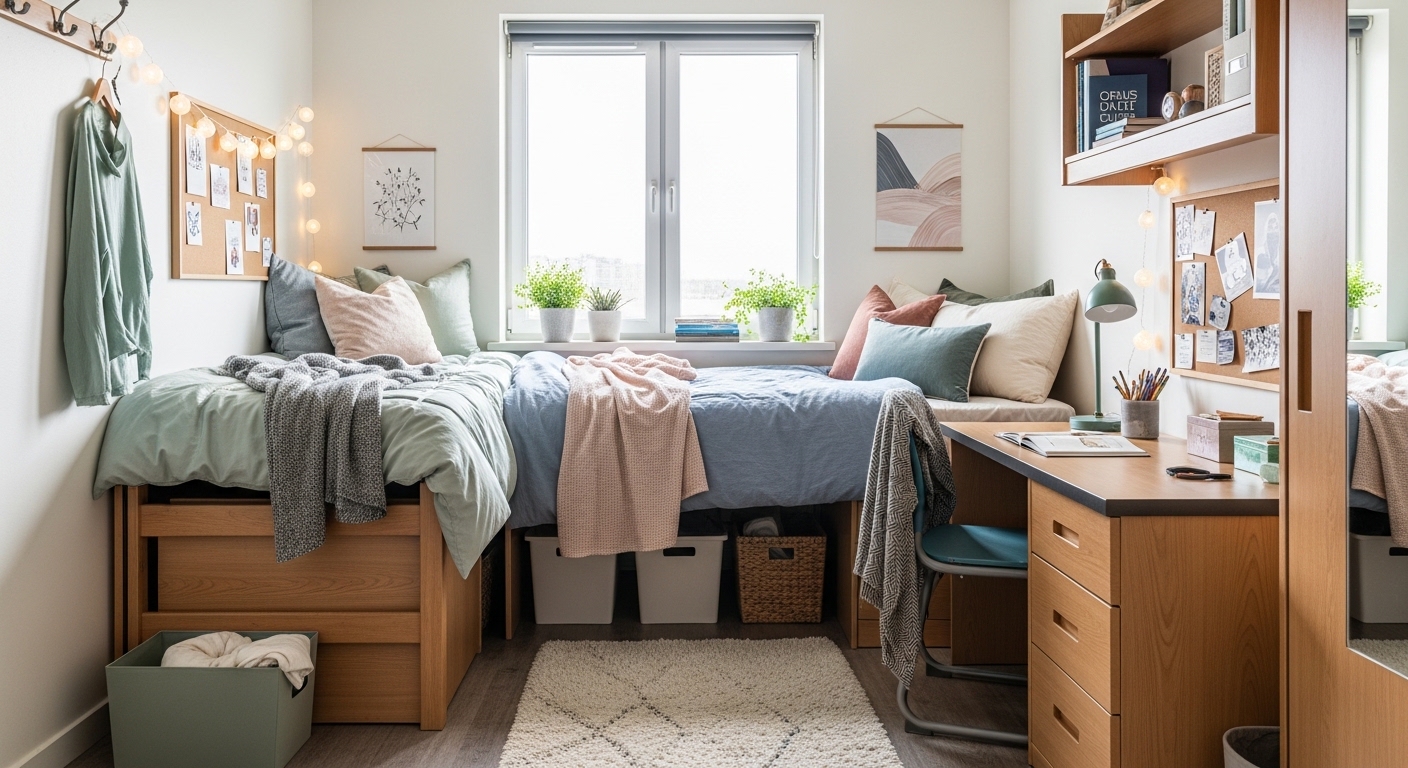
In a dorm room, the bed is the biggest block of color in the room, often a third of everything you see. That makes bedding the single most powerful color decision you will make, and the cheapest to change. If your bedding is loud and patterned, the rest of the room should quiet down. If your bedding is plain, you have room for a stronger accent elsewhere.
A practical approach: choose bedding in one main color family and one supporting neutral. A white or cream duvet with colored pillowcases reads clean and lets you swap the accent each semester without buying a new duvet. A solid colored duvet in a muted tone, like sage, dusty blue, or warm terracotta, anchors the room and makes everything else easier to match. Avoid bedding with many competing bright colors, because in a small room it turns visual noise into the whole room.
Texture matters as much as hue. A chunky knit throw, a linen-look duvet cover, and a smooth cotton sheet in the same color family look layered rather than flat. Mixing textures is how small rooms avoid looking like a single flat color swatch.
🛒 Shop This Look:
One Accent, Not Five
The most common dorm color mistake is enthusiasm: a red poster, a yellow lamp, a blue rug, and green plants, all competing. In a small room, three or four strong colors read as clutter even when the room is tidy. Pick one accent color and let it repeat in small doses: a throw pillow, a desk organizer, a poster frame, a mug. Repetition of one color looks intentional; a scatter of many colors looks accidental.
Your accent should relate to your bedding, not fight it. If your bedding is warm, a warm accent like rust, mustard, or terracotta will sit comfortably. If your bedding is cool, a cool accent like slate blue, sage, or teal will sit comfortably. You can mix warm and cool, but it takes discipline: keep one clearly dominant and the other as a small note, not an equal partner.
Neutrals are what make an accent work. White, cream, light gray, natural wood, and black do not compete; they give the eye somewhere to rest. If your room feels busy, the fix is usually not removing the accent but adding neutrals around it: a plain curtain, a neutral rug, a clear desk surface.
Color Families That Work in Small Rooms
Soft pastels earn their reputation in dorms because they add color without shrinking the room. A pale pink, mint, or sky blue on bedding or curtains reads as color while keeping the walls feeling open. The risk with pastels is going too sweet: pair them with a grounded neutral, like natural wood or charcoal, so the room reads grown-up rather than nursery-like.
Muted, dusty tones are the safer middle ground. Dusty blue, sage green, muted coral, and warm taupe all carry personality without shouting. They also forgive mixed lighting better than bright colors, which can look harsh under fluorescents. If you are unsure, a muted tone is almost always the better bet than its bright version.
Dark colors have a place in dorms, but they need a job. A single dark accent wall, done with removable panels or a large tapestry, can make a room feel cozy rather than cramped, especially behind the bed. Dark bedding on a small bed can also work if the walls and curtains stay light. What does not work is dark everywhere: dark bedding, dark curtains, and dark posters together turn a small room into a cave.
For a deeper look at how color behaves in tight spaces generally, the guide to paint colors that transform small rooms covers light direction and undertone in more detail, and the same principles apply even when you cannot repaint.
🛒 Shop This Look:
Style Directions Worth Borrowing
You do not need a named style to have a coherent room, but borrowing one helps you decide faster. A minimalist direction means a neutral base, one accent, and clear surfaces; it suits small rooms because it keeps visual noise low. A bold direction means a strong accent color carried confidently through bedding, art, and accessories; it suits people who want the room to feel energetic.
A moodier direction works too, if you commit to it. Dark walls or dark bedding, layered textures, and warm low lighting can make a dorm room feel like a retreat rather than a cell. The grunge bedroom style shows how that layered, lived-in look comes together, and the same layering ideas translate to a dorm bed and desk corner.
Whatever direction you pick, keep it to one. A room that tries to be minimalist and maximalist at once just looks undecided. Pick the direction that matches how you actually live: if your desk is always covered in projects, a pristine minimalist scheme will fight you daily, while a layered, forgiving scheme will absorb the mess.
Removable Color: Your Best Friend
Since paint is usually off the table, removable color does the heavy lifting. Peel-and-stick wall decals, removable wallpaper on one wall, and washi tape borders all add large areas of color without damage. Test any adhesive on a hidden spot first, and read the removal instructions before you apply, not the night before move-out.
Curtains are another large color block that most students underestimate. A dorm window with a plain roller blind looks institutional; the same window with a curtain in your accent color or a soft neutral instantly makes the room feel finished. Curtains also soften light, which helps colors read warmer in the evening.
Rugs do similar work on the floor. A rug in a neutral tone with a border in your accent color ties the bed, desk, and door areas together. In a shared room, a rug also quietly marks your side of the room without a conversation about boundaries.
If you share the room, color becomes a negotiation, not a solo decision. The simplest agreement: each person controls their own bed area and desk, and shared areas stay neutral. That way neither person’s accent has to match the other’s, and the room still reads as one space because the shared zones are calm.
Talk about it early, before purchases. It is much easier to agree on a neutral rug and curtain together than to live with a rug one person hates. If your tastes clash completely, a neutral base with each person’s accent confined to their own side is the compromise that actually holds.
Lighting is shared too. A warm desk lamp on your side and a cool overhead light create two color temperatures in one room, which makes everyone’s colors look slightly off. Agreeing on warm bulbs for personal lamps is a small decision that improves how the whole room reads.
Do It Yourself, On a Dorm Budget
Some of the best dorm color comes from projects rather than purchases. Dyeing pillowcases, painting a thrifted frame, making a fabric wall hanging, or covering a corkboard in a favorite fabric all add color that is personal and cheap. The guide to DIY decor for college students collects dorm-friendly projects that are designed to survive move-out without damage.
When you DIY, keep the same palette discipline: one accent, repeated. A dozen small projects in a dozen different colors will undo the coherence you built with bedding and curtains. Pick your accent first, then choose projects that use it.
🛒 Shop This Look:
Mistakes That Make Small Rooms Feel Smaller
Too many competing brights is the first mistake, and the fix is subtraction, not addition. Remove one strong color at a time until the room calms down; you will usually find the culprit within two removals.
Ignoring undertones is the second. A warm cream curtain next to a cool gray bedding set can look slightly dirty rather than intentional, because the undertones clash. Hold fabrics next to each other in daylight before buying, and trust your eye: if two neutrals look off together, they probably are.
Forgetting the ceiling light is the third. If your only light is a harsh overhead fluorescent, every color in the room will look worse at night. A warm desk lamp and a small string of warm lights change how the whole palette reads after dark, and they cost less than any single decor purchase.
Finally, do not buy everything at once. Live in the room for a week with just bedding and curtains, notice what the light does, then add the accent pieces. The room will tell you what it needs, and you will spend less on things that looked good in a store and wrong in your room.
A Starter Plan for the First Weekend
Day one: bedding in your main color family, plain curtains, and a rug if the floor is hard. Day two: one accent repeated in two or three small items, and warm bulbs for your lamps. Day three: one removable wall piece, a poster or decal, in your accent or a neutral. Then stop and live with it for a week before adding anything else.
That restraint is the whole method. A dorm room does not need many colors; it needs a few colors chosen on purpose, repeated deliberately, and given room to breathe. Get the bedding right, pick one accent, keep the shared zones neutral, and the smallest room on the floor can feel like it was designed rather than assigned.



