
As an Amazon Associate, I earn from qualifying purchases. This means I may earn a commission if you purchase through links on this page — at no extra cost to you.
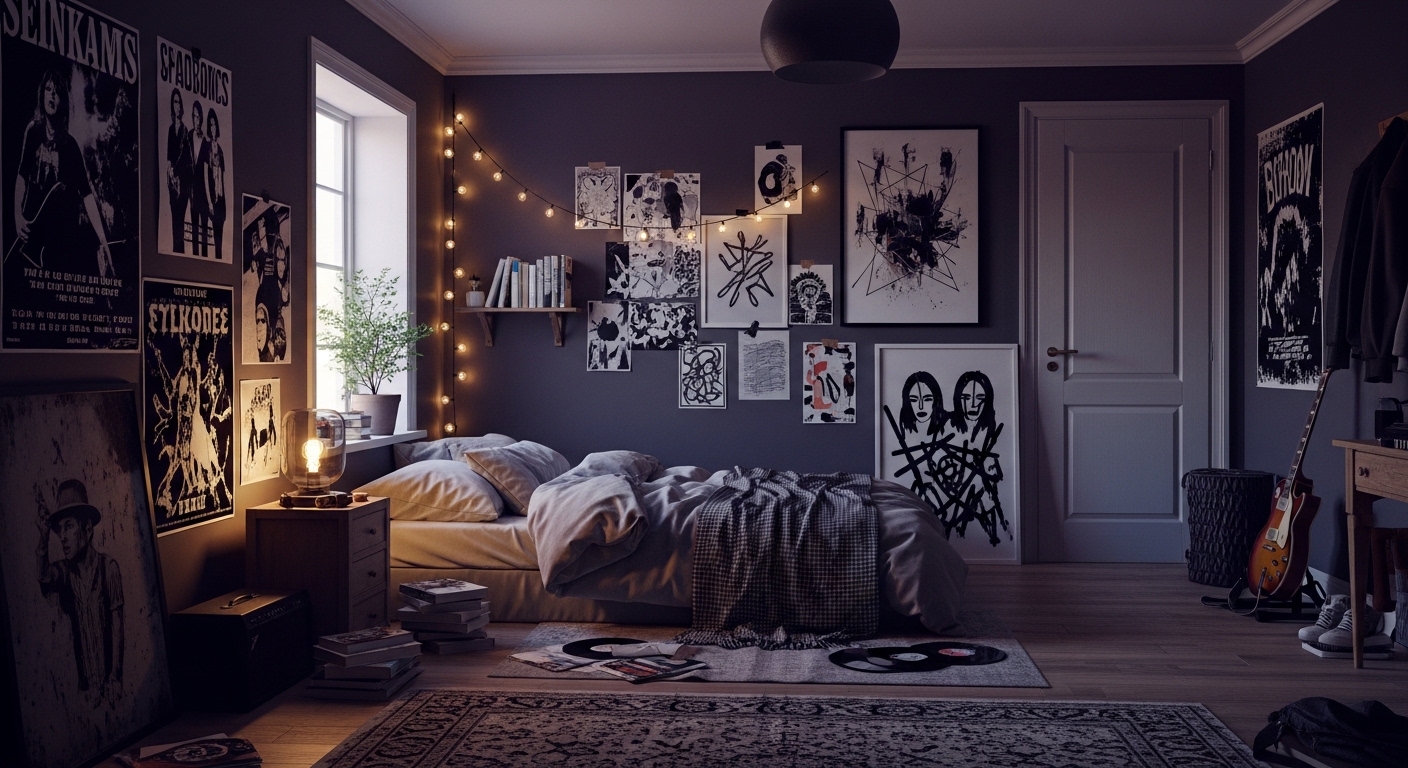
Grunge is not mess. It is a bedroom that looks collected over time rather than bought in one shopping trip: dark walls, worn wood, layered fabrics, posters that mean something, and lighting low enough that the room feels like a retreat. Done well, it feels personal and lived-in. Done badly, it just looks like a room nobody cleans. The difference is intention: every layer is chosen, even when it looks casual.
Walls First: The Moody Backdrop
Grunge starts with the walls, because everything else hangs off that backdrop. Deep, muted tones do the work: charcoal, deep plum, muted black, dark olive, or a smoky brown. One dark accent wall behind the bed often gives you the whole effect with less risk than painting all four walls dark, and it keeps the room from feeling like a box.
If you rent or share the room, paint may not be an option. Removable dark wallpaper, large fabric panels, or a wall of posters on one wall can build the same backdrop without damage. What matters is the depth of tone behind the bed, not how you got it there.
Before you commit to a dark wall, check your light. A room with one small window and dark walls can feel gloomy rather than moody, especially in winter. If your room is short on daylight, keep two walls lighter and let the dark wall sit behind the bed, where it reads as a headboard rather than an enclosure. The guide to bedroom paint colors for better sleep covers how dark colors behave in low light, which matters here because a grunge bedroom is also a sleep space.
Furniture: Worn, Mixed, and Secondhand
Grunge furniture looks like it has a history. Distressed wood, a thrifted dresser, a metal bed frame, a wooden crate as a nightstand: these pieces carry texture that new flat-pack furniture does not. You do not need a full matching set; in fact, matching sets work against the look. A room where every piece came from a different place reads collected, which is exactly the point.
Mix materials deliberately. Rough wood against smooth metal, a worn leather chair against a soft knit throw, a concrete-look planter against a wooden shelf: contrast between textures is what keeps a dark room from feeling flat. If everything is the same dark wood, the room turns muddy. Break it up with metal, glass, or a lighter wood somewhere in the mix.
Thrifted and secondhand pieces also keep the budget honest, which fits the spirit of the style. Check the structure before the look: a wobbly dresser is not charming, it is a problem. Solid, slightly scuffed beats pretty and broken every time.
🛒 Shop This Look:
Bedding and Textiles: Layer, Don’t Match
The bed is where grunge layering shows most. Start with dark or muted bedding, then add layers that do not match exactly: a plaid throw over a solid duvet, a knit blanket over a cotton cover, pillowcases in two related tones rather than one identical set. The layers should relate, through a shared warm or cool direction, without being identical.
Texture is the whole game here. Flannel, knit, washed linen, and worn cotton all read as grunge-friendly because they look soft from use rather than stiff from packaging. A single smooth, shiny fabric in the mix, like satin, will stick out; keep the textiles matte and touchable.
Rugs follow the same rule. A worn-looking rug, a layered pair of flat-weave rugs, or a dark rug with a faded pattern all ground the room. A bright new rug with a crisp pattern will fight the rest of the room, so if you love a rug, let it be the one bright note and quiet everything around it.
Lighting: Low, Warm, and Industrial
Overhead ceiling light is the enemy of a grunge room. It flattens the layers and makes dark walls look dull. Replace it, as much as you can, with low, warm light: a metal desk lamp, a floor lamp with a warm bulb, string lights along a shelf, a candle-style LED on the nightstand. Several small warm sources beat one bright ceiling fixture.
Industrial-style fixtures fit naturally: exposed metal, cage shades, Edison-style bulbs, black or brass finishes. You do not need to rewire anything; a clamp lamp on a shelf and a thrifted metal lamp on the desk get you most of the way there.
Keep one practical bright light for tasks. Reading, studying, and getting dressed all need real light, and straining your eyes is not part of the aesthetic. A desk lamp with a brighter setting covers the practical need while the rest of the room stays low and warm.
Posters, Art, and Walls That Tell a Story
Grunge walls are personal walls. Band posters, gig flyers, black-and-white photography, vintage prints, and art you made yourself all belong, and they belong slightly imperfectly: taped corners, mismatched frames, a poster slightly crooked. The imperfection is part of the look, but there is a line between curated imperfection and a wall covered at random.
Group posters rather than scattering them. A cluster above the desk or bed reads as a gallery; the same posters spread one per wall read as leftovers. Leave some wall empty too. Empty dark wall is what makes the clusters stand out, and a room with every inch covered feels busy no matter how good the individual pieces are.
For art beyond posters, the guide to bedroom wall art covers sizing and hanging rules that apply here as well, including the habit of hanging art at eye level rather than too high. Vintage and retro prints deserve a specific note: a vintage revival wallpaper accent or a framed retro print can anchor a grunge wall, because the style borrows heavily from past decades. One retro statement beats five small retro nods.
🛒 Shop This Look:
Small Rooms and Rented Rooms
Grunge suits small rooms well, because layering makes a small room feel full rather than empty. The risk is tipping from full to cluttered, and the guardrail is surface discipline: keep the desk surface and the top of the dresser mostly clear, and let the layering live on the bed, the walls, and the floor. Clear horizontal surfaces make a layered room read as styled rather than messy.
In a rented room, removable everything is the rule. Command strips for posters, removable hooks for hanging textiles, freestanding shelves instead of wall-mounted ones, and peel-and-stick wallpaper on one wall all build the look without risking the deposit. Test adhesives on a hidden spot first, especially on freshly painted rental walls.
Storage is part of the look, not separate from it. Open crates, a visible record collection, books stacked rather than shelved, and a jacket on a wall hook all read as grunge storage because they are honest about what you own. Closed, matching storage boxes read as the opposite. If you need hidden storage, put it under the bed and keep the visible storage characterful.
The Line Between Grunge and Mess
This is the question every grunge room has to answer, and the answer is maintenance. A grunge room is layered, not dirty. Floors get vacuumed, bedding gets washed, dishes leave the room, and surfaces get wiped. The style forgives a rumpled bed and a stack of books; it does not forgive dust, laundry on the floor, and trash. Cleanliness is what lets the layering read as a choice.
A weekly reset helps: bedding straightened, surfaces cleared, posters checked for falling corners, floors done. Ten minutes a week keeps the room on the right side of the line, and it is much easier than a deep clean after a month of drift.
Another guardrail is the one-in, one-out rule for decor. Every new poster or thrifted object should replace or relocate something, not just join the pile. Grunge grows by accumulation, which is also how it tips into clutter, so pruning is part of the style, not a betrayal of it.
🛒 Shop This Look:
Thrift Shopping for the Grunge Look
Most grunge rooms are furnished secondhand, and shopping secondhand well is a skill of its own. Start with structure: open drawers, check that chairs do not wobble, look underneath for water damage or repairs that will fail. A scuffed surface is character; a cracked joint is a repair bill. Wood furniture with solid joints and a worn finish is the best thrift find for this style, because it already carries the texture you would otherwise have to fake.
Shop with measurements, not hope. Note your room’s key dimensions before you go: the wall length for a dresser, the ceiling height for a shelf, the door width for anything large. A beautiful thrifted wardrobe that does not fit through the door is not a bargain, and measuring first saves the most common thrift regret.
Clean secondhand pieces before they enter the bedroom. Wipe wood with a damp cloth and let it dry fully, wash textiles on a hot cycle where the fabric allows, and air out upholstered pieces for a day. This is not just hygiene; cleaning also reveals damage that dust and grime were hiding, while you can still return or repair the piece.
Know what to skip. Mattresses, pillows, and anything upholstered with stains or odor are not worth the risk, no matter how good the price. Electrical items with frayed cords or cracked plugs belong in the skip pile too. The grunge look forgives a lot, but it does not forgive unsafe or unhygienic foundations.
Mistakes That Break the Look
Going dark everywhere is the first mistake. Dark walls, dark bedding, dark curtains, and dark art together remove all contrast, and the room reads as a cave rather than a retreat. Keep at least one lighter element: pale bedding against dark walls, or a light rug on a dark floor.
Buying a grunge starter kit is the second. A room full of brand-new items manufactured to look distressed reads as costume, not collection. Thrifted, borrowed, and genuinely worn pieces carry the texture that new distressed items only imitate. If you must buy new, buy plain and let it wear in.
Ignoring the ceiling light is the third. A grunge room lit only by a harsh overhead fixture looks like a storage room, not a retreat. Warm, low, layered light is not optional for this style; it is what makes the dark walls and textures read as intended.
A Starter Plan
Start with the wall behind the bed: one dark accent, by paint or removable panel. Add layered bedding in muted, matte textures. Swap the ceiling light for two or three warm, low sources. Cluster your posters above the desk or bed, leaving empty wall around them. Add one thrifted furniture piece with real texture, and one industrial-style lamp. Then live with it for two weeks before adding anything else.
That sequence builds the look in the order it actually reads: backdrop, bed, light, walls, furniture. Resist the urge to buy everything at once, because a grunge room earned over time looks better than one assembled in a weekend, and it costs less too. For more bedroom direction once the grunge base is set, the bedroom ideas hub collects related guides, from paint to wall art to small-room layouts.