
As an Amazon Associate, I earn from qualifying purchases. This means I may earn a commission if you purchase through links on this page — at no extra cost to you.
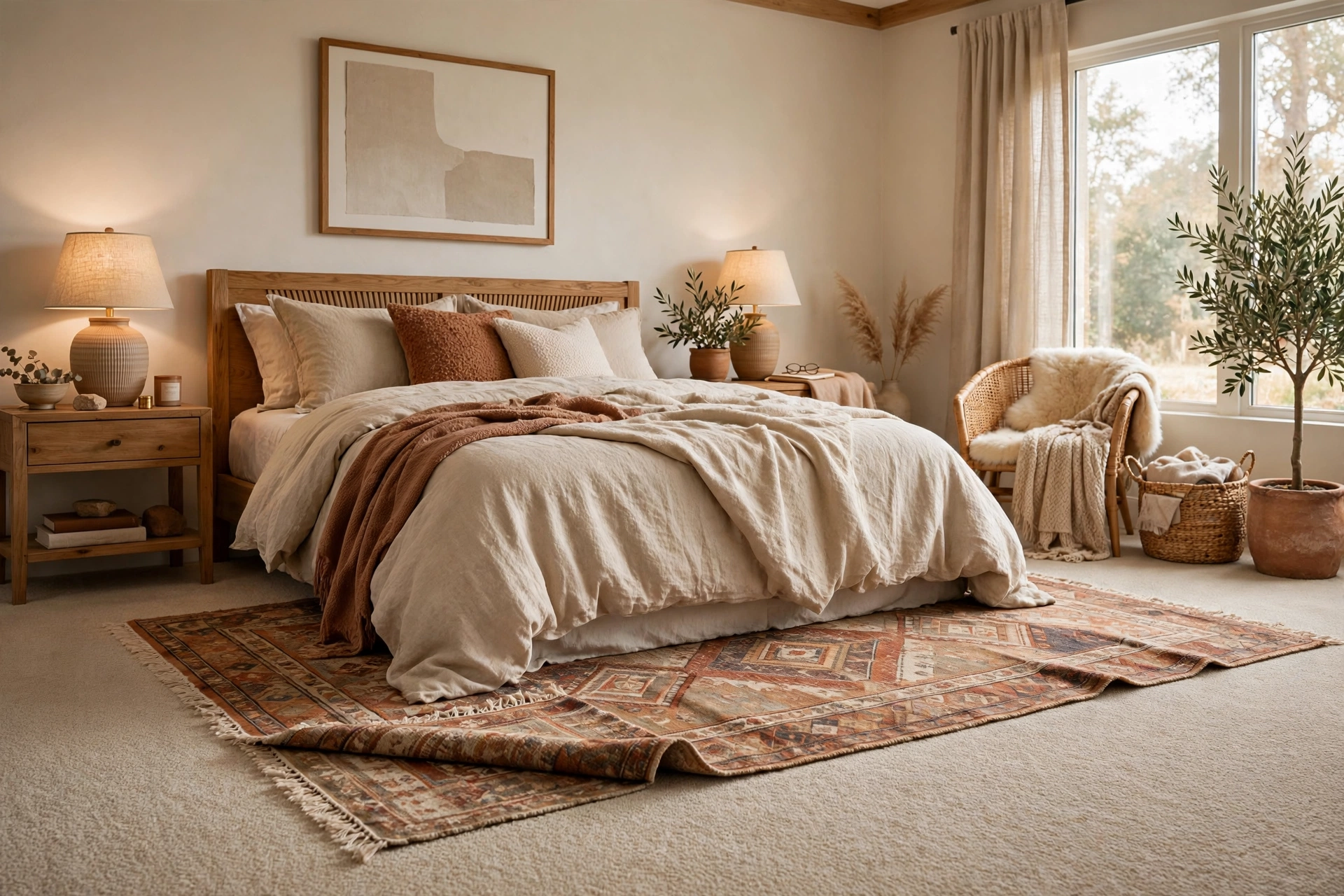
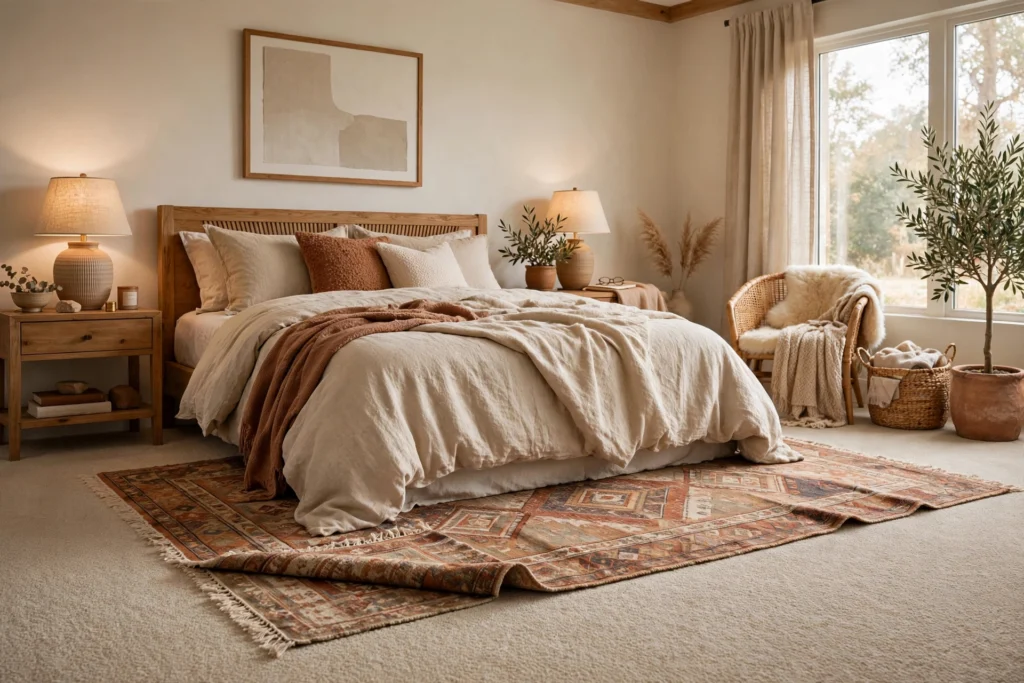
Yes, you can put a rug on carpet in a bedroom — it’s called layering, and designers do it all the time. The key is choosing a rug with low pile and enough weight to stay flat, in a size and style that contrasts with the carpet underneath. A patterned or textured rug over neutral wall-to-wall carpet adds depth, defines zones (like a reading nook), and brings color to a room without replacing the carpet. Avoid thick, high-pile rugs on top of plush carpet, as the combination can feel unstable underfoot.
When Layering Works Best
Rug-on-carpet layering shines when your wall-to-wall carpet is neutral and boring — the rug becomes the star. It also works well to define a seating area within a large bedroom, add warmth over a thin apartment-grade carpet, or introduce pattern without committing to new flooring.
Choosing the Right Rug
- Low pile: Flatweave, kilim, or low-pile wool rugs sit best on carpet
- Heavy enough to stay put: Lightweight rugs bunch up; choose something with substance
- Contrasting texture or pattern: If the carpet is plain, the rug can be bold
- Rug pad: Use a thin rug pad designed for carpet-to prevent slipping
SAFAVIEH Kilim Collection Area Rug 8×10, Dark Green, Handmade Wool, Flat Woven, Low Pile
Best for adding bold pattern over neutral carpet without adding height.
What to Avoid
Don’t layer a thick shag rug on plush carpet — doors may not clear it, and it feels wobbly. Don’t use a rug that’s the same color and texture as the carpet (it just looks like a mistake). And don’t skip the rug pad — without one, the rug will creep and wrinkle.
Styling Tips
Center the rug under the bed with generous borders, or use it to anchor a reading chair in the corner. A vintage-style rug over beige carpet is a classic combination. For a modern look, try a geometric flatweave over gray carpet.
What Size Rug Should You Layer Over Carpet?
Size is where most rug layering goes wrong. Too small and the rug looks like a postage stamp floating on carpet; too big and you lose the contrast that makes layering interesting. For a queen bed, an 8-by-10-foot rug is the classic choice: position it so it extends about 18–24 inches beyond each side of the bed and tucks a few inches under the bed itself. For a king, step up to 9-by-12 if the room allows. The goal is for your feet to land on the rug — not the bare carpet — when you get out of bed on either side.
In a smaller bedroom where a full under-bed rug won’t fit, try a large rug placed horizontally across the lower two-thirds of the bed, or use two runners — one on each side of the bed. This “runner pair” trick is a favorite in narrow bedrooms and rentals, giving you softness underfoot without wrestling a giant rug into a tight space. Whatever size you choose, leave at least a few inches of the underlying carpet visible around the rug’s edges; that visible border is what makes the layering look intentional rather than accidental.
The Best Rug Materials for Layering on Carpet
Flatweave rugs are the top pick for layering. They’re thin, stable, and their tight weave grips carpet well instead of sliding around. Kilim and dhurrie rugs fall into this category and bring gorgeous pattern to neutral carpet. Low-pile wool rugs (think a tight, short loop) are the next best option — durable, naturally stain-resistant, and heavy enough to stay put. Cotton rugs work in low-traffic bedrooms and are easy to wash, but they’re lighter, so pair them with a rug pad.
SAFAVIEH Micro-Loop Collection Area Rug 8×10, Blue & Beige, Handmade Wool, Low Pile
Best for a durable, low-pile wool layer that stays put over bedroom carpet.
Jute and sisal rugs can look fantastic over carpet for a natural, textured layer, but they come with caveats: they’re rough underfoot, they shed, and they’re not ideal if you like walking barefoot. Save them for the foot of the bed rather than the sides. What to avoid: thick shag or high-pile rugs on top of plush carpet. The combination compresses unevenly, feels wobbly underfoot, and creates a tripping hazard — plus doors may not clear the extra height. If you love the look of shag, it works far better on hard flooring.
nuLOOM Alisia Handmade Striped Jute & Cotton Area Rug, 6′ x 9′, Flat Woven
Best for a natural, textured layer over carpet, especially at the foot of the bed.
How to Keep Your Rug From Sliding or Bunching
Slipping is the biggest practical complaint about rug-on-carpet layering, but it’s solvable. A rug pad designed specifically for carpet-to-rug use (sometimes labeled “carpet-to-carpet” or “rug-on-carpet” pads) is the single best investment — these have a grippy texture on both sides and add cushioning without much height. Avoid standard rug pads meant for hard floors; many have a rubberized side that can discolor or damage carpet over time.
Mohawk Home 9′ x 12′ Non Slip Rug Pad Gripper, 1/4″ Thick, Dual Surface Felt + Rubber Gripper
Best for keeping a layered rug from sliding or bunching on carpet without adding much height.
Placement does half the work. Tucking the rug partially under the bed anchors it with the bed’s weight, which eliminates most movement. In seating areas, position heavy furniture — a chair, an ottoman, a bench — with at least two legs on the rug. For persistent curling edges, reverse-roll the rug overnight before laying it down, or place heavy books on the corners for a day or two. Double-sided carpet tape made for rugs can help on low-pile carpet, but test it in an inconspicuous spot first — some tapes leave residue or pull up carpet fibers when removed. Finally, rotate the rug every few months if one area gets more foot traffic; even wear keeps it lying flat longer.
Best for extra grip on low-pile carpet where a layered rug keeps sliding or curling.
When Layering Doesn’t Work — and What to Do Instead
Layering isn’t right for every situation. If your wall-to-wall carpet is already thick and plush, adding a rug on top can feel unstable and look lumpy no matter what you do — in that case, the carpet is already doing the rug’s job. Bedrooms with doors that swing inward over the rug area are another problem: the extra height can catch the door, and trimming the door is rarely worth it for a decorative layer. Very small bedrooms can also feel more cramped with a rug chopping up the floor visually.
In these cases, get the benefits of layering another way. A great bedside runner pair gives softness where your feet land without covering the whole floor. Or skip the floor entirely and layer texture higher up: a chunky throw across the foot of the bed, textured Euro shams, or a woven bench at the foot of the bed all add the depth and warmth that layering is really about. And if your carpet is simply worn or ugly, no rug fully fixes that — a rug covers the middle, but the edges still show. At that point, it’s worth pricing carpet replacement against the cost of a large quality rug; sometimes the real fix is the better investment.
Rug on Carpet FAQs
Will a rug damage the carpet underneath? Generally no, as long as you use a proper rug pad and move or rotate the rug occasionally. Without a pad, the rug’s backing can wear a visible pattern into the carpet over time, and trapped moisture (from spills that soak through) can cause issues. Lift the rug every few months to vacuum underneath and let the carpet breathe.
Can I layer a rug on carpet in a rental? Absolutely — it’s one of the best rental-friendly upgrades there is. It adds color and personality without touching the landlord’s flooring, and you take it with you when you leave. Just use a non-adhesive rug pad rather than tape to avoid any risk to the carpet.
Should the rug match the carpet color? Contrast is the whole point. If your carpet is beige or gray, that’s your cue to go bold with the rug — pattern, color, or texture. A rug that closely matches the carpet color tends to look like a mistake rather than a design choice.
Pattern Mixing Rules for Layered Rugs
The rug-on-carpet combination lives or dies on pattern decisions. The golden rule: one pattern stars, the other supports. If your wall-to-wall carpet has any pattern or texture (berber, subtle geometric), choose a rug that’s mostly solid or has a very quiet pattern — two competing patterns fight each other and the result looks busy rather than designed. If your carpet is a plain solid (the most common case), the rug gets to be the star: bold geometrics, vintage-inspired medallions, stripes, or rich texture all work beautifully.
When mixing patterns, vary the scale — a large-scale rug pattern over a small-scale carpet texture (or vice versa) creates harmony, while two similar-scale patterns clash. Keep the color palette connected: pull one color from the rug that echoes the carpet tone, and the layering looks intentional. And consider the rug’s border: rugs with a strong border pattern define the layered area crisply, which helps the whole arrangement read as deliberate design rather than a rug that happened to land on carpet.
Cleaning and Maintaining a Layered Rug
Two layers of flooring need a slightly different cleaning routine. Vacuum the rug regularly with suction-only or the beater bar off if the rug is delicate — and lift the rug every month or two to vacuum the carpet underneath, where dust and grit migrate through. Grit trapped between the layers acts like sandpaper, wearing both the rug backing and the carpet face over time.
Address spills immediately: blot (never rub) and remember the spill has somewhere to go — through the rug into the carpet below. For serious spills, lift the rug and treat both layers. Rotate the rug twice a year to even out sun fading and foot-traffic wear; carpet underneath fades too, and a rug that never moves leaves a visible “tan line” when you eventually rearrange. Every year or so, take the rug outside for a proper beating or a professional cleaning — layered rugs hide how dirty they are because the carpet beneath masks the evidence. A rug pad also deserves occasional attention: shake it out and check that it hasn’t bunched or degraded, since a failed pad is the usual suspect when a previously well-behaved rug starts sliding.
COTTY HOME Washable Non-Slip Backing Oriental Area Rug, Turkish Cotton, Flat Woven, Low Pile
Best for an easy-care, patterned layer over bedroom carpet that is simple to clean.
🛒 Shop This Look:
🛒 Shop This Look:
🛒 Shop This Look:



