
As an Amazon Associate, I earn from qualifying purchases. This means I may earn a commission if you purchase through links on this page — at no extra cost to you.
A well-designed living room balances comfort, function, and style. It’s the hardest room to get right because it serves so many purposes — relaxing, entertaining, working, family time. The key is defining zones (even in open spaces), choosing a focal point, and ensuring every piece earns its place. This guide covers furniture arrangement, style coordination, lighting, and the common mistakes that make living rooms feel off.
Furniture Arrangement: 6 Layout Formulas
1. The Conversation Pit
Sofa and two chairs facing each other, coffee table in the center. The classic arrangement for socializing. Best for: living rooms where people actually talk to each other.
Spacing: 7–9 feet between facing seats (close enough to converse, far enough for legroom). Coffee table 14–18 inches from sofa edge.
2. The TV Wall
Sofa facing the TV wall, chairs angled inward. The most common layout. Best for: families where TV is central.
TV placement: Center of TV at seated eye level (42 inches from floor). Viewing distance: 1.5–2.5x the diagonal screen size. A 55-inch TV needs 7–11 feet.
3. The L-Shape
Sectional or sofa + loveseat in an L configuration. Defines zones in open-plan spaces. Best for: open concept living/dining areas.
4. The Symmetrical Formal
Matching sofas or sofa + two identical chairs, mirrored on either side of a focal point (fireplace, large window). Best for: traditional interiors, formal living rooms.
5. The Floating Arrangement
Furniture pulled away from walls, anchored by a rug. Creates intimacy in large rooms. Best for: oversized living rooms that feel empty with furniture against walls.
Key: The rug must be large enough to anchor all front legs. Floating furniture on a too-small rug looks lost.
6. The Split Zone
Two distinct seating areas in one large room — e.g., TV zone + reading nook. Best for: great rooms, long narrow living rooms.
Divider: Use a console table, bookshelf, or rug to define the boundary between zones.
Rug Sizing: The Make-or-Break Decision
The rug anchors the entire room. Too small is the #1 living room mistake.
- All legs on: Ideal. Rug extends 12–18 inches beyond furniture on all sides. For a standard sofa + chairs, that’s typically 8×10 or 9×12.
- Front legs on: Minimum acceptable. Back legs can be off, but front legs of all seating must be on the rug.
- Coffee table only: Too small. The rug looks like a placemat under the table.
Standard guide: 5×8 for small sitting areas, 8×10 for average living rooms, 9×12 for large rooms or sectionals.
Sofa Selection
Size
Measure your space before shopping. A sofa should leave 30–36 inches of walkway around it. In small living rooms, a loveseat (48–72 inches) often works better than a full sofa (72–96 inches).
🛒 Shop This Look:
Depth: 36–40 inches is standard. Deeper (42+) is lounge-friendly but overwhelms small rooms. Shallower (34–36) suits formal or compact spaces.
Fabric
Families/pets: Performance fabrics (crypton, Revolution) resist stains and wear. Leather wipes clean but scratches. Avoid delicate fabrics like silk or velvet.
Color: Neutral sofas (gray, beige, white) offer longevity — change pillows and throws for seasonal updates. Bold sofas make a statement but limit flexibility.
Lighting Layers
- Ambient: Overhead (recessed, chandelier, or ceiling fixture). Dimmable preferred.
- Task: Floor lamp by reading chair, table lamps on side tables. Each seating position should have accessible task lighting.
- Accent: Picture lights on art, LED strips on shelves, candles. Creates depth and mood.
Rule: Every 10×10 foot area needs at least 3 light sources at different heights. A single overhead light makes living rooms feel flat and institutional.
Coffee Table Styling
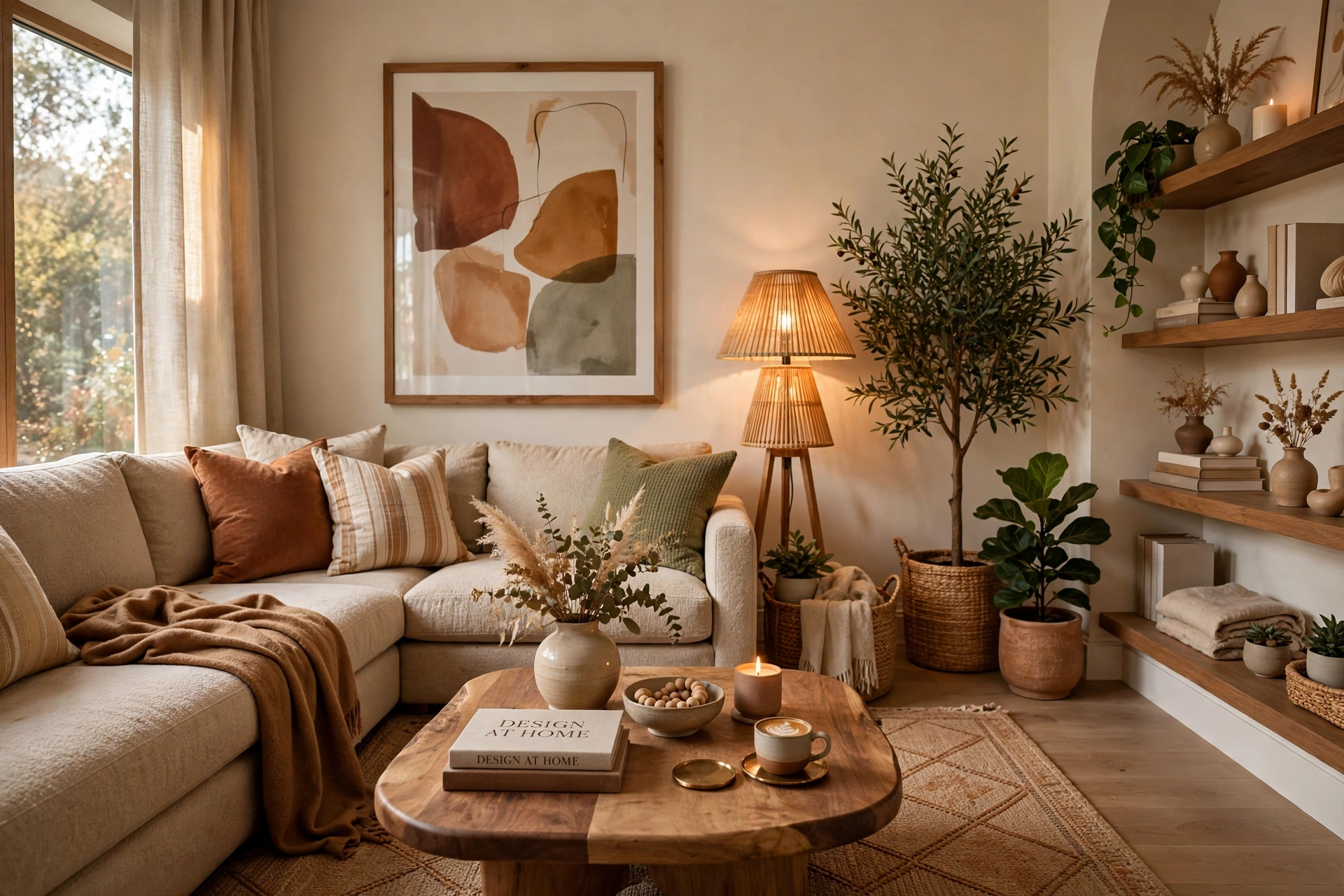
The 3-item formula: something tall (vase with stems), something flat (stack of books), something small (candle, small bowl). Vary heights and textures. Leave 40% of the surface empty — overstyled coffee tables feel cluttered.
Size: Coffee table should be 1/2 to 2/3 the sofa length, 14–18 inches from the sofa edge, and the same height as the sofa seat (or 1–2 inches lower).
Curtain Guide
Length: Floor-length always (unless there’s a radiator or furniture blocking). Curtains should just kiss the floor or puddle 1–2 inches for drama.
Width: Panels should total 2–2.5x the window width for proper fullness.
Hanging: Mount 4–6 inches above the window frame, extend 8–12 inches beyond each side. This makes windows look larger.
Common Living Room Mistakes
- Rug too small. The most common and most impactful mistake.
- All furniture against walls. Pull pieces inward to create intimacy, especially in large rooms.
- Single overhead light. Layer lighting at multiple heights.
- No focal point. Every room needs one — fireplace, large art, TV wall, or stunning view. Arrange furniture to face it.
- Too many small decor items. Five small objects look cluttered; one large object looks intentional.
- Ignoring scale. Tiny art on a huge wall, oversized sofa in a small room. Measure before buying.
- Matching everything. A matching furniture set looks like a showroom. Mix textures, tones, and styles for a collected feel.
Choosing a Style Direction
Before buying anything, decide what you’re aiming for. A living room assembled without a direction ends up as a collection of nice individual pieces that don’t speak to each other.
Find Your Common Thread
Save 10–15 living room images you love (Pinterest, Instagram, magazines). Then look for the pattern: are the rooms mostly light or moody? Clean-lined or layered? What wood tones repeat? What colors appear again and again? Most people discover they’re drawn to one dominant style with traces of another — “mostly modern with some vintage warmth,” for example. That sentence becomes your shopping filter: if a piece doesn’t fit the sentence, it doesn’t come home.
Know the Main Style Families
- Modern: Clean lines, minimal ornament, neutral palette with bold accents. Low-profile furniture, uncluttered surfaces.
- Traditional: Classic silhouettes, rich woods, symmetrical arrangements. Patterned fabrics, formal lighting.
- Mid-century modern: Tapered legs, organic shapes, warm woods (walnut, teak). Functional, uncluttered, quietly retro.
- Farmhouse: Rustic woods, cozy textiles, vintage-inspired pieces. Warm, lived-in, approachable.
- Coastal: Light and airy, blues and whites, natural textures (jute, linen, rattan). Relaxed, not themed — no anchors required.
- Japandi: Japanese minimalism meets Scandinavian warmth. Low furniture, natural materials, extreme restraint.
The 80/20 Rule
Let one style dominate 80% of the room and allow 20% personality — a vintage chair in a modern room, a bold art piece in a neutral space. This is what separates designed rooms from showrooms: the 20% is where your taste shows. The mistake is 50/50 — two competing styles at equal weight just look undecided.
Wall Decor and Art Placement
Bare walls make even well-furnished living rooms feel unfinished. Wall decor is the layer most people postpone and the one that makes the biggest difference once done.
Gallery Walls That Work
Successful gallery walls share three traits: consistent spacing (2–3 inches between frames), a defined outer boundary (imagine an invisible rectangle containing the arrangement), and one unifying element — matching frames, a consistent color palette, or a single theme. Lay the arrangement on the floor first, photograph it, then transfer to the wall using paper templates taped up before you hammer a single nail.
🛒 Shop This Look:
Single Large Piece vs. Grouping
One large piece (30×40 or bigger) creates a calmer, more formal focal point — ideal above a sofa or fireplace in modern and minimalist rooms. A grouping feels more collected and personal, suiting traditional, eclectic, and farmhouse styles. Either works; mixing one oversized piece with a small grouping on the same wall usually doesn’t.
Sizing and Height Rules
Art above the sofa should span roughly two-thirds the sofa’s width. Center artwork at 57–60 inches from the floor. When hanging above furniture, leave 6–8 inches between the furniture top and the frame bottom. Art hung too high — floating near the ceiling, disconnected from everything — is the most common wall decor mistake.
Mirrors as Decor
A large mirror functions as art while doubling light and perceived space. Round mirrors soften rooms full of rectangular furniture; arched mirrors add architectural interest to plain walls. Hang mirrors where they reflect something worth doubling — a window, a light fixture, a beautiful view — not a blank wall or clutter.
Side Tables and Surfaces: The Forgotten Layer
Every seat in a living room needs a surface within arm’s reach — for a drink, a book, a lamp. Rooms where guests have nowhere to set a coffee cup feel subtly inhospitable, even if visitors can’t name why.
- Height: Side tables should sit at or just below the arm height of the adjacent seating — typically 22–26 inches. Too low forces awkward reaching; too high dominates the chair.
- Styling: Each side table needs a job: lamp (lighting), plus one or two of — a small stack of books, a candle, a small plant, a decorative box. Three objects maximum; the surface still needs room to function.
- Behind the sofa: A narrow console table behind a floating sofa adds a surface for lamps and decor while hiding the sofa’s back — the least attractive angle in most rooms.
Seasonal Refresh Without Redecorating
A living room should evolve through the year. The trick is changing only the easy layers — never the furniture or wall color.
- Textiles (biggest impact): Swap throw pillows and blankets seasonally — warm knits and deep tones for fall/winter, linen and light colors for spring/summer. Two sets of pillow covers stored in a closet give you two rooms for the price of covers.
- Greenery: Rotate plants and stems with the seasons — bare branches in winter, fresh eucalyptus in spring, dried grasses in fall. One $15 bunch of stems transforms a vase arrangement.
- Art rotation: If you own more art than wall space, rotate pieces seasonally. Art you haven’t seen in six months feels new again.
- Scents and light: Candles in seasonal scents and warmer bulb tones in winter change how a room feels more than any object. Atmosphere is decor too.
Budget: A full seasonal refresh runs $50–$100 if you reuse and rotate rather than buying new each season. Store off-season textiles in vacuum bags to keep them fresh.
Frequently Asked Questions
Where should the TV go?
On the wall that allows comfortable viewing from the main seating. Avoid opposite large windows (glare). If the fireplace is the focal point, mount the TV above it only if the height works — TVs above mantels are often too high, causing neck strain.
How do I make a large living room feel cozy?
Create zones with rugs and furniture arrangement. Add texture (throw blankets, pillows, curtains). Use warm lighting (table lamps, not just overhead). Darker wall colors can make large rooms feel more intimate.
Can I mix wood tones?
Yes. The key is intentional contrast — light oak + dark walnut looks deliberate. Three similar-but-not-matching wood tones looks accidental. Stick to 2 wood tones max, and repeat each at least twice in the room.
How do I style open shelves without them looking cluttered?
Follow the rule of thirds: one-third books or functional items, one-third decorative objects, one-third empty space. Group in odd numbers, vary heights (tall vase next to short stack of books), and repeat colors across shelves for cohesion. Step back and squint — if any shelf looks uniformly busy with no breathing room, remove two items. Open shelves need editing more than styling.
What paint color works for most living rooms?
Warm whites (with the slightest creamy undertone) are the safest choice — they brighten the room, work with any style, and make art and furniture stand out. Light greige (gray-beige) adds warmth while staying neutral. Always test with large swatches on the wall and observe them at morning, afternoon, and evening light before committing; paint looks dramatically different under different lighting.
How many throw pillows is too many?
For a standard sofa: five maximum — two larger (20–22 inch) in back, two medium (18 inch) in front, one lumbar in the center. Beyond that, pillows become an obstacle course guests have to clear before sitting. Vary textures (linen, velvet, knit) within a coordinated color palette rather than matching everything exactly.
By Ella Knight
🛒 Shop This Look:
- Living Room Ideas — our complete hub
- Best Sofas Under $1000
- Coffee Table Decor Ideas
Related reading:




1 thought on “The Ultimate Living Room Decor Guide (2026): Styles, Layouts & Ideas”
Comments are closed.