
As an Amazon Associate, I earn from qualifying purchases. This means I may earn a commission if you purchase through links on this page — at no extra cost to you.
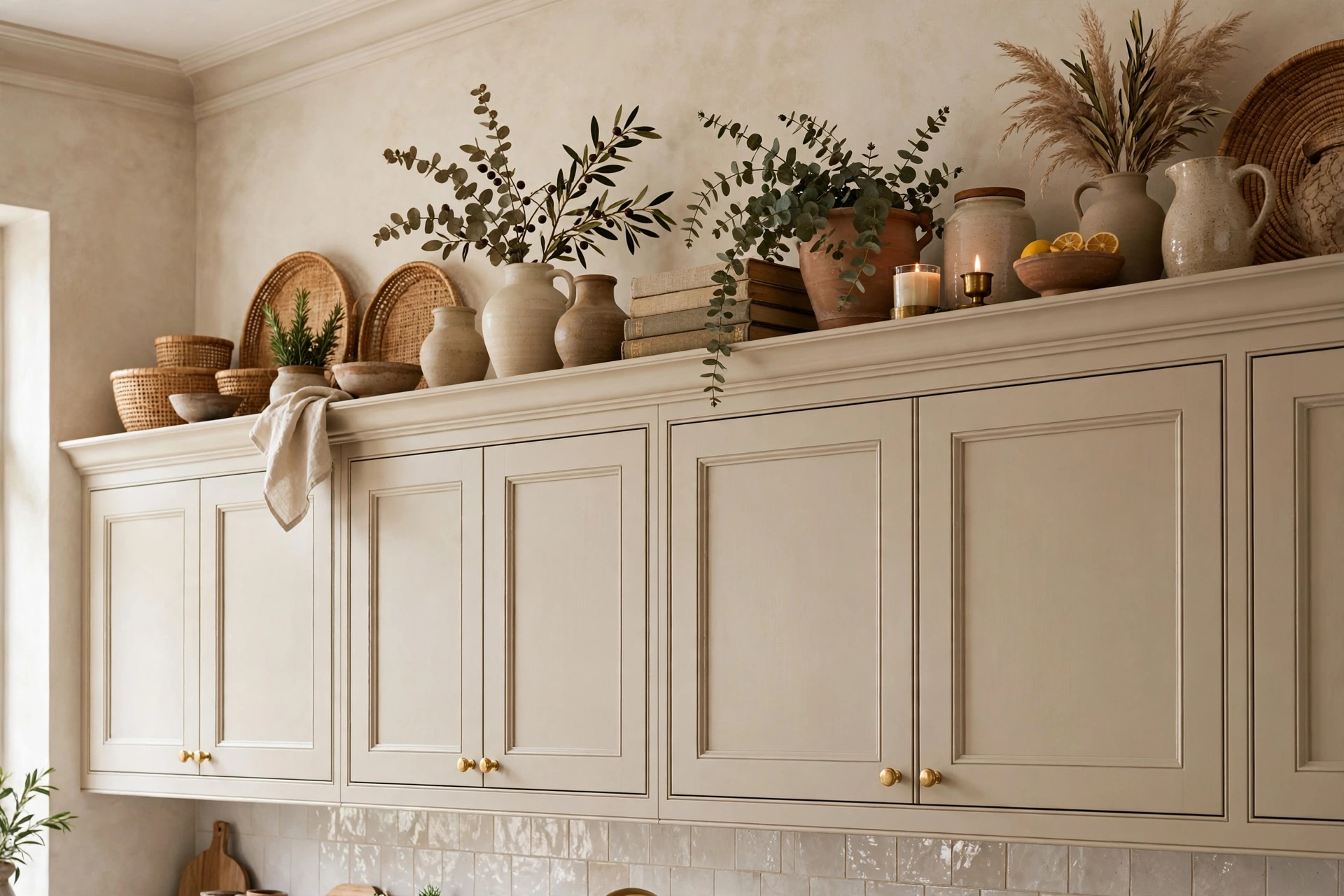
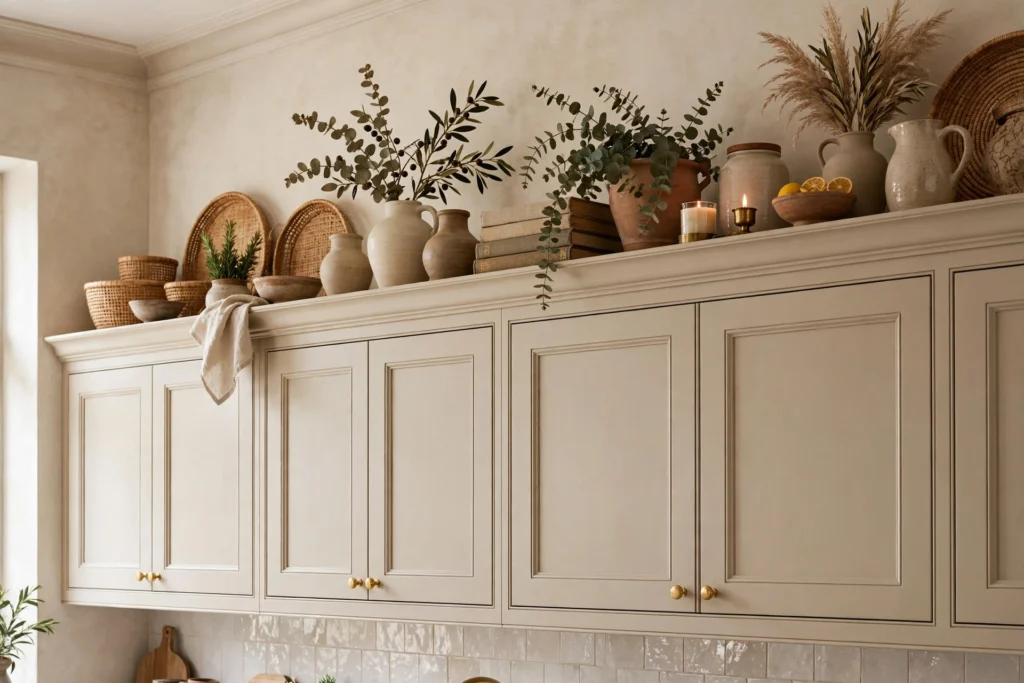
The best items for on top of kitchen cabinets are large-scale pieces like woven baskets, oversized pottery, framed art leaned against the wall, and trailing plants. Stick to 3–5 items per section, choose pieces at least 12 inches tall (small items look cluttered from below), and select easy-to-clean materials since everything up there collects dust and grease. When in doubt, less is more — negative space looks intentional.
12 Ideas Ranked by Practicality
Tier 1: Best Choices
1. Large woven baskets — Lightweight, easy to dust, add texture. $15–$30 each.
Sienna & Coast Hand Woven Natural Seagrass Lidded Basket, Natural/Tan, Large (17.7″ x 17.7″ x 23.6″)
Best for adding large-scale natural texture above kitchen cabinets.
2. Oversized ceramic vases — Substantial presence, wipeable surface. Thrift stores: $5–$15.
LE TAUCI 11.3″ Ceramic Vase, Large White Ceramic Vase for Modern Farmhouse Home Decor
Best for a substantial, wipeable statement piece above kitchen cabinets.
3. Framed art (leaned) — Adds color and personality. Use lightweight frames.
4. Trailing pothos plants — Softens hard lines. Real or high-quality faux.
BLEUM CADE Fake Hanging Plants, 4pcs Artificial Pothos Vines Greenery (43.3″ vines)
Best for softening hard cabinet lines with trailing greenery.
Tier 2: Good Options
5. Decorative platters on stands — Charming if color-coordinated.
IPAME 8 Inch Large Plate Stands for Display, Metal Square Wire Plate Holder Display Stand (2 Pack)
Best for displaying decorative platters upright above cabinets.
6. Wooden bowls and cutting boards — Warm, natural, easy to clean.
7. Large glass jars — Filled with pasta, beans, or left empty for shape.
ComSaf 1.2 Gallon Wide Mouth Glass Storage Containers, 4.6 Qt Glass Jars with Lids (2 Pack)
Best for large glass jars filled with pasta, beans, or left empty for shape.
8. Vintage tins and canisters — Nostalgic charm, wipeable.
Tier 3: Use Sparingly
9. Cookbooks — Only if you have large, attractive ones. Can look messy.
10. Small plants in rows — Cute but high-maintenance for watering.
11. Seasonal decor — Fine temporarily, but don’t leave year-round.
12. Nothing — Seriously. Empty tops look clean and modern.
What to Avoid
- Tiny figurines (invisible from below, dust magnets)
- Silk flowers (greasy within months)
- Word signs (“EAT”, “KITCHEN”, “GATHER”)
- Anything fragile (vibration from doors causes falls)
- Mismatched random clutter with no color theme
Pro Tips
- Line cabinet tops with wax paper for easy cleaning — replace every 6 months
- Stick to 2–3 colors maximum across all items
- Leave at least 30% of the space empty
- If ceiling is less than 12″ above cabinets, skip decor entirely
— Ella Knight
The Dust Debate: An Honest Take
Let’s address it directly: yes, the tops of kitchen cabinets collect dust and grease. It’s the reason half the internet says to leave the space empty. But “it gets dusty” is true of every surface in a kitchen — the question is whether the visual payoff is worth the maintenance, and for most people, the answer depends on what you put up there.
The grease factor is real in kitchens with heavy stovetop cooking and no range hood (or a weak one). Airborne cooking grease settles on high surfaces and turns dust into a sticky film that’s genuinely unpleasant to clean. If you cook daily with a lot of frying and your ventilation is poor, the top of the cabinets is a high-maintenance display zone — choose accordingly.
Mitigation strategies that actually work:
- Line the tops with newspaper or paper: lay it flat, replace every few months. Dust settles on the paper, not the cabinet. When cleaning day comes, roll it up and toss it.
- Choose wipeable items: glazed ceramics, glass, and metal wipe clean in seconds. Woven baskets, dried plants, and fabric trap dust and grease — avoid them up high.
- Enclose or cluster: items grouped on a tray can be lifted and wiped underneath in one motion. A dozen separate small items means a dozen dusting operations.
- Schedule it: add “cabinet tops” to a quarterly deep-clean rotation. With paper lining and wipeable items, it’s a 15-minute job, not an ordeal.
The Styling Formula: Height, Depth, and Breathing Room
Cabinet tops fail when they look like a storage shelf and succeed when they look like a styled ledge. The formula:
- Vary heights: the number one rule. A row of same-height items looks like inventory. Mix tall (vases, pitchers, large platters stood upright), medium (canisters, stacks of bowls), and low (small plants, short baskets). Aim for a wave pattern across the run, not a flat line.
- Group in odd numbers: clusters of 3 or 5 read as intentional. Leave gaps between clusters — the empty space is what separates “styled” from “cluttered.”
- Work in thirds: visually divide the cabinet run into thirds. Style two-thirds, leave one-third empty. The breathing room keeps the whole thing from feeling heavy.
- Repeat colors and materials: pick 2–3 materials (e.g., white ceramic + natural wood + greenery) and repeat them across clusters. Repetition creates rhythm; randomness creates noise.
- Consider the sight line: you see cabinet tops from a few feet away and below. Items need to be large enough to read at that distance — anything under 8 inches tall disappears. Go bigger than you think.
What to Put Up There: 12 Ideas That Work
Grouped by what they do for the space:
Functional Display
- 1. Rarely-used serveware: large platters, punch bowls, the good pitcher. Beautiful, bulky, and used too rarely for prime cabinet space — the perfect cabinet-top residents.
- 2. Cookbooks you actually reference: a stack of 3–5 substantial cookbooks, styled horizontally. Keep the daily go-tos lower; these are the beautiful-but-occasional ones.
- 3. Extra glassware: sets of glasses or decanters that don’t fit in regular cabinets. Glass catches light beautifully up high.
Decorative
- 4. Large-scale greenery: trailing pothos or faux eucalyptus in substantial pots. Plants soften the hard lines of cabinetry. Faux is fine up high — nobody can tell at that distance, and there’s no watering hassle.
- 5. Woven baskets (with caveats): beautiful for texture, terrible for dust. Only if you’re committed to the cleaning, or use them in low-grease kitchens.
- 6. Art and signs: a framed print or wooden sign leaned against the wall adds personality. Keep it large — small frames vanish up there.
- 7. Ceramic collections: white pitchers, ironstone, or pottery in a single color family. Collections are the ideal cabinet-top content because repetition looks intentional.
- 8. Vintage finds: scales, tins, enamelware — the flea-market treasures too pretty to hide. One or two statement pieces, not a museum.
Architectural
- 9. Uplighting: LED strip lights hidden behind a small lip on the cabinet tops wash the ceiling with warm light. This is the designer trick that makes the whole kitchen glow — and it makes everything displayed up there look better.
- 10. A long runner or textile: in some styles, a folded runner or length of fabric softens the cabinet line. Unusual, but effective in bohemian or eclectic kitchens.
- 11. Seasonal rotation: keep a box of seasonal items (wreath, pumpkins, garlands) and swap quarterly. Fresh looks without permanent commitment.
- 12. Nothing: the most underrated option. If your cabinets nearly reach the ceiling, or your kitchen is small and busy, empty tops are clean, calm, and dust-free. “Nothing” is a valid design choice.
Best for warm uplighting that washes the ceiling and makes displayed items look better.
What Never to Put Up There
- Anything you use weekly: if you’re climbing for it regularly, it doesn’t belong up high. Daily and weekly items live at counter or eye level.
- Heavy items on weak cabinets: stock cabinets aren’t engineered for heavy loads on top. A cast-iron collection up there is a structural risk — and a head-injury risk when retrieving.
- Anything flammable near the stove: cabinet tops near the range get heat and grease. No dried florals, paper, or fabric within a few feet of the stove.
- Sentimental irreplaceables: heat, grease, and the occasional fall make cabinet tops a bad home for anything you can’t replace.
- Small fussy items: tiny figurines and small frames read as clutter from below and collect dust disproportionate to their visual contribution.
Safety: Weight, Heat, and Stability
Cabinet tops are not shelves — they have no lip, no railing, and often a slightly uneven surface. Keep items stable: use museum putty under anything top-heavy or in earthquake-prone areas. In homes with kids, remember that cabinet-top items are at “climbing target” height for adventurous toddlers — keep it minimal until they’re older.
Near the range, heat rises and concentrates. Check that items above or near the stove aren’t getting hot during cooking — warped baskets and discolored finishes are the warning signs. When in doubt, leave the cabinets flanking the range empty.
The Cleaning Routine That Makes It Sustainable
The difference between cabinet tops that look great and ones that become a dusty embarrassment is a system:
- Quarterly: lift everything (or roll up the paper liner), wipe the surface with a damp cloth and a drop of dish soap, replace the liner, wipe each item, restyle.
- Monthly (quick): run a microfiber duster across the fronts of items. Two minutes.
- After heavy cooking weeks: if you’ve been frying, wipe the nearest cabinet tops with a degreasing wipe. Don’t let grease build up — it’s ten times harder to remove once layered.
Total annual time investment: a few hours. That’s the real cost of styled cabinet tops — not money, but a maintenance habit. If that sounds like too much, choose “nothing” with confidence. An empty cabinet top is always better than a dusty styled one.
Frequently Asked Questions
Should I decorate above my kitchen cabinets?
It’s optional, not required. Decorate if: your cabinets sit well below the ceiling (12+ inches of space), your kitchen style benefits from display (farmhouse, eclectic, traditional), and you’ll maintain it. Skip it if: cabinets nearly reach the ceiling, your kitchen is small and visually busy, or you hate dusting.
How do I keep the top of kitchen cabinets from getting dusty?
Line the surface with newspaper or shelf paper and replace it periodically, choose wipeable display items, and add the area to a quarterly cleaning rotation. Good range ventilation (a real hood, used consistently) reduces grease buildup dramatically.
What looks good on top of kitchen cabinets?
Large-scale items in repeating materials: white ceramics, wood pieces, trailing greenery, substantial cookbooks, vintage finds in a consistent style. The keys are scale (go big), repetition (2–3 materials), and breathing room (don’t fill every inch).
Is it outdated to decorate above kitchen cabinets?
The “cluttered country” look of tiny items crammed above cabinets reads dated. But intentional, large-scale, minimal styling — or dramatic uplighting — is current. The difference is curation: fewer, bigger, better beats more, smaller, random.
🛒 Shop This Look:
🛒 Shop This Look:
🛒 Shop This Look:



