
As an Amazon Associate, I earn from qualifying purchases. This means I may earn a commission if you purchase through links on this page — at no extra cost to you.
In Italy, the coffee table is not furniture. It is infrastructure for the espresso ritual: the tiny cup, the saucer, the sugar, the fifteen minutes of doing nothing beautifully. Styling an Italian coffee table means honoring that ritual first and letting the decor follow from it. A table that serves espresso well, holds a book open, and catches evening light will look elegant almost by accident. This guide builds that table step by step: proportions, surfaces, the espresso set, books, flowers, metallic accents, and the mistakes that turn elegance into stiffness.
Proportions before decoration
Start with size, because no arrangement fixes a table that fights its sofa. Aim for a table about two-thirds the length of the sofa, with its top level with the seat cushions or an inch or two lower. That height makes setting down an espresso cup feel effortless and keeps the table from blocking the view across the room. Leave a comfortable stride of clearance on every side you walk past, and check that nobody has to squeeze between the table and a chair to sit down. A round table suits a curved or compact seating group; a rectangular table suits a long sofa and a long room. If the table is glass-topped, it will read lighter in the room, which helps in small spaces, but it shows every fingerprint and needs a tray to anchor the arrangement visually.
Shape also decides how the table gets used. A rectangular table gives you zones: espresso at one end, books at the other, flowers in the middle. A round table gives you one center, which suits a single strong arrangement rather than several small groups. Either way, keep at least a third of the surface permanently open. An Italian table that cannot hold two espresso cups without moving the decor has failed at its main job.
Surfaces that age with grace
Italian tabletops favor materials with visible character: travertine, marble, walnut, and brass-trimmed wood. Each needs slightly different care, and the care is part of the styling decision. Marble and travertine stain if acidic drinks sit on them, so coasters are not optional and a small tray under the espresso set earns its place twice over. Sealing stone helps, but it is maintenance, not a one-time fix: reseal on the schedule the sealer maker recommends, and wipe spills promptly rather than letting them sit. Wood tops are more forgiving and warmer to the touch, which suits rooms that lean cozy rather than formal. Brass trim and metal legs add the glint that keeps a warm room from feeling flat, but keep metal to one or two accents: a brass tray edge, a lamp base, or a picture frame. A room full of brass reads as a showroom.
The espresso set as the centerpiece
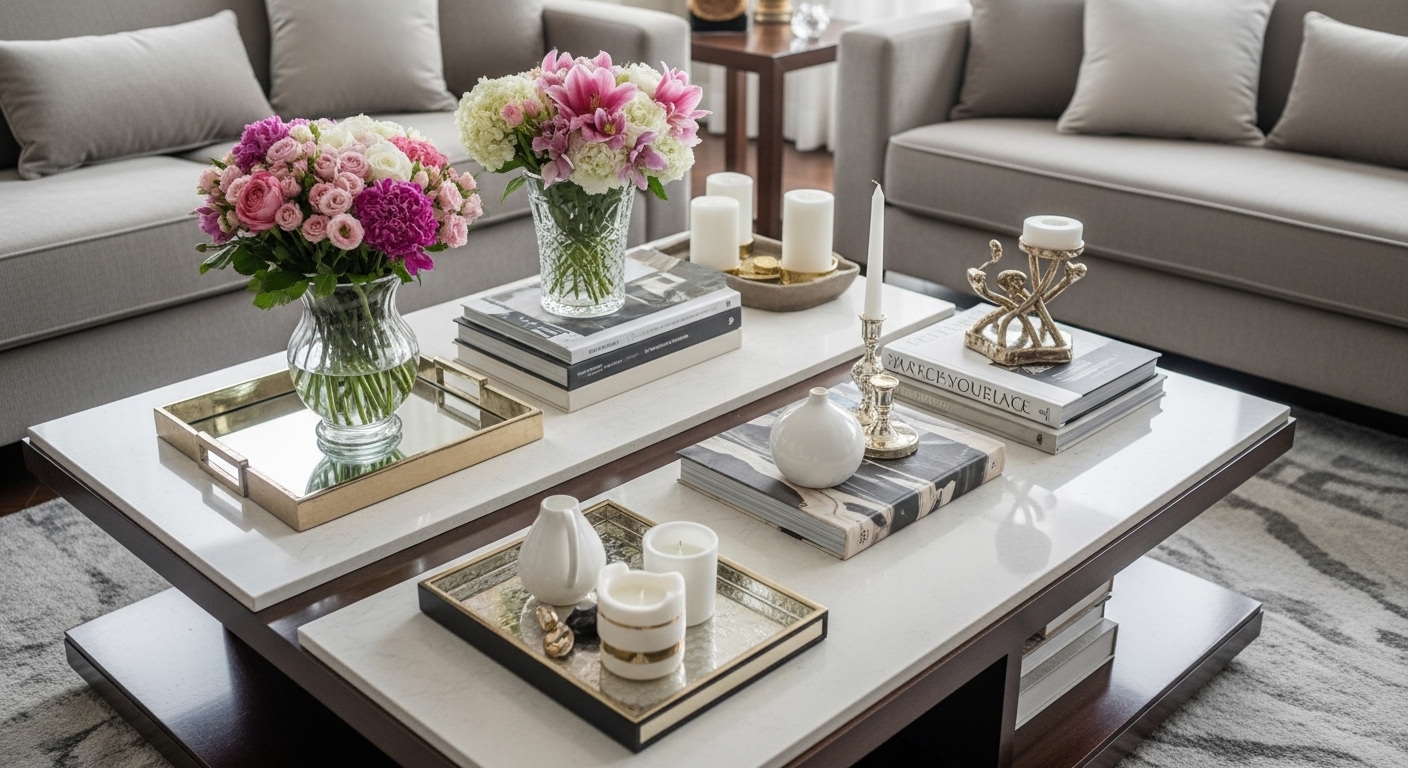
Build the arrangement around the ritual, not around objects bought for display. A small tray holding two espresso cups, saucers, and a sugar bowl is both the prettiest and the most useful thing on the table. Keep the set itself simple: white or cream porcelain reads classic against dark wood and lets the coffee color do the work, while a hand-painted set adds pattern that then needs quieter surroundings. Store the set on the table only if the table has room for it plus open surface; otherwise keep the cups in a nearby cabinet and bring the tray out for the ritual. Either approach is honest. What looks wrong is a full espresso set crammed onto a table that has no space left for the people drinking from it.
Add one small ritual object beside the tray: a tiny spoon rest, a folded linen napkin, or a single biscuit plate. One is enough. The ritual already has its own beauty; extra props dilute it.
🛒 Shop This Look:
Books and art, kept low
Two or three large-format books, stacked largest at the bottom, anchor the non-tray end of a rectangular table or one side of a round one. Art and photography books suit the Italian table because they invite slow browsing, which matches the room’s pace. Keep the stack low: when two people sit opposite each other, they should see each other’s faces over the books, not peer around them. A single book laid open on top of the stack signals use rather than display, and it gives guests something to open without asking permission. Avoid stacking books so high they become a plinth, and avoid matching all the book covers to the room color: a little contrast keeps the stack from looking staged.
If the table sits near art on the walls, let the table echo one color from the nearest artwork rather than copying it. A rust-colored book spine near a painting with rust tones, for example, ties the table to the room without turning it into a color swatch.
Flowers and branches, one arrangement only
One floral arrangement is the right amount on an Italian coffee table. A single stem in a tall narrow vase reads more elegant than a crowded bouquet, because it leaves sightlines open and does not compete with the espresso set. Olive branches, eucalyptus stems, or a single rose all suit the palette; what matters is that the arrangement looks intentional rather than assembled from leftovers. Keep the vase height below seated eye level across the table, and trim stems so they do not brush anyone leaning forward. Fresh flowers need water changes and stem trims to last the week; good faux stems are a fair substitute in a dark corner, judged from sofa distance rather than close inspection. Either way, replace or refresh the arrangement before it wilts: tired flowers undo the whole room’s freshness faster than an empty vase would.
Brass and metallic accents in small doses
Metallic accents give an Italian table its lift, but dose control is everything. One brass object, a small bowl, a candle holder, or a tray edge, plus one more metal somewhere nearby, like a lamp base across the room, is plenty. Mixing metals is fine when one dominates: brass with a touch of blackened iron, for example, reads collected, while equal parts brass, chrome, and gold read uncertain. Keep metal away from the espresso zone if the table is small, since cups, saucers, and a brass bowl in one cluster start to feel like a shop counter. Let the metal catch light from a nearby lamp rather than sitting under direct overhead light, which can make it glare.
Color discipline: warm neutrals, one accent
The Italian palette on a coffee table is warm neutrals first: cream, warm white, walnut, terracotta, olive, and soft black. Choose one accent color and repeat it exactly twice: a rust book spine and a rust candle, for example, or an olive vase and an olive cushion on the sofa. Two repetitions read as intention; one reads as accident, and three or more start to feel like a theme. The Italian living room guide shows how this same discipline scales up to walls, seating, and rugs, so the table and the room reinforce each other instead of competing.
🛒 Shop This Look:
Light that flatters the table
Evening light makes an Italian table. A table lamp on a side table or a floor lamp behind the sofa, aimed so it washes across the tabletop rather than glaring into eyes, gives wood and brass their warmth. Candles on the coffee table itself add a second, lower layer of light; use sturdy holders, keep flames clear of books and fabric, and never leave a lit candle in an empty room. Battery candles inside a glass hurricane give the same low glow with none of the worry, and they suit homes with children or pets. Avoid a single harsh overhead light as the room’s only source: it flattens the very textures the table is meant to show off.
Caring for marble and travertine day to day
Stone tops reward a small daily habit and punish neglect, so build the habit into the styling. Wipe the surface with a soft, damp cloth after coffee, and dry it rather than leaving it wet. Keep a coaster under every cup without exception, and keep the espresso tray lined with a washable cloth so drips never reach the stone. Avoid placing citrus, vinegar dressings, or tomato dishes directly on marble or travertine, since acids etch the surface even through a quick contact. If an etch mark does appear, it is usually a dull spot rather than a stain, and a stone professional can often polish it out; home remedies that promise to erase etches tend to make the area worse, so leave that job alone. Reseal on the schedule the sealer maker recommends, which is typically measured in months rather than years for a table that sees daily coffee. Between sealings, the water test tells you where you stand: if water darkens the stone instead of beading, the seal has worn thin and it is time to reseal. This care routine is also why the tray matters so much on a stone table: it concentrates the risk in one lined, washable zone and leaves the rest of the stone to be admired.
Small rooms and rented rooms
A small room needs the same ritual at a smaller scale: one tray, one book stack, one flower stem. Choose a table with a lower shelf so books and throws have a home that is not the tabletop, and avoid tall centerpieces that chop the sightline in a compact seating group. Renters lose nothing here, since everything on a coffee table is movable by definition: invest in the tray, the cups, and the books, and leave the walls alone. A nesting table pair is a strong small-room choice, giving you a second surface for guests and tucking away when the room needs floor space.
Mistakes that make elegance feel stiff
Four mistakes turn an Italian table formal in the wrong way. First, matching everything: identical cups, identical frames, identical metals, all lined up like a catalog page. Second, a centerpiece so tall or wide that conversation has to go around it. Third, a table so full of decor that the espresso set has nowhere to land, which defeats the whole point. Fourth, ignoring wear: a marble top with unaddressed rings, a tray with chipped edges, or flowers past their best all signal neglect faster than a plain table would. Elegance here is maintenance plus restraint, not expense.
🛒 Shop This Look:
A starter plan for one weekend
Saturday, clear the table completely and clean the surface properly, stone included. Measure it against the sofa and check the height against the seat cushions; note honestly whether the table itself works, since styling cannot fix bad proportions. Place the espresso tray first, then the book stack, then the single flower arrangement, stepping back after each addition to check sightlines from every seat. Add one brass accent last, in exactly one place. Live with the arrangement for a day of real use: morning espresso, afternoon reading, an evening with guests. Sunday, remove whatever got in the way and keep what earned its place. That is the method: ritual first, proportions second, decor last.
For further reading, the same ritual-first method adapts to other palettes: the Mediterranean coffee table guide, the Irish coffee table guide, the Scottish coffee table guide, and the round coffee table guide, plus the living room ideas hub for the room-level guides.



