
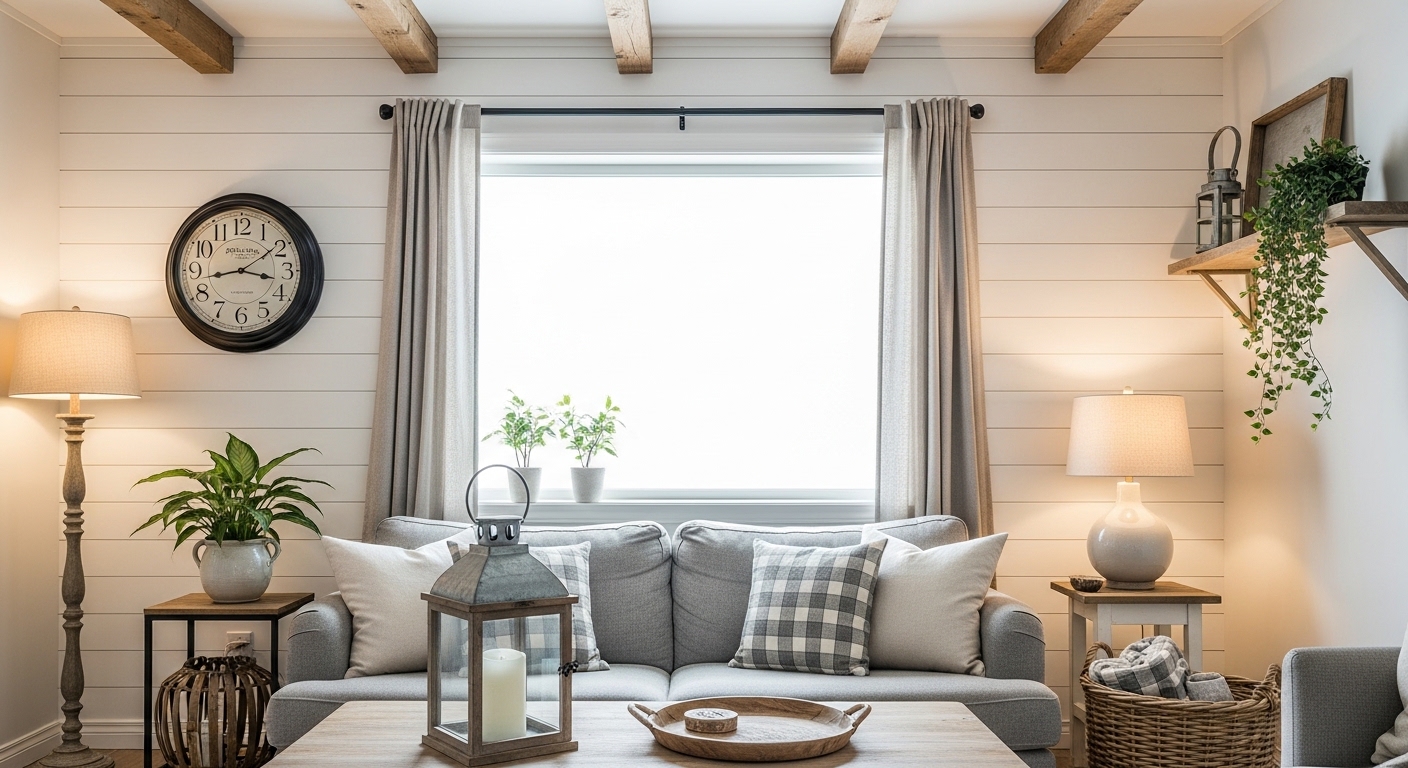
As an Amazon Associate, I earn from qualifying purchases. This means I may earn a commission if you purchase through links on this page — at no extra cost to you.
Farmhouse had its reality-TV era — the shiplap, the ‘gather’ signs, the barn doors on every closet. That version is over. What survived is better: the underlying honesty of the style. Natural materials, comfortable proportions, rooms that look lived-in rather than staged.
Related: Grunge Room Ideas For Cool Aesthetic Bedroom
Explore more living room ideas for inspiration.
The aesthetic farmhouse keeps the soul and loses the clichés. Think less ‘fixer-upper,’ more ‘European country house’: aged wood with patina, linen instead of burlap, vintage pieces with actual history. These eighteen ideas show farmhouse grown up — refined, layered, and blissfully free of word art.
Living Room1. Neutral Farmhouse with Soft Whites
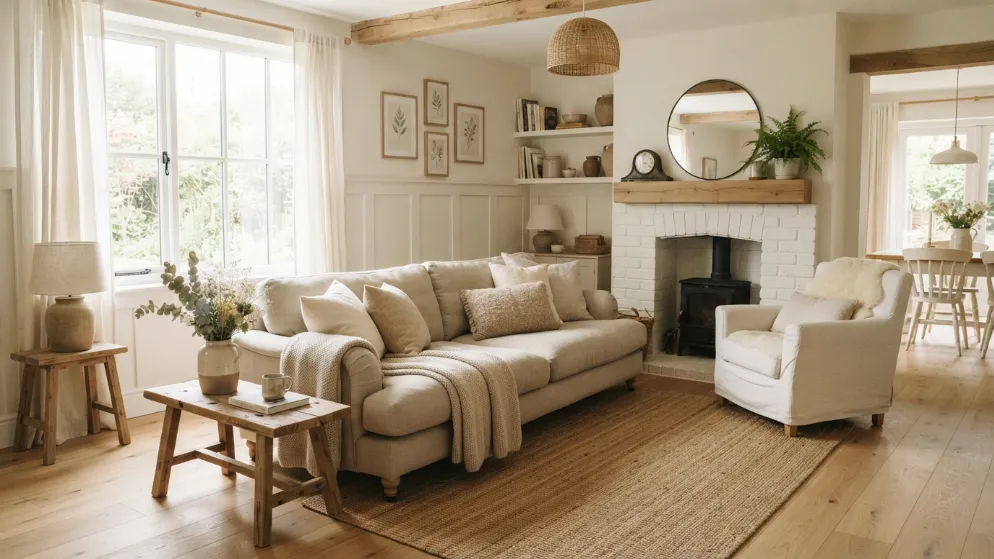
A soft white farmhouse living room creates an open and calming environment that instantly feels welcoming. White walls, neutral furniture, and subtle textures reflect natural light, making the space feel brighter and more spacious. This approach works especially well if you want a clean aesthetic without losing warmth.
To prevent the space from looking too plain, layer different shades of white and cream with varied textures like linen, cotton, and wood. Add a few vintage-inspired decor pieces to give character without cluttering the space. The goal is simplicity with depth, not emptiness.
2. Rustic Wood Beam Living Room
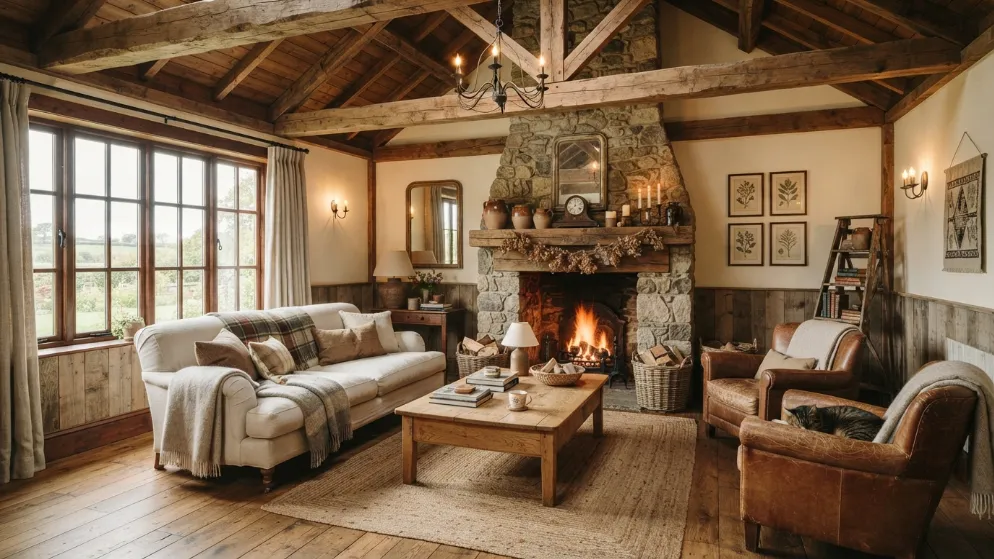
Exposed wooden beams instantly define a farmhouse aesthetic by adding architectural character and warmth. They create a grounded look that makes the living room feel more connected to natural materials and traditional design.
Pair the beams with neutral furniture and soft textiles to balance the heaviness of wood. Avoid overcrowding the space—let the beams remain the focal point. This creates a structured yet cozy atmosphere that feels authentic rather than staged.
3. Farmhouse Living Room with Shiplap Walls
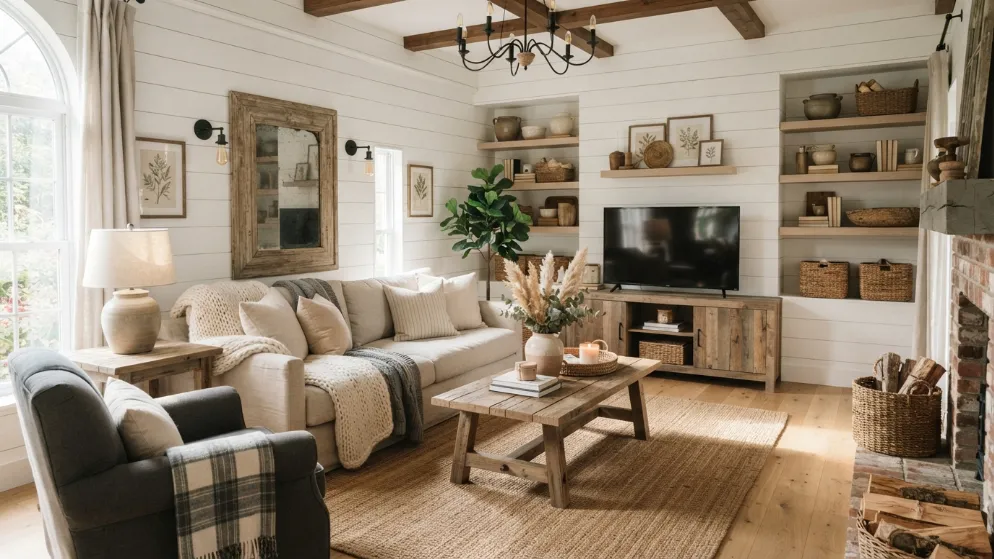
Shiplap walls are a signature farmhouse element that adds subtle texture and visual interest. Painted in white or soft neutrals, they create a clean backdrop that enhances the overall aesthetic without overpowering the space.
Combine shiplap with simple furniture and natural accents like woven baskets or wooden tables. Keep the palette cohesive to maintain that calm farmhouse vibe. The beauty of shiplap lies in its simplicity—it adds detail without demanding attention.
4. Cozy Farmhouse with Layered Textiles
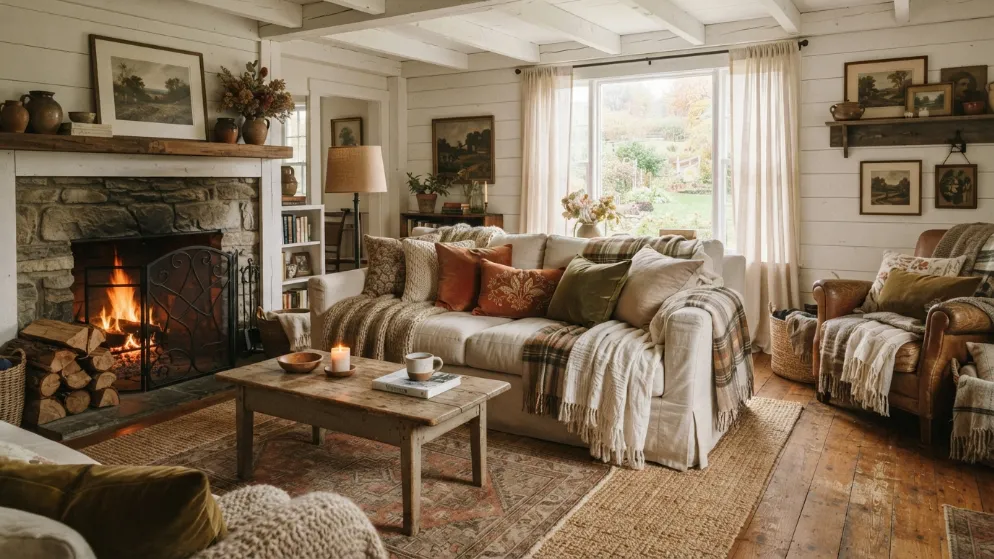
Layering textiles is one of the easiest ways to make a farmhouse living room feel warm and inviting. Soft throws, cushions, and rugs create depth while adding comfort and personality to the space.
Stick to a neutral or muted palette and focus on texture rather than bold colors. Mixing materials like wool, cotton, and linen helps achieve a rich, cozy feel. This approach turns a simple room into a comfortable retreat without overcomplicating the design.
5. Farmhouse with Vintage Decor Accents
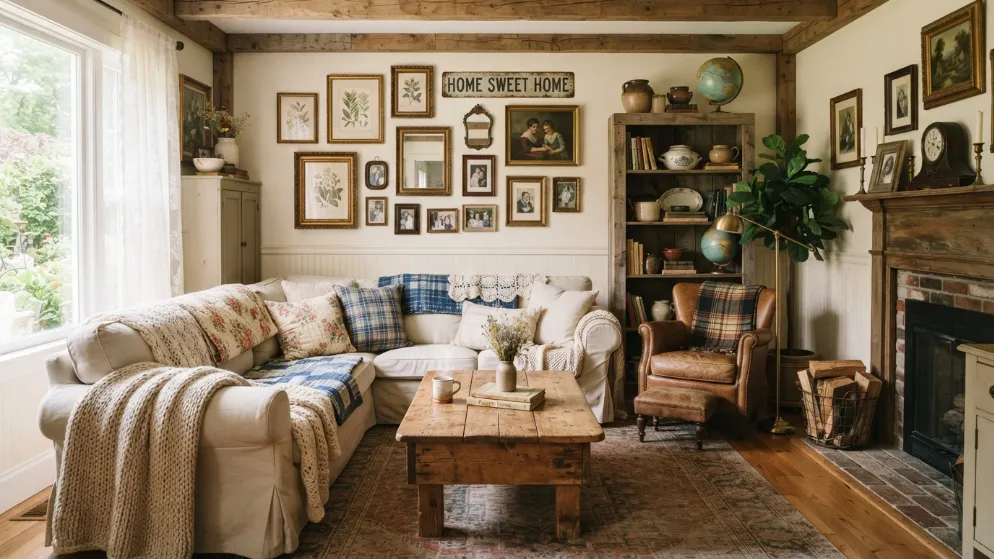
Vintage decor adds authenticity to a farmhouse living room, making it feel collected rather than styled. Items like old frames, distressed furniture, or antique accessories bring character and history into the space.
The key is moderation. Too many vintage pieces can make the room feel cluttered or outdated. Select a few statement items and pair them with modern elements to keep the space balanced and visually appealing.
6. Black and White Farmhouse Style
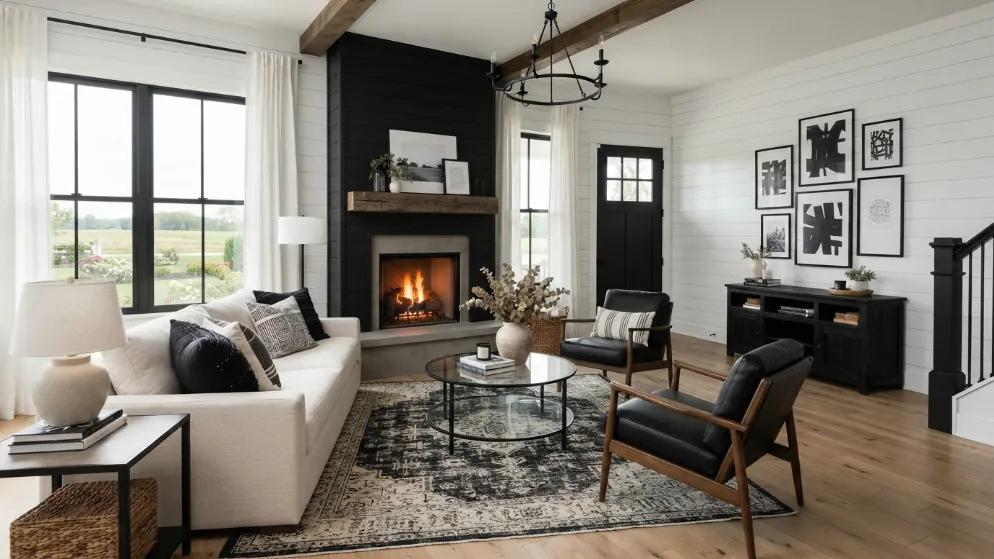
A black and white farmhouse living room offers a modern twist on the traditional style. The contrast creates a crisp and structured look while maintaining the warmth of farmhouse design.
Use black accents sparingly to avoid overwhelming the space. Combine them with white walls and neutral textures to maintain balance. This approach feels fresh and updated while still rooted in farmhouse aesthetics.
7. Farmhouse Living Room with Natural Wood Furniture
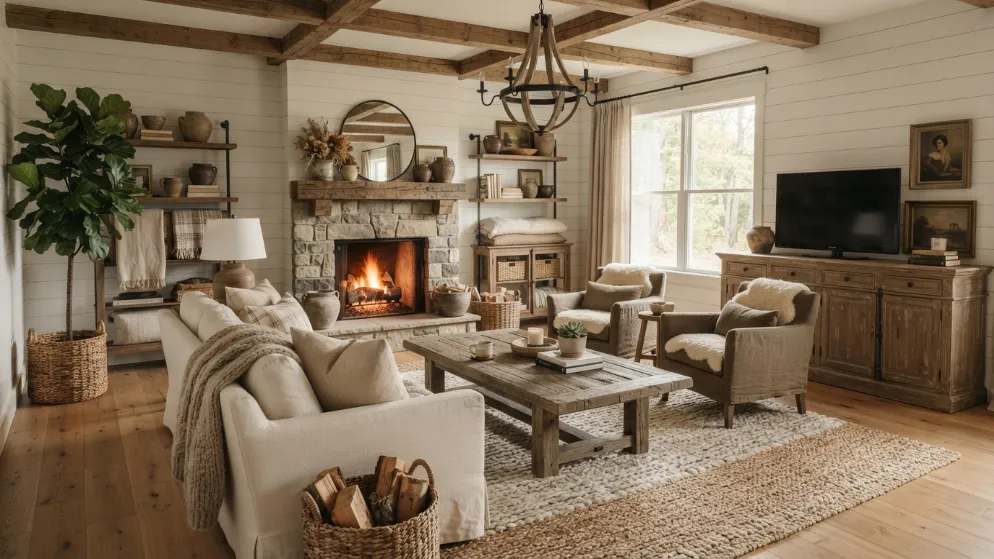
Natural wood furniture brings warmth and authenticity to a farmhouse living room. Its organic texture contrasts beautifully with soft fabrics and neutral tones, creating a balanced and grounded look.
Choose pieces with simple designs to maintain a clean aesthetic. Avoid overly ornate furniture, as it can clash with the simplicity of farmhouse style. The goal is natural elegance, not decoration for the sake of it.
8. Modern Farmhouse with Clean Lines
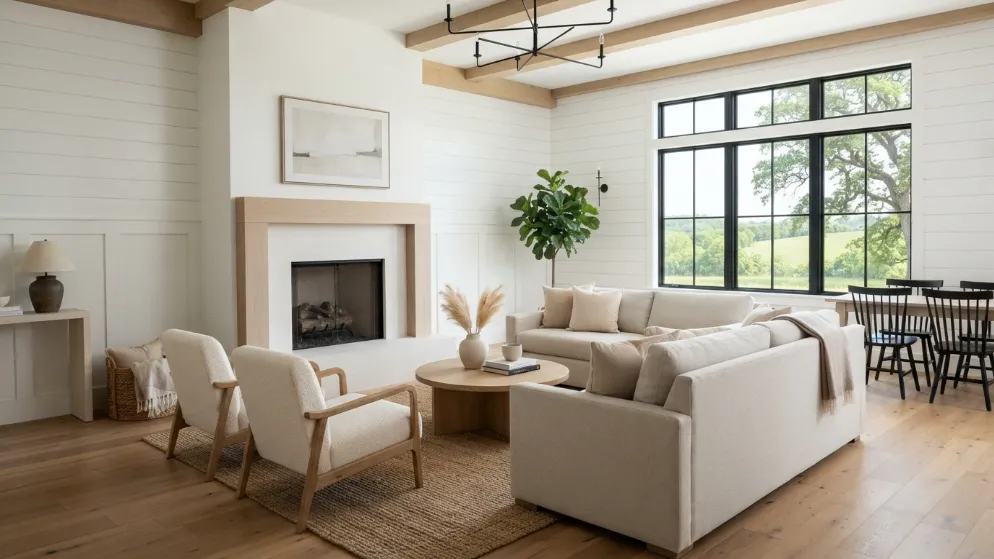
Modern farmhouse design focuses on simplicity and function while retaining warmth. Clean lines and uncluttered spaces make the room feel more contemporary without losing its cozy appeal.
Keep decor minimal and intentional. Use neutral colors and a few carefully chosen accents to create a polished look. This approach works well if you prefer a more refined version of farmhouse style.
9. Farmhouse Living Room with Fireplace Focus
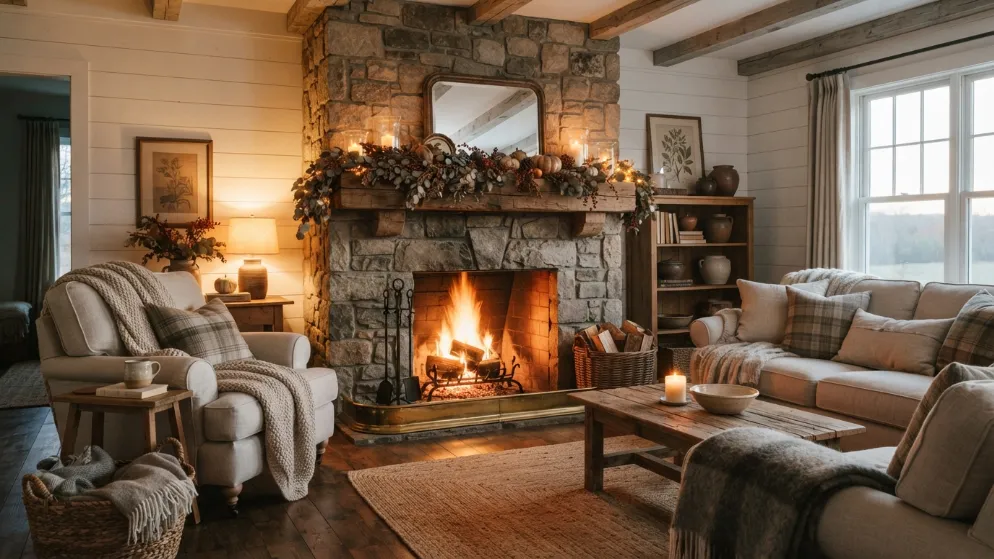
A fireplace naturally becomes the focal point in a farmhouse living room, adding both visual and physical warmth. It anchors the space and creates a cozy gathering area.
Decorate the mantel with simple, rustic elements like wood, greenery, or minimal accessories. Arrange seating around the fireplace to enhance functionality. This setup feels both practical and aesthetically pleasing.
10. Farmhouse with Soft Neutral Palette
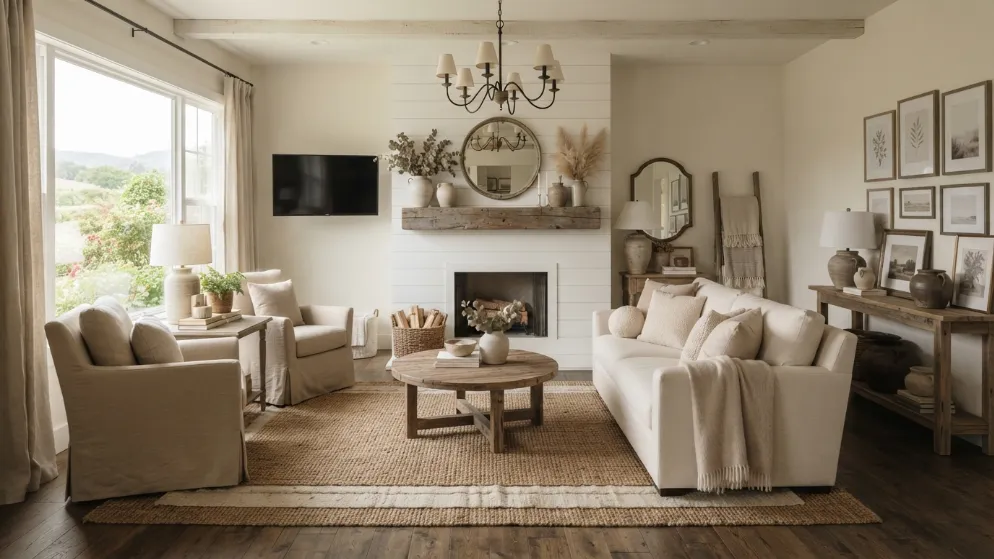
A soft neutral palette creates a calming and cohesive farmhouse living room. Shades like beige, cream, and taupe add warmth without overwhelming the space.
Layer different tones to add depth and prevent the room from looking flat. Focus on textures and subtle contrasts to keep the design interesting. This style is timeless and easy to maintain.
🛒 Shop This Look:
11. Farmhouse Living Room with Indoor Plants
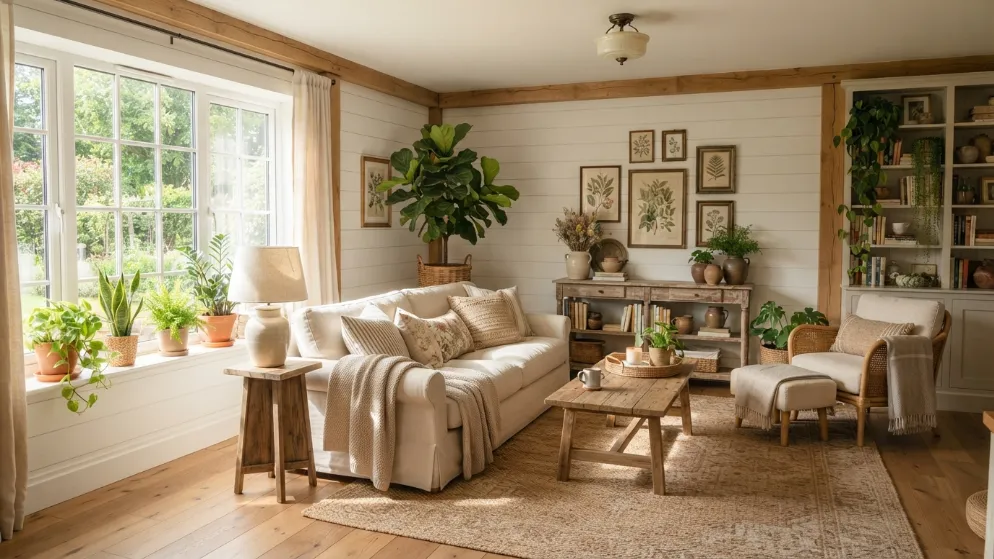
Indoor plants bring life and freshness to a farmhouse living room. They soften the rustic elements and add a natural contrast to neutral tones.
Use a mix of plant sizes and place them strategically to enhance the layout. The greenery adds vibrancy without disrupting the overall aesthetic. This combination feels natural and inviting.
12. Farmhouse with Woven and Rattan Accents
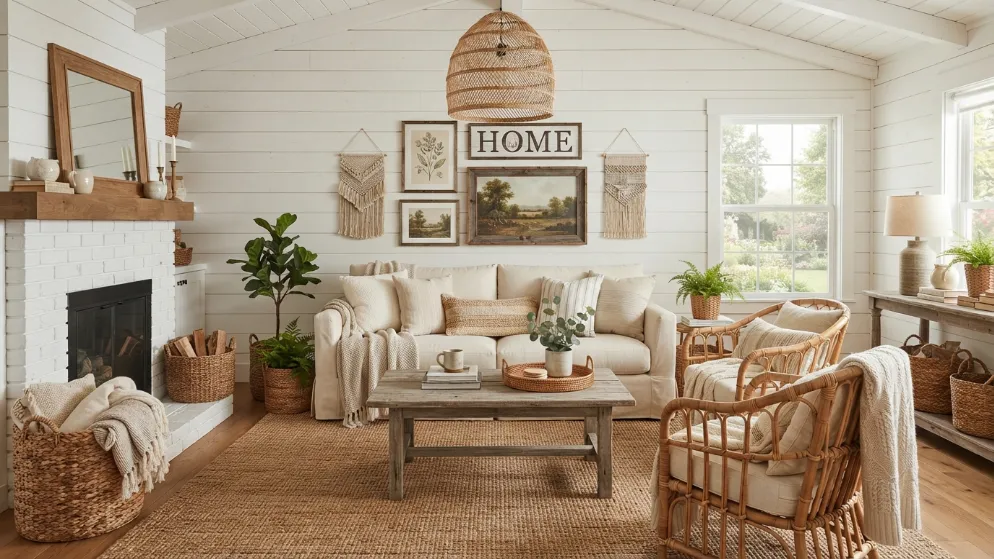
Woven and rattan accents add texture and warmth to a farmhouse living room. They introduce an organic element that complements wood and neutral fabrics.
Incorporate these materials through baskets, chairs, or decor pieces. Keep the palette consistent to maintain harmony. This approach enhances the cozy and relaxed feel of the space.
13. Farmhouse Living Room with Open Shelving
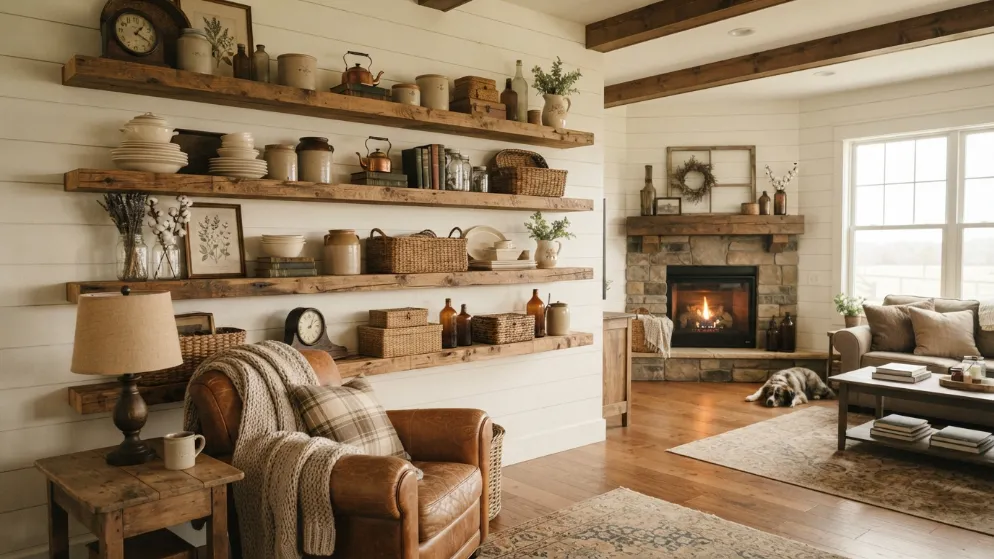
Open shelving allows you to display decor while maintaining a functional design. It adds character and makes the space feel more personalized.
Keep the styling simple and cohesive. Avoid overcrowding the shelves—select a few meaningful pieces instead. This creates a balanced and visually appealing display.
14. Farmhouse with Statement Lighting
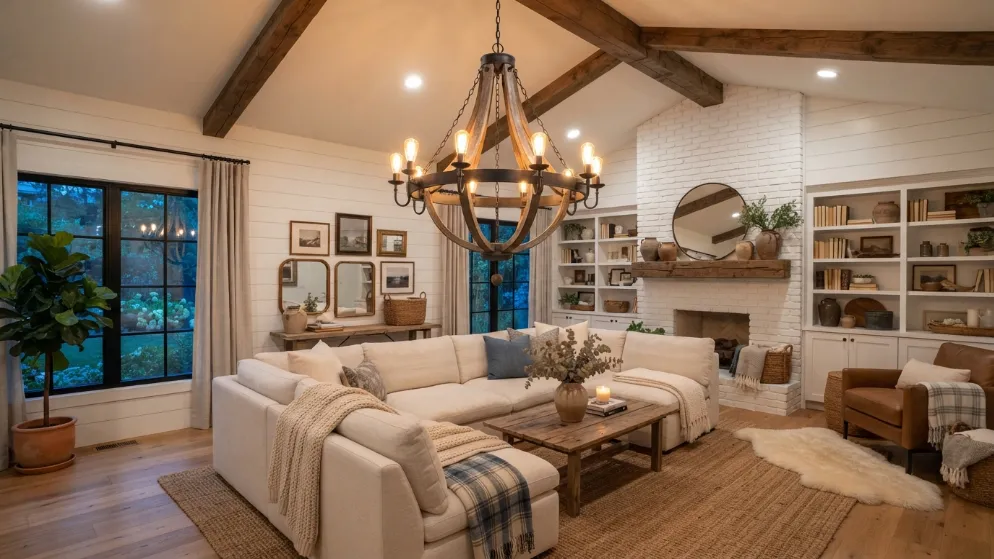
Statement lighting can elevate a farmhouse living room by adding a focal point. A rustic chandelier or unique fixture brings character and enhances the overall design.
Choose lighting that complements the style without overpowering it. The goal is to enhance the space, not dominate it. Proper lighting also improves the ambiance and functionality of the room.
15. Farmhouse Living Room with Cozy Corner Setup
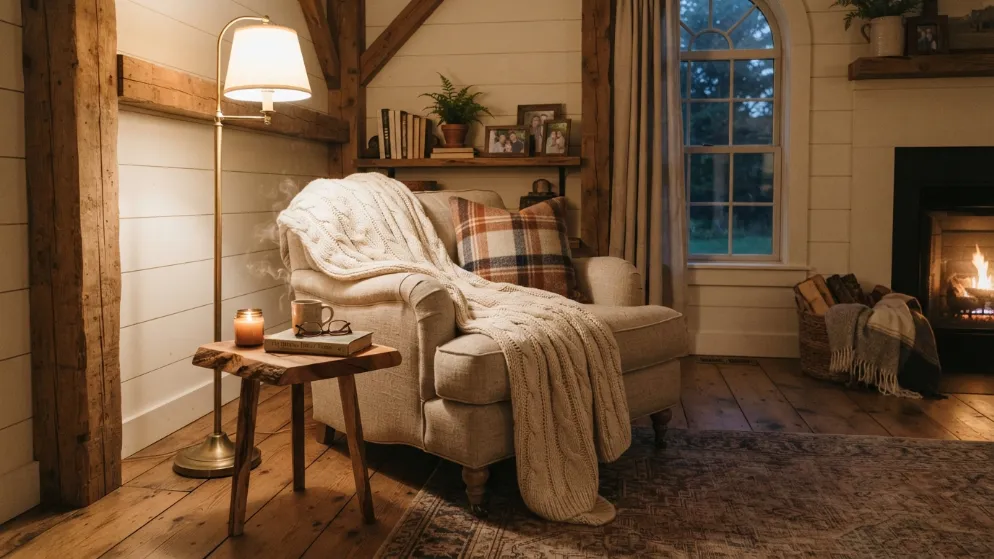
Creating a cozy corner adds functionality and charm to a farmhouse living room. It provides a dedicated space for relaxation while enhancing the overall layout.
Use a comfortable chair, soft lighting, and layered textiles to define the area. Keep it simple and inviting. This small addition can make a big difference in how the space feels.
16. Farmhouse with Subtle Patterns
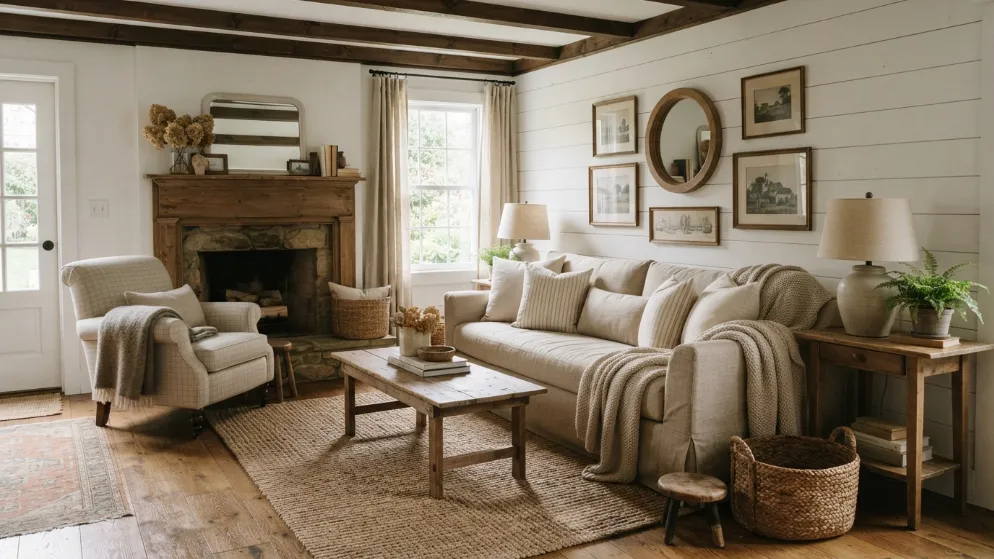
Subtle patterns add interest to a farmhouse living room without overwhelming it. Stripes, checks, or soft prints work well within a neutral palette.
Use patterns sparingly and balance them with solid colors. This keeps the design cohesive and visually pleasing. The goal is to enhance, not distract.
17. Farmhouse Living Room with Distressed Finishes
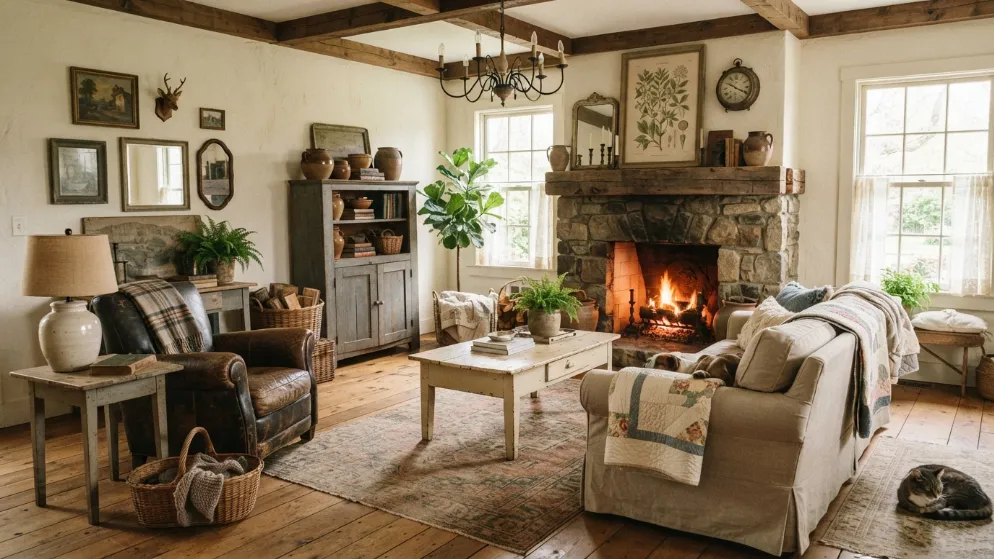
Distressed finishes add a lived-in feel that’s essential to farmhouse design. They bring character and make the space feel authentic rather than staged.
Combine distressed pieces with cleaner elements to maintain balance. Too much can feel outdated, so use them strategically. This creates a refined rustic look.
18. Farmhouse with Artistic Touches
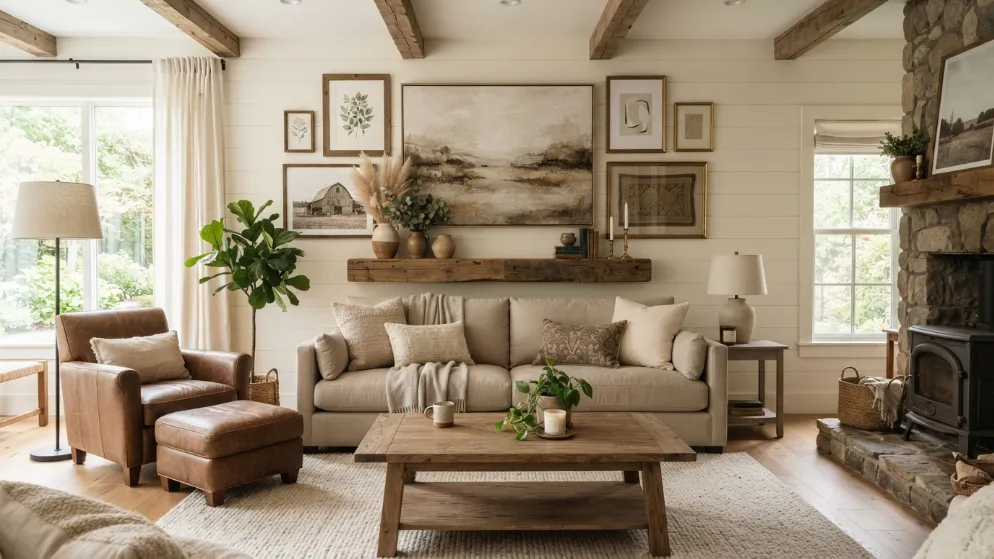
Adding artistic touches brings personality to a farmhouse living room. It prevents the space from feeling too generic or overly themed.
Choose artwork or decor that complements the neutral palette while adding interest. Keep the layout balanced and intentional. This creates a space that feels both aesthetic and unique.
Conclusion
Farmhouse style only works when it feels natural—forced “rustic” quickly turns into clutter or cliché. The difference between average and aesthetic comes down to restraint and balance. You need warmth, but also clean structure. You need texture, but not chaos. The strongest farmhouse living rooms mix old and new, soft and solid, simple and detailed—without overloading the space.
If you focus on neutral layering, natural materials, and a few intentional statement elements, the look becomes timeless instead of trendy. Don’t try to copy everything at once. Pick a direction—modern farmhouse, rustic, or minimal—and build around it. Done right, a farmhouse living room doesn’t just look cozy, it feels designed, elevated, and actually livable long-term.
15 Essential Questions About Aesthetic Farmhouse Living Room Design
1. What defines aesthetic farmhouse style, and how is it different from traditional farmhouse?
Aesthetic farmhouse celebrates the romance of rural living—rustic warmth paired with intentional curation. It’s Instagram-worthy farmhouse without the actual farm.
Traditional farmhouse prioritizes function over form. Aesthetic farmhouse balances both beautifully—it looks beautiful while working perfectly for modern life.
The difference? Aesthetic farmhouse feels designed and styled. Traditional farmhouse feels naturally lived-in.
🛒 Shop This Look:
2. What color palettes define aesthetic farmhouse living rooms?
Warm, earthy tones are your foundation: cream, warm white, soft beige, and warm gray.
Layer with farmhouse richness: soft terracotta, warm sage green, soft burgundy, or muted black. These colors create warmth and character.
Avoid cool grays or pastels. Farmhouse thrives on warmth—colors that feel like natural linen and weathered wood.
3. How do I prevent an aesthetic farmhouse room from feeling too country or themed?
Intentionality prevents costume-y vibes. Skip obvious farmhouse decor (roosters, barn signs, excessive signage) and let design speak through materials and colors.
Modern furniture mixed with rustic elements feels more intentional. Contemporary art alongside vintage pieces creates balance.
Quality and restraint trump themed decoration. One beautiful vintage piece beats ten farmhouse tourist trinkets.
4. What furniture styles work best for aesthetic farmhouse living rooms?
Substantial, well-crafted wood furniture feels authentically farmhouse. Simple lines, honest construction, no ornate details.
Upholstered pieces in cream, white, or soft linen work beautifully. Mix wood and upholstery for balance—wooden coffee table, upholstered sofa, wooden shelving.
Vintage or antique pieces add genuine character and authenticity. Hunt thrift stores for quality finds.
5. How important is a fireplace in aesthetic farmhouse design?
A fireplace is ideal and becomes a natural gathering point, but it’s not essential.
If you have one, embrace it with a simple stone or white surround. Mantel styling becomes a key design element.
No fireplace? Create a focal point with a large artwork, statement shelving, or beautiful window treatment instead.
6. What textiles and textures create authentic farmhouse warmth?
Layering textures is everything. Heavy linen, chunky knit, soft wool, and woven materials create genuine farmhouse comfort.
A substantial throw blanket draped over the sofa. Linen curtains. Woven baskets. Textured area rugs. Quilted pillows.
These elements add warmth physically and visually. They’re the soul of aesthetic farmhouse design.
7. How do I incorporate vintage and antique pieces without the room looking like a thrift store?
Intentionality prevents randomness. Choose vintage pieces with real quality and character—not just old stuff.
Limit yourself to 2-3 statement vintage pieces. A beautiful antique mirror, an inherited chest, a quality painting. These tell stories.
Everything else can be new. Curated vintage pieces mixed with quality modern basics feels designed, not cluttered.
8. What role do plants and natural elements play in aesthetic farmhouse?
Plants are essential—they add life, color, and organic warmth. Potted greenery on shelves, windowsills, and corners.
Natural elements ground the space: branches in a vase, gathered wood pieces, stone accents, woven baskets.
These elements soften hard surfaces and reinforce the connection to nature that defines farmhouse aesthetic.
9. What lighting creates the right mood in aesthetic farmhouse living rooms?
Warm, soft lighting is absolutely essential. Farmhouse should feel candlelit and intimate, not bright and exposed.
Use 2700K warm white bulbs throughout. Add multiple sources: table lamps, wall sconces, overhead dimmers, and candles.
Vintage-style fixtures (Edison bulbs, wrought iron) enhance the farmhouse vibe beautifully.
🛒 Shop This Look:
10. How do I use open shelving in aesthetic farmhouse without it looking cluttered?
Curate carefully. Display items you genuinely love and use—beautiful books, quality ceramics, meaningful objects.
Group similar items together: bowls stacked, glasses grouped, dishes coordinated. This creates visual harmony.
Leave breathing room. A few beautifully placed items beat shelves crammed full of things.
11. Can I incorporate modern elements into aesthetic farmhouse without losing the vibe?
Absolutely. Aesthetic farmhouse works beautifully with contemporary elements mixed in thoughtfully.
Modern artwork, contemporary lighting, quality upholstered pieces—these add sophistication without destroying farmhouse character.
Balance is key: mostly farmhouse foundation with modern touches for freshness and function.
12. What’s the best way to style a coffee table in aesthetic farmhouse?
A substantial wooden table is ideal. Simple construction, honest materials, real wood.
Style with intention: a stack of books, a woven basket, fresh flowers, a wooden bowl. Less is more.
A coffee table runner (linen, cotton, or woven) adds texture and defines the styling zone.
13. Can I create aesthetic farmhouse on a budget?
Yes. This style actually thrives on thrifted and DIY approaches beautifully.
Hunt thrift stores for vintage pieces ($5-30 each). Paint furniture if needed. Add plants ($5-15 each) and textiles.
Budget farmhouse feels more authentic than expensive farmhouse. Collected pieces beat designer furniture.
14. What mistakes do people make with aesthetic farmhouse design?
Overdoing farmhouse décor. Farmhouse signs, excessive barn decor, and themed kitsch cheapen the design. Let materials speak.
Using cheap, thin fabrics. Farmhouse demands substance—real linen, quality wool, authentic textiles. Synthetic materials destroy the vibe.
Neglecting lighting. Poor lighting makes farmhouse feel gloomy. Warm, layered lighting is essential.
Ignoring balance. Too much rustic feels costume-y. Balance rustic elements with modern pieces for sophistication.
15. How do I refresh aesthetic farmhouse styling seasonally?
Seasonal styling keeps the look fresh while maintaining warmth and character.
Spring: fresh flowers, lighter linens, brighter natural elements. Summer: minimal styling, fresh greenery, lighter feel. Fall: warmer tones, deeper flowers, richer colors. Winter: cozy candles, heavier textures, warm lighting.
Swap accessories seasonally while keeping the core design consistent. This maintains authenticity while feeling intentional.
Ready to create your aesthetic farmhouse living room? Discover more farmhouse inspiration and design strategies on our homepage. Explore how to blend rustic charm with modern living beautifully. Visit homeisdecor.com and find comprehensive farmhouse living room design ideas plus 17 more actionable concepts to create a warm, intentionally styled space that captures the beauty and comfort of aesthetic farmhouse living today.