
As an Amazon Associate, I earn from qualifying purchases. This means I may earn a commission if you purchase through links on this page — at no extra cost to you.
To make a small bedroom look bigger, use these 12 tricks: paint walls a light, cool color; hang curtains high and wide; choose a low-profile bed; use mirrors strategically; keep the floor visible; opt for multi-functional furniture; use vertical storage; pick one statement piece instead of many small items; keep bedding simple; use consistent flooring; maximize natural light; and declutter ruthlessly. The most impactful changes are light paint, a large mirror, and removing visual clutter.
Small Bedroom Layouts: Where to Put What
The layout matters more than any single decor choice in a small bedroom. Start with the bed — it is the largest object and everything else orbits it. The classic placement, bed centered on the longest wall with the headboard against it, works because it leaves balanced walkways on both sides and gives the room symmetry, which the eye reads as order and spaciousness. If the room is too narrow for side walkways, push the bed into a corner instead: a corner bed in a very small room actually feels intentional and frees one full side for a dresser or desk, while a bed floating with six inches of unusable gap on each side just feels cramped.
Keep the path from door to window (or door to bed) clear and straight. Every time you have to sidestep furniture, the room feels smaller, because your body is measuring the space as you move through it. Map the walking path first, then place furniture around it — not the other way around.
Float nothing in the middle of a small bedroom. Dressers, desks, and nightstands belong against walls; the center of the room should be open floor. That open center is what makes a small room feel breathable. If you need a desk, consider a wall-mounted drop-leaf table that folds away, or a narrow console behind the bed’s foot — both give you a work surface without claiming floor area permanently.
Think in zones even in one small room: sleep zone (bed and nightstands), storage zone (dresser/closet wall), and, if space allows, a small sitting or dressing spot. Zones do not need dividers — a rug under the bed area and consistent furniture placement is enough to make the room feel organized rather than stuffed.
Lighting Layers That Open Up the Room
Small bedrooms often rely on a single overhead light, which is the worst possible lighting for making a room feel bigger. One central fixture creates harsh shadows in the corners, and dark corners are where the eye stops — the room feels exactly as big as the lit area. Layered lighting pushes light into the corners and up the walls, and the room expands to fill the light.
Build three layers. Ambient: the overhead light, ideally on a dimmer so it can go soft in the evening. A flush-mount or semi-flush fixture keeps headroom clear — avoid pendants that hang into the space in rooms with low ceilings. Task: bedside lighting for reading. Wall-mounted sconces or pendant lights hung beside the bed are the small-room winner here: they free the entire nightstand surface and draw the eye upward, adding vertical interest. Accent: a small lamp on the dresser, LED strip behind the headboard, or a picture light over art. Accent light is what makes a small bedroom feel designed rather than merely furnished.
Color temperature matters: 2700K warm white throughout. Mixed temperatures (a cool overhead plus warm lamps) make the room feel disjointed. And put the main lights on dimmers wherever possible — a small bedroom at full brightness feels exposed; the same room dimmed in the evening feels cozy and intentional.
Mirrors multiply lighting. A mirror placed to catch a lamp or window doubles that light source visually. This is why the large-mirror trick from the list above works so well — it is not just reflecting the room, it is reflecting the light.
🛒 Shop This Look:
Color Palettes That Visually Expand Small Bedrooms
Light and cool was the headline advice, but the palette deserves more nuance than “paint it white.” The most spacious-feeling small bedrooms use a restrained palette of three to four related tones with one consistent undertone. Mixed undertones — a pink-beige rug, a yellow-cream wall, a gray-blue duvet — create subtle visual friction that chops the room up. Pick an undertone family (warm or cool) and stay in it.
Three palettes that consistently work: Warm minimal — warm white walls, natural wood tones, cream and oatmeal textiles. Cozy without heaviness; best for north-facing rooms that need warmth. Cool serene — pale blue-gray walls, white bedding, light gray accents. Maximizes the airy effect; best for rooms with good natural light. Tonal deep — the counterintuitive option: one deep color (inky blue, forest green, charcoal) on walls, trim, and ceiling alike. Dark rooms feel smaller only when the darkness is patchy; a fully enveloped dark bedroom blurs every boundary and can feel surprisingly expansive and cocooning at once. This works best if you commit completely — half-dark (dark walls, white ceiling) just draws a line at the ceiling and shrinks the room.
Whatever palette you choose, carry it onto the ceiling. A white ceiling above colored walls puts a lid on the room at exactly 8 feet. Painting the ceiling the wall color (in flat finish) dissolves that boundary and is the single highest-impact paint decision in a small bedroom.
Storage That Doesn’t Eat Floor Space
Clutter is the enemy, but “declutter” is only half the advice — the other half is giving everything a home that does not consume floor area. Start with the bed: a storage bed with drawers, or simply risers plus under-bed boxes, reclaims the largest dead zone in the room. Under-bed space holds an entire season of clothing or all your spare bedding.
Go vertical everywhere else. A tall, narrow dresser holds as much as a wide one in half the footprint. Wall-mounted nightstands (small shelves or drawers fixed to the wall) give you a bedside surface with zero floor contact, which keeps the floor visible — and visible floor is visible space. Hooks on the back of the door and a wall-mounted valet hook by the closet handle the clothes that would otherwise become chair-draped clutter.
Use the closet like it is part of the room, not a separate cave. A closet with double hanging rods, shelf dividers, and door-mounted organizers can absorb the storage that would otherwise require a dresser in the room. If the closet is small, a slim rolling cart or a lidded ottoman at the foot of the bed adds hidden storage that doubles as seating.
Finally, apply the one-in-one-out rule going forward: every new item that enters the bedroom means one leaves. Small rooms do not stay decluttered by accident — they stay decluttered by system.
Color and Light Tricks
1. Paint Walls Light and Cool
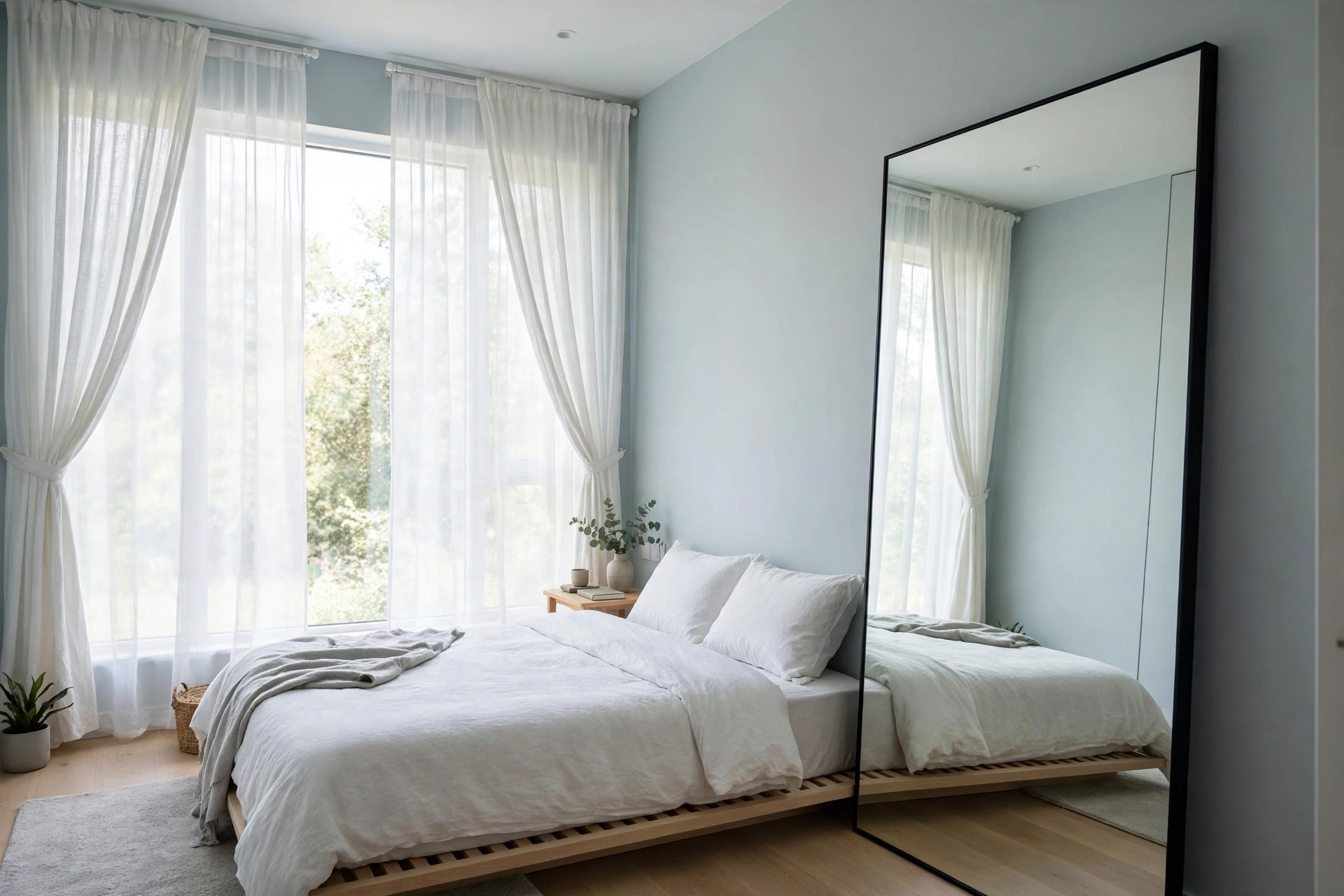
Light colors reflect more light, making walls feel farther away. Cool whites, pale blues, and soft grays work best. Paint the ceiling the same color to blur the boundary.
2. Maximize Natural Light
Use sheer curtains or leave windows bare. Don’t block windows with furniture. Clean windows regularly — dirty glass can cut light by 20%.
3. Add a Large Mirror
A floor-length mirror opposite or adjacent to a window doubles the perceived space and light. One large mirror beats several small ones.
🛒 Shop This Look:
Furniture Strategies
4. Choose a Low-Profile Bed
Platform beds and low headboards keep sightlines open, making ceilings feel higher.
5. Use Multi-Functional Pieces
Storage beds, ottomans with hidden storage, and wall-mounted nightstands free up floor space.
6. Keep the Floor Visible
Furniture on legs (rather than pieces that sit flat on the floor) creates a sense of airiness. You should see floor under and around furniture.
7. Go Vertical With Storage
Tall, narrow dressers and wall-mounted shelves use vertical space without eating floor area.
Styling and Decluttering
8. One Statement Piece, Not Many Small Items
A single large art print makes a room feel bigger than a cluster of small frames. Same principle applies to decor — fewer, larger items.
9. Keep Bedding Simple
Busy patterns chop up visual space. Solid or subtly textured bedding in light colors keeps the bed from dominating.
10. Hang Curtains High and Wide
Mount the rod 4–6 inches above the frame and 6–8 inches wider. This makes windows look larger and ceilings taller.
11. Use Consistent Flooring
If possible, use the same flooring throughout. If you use a rug, make it large — small rugs chop up the floor visually.
12. Declutter Ruthlessly
Nothing makes a small room feel smaller than clutter. Every item should have a home. If it doesn’t, it goes.
The Weekend Small-Bedroom Refresh: What to Do First
If the full list feels like a lot, sequence it by impact per effort. Weekend one: declutter ruthlessly and rearrange the layout so the walking path is clear — free, and the highest-impact change available. Weekend two: hang curtains high and wide, add the large mirror, and swap harsh overhead lighting for layered warm light — modest cost, transformative result. Weekend three: paint (walls and ceiling in one enveloping color) and simplify the bedding. Each weekend builds on the last, and after three, the room will feel like a different space. The order matters: there is no point painting before decluttering, because clutter will still make fresh paint feel cramped. Space first, light second, color third — that is the sequence that makes small bedrooms feel bigger.
🛒 Shop This Look:




1 thought on “How to Make a Small Bedroom Look Bigger (12 Tricks)”
Comments are closed.