
As an Amazon Associate, I earn from qualifying purchases. This means I may earn a commission if you purchase through links on this page — at no extra cost to you.
Hang wall art so the center is 57 inches from the floor — this is the museum standard based on average human eye level. When hanging above furniture, place the bottom of the frame 6-8 inches above the furniture. For gallery walls, treat the entire arrangement as one piece and center the whole grouping at 57 inches.
Why 57 Inches?
Museums determined that 57″ (145 cm) is the average eye level for adults viewing art while standing. This height feels natural — you don’t crane your neck up or hunch down. It’s the standard used by galleries worldwide.
Adjustments to the Rule
- Above a sofa: Bottom of frame 6-8″ above sofa back (center may be above 57″)
- Above a console: Bottom 4-6″ above surface
- In hallways: Stick to 57″ — people view while walking
- High ceilings (10ft+): Can go to 60″ center, but don’t overcompensate
- Above a bed: Bottom 8-10″ above headboard
Tools and Materials You Will Need
- Tape measure (a steel one, not a fabric one)
- Painter’s tape — for marking positions on the wall without damage
- Pencil — for light marks that erase easily
- Level (a small torpedo level is perfect)
- Hammer, picture-hanging hooks or nails appropriate for your wall type
- Stud finder (for heavy pieces)
- A helper — holding art while you step back to judge is a two-person job
For drywall, standard picture-hanging hooks rated for your art’s weight are fine up to about 20-25 pounds. Heavier pieces need wall anchors or a stud. For plaster walls, drill pilot holes to avoid cracking. For brick or concrete, use masonry anchors.
Step-by-Step: Hanging a Single Piece at 57 Inches
1. Find the center of your art. Measure the height of the framed piece and divide by two. Mark this midpoint lightly on the back of the frame or on a piece of tape.
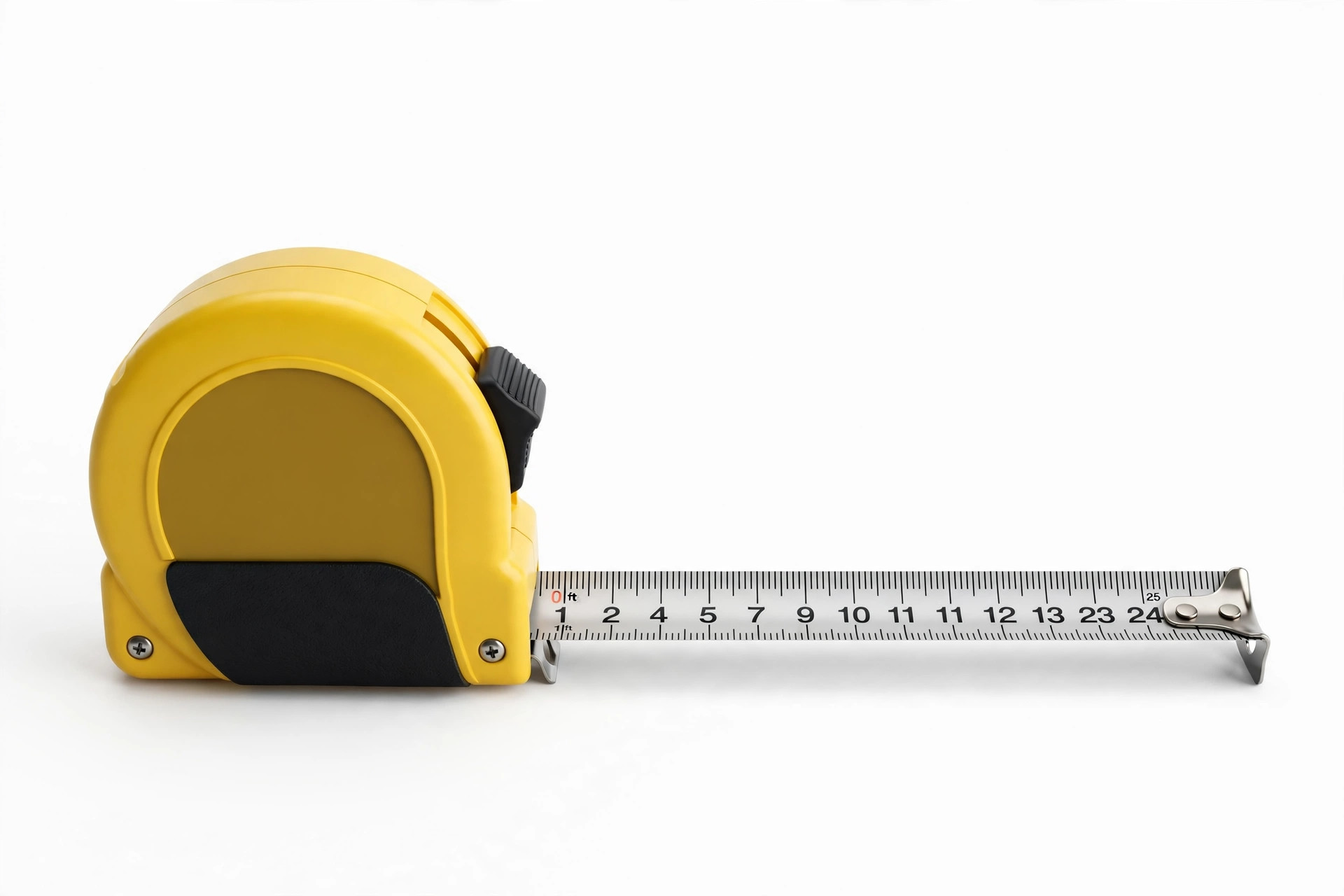
STANLEY FATMAX 25 ft Magnetic Tape Measure
Best for measuring the frame and marking 57 inches from the floor.
2. Account for the hanging hardware. The hook or wire sits above the frame’s center. Measure the distance from the center mark to where the hardware will catch the wall hook — typically 2-4 inches above center for wire hangers. Subtract this from 57 to find where your nail goes. Example: if the hardware catches 3 inches above center, your nail goes at 54 inches.
3. Mark the wall. Measure 54 inches (or your calculated number) from the floor and make a light pencil mark. Use painter’s tape for a visible, removable marker.
ScotchBlue Original Multi-Surface Painter’s Tape, 0.70 Inches x 60 Yards, Blue
Best for marking the wall position without damage in Step 3.
4. Check level and surroundings. Hold the piece up (or have your helper hold it) and step back to the room’s entrance — the viewpoint that matters most. Check that it relates well to nearby furniture and does not crowd door frames or light switches.
5. Hang and level. Drive your hook, hang the piece, and check with the level. Step back once more. Small adjustments now prevent the slow tilt that happens over weeks.

The most common error in this process is step 2 — people put the nail at 57 inches, forgetting the hardware offset, and the art ends up hanging 2-4 inches too high. Do the subtraction every time.
Hanging Art Above Furniture: Exact Measurements
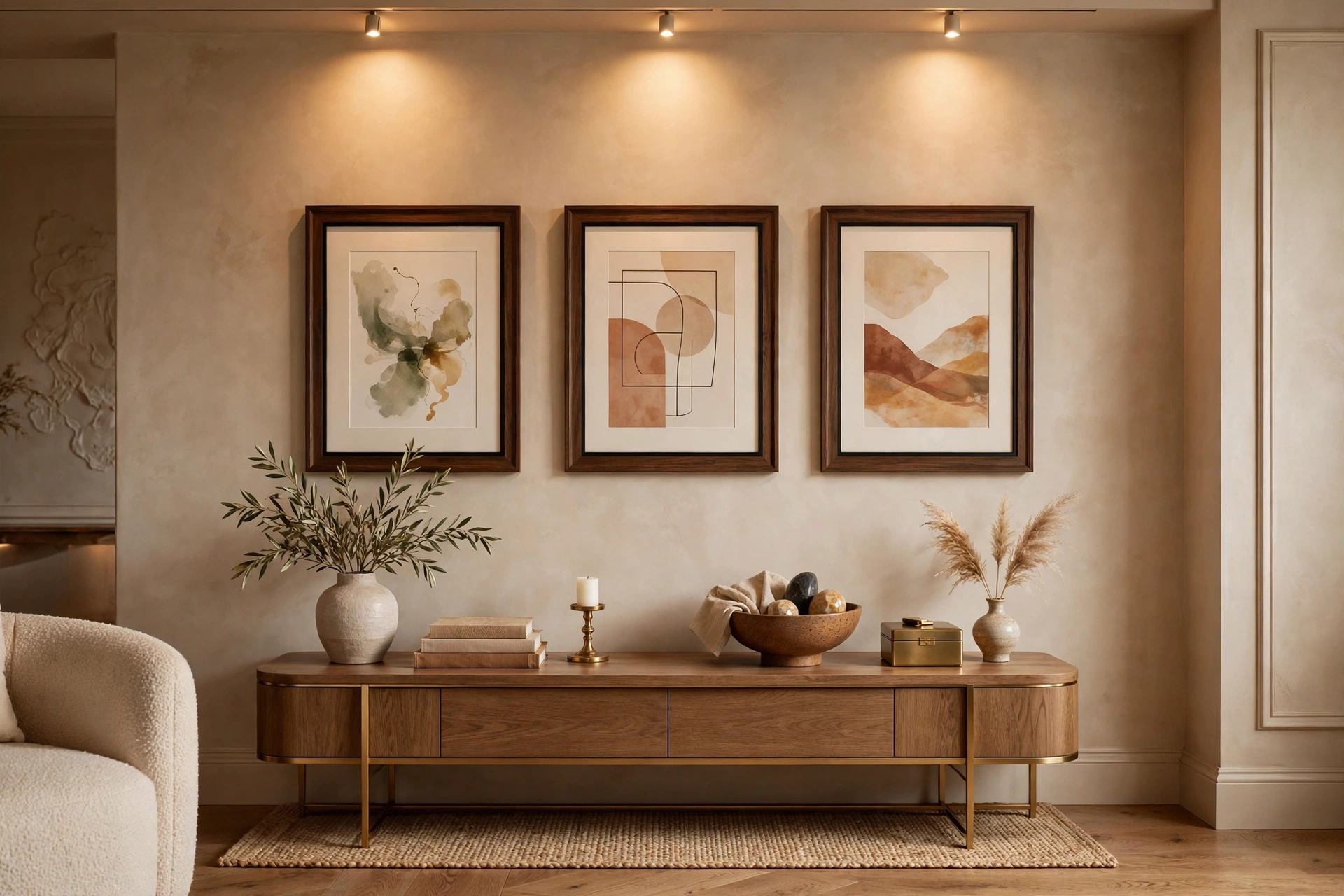
The 57-inch rule assumes a bare wall. Above furniture, the furniture sets the height instead:
Best for hanging art above furniture with hooks, wire and hangers.
🛒 Shop This Look:
Above a sofa
The bottom of the frame should sit 6-8 inches above the sofa back. For a standard sofa (about 36 inches high at the back), this puts the frame bottom around 42-44 inches — the center will land above 57 inches for larger pieces, and that is correct. The art should also be roughly two-thirds the width of the sofa: a 72-inch sofa wants art (or an arrangement) about 48 inches wide.
Above a console or sideboard
Leave 4-6 inches between the furniture surface and the frame bottom. Consoles are lower than sofas, so the center often lands close to 57 inches naturally.
Above a bed
Leave 8-10 inches above the headboard. Center the art on the bed, not on the wall — in most bedrooms the bed is not centered on the wall, and art centered on the wall looks off.
Above a fireplace mantel
Leave 6-12 inches above the mantel, depending on the mantel’s visual weight. Keep the art’s width narrower than the mantel itself. And consider heat: valuable originals should not hang above a working fireplace.
Above a desk
Leave enough clearance that you will not hit the frame when standing up — usually 8-12 inches above the desk surface, keeping the center near seated eye level (around 48-52 inches) since you will view it sitting down.
Gallery Walls: Planning and Hanging
For a gallery wall, treat the entire arrangement as one piece: the center of the whole composition sits at 57 inches.
Plan on the floor first. Lay out all frames on the floor or a large table, experimenting with arrangements. Take a photo of each version — the camera reveals imbalances your eyes miss.
Use a paper template. Trace each frame onto kraft paper or newspaper, cut out the shapes, and tape them to the wall. Live with the paper layout for a day. This is the step that prevents regret holes.
Keep spacing consistent. Two to three inches between frames is the standard. Consistent gaps make mixed frames look intentional; irregular gaps make them look accidental.
Start from the center. Hang the largest or most important piece first, centered at 57 inches, then build outward. Check level constantly — errors compound across a gallery wall.
Mix with intention. Gallery walls work with mixed frame styles if there is a unifying element: consistent mat color, a shared palette in the art, or consistent spacing. Without any unifying thread, mixed frames read as clutter.
Special Situations
High ceilings (10 feet and up)
You can raise the center to about 60 inches, but resist the urge to “fill” the wall height. Art hung at human eye level in a tall room looks confident; art floated halfway up a two-story wall looks lost. For very tall walls, stack two pieces vertically or use one oversized piece rather than hanging a normal piece too high.
🛒 Shop This Look:
Stairwells
Hang art following the stair angle, keeping each piece’s center at 57 inches above the stair tread directly below it — not 57 inches from some imaginary flat floor. Step back to the bottom of the stairs to judge the composition.
Viewing while seated
In dining rooms and home offices where art is viewed sitting down, lower the center to about 48-52 inches — seated eye level. The 57-inch rule assumes standing viewers.
Kids’ rooms and playrooms
Hang art at the child’s eye level so they can actually see and enjoy it. The “rule” serves the viewer, and in a kid’s room the viewer is small.
Troubleshooting and FAQs
I hung it too high. Do I really need to move it?
Yes — it is a ten-minute fix that changes the whole room. Art hung too high disconnects from the furniture and the viewer; it is the single most common hanging mistake, and almost everyone who fixes it wonders why they waited.
How do I hang heavy art safely?
Use two hooks spaced across the width rather than one — this distributes weight and keeps the piece level. For anything over 25 pounds, anchor into a stud or use appropriately rated wall anchors. When in doubt, check the hardware’s weight rating and stay well under it.
Best for finding a stud for heavy art over 25 pounds.
What about leaning art instead of hanging?
Leaning large art on a mantel or console is a legitimate styling choice — it reads casual and modern. Use museum putty or small bumper pads behind the frame to protect the wall, and make sure the piece cannot slide forward. Do not lean valuable or glass-fronted pieces where they could topple.
PHIXBEAR Extra Large 1.18″ Mounting Putty, Clear Museum Tack, Removable, 50 pcs
Best for securing leaned art and protecting the wall behind the frame.
Should art be centered on the wall or on the furniture?
On the furniture below it, when there is furniture. Art above a sofa should center on the sofa, even if the sofa is off-center on the wall. On a bare wall with no furniture, center on the wall.
How far apart should two pieces hung side by side be?
Two to four inches for pieces that belong together as a pair. Treat them as one unit: the center of the pair goes at 57 inches, and the combined width should relate to the furniture below (about two-thirds its width).
Can I hang art in the bathroom?
Yes, with caveats. Avoid originals and anything valuable — humidity and temperature swings damage art over time. Use prints behind glass or acrylic, ensure good ventilation, and never hang art where it gets direct water spray.
Common Mistakes
The #1 mistake is hanging too high. If you’re unsure, go lower — art hung slightly low looks intentional, art hung too high looks disconnected. When in doubt, have someone hold the piece while you step back to the room’s entrance and judge.
A Quick Reference You Can Save
Single piece on a bare wall: center at 57 inches from the floor. Above a sofa: frame bottom 6-8 inches above the sofa back, art about two-thirds the sofa’s width. Above a console: frame bottom 4-6 inches above the surface. Above a bed: frame bottom 8-10 inches above the headboard, centered on the bed. Gallery wall: center of the whole arrangement at 57 inches, 2-3 inches between frames. Seated viewing (dining room, office): center at 48-52 inches. When two guidelines conflict, the furniture relationship wins over the bare-wall number — art should always feel connected to what is beneath it and comfortable for the person looking at it.
🛒 Shop This Look:



