
As an Amazon Associate, I earn from qualifying purchases. This means I may earn a commission if you purchase through links on this page — at no extra cost to you.
Yes — wallpaper is firmly back in style in 2026. After a decade of all-white minimalism, homeowners are embracing pattern, texture, and color again. What’s different from past wallpaper booms: peel-and-stick made it renter-friendly, and current tastes favor large-scale botanicals, textured neutrals, and mural statements over tiny repetitive prints.
The Evidence
- “Peel and stick wallpaper” searches remain strong through 2026.
- Major paint brands’ 2026 collections pair with wallpaper recommendations.
- Designers report wallpaper in a majority of current projects.
- Peel-and-stick brands have multiplied; retail shelf space is at a 20-year high.
What’s Trending in 2026
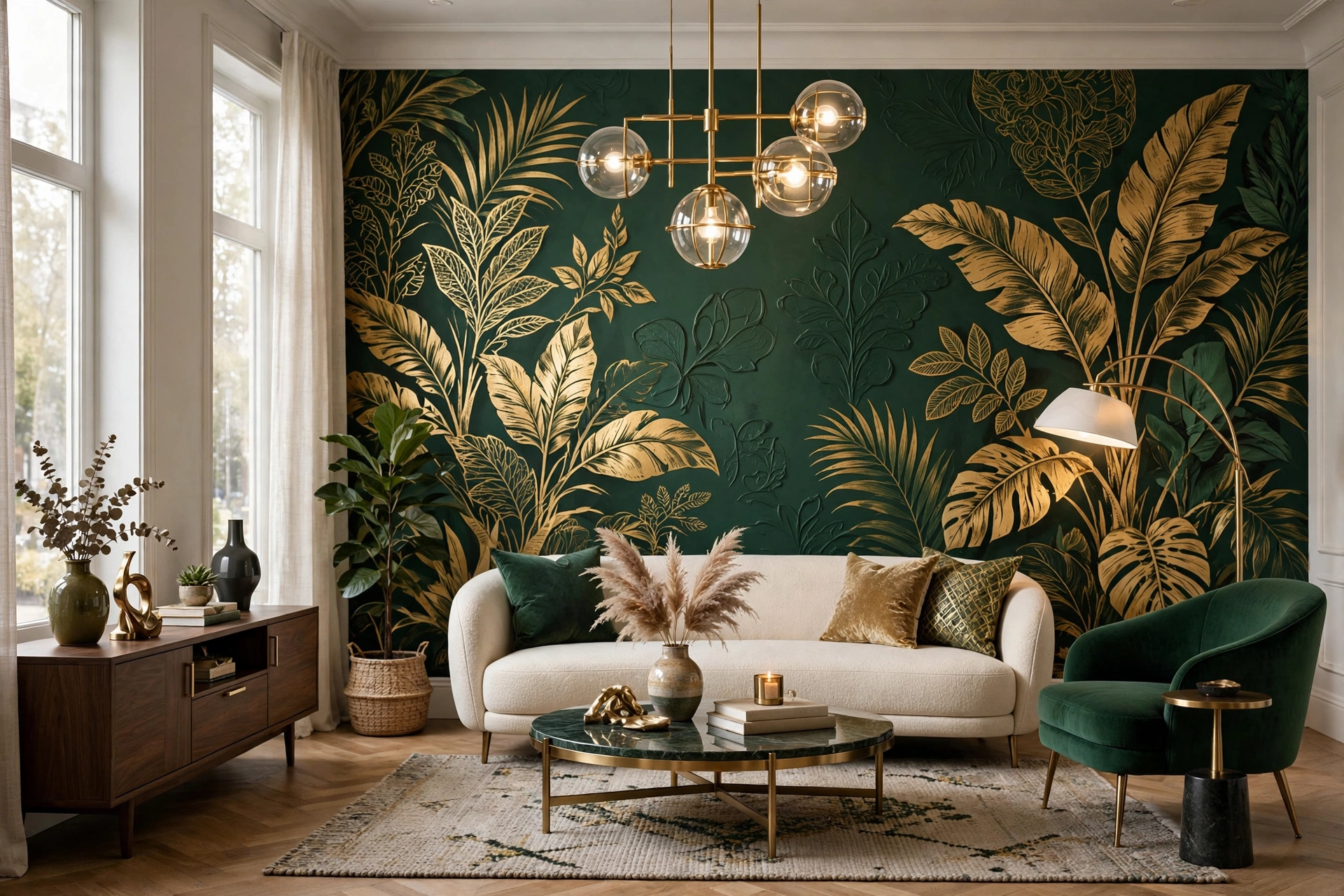
- Large-scale botanicals: Oversized florals and palms, often dark and moody.
- Textured neutrals: Grasscloth-looks, linen, plaster effects in warm whites.
- Murals: One-wall scenic prints — forests, coastlines, abstract landscapes.
- Ceiling wallpaper: The “fifth wall” is having a moment.
What’s Fading
Tiny all-over damasks, glossy faux finishes, and the grey-everything palette of the late 2010s. The direction is warmer, bolder, more personal.
Fad or Here to Stay?
Peel-and-stick gives this cycle staying power — low commitment means low risk, which sustains demand. Wallpaper isn’t “back” as a trend; it’s back as a permanent option alongside paint.
The Design Principles That Make Wallpaper Work
Whether wallpaper succeeds or fails in a room comes down to design principles that haven’t changed since wallpaper’s first boom. Understanding them matters more than knowing what’s trendy, because principles outlast trends.
Scale must match the room. Large-scale patterns — oversized florals, bold geometrics, sweeping murals — need breathing room, which makes them ideal for spacious living rooms, primary bedrooms, and entryways. In a small powder room, a large-scale print can actually work beautifully because the walls are close together and the pattern reads as one continuous image. Conversely, small-scale prints disappear in large rooms and make small rooms feel busy and closed in. Match the repeat size to the wall size.
Pattern needs a resting place for the eye. A fully wallpapered room with bold pattern can overwhelm. Designers balance pattern with visual rest: one wallpapered accent wall with the other walls painted in a coordinating solid, or wallpaper above wainscoting, or pattern in a room whose furniture is mostly solid. The pattern becomes the star precisely because everything else recedes.
Color in the wallpaper must connect to the room. Pull at least one color from the wallpaper into the room — a throw pillow, a rug, curtain panels, art frames — and the pattern stops looking random and starts looking intentional. This is the single most reliable trick for making bold wallpaper feel integrated rather than pasted on.
🛒 Shop This Look:
Light changes everything. Dark, moody botanicals glow in rooms with abundant natural light and can feel like a cave in a north-facing room with one small window. Metallic or lightly textured wallpapers bounce light and help dim rooms. Always test a large sample on the wall and live with it for several days, viewing it in morning, afternoon, and evening light, before committing.
Where Wallpaper Works Best: Room by Room
- Powder rooms: The number-one room for bold wallpaper. It’s small, guests see it, and you spend little time there — so pattern fatigue never sets in. Go as dramatic as you like.
- Bedrooms: The wall behind the bed is the classic accent-wall placement. Choose something you’ll enjoy waking up to — serene murals, soft botanicals, or textured neutrals rather than high-energy geometrics.
- Dining rooms: Wallpaper adds formality and occasion. Textured neutrals, classic stripes, or elegant botanicals elevate a dining room without the permanence of wainscoting.
- Entryways and hallways: These transitional spaces benefit from pattern because you pass through them rather than linger. A bold hallway wallpaper makes the whole home feel considered.
- Home offices: Visible on video calls, wallpaper behind a desk adds personality to your background. Choose patterns that read well on camera — medium scale, not too busy, and avoid thin stripes, which can create a distracting moiré effect on screen.
- Kitchens and bathrooms: Possible but picky. Traditional wallpaper doesn’t tolerate steam and splashes well, so use vinyl or specially rated papers, and keep them away from direct water. Peel-and-stick is a practical choice here because it’s easy to replace if a section fails.
How to Choose Wallpaper That Won’t Feel Dated
The fear that keeps most people from wallpapering — what if I hate it in three years? — is manageable if you choose with longevity in mind.
Choose patterns with historical roots. Botanicals, stripes, chinoiserie, and classic geometrics have cycled in and out of fashion for over a century. Each cycle they return slightly reinterpreted, but a well-chosen botanical from today won’t look as period-specific as, say, a 2020s abstract blob print will in a decade.
Prefer texture over trend. Grasscloth, linen-look, plaster-effect, and cork wallpapers add depth without committing to a specific motif. They read as material, not pattern, which makes them nearly trend-proof — and they’re the easiest bold-wallpaper choice for people nervous about commitment.
Limit trendy prints to removable applications. If you love an of-the-moment print, use peel-and-stick rather than traditional paste. The lower commitment cost — both financial and psychological — means you can enjoy the trend now and swap it later without a removal nightmare.
Consider the mural. One-wall scenic prints (forests, coastlines, abstract landscapes) function more like large-scale art than wallpaper. Because they read as a picture rather than a repeating pattern, they tend to age more gracefully.
Longevity Factors: Why This Cycle Has Staying Power
Wallpaper has boomed and busted before — the 1970s foil papers, the 1980s borders, the 2000s accent walls — so it’s reasonable to ask whether the current wave will fade the same way. Several structural factors suggest this cycle is different.
Removability removed the main risk. Past wallpaper cycles ended when homeowners faced the miserable job of steaming and scraping old paper off the walls. Peel-and-stick changed the economics of regret: a bad choice now costs an afternoon, not a weekend of scraping. When the cost of changing your mind drops, adoption rises and stays elevated.
Renter participation expanded the market. Previous wallpaper booms were homeowner-only affairs. Peel-and-stick opened wallpaper to the enormous renter population, who decorate differently — more experimental, more frequent changes — and that keeps demand cycling even when homeowner interest cools.
🛒 Shop This Look:
It’s diversified beyond pattern. Wallpaper now means textured neutrals, grasscloth looks, murals, and ceiling treatments, not just repeating prints. A category that includes subtle texture is a category that survives trend cycles, because texture never reads as “so 2026.”
Frequently Asked Questions
Is wallpaper or paint better for resale value?
Neither is universally better. Tasteful, neutral wallpaper in a powder room or bedroom rarely hurts resale and can make listing photos stand out. Bold, highly personal wallpaper in main living areas can narrow buyer appeal — but peel-and-stick removes the objection entirely, since it comes down cleanly.
Does peel-and-stick wallpaper damage walls?
Quality peel-and-stick is designed for clean removal from properly painted drywall. The risk cases are flat/matte paint (the adhesive can pull paint off), fresh paint that hasn’t fully cured (wait at least 30 days), and textured walls (adhesion is poor and the texture shows through). Always test a small piece in an inconspicuous spot first.
How much wallpaper do I need for an accent wall?
Measure the wall’s width and height, multiply for square footage, then add 15–20% for pattern matching and mistakes. Pattern repeat size is the key variable: a large repeat wastes more paper than a small one, so check the repeat measurement on the product listing before ordering.
Can I wallpaper over textured walls?
Light orange-peel texture is usually fine, especially with thicker papers. Heavy knockdown or popcorn texture will show through and compromise adhesion — skim-coating the wall smooth first is the proper fix, though many people accept the texture showing slightly with textured papers like grasscloth.
Peel-and-Stick vs. Traditional Wallpaper: Which Should You Choose?
The biggest practical decision isn’t which pattern — it’s which application method. Each has a clear best use case.
- Choose peel-and-stick when: you rent, you’re trying a bold pattern for the first time, the wall is smooth and painted with eggshell or satin paint, or you like changing decor every few years. Installation is a one-person afternoon job with a utility knife and a smoothing tool. Quality has improved enormously — thick, fabric-backed peel-and-stick looks and feels close to traditional paper.
- Choose traditional pasted wallpaper when: you want maximum longevity (properly hung traditional paper lasts 15+ years), you’re covering a large or high-traffic area, or you want textured materials like real grasscloth, which mostly come as traditional paper. Hiring a professional installer is worth it for whole rooms — pattern matching across multiple walls is genuinely skilled work.
- Cost comparison: Peel-and-stick typically runs $1–$3 per square foot for the paper itself, with no installer cost if you DIY. Traditional wallpaper runs $0.50–$5+ per square foot for the paper, plus $3–$7 per square foot for professional installation. For a single accent wall, DIY peel-and-stick is almost always the economical choice.
The hybrid strategy many designers use: traditional wallpaper or high-end textured paper in permanent, high-visibility spots (entryway, dining room), and peel-and-stick for experimental or temporary placements (rentals, kids’ rooms, seasonal changes).
The bottom line on the trend question: wallpaper’s return is built on genuine advantages — pattern and warmth that paint can’t deliver, removability that removes the risk, and a range of textures and murals that transcend any single trend cycle. Choose with the principles above, match the paper to the room, and you’ll get a result that looks intentional whether wallpaper is “in” or not.
🛒 Shop This Look:



